
In this answer
Short answer
The Radio Teleswitch Service is ending, and every electricity meter that depends on it must be replaced. Ofgem figures put the number of RTS meters still needing replacement across Great Britain at around 800,0001. The service itself is being phased out in stages, and the reason is physical rather than commercial: the equipment has reached the end of its lifespan2.
For a household, the practical position is simple. Your supplier must replace the meter to make sure there is no disruption to your electricity supply, and in most cases the replacement costs you nothing1. The replacement is a smart meter, which can be programmed to deliver a similar service to the RTS meter it replaces5.
What follows is what the service does, what suppliers are obliged to do and by when, what happens to homes that are not reached in time, and how the replacement works where the smart network has not arrived.
What an RTS meter does, and why the signal is going
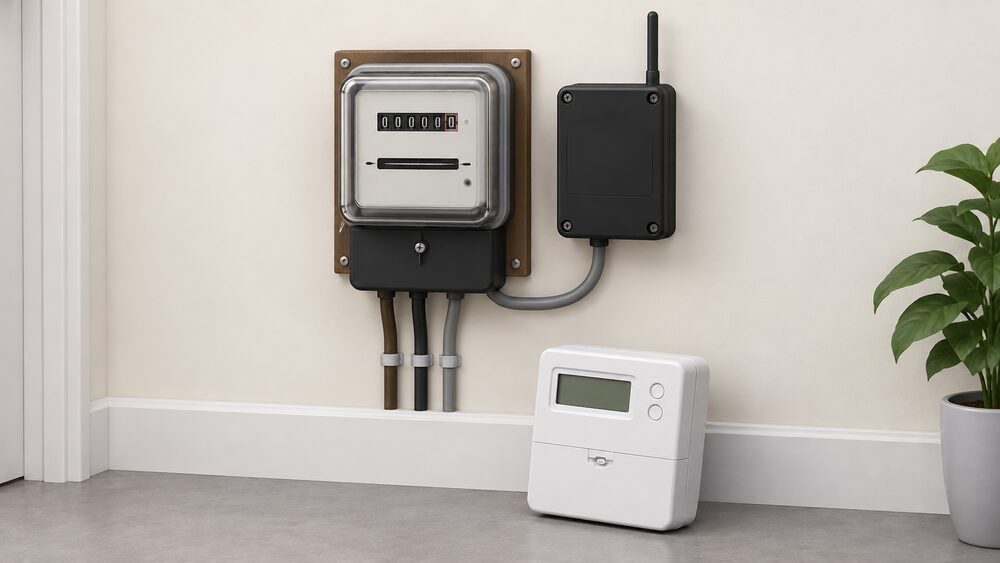
An RTS meter receives radio signals that switch between different electricity rates or turn certain appliances on or off at specific times1. In practice it uses radio waves to send signals to the meter, allowing it to switch between two different energy prices at different times of the day2. That is the mechanism behind a whole class of legacy heating tariffs: the meter does not decide when cheap electricity applies, the broadcast does.
The technology dates back more than 40 years2. The signal is being turned off because the equipment has reached the end of its lifespan, not because of any change in tariff policy2. RTS is being phased out, and systems that rely on it need a meter upgrade3. The phase-out is running in stages, so the date at which any individual meter loses its signal depends on the supplier's programme3.
This matters most to homes that heat with electricity. Storage heaters and similar systems use the RTS signal to know when to draw power, so the meter and the heating are tied together. The Energy Saving Trust's guidance on electric storage heater controls sets out how those systems are managed, and its electric heating advice covers the wider picture for homes without a gas connection.
For energy independence, the RTS meter is a dependency in its own right: the household's cheap-rate window is set by a broadcast it does not control and cannot influence. Replacing it with a smart meter moves that timing into the meter itself, which is a modest gain in control, but it substitutes one dependency for another. The smart meter still depends on a supplier, a communications network and, in most cases, the grid.
How to tell whether your home has one
There are two reliable checks. The first is physical: a black box next to the meter with "radio teleswitch" written on it4. The second is a separate switch box near the meter, often labelled Radio Teleswitch3.
Beyond the hardware, a set of property and tariff characteristics points to RTS. If your property matches any of these criteria, you may have a Radio Teleswitch meter: a separate switch box near the meter often labelled Radio Teleswitch; a property heated using electricity or storage heaters; no gas supply to the area, including rural areas and high-rise flats; or a tariff that is Economy 7, Economy 10 or Total Heat Total Control3.
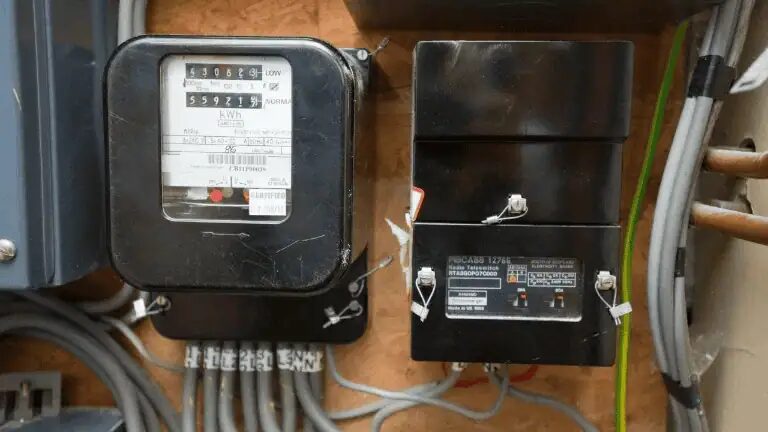
If none of that settles it, the number on your bill is the route in, and phoning your supplier as soon as possible avoids issues at switch-off2. Where you cannot establish who supplies you at all, call 105 to speak to your local electricity network operator, which can tell you who your supplier is5. The finding out who supplies your energy page covers the other look-up routes.
What your supplier must do: free replacement and two weeks' notice
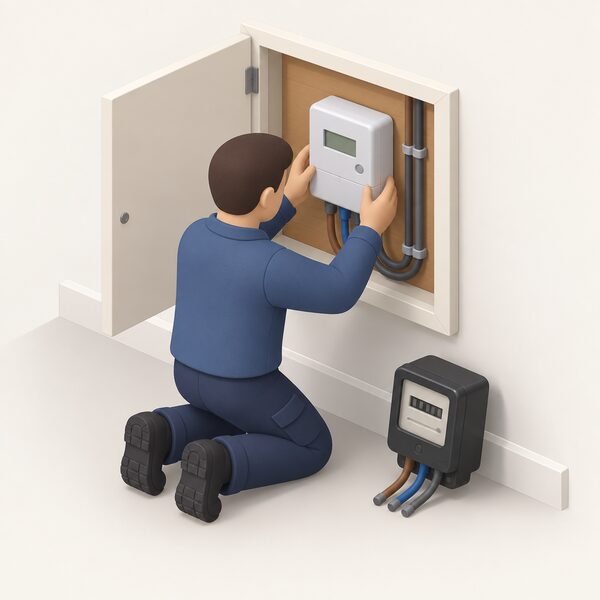
The obligation on suppliers is not discretionary. Your supplier must replace your meter to make sure there is no disruption to your electricity supply1. If your electricity meter uses RTS, it must be replaced5. Suppliers are required to proactively contact customers who currently use RTS meters to inform them about the upcoming switch-off date and the need to upgrade to a smart meter to avoid disruptions6.
On cost, the position across the guidance is consistent. Your supplier should upgrade you to a smart meter for free, and you do not pay anything to change your meter1. All electricity suppliers have been contacting impacted customers to offer a smart meter upgrade at no extra cost9. The same applies where a DTS meter is being replaced: you will not have to pay your supplier to install a new meter10.
There is one qualification. In most cases there is no cost, but on rare occasions, if it is not possible to install a new meter, there may be a cost, for example where there is an asbestos board or no space for a new meter4. Where a meter cannot be moved, the supplier must replace it with a different type of meter11.
On notice, your supplier should let you know at least two weeks beforehand when your RTS meter is scheduled to be switched off1. The same two-week minimum applies before the RTS signal is switched off for your meter5. A separate protection applies to smart meters: your supplier must give you seven working days' notice before remotely switching your smart meter to prepayment mode13.
"Your supplier must replace your meter to make sure there's no disruption to your electricity supply."
What happens if the meter is not replaced
The consequences are practical rather than administrative. If the meter is not replaced, heating could end up always on, never on, or turning on and off at unsuitable times, and heating and hot water may not work properly while electricity costs could increase8. The Scottish Government's position is the same: if meters are not replaced before the service is switched off, it could mean disruption to heating and hot water supplies, and possibly higher bills for households and businesses still using the technology7. Rent Smart Wales warns that heating or hot water may stop working properly, or bills could increase14.
There is also a billing risk that arrives before the signal ends. Households can be charged the wrong amount, because the supplier is not able to track energy use properly5. Reports have described customers being charged double standing charges because of legacy meter configurations15. The rule is that even with two meters, two MPANs, only one standing charge applies, so bills are worth checking5.
Smart meters as the replacement: how they replicate the RTS service
Your energy supplier can replace your RTS meter with a smart meter5. Smart meters are a technical replacement for RTS meters because they can be programmed to deliver a similar service16. A smart meter will give you a similar service to your RTS meter17, and upgrading to one allows it to be programmed to deliver a similar service to the RTS meter it replaces6.
In Wales the position is stated more firmly: smart meters are the only replacement, but residents must contact their energy supplier to arrange an upgrade14. The official consumer guidance is consistent across Ofgem's pages: contact your supplier to arrange to have a new smart meter installed18.
The technical detail that matters for a household is the meter generation. SMETS2 meters allow consumers to switch supplier while retaining smart functionality, including automatic meter readings21. That is the difference between a meter that keeps working when you change supplier and one that does not.
On tariffs, you will still be able to get a tariff that supports heating and hot water after your meter is replaced, but it may differ from your current one5. Some older Economy 7 meters use the RTS service and will be affected, but not all Economy 7 meters are3. If you do not already have an Economy 7 meter, your chosen supplier will need to install a new one22. Alternatively, you can talk to your current supplier and arrange for a credit meter to be installed, which may cost a fee23.
Where the smart network has not arrived
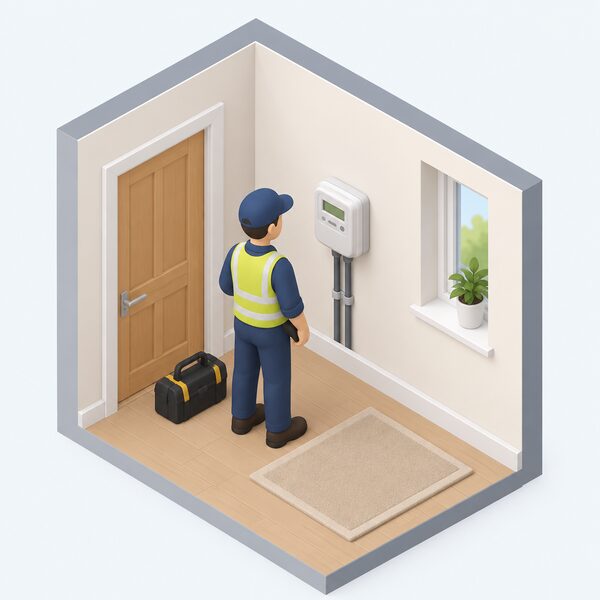
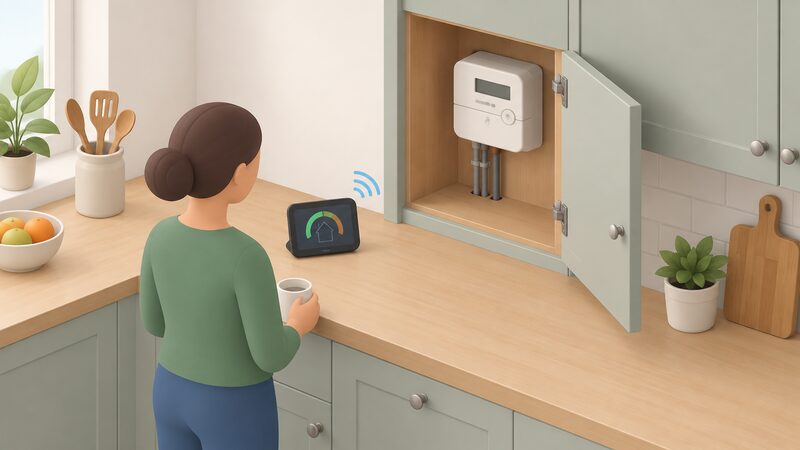
Coverage is not universal, and the guidance anticipates it. If a smart meter cannot be fitted because of a lack of signal, the supplier will usually install a non-communicating smart meter preset to switch between tariffs4. When the smart meter network coverage reaches your area, your supplier should arrange to connect your smart meter to the network5.
There are also cases where no appointment can be offered yet. There are some situations where your electricity supplier will not be able to offer you an appointment for a smart meter upgrade, and the supplier will get in touch when it is ready17.
For a household, this is the point at which the independence question becomes concrete. A non-communicating smart meter restores the tariff switching that the RTS broadcast provided, but it does not report readings remotely and does not give the supplier live visibility of consumption. It is a working meter with a temporary limit, and the connection to the network is a commitment the supplier is expected to honour later5.
Progress and the numbers still outstanding
The rollout is measured, and the figures are partial. Ofgem data from suppliers shows that between October 2024 and January 2025 around 18,700 RTS meters were replaced in Scotland7. Against the Great Britain total of around 800,000 still to replace, that gives a sense of the scale of what remains1.
Official statistics on smart meter operation cover suppliers with over 150,000 customers, and report the total numbers of smart and non-smart meters operated by those suppliers at the end of March 202424. Ofgem's guaranteed standards work on smart meters estimates redress at £117m26.
| Measure | Figure | Period | Source |
|---|---|---|---|
| RTS meters to replace, Great Britain | around 800,000 | as reported May 2026 | 1 |
| RTS meters replaced in Scotland | around 18,700 | October 2024 to January 2025 | 7 |
| Smart meter redress estimate | £117m | August 2025 | 26 |
| Notice before RTS switch-off | at least two weeks | current guidance | 1 |
Scotland has its own consumer protection messaging through Home Energy Scotland, which explains the closure and what it means for heating and hot water8. Wales has issued its own warning to residents through Rent Smart Wales14. Northern Ireland operates a separate energy market, and the RTS guidance in this article applies to Great Britain.
If something goes wrong with the replacement

The general supplier standards still apply around the RTS programme. Regulation 4 on faulty meters requires that within 5 working days of receiving a notification, the supplier must complete an initial assessment, take an appropriate action and offer to confirm in writing27. Where a smart meter is under 12 months old and the in-home monitor is not working as it should, the supplier must fix it or replace it free of charge28. If a supplier does not give its resolution plan within five working days, £40 compensation is owed29.
Two switching points are worth knowing. A supplier might charge you if you switch to a new supplier within 12 months of a non-smart credit meter being fitted, even if it was fitted for free30. And where a credit meter customer stops paying, the supplier must give notice to pay and offer options such as a repayment plan for those struggling31.
The suppliers and smart meter installation page covers appointment obligations in more detail, and complaining about an energy supplier sets out the escalation route if a replacement is delayed or a bill is wrong.
Sources31 cited
- RTS meter switch off, Energy Saving Trust, 2026-05-08
- RTS: what you need to know, Act on Energy, 2026
- The Radio Teleswitch Service (RTS) switch off, Smart Energy GB, 2026-04-24
- Important reminder for Economy 7 and 10 meters, Centre for Sustainable Energy, 2026-06
- RTS switch off, Home Energy Scotland, 2026-09-20
- The Radio Teleswitch Service switch off: what you need to know, Energy UK, 2026-07-01
- Protection for energy customers ahead of RTS switch off, Scottish Government, 2025-03-15
- Closure of Radio Teleswitch explained, Home Energy Scotland, 2025-02
- Radio Teleswitch Service (RTS) switch off, Age UK, 2026-08-26
- DTS energy meter, Citizens Advice, 2024-02-03
- Prepayment meters: consumer guidance, Ofgem, 2026
- Get help with your prepayment meter, Ofgem, 2026
- Stop your energy supplier installing a prepayment meter, Citizens Advice, 2026-09-17
- Act now: RTS switch off could affect heating and hot water, Rent Smart Wales, 2026-06-15
- Looming crisis for households on RTS meters, End Fuel Poverty Coalition, 2025-04-30
- Radio Teleswitch Service switch off, National Energy Action, 2026-07-29
- RTS meters, National Energy Action, 2026-07-08
- Getting a smart meter, Ofgem, 2026
- Get help with your smart meter, Ofgem, 2026
- Get help with your smart meter, Ofgem, 2026-09-17
- How do you know if you have a smart meter?, Smart DCC, 2026
- What is Economy 7?, Energy Helpline, 2026-09-20
- Energy tariffs explained, Uswitch, 2026-02-17
- Smart meter performance, Ofgem, 2026
- Smart meters in Great Britain: quarterly update, March 2024, Department for Energy Security and Net Zero, 2024-05-30
- Smart meter Guaranteed Standards of Performance: draft impact assessment, Ofgem, 2025-08
- The Electricity and Gas (Standards of Performance) (Amendment) Regulations 2015, legislation.gov.uk, 2015-07-11
- How to solve 6 common energy supplier problems, Which?, 2024-03-12
- Top energy company issues and how to solve them, Which?, 2026-03-03
- Change prepayment meter to credit meter, Confused.com, 2026-04-20
- What if you can't pay your energy bill?, Centre for Sustainable Energy, 2026-06
 Radio Teleswitch Switch-OffIs your storage heating or hot water still run by an old radio-controlled meter?
 Smart Meter RulesCan your supplier make you have a smart meter?
 Move, Exchange or Remove a MeterMoving a meter is not a DIY job and it is illegal to do it yourself.
 Smart Meter Faults and FixesYour smart meter has stopped working.
 Smart Meter InstallationCan your supplier make you have a smart meter, and how long should you wait for an appointment?
 Meter Standards and AccuracyHow UK smart meters are certified for accuracy, how their readings become a bill, what happens when a meter stops communicating, and how a metering or billing dispute is escalated to a supplier and then to the Energy Ombudsman.