
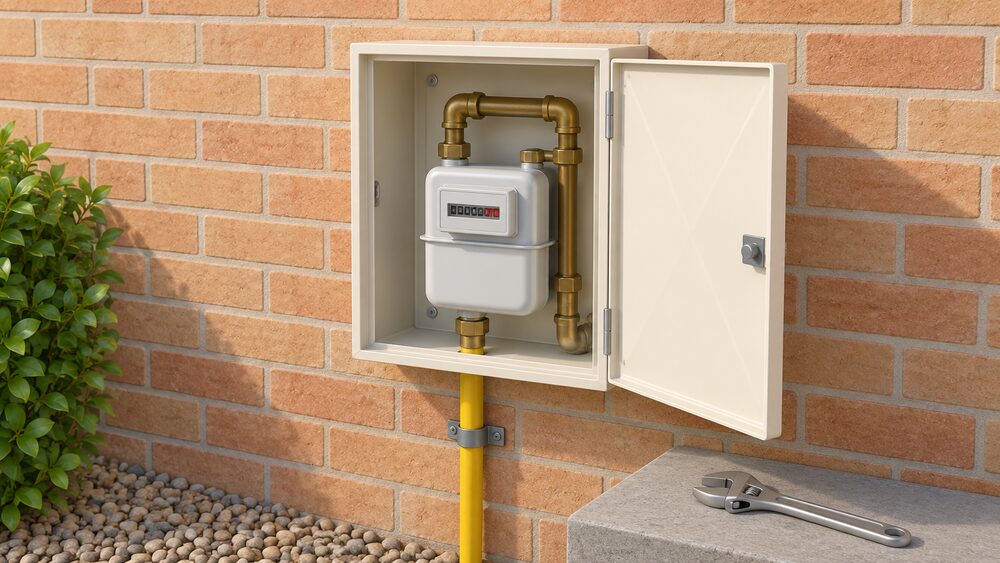
In this guide
Moving a gas or electricity meter is never a job for the householder or a general builder. It is illegal to move a meter yourself, and in the case of gas it is dangerous as well1. The first call is almost always the energy supplier, because the supplier owns the meter and is responsible for its installation and maintenance2. Only where the work involves the service pipe or the connection to the street does it pass to the gas transporter or the electricity network operator.
Cost is the point most households underestimate. Citizens Advice states that where a network has to do the work it will usually charge at least £400, and it could be over £1,000 depending on how much is involved1. Published network prices sit at the upper end of that: Wales & West Utilities quotes a domestic gas meter move from £1,000 plus VAT3, and Uswitch's August 2026 survey of network charges records basic alterations from around £605 to £1,210 at SGN and from around £810 without digging to £1,362 with digging at Northern Gas Networks4. Electricity moves tend to be cheaper: SSEN's range was recorded at £308 to £607, excluding digging or traffic management4.
Timescales are measured in weeks, not days. The physical work at the property rarely takes more than a few hours, but from application to completion can take several weeks4. Cadent and Wales & West Utilities both aim for six to eight weeks from accepted quote or payment to completed work5.
Who does the work: supplier, transporter and network operator
Three different organisations can be involved, and getting the right one first saves weeks.
| Party | What it owns and does |
|---|---|
| Energy supplier | Owns the meter and the gas, responsible for installation, maintenance and billing2 |
| Gas transporter | Physically distributes gas to the home and maintains the pipes to the property9 |
| Network operator | Owns and runs the pipes and wires that carry gas and electricity to homes10 |
A short move within the meter position, or a change of meter type, sits with the supplier. Electricity North West notes that a supplier can often move a meter for a small fee where the distance is less than one metre12. Anything that alters the service pipe, or moves a meter a real distance, becomes a network job.
For new gas connections the split is sharper still. Northern Gas Networks states plainly that it does not install gas meters, and that the applicant must contact their chosen gas supplier to arrange the meter fitting13. The network brings the pipe to the property; the supplier puts the meter on the end of it.
Even where the network does the work, other trades may be needed. Citizens Advice notes a registered electrician or gas engineer may still be required for preparatory digging, fitting a meter box or reconnecting the supply inside the home1. Cadent's guidance on building work is unambiguous that the gas pipes and meter must not be built over, moved or altered without seeking advice first15.
Whether a supplier can do the move at all depends on where the meter is now, how far it is to go, the type of connector on a gas meter, and the reason for the move1. If a fault or a reading problem is the real issue, the supplier is responsible for the meter and any faults, and its number is at the top of the energy bill16. Related reading: reporting a faulty or inaccurate meter and who to call for an energy problem.
Meter relocation through a gas service alteration
Gas transporters call a meter move a service alteration. Cadent states that service alterations are required to relocate a gas meter, to increase a gas supply, or to move pipework for renovations or alterations to the home5. The meter and its pipes are moved together18. SGN gives the same common reasons: building work, moving a meter from inside to outside, and moving a meter so it can be reached more easily19.
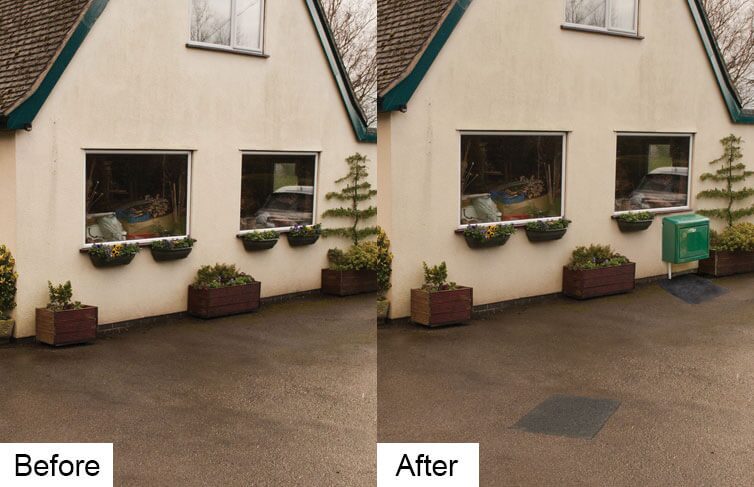
The process runs in a fixed order:
- Gather the full address, the owner's name and telephone number, the distance of external pipework needed and, where the meter is to be reconnected to the boiler, the distance of internal pipework18.
- Apply online or by telephone on 0800 074 5788, Monday to Friday 8am to 5pm excluding public holidays5.
- Accept and pay: Cadent allows up to 90 days to return the signed acceptance and pay5.
- Expect a call the week before work starts to confirm the site is ready5.
- Work completed, on average, six to eight weeks from payment5.
Two things stretch that. Local authority traffic management or highway restrictions increase the lead time before work starts5, and a move from a difficult to access indoor location out to an external wall takes longer18. Moving an indoor meter and pipes outside is often the easier option during remodelling or extension work, and it also removes a fixture from inside the living space18.
Northern Gas Networks applies standard charges to domestic properties only, subject to other criteria, with a standard charge scope of up to 20 metres20. Beyond that, the job is individually quoted, which is one reason published price ranges vary so widely between networks.
When the network moves your meter as part of its own work
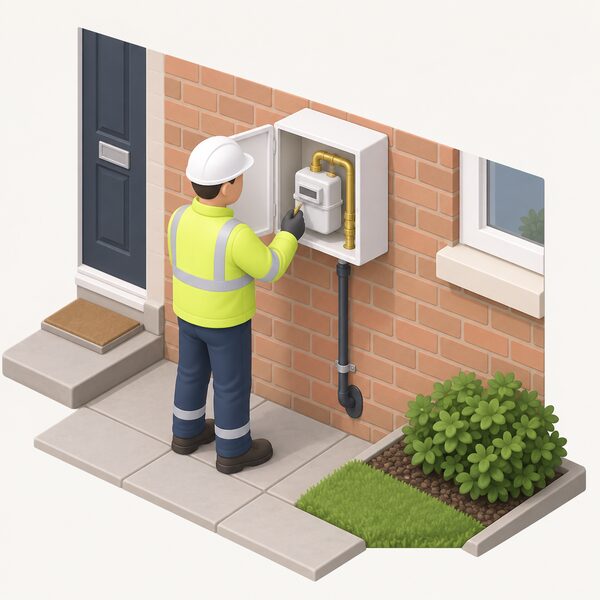
Not every meter move is a customer request. Cadent's mains replacement programme swaps old metal mains for longer lasting plastic pipes, and it states that it may also have to move the gas meter, usually to an outside wall21. About 1 in 10 homes need that extra work as part of the programme6. A meter may also be moved to an external wall during an emergency repair if the repair makes it necessary16.
A separate strand is meter exchange. SGN's engineers hold contracts to replace old gas meters in certain parts of the UK when scheduled under the policy meter exchange programme, working with gas suppliers22. Where a smart meter installation is involved, the same visit may cover both fuels: if the gas and electricity suppliers are the same, both meters might be changed at once, and Citizens Advice is clear that a household does not have to have the gas meter changed if it does not want to24.
There is also a route where the household should not be paying at all. Where a prepayment customer is on the Priority Services Register and the meter needs moving because they cannot reach it, the supplier should move the meter free of charge25. More generally, Ofgem states that a customer who cannot easily reach a prepayment meter to top it up should ask the supplier to move it, though a fee may apply26. In Northern Ireland, the Utility Regulator's code of practice for consumers in vulnerable circumstances states that electricity or gas suppliers or NIE Networks may be able to change the position of the meter, or provide special controls and adaptors, free of charge27. On meter testing, Which? notes that the test itself is free but suppliers can charge for removing and replacing the meter28.
Costs, quotes and lead times
| Network or party | Published figure | As of |
|---|---|---|
| Network operator, general | At least £400, could be over £1,0001 | 2026 |
| Wales & West Utilities, domestic gas meter | From £1,000 plus VAT3 | Sept 2026 |
| Wales & West Utilities, as reported by Uswitch | Starts at £1,2004 | Aug 2026 |
| SGN basic alteration | Around £605 to £1,2104 | Aug 2026 |
| Northern Gas Networks, one metre alteration | From around £810 without digging to £1,362 with digging, each extra metre £24 to £1144 | Aug 2026 |
| SSEN electricity supply or meter move | £308 to £607, excluding digging and traffic management4 | Aug 2026 |
Both are recorded here; the VAT position differs between them.
Two drivers explain the spread. The first is excavation. SGN's price depends on whether it carries out the digging and on which part of the country the customer lives in4; Northern Gas Networks' digging premium is visible in its own figures4. The second is scope. Electricity North West notes the cost may increase according to the specifics of the request, and that excavation on the customer's land and meter boxes are additional costs not included in the basic price12. Uswitch puts the outer bound bluntly: hundreds of pounds, or even thousands where extensive building work such as excavating cables or pipes is needed4.
On timing, Electricity North West completes a meter move 20 days after payment or the site being ready12, faster than the six to eight weeks quoted for gas alterations by Cadent and Wales & West Utilities5. Where a smart meter is being fitted rather than moved, Smart Energy GB gives around an hour for the gas meter and an hour for the electricity meter, with the customer present29.
Tenants have a further step. Uswitch states that in most cases the landlord's permission is needed to move a meter, and the tenant will almost certainly be expected to pay unless the landlord wants the move as part of a renovation or improvement4.
Removing a supply entirely: disconnection
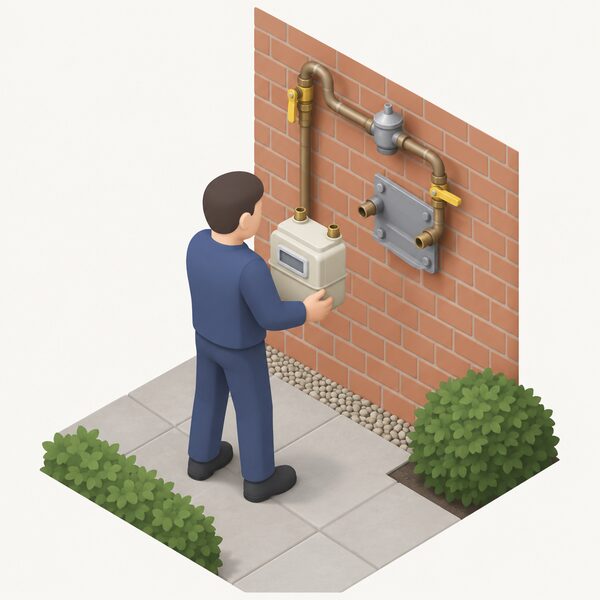
Disconnection is a two-stage job and the order cannot be reversed. The supplier removes the meter; the network then disconnects the pipe. The gas distribution network operator will not disconnect pipes and equipment until the meter has been safely removed by the energy supplier7. Wales & West Utilities says the same: supply pipe removal is chargeable and can only go ahead once the supplier has removed the meter, and meter removal is arranged through the supplier, not the transporter30. Northern Gas Networks and Cadent both instruct customers to arrange meter removal with the supplier before the planned start date32. SGN can disconnect a gas supply where the customer no longer needs it35.
What happens to the pipe itself follows a timetable. IGEM states that if the pipe is disconnected, it will be disconnected as close to the gas main as possible and more than 12 months after the meter is removed by the supplier, and that if a new gas meter is not fitted within 12 months the network operator will contact the property owner7. Metal supply pipes are usually removed30.
Electricity North West plans disconnections with six to ten weeks' notice to give the supplier time to remove the meter, quotes on the basis of the work being done within one metre of its network under the standard Codes of Practice, and returns within five working days to backfill and reinstate the surface36. It responds to an online application form within five working days with a quote, accepts payment by cheque or BACS, and notes that guaranteed standards of performance do not apply to disconnections36. Its online estimate service covers only disconnections with a single phase supply to underground services; three phase or overhead connections go through 0800 988 173036. In Northern Ireland, a permanent disconnection is applied for using NIE Networks' disconnection application form37.
Electricity meter positions in Northern Ireland
Northern Ireland works differently from Great Britain, and the network holds more of the decision. NIE Networks states that it has the right of final determination on the location of the metering equipment in a premise38. Its position rules for domestic connections are specific: metering positions are not acceptable under stairs, in bedrooms, toilets, washrooms, cellars, boiler rooms, generator rooms and fuel stores, or adjacent to gas installations39. For new connections applied for through the portal, meters must be on the outside wall of the property at the front of the house, or within 2 metres of the front40.
To move or alter any piece of NIE Networks equipment, a meter box, or to arrange a temporary disconnection, an alteration application form is completed37. On a new supply, NIE Networks contacts the customer to arrange the meter works on site once the connection is energised41. Its guidance is that connection work can take up to 9 months to complete because of the legal processes involved, and that selecting an early date on the form will not speed the application up40. Where generation is being installed, all generation details must be provided before the supply can be energised, including the size of the system, the type of equipment and the installer40. Heat pumps and EV chargers must be declared with make and model so certification for use in Northern Ireland can be checked, alongside other high load equipment such as power showers, water heaters, under floor heating and swimming pools40. Once a design and quotation have been issued the details cannot be changed, and altering the Maximum Import Capacity means cancelling and re-applying40.
On metering practice, NIE Networks reads electricity meters four times a year42, all meters are read from left to right including import and export meters43, and where a meter is replaced the installer shows the customer how to read and use the new one44. For reading technique, see how to read an electricity meter.
What happens to the supply, appliances and ground
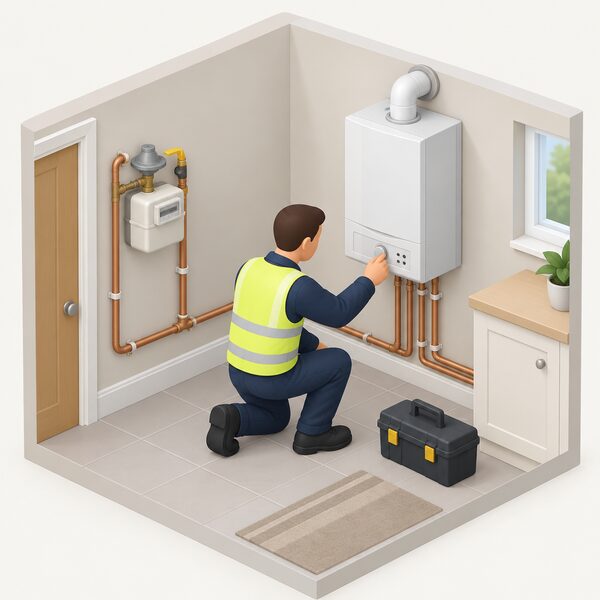
Where the work is Cadent mains replacement, the gas goes off first thing in the morning, usually around 8am, with advance notice, and an adult over 18 must be present all day21. In some cases the gas is turned off twice21. Engineers work up to 8pm to get everyone back on gas21. If a fault is found, reconnection waits until a Gas Safe engineer has carried out checks, and Cadent states it is not authorised to repair appliances but will explain what to do next21.
Reconnection to appliances is the detail that catches households out. Northern Gas Networks distinguishes three outcomes34:
- Purge and relight: the supply pipe is altered but the meter stays where it is; the network purges the meter and relights the appliances.
- Full reconnection: the meter is moved and reconnected to the gas appliances, available only where no more than 2 metres of outlet copper pipework is needed between meter and appliances.
- Partial reconnection: the meter is moved but not connected to the appliances; the customer arranges their own Gas Safe engineer for the outlet pipework.
Where a meter is being changed because of a move to or from a semi-concealed meter box, the gas supplier arranges the reconnection works34. For box replacement itself, Northern Gas Networks will temporarily disconnect the service pipe before the customer's own tradesman removes the old box, then reconnect once the new box is fitted45. Checking the engineer is registered matters here: see how to check an engineer is Gas Safe registered.
Ground reinstatement is defined. Cadent fills holes dug on the property and replaces the patch with turf, seed, tarmac or paving within five working days, though a concrete imprint drive restored by specialist contractors may take a little longer21. Under a service alteration it re-turfs, re-seeds grassed areas and replants disturbed flower beds, while internal decorative works fall to the customer5. Electricity North West backfills and reinstates within five working days of completing a disconnection36.
"We're not authorised to repair appliances but we will explain what you need to do next."
Electricity North West also operates a free Extra Care service for households needing extra help and support46.
Where a meter move fits into household energy independence
A meter move changes access and convenience, not supply. The meter remains the supplier's property, the pipe or cable remains the network's, and the household remains connected to both. What a move can buy is practical control: a meter reached without a key, a ladder or a landlord, so readings can be taken and checked. Uswitch records that meters sit in basements, lofts, garages or outside in a mounted box47, and Cadent lists garages, the back of the house, under the stairs, the kitchen or outside at the front or side48. In flats, gas and electricity meters are usually in a shared space such as a labelled utility room47, and in multiple occupancy buildings the meter may be in communal areas but is usually inside48. An external box needs a key: the key is inserted and turned to open the door48.
Knowing where the meter is matters for safety as well as billing, because that is where the gas supply is turned off if advised to do so or in a gas emergency17, turning the lever so it sits at 90 degrees to the gas pipe49. See how to turn off the gas, water and electricity in an emergency and what to do if you smell gas.
Position also affects smart metering. The Energy Ombudsman notes that the communications hub is typically situated within or near the electricity meter, and if the gas meter is too far away it may not be able to communicate with it50. Where both fuels are smart, the in-home display works best closest to the electricity meter51. Smart mode means the meter sends automatic readings to the supplier52. In-home displays stay with the property: NEA and Citizens Advice both state the display should be left behind for the next occupants because it is designed to work with the smart meter installed there53.
Full disconnection is the only step here that genuinely reduces dependence, by ending the gas supply contract and removing a standing charge and a fuel from the home. It is also the least reversible: the gas pipe is cut back to the main more than 12 months after meter removal7, and an electricity disconnection cannot simply be undone36. Households considering it should also take a closing reading on the day they move out or end a contract, to avoid being overcharged54. Wider steps are covered in taking more control of your home's energy and across the home energy how-to guides.
Sources54 cited
- Move your gas or electricity meter, Citizens Advice, 2026
- What to expect from a gas connection, Northern Gas Networks, 2026
- Make changes to your gas connection, Wales & West Utilities, 2026
- How to move your gas or electricity meter, Uswitch, 2026-09-04
- Service alterations, Cadent, 2026
- Under your feet, Cadent, 2026
- Disconnecting from the gas network, IGEM, 2026
- New gas connection, Cadent, 2026
- Who is my gas and electricity supplier, Confused.com, 2026-07-03
- Priority Services Register, Fuel Bank Foundation, 2025-09-24
- Customers and energy networks, Energy Networks Association, 2026
- Meter move information, Electricity North West, 2026
- Make changes to your gas supply, Northern Gas Networks, 2026-09-04
- Apply for a new gas connection, Northern Gas Networks, 2026
- Building regulations and gas pipes, Cadent, 2026
- Emergency engineer visit, Cadent, 2026
- Make the right call, Cadent, 2026
- Moving your gas meter, Cadent, 2026
- Move your gas meter, SGN, 2026
- What to expect when making changes, Northern Gas Networks, 2026-09-04
- Upgrading your gas pipes, Cadent, 2026
- Gas meter exchange, SGN, 2026
- Meter box repairs, SGN, 2026
- Getting a smart meter, Citizens Advice, 2024-02-03
- Problems getting to or topping up your prepayment meter, Citizens Advice, 2026-09-17
- Prepayment meters consumer guidance, Ofgem, 2026
- Code of Practice for Consumers in Vulnerable Circumstances, Utility Regulator, 2025
- Gas meters and electricity meters: what you need to know, Which?, 2026-01-16
- The smart meter installation process, Smart Energy GB, 2026-04-01
- Disconnect your gas supply, Wales & West Utilities, 2026
- Gas connections, Wales & West Utilities, 2026
- Gas disconnections, Cadent, 2026
- Disconnection FAQs and guidance, Northern Gas Networks, 2025-10-30
- Make changes FAQs and guidance, Northern Gas Networks, 2025-10-30
- Household customers, SGN, 2026
- Disconnect your supply, Electricity North West, 2026-09-19
- Connections FAQs, NIE Networks, 2026-09-19
- Where can I locate external meters for domestic connections, NIE Networks, 2026-09-19
- Where can I locate internal meters for domestic connections, NIE Networks, 2026-09-19
- Application help: single house connection, NIE Networks, 2026-09-19
- Energising your connection, NIE Networks, 2026-09-19
- Bills and metering, Consumer Council for Northern Ireland, 2026
- Import and export meters, NIE Networks, 2026
- Meter replacements, NIE Networks, 2026-09-19
- Meter box services, Northern Gas Networks, 2025-12-29
- Worried about energy costs, Electricity North West, 2026-09-19
- Setting up gas and electricity in a new home, Energy Helpline, 2026
- Locating your meter and turning off the gas, Cadent, 2026
- What to do if you smell gas, Confused.com, 2025-09-08
- Smart meters, Energy Ombudsman, 2026
- Fixing problems with your smart meter's in-home display, Citizens Advice, 2026-09-17
- Moving home: dealing with your energy supply, Citizens Advice, 2026
- Understanding smart meters, National Energy Action, 2026-04-21
- Who supplies my electricity and gas, Uswitch, 2026-06-29
 What Does a Smart Meter Cost?There is no upfront charge for a smart meter or a standard installation: the cost is recovered indirectly through energy bills.
 Meters and Energy IndependenceDo smart meters really save you money, and can you still get one fitted for free?
 The Full Smart Meters GuideDo smart meters really save you money, and how do you use one to cut your bills?
 Take Control of Your EnergyHow do you read your own energy use and keep hold of your meter readings?
 Prepayment Meters and DebtCan your energy supplier force you onto a prepayment meter because you owe them money?
 New Electricity ConnectionWho do you contact for a new or upgraded electricity connection, and what will it cost?