

In this guide
Checking whether you qualify for an energy grant in the UK is not one check but four, because the schemes that pay for insulation, heating and renewables are run separately in England, Scotland, Wales and Northern Ireland. The criteria they test are broadly the same: the benefits a household receives, its income, whether the home is owned or rented, the property type, and the energy performance certificate (EPC) band. What changes across the border is which body you contact and which thresholds apply.
The single most important thing to know before you start is that the Energy Company Obligation, the scheme most people mean when they say "energy grant", is closing. ECO has been extended to 31 December 2026, but energy suppliers have now stopped advertising or accepting applications for ECO4 funding, and no further funding is available for new installations after March 20261. Anyone still searching for ECO4 Flex eligibility is looking at a scheme that has closed to new applications in several council areas3.
That makes the free national advice services the practical starting point rather than a supplier application. Nest in Wales is reached on 0808 808 2244, Home Energy Scotland runs the Grant and Loan Scheme with up to £7,500 of grant funding for homeowners alongside an optional £7,500 interest free loan, and NI Energy Advice on 0800 111 4455 covers all households across Northern Ireland5. Each will test eligibility before any application is made.
The main grant schemes and where each one applies
Grant funding for home energy efficiency in the UK is devolved, so the scheme that applies to a household depends on which nation the property sits in. In England the main routes have been the Energy Company Obligation, the Boiler Upgrade Scheme for heat pumps, and the Warm Homes Local Grant, which is administered by councils rather than nationally. In Wales the Welsh Government Warm Homes programme includes the Nest scheme, and the Green Homes Wales scheme is delivered through the Development Bank of Wales. In Scotland the Home Energy Scotland Grant and Loan Scheme is run by the Scottish Government. In Northern Ireland the Affordable Warmth Scheme and the Northern Ireland Sustainable Energy Programme operate alongside advice from NI Energy Advice.
The schemes also differ in who they are open to. The grants administered through NI Energy Advice are available to homeowners and private tenants10. The Boiler Upgrade Scheme requires an eligibility check before an application is made, and for air source heat pumps the home must be energy efficient enough to qualify11. The Green Homes Grant voucher scheme, which ran in England between September 2020 and March 2021, provided grants to homeowners and landlords for energy efficiency improvements, and is now closed13. The Ynni Cymru Grant Capital Scheme is not a household scheme at all: it is open to community energy organisations, social enterprises, public sector bodies and SMEs14.
For a household trying to work out what it might qualify for, the practical consequence is that a national eligibility checker will only ever cover part of the picture. Council-run schemes such as the Warm Homes Local Grant add their own property boundary and EPC conditions on top of the national criteria, and the Northern Ireland Sustainable Energy Programme allocates its grants on a first come first served basis, so timing matters as much as eligibility15.
ECO4: who qualifies and what it funds
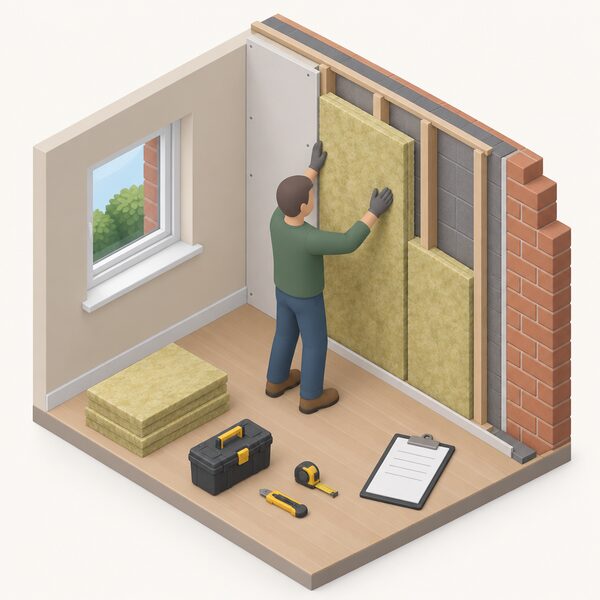
ECO4 is the fourth phase of the Energy Company Obligation, the obligation placed on larger energy suppliers to fund energy efficiency improvements in homes. It pays for energy efficiency measures such as heating improvements and insulation, and the Affordable Warmth route within it is aimed at households receiving certain means-tested benefits, with Income Support named as a qualifying benefit17. The scheme has also funded window glazing under flexible eligibility routes19.
The application route is not a government form. Eligible residents contact a participating energy supplier, and the list of those suppliers is published by Ofgem4. A household can approach any obligated supplier, even one that is not its own energy provider20. That matters because it is up to each supplier to determine which measures it wants to fund, the level of funding it provides, and the retrofit coordinator or installers it chooses to work with, so two suppliers can give different answers about the same property20.
ECO is not a grant scheme in the ordinary sense, and that shapes what a household should expect. Because suppliers decide the level and type of support, there is no published tariff of awards to check against, and no single eligibility checker that produces a yes or no. Councils direct residents to organisations offering free and impartial energy and bill saving support to assess whether they might be eligible for funding, and ECO4 Flex declarations made by councils may be subject to Ofgem audits during the time ECO4 is in effect and for up to three years after it ends21.
"ECO is not a grant scheme and as such, different companies or installers may provide different levels or types of support"
ECO is closing: what that means for new applications
The Energy Company Obligation is closing to new applications. Ofgem records that ECO has been extended to 31 December 2026, and that ECO4 will run until that date following a nine-month extension1. The extension followed a period in which the scheme was due to end on 31 March 2026 with no ECO5 replacement18. Energy suppliers have now stopped advertising or accepting applications for ECO4 funding, and there is no further funding for new installations after March 20262.
The scheme's history explains the confusion in search results. ECO2 ended on 31 March 2017, ECO2t extended the policy until 30 September 2018, and ECO3 closed on 31 March 20221. Each phase has left behind council pages and advice articles that still describe the previous rules, which is why some sources state that ECO4 has closed to new applications while others describe it as running until the end of 20263. Both statements are in circulation and they describe different things: the scheme's legal end date, and whether suppliers are still taking on new work.
The government's stated reason for ending ECO was that it did not represent strong value for money13. Energy efficiency measures under ECO will continue until the end of 2026, so work already committed may still be delivered, but a household that has not yet applied should treat the scheme as effectively unavailable and look to the devolved schemes instead13.
Nest in Wales: eligibility, income thresholds and the EPC requirement
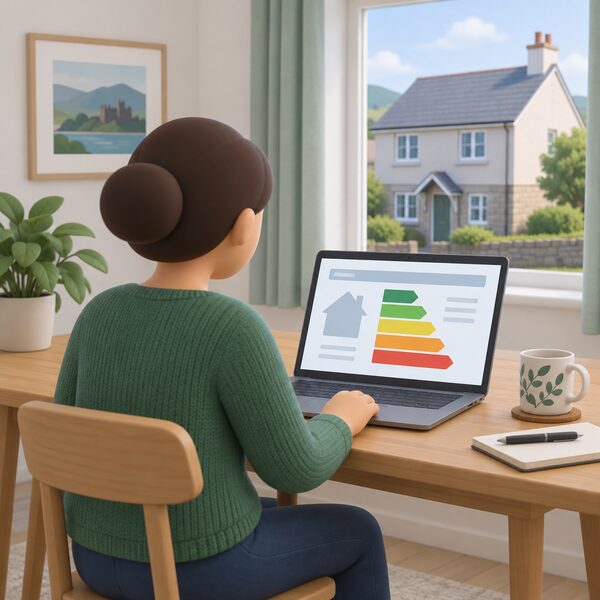
Nest is the Welsh Government Warm Homes scheme, and it is the main free energy upgrade route for households in Wales. It supports people in Wales living on a lower income who receive a means-tested benefit or live with a respiratory, circulatory or mental health condition5. The scheme is for households that own or privately rent their home, receive a means-tested benefit or live in a low-income household, and live in a home with an EPC rating of 54 (E) or less, or 68 (D) or less where a household member has an eligible health condition8.
The health condition route widens the EPC threshold rather than removing it, which is the detail most often missed. Eligible conditions include respiratory disease such as respiratory infections, broncho-constriction in asthma and chronic obstructive pulmonary disease; circulatory disease including cardio-vascular disease, strokes and heart attacks; mental health conditions including depression, anxiety, psychosis and bipolar disorders; dementia; and intellectual and development disorders8. Where one of these applies, the home must have an EPC rating of 68 (D) or less8.
Applying is by phone or online. Nest can be reached on freephone 0808 808 2244 or through nest.gov.wales, and the same number provides free and impartial general advice on current support options5. Green Homes Wales, delivered through the Development Bank of Wales, also directs households to Nest on 0808 808 2244 for general advice9.
The Welsh Government has described the Warm Homes Nest Scheme as offering free energy upgrades for houses with a poor EPC rating, which places the EPC band at the centre of eligibility rather than income alone13. For a household in Wales, that means the first practical step is to find the EPC rating for the property, because a home rated above the threshold will not qualify however low the household income is.
Home Energy Scotland: grants up to £7,500 and interest-free loans
The Home Energy Scotland Grant and Loan Scheme is the Scottish route, and it combines a grant with an optional loan. Up to £7,500 of grant funding is available to homeowners for heat network connections, in addition to the optional £7,500 interest free loan6. The two figures are separate: the grant does not have to be repaid, the loan is interest free, and a household can take the grant without the loan.
The scheme is administered by the Scottish Government, and the published contact address for applications and claims is heesgl@gov.scot22. The Scottish Government has set out its wider position on decarbonising heating in homes and buildings, which is the policy context for the grant and loan scheme6.
Scotland's approach differs from the other nations in two ways that matter to a household checking eligibility. First, the funding is structured as a grant plus an optional loan rather than a single award, so the amount a household can access depends on whether it takes the loan as well. Second, the scheme is open to homeowners, and the grant figure is tied to specific measures including heat network connections rather than to a general insulation budget6.
Home Energy Scotland also runs free online sessions that explain energy saving at home, including a one-hour webinar on 30 September at 2pm and 6pm and a session on 21 September at 10am as part of Climate Week North East 202622. These are advice sessions rather than eligibility checks, but they are a way to understand what the scheme covers before making an application.
Northern Ireland: NI Energy Advice and where it can refer you

NI Energy Advice is the single entry point for households in Northern Ireland. It offers independent and impartial energy advice to domestic householders, plus referrals to energy grants and other sources of help23. It is for all households across Northern Ireland, not only Housing Executive tenants, and it is funded by the Department for Communities and delivered by the Housing Executive25.
The service covers energy grants and support, heating and energy use, energy bills and fuel poverty support, damp, condensation and ventilation, insulation and home improvements, renewable energy, changing electricity or gas supplier, and heating-oil savings25. It can be contacted on 0800 111 4455, open 9am to 5pm Monday to Friday, or by email at nienergyadvice@nihe.gov.uk7. Belfast City Council directs households to the same service for grant information and energy advice10.
Where a household appears to qualify for a scheme, NI Energy Advice passes it on. For the Affordable Warmth Scheme, the household contacts NI Energy Advice, and if it meets the entry requirements an application form is sent out; the household completes and returns it with supporting documents to its local Grant Office26. The supporting documents must prove ownership or private tenancy at the property and that the household occupies it as its main residence26.
Not every Northern Ireland scheme is open to everyone. The Priority PV Scheme is for Northern Ireland Housing Executive tenants only, and requires a single storey Housing Executive property with oil or electric heating outside a natural gas area, with an income or pension under £35,000 gross for a couple or single parent family7. The Efficiency Plus fully funded insulation scheme states that Housing Executive tenants are not eligible7. The Warm Healthy Homes Fund, out for consultation, proposes eligibility criteria including income thresholds and the use of certain benefits to determine entitlement, alongside increased grant limits per household and support for the private rented sector27.
The qualifying benefits and income thresholds, nation by nation
The criteria that decide eligibility fall into four groups: the benefits a household receives, its income, how the property is owned or rented, and the EPC band. Which of these is tested, and at what level, varies by nation and by scheme.
| Nation | Main route | Key eligibility tests |
|---|---|---|
| England | ECO4 (closing), Boiler Upgrade Scheme, Warm Homes Local Grant | Qualifying benefits under Affordable Warmth; EPC D to G and income usually £36,000 a year or less for the Warm Homes Local Grant13 |
| Wales | Nest (Welsh Government Warm Homes) | Means-tested benefit or low income; EPC 54 (E) or less, or 68 (D) or less with an eligible health condition8 |
| Scotland | Home Energy Scotland Grant and Loan Scheme | Homeowners; up to £7,500 grant plus optional £7,500 interest free loan6 |
| Northern Ireland | Affordable Warmth Scheme, NISEP, NI Energy Advice | Entry requirements assessed by NI Energy Advice; NISEP grants allocated first come first served26 |
The Warm Homes Local Grant in England tests EPC between D and G, private ownership either owner occupied or privately rented, and a low income usually £36,000 a year or less13. Home Upgrade Grants, which preceded it, provided energy efficiency upgrades and low carbon heating to low income households in properties off the gas grid and in energy efficiency bands D to G13. The Green Homes Grant supported lower income households in or at risk of fuel poverty28.
For households where a disability benefit is part of the picture, the Disabled Facilities Grant rules show how income is treated in that separate scheme. How much is awarded usually depends on household income, and depending on income an applicant may need to pay towards the cost of the work29. Two groups are exempt from the income test: landlords can get a grant without their income and savings being taken into account, and disabled children under 18 can get a grant without their parents' income being taken into account29.
How to check if you qualify: the free advice services to call

The eligibility check itself is free, and in most cases it is done by an advice service rather than by the household. The Local Energy Advice Programme offers a free telephone advice service to help with benefits, money and bill problems, checks eligibility before a home visit, provides a free home visit from a qualified Home Energy Advisor, and helps householders check whether they are on the cheapest tariff28. Council-run services such as the East Herts Home Energy Support Service provide information on grants and help with checking eligibility, benefits support, supplier switching advice, energy saving advice, debt advice, and referral to other organisations or contractors3.
The numbers to use depend on the nation:
- Wales: Nest on 0808 808 2244, Monday to Friday, for the Warm Homes Nest Scheme and general advice9.
- Scotland: Home Energy Scotland, with the Grant and Loan Scheme contact at heesgl@gov.scot22.
- Northern Ireland: NI Energy Advice on 0800 111 4455, 9am to 5pm Monday to Friday, or nienergyadvice@nihe.gov.uk7.
- England: the local council's home energy team, which handles Warm Homes Local Grant eligibility and can refer to other schemes15.
Before calling, it helps to have the property's EPC rating to hand, because the EPC band is the test that most often decides the outcome and it is the one a household can check in advance. The guide to reading an EPC explains what each band means, and if no certificate exists, getting an EPC for your home sets out how one is produced.
What documents and evidence you will need
The evidence a scheme asks for falls into three categories: proof of who you are, proof of income or benefit, and proof of ownership or tenancy. Nest asks owner-occupiers for one of a mortgage statement, a buildings insurance policy or property deeds8. The Warm Homes Local Grant may ask for personal ID and financial information to verify household income, or property deeds15. The Affordable Warmth Scheme requires supporting documents that prove ownership or private tenancy at the property and that it is occupied as the main residence26.
The EPC itself carries information that schemes use. An energy performance certificate includes a statement about improvement measures in the property report, the address, the report reference number, the issue date, the type of heating system, and whether the building is in a heat network zone30. Under the Scottish legislation, energy performance data must be sent to the relevant register before the document is issued, which is why an EPC can be looked up rather than only produced on request30.
For a household preparing an application, the practical list is short. Have the EPC reference number, a recent benefit award letter or income evidence, and one document that proves ownership or tenancy. Where a health condition is being used to widen the EPC threshold, the scheme will assess that separately, and Nest publishes the list of eligible conditions it uses8.
What the schemes actually pay for: insulation, heating and solar
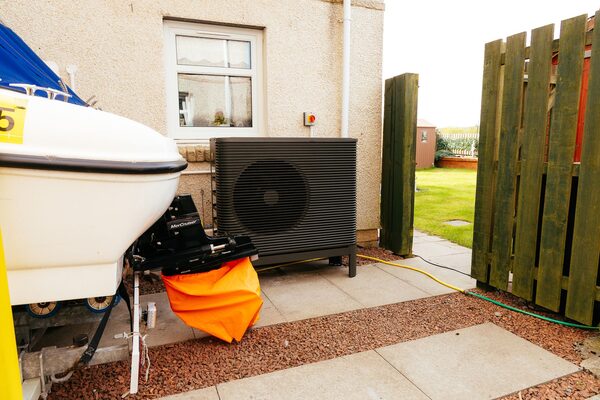
What a grant covers varies as much as who qualifies for it. The Warm Homes Local Grant funds insulation, energy-efficient heating systems, and renewable energy installations3. ECO4 funded energy efficiency measures such as heating improvements and insulation, and under flexible eligibility routes it has also covered window glazing17. The Home Energy Scotland grant is tied to measures including heat network connections, alongside the optional interest free loan6.
The Northern Ireland Sustainable Energy Programme funds priority whole house solutions covering heating and insulation measures, priority individual measures covering insulation and various other energy efficiency measures, priority whole house solutions for innovative measures, and non-priority conventional schemes for non-priority domestic and commercial properties16. The Priority PV Scheme in Northern Ireland covers solar photovoltaics for Housing Executive tenants meeting its conditions7.
For heat pumps specifically, the Boiler Upgrade Scheme is the England and Wales route, and it requires an eligibility check before applying11. Air source heat pumps may qualify for a grant under the scheme if the home is energy efficient enough12. That energy efficiency condition links the heating grant back to the EPC band, so the same certificate that decides an insulation grant often decides a heating grant too.
The limits are worth stating plainly. A grant that funds insulation does not make a home independent of the grid, and a grant that funds a heat pump does not remove the need for an electricity supplier. What these schemes change is the capital cost of the improvement, not the ongoing dependence on a network and a supplier. For households weighing up how far that goes, how to take more control of your home's energy sets out the practical steps, and how to apply for a home energy grant covers the application stage once eligibility is confirmed.
Sources30 cited
- Energy Company Obligation (ECO), Ofgem, 2026-09-17
- Energy Company Obligation briefing, House of Commons Library, 2026-05-13
- Home and business grants, schemes and advice, East Herts Council, 2026-09-17
- ECO4 and ECO Flexible Eligibility, Breckland Council, 2026-09-17
- Nest: a scheme to make your home warmer and more energy efficient, Isle of Anglesey County Council, 2026-09-17
- Decarbonising heating in homes and buildings, Scottish Government, 2026-09-17
- NISEP List of Schemes 2026-27, Utility Regulator, 2026-04
- Nest eligibility, Welsh Government, 2026-09-17
- Green Homes Wales, Development Bank of Wales, 2026-09-17
- Home heating, Belfast City Council, 2026-09-20
- Apply for the Boiler Upgrade Scheme, GOV.UK, 2026-09-17
- Air and ground source heat pumps, Croydon Council, 2026-09-17
- Energy efficiency schemes briefing, House of Commons Library, 2026-09-17
- £10 million to help Welsh communities cut energy bills, Welsh Government, 2026-03-03
- Apply for a Warm Homes Local Grant, Liverpool City Council, 2026-09-17
- Northern Ireland Sustainable Energy Programme annual report, Utility Regulator, 2026-07-03
- Energy Company Obligation scheme, Leeds City Council, 2026-09-20
- ECO flexibility funding, Ceredigion County Council, 2026-09-17
- ECO4 Flex open, South Cambridgeshire District Council, 2026-09-17
- ECO: information for homeowners and tenants, Ofgem, 2026-09-17
- Home energy efficiency, Bridgend County Borough Council, 2026-09-17
- Home Energy Scotland Grant and Loan Scheme application and claim processing times, Scottish Government, 2026-03-12
- Energy saving grants in your area, nidirect, 2026-09-17
- Heating technologies to suit your home, nidirect, 2026-09-17
- Energy, Northern Ireland Housing Executive, 2026-09-17
- Affordable Warmth Scheme, Northern Ireland Housing Executive, 2026-09-17
- Consultation on the Warm Healthy Homes Fund, Department for Communities, 2026-09-19
- Grants and funding, Tameside Council, 2026-09-17
- Disabled Facilities Grants: what you'll get, GOV.UK, 2026-09-17
- Energy Performance of Buildings (Scotland) Amendment Regulations 2025, legislation.gov.uk, 2025
 Why Energy Grants DifferWhere you live in the UK changes which home energy grants you can get.
 The Full Grants and Schemes GuideWhich grants can you actually get right now, and how do you apply for them?
 Devolved vs Reserved PowersWho decides what you pay for gas and electricity, and who decides how your home is insulated or improved?
 Devolution and Energy PowersLiving in Scotland, Wales or Northern Ireland can mean different grants and building rules for your home than in England.
 The Full Your Type of Home GuideLiving in a flat, an old listed house or somewhere off the gas grid changes what energy help you can get and what you are allowed to install.
 The Full Scotland, Wales and Northern Ireland GuideWhy a householder in Glasgow, Cardiff or Belfast faces different schemes, standards, targets and markets from one in England.