
In this comparison
The Home Energy Scotland Grant and Loan Scheme gives homeowners in Scotland a grant, an interest-free loan, or a combination of both1. It is the main public funding route for insulation, clean heating and renewable measures north of the border, and it has been running since December 20222. The choice between grant-only and grant plus loan is not a matter of preference: it depends on what the measures cost, how much grant the property qualifies for, and whether the household wants to borrow to cover the rest.
The grant side is capped. Energy efficiency measures can attract grant funding up to 75% of the combined cost of the improvements, up to a maximum grant amount of £7,5003. Clean heating is funded separately, and rural and island homes can receive an uplift of £1,500 to both the heating and the energy efficiency grants4. The loan side is optional and interest-free, with no interest to pay5. Repayment runs over 5 years for amounts up to £4,999, 10 years for £5,000 to £9,999, and 12 years for more than £10,0005.
For a household weighing the two, the practical question is how much of the work the grant covers and how much would otherwise have to come from savings. Grant funding covers up to 100% of the quoted installation cost of an improvement, but it cannot be more than the maximum for that individual improvement5. Where the quote exceeds the cap, the loan is the mechanism for bridging the gap without paying interest.
What the scheme offers: a grant, an interest-free loan, or both
The scheme is deliberately structured as three options rather than one. Official guidance describes it as providing homeowners in Scotland a grant, interest free loan or a combination of both1. The Energy Saving Trust, which delivers it, describes grants and optional interest-free loans from the Home Energy Scotland Grant and Loan8. An optional interest free loan is also available for both clean heating and energy efficiency9.
The loan element is not a commercial credit product with a subsidised rate. It is a zero interest loan, and the Scottish Government describes its Home Energy Scotland and Business Energy Scotland schemes in those terms in consultation material10. The same wording appears in the government's consultation on delivering net zero in Scotland's buildings11. For a household, that means the cost of borrowing over the repayment period is the capital sum alone.
The grant element is the part that does not have to be repaid, and it is where the scheme's limits bite. Grant funding for energy efficiency improvements is available up to 75% of the combined cost of the improvements and up to the maximum grant amount of £7,5003. That 75% ceiling matters: a household cannot use grant to cover the whole of an insulation project unless the project cost is low enough that 75% of it sits under the cap.
The scheme also offers grant only, loan only and a combination of both for heat pumps, according to official statistics on the scheme12. That flexibility is the point. A household with capital available can take grant only and avoid any repayment obligation. A household without capital can take the loan alongside the grant and spread the cost.
Grant amounts: up to £7,500, with an extra £1,500 for rural and island homes

The headline grant figure is £7,500, rising to £9,000 where the rural uplift applies. The scheme's own terms state the maximum combined grant of £7,500, or £9,000 if the applicant qualifies for the rural uplift5. The uplift itself is £1,500 for rural and island homes, applied to both the heating and the energy efficiency grants4.
The rural uplift is not a single top-up on the total. It applies to each of the two grant streams, so a rural household can receive up to £1,500 extra for energy-efficiency improvements and up to £1,500 extra for clean heating systems13. That is how a combined grant can reach £9,000 rather than £7,500.
There is a separate and larger figure for heat network connections. The Scottish Government has introduced grant support for homeowners to enable connections to heat networks through the Home Energy Scotland scheme, with grants of up to £9,000 together with loans for households in island and remote rural areas connecting to local district heat networks14. Applications for that heat network connection grant support opened in December 202515.
| Grant element | Standard maximum | Rural or island maximum |
|---|---|---|
| Energy efficiency measures | £7,500 combined grant maximum5 | £9,000 with rural uplift5 |
| Rural uplift per stream | Not applicable | £1,500 to heating and £1,500 to energy efficiency4 |
| Heat network connection | Up to £9,000 with loans, island and remote rural households14 | Up to £9,000 with loans14 |
One independent guidance source published in September 2026 gives the grant amount as £7,500, while the scheme's own terms and conditions state a maximum combined grant of £7,500 or £9,000 with the rural uplift5. A separate conflict ruling records a figure of up to £18,000 against the £7,500 figure, and that conflict is not ruled on. Households should treat the £7,500 and £9,000 figures as the ones the scheme's own terms state, and check the current position with Home Energy Scotland before committing to a specification.
Grant, loan or combination: which fits which home
The three routes suit different household circumstances, and the scheme does not express a preference between them. What determines the fit is the gap between the quoted cost and the grant cap.
A household with the capital to cover the balance is in a position to take grant only. The grant covers up to 100% of the quoted installation cost of an improvement, but not more than the maximum for that individual improvement5. Where the quote sits under the cap, grant alone can cover the work in full. Where it exceeds the cap, the household meets the difference from its own funds.
A household without that capital can take the loan alongside the grant. The loan is interest-free, so the only cost is the capital repaid over the term5. The repayment period scales with the amount borrowed: 5 years up to £4,999, 10 years for £5,000 to £9,999, and 12 years for more than £10,0005. A larger loan therefore spreads over a longer period, which keeps the annual repayment lower but extends the obligation.
A household taking on both clean heating and energy efficiency measures may find the combination route most useful, because the two grant streams have separate caps and the rural uplift applies to each. The scheme's own terms describe the maximum combined loan and grant funding for a biomass boiler or stove as £15,0005.
The scheme can be combined with other schemes and incentives in some circumstances, though the exclusion above applies to duplicated grant funding for the same measure7. Households in areas covered by area-based schemes may also be able to apply for an interest-free loan through Home Energy Scotland to cover a customer contribution to a future Area Based Scheme programme16.
What the scheme funds, and what it does not
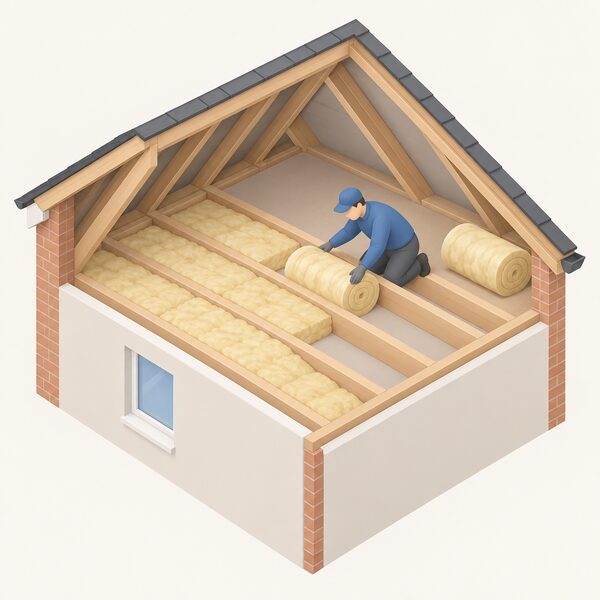
The scheme funds energy efficiency improvements and clean heating systems6. On the energy efficiency side that means measures such as insulation, funded up to 75% of the combined cost and up to the £7,500 maximum3. On the clean heating side it means heat pumps and other low and zero emission heating, with grant only, loan only and a combination of both available for heat pumps12.
Biomass boilers and stoves, and high heat retention storage heaters, may be eligible for grant funding when certain conditions are met7. For biomass, the scheme's terms state a £7,500 grant available upon evidence that a zero-emission heating system, including a heat pump, is not suitable for the property, rising to £9,000 in eligible rural locations, with maximum combined loan and grant funding of £15,000 for a biomass boiler or stove5.
The exclusions are explicit. Grant funding is not available for replacement heat pumps, wind or hydro turbines, warm air units, solar water heating systems, glazing (double or secondary), or insulated doors7. A household considering a hydroelectricity system therefore cannot use the grant for it, and a household replacing an existing heat pump cannot claim grant for the replacement.
| Measure | Grant position |
|---|---|
| Insulation and energy efficiency | Up to 75% of combined cost, maximum £7,5003 |
| Heat pumps | Grant only, loan only or both12 |
| Biomass boiler or stove | £7,500, or £9,000 in eligible rural locations, on evidence a zero-emission system is unsuitable5 |
| High heat retention storage heaters | May be eligible when conditions are met7 |
| Wind or hydro turbines | Not available7 |
| Replacement heat pumps, warm air units, solar water heating, glazing, insulated doors | Not available7 |
The scheme also supports connections to heat networks, with grant support for homeowners introduced through the Home Energy Scotland scheme14. That is a distinct strand from the insulation and heating grants, and it is aimed at households in island and remote rural areas connecting to local district heat networks14.
Who is eligible: owner-occupiers in Scotland
The scheme is open to all domestic owner-occupiers in Scotland17. The scheme's terms are more specific: the applicant must own or jointly own the property as a natural person, not a business, and it must either be their only or principal private residence5. Funding covers existing Scottish homes only5.
Private registered landlords are also eligible for grant and loan funding for their rented properties under the scheme and the Private Rented Sector Landlord Loan Scheme12. Loans are available to owner occupiers, with private landlords also eligible to borrow to fund measures in a maximum of 3 properties18. That landlord route is loan-focused: the Private Rented Sector Landlord Loan Scheme offers loan funding only, while the Home Energy Scotland Grant and Loan Scheme offers grant only, loan only and a combination of both for heat pumps12.
The scheme sits within the Heat in Buildings Programme19. Its requirements are not set out in legislation or regulations, and the terms and conditions are set by the Scottish Government19. That is a meaningful distinction for a household: the scheme's rules can change without a change in law, so the terms in force at the point of application are the ones that govern the award.
The scheme has been running since 202212. Applications received totalled 7,540 in financial year 2022-23 and 6,516 in financial year 2023-2420. Official statistics on the scheme cover the number of grants and loans provided, the types of energy efficiency measures and clean heating systems installed, total funding distributed, and installations by local council area by financial year12.
How the money is paid: funding goes to you, not the installer
Funding is reserved for applicants once a written offer of funding has been issued, not on application to the fund4. That sequencing protects the household: an application alone does not commit money, and a written offer is the point at which the funding is held.
Applications must be completed and submitted personally by the property owner and not by third parties, such as installers or letting agencies5. An installer cannot apply on a householder's behalf. That rule also means a cold caller offering to handle the application is outside the scheme's process.
The application runs in two stages: first an application to request funding before any work takes place, then a claim once the work has been completed6. Work started before an application is made falls outside that sequence. The household must also have an energy report which recommends the improvements being applied for5.
After signing a funding agreement, there are 9 months to complete all the installation of the funded measures and submit a final funding claim4. The scheme's terms put the same window at up to nine months to carry the work out and claim funding after receiving a funding offer7. A household that misses the window risks the offer lapsing.
How to apply and how long it takes

The Energy Saving Trust aims to process all applications and claims within 10 working days of receiving all required documents6. The scheme's own guidance states the same target: after a successfully submitted application form, processing is aimed at within 10 working days4.
Earlier reporting shows a different target and a performance figure against it. Before 1 December 2023, the Energy Saving Trust aimed to process applications within 15 working days where all paperwork was fully completed and supporting documentation submitted21. For the reporting period from the start of October 2023 to the end of November 2023, 92% of applicants had their applications processed within 15 working days21. The target has since shortened to 10 working days, and the 92% figure relates to the older 15 working day standard.
The published contact email for the Grant and Loan Scheme is heesgl@gov.scot6. Home Energy Scotland can be reached on 0808 808 2282, and calls are free from landlines and most mobile networks22. Phone lines are open Monday to Friday 8am to 8pm, and 9am to 5pm on Saturdays16.
The practical sequence for a household is:
- Obtain an energy report that recommends the improvements being applied for5.
- Submit the application personally, before any work takes place5.
- Wait for a written offer of funding, at which point funding is reserved4.
- Complete the installation within the 9 month window after signing the funding agreement4.
- Submit the final funding claim within the same window4.
Where the scheme sits alongside the free Home Energy Scotland advice service
Home Energy Scotland is a free independent advice and referral scheme9. It is funded by the Scottish Government and managed by the Energy Saving Trust, and it operates as a network of local advice centres covering all of Scotland8. Since the service was set up in 2008 it has helped save over £1 billion on domestic energy bills8.
The advice service and the funding scheme are separate functions delivered through the same channel. The Energy Saving Trust delivers the Home Energy Scotland Grant and Loan via Home Energy Scotland on behalf of the Scottish Government8. Home Energy Scotland, funded by the Scottish Government, provides free and impartial advice and support2. It can also offer free advice on improving the energy efficiency of your home23.
Home Energy Scotland operates a Funding Finder for searching funding and support on improving a home's energy efficiency, reducing energy bills and making a home warmer23. It also acts as a referral partner for Area Based Scheme eligibility enquiries2. For households in Scotland, Ofgem directs enquiries to Home Energy Scotland on 0808 808 228224, and the service can give free impartial advice on energy efficiency and renewable energy in Scotland25.
The scheme's administrator has a wider role in public advice. The Energy Saving Trust administers Home Energy Scotland on behalf of the Scottish Government13. The service's advice remit covers energy efficiency and renewable energy, which means a household can discuss a specification before committing to an application.

What the scheme means for a household's energy independence
The scheme's contribution to energy independence is direct and material: it reduces the capital cost of measures that cut a household's demand for bought energy, and the interest-free loan removes the financing cost of the balance. A household that insulates and installs a heat pump reduces its reliance on gas, and where the electricity supply is increasingly low carbon, the dependence that remains is on the grid and on an electricity supplier rather than on a fossil fuel delivered by pipe.
The dependence that remains is real. The scheme funds measures in existing Scottish homes only5, and it does not fund wind or hydro turbines, so a household cannot use it to generate its own electricity7. Solar water heating is excluded from grant funding7. A household that wants electricity generation or solar thermal has to look elsewhere, and the scheme's grant cannot be used for those measures.
The scheme also ties the household to a process. Applications must be made personally by the property owner5, an energy report must recommend the measures5, and the work must be completed and claimed within 9 months of signing the funding agreement4. Funding is reserved only once a written offer is issued4. Those conditions are the price of the grant and the interest-free loan, and they are worth weighing against the alternative of paying for the work outright.
For households comparing Scottish support with schemes elsewhere in the UK, the Home Energy Grants and Schemes in the UK: The Full Guide sets out the wider landscape, and Home Energy Grants in Scotland covers the Scottish schemes in more detail. Households weighing the loan route against other borrowing options can read Interest-Free Loans and Finance Schemes for Home Energy Work, and those comparing the Scottish scheme with the reserved scheme in England can read Boiler Upgrade Scheme vs ECO4.
Sources25 cited
- Local and small scale renewables, Scottish Government, 2026-09-17
- Home energy efficiency, Argyll and Bute Council, 2026-09-17
- Energy saving home improvements, Scottish Government, 2026-09-17
- Home renewables Scotland, Energy Saving Trust, 2026-02-19
- Home Energy Scotland Grant and Loan terms and conditions, Home Energy Scotland, 2026-09-17
- Home Energy Scotland Grant and Loan Scheme application and claim processing times, Scottish Government, 2026-03-12
- Home Energy Scotland funding: grants and loans, Home Energy Scotland, 2026-09-20
- Home Energy Scotland programme, Energy Saving Trust, 2026-02-20
- Heat in Buildings progress report 2025, Scottish Government, 2025-10-02
- Delivering net zero for Scotland's buildings consultation, Scottish Government, 2023-11
- Heat pump sector deal expert advisory group: Scottish Government response, Scottish Government, 2026-09-17
- Home Energy Scotland Grant and Loan Scheme awards, Scottish Government, 2025-02-20
- Heat in Buildings progress report 2025, Scottish Government, 2026-05-13
- Heat in Buildings Bill update from the Cabinet Secretary, Scottish Parliament, 2025-11-18
- Heat networks delivery plan review report 2026, Scottish Government, 2025-12
- Energy Efficient Scotland Area Based Schemes, West Lothian Council, 2026-09-17
- Heat in Buildings progress report 2025, Scottish Government, 2025-10-02
- Energy efficiency private rented property Scotland regulations 2019 interim island communities impact assessment, Scottish Government, 2019-06-17
- Heat in Buildings progress report 2024, Scottish Government, 2024-05-15
- FOI 202500462873, Scottish Government, 2023-24
- FOI 202300388119, Scottish Government, 2024-04-03
- Keeping your home warm in winter, Met Office, 2026-09-20
- Financial help for energy efficiency and low carbon heating improvements, City of Edinburgh Council, 2026-09-20
- Energy Company Obligation: homeowners and tenants, Ofgem, 2026-09-17
- Domestic Renewable Heat Incentive: who to contact, Ofgem, 2026-09-17
 Community Energy in ScotlandCommunity energy in Scotland lets you join a local scheme for cheaper, greener heat and power, or get advice and funding to make your own home warmer and cheaper to run.
 Energy Policy in ScotlandWho decides how your home in Scotland is heated and improved?
 The Full Grants and Schemes GuideWhich grants can you actually get right now, and how do you apply for them?
 Why Energy Grants DifferWhere you live in the UK changes which home energy grants you can get.
 Check Which Energy Grants ApplyWhich energy grants can you actually get right now, and which have closed?
 Apply for a Home Energy GrantThe application sequence common to funded schemes: the checker, the survey or assessment, the installer, the paperwork and the sign-off.