

In this answer
Short answer
The Home Energy Scotland Grant and Loan Scheme offers homeowners in Scotland a grant, an interest free loan or a combination of both, to install clean heating systems and energy efficiency measures1. Grant funding of up to £7,500 is available for energy efficiency improvements such as insulation, and up to £7,500 for clean heating systems such as heat pumps2. An additional £7,500 of funding is available as an optional interest free loan1.
The application is not made cold. Applicants for the Home Energy Scotland scheme must be referred to the Energy Saving Trust by Home Energy Scotland and provide a unique invitation code before completing an application3. The scheme runs in two stages: an application to request funding before any work takes place, then a claim once the work has been completed2. That order matters, because work started before approval falls outside the process.
Home Energy Scotland itself is administered by the Energy Saving Trust on behalf of the Scottish Government2, and the advice line is free and impartial4. This page sets out what the scheme funds, who qualifies, the rural uplift, the loan alongside the grant, and how the free advice service feeds into the application.
What the Home Energy Scotland Grant and Loan Scheme is
The scheme helps eligible homeowners pay for energy efficiency improvements and clean heating systems2. It is open to all domestic owner-occupiers in Scotland5, and it provides a grant, an interest free loan or a combination of both1. The Scottish Government describes it as offering homeowners in Scotland a grant, interest free loan or a combination of both, to install clean heating systems and energy efficiency measures1.
The scheme sits inside a wider Scottish programme. The Heat in Buildings Programme provides grants and loans to help people install clean heat and energy efficiency measures in their homes6, and the Home Energy Scotland Scheme offers grants to homeowners to install heat pumps6. The advice service attached to it is described in official guidance as a free independent advice and referral scheme7, and the Scottish Government has set out growing its advice services and support to access funding and finance as part of its heat in buildings strategy8.
For a household, the practical effect is that a single route covers both the fabric of the home and the heating system. Insulation and a heat pump can be funded in the same application, which matters because the two interact: a better insulated home needs a smaller heat pump, and the scheme's structure allows both to be requested together rather than in sequence.
What the scheme does not do is remove dependence on the grid or on a supplier. A heat pump runs on electricity, so the household remains connected and billed. The grant shifts the capital cost of the equipment and the work; it does not change the running relationship with an energy supplier, and it does not make a home self-sufficient. What it does is reduce how much energy the home needs and change which fuel it uses.
Grants up to £7,500: what the funding covers
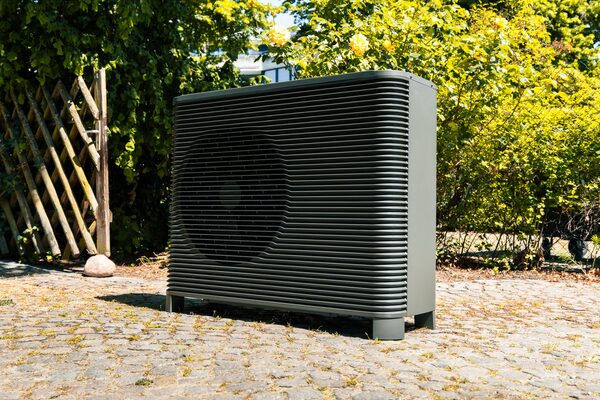
The headline figures are two grants of up to £7,500 each. The Scottish Government's own description is that this could be up to £7,500 for energy efficiency improvements such as insulation and up to £7,500 for clean heating systems such as heat pumps2. Independent guidance from Which? puts it as grant funding of up to £7,500, with an additional £7,500 of funding available as an optional interest free loan9, and the Energy Saving Trust's installer toolkit describes the same combination as £7,500 grant plus £7,500 optional loan towards a new heat pump or heat network connection10.
The clean heating grant covers a new heat pump or a heat network connection10. The energy efficiency grant covers insulation and similar improvements2. Home Energy Scotland's own heat pump page states that grant funding of £7,500 is available to homeowners11, and Nesta's guidance for homeowners refers to a £7,500 grant for which homeowners may be eligible12.
| Measure | Grant | Optional interest free loan |
|---|---|---|
| Energy efficiency, such as insulation | up to £7,5002 | £7,5001 |
| Clean heating, such as a heat pump or heat network connection | up to £7,5002 | £7,5001 |
| Rural and island homes | up to £1,500 extra on each2 | not stated |
The figures are ceilings, not entitlements. The grant is capped at those amounts, and the actual award depends on the measures and the property. The scheme also funds battery storage alongside renewable measures through the loan route: Home Energy Scotland Grant and Loan can provide interest free loan funding for energy efficiency measures or to install renewable measures such as heat pumps or battery storage, and grant funding may also be available13.
"This could be up to £7,500 for energy-efficiency improvements such as insulation and up to £7,500 for clean heating systems such as heat pumps"
Who is eligible: homeowners in Scotland
The scheme is open to all domestic owner-occupiers in Scotland5. Funding is for existing Scottish homes only3, so it is not a new-build route. The Scottish Government's own summary is that the scheme offers homeowners in Scotland a grant, interest free loan or a combination of both1.
The wider Scottish funding landscape has more than one door. Owner occupiers, eligible registered private sector landlords and self-builders in Scotland have historically been able to apply for loan funding to fund renewable installations14, and the Home Energy Scotland Grants and Loans are described as offering financial assistance to Scottish homeowners looking to install renewable heating systems15. Where a household is not eligible for Warmer Homes Scotland, it might be eligible for assistance through the Home Energy Scotland Grant and Loan or an area-based scheme through its council16.
Area-based schemes are the other main route. Energy Efficient Scotland: Area Based Schemes provide home owners and landlords with access to grant funding which meets the Scottish Government's future minimum energy efficiency standards17, and Home Energy Scotland acts as the referral partner for area-based scheme eligibility enquiries, providing free and impartial advice funded by the Scottish Government13. If a home is selected for a future area-based programme, the householder may be eligible to apply for an interest free loan through Home Energy Scotland to cover the customer contribution to the scheme18.
The distinction matters for a household deciding where to start. The Grant and Loan Scheme is applied for directly through Home Energy Scotland, while area-based schemes are organised by councils and can cover common measures across a block or street. A household in an area with an active programme may find the council route covers work the national scheme would not, and the two are not mutually exclusive in the way a single application would be.
How to apply: step by step
The process has a fixed order, and the first step is a conversation rather than a form.
- Contact Home Energy Scotland to begin the funding process18.
- Receive a referral and a unique invitation code. Applicants for the Home Energy Scotland scheme must be referred to the Energy Saving Trust by Home Energy Scotland and provide a unique invitation code before completing an application3.
- Apply using the online application form provided by Home Energy Scotland, which is the only way to apply for funding19.
- Submit the application to request funding before any work takes place2.
- Have the work completed.
- Submit the claim once the work has been completed2.
The application must be completed and submitted personally by the property owner, not by third parties such as installers or letting agencies3. That is a firm rule in the scheme's terms and conditions, and it is the point at which most third-party approaches fail.
Households applying for Warmer Homes Scotland do so via Home Energy Scotland20, so the same advice line serves both the national grant scheme and the warmer homes route. The Energy Saving Trust publishes a step by step guide to heat pump installation21, which covers the sequence from assessment through to commissioning, and the free advice service is the point at which a householder can establish which measures the property is likely to support before committing to an application.

The interest-free loan option alongside the grant

An optional interest free loan is available for both clean heating and energy efficiency7. For energy efficiency measures such as insulation, an additional £7,500 of funding is available as an optional interest free loan1. The Energy Saving Trust describes the package as grants and optional interest free loans from the Home Energy Scotland Grant and Loan22, and its guidance on home renewables in Scotland notes that a household might be able to get an interest free loan or a grant to make the home more energy efficient23.
The loan is not a substitute for the grant; it sits alongside it. The Energy Saving Trust's installer toolkit describes the combined offer as £7,500 grant plus £7,500 optional loan towards a new heat pump or heat network connection10, and Which? describes grant funding of up to £7,500 with an additional £7,500 of funding available as an optional interest free loan9. Home Energy Scotland Grant and Loan can also provide interest free loan funding for renewable measures such as heat pumps or battery storage, with grant funding potentially available as well13.
For a household, the loan changes the cash flow rather than the total cost. It covers the gap between the grant ceiling and the actual installed price, spread over a repayment period rather than paid up front. The trade-off is a continuing repayment obligation, which is a form of dependence on the scheme rather than on a supplier, and it runs for the term of the loan. The grant element reduces the capital cost permanently; the loan element defers it.
How the free advice service fits in
The advice service is the front door to the funding. Home Energy Scotland provides free, impartial advice on home upgrade options and available funding19, and the Energy Saving Trust describes the service as completely free and impartial22. Official guidance describes it as a free independent advice and referral scheme7, and Home Energy Scotland, funded by the Scottish Government, provides free and impartial advice and support13. Councils also point households to it: Home Energy Scotland can offer free advice on improving the energy efficiency of your home24.
The scope of the advice extends beyond the grant scheme. The advice line provides free, impartial energy saving advice and, if a household is eligible, a package of free home energy efficiency improvements such as a new boiler, central heating, insulation or solar panels, in Scotland only25. For households with supplier problems rather than upgrade questions, Energyadvice.scot runs a free service for Scottish citizens with questions about their energy supplier, wanting to understand their supplier's complaints process, or with problems with their energy bills26.
Someone else can make the first contact. Home Energy Scotland's own guidance states that a person can contact the service on behalf of someone else, but that the service needs that person's permission so it can give them the best, tailored advice for them27. That is a different rule from the application itself, which must be submitted personally by the property owner3. The separate Emergency Heating Oil Scheme does accept applications submitted on behalf of someone else via the application form28.

Rural and island homes: the uplift
People living in rural areas can apply for extra grant funding and could get up to £1,500 extra for energy efficiency improvements and up to £1,500 extra for clean heating systems2. One independent guide states that an additional £1,500 is available for rural and island homes to both the clean heating and energy efficiency grants, meaning rural households can claim up to £18,000 in grant funding9. Nesta's homeowner guidance refers to those in rural areas receiving up to £9,00012.
The figures differ because they describe different combinations. The £1,500 uplift applies twice, once to each grant, which is how the £18,000 total arises in the independent guide9. The £9,000 figure reflects a single grant plus a single uplift12. A rural household should expect the uplift to apply to whichever grants it claims, not as a separate pot.
Off-gas homes are the main beneficiaries, because the clean heating grant is the route away from oil or solid fuel and towards a heat pump or a heat network connection10. Rural and island properties are also more likely to need the energy efficiency grant, since older and harder-to-treat fabric is common. The two uplifts together are designed to close part of the cost gap that rural installation carries.
Where the scheme sits among Scottish routes
The Grant and Loan Scheme is one of several Scottish routes, and the right one depends on tenure and circumstance. Warmer Homes Scotland is applied for via Home Energy Scotland20, and households not eligible for it may qualify for the Home Energy Scotland Grant and Loan or an area-based scheme through their council16. Area-based schemes provide home owners and landlords with access to grant funding which meets the Scottish Government's future minimum energy efficiency standards17, and Home Energy Scotland is the referral partner for area-based scheme eligibility enquiries13.
Councils publish their own routes into these programmes. Glasgow City Council sets out its area-based schemes17, West Lothian Council describes the Energy Efficient Scotland area-based schemes18, Argyll and Bute Council provides home energy efficiency advice13, and the City of Edinburgh Council offers financial help for energy efficiency and low carbon heating improvements24. The Energy Saving Trust's funding portal lists the Home Energy Scotland offer29, and its insulation toolkit covers government-funded schemes including ECO420.
For a household, the practical question is which route covers the measures the property needs. The national Grant and Loan Scheme is the broadest, covering both fabric and heating. Area-based schemes are geographically targeted and can cover measures across a group of homes. Warmer Homes Scotland is aimed at households in fuel poverty, and Home Energy Scotland's work on fuel poverty is set out in its own guidance27. A household that is unsure which applies can establish it through the advice line before making any application.
Sources29 cited
- Energy Saving Home Improvements, Scottish Government, 2026-09-17
- Home Energy Scotland Grant and Loan Scheme: Application and Claim Processing Times, Scottish Government, 2026-03-12
- Home Energy Scotland Grant and Loan Terms and Conditions, Home Energy Scotland, 2026-09-17
- Home Renewables Scotland, Energy Saving Trust, 2026-02-19
- Heat in Buildings Progress Report 2025, Scottish Government, 2025-10-02
- The Heat in Buildings Programme, Scottish Government, 2026-09-17
- Heat in Buildings Progress Report 2025, Scottish Government, 2025-10-02
- Draft Heat in Buildings Strategy, Scottish Government, 2021-02
- What Is the Boiler Upgrade Scheme?, Which?, 2025-10-22
- Available Funding, Energy Saving Trust, 2025-12-16
- Heat Pumps, Home Energy Scotland, 2026-09-20
- Am I Eligible for a Grant to Get a Heat Pump Installed?, Nesta, 2025-01-21
- Home Energy Efficiency, Argyll and Bute Council, 2026-09-17
- MCS Renewing Britain Report, MCS, 2021-09
- Heat Pumps vs Boilers, The CPA, 2025-02-18
- Warmer Homes Scotland, Home Energy Scotland, 2026-09-20
- Area Based Schemes, Glasgow City Council, 2026-06-08
- Energy Efficient Scotland Area Based Schemes, West Lothian Council, 2026-09-17
- Battery Storage, Home Energy Scotland, 2026-09-20
- Government Funded Schemes and ECO4, Energy Saving Trust, 2025-04-02
- Heat Pump Installation: A Step by Step Guide, Energy Saving Trust, 2026-07-15
- Save Money on Energy Bills, Energy Saving Trust, 2026-02-19
- Ground Source Heat Pumps, Energy Saving Trust, 2026-07-16
- Financial Help for Energy Efficiency and Low Carbon Heating Improvements, City of Edinburgh Council, 2026-09-20
- Advice for Those Worried About Energy Bills, Smart Energy GB, 2026-08-19
- Complain About Your Energy Supplier or Network Operator, Ofgem, 2026
- How We Help People in Fuel Poverty, Home Energy Scotland, 2025-11
- FAQs, Home Heating Advice Scotland, 2026-09-17
- Home Energy Scotland Funding Portal, Energy Saving Trust
 The Full Grants and Schemes GuideWhich grants can you actually get right now, and how do you apply for them?
 Apply for a Home Energy GrantThe application sequence common to funded schemes: the checker, the survey or assessment, the installer, the paperwork and the sign-off.
 Community Energy in ScotlandCommunity energy in Scotland lets you join a local scheme for cheaper, greener heat and power, or get advice and funding to make your own home warmer and cheaper to run.
 The Full Where to Start GuideWhich home improvements actually cut your bills, and which should you do first?
 Why Energy Grants DifferWhere you live in the UK changes which home energy grants you can get.
 Grant ScamsGrant schemes attract cold callers, doorstep sellers and fake approval letters using real scheme names.