
In this guide
Scotland has a national energy advice service that most of the rest of the UK does not. Home Energy Scotland is funded by the Scottish Government and managed by the Energy Saving Trust, and it gives free, impartial advice on energy efficiency and renewable energy1. It is also the gateway to Warmer Homes Scotland and to the Home Energy Scotland Grant and Loan scheme, which offers homeowners a grant, an interest free loan or a combination of both3.
The freephone number is 0808 808 2282, with lines open Monday to Friday 8am to 8pm and 9am to 5pm on Saturdays5. Calls are free from landlines and most mobile networks6. A second national line, Energy Advice Scotland on 0808 196 8660, is run by Advice Direct Scotland and covers supplier problems, complaints and consumer rights as well as energy bills7.
The practical value of the advice route is that it joins three things a household would otherwise have to assemble alone: an assessment of what the home needs, a route to Scottish Government funding, and a check on what is worth doing first. What it does not do is install anything, sell anything or guarantee a result. The sections below set out who runs each service, what an advisor can and cannot do, and how the funding attached to the advice works.
Free and impartial: what the Scottish advice services offer
The defining feature of the Scottish advice landscape is that the main service is publicly funded and does not sell. Home Energy Scotland describes itself plainly: "We never cold call people and we don't sell anything."9 That matters for a household trying to work out whether the person on the phone has an interest in the outcome. The service is funded by the Scottish Government and delivered as a network of local advice centres covering all of Scotland2.
Advice Direct Scotland positions itself differently but on the same principle. It describes itself as "Scotland's national advice service, offering free, practical, and impartial advice on a wide range of issues including energy, debt and consumer rights"10. Its energy arm, energyadvice.scot, is a free service for Scottish citizens with questions about their energy supplier, wanting to understand a supplier's complaints process, or with problems with their energy bills11.
There is a separate business-facing service, Business Energy Scotland, offering free and impartial advice and support to small and medium-sized enterprises to reduce energy use and costs1. That is outside the household route but worth knowing where a home doubles as a workplace.
The independence of the advice is not just a claim made by the services themselves. An evaluation of the Energy Efficient Scotland Transition Programme found that "Respondents regarded advice from local authorities and Home Energy Scotland as trustworthy"13. That evaluation carries its own limits: it did not explore the experiences of local authorities or delivery partners running engagement activities, and it included no technical-economic cost-benefit analysis of different engagement methods13.
For a household, the practical consequence is that the advice can be treated as a starting point rather than a sales conversation. The remaining dependence is on the Scottish Government continuing to fund the service, and on the advisor's time being available when the household calls.
Home Energy Scotland: the main service and who runs it
Home Energy Scotland is administered by the Energy Saving Trust on behalf of the Scottish Government14. It was set up in 2008 and, since then, has helped save over £1 billion on domestic energy bills2. Its stated role is to provide tailored advice to households in Scotland on improving the energy efficiency of their home, and it acts as the gateway to the Warmer Homes Scotland scheme3.
The service model is a network rather than a single office. Home Energy Scotland is described as a network of local advice centres covering all of Scotland, funded by the Scottish Government2. That structure is what allows a household in a rural area to reach the same advice as one in a city, though the funding schemes attached to the advice differ by property type and location.
The Scottish Government has treated the advice function as something to grow rather than a fixed service. Its heat and buildings strategy consultation referred to "growing our advice services and support to access funding and finance"1. The service is also the gateway to the Warmer Homes Scotland scheme, providing tailored advice to households in Scotland on how they can improve the energy efficiency of their home2.
For a household, the significance is that the advice is tied to the funding. Home Energy Scotland is not a general consumer helpline that happens to mention grants; it is the referral route into the Scottish Government's domestic funding programmes. That is the main reason to use it rather than a commercial comparison site, and also the main limitation: the advice is shaped by what the Scottish Government is currently funding.

Advice Direct Scotland and Energy Advice Scotland: the other national helplines

Advice Direct Scotland is the second national route, and it covers ground Home Energy Scotland does not. Its services include "assistance in various areas related to the cost-of-living, including energy, debt, and support with benefits applications"10. That combination matters where an energy problem is really a debt problem or an unclaimed benefit.
Its energy service, energyadvice.scot, is free for Scottish citizens with questions about their energy supplier, wanting to understand their supplier's complaints process, or with problems with their energy bills11. The number is 0808 196 8660, and the service can also be reached through a webchat function at energyadvice.scot7. Advice Direct Scotland's main telephone line is 0808 164 600015.
Advice Direct Scotland also delivers the Scottish Emergency Heating Oil Scheme, which is aimed at households off the gas grid16. Applications can be made at homeheatingadvice.scot, by calling 0800 048 7413, or by sending a form through the post10.
The division of labour between the two services is reasonably clear. Home Energy Scotland handles energy efficiency, renewable energy and Scottish Government funding. Advice Direct Scotland handles supplier disputes, complaints, consumer rights, debt and the emergency heating oil route. Where a household has both an efficiency question and a billing dispute, both calls may be needed.
Changeworks and local advice centres
Below the national services sits a layer of local delivery. In Edinburgh, the city council names Changeworks as "our trusted partner for energy efficiency advice"17. Changeworks helps residents find out what they can do to feel warmer in their home and what support and grants are available17. That is a delivery role rather than a national helpline, and it is typical of how Scottish advice is organised: national funding and standards, local organisations doing the face-to-face work.
Local authorities run their own energy advice and area-based schemes. West Lothian Council publishes information on Energy Efficient Scotland Area Based Schemes18, and Argyll and Bute Council runs a home energy efficiency advice page for its residents19. These pages are the practical entry point for households whose work is being funded through a local scheme rather than a national one.
There is also a community route. The Community and Renewable Energy Scheme has "a network of development officers across Scotland to provide free, expert and impartial advice and support to community groups, charities and other eligible organisations seeking to explore their renewable energy options"19. That is aimed at organisations rather than individual households, but it is the route by which a community energy project in a Scottish area gets advice.
For a household, the local layer matters because eligibility for area-based work is often geographic. A national helpline can explain the scheme; the council or its partner organisation determines whether a particular street or building is included. The Energy Efficient Scotland Transition Programme evaluation found that local authority advice was regarded as trustworthy alongside Home Energy Scotland's13, which suggests the local route is not a lesser one.
What an advisor can do for you: assessments, reports and home visits
The core of the service is a conversation about the home. Home Energy Scotland has offered a virtual tour, described as "a virtual tour where a Home Energy Scotland advisor talks you through ways to make savings in different areas of your home over the phone"20. That is a structured walk through the property by phone rather than a physical inspection, and it produces a list of measures rather than a formal certificate.
Home visits exist in the wider advice landscape. The Local Energy Advice Programme, which operates in parts of the UK, offers "a FREE home visit from a qualified Home Energy Advisor"21. Availability in Scotland depends on the scheme and the area, and the national service's published example is the telephone-based virtual tour.
Advice on microgeneration has a longer history in Scotland. The Energy Saving Scotland advice centres provided an advice service for householders and small businesses on microgeneration, including Home Renewables Visits from specialist advisors where appropriate22. That model, a specialist visit for renewable technologies, is the ancestor of the current advice offer.
What an advisor can realistically do is: explain which measures suit the property, point to the funding that applies, and refer onward where a question falls outside energy efficiency. Home Energy Scotland can provide an onward referral to CITRUS Energy for advice on switching energy supplier or tariff23. It also runs a Funding Finder to search for funding and support on improving a home's energy efficiency, reducing energy bills and making the home warmer17.
What an advisor cannot do is certify the property or guarantee a saving. For a formal rating, the route is an Energy Performance Certificate. Scotland has its own register, separate from the service used in England and Wales24, and the Scottish Government consulted between February and March 2025 on the future funding of key elements of Scotland's Energy Performance Certificate register25.
Grants and interest-free loans: the Home Energy Scotland Grant and Loan
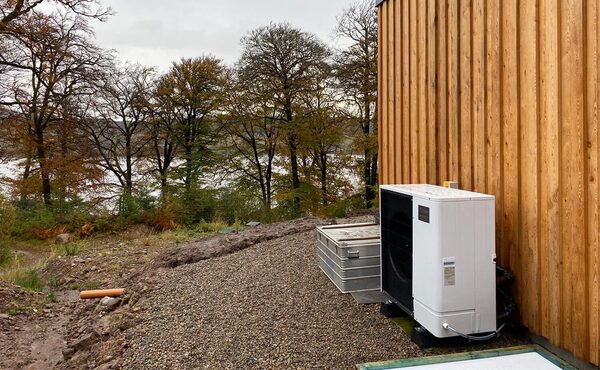
The funding attached to the advice is the Home Energy Scotland Grant and Loan scheme. It "provides homeowners in Scotland a grant, interest free loan or a combination of both"19. The scheme can provide interest free loan funding for energy efficiency measures or to install renewable measures such as heat pumps or battery storage, with grant funding potentially available as well19. An optional interest free loan is available for both clean heating and energy efficiency4.
The eligibility headline is tenure: the scheme is for homeowners in Scotland19. That places private tenants, social tenants and owners in different positions, and the Energy Efficient Scotland programme has published separate guidance for private tenants26. Where a household rents, the advice route still exists but the funding route does not run through the same scheme.
The advice service is the front door to this funding. Home Energy Scotland states: "We can help you find funding, including grants and interest-free loans from the Scottish Government."9 Applications for heat network connection grant support opened in December 202527, which shows the scheme is being extended into newer areas rather than frozen.
| Element | What the scheme provides | Who it is for |
|---|---|---|
| Grant | Grant funding may be available alongside loan funding19 | Homeowners in Scotland19 |
| Interest free loan | Funding for energy efficiency measures or renewable measures such as heat pumps or battery storage19 | Homeowners in Scotland19 |
| Combined | A grant, an interest free loan or a combination of both19 | Homeowners in Scotland19 |
| Clean heating and energy efficiency | Optional interest free loan available for both4 | Homeowners in Scotland4 |
For a household, the significance is that the advice and the money are the same conversation. The limitation is that the scheme is a loan as well as a grant, so the household carries repayment risk on the loan element, and the terms are set by the Scottish Government rather than by the advisor.
Warmer Homes Scotland and support for rural and off-gas homes
Warmer Homes Scotland is the Scottish Government's scheme for households in difficulty. It is "funded by the Scottish Government and offers funding and support to eligible households struggling to stay warm and keep on top of energy bills"19. Home Energy Scotland is the gateway to it3. The scheme also supports climate goals by installing more clean heating systems and reducing emissions through improved energy efficiency12.
For rural and off-gas homes, the routes multiply. The Scottish Emergency Heating Oil Scheme is delivered by Advice Direct Scotland and is aimed at households using heating oil16. Applications can be made at homeheatingadvice.scot, by calling 0800 048 7413, or by post10. That is a separate scheme from Warmer Homes Scotland and runs through a separate organisation.
Heat networks are a third route for some Scottish homes. Advice on heat networks directs households to the webchat function at energyadvice.scot or to 0808 196 86607. The Scottish Government has published a heat networks delivery plan review report27, and heat network connection grant support opened to applications in December 202527.
The Scottish Government has also boosted its fuel insecurity fund28, which sits alongside the advice and scheme landscape rather than replacing it. Research into lived experience of fuel poverty in Scotland has been published by the Scottish Government20, and the strategic approach to tackling fuel poverty sets out the wider policy frame3.
For a household off the gas grid, the practical position is that no single service covers everything. Home Energy Scotland covers efficiency and the main grant and loan scheme; Advice Direct Scotland covers the emergency heating oil route; the local authority covers area-based work. A rural household may need two or three calls rather than one.
How to contact: phone numbers, hours and channels

Home Energy Scotland is reachable free on 0808 808 228219. Calls are free from landlines and most mobile networks6. Phone lines are open Monday to Friday 8am to 8pm, and 9am to 5pm on Saturdays5.
Energy Advice Scotland, the Advice Direct Scotland energy line, is on 0808 196 86607. Advice Direct Scotland's main line is 0808 164 600015. The Scottish Emergency Heating Oil Scheme is on 0800 048 7413, with applications also accepted at homeheatingadvice.scot or by post10.
The Energy Efficient Scotland programme publishes a contact number of 0131 244 4000 and an email address of EnergyEfficientScotland@gov.scot23. A consultation on the programme used the address energyefficientscotland@gov.scot26.
Home Energy Scotland also runs free online sessions. A one-hour "Save energy at home" webinar ran on 30 September at 2pm and 6pm, with a further session on Monday 21 September at 10am, as part of Climate Week North East 202629. That is a lower-commitment way to hear the advice before calling.
| Service | Number | What it covers |
|---|---|---|
| Home Energy Scotland | 0808 808 228219 | Energy efficiency, renewable energy, Scottish Government funding3 |
| Energy Advice Scotland | 0808 196 86607 | Supplier questions, complaints, energy bills11 |
| Advice Direct Scotland | 0808 164 600015 | Energy, debt, benefits, consumer rights10 |
| Scottish Emergency Heating Oil Scheme | 0800 048 741310 | Emergency heating oil support16 |
What the advice service will not do: no selling, no endorsements
The clearest statement of the boundary comes from Home Energy Scotland itself: "We never cold call people and we don't sell anything."9 The service is an advice and referral scheme, not a supplier or an installer, and it does not endorse products or installers as part of its published role.
That boundary is not unique to Scotland. Ceredigion County Council states that it "does not accept referrals from lead generators or third parties"30, which is the same principle applied at local authority level: advice is given to the householder, not routed through intermediaries with a commercial interest.
The national picture is uneven. The Energy Saving Trust already runs a national energy advice service in Scotland and Wales, but such a service does not yet exist in England31. That is why the Scottish route is worth understanding as a distinct system rather than as one regional variant of a UK-wide service.
Where the advice stops, consumer protection law takes over. A household dealing with a trader has rights under consumer protection legislation15, and a dispute with a supplier follows the supplier's complaints process before it can go further32. Where a supplier dispute reaches a deadlock, the Energy Ombudsman handles disputes including those involving Scottish Gas34.
For a household, the limit is straightforward: the advice service will tell you what is possible and what funding exists, but it will not choose an installer, price the work or stand behind the result. Those remain the household's decisions and the household's risk.
Waiting times, applications and what to expect

The advice call itself is usually immediate, but the processes behind it are not. A supplier complaint must generally go through the supplier's own process first, and the Energy Ombudsman asks why a complainant has to wait 8 weeks before escalating a dispute involving Scottish Gas34. That eight-week period is a supplier dispute rule, not an advice service rule, but it illustrates the timescales involved once a problem leaves the advice stage.
Applications for funding run to their own timetable. Heat network connection grant support opened to applications in December 202527. The Scottish Government consulted between February and March 2025 on the future funding of key elements of Scotland's Energy Performance Certificate register25, which affects how certificates are lodged and paid for.
For a household planning work, the sequence is usually: call the advice line, discuss the property and the measures, get pointed to the funding that applies, then apply through the scheme the advisor identifies. Where the work needs an EPC, Scotland uses its own register rather than the service for England and Wales24.
The realistic expectation is that advice is fast and funding is slow. The advisor can tell a household within one call what is available; the application, assessment and installation stages take months and depend on scheme budgets and contractor availability. The advice service's own evaluation work notes that it does not include technical-economic cost-benefit analysis of different engagement methods13, so the evidence base for how advice translates into completed work is thinner than the evidence base for the advice itself.
For energy independence, the Scottish advice route does something specific: it connects a household to public funding for measures that reduce reliance on bought energy, including heat pumps and battery storage19. What it does not remove is the dependence on the grid, on a supplier, and on the Scottish Government's continued funding of both the advice and the schemes behind it. The advice is free; the measures it points to are not, and the loan element is repayable.
Sources34 cited
- Heat in Buildings quality assurance statement, Scottish Government
- Home Energy Scotland programme page, Energy Saving Trust, 2026-02-20
- Tackling fuel poverty in Scotland: strategic approach, Scottish Government
- Heat in Buildings progress report 2025, Scottish Government, 2025-10-02
- Energy Efficient Scotland Area Based Schemes, West Lothian Council, 2026-09-17
- Home Energy Scotland contacts and guidance, Ofgem, 2026-09-17
- Heat networks, Scottish Government, 2026-09-17
- Get help with your home or business energy bills, Ofgem, 2026
- Helping avoid energy scams, Home Energy Scotland, 2024-06
- Fund opens for Scots to claim £300 heating oil support, Advice Direct Scotland, 2026-04-01
- Get help with your energy bills, Ofgem, 2026-09-17
- Warmer Homes Scotland scheme headline data, Scottish Government, 2025-10-29
- Energy Efficient Scotland Transition Programme survey evaluation, Scottish Government, 2022-08-08
- Home Energy Scotland briefing, House of Commons Library, 2026-05-13
- Consumer protection rights, GOV.UK, 2026-09-17
- Scottish Emergency Heating Oil Scheme, Home Heating Advice Scotland, 2026-09-17
- Financial help for energy efficiency and low carbon heating improvements, City of Edinburgh Council, 2026-09-20
- Home energy efficiency, Argyll and Bute Council, 2026-09-17
- Local and small scale renewables, Scottish Government, 2026-09-17
- Research on lived experience of fuel poverty in Scotland, Scottish Government, 2020-09-03
- Energy saving grants and funding, Tameside Council, 2026-09-17
- Microgeneration strategy for Scotland, Scottish Government, 2012-06-22
- Energy Efficient Scotland user guide for private tenants, Scottish Government, 2018-05-02
- Find an energy certificate, GOV.UK, 2026-09-17
- Scottish Energy Performance Certificate register consultation, Scottish Government, 2025-10-13
- Energy Efficient Scotland consultation, Scottish Government, 2019-03-26
- Heat networks delivery plan review report 2026, Scottish Government, 2025-12
- Boosting the fuel insecurity fund, Scottish Government, 2026-09-17
- Save energy at home webinar, Home Energy Scotland, 2026-09-30
- ECO4 Flex and GBIS Flex information document, Ceredigion County Council, 2025-11
- Energy advice provision inquiry, House of Commons Environmental Audit Committee, 2025-05-09
- Complain about your energy supplier or network operator, Ofgem
- Complain about your energy supplier, Ofgem
- Raise a dispute: Scottish Gas, Energy Ombudsman, 2026-09-19
 Community Energy in ScotlandCommunity energy in Scotland lets you join a local scheme for cheaper, greener heat and power, or get advice and funding to make your own home warmer and cheaper to run.
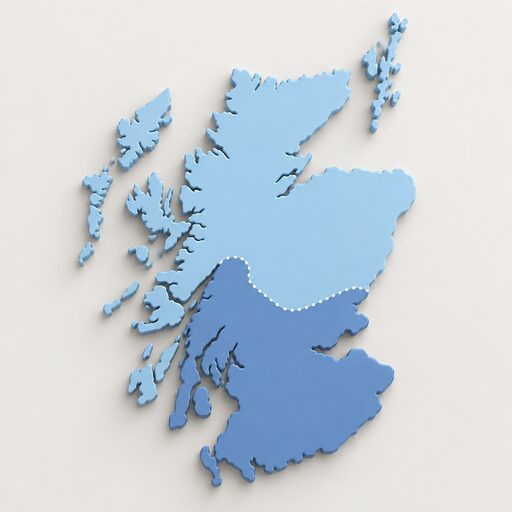 Tariffs in ScotlandWhy do Scottish electricity bills differ from the rest of Great Britain, and why do standing charges cost more in the north?
 Energy Policy in ScotlandWho decides how your home in Scotland is heated and improved?
 Energy Consumer BodiesWho do you call about an energy problem where you live?
 Housing Stock Data for ScotlandScotland's housing is measured differently from England's, so the numbers you see may not compare directly.
 Suppliers in ScotlandWho do you contact in Scotland when something goes wrong with your supplier, whether that is British Gas, ScottishPower, SSE or another big name?