In this guide
The first decision in any UK home is not which measure to buy, it is what the building is made of. Wall construction sets the cost, the disruption and the permissions for almost everything that follows, and it varies more between house types than between householders. Official statistics show that more energy efficient houses, as measured by the EPC rating, tend to have lower gas consumption even after adjusting for floor area, so the fabric of the building is where the returns concentrate1.
The pattern across types is consistent. Flats and maisonettes were the most energy efficient property type in England and Wales, with a median EPC score of 74, while older homes, converted flats and bungalows have the lowest average ratings2. Around a third of EPC rated bungalows have ratings A to C, compared with almost half for all other types of houses1. Detached homes carry the largest absolute bills and therefore the largest absolute savings from insulation, but they also have the most wall area to treat.
What follows sets out, type by type, which measures usually come first, what each type constrains, and where the funding and sign-off rules bite. It is a map of the constraints, not a recommendation of any product or installer.
First, work out what your walls are made of
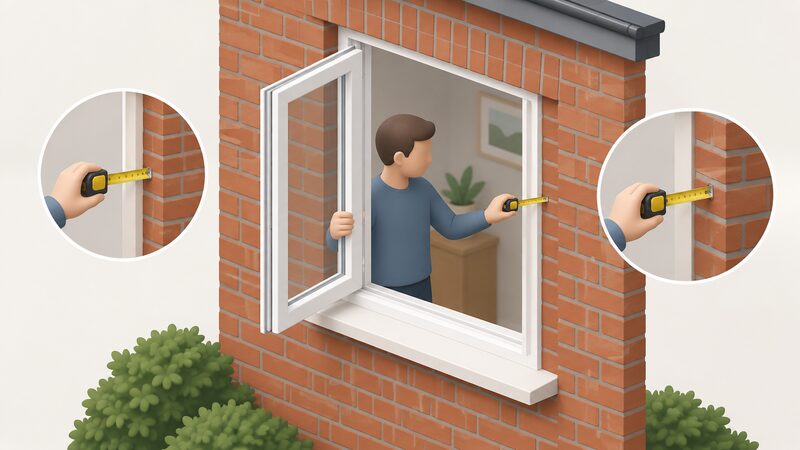
Wall type is the single fact that determines whether a household is looking at a two-hour job or a major retrofit. Cavity walls are two skins with a gap of around 50mm between them, typical of homes built after the 1920s4. Solid walls are a single thickness of masonry, usual in older properties, and solid walls lose even more heat than cavity walls7. The practical check is at a window or door reveal: a thick reveal suggests a cavity, a thin one suggests solid brick.
Where a building is being converted rather than simply insulated, existing external walls need to be checked for their adequacy in terms of weight and structural stability, weather resistance including damp-proofing, and thermal resistance and changes to thermal elements8. That three-part check is a useful mental model for any retrofit: structure, water, heat, in that order.
The measures themselves sit in a wider set. Retrofitting includes insulating roofs, walls and floors, replacing windows, improving ventilation, draught-proofing, installing efficient heating and hot water systems, and renewable energy such as solar panels9. Which of those come first depends on the wall, the roof and the heating system already present.
Cavity walls: the quick win for post-1920s homes
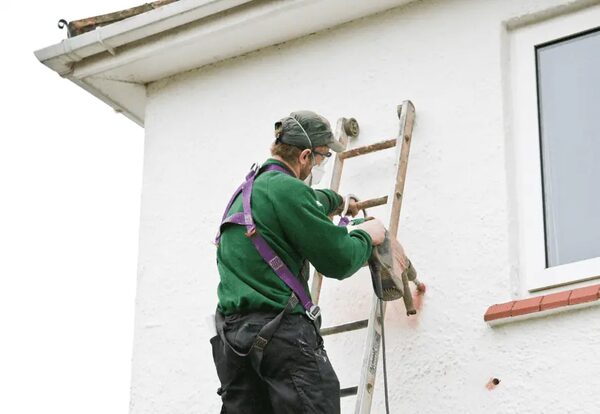
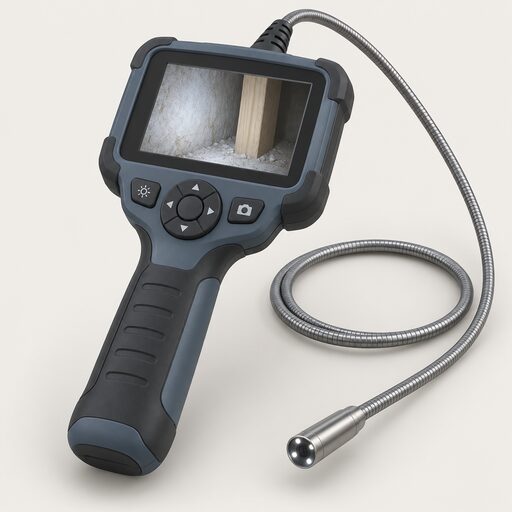
For a home with a cavity, insulation is the least disruptive significant measure available. The insulation is blown into the cavity from the outside and disruption to the householder is minimal5. Independent guidance describes the job for professional installers as simple, quick, about two hours, and making no mess4, and official guidance puts it at just a couple of hours for a typical three-bedroom house5.
The materials are well established. The main materials used are mineral wool, in glass or rock wool form, EPS bead, which is polystyrene bead, and PU foam, which is polyurethane foam10. Three measure variants are defined by their range of thermal conductivity: 0.027, 0.033 or 0.04010. A U-value target of 0.55 W/m2K applies to the measure10. Where at least 50% of the cavity walls are originally insulated prior to retrospective cavity wall insulation, that threshold governs how the work is treated10.
Savings figures vary between sources. One independent source puts the saving at up to £610 a year on energy bills, while another gives between £110 and £380 a year4. A further pair of figures gives up to £370 and up to £2304. The spread reflects different starting points, heating fuels and house sizes rather than a single national number, and the honest position is that the range is wide.
What is more settled is durability. The gas savings from solid and cavity wall insulation appear to be sustained in the 5 years following installation, according to analysis of installations in England and Wales between 2011 and 20151. That matters for the household's independence: the saving is not a one-off dip in a bill, it is a persistent reduction in the heat the building loses.
Solid walls: the bigger job for older homes
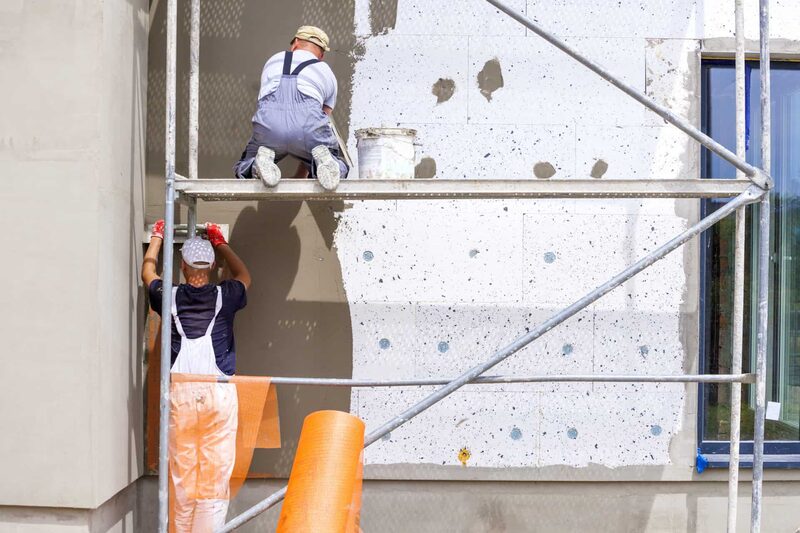
Solid wall insulation is a different order of project. It is an improvement rather than an enlargement or extension to the house, which shapes how it is treated in planning terms11. It also brings benefits beyond the bill: it will help create a more even temperature in your home, help prevent condensation on the walls and ceilings and can also reduce the amount of heat building up inside your home during summer hot spells7.
Cost is the constraint. Independent guidance gives two figures for solid wall insulation, around £15,000 and around £12,0004. Annual savings are similarly wide: one source gives £410 per year, another gives £150 to £550 per year4. A household looking at solid walls should expect a long payback on the bill alone, with comfort and condensation control forming part of the case.
Internal wall insulation is one route, and official guidance on traditional buildings is candid about its limits: this solution does not represent best practice in building conservation but can be useful where the masonry is unavoidably damp12. That is a narrow justification, not a general endorsement, and it points to the wider principle that solid walled buildings need a moisture-aware approach rather than a standard specification.
Flats and terraces: what fits a smaller, attached home
Attached homes start from a stronger position on paper. Flats and maisonettes were the most energy efficient property type in England and Wales, with a median score of 743. Purpose-built flats have much higher ratings, as do purpose-built flats generally within the stock2. The reason is largely geometric: fewer exposed walls and a smaller external envelope per unit of floor area.
That advantage is also the constraint. In a flat or terrace, the walls that lose heat are often shared or owned in common, and the roof may not be the householder's to insulate. The Heat in Buildings Bill consultation in Scotland found that traditional buildings, flats and rural properties were frequently noted as being less suitable for both energy efficiency improvements and clean heating systems13. That finding is not Scotland-specific in its logic: the same physical constraints apply wherever a flat sits within a larger block.
Where a flat does have its own external wall, cavity insulation may still be possible, subject to the same building notice requirement as any other home14. Where it does not, the practical measures shift toward the internal: heating controls, draught-proofing, hot water cylinder insulation where a cylinder exists, and low energy lighting. The Warm Homes: Local Grant lists cavity wall insulation, external wall insulation, internal wall insulation, loft insulation, room in roof insulation, flat roof insulation, under floor insulation, park home insulation, draughtproofing, hot water cylinder insulation, low energy lighting, heating controls, solar PV, battery storage, and in rare cases double or triple glazing and energy efficient doors among eligible improvements16.
For a household in a flat, the honest position on independence is that the shared structure limits what one owner can do alone. The measures that remain are real but smaller, and coordination with a freeholder or factor becomes part of the plan.
Semis and detached houses: costs and savings by house type
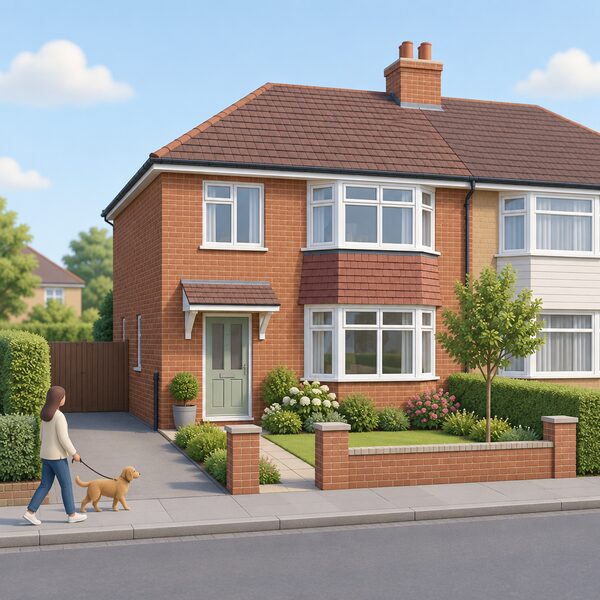
Detached and semi-detached homes carry the largest bills and therefore the largest absolute savings from fabric work. Independent guidance gives a saving of £240 a year for a semi-detached house and £420 a year for a detached house, both for a gas-heated home4. The same source gives the underlying bills as £2,700 for the semi-detached case and £4,300 for the detached case4. The saving scales with the bill, which is why the detached figure is larger.
Floor area varies widely within these types. Official scheme data for a 1930s semi-detached house gives a gross floor area of 90 to 135 square metres17. That range alone explains much of the variation in quoted savings between one semi and another, before fuel, occupancy and starting efficiency are considered.
New-build characteristics are tracked separately. Official statistics break down new dwellings by property type, type of heating systems and key energy efficiency characteristics18. That breakdown is useful context for anyone comparing an older semi with a newer one on the same street: the two may share a footprint and nothing else.
For the household, the semi-detached and detached cases are where a whole-house sequence pays best, because there is enough external envelope to treat and enough bill to move. The order of energy improvements matters more here than in a flat, where the options are fewer.
Bungalows: where the savings land
Bungalows are the type most often underestimated. Around a third of EPC rated bungalows have EPC ratings A to C compared with almost half for all other types of houses1. Older homes, converted flats and bungalows have the lowest average ratings2. A bungalow presents a large roof area relative to its floor area, and the roof is usually the easiest large surface to treat.
That geometry is the opportunity. Loft insulation is a straightforward measure, though installing insulation to your loft area requires an application for approval under the Building Regulations19. The type of light fittings that would meet energy efficiency requirements in regulated work are fluorescent and compact fluorescent fittings19, a reminder that a bungalow retrofit often touches lighting and ventilation alongside insulation.
Bungalows also appear in the funding landscape. The Warm Homes: Local Grant lists loft insulation, room in roof insulation and flat roof insulation among eligible improvements16, all of which bear directly on a bungalow's largest heat loss surface. For a household in a bungalow, the sequence is often roof first, then walls, then heating.
The independence question for a bungalow owner is favourable: a single-storey home with its own roof and its own walls gives the householder more scope to act without coordinating with neighbours than a flat or mid-terrace does.
Rural homes off the gas grid: LPG and storage considerations
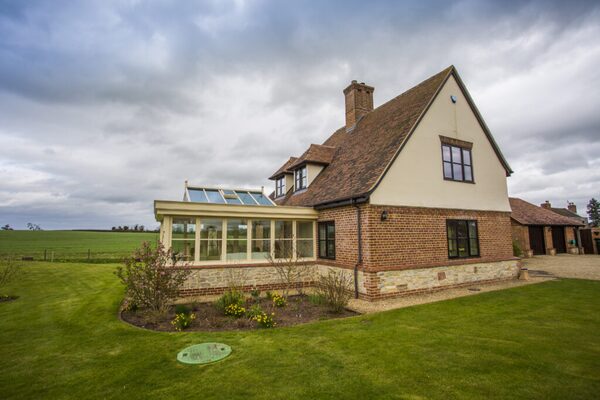
Off-gas-grid households use a range of other fuels to heat their homes including heating oil, liquefied petroleum gas (LPG), solid fuels, mains electricity, and microgeneration6. Each carries a different cost and a different degree of dependence, and none of them is mains gas.
LPG is the most expensive of the conventional options. Official guidance puts the cost of heating a typical three-bedroom house at 100% higher with LPG than with mains gas6. That premium is the single strongest argument for fabric work in an off-grid home: every unit of heat saved is saved at the most expensive rate available.
Storage is the other rural consideration. LPG is delivered and stored on site, which means a tank, a supply agreement and a periodic delivery. Ownership of that tank is normally set by the supply agreement rather than by the property, so it is a contractual question rather than a building one. What the regulations do settle is safety: landlord duties for LPG appliances are the same as for natural gas, with maintenance by a Gas Safe registered engineer for all LPG appliances they own and provide for tenants20.
For the household, off-grid independence is partial at best. A rural home can reduce its demand substantially through insulation and controls, and can generate some of its own electricity, but the heat itself still arrives by tanker or by solid fuel delivery unless the heating system changes. The off-grid heating fuels comparison sets out the options in more detail.
Costs, savings and payback at a glance
The figures below are the ones the sources give, with the disagreements left visible rather than averaged away. Where two sources differ, both are shown.
| Measure | Figure | Source position |
|---|---|---|
| Cavity wall insulation, annual saving | Up to £610 a year | Independent guidance4 |
| Cavity wall insulation, annual saving | £110 to £380 a year | Independent guidance4 |
| Cavity wall insulation, annual saving | Up to £370, or up to £230 | Independent guidance4 |
| Solid wall insulation, cost | Around £15,000, or around £12,000 | Independent guidance4 |
| Solid wall insulation, annual saving | £410 per year, or £150 to £550 per year | Independent guidance4 |
| Semi-detached house, annual saving | £240 a year, on a £2,700 bill | Independent guidance4 |
| Detached house, annual saving | £420 a year, on a £4,300 bill | Independent guidance4 |
| LPG versus mains gas, heating cost | 100% higher | Official guidance6 |
The pattern across the table is that cavity wall insulation is cheap and quick with a wide range of quoted savings, solid wall insulation is expensive with a long payback, and the detached home saves more in absolute terms because it spends more to begin with. The payback periods for home energy measures page works through the arithmetic.
Grants, funding and the rental EPC deadline
Funding is targeted rather than universal. The Warm Homes: Local Grant covers privately rented properties with an EPC rating of Band D or E among its eligible households16. Its eligible improvements span cavity wall insulation, external wall insulation, internal wall insulation, loft insulation, room in roof insulation, flat roof insulation, under floor insulation, park home insulation, draughtproofing, hot water cylinder insulation, low energy lighting, heating controls, solar PV, battery storage, and in rare cases double or triple glazing and energy efficient doors16.
Tenure shapes the picture sharply. Around two-thirds of Council or Housing Association houses have EPC ratings A to C, compared to around 40% of houses in other tenure types1. That gap is the clearest single statistic on how much the social rented sector has already been improved relative to owner-occupied and private rented stock.
The private rented sector faces a deadline. Privately rented homes in England and Wales must achieve a minimum EPC rating of C by 1 October 2030, where an EPC is required. The 2025 consultation on improving the energy performance of privately rented homes proposed increasing the number of exemptions available and amending current exemptions21. The existing exemption framework already provides that the requirement to meet the minimum level of energy efficiency does not apply where a landlord has made all the relevant energy efficiency improvements for the property, or there are none that can be made, and the property remains below EPC E22.
Support for households in difficulty is separate from capital grants. Energy supplier schemes and grants can cover energy costs, paying off energy debt, and making energy-saving improvements to your home23. Local advice services refer households for further energy efficiency improvements such as loft or cavity wall insulation and in some instances a new boiler24. In Scotland, Home Energy Scotland offers advice on energy at home and a guide to green renovation to help you put energy efficiency first room by room25.
Building Regulations, guarantees and who must sign off
Cavity wall insulation is not a DIY measure, and the reason is regulatory as much as practical. The installation of cavity wall insulation is specifically defined as notifiable building work in the Building Regulations15. For all buildings which are not exempted from the Regulations it will be necessary to submit a building notice to a building control body stating that cavity wall insulation work will be carried out14.
Who submits it depends on the installer. If the installer is registered with the Cavity Insulation Guarantee Agency the installer will in most cases submit the building notice15. In any case building owners should always check that a building notice will be submitted14. The Building Regulations require that the insulation material used is suitable for the wall construction concerned15, and in the case of some foam cavity wall insulating materials an assessment of the risk of the emission of formaldehyde gas will need to be carried out15.
The guarantee is the householder's protection against installation faults. The CIGA guarantee is for 25 years and covers problems that are caused by faulty or inappropriate installation of cavity wall insulation, and CIGA will have your property registered if the cavity walls have been insulated by an installer covered by the guarantee4. It is worth being precise about what that covers: the quality of the installation, not the performance of the measure in a particular building.
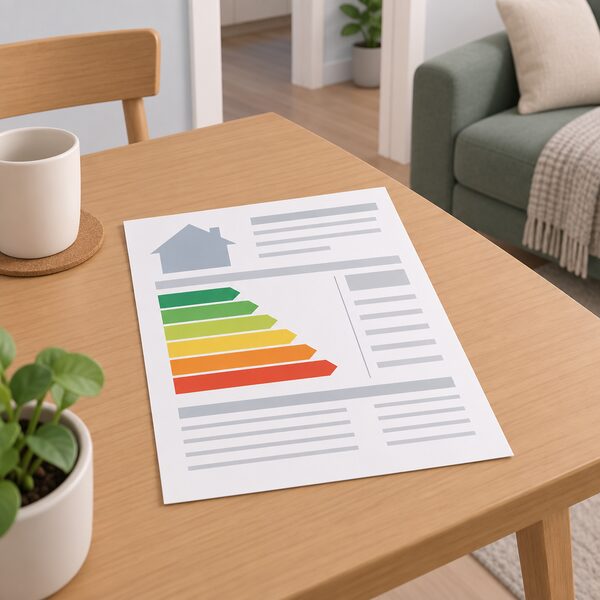
Separately, building work covered by Regulation 7A carries an EPC duty. The person carrying out the work must give an energy performance certificate for the building to the owner of the building, and must include in the notice to the local authority the reference number under which the energy performance certificate has been registered, except in the case of a certificate issued under regulation 9A for excluded buildings26. Energy Performance Certificates also carry information on measures which could be made to improve the energy efficiency of the building27, which makes the certificate a useful planning document rather than just a sale document.
"In any case building owners should always check that a building notice will be submitted."

Sources27 cited
- National Energy Efficiency Data-Framework: need report summary of analysis 2026, GOV.UK, 2026-06-11
- Energy efficiency of housing in England and Wales, House of Commons Library, 2026-09-17
- Energy efficiency of housing in England and Wales, Office for National Statistics, 2025-03
- Cavity wall insulation advice, Centre for Sustainable Energy, 2025-12
- Heating technologies to suit your home, nidirect, 2026-09-17
- Off-gas grid households and heating fuels, House of Commons Library, 2026-09-17
- Solid wall insulation, Planning Portal, 2026
- Building regulations: external walls, Welsh Government, 2026-09-17
- Do you need planning permission for retrofitting, South Oxfordshire District Council, 2025-08-15
- ECO4 new measures and products guidance v3.0, Ofgem, 2026-03-26
- Permitted development rights for householders: technical guidance, GOV.UK, 2026-09-17
- Guide to the conversion of traditional buildings, Scottish Government, 2026-08-10
- Delivering net zero for Scotland's buildings: Heat in Buildings Bill consultation analysis, Scottish Government, 2026-01-29
- Building regulations: insulation and cavity wall, Welsh Government, 2026-09-17
- Building regulations: cavity wall, Planning Portal, 2026
- Warm Homes: Local Grant, Greater Manchester Combined Authority, 2026-09-17
- Energy efficiency modelling annex: dwelling types, Scottish Government, 2024-08
- Energy efficiency characteristics of new dwellings, GOV.UK, 2026-02-04
- Building regulations: energy efficiency for extensions, Planning Portal, 2026
- Gas safety in the home: frequently asked questions, Health and Safety Executive, 2026
- Improving the energy performance of privately rented homes: 2025 update, GOV.UK, 2025-02-07
- Guidance on PRS exemptions and exemptions register evidence requirements, GOV.UK, 2026-05-05
- Getting help if you can't afford your energy bills, Ofgem, 2026-09-17
- Energy saving grants and funding, Tameside Council, 2026-09-17
- Financial help for energy efficiency and low carbon heating improvements, City of Edinburgh Council, 2026-09-20
- Building Regulations 2012, regulation 7A, legislation.gov.uk, 2026-09-17
- Energy Performance Certificates: a guide, Scottish Government, 2026-08-24
 Insulation by Home TypeFlats, terraces, semis, detached houses, bungalows and park homes all have different walls, roofs and shared spaces, so what you can insulate varies.
 Choosing Heating by Home TypeWhat heating can you actually have in a flat, a park home, a listed building or a new build?
 Technology by Home TypeWhich new energy technologies actually work in a flat, a terrace or a rural home?
 The Full Your Type of Home GuideLiving in a flat, an old listed house or somewhere off the gas grid changes what energy help you can get and what you are allowed to install.
 Batteries by Home TypeLooks at how house type, occupancy pattern, electrical supply and available space change what storage can achieve, from flats and terraces to rural and off-grid properties.
 Charging by Home TypeHow the practical and legal position for home EV charging changes by property type: flats and leasehold consent, terraced homes without frontage, shared car parks and metering, rural properties with long cable runs, and listed or conservation area homes.