
In this guide
Home charging is not one product decision. It is a property decision first, and the property decides almost everything that follows: whether a charger can be fitted at all, who has to agree, whether a grant is available, and how much electrical work sits behind the wall. In England, households living in flats were more likely to have access to an EV charge point (11%) than those in houses or bungalows (6%) as of 2023, which reflects how much of the early installation effort went into apartment blocks and shared parking rather than driveways1.
The single most useful distinction is between a home with private, designated off-street parking and one without. Where that space exists and is legally the household's, a charger is usually permitted development and the main grant for renters and flat owners is open, worth 75% off the cost to buy and install a socket up to a maximum of £5002. Where it does not exist, the charger is not the obstacle; the parking is, and the answer moves to public, workplace or cross-pavement arrangements.
The second distinction is between owning and renting, or between freehold and leasehold. A leaseholder or tenant needs the freeholder's or landlord's permission, and the grant rules require proof of all legal rights and permissions, such as from the freeholder of a block of flats3. The third is heritage: listed buildings, conservation areas and world heritage sites sit outside the ordinary permitted development route, and listed buildings require listed building consent for charging points4.
Who can charge at home, and what each home type can install
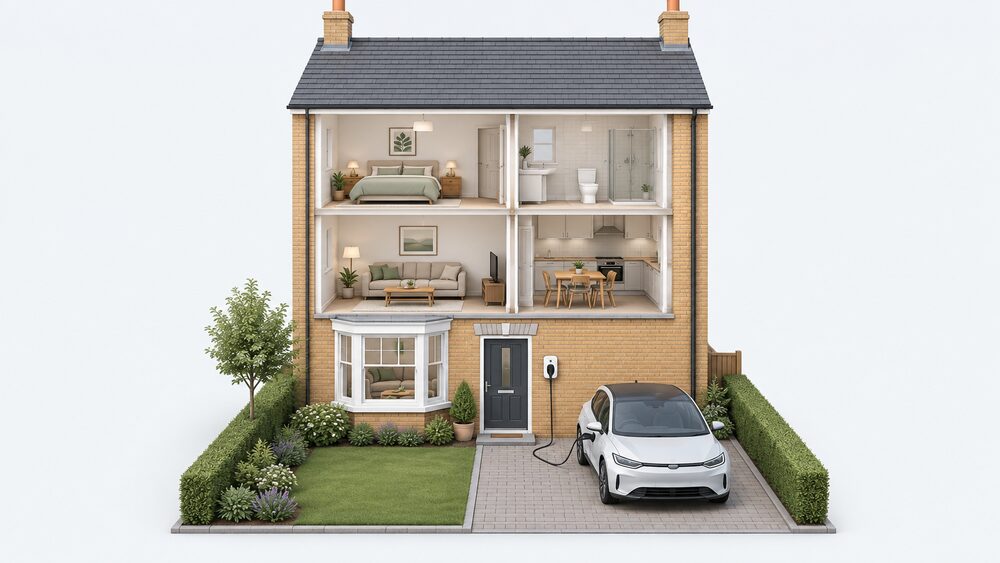
The four home types in this guide are not a marketing split; they are four different permission and supply problems. A flat with an allocated bay in a block has a legal question (who owns the bay, who owns the freehold) and a metering question (whose electricity is being used). A terraced house with a front wall but no drive has a cable-run question and sometimes a supply question. A rural property with a long drive has a voltage-drop question and possibly a three-phase question. A listed or conservation area property has a heritage question that overrides the others.
The grant structure follows the same lines. The Electric Vehicle Chargepoint Grant for Renters and Flat Owners is aimed at people who own and live in a flat, or rent and live in any residential property, including properties under the shared ownership scheme2. It is not available to someone who owns and lives in a house, unless that house has been converted into flats and they live in just one of them3. Landlords have a separate route, covering flats and houses and apartment blocks, at 75% off the cost of buying and installing chargepoints up to a maximum of £500 per socket9.
For a household, the practical test is simple to state and often hard to satisfy: is there a parking space that is designated, private, off-street, legally the household's, and accessible at all times? The grant rules require all of those things2. Where they hold, the installation is a normal domestic electrical job with a permission step attached. Where they do not, no amount of charger specification solves it.
Flats: the grant that exists, and its conditions
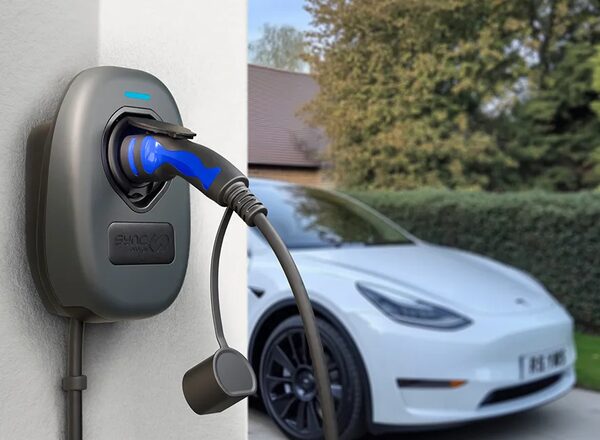
The grant for renters and flat owners is the main public support for charging in a flat, and its headline terms are straightforward: 75% off the cost to buy and install a socket, up to a maximum of £5002. Older independent guidance described the same scheme as £350 or 75% off the cost of installing an electric car charger, whichever is lower, for flat owners and renters with dedicated off-street parking8. The £500 maximum is the current official figure and the one to work from; the £350 figure reflects the scheme as it stood when that guidance was written.
Take-up is meaningful but modest. By 1 July 2026 the scheme had funded the installation of 26,504 sockets, of which 9,301 were in the last 12 months, at a total of £9.2 million for socket installations5. That is a scheme that has moved from a slow start into steady use, and the recent rate is roughly a third of the lifetime total in a single year.
The conditions are where most applications fail. The applicant must own and live in a flat, or rent and live in any residential property including shared ownership2. The property must have designated, private off-street parking with a legal entitlement, accessible at all times2. The applicant must own or use an eligible vehicle, and the vehicle requirement covers plug-in battery electric and hybrid vehicles: being the registered keeper of a new or second-hand eligible vehicle, being assigned a company car, leasing an eligible vehicle, being named primary user by an employer, or having ordered an eligible vehicle for delivery within three months2. Where a vehicle lease is bundled with a chargepoint, the lease must be for at least 6 months2.
Two exclusions catch people out. The grant cannot be given where the installation of the chargepoint or infrastructure was a mandatory requirement, including a planning condition that mandates installation2. And it cannot be claimed if the applicant has already claimed the grant or its predecessors, the Electric Vehicle Homecharge Scheme or the Domestic Recharge Scheme2.
Eligibility in detail: parking rights, vehicle ownership and who installs
The eligibility rules read as a checklist, and it is worth treating them as one. On parking, the space must be designated, private and off-street, the household must own it or have the legal right to it, and it must be accessible at all times3. On permissions, the applicant must have proof of all legal rights and permissions, such as from the freeholder of a block of flats3. On the vehicle, the applicant must own or use an eligible vehicle3, and independent guidance summarises the same requirement as using or owning a vehicle on OZEV's list of approved vehicles8.
On the installer, the work must be done by an OZEV-authorised installer using an eligible residential chargepoint2. That is not a formality: the installation standards attached to the grant require the work to be carried out to BS EN 61851, the IET wiring regulations BS 7671, the IET Code of Practice for Electric Vehicle Charging Equipment Installations, and the Electricity Safety, Quality and Continuity Regulations installation requirements11. Chargepoints must be installed on a residential property11.
There are also building-regulation exclusions that matter for newer blocks. The grant is not available for buildings under construction or being renovated where the Part S Regulations applies on or after 15 June 2022 in England, or in devolved countries with similar regulations, for example the Building (Scotland) Regulations from 5 June 20232. In other words, where the building regulations already require chargepoint infrastructure, the grant steps aside.
The administrator is OZEV, the Office for Zero Emission Vehicles, and applicants may be asked to provide evidence of any of these conditions at any time2. The scheme also commits to aiming to provide 4 weeks' notice if the grant ends or the grant amount changes, with claims made before any public announcement honoured subject to the grant criteria2.
Terraced homes: cable runs, party walls and where the charger goes
A terraced house with a front garden or a bay can usually take a wall-mounted charger on the front elevation, and the installation is likely to fall under permitted development where the home has off-street parking and the criteria are met12. The complications are physical rather than legal. Cable runs from the consumer unit to the front of the house can be long, and the electrical work alone is a substantial part of the job: a typical domestic installation is worth £800 to £1,500 for the electrical work, excluding the charger unit13.
The supply is the harder constraint. Some homes share one electricity cable with a neighbour, which means the supply is not strong enough for an EV charger, and a dedicated cable has to be installed before the charger can go ahead14. This is a distribution network operator matter rather than an installer matter, and it adds time and cost to the project. It is more common in older terraces than in newer housing.
Space is usually available even where it looks tight. Two EV chargers need around 1 to 2 square metres depending on the charger models and the installation method15. Units are typically wall-mounted, and available either with a tethered Type 1 or Type 2 cable, which can be plugged straight into the car, or with a Type 2 socket for use with the vehicle's charging cable16.
Where a terrace has no off-street parking at all, the position changes completely. Planning permission is required if there is no off-street parking17, and a cable crossing the pavement needs separate planning permission unless the crossing is owned by the Highways Authority; pavement cable crossings are unlikely to be covered under householder permission for the charging point where they sit outside the curtilage of the building on highway pavement18. Government has consulted on cross-pavement charging as part of a wider package of measures to expand EV charging provision19.
Rural homes: longer drives, three-phase supply and 22kW options
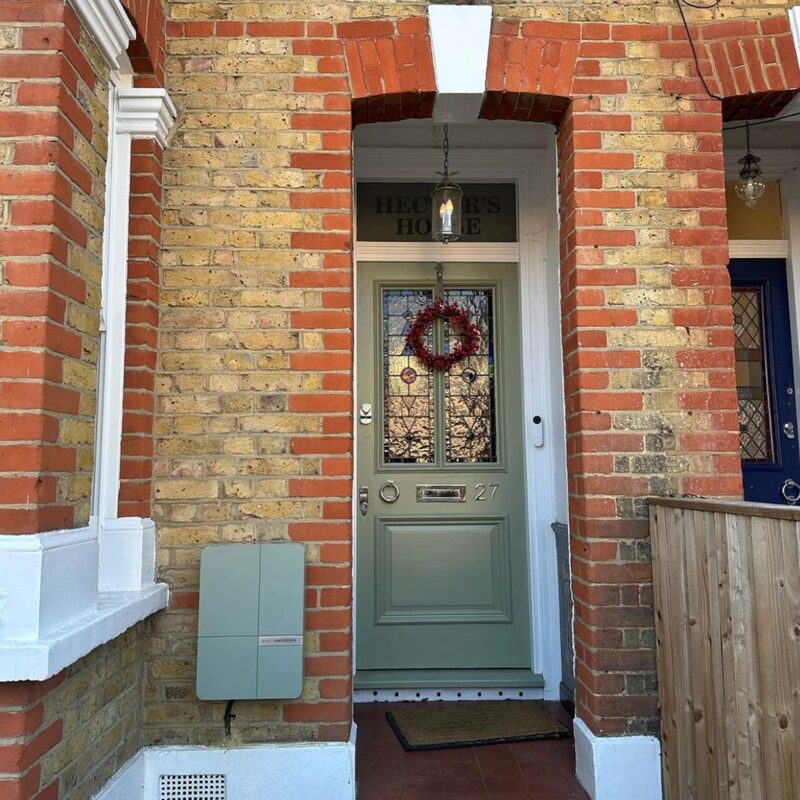
Rural properties usually have the one thing flats lack: space. What they often lack is a short cable run and a strong supply. A long drive means a longer circuit from the consumer unit, and the electrical work scales with it. The charger itself is the smaller part of the bill.
On power, the ceiling for a single-phase home is 7kW, which is the most common choice for home charging in the UK20. Faster units exist. There are also faster home chargers, up to 22kW, but those need a three-phase power supply, which most homes do not have21. The same limit is stated independently: chargers delivering up to 22kW can be installed at home, but this requires a three-phase electricity supply22. Installing a 22kW charger typically requires a three-phase supply, which is uncommon in residential properties20, and 22kW chargers are the most expensive6.
For a rural household with three-phase already on site, a 22kW unit shortens the charging window considerably. For everyone else, the realistic choice is 7kW, and the question becomes whether the supply can carry it. Where the supply cannot cope with the new equipment, the connection to the network may need to be upgraded, which is a separate application to the distribution network operator14.
Rural households also have the best case for pairing a charger with generation, because they tend to have the roof and the land. The seasonal pattern is the same everywhere: in summer a reasonably sized solar system can cover a significant portion of a typical household's EV charging needs, while in winter output drops considerably and grid top-ups become more necessary23. That is the honest version of the solar charging story, and it applies with more force on a long rural commute.
Listed and older homes: planning permission and permitted development
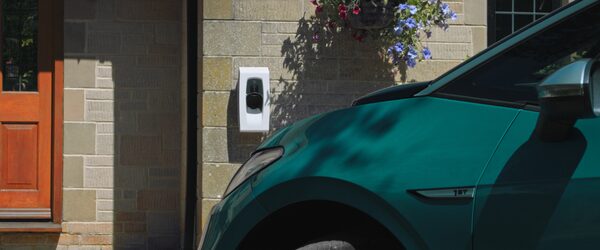
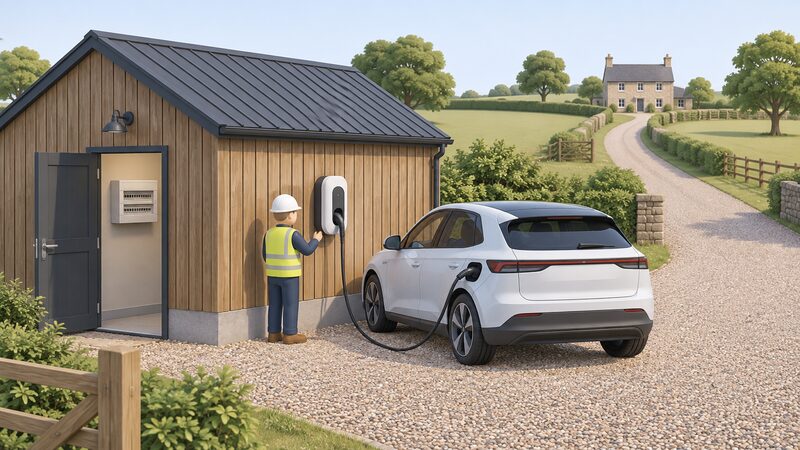
For an ordinary dwelling with off-street parking, the installation of a domestic electric vehicle charger can be achieved using permitted development rights, provided certain limits are met24. A wall-mounted outlet needs no planning permission provided the outlet and its casing will not exceed 0.2 cubic metres, and provided it is not located on scheduled ancient monument land25. That is the baseline, and it covers most houses.
It does not cover heritage. Installing a home charger is classified as development, so it is up to the householder to ensure the correct permissions are in place26. Permission is usually required for on-street parking, conservation areas, listed buildings, areas where the installation is restricted, and more than one upstand per parking space26. Independent guidance lists the exceptions as listed buildings, conservation areas and world heritage sites, among other protected buildings and landscapes27. Electric vehicle charging points will require listed building consent4. Listed buildings or buildings in a heritage area may also need planning permission for a home charger17.
The permitted development route can also be closed by local action. A wall-mounted outlet is permitted development on a dwelling excluding those that have had permitted development rights removed, or those located within an area of outstanding natural beauty or a conservation area25. Where rights have been removed through an article 4 direction, the ordinary route is gone and a full application is needed.
For older homes generally, the practical sequence is to establish the planning position before ordering equipment, because the heritage constraint is not negotiable and the visual treatment of the installation is part of the decision. The technical requirements do not change: most local authorities specify that households install a dedicated EV charger, with protective earth neutral fault protection17.
Choosing the charger: 7kW or 22kW, tethered or untethered
The power decision is mostly settled by the supply. A 7kW charger is the most common choice for home charging in the UK20, and it will generally charge a car from 20 to 80% within six to 12 hours7. That window suits overnight charging, which is when most domestic charging happens.
22kW is available only with a three-phase supply, which most homes do not have21. It is also the most expensive option6. For a household without three-phase, the choice is between 7kW and a lower-powered unit, and 7kW is the sensible default where the supply allows it.
The connector decision is separate. Units are typically wall-mounted, and available either with a tethered Type 1 or Type 2 cable, which can be plugged straight into the car, or with a Type 2 socket for use with the vehicle's charging cable16. A tethered unit is simpler in daily use; an untethered unit is more flexible if the household changes car or charges more than one vehicle.
| Decision | Option | What drives it |
|---|---|---|
| Power | 7kW | Most common home choice in the UK; 20 to 80% in six to 12 hours20 |
| Power | 22kW | Requires a three-phase supply, uncommon in homes; most expensive21 |
| Cable | Tethered Type 1 or Type 2 | Cable fixed to the unit, plugs straight into the car16 |
| Cable | Type 2 socket | Uses the vehicle's own charging cable16 |
| Space | 1 to 2 square metres | For two chargers, depending on models and installation method15 |
Cost: what a home charger costs installed, and what it saves
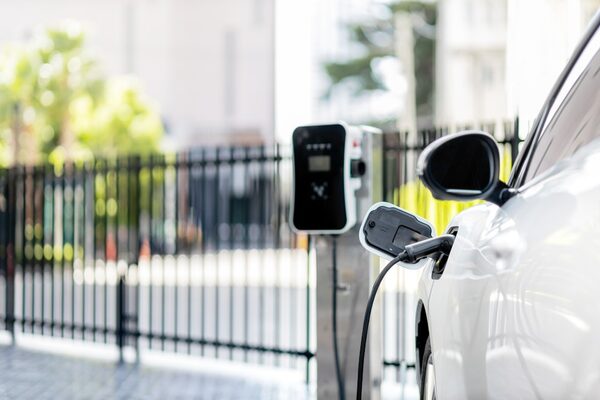
Published figures for a fully installed home charger cluster in a band rather than a single number, and the spread reflects the electrical work more than the box. Independent guidance puts a home EV charger at £500 to £1,200 to buy and install6, with 7kW chargers around £900 to buy and install for most households6. A separate independent figure puts a 7kW charge point at between £700 and £1,200 fully installed16. Installation alone typically adds up to £500 to £1,000 per charger15.
Official guidance on the planning side gives a wider range: installation costs range between £450 for a basic model, increasing to around £1,200 as the power and capabilities increase24. A report from Checkatrade found that the average cost of installing a home EV charger was £1,00029. The electrical work is the variable that moves most: a typical domestic installation is worth £800 to £1,500 for the electrical work, excluding the charger unit13.
Against that, the grant reduces the cost for eligible households. For a flat owner or renter meeting the conditions, 75% off the cost to buy and install a socket up to a maximum of £5002 takes a £1,000 installation to £500. Landlords can claim 75% off the cost of buying and installing chargepoints up to a maximum of £500 per socket9.
On running cost, the case for home charging rests on tariff structure rather than the charger. It is simply cheaper and more convenient to charge a car at home, especially if the energy provider offers cheaper off-peak electricity or a specialist EV charging tariff30. The grant figures and the installation figures are published; the running cost depends on the tariff the household is on, and prices for installation are otherwise installer-quoted.
Weather, safety and installation requirements
The safety requirements for a home charger are about the electrical installation, not the weather. Your EV charger must be installed in line with the current edition of BS 7671, the national standard for electrical installations8. To install EV chargers, an installer needs competence in the IET Code of Practice for Electric Vehicle Charging13. Most local authorities specify that households install a dedicated EV charger, with protective earth neutral fault protection17.
The grant adds its own layer for funded installations: work must be carried out to BS EN 61851, the IET wiring regulations BS 7671, the IET Code of Practice for Electric Vehicle Charging Equipment Installations, and the Electricity Safety, Quality and Continuity Regulations installation requirements11.
On who does the work, the installation will be carried out by an experienced, qualified electrician who specialises in electric vehicles and chargers, appointed by the dealer, energy supplier or individual company the charger was ordered from31. Independent guidance adds that compatibility between the charger, solar system and any battery storage should be considered from the outset23, which matters most where a household intends to add generation later.
Rain and thunderstorms do not change the rules. Outdoor chargepoints are designed for external mounting and the standards cover the installation; the protective requirements above are what make that safe. What does change the position is the supply: where a home shares a cable with a neighbour, the supply is not strong enough for an EV charger and a dedicated cable is needed first14.
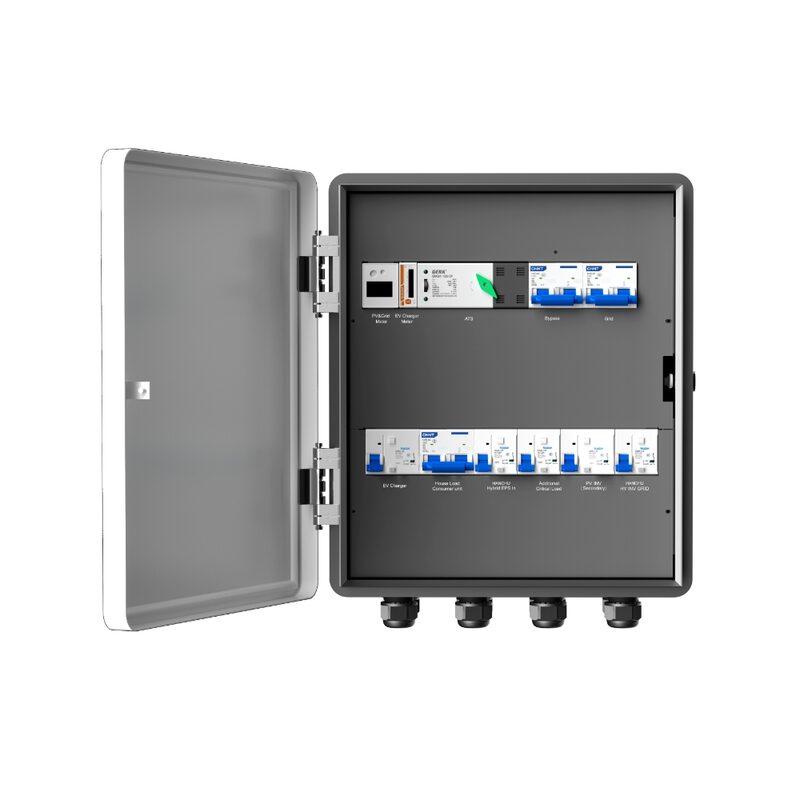
What home charging means for energy independence
Home charging moves a household's transport fuel from a forecourt to its own electricity supply. That is a real shift in control: the energy comes through a connection the household already has, at a time the household chooses, on a tariff the household selects. It is simply cheaper and more convenient to charge a car at home, especially with cheaper off-peak electricity or a specialist EV charging tariff30.
What remains is dependence, and it is worth being exact about it. The electricity still comes from the grid through a supplier, so the household has moved its fuel demand, not removed it. A flat owner charging from a shared or landlord-supplied supply may not control the tariff at all. A rural household on a single-phase supply is capped at 7kW regardless of what it installs. A listed building household may be constrained in where the equipment can go. And a household that has already claimed a predecessor grant cannot claim again2.
The grant itself is time-limited. The renters and flat owners scheme closes on 31 March 20272, and OZEV aims to provide 4 weeks' notice if the grant ends or the amount changes2. For a household weighing the work, that is the deadline that matters, and it sits alongside the property constraints rather than replacing them.
The strongest independence case is a household with private off-street parking, a supply that can carry a 7kW charger, and either an off-peak tariff or its own generation. The weakest is a flat with an unallocated bay and no freeholder consent, where the honest answer is that home charging is not available and the household depends on public infrastructure. Most homes sit between those two, and the deciding factors are the parking right and the supply, not the charger.
Sources31 cited
- English Housing Survey 2023 to 2024: low carbon technologies in English homes fact sheet, GOV.UK, 2023
- Electric Vehicle Chargepoint Grant for Renters and Flat Owners, Find Government Grants, 2026-09-18
- Electric vehicle chargepoint grant for renters or flat owners: eligibility, GOV.UK, 2026-09-17
- Improving energy saving and sustainability in conservation areas and listed buildings, Brighton & Hove City Council, 2026-09-17
- Grant schemes for electric vehicle charging infrastructure statistics: 1 July 2026, GOV.UK, 2026-07-01
- Electric car charging at home, Which?, 2026-02-25
- How long does it take to charge an electric car, Zapmap, 2026-04-15
- Electric vehicle charger installation and maintenance, NICEIC, 2025-08
- Electric vehicle chargepoint and infrastructure grants for landlords, Find Government Grants, 2026-09-18
- Electric Vehicle Chargepoint Grant for Households with On-Street Parking, Find Government Grants, 2026-09-17
- Electric vehicle chargepoint and infrastructure specifications, GOV.UK, 2023-10-10
- Electric vehicle charging, Planning Portal, 2026
- Section 722 EV charging complete guide, Elec-Mate, 2026-07-02
- If your electricity supply can't cope with the new equipment, NIE Networks, 2026-09-19
- Best EV tariffs for multi-car families, Uswitch, 2025-07-02
- Home charging, Zapmap, 2025-06-19
- Cross-pavement charging solutions, Energy Saving Trust, 2025-07-18
- Approved pavement crossings, Planning Portal, 2026
- Government announces fresh range of changes to bring down energy costs, End Fuel Poverty Coalition, 2026-04-21
- Which EV charger, Fuse Energy, 2026-04-25
- Home electric vehicle chargers, Carwow, 2026-01-09
- Electric car charging guide, Carwow, 2025-07-16
- Can solar panels charge electric cars, The CPA, 2026-04-15
- Electric vehicle chargers, Planning Portal, 2026
- Permitted development, Cotswold District Council, 2026-09-17
- Electric vehicle charging: planning permission, Planning Portal, 2026
- EV charger regulations in England: what's changed, NICEIC, 2026-08-19
- Approved Document S, Planning Portal, 2021-12
- EV charging statistics, Uswitch, 2025-12-15
- What does the new Electric Car Grant mean for you-mean-for-you), NICEIC, 2025-07-29
- EV charger home installation process, Uswitch, 2022-02-03
 Planning Permission for ChargersDo you need planning permission for a home EV charger, and does it change if you live in a listed building, a conservation area or a flat?
 Types of Home EV ChargerWhich home charger suits your car and your driveway?
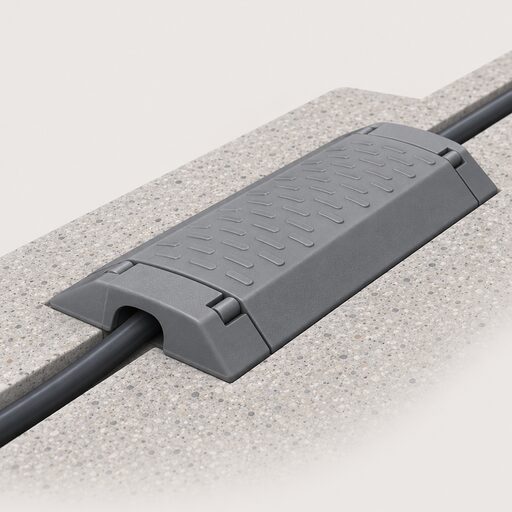 Charging Without a DrivewayParking on the street makes charging an electric car at home tricky.
 EV Tariffs and Home ChargingHow EV-specific import tariffs and charging bolt-ons work, including supplier-controlled charging where the energy company decides when the car draws power, which charge points each scheme supports, and what a household needs in place.
 Batteries by Home TypeLooks at how house type, occupancy pattern, electrical supply and available space change what storage can achieve, from flats and terraces to rural and off-grid properties.
 Charging and Energy IndependenceCharging an electric car at home can cut your fuel costs, but how much does it really free you from the grid?