

In this guide
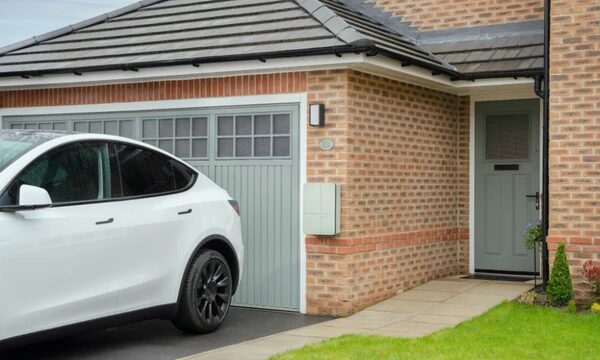
For most households in England with off-street parking, no planning application is needed. Installing a domestic charge point is likely to fall under permitted development rights, provided the equipment stays within the stated limits1. The two limits that matter are dimensional: an upstand with a mounted electrical outlet must not exceed 1.6 metres in height within the curtilage of a dwellinghouse or a block of flats, and a wall-mounted outlet together with its casing must not exceed 0.2 cubic metres2.
That does not mean the installation is unregulated. Installing a home charger is classified as development, and it is up to the householder to ensure the correct permissions are in place4. Permitted development is a grant of planning permission given automatically by an order rather than an absence of planning law, so the conditions attached to it have to be met. Building regulations approval is required in all cases, whether achieved through a competent person scheme or the local building control body1.
Permission is usually required in five situations: on-street parking, conservation areas, listed buildings, areas where installation has been restricted through an article 4 direction, and more than one upstand per parking space4. Each of the four nations operates its own general permitted development order, and Planning Portal guidance written for England states that the policy in Wales may differ.
Permitted development rights: why no application is usually needed
Permitted development rights allow certain types of work to be carried out without the need to apply for planning permission7. In England the principal instrument is the Town and Country Planning (General Permitted Development) (England) Order 2015, instrument number 2015 No. 596, which sets out classes of development for which a grant of planning permission is automatically given, subject to the stated conditions and exemptions7. The effect is that specified types of development can be carried out without a planning application being submitted and approved, so long as the works stay inside the limits the order attaches to each class7.
Charge points are dealt with separately. The relevant criteria are set out by Schedule 2, Part 2, Class D and Class E of the order9. Class D covers the wall-mounted electrical outlet; Class E covers the installation, alteration or replacement, within an area lawfully used for off-street parking, of an upstand with an electrical outlet mounted on it for recharging electric vehicles10. The order itself then carries an exclusion clause, headed "Development not permitted", which is where the limits bite11.
Permission is only needed if the work being carried out meets the statutory definition of development12. Charge point installation does meet it, which is precisely why a permitted development class was needed at all rather than the work simply falling outside the planning system.
The practical consequence for a household is narrow but real. The right is conditional: exceed the height, exceed the volume, put the unit somewhere the class does not reach, or sit in an area where the rights have been withdrawn, and the default reverses. If the work does not meet the requirements, planning permission will be required9. For related detail on the building side, see building regulations approval for an EV charger.
Height, volume and siting: the limits on the equipment itself
The dimensional limits are the load-bearing part of the rules, and they are consistent across the official sources.
| Situation | Limit | Source |
|---|---|---|
| Upstand, curtilage of a dwellinghouse or block of flats | 1.6 metres in height | 13 |
| Upstand, residential | 1.6 metres | 3 |
| Upstand, non-residential | 2.7 metres | 3 |
| Wall-mounted outlet and its casing | not to exceed 0.2 cubic metres | 3 |
| Upstands per parking space | more than one usually requires permission | 4 |
The 1.6 metre figure is measured from the level of the surface used for the parking of vehicles14. In a dwelling within an Area of Outstanding Natural Beauty, the guidance quotes the same 1.6 metre residential figure, with the additional condition for wall-mounted units that they are not located on scheduled ancient monument land3. For a dwelling in a conservation area or one subject to an article 4 direction, the same 1.6 metre and 0.2 cubic metre figures are quoted, though other restrictions in those areas may still require an application3.
Beyond dimensions, siting limits apply. Class E is drawn around an area lawfully used for off-street parking, which is why a unit serving a space that is not lawfully so used falls outside it10. Independent guidance notes that limitations apply relating to the size and height of the equipment that can be installed under permitted development rights in England6. Government has consulted on relaxing this: one proposal was to remove limits on where installation within off-street parking areas can take place15.

When planning permission is required: the exceptions that catch people out

Planning Portal lists permission as usually required for on-street parking, conservation areas, listed buildings, areas where installation has been restricted through article 4 directives, and more than one upstand per parking space4. Independent guidance puts the protected categories more broadly, listing listed buildings, conservation areas and world heritage sites among other protected buildings and landscapes6.
Listed buildings are the firmest case. Electric vehicle charging points will require listed building consent16, and heritage guidance treats external meter boxes and electric chargers as minor works requiring consent where they affect the special character of the building17. Listed building consent is a separate consent from planning permission, so a property can need both.
In conservation areas and other designated areas, the outcome is not usually refusal but conditions: there are increased chances that if an application is accepted there will be conditions attached, affecting the size, appearance and placement of the charger4. Where an application is made, the stated route to success is to minimise impact on the visual context of the local area, for example by placing the charge point around the side of the house, on a porch, or screening it with bushes and plants4. The same conservation-area logic applies to other retrofits: solar panels in conservation areas and on listed buildings may also require permission18. More detail sits on installing an EV charger in a conservation area and EV charging by home type.
On-street parking: no driveway changes the answer entirely
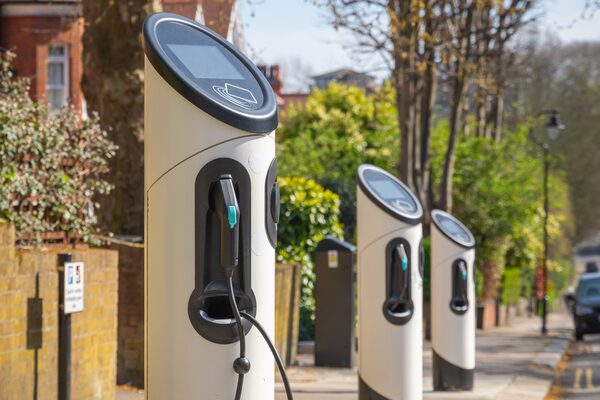
Permitted development rights do not extend to on-street parking, and in those circumstances an application for planning permission is required1. The planning rules for installing a charge point depend on whether the dwelling has off-street parking or on-street parking20. This is the single largest divide in the subject, and it falls along lines of housing type rather than income or intent.
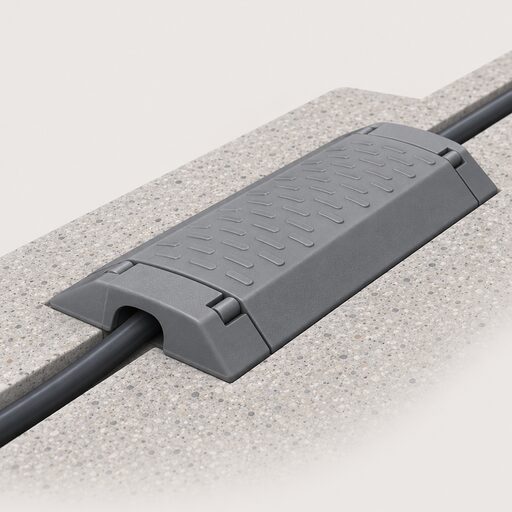
The complication is the pavement. A cable crossing outside the curtilage of the building, on highway pavement, is unlikely to be covered by householder permission for the charge point, and unless the crossing is owned by the Highways Authority separate planning permission will be needed21. Government's own call for evidence states the position plainly.
"Planning permission is required to install any cross-pavement solution and associated private EV chargepoint, unless a local development order is in place"
Independent guidance counts up to three separate permissions for a cross-pavement charger: permission from the local authority, planning permission for the cross-pavement chargepoint, and street works permissions to install the infrastructure6. Where a permanent pavement crossing solution is used, permission from the Highways Authority will be required in addition1.
The grant rules mirror this. The chargepoint grant for households with on-street parking requires applicants to install a non-temporary cross-pavement charging solution alongside the chargepoint, to have permission from the local highways authority, and to declare that they will obtain the necessary planning permissions22. The grant does not confer ownership over, exclusive use of, or reserved access to any on-street parking space23. That last point matters for independence: a household can have a channel, a charger and a grant and still have no right to the space in front of it. See charging an EV without a driveway and the cross-pavement charging grant.
Reform has been under consideration. A Regulatory Policy Committee opinion on a 2025 amendment order records the preferred option as amending permitted development rights to reduce the circumstances in which installation of off-street charge points would require planning permission24. Independent guidance reports that on 29 May 2025 the requirement for homeowners and businesses to obtain planning permission for EV charger installations was removed in England, with home chargers, public charging points and business installations falling under permitted development rights, subject to the exceptions and size and height limitations already described6.
Article 4 directions, planning conditions and local restrictions
An article 4 direction is one of a family of local mechanisms that withdraw permitted development rights in a defined area. Planning Portal describes the category generally as areas where there may be a planning condition, an article 4 direction or other restriction that limits permitted development rights, in which permitted development allowances do not apply25. For charge points specifically, areas where installation has been restricted through article 4 directives are listed among the situations where permission is usually required4.
There is no national register a householder can consult; the direction is made by the local planning authority and applies to a mapped area, commonly a conservation area or a historic street where cumulative small changes would erode character. The cotswold guidance treats a dwelling subject to an article 4 direction as its own category, quoting the same 1.6 metre and 0.2 cubic metre dimensional limits3, but the existence of the direction is what determines whether the class can be relied on at all.
Local authorities are also the beneficiaries of a separate permitted development right of their own, which is worth distinguishing from the householder one. Class A of Part 12 of Schedule 2 covers the erection, construction, maintenance, improvement or alteration of small ancillary buildings, works and equipment by a local authority or urban development corporation, including electric vehicle charging points and any associated infrastructure26. A 2024 consultation response confirmed that this puts beyond doubt that local authorities can appoint charge point providers to install public charging points on their behalf in their area, without having to submit a planning application27. That right belongs to the council, not to the resident, even where the charger stands outside the resident's house.
Some authorities publish free technical advice notes covering EV charging installations, available on the relevant authority's website28.
England, Wales, Scotland and Northern Ireland: four orders, one subject
Planning is devolved, and each nation legislates separately. Planning Portal states explicitly that its guidance relates to the planning regime for England and that the policy in Wales may differ29, a caveat repeated across its charge point, microgeneration and flue guidance.
| Nation | Principal instrument | Notes |
|---|---|---|
| England | Town and Country Planning (General Permitted Development) (England) Order 2015, 2015 No. 596 | Charge points at Schedule 2, Part 2, Classes D and E8 |
| Wales | Town and Country Planning (General Permitted Development) (Amendment) (Wales) Order 2019, 2019 No. 330 (W. 80) | Amends the 1995 order; provision headed "Minor operations: recharging electric vehicles"30 |
| Wales (earlier) | Town and Country Planning (General Permitted Development) (Amendment) (Wales) Order 2013, 2013 No. 1776 (W. 177) | Earlier Welsh amendment31 |
| Northern Ireland | Planning (General Permitted Development) Order (Northern Ireland) 2015, 2015 No. 70 | In operation from 1 April 201532 |
The Northern Ireland order was made under sections 32 and 247(6) of the Planning Act (Northern Ireland) 2011, was subject to the negative resolution procedure, and was declared on 25 February 201532. It grants planning permission for certain classes of development described in the Schedule, subject to the relevant exceptions, limitations and conditions33. The explanatory memorandum records that the consolidation does not alter the policy principle of permitted development, that planning powers transferred to district councils, and that applicants still have to make sure their development complies with any environmental and other consents that may be needed, including building regulations32. Northern Ireland's Part 3, Class E applies the same 1.6 metre limit to an EV charging upstand within the curtilage of a dwellinghouse or a block of flats, and its Part 13, Class A gives councils a right covering electric vehicle charging points alongside lamp standards, information kiosks, public shelters and seats13.
Grant schemes, unlike planning, are largely UK-wide. The chargepoint grants for households with on-street parking, for renters and flat owners, and for residential landlords all require the property to be located in England, Wales, Scotland or Northern Ireland23. Northern Ireland residents who own an electric vehicle and need a way to charge it at home across a pavement have a dedicated route through nidirect36. The pavement channels grant, by contrast, applies to England only37. VAT on energy-saving products differs too: the rate paid and eligibility depend on whether the property is in Great Britain or Northern Ireland38. The landlord grant excludes installations that were a mandatory requirement, including under Part S of the Building Regulations in England from 15 June 2022 and equivalent devolved regulations such as the Building (Scotland) Regulations from 5 June 202335. See EV charge point requirements for new build homes.
Renters, landlords and flats: who applies and who consents

Planning permission and private consent are different obstacles, and for flats and rented homes the private consent is usually the harder one. Renters need to ask their landlord's permission, and the outcome depends on what the landlord says5.
The grant rules set out what evidence is expected. The chargepoint grant for renters and flat owners is open to those who own and live in a flat, or rent and live in any residential property, including properties under the shared ownership scheme34. The parking space must be off-street, private and clearly defined, and it does not have to be part of the property39. Applicants must have proof of all legal rights and permissions, such as from the freeholder of a block of flats39. Renters and flat owners are eligible provided they own an eligible vehicle and have private, off-street parking40.
For landlords, each parking space must be off-street, private and clearly defined, accessible to the tenant, and owned by the landlord or one the landlord has the legal right to35. Neither grant can be given where the installation of the chargepoint or infrastructure was a mandatory requirement, including where a planning application condition mandated it34.
For planning purposes the 1.6 metre upstand limit is written to cover the curtilage of a block of flats as well as a dwellinghouse, so a ground-mounted unit in a communal car park is within the same dimensional test13. Further detail sits on the chargepoint grant for renters and flat owners and the grant for residential landlords.
Checking with the local planning authority before installing
Two formal routes exist for certainty. A lawful development certificate can be applied for to be certain that changes do not require planning permission41. Where work has already been completed and retrospective approval is needed, that can be gained through a lawful development certificate for existing use19.
Pre-application advice is the other route, and is described as useful where the development location is within a conservation area or the building is listed, or where chargers are being installed alongside wider changes to a household's energy system28. That second case is common, because charge points are often fitted at the same time as solar or storage. See charging an EV from solar panels and EV charging alongside a home battery.
Building control is separate again and is not optional. Building regulations approval is always required when installing an EV home charger, and a competent and reputable installer should be used, with specific processes for notifying the local building control authority2. A compliance certificate is issued proving the work complies with building regulations29. Building regulations in England and Wales require charger installations to be notified to local authority building control because they involve creating a new circuit6, and where the electrician is not on a competent person scheme the work must be notified to building control 48 hours in advance of it starting5. Approved Document S provides the technical guidance on installation and charge point requirements for electric vehicles under Part S. A related exemption is worth noting for covered parking: for parking spaces in a covered car park the requirement to install charge points does not apply, with cable routes installed instead where needed, and charge points installed voluntarily fall outside the section 6 guidance but must still meet other relevant standards including electrical safety42.
Charge points are also outside the scope of the consumer connectable product security regulations43.
What this means for household energy independence
A charge point moves refuelling from a forecourt to the home, but it does not remove dependence, and the planning rules make the boundaries of that visible. The permitted development right is conditional on a household already having off-street parking within its own curtilage, which is a property characteristic, not a choice. Households without it remain dependent on a local highways authority's consent, a planning decision, and in England a grant scheme that explicitly confers no right to the parking space itself23.
Even with a driveway, the charger remains connected to the grid and to a supplier, and the installation remains subject to building control and to the network operator. A Parliamentary briefing records the Royal Town Planning Institute's view that increasing numbers of electric vehicles will require the locations of new charging points to be planned together with grid upgrades and the locations of other higher energy demand developments44. The planning question is therefore not only about the appearance of a box on a wall; it sits within capacity decisions a household does not control. See telling the network operator about a home EV charger and EV charging and household energy independence, and the pillar guide at /ev-charging/.
Sources44 cited
- Electric vehicle chargers: planning guidance, Planning Portal, 2026
- Electric vehicle charging smart search, Planning Portal, 2026
- Permitted development for retrofit and energy efficiency, Cotswold District Council, 2026-09-17
- Planning permission for electric vehicle charging, Planning Portal, 2026
- EV charger installation and maintenance, NICEIC, 2025-08
- EV charger regulations in England: what's changed, NICEIC, 2026-08-19
- Permitted development rights, Planning Portal, 2026-09-17
- The Town and Country Planning (General Permitted Development) (England) Order 2015, legislation.gov.uk, 2026-09-17
- Permitted development for electric vehicle charging, Planning Portal, 2026
- Schedule 2, Part 2, Class E: recharging electric vehicles, legislation.gov.uk, 2015-04-15
- Town and Country Planning (General Permitted Development) (England) Order 2015: contents, legislation.gov.uk, 2026-09-17
- When is permission required, GOV.UK, 2014-03-06
- Planning (General Permitted Development) Order (Northern Ireland) 2015: schedules, legislation.gov.uk, 2026-09-17
- Solar car parks and EV charging: call for evidence, GOV.UK, 2025-05
- More permitted development changes on the horizon, Planning Portal, 2024-02-27
- Energy saving and sustainability in conservation areas and listed buildings, Brighton and Hove City Council, 2026-09-17
- Planning and listed building consent requirements, West Northamptonshire Council, 2023-12-14
- Solar Together Norfolk, South Norfolk and Broadland Councils, 2026-09-17
- Retrospective approval for electric vehicle charging, Planning Portal, 2026
- Do I need planning permission?, Cornwall Council, 2026-09-09
- Approved pavement crossings, Planning Portal, 2026
- EV chargepoint and infrastructure grants, Department for Infrastructure Northern Ireland, 2026-09-18
- Electric vehicle chargepoint grant for households with on-street parking, Find a grant, 2026-09-17
- RPC opinion: General Permitted Development (England) (Amendment) Order 2025, Regulatory Policy Committee, 2025-05-02
- Fuel tanks: planning guidance, Planning Portal, 2026-09-17
- The Town and Country Planning (General Permitted Development) (Amendment) Order 2011, legislation.gov.uk, 2011-08-30
- Government response on permitted development rights for renewable energy and other uses, GOV.UK, 2024-03-11
- Pre-planning advice for electric vehicle chargers, Planning Portal, 2026
- Building regulations for electric vehicle charging, Planning Portal, 2026-09-17
- The Town and Country Planning (General Permitted Development) (Amendment) (Wales) Order 2019, legislation.gov.uk, 2026-09-17
- The Town and Country Planning (General Permitted Development) (Amendment) (Wales) Order 2013, legislation.gov.uk, 2026-09-17
- Explanatory memorandum to the Planning (General Permitted Development) Order (Northern Ireland) 2015, legislation.gov.uk, 2015-02-25
- The Planning (General Permitted Development) Order (Northern Ireland) 2015, legislation.gov.uk, 2026-09-17
- Electric vehicle chargepoint grant for renters and flat owners, Find a grant, 2026-09-18
- Electric vehicle chargepoint and infrastructure grants for landlords, Find a grant, 2026-09-18
- Apply for electric vehicle cross-pavement charging, nidirect, 2026-09-17
- Apply for the electric vehicle pavement channels grant, GOV.UK, 2025-08-15
- VAT on energy-saving products, GOV.UK, 2026-09-17
- Electric vehicle chargepoint grant: eligibility, GOV.UK, 2026-09-17
- Incentives for electric vehicles, SMMT, 2025-03-26
- Find out if you need planning permission, Buckinghamshire Council, 2026-09-17
- Approved Document S: frequently asked questions, GOV.UK, 2023-04-17
- Regulations for consumer connectable product security, GOV.UK, 2024-01-08
- POSTnote: electric vehicles and the grid, UK Parliament POST, 2025-01-06
 Home Charger InstallationWho can fit a home EV charger, and does it need building regulations approval?
 Electrical RequirementsWill your home need a bigger electricity supply before a charge point can go in?
 Planning Permission in EnglandWhen a domestic battery or its enclosure falls within permitted development in England, when an application is needed, and how the position differs for outbuildings, listed buildings and conservation areas.
 Charging by Home TypeHow the practical and legal position for home EV charging changes by property type: flats and leasehold consent, terraced homes without frontage, shared car parks and metering, rural properties with long cable runs, and listed or conservation area homes.
 Planning Permission in ScotlandDo you need planning permission for a home battery in Scotland?
 Charging Without a DrivewayParking on the street makes charging an electric car at home tricky.