
In this guide
Listed building consent is a type of planning control which protects buildings of special architectural or historical interest1. It applies to the inside and outside of the building, and it is required for any works that affect the building's character as a building of special interest1. For a household trying to cut its energy use, that means the fabric measures and the equipment that would normally sit outside the planning system, insulation, glazing, solar panels, heat pumps and charging points, all pass through a heritage assessment first.
The practical position is blunt. Listed Building Consent will be required for most energy efficiency works, including internal works such as internal wall insulation3. Solar panels on listed buildings always require listed building consent3. Electric vehicle charging points will require listed building consent3. Where a building is listed, consent is required even if permitted development rights apply, because those rights do not displace the heritage regime4.
Conservation areas are a lighter regime, but not an empty one. Roofing and solar installations can need permission where panels project more than 20cm from the roof plane, or sit on walls facing the highway, or on listed buildings or within their curtilage5. The rest of this page sets out what consent covers, who decides, what permitted development rights lose, and how the four nations differ.
What listed building consent covers, and when energy work needs it
The consent regime is broad by design. An application for listed building consent should be submitted for all applications requiring alteration, extension, or demolition to a listed building1. Council guidance repeats the point in different words: listed building consent is needed for any significant works whether internal or external8. Some minor works require listed building consent when they affect the special character of a listed building, so size is not the test10.
Energy work sits squarely inside that. Central heating or other flues, solar panels, air conditioning and heat recovery units and pipework may require listed building consent10. New roofing materials require consent, as does the insertion of roof lights10. External works, including decorative alterations, require consent10. Introducing new materials to the property, such as insulation, requires consent, as do internal and external alterations such as removal of partition walls, fireplaces, new flues and vents11.
The pattern for a household is that almost every retrofit measure has a consent question attached. Internal solid wall insulation requires listed building consent in listed buildings12. Mechanical ventilation with heat recovery is treated the same way, with listed building consent necessary for listed buildings12. A micro-combined heat and power system in a listed building or designated area is likely to need consent for internal alterations as well13.
Who decides: the Local Planning Authority and how to approach it
An application must be made to, and determined by, the local planning authority14. The Local Planning Authority is usually the planning department of your local council, and for queries about a particular case the first thing to do is to contact it6. Guidance for listed buildings advises contacting the authority before carrying out any work15. Some councils publish a dedicated conservation address for advice on whether listed building consent is required and what conditions apply16.
The legal basis is the Planning (Listed Buildings and Conservation Areas) Act 19901. Listed building consent should be granted within 8 weeks, beginning when the Local Planning Authority validates the application, and the process includes a 21-day consultation period where neighbours and interested parties can comment1.
Pre-application advice is worth understanding as a cost item. Local authorities may charge a fee for pre-application advice, so the position varies by council15. There is no additional fee for listed building consent itself17. Where a building is listed or in a designated area, even with permitted development rights, it is advisable to check with the local planning authority before a flue is fitted13. The same check applies to solar installations, where the authority can confirm whether the proposal falls inside an Order or needs a full application3.

Permitted development rights: what listed and conservation area status takes away
Permitted development rights are the general permissions that let certain works proceed without an application. Listed status does not simply switch them off, but it makes them irrelevant to the heritage question: if the building is listed, even if permitted development rights apply, Listed Building Consent will be required4. The two regimes run in parallel, and the heritage one is the binding constraint.
Conservation area status works differently. Rights may have been removed by an Article 4 direction, and these are most common in conservation areas; a solicitor should have informed the purchaser, otherwise the position can be checked with the Local Planning Authority18. Rights may also have been removed as a condition of the original planning permission, in which case a planning application must be submitted18.
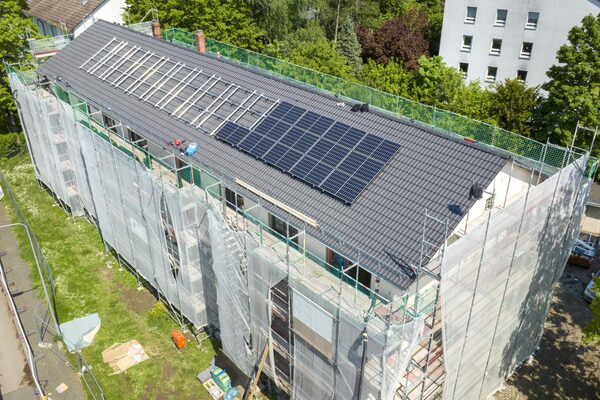
For solar specifically, the interaction matters. Domestic solar panels may require planning permission for buildings in conservation areas covered by Article 4 directions which remove permitted development rights for roof alterations19. Roofing and solar installations can need permission where panels project more than 20cm from the roof plane, or sit on walls facing the highway, or on listed buildings or within their curtilage, including stand alone solar panels5.
| Situation | Planning permission | Listed building consent |
|---|---|---|
| Listed building, any significant work | Depends on the work | Required, internal or external8 |
| Listed building, solar panels | May be required20 | Always required3 |
| Conservation area, roof solar over 20cm projection | Required5 | Not applicable unless listed |
| Conservation area with Article 4 direction | May be required19 | Not applicable unless listed |
| Dwelling, wall-mounted EV outlet under 0.2 cubic metres | Not required, subject to location conditions21 | Required if listed3 |
Glazing, insulation and internal works: where consent is required
Windows and doors are the most common flashpoint. Replacement or double glazed windows or doors require listed building consent10. Double glazing can sometimes be installed on a listed building, depending on the building and how the installation would affect its character2. For replacement windows, listed building consent is likely needed, depending on the proposal details and the identified significance of the individual listed building3. The assessment is building-specific, which is why two similar houses in the same street can get different answers.
Insulation follows the same logic. Planning permission and listed building consent are required for external and internal wall insulation3. More disruptive work like internal or external insulation will usually need Listed Building Consent1. Internal alterations may require listed building consent, especially where modern materials are used or historic fabric is removed or altered10. Internal solid wall insulation requires listed building consent in listed buildings12.
Internal works are not exempt because they are invisible from the street. Listed building consent covers the inside and outside of the building1. Internal and external alterations, including removal of partition walls, fireplaces, new flues and vents, require consent11. Changing materials, for example changing from metal pipes to plastic pipes, requires consent11.
Solar panels on listed homes: Local Listed Building Consent Orders
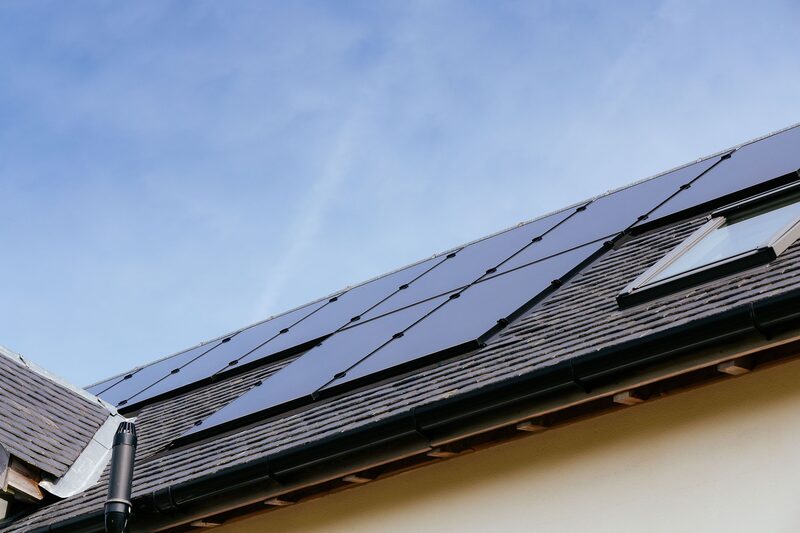
Solar on a listed building normally means an individual application. Solar panels on listed buildings always require listed building consent3, and listed building consent is required before works can commence20. Planning permission may also apply20. For a listed commercial premises, a listed building consent form will be required22. Consent is required to place solar panels on a listed building, including buildings within the curtilage of the listed building which pre-date July 194814.
Local Listed Building Consent Orders change that for defined areas. An Order is a pro-active and blanket grant of listed building consent, so owners of specified listed buildings do not have to make individual applications and can proceed with the works provided they comply with any conditions attached to the Order23. Legally, an Order allows the council to grant listed building consent for alterations to more than one listed building, including groups of listed buildings in all or part of the borough, or buildings of a particular description23. Orders provide conditional consent for certain types of works, as defined by the Order, that would otherwise require listed building consent1.
The Kensington and Chelsea Order is the worked example. It gives consent for solar panels on most Grade II and Grade II* listed buildings, without the need for individual listed building consent, requiring a simple application to the Council24. The Clifton Order in Bristol covers the installation of microgeneration solar PV or solar thermal equipment and associated infrastructure, removing the need for consent for these works subject to the conditions of the Order, for listed residential properties within the Clifton Conservation Area25.
How a Local Listed Building Consent Order works: term, consultation and exclusions
An Order is made under the Planning (Local Listed Building Consent Orders) (Procedure) Regulations 2014 and Sections 26D-G, 28A and Schedule 2A of the Planning (Listed Buildings and Conservation Areas) Act 19907. The term is capped: a period of no more than 5 years from the starting date of the Order7. The Clifton Order runs from 2025 to 2030, a period of no more than 5 years from the starting date26.
Consultation is a defined stage. One Order records a public consultation of at least 28 days and consultation with Historic England of at least 28 days7. The Clifton Order was endorsed by Planning Committee in July 2025 following a 28 day public consultation1. A draft Order in Kensington and Chelsea ran from Wednesday 19 January to Friday 25 February 202223. The Clifton Order is reviewed annually, both quantitatively in terms of the number of solar installations under its provisions and qualitatively in terms of the effects on the listed buildings affected25.
Exclusions are where the detail bites. Solar tiles and solar slates are excluded from one Order because installation could result in the irreversible loss of historic roof coverings7. Grade I listed buildings are excluded from the Kensington and Chelsea Order as they are of exceptional special interest, along with certain Grade II* buildings listed in a schedule and ecclesiastical buildings in use for ecclesiastical purposes27. Eligibility otherwise covers any Grade II listed building in the borough and any Grade II* listed building not listed in the schedule27. A draft Order elsewhere aims to allow solar PV on Grade II and most Grade II* buildings, and may be extended if successful23.
Conditions attach to the consent. Orders carry conditions about the positioning, materials and fixings that can be used, protecting the appearance and fabric of listed buildings24. One Order requires that the solar equipment is maintained in good order and removed as soon as reasonably practicable when no longer needed, with making good finished to match the adjacent work28.
If an Order ends, unfinished work is protected for a period. Works started but not completed at the end date may be completed within six months of that date, and works started but not completed may be completed within six months of the date of revocation; works not started will no longer benefit from the consent7. Before works begin, a Certificate of Lawfulness of Proposed Works to a Listed Building can be applied for optionally, offering formal confirmation that installation in compliance with the Order's conditions is lawful and will not require listed building consent7.
Conservation areas: lighter controls, but still real limits
Conservation area status does not create a consent regime equivalent to listing, but it removes some of the freedoms a household might assume. Roofing and solar installations can need planning permission where panels project more than 20cm from the roof plane, or sit on walls facing the highway, or on listed buildings or within their curtilage, including stand alone solar panels5. Air conditioning in a protected area such as a Conservation Area requires permission, and listed building consent is required for listed buildings29.
The building regulations position is separate and worth stating, because it is often confused with planning. Certain buildings which are listed, in conservation areas or included in the schedule of monuments are exempt from the energy efficiency requirements where compliance would unacceptably alter their character or appearance30. Temporary buildings with a planned time of use of 2 years or less, with low energy demand, are also exempt30. Current limiting standards have been retained to ensure an adequate level of performance and minimum standards of energy efficiency, and existing guidance for buildings with low energy demand which are not exempt has been retained without amendment31.
For a household, the practical consequence is that a conservation area property may be able to do work that a listed property cannot, but the roof plane and the street-facing elevation are the two places where permission is most likely to be needed. Checking whether an Article 4 direction applies is the first step, because it is the mechanism that removes the default freedoms18.
The evidence conservation officers look for: siting, fixing, colour and finish
The conditions attached to Orders show what the assessment turns on. Orders carry conditions about the positioning, materials and fixings that can be used, protecting the appearance and fabric of listed buildings24. That triad, position, material, fixing, is the same set of questions an individual application will face.
Siting is about visibility and reversibility. Panels set on a rear slope, or on an outbuilding, raise fewer questions than panels on a principal elevation. Fixings matter because they determine how much historic fabric is penetrated and how easily the installation could be reversed. Materials and finish matter because a panel that reads as a modern addition to a traditional roof surface is treated differently from one that blends.
Maintenance is written into the consent. One Order requires that the solar equipment is maintained in good order and removed as soon as reasonably practicable when no longer needed, with making good finished to match the adjacent work28. That is a continuing obligation, not a one-off condition at installation.
Ventilation, external plant and EV charging: consent questions beyond the roof

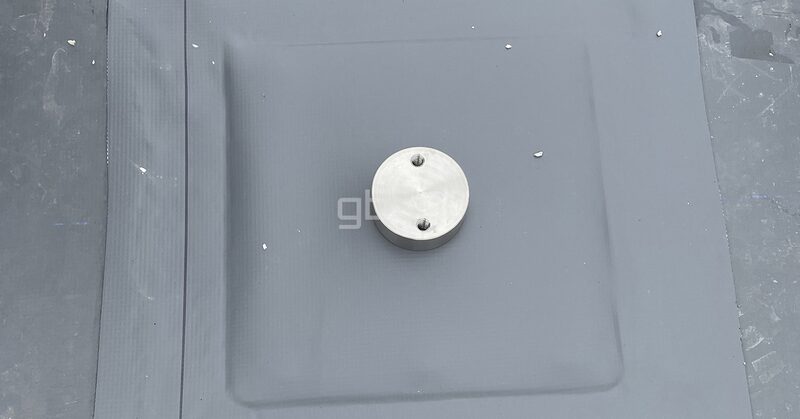
Equipment that sits outside the building envelope raises its own consent questions. Electric vehicle charging points will require listed building consent3. External meter boxes and electric chargers are listed as minor works requiring consent when they affect special character5. For a dwelling in a conservation area or one subject to an Article 4 direction, planning permission is not required for a wall-mounted outlet provided the outlet and its casing will not exceed 0.2 cubic metres32. For a dwelling that has not had permitted development rights removed and is not in an AONB or conservation area, the same 0.2 cubic metre threshold applies, and the outlet must not be located on scheduled ancient monument land32.
Heat pumps are assessed as renewable energy solutions. Adding renewable energy solutions like solar panels or air and ground source heat pumps might be acceptable but will require listed and or planning consent1. A micro-combined heat and power system in a listed building or designated area is likely to need consent for internal alterations, and it is advisable to check with the local planning authority before a flue is fitted13.
Ventilation and pipework follow the same route. Central heating or other flues, air conditioning and heat recovery units and pipework may require listed building consent10. Mechanical ventilation with heat recovery requires listed building consent for listed buildings12. New flues and vents are named among the internal and external alterations requiring consent11.
The four nations: how consent differs across the UK
The listed building consent regime derives from the Planning (Listed Buildings and Conservation Areas) Act 1990, which is the legal basis cited in England1. The Welsh Government publishes separate planning permission guidance for boilers and heating, external walls, solar panels and micro-combined heat and power, which sets out the Welsh position on each of those measures4. In Wales, if the building is listed, even if permitted development rights apply, Listed Building Consent will be required, and the Local Planning Authority may have removed some permitted development rights as a condition of the original planning permission4. If the property is listed, planning permission and Listed Building Consent will be required18.
Building regulations exemptions differ by nation as well. In Wales, certain buildings which are listed, in conservation areas or included in the schedule of monuments are exempt from the energy efficiency requirements where compliance would unacceptably alter their character or appearance30. The Welsh Government has published Approved Document L volumes for conservation of fuel and power and Approved Document F for ventilation, with the listed volume 1 dwellings and volume 2 buildings other than dwellings documents taking effect on 4 March 202730.
For Scotland and Northern Ireland, the consent principle is the same, in that designated heritage buildings are assessed individually before energy work proceeds, but the administrative route runs through the devolved planning systems rather than the Planning Portal guidance cited here. Households in those nations should approach their own planning authority, since the published guidance used on this page is drawn from England and Wales.
Sources32 cited
- Listed building consent, Planning Portal, 2026
- Making alterations to a listed building, Bristol City Council, 2026
- Improving energy saving and sustainability in conservation areas and listed buildings, Brighton and Hove City Council, 2026
- Planning permission: boilers and heating, Welsh Government, 2026
- Planning and listed building consent requirements, West Northamptonshire Council, 2023
- What is planning permission, Planning Portal, 2026
- Proposed Local Listed Building Consent Order, London Borough of Southwark, 2026
- Planning permission for external walls, Planning Portal, 2026
- Planning permission: external walls, Welsh Government, 2026
- Getting consent for works to a listed building, North Northamptonshire Council, 2026
- When consent is required, Buckinghamshire Council, 2026
- Permitted development checklist, Bath and North East Somerset Council, 2015
- Planning permission: micro combined heat and power, Welsh Government, 2026
- Solar photovoltaics and planning in conservation areas, West Suffolk Council, 2026
- Planning permission for electrics, Planning Portal, 2026
- Installing solar panels on your home, Brighton and Hove City Council, 2026
- Solar panels guidance, City of York Council, 2026
- Planning permission: solar panels, Welsh Government, 2026
- Solar Together domestic planning guidance, Southampton City Council, 2026
- Solar photovoltaic (PV) panels, London Borough of Bromley, 2026
- Planning and solar, Frome Town Council, 2025
- Solar panels, City of York Council, 2026
- Building consent order for solar panels, Royal Borough of Kensington and Chelsea, 2022
- Royal Borough of Kensington and Chelsea Local Listed Building Consent Order, Local Government Association, 2022
- Clifton Local Listed Building Consent Order guidance, Bristol City Council, 2025
- Draft LLBC Order for the Clifton Conservation Area, Bristol City Council, 2025
- Draft Local Listed Building Consent Order, January 2022, Royal Borough of Kensington and Chelsea, 2022
- Installing solar panels using the Local Listed Building Consent Order, Royal Borough of Kensington and Chelsea, 2026
- Is permission needed for installing new roof tiles, Planning Portal, 2026
- Exemptions from building regulations, Planning Portal, 2026
- Future Homes and Buildings Standards consultation response, Ministry of Housing, Communities and Local Government, 2026
- Retrofit and energy efficiency: permitted development, Cotswold District Council, 2026
 Building Regulations EnglandAdding a heat pump, solar panels or an extension usually needs building regulations approval, and it is separate from planning permission.
 Permitted Development by HomeCan you put up solar panels or a heat pump without asking the council?
 Planning for InsulationDo you need planning permission to add insulation, cladding or new windows?
 Permitted Development RightsDo you need planning permission for solar panels or a heat pump?
 Home Energy Planning WalesSolar panels and heat pumps often need no planning permission in Wales, but the rules differ from England.
 Planning Permission EnglandMost homes in England can have solar panels fitted without planning permission, but does yours count as one of the exceptions?