
In this answer
Short answer
There is no fee for an application for listed building consent. Councils state it directly: no fee applies to the consent application, and there is no additional fee where consent is sought for work such as solar panels1. The same position is repeated across authority guidance, including a technical advice note that records no fee for listed building consent, and a government review of the barriers to adapting historic homes, which notes that making an application carries no fee3.
The costs that do arise sit elsewhere. Listed building consent is a separate process from planning permission and applies to both the interior and exterior of a building, so works on a listed home frequently need both consents, and planning permission usually carries a fee6. Professional work, building control and pre-application advice are the other places money changes hands.
What listed building consent is and when it is required
Listed building consent is the permission a local planning authority grants for works that affect a listed building's character as a building of special interest10. It is required for any significant works, whether internal or external, and it is not displaced by permitted development rights: where a building is listed, consent is required even if permitted development rights would otherwise apply11.
The scope is broad. Consent is required for alterations, extensions and demolitions, for major repairs, for introducing new materials such as insulation, and for adding solar panels to the building or its curtilage13. External works, including decorative alterations, new rendering, painting or cladding, removal of existing rendering, painting or cladding, and new roofing materials all fall within it14. Minor works require consent when they affect the special character of the listed building15.
Energy work is squarely inside this. Central heating or other flues, solar panels, air conditioning and heat recovery units and pipework may all require consent14. Solar panels on a listed building require consent, including on buildings within the curtilage that pre-date July 1948, and one council states that listed building consent is always needed for solar panels on listed properties16. The same applies to a listed commercial premises18.
For a household, this is the first point at which energy independence meets regulation. A listed home can usually be adapted, but the consent route is the mechanism, and it is free to use. The dependence that remains is procedural rather than financial: the local planning authority decides, and the decision turns on the building's significance rather than on the household's energy costs.
Consent and planning permission: which applies to which works
The two consents are separate, and the distinction matters because only one of them is free. Listed building consent is a separate process from planning permission and applies to both the interior and exterior of the building6. Where a property is listed, planning permission and listed building consent will be required, and where the property is a listed building or scheduled monument, both are needed19.
Some works need consent alone. Others need both. Extensions to buildings are among the works for which planning permission is likely to be required, and all forms of extension, including porches, dormer windows and conservatories, require listed building consent21. Replacement windows on a listed building are likely to need consent, depending on the proposal details and the identified significance of the individual building22.
| Work | Listed building consent | Planning permission |
|---|---|---|
| Extensions, including porches, dormers, conservatories | Yes, all forms14 | Likely required21 |
| Solar panels on the listed building or curtilage | Yes16 | Depends on the proposal |
| New rendering, painting or cladding, or removal of it | Yes14 | Depends on the proposal |
| New roofing materials | Yes14 | Depends on the proposal |
| Major repairs | Yes13 | Depends on the proposal |
| Demolition | Yes13 | Depends on the proposal |
The practical consequence is that a household planning energy work on a listed home should expect to run two processes where the work is more than minor. Consent is free; the planning application that accompanies it is not. Where an application is combined with full or householder consent, fees may be incurred from that other consent type2.
Where the costs actually arise for applicants
The consent application is free, so the money goes to the work around it. Four categories account for most of it.
Planning fees. Householder planning consent carries a £249 fee for work falling under prior approval, such as a larger rear extension, and £272 for smaller works not to the house itself, such as fences8. Prior approval for changes of use with related building operations carries a fee of £53623. A planning application for the creation of new dwellings would usually be £714 for each new dwellinghouse where no more than ten are proposed, and between 10 and 50 dwellinghouses the fee is £476 for each dwellinghouse24.
Building control. Building control fees are separate from planning, and the applicant is liable to pay them25. What is paid depends on the type of work involved, site inspections, the number of dwellings in the building and the total floor area9. A decision on full plans can be expected within 5 weeks, or 2 months with the applicant's consent9.
Pre-application advice. Local authorities may charge a fee for pre-application advice26. This is optional in the sense that it is not required to apply, but it is the stage at which a household learns whether a proposal is likely to succeed.
Professional documents. A site plan, location plan, design and access statement and heritage assessment are required with the application, and supporting technical and heritage documents may also be needed2. These are prepared by architects, surveyors or heritage consultants, and their cost is set by the practice rather than by any published scale.
Extensions, repairs and energy work on a listed home
Extensions are the clearest case. All forms of extension require listed building consent, and extensions to buildings are among the works for which planning permission is likely to be required14. Because consent covers the interior as well as the exterior, internal alterations made as part of an extension fall within the same application6.
Repairs and alterations follow the same logic. Major repairs require consent, as do demolitions and the introduction of new materials such as insulation13. External works, including decorative alterations, require consent, and so do new roofing materials and any new rendering, painting or cladding, or the removal of existing rendering, painting or cladding14.
Energy measures are treated as alterations. Solar panels on a listed building require consent, including on curtilage buildings that pre-date July 194816. Central heating or other flues, solar panels, air conditioning and heat recovery units and pipework may require consent14. One council states that listed building consent is always needed for solar panels on listed properties, and another that consent must be applied for to install solar panels on a listed building17.
For a household, the pattern is consistent: the consent itself costs nothing, and the constraint is what the authority will accept. That is the dependence a listed home carries. The building's significance, not the household's energy bill, is the test, and the free application is the route through it. Households weighing energy work on a protected building can read more on listed buildings and conservation areas and on how permitted development rights interact with designation.
Submitting the application and what happens next
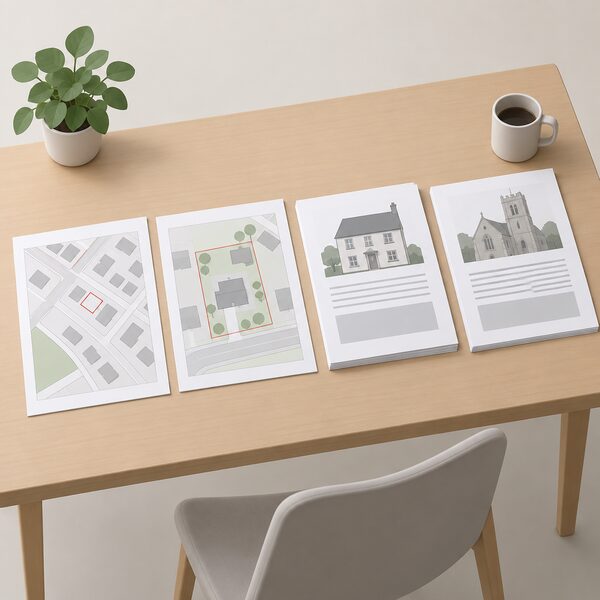
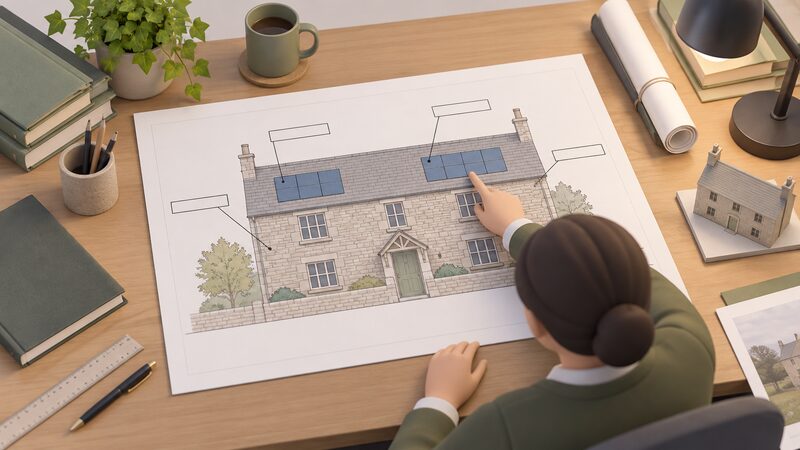
An application for listed building consent must be made to, and determined by, the local planning authority30. The required information is a site plan, location plan, design and access statement and heritage assessment2. Supporting technical and heritage documents may need to be submitted when requesting consent, and Historic England Advice Note 16 is the reference councils cite for listed building consent applications14.
The timetable is fixed. Listed building consent should be granted within 8 weeks, beginning when the local planning authority validates the application, and that period includes a 21-day consultation during which neighbours and interested parties can comment2. Building control runs to a different clock: a decision on full plans within 5 weeks, or 2 months with the applicant's consent9.
Retrospective consent can be applied for after work to a listed building has taken place, and that application is also free2. It does not undo the offence of having carried out the work without consent first, and it places the household in the position of asking the authority to approve something already built.
Sources32 cited
- Solar panels guidance, City of York Council, 2026-09-17
- Listed building consent, Planning Portal, 2026-09-17
- Solar equipment on residential buildings: technical advice note, Hart District Council, 2025-01
- Adapting historic homes for energy efficiency: a review of the barriers, GOV.UK, 2024-01-03
- Installing solar panels using the local listed building consent order, Royal Borough of Kensington and Chelsea, 2026-09-17
- Common queries about planning permission, Wiltshire Council, 2026-09-17
- Deciding if a heat pump is right for you, Citizens Advice, 2025-12-08
- Householder planning consent, Planning Portal, 2026-09-17
- Building regulations approval: how to apply, GOV.UK, 2026-09-17
- FAQs for listed building owners and occupiers, Exeter City Council, 2026-09-17
- Planning permission, Planning Portal, 2026
- Planning permission, boilers and heating, Welsh Government, 2026-09-17
- When consent is required, Buckinghamshire Council, 2026-09-17
- Getting consent for works to a listed building, North Northamptonshire Council, 2026-09-17
- Planning and listed building consent requirements, West Northamptonshire Council, 2023-12-14
- Solar photovoltaics and planning in conservation areas, West Suffolk Council, 2026-09-17
- Planning and solar, Frome Town Council, 2025-09-02
- Solar panels, City of York Council, 2026-09-17
- Solar together, Swindon Borough Council, 2026-09-17
- Planning guidance: heat pumps, London Borough of Richmond upon Thames, 2026-04-22
- Find out if you need planning permission, Buckinghamshire Council, 2026-09-17
- Improving energy saving and sustainability in conservation areas and listed buildings, Brighton and Hove City Council, 2026-09-17
- Prior approval, Planning Portal, 2026-09-17
- Permitted development rights: support and provision for new homes consultation, Scottish Government, 2025-09
- Building control application guidance notes, London Borough of Bromley, 2026-09-17
- Flue, chimney or soil and vent pipe, Planning Portal, 2026-09-17
- Permitted development, London Borough of Redbridge, 2026-09-17
- Building regulations: boilers and heating, Welsh Government, 2026-09-17
- Solar panels, Wirral Council, 2026-09-17
- Solar panels planning permission checklist, Islington Council, 2026-09-17
- Making alterations to a listed building, Bristol City Council, 2026-09-17
- Do you need planning permission for retrofitting, South Oxfordshire District Council, 2025-08-15
 Planning for InsulationDo you need planning permission to add insulation, cladding or new windows?
 Listed Buildings and AreasYour home is listed or sits in a conservation area, so do you need permission before adding solar panels, insulation or a heat pump?
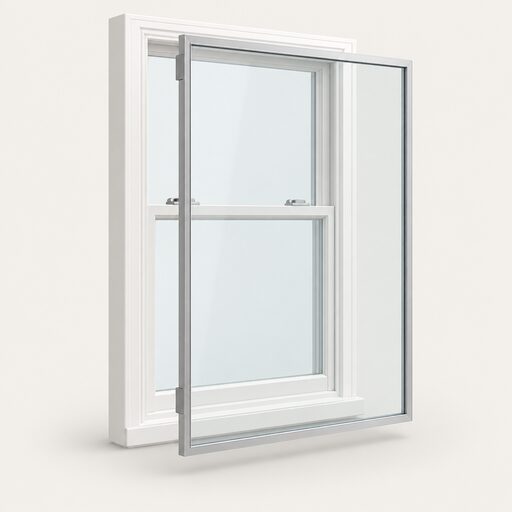 Insulating a Listed BuildingCan you insulate a listed building, and do you need permission first?
 Leasehold Consent for EnergyHow a lease restricts alterations, who grants consent for solar, heating and glazing work in a flat, and how planning permission and listed building consent sit alongside freeholder permission.
 Building Regulations EnglandAdding a heat pump, solar panels or an extension usually needs building regulations approval, and it is separate from planning permission.
 Planning Permission for ChargersDo you need planning permission for a home EV charger, and does it change if you live in a listed building, a conservation area or a flat?