
In this answer
Short answer
Replacing the windows in a listed building almost always requires listed building consent. Brighton and Hove Council states that listed building consent is likely needed, depending on the proposal details and the identified significance of the individual listed building1. Lewisham and Fulham Council is more direct: listed building consent would be required for the installation of replacement windows and any internal works such as the installation of secondary glazing2.
The consent regime is broad. It applies to any works for the demolition of a listed building, or for its alteration or extension, which is likely to affect its character as a building of special interest3. That covers replacement windows, double glazing, new materials and changes to openings. In many cases planning permission is needed as well, because listed status removes permitted development rights.
What follows sets out when consent is triggered, what counts as an alteration, how openings and internal works are treated, how building regulations fit alongside consent, and how a Certificate of Lawfulness can confirm that minor work is lawful without consent.
When listed building consent is needed for replacement windows
The test is not the window itself but the effect on the building. Exeter Council states that listed building consent is needed for any works that affect the building's character as a building of special interest4. North Northamptonshire Council puts it another way: any works that would alter the special character of a listed building require listed building consent, and some minor works require it when they affect that special character5.
For windows specifically, the position is settled. Bristol Council advises that if you need to change your windows then you will probably need either listed building consent or a Certificate of Lawfulness9. The Energy Saving Trust states plainly that permission is needed to make changes to windows in a listed building10.
Consent is a separate process from planning permission and applies to both the interior and exterior of the building7. That matters for windows because the works often touch the reveal, the frame, the internal lining and the surrounding plaster as well as the external face.
Where a building is listed, permitted development rights do not remove the need for consent. Welsh Government guidance states that if the building is listed, even if you enjoy permitted development rights, listed building consent will be required11. The same principle applies across the UK: listing is a national designation and the consent regime operates alongside, not instead of, the planning system.
In practice, a householder with a listed building should expect to submit an application before any window is ordered or removed. The application is made to and determined by the local planning authority12, and consent should be granted within eight weeks, beginning when the authority validates the application3.
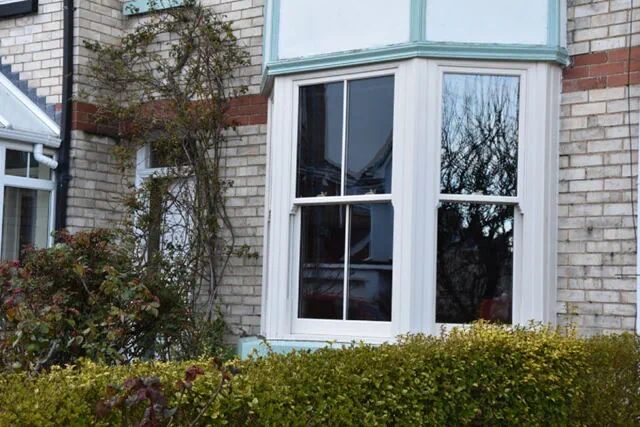
What counts as an alteration: replacement, double glazing and new materials
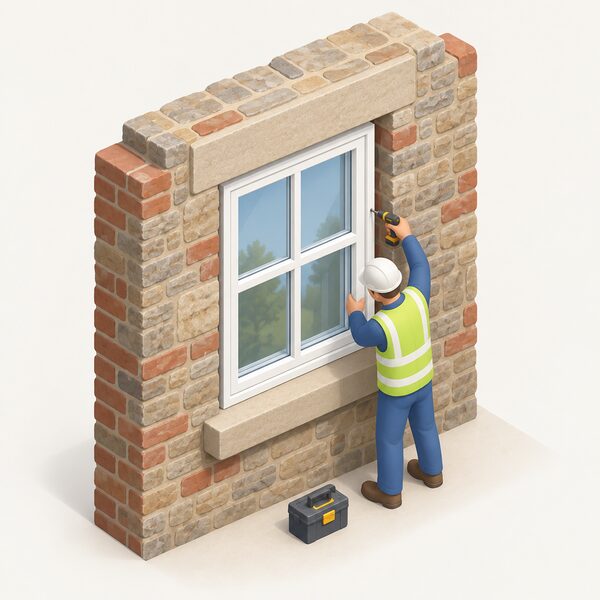
The consent regime treats replacement, reglazing and material change as alterations. North Northamptonshire Council lists replacement or double glazed windows or doors among the external alterations requiring listed building consent5, and Wiltshire Council gives the same wording13. Buckinghamshire Council adds changing materials, for example changing from metal pipes to plastic pipes, and introducing new materials to the property such as insulation14.
Bristol Council sets out the wider principle: listed building consent or a Certificate of Lawfulness is probably needed if you are introducing new material to the building or removing original fabric, and this includes painting, re-rendering, cladding, re-roofing, and changing windows and doors9. Buckinghamshire Council also lists notable changes of colour to the exterior, including walls, doors or windows, as requiring consent14.
The practical effect is that a like-for-like repair in the same materials sits at one end of the scale, and a new window in a different material, profile or colour sits at the other. Between them lie reglazing an existing frame, adding draught seals, and replacing a single failed unit.
"replacement or double glazed windows or doors"
Where a building is not listed, the position is different. Cotswold District Council states that planning permission is not required for replacement windows provided they are similar in appearance to the existing, though this exclusion does not apply to dwellings that have had permitted development rights removed, or those in an Area of Outstanding Natural Beauty or a conservation area15. Bath and North East Somerset's permitted development checklist confirms that permitted development applies to the installation of new windows under Part 1, Class A16.
Bricking up a window or other changes to openings
Changes to openings are treated as alterations in their own right. Planning Portal guidance states that bricking up or infilling an existing window is classified as permitted development, so an application for planning permission is not required17. That is the position for an ordinary dwelling.
For a listed building the position reverses. The same guidance states that if you live in a listed building, you will require planning permission and listed building consent for the change17. Bricking up a window removes historic fabric and changes the elevation, so it engages the consent regime directly.
Other changes to the envelope follow the same logic. North Northamptonshire Council lists new roofing materials and the insertion of roof lights as requiring listed building consent5. Buckinghamshire Council lists extensions and demolitions14. Bristol Council notes that repointing in different materials or pointing style requires consent9.
For a household, the point is that a window is not an isolated component. Widening an opening, lowering a sill, removing a mullion or blocking a light all change the building's character and all fall within the consent regime. Where a proposal touches the opening rather than the window alone, the application needs to describe the whole change.
Building regulations approval alongside consent
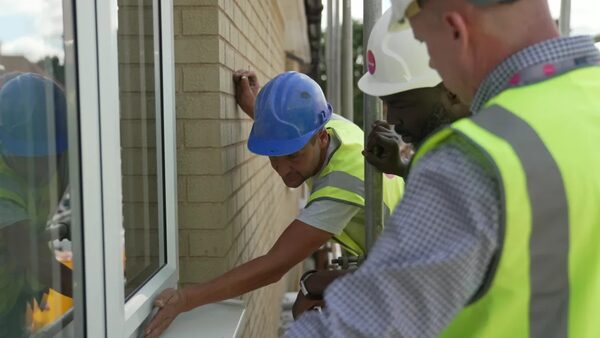
Listed building consent and building regulations approval are separate requirements, and both can apply to the same window. GOV.UK lists replacing windows and doors among the alterations covered by building regulations approval18. Contact a building control body to check the building regulations or apply for approval19.
The two regimes answer different questions. Consent asks whether the work harms the special interest of the listed building. Building regulations ask whether the work meets standards for energy efficiency, ventilation, structural safety and fire. A window can satisfy one and fail the other.
There is also an exemption worth knowing. FENSA states that there are exemptions to the rule for listed buildings and conservation areas20. That exemption concerns the energy efficiency standards in Approved Document F, not the need for consent. A listed building may be exempt from a particular performance requirement while still requiring listed building consent for the window itself.
Where electrical work is involved, for example a new extractor or a heating control, Welsh Government guidance states that the local authority building control department should be contacted before work starts21.
Certificate of Lawfulness: when it applies instead
Not every window task needs consent. Bristol Council states that regular maintenance and some relatively minor work might not need listed building consent, and if this is the case a Certificate of Lawfulness can be applied for9. The same source notes that where repairs use the same materials and construction methods and only damaged items are removed, it is likely that the work can be covered by a Certificate of Lawfulness9.
A Certificate of Lawfulness is also known as a lawful development certificate22. It is a formal confirmation that proposed works are lawful, not a permission in itself.
Local Listed Building Consent Orders are a related route. Bristol Council explains that LLBCOs provide conditional consent for certain types of works, as defined by the Order, that would otherwise require listed building consent9. Southwark Council's proposed order states that before works begin, a Certificate of Lawfulness of Proposed Works to a Listed Building can be applied for optionally, and offers formal confirmation that installation in compliance with the Order's conditions is lawful and will not require listed building consent23. The Local Government Association has published a case study on the Royal Borough of Kensington and Chelsea's Local Listed Building Consent Order24.
For a household, the practical sequence is to establish first whether the work is maintenance or alteration. If it is maintenance in the same materials, a Certificate of Lawfulness may confirm the position. If it is alteration, consent is the route.
How consent is judged: significance of the building and the proposal

Applications are assessed against the significance of the building and the detail of the proposal. Before submitting, the applicant needs to know the listed building grading, the detailed proposed works and affected parts, and the applicant's interest and any other person's interest3. Supporting technical and heritage documents may need to be submitted when requesting consent5.
The decision rests with the local planning authority12. Consent should be granted within eight weeks, beginning when the authority validates the application3. Applications for listed building consent are free8.
The judgment turns on whether the proposal preserves or harms the special interest of the building. A replacement window that copies the original in material, profile, glazing bar pattern and finish is a different proposition from one that substitutes a modern profile in a different material. The same logic applies to the wider envelope: solar panels on a listed building need listed building consent before work can commence25, and Frome Town Council states that listed building consent is always needed for solar panels on listed properties26. Bath and North East Somerset notes that consent may also be required for installations on a listed building or within its curtilage, or the curtilage of any building built before 194827.
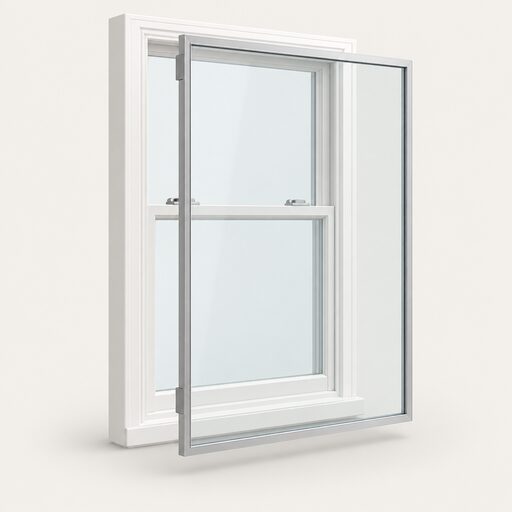
For a household, the consent regime is the main constraint on what can be done to a listed building's windows. It limits the choice of frame material, glazing type and finish, and it requires an application before work starts. What it does not do is prevent improvement: secondary glazing, draught-proofing and repair in matching materials are all routes that have been used within the regime, and the listed buildings insulation and glazing page sets out how those measures are treated. For the wider rules on window replacement outside the listed regime, see replacement window rules, and for the planning framework around insulation and glazing generally, see planning permission for insulation, cladding and windows.
Sources28 cited
- Improving energy saving and sustainability in conservation areas and listed buildings, Brighton and Hove City Council, 2026
- Planning frequently asked questions, London Borough of Hammersmith and Fulham, 2026
- Listed building consent, Planning Portal, 2026
- FAQs for listed building owners and occupiers, Exeter City Council, 2026
- Getting consent for works to a listed building, North Northamptonshire Council, 2026
- Planning guidance: heat pumps, London Borough of Richmond upon Thames, 2026
- Common queries about planning permission, Wiltshire Council, 2026
- Royal Borough of Kensington and Chelsea Local Listed Building Consent Order, Local Government Association, 2022
- Making alterations to a listed building, Bristol City Council, 2026
- Windows and doors, Energy Saving Trust, 2026
- Planning permission: boilers and heating, Welsh Government, 2026
- Solar photovoltaics and planning in conservation areas, West Suffolk Council, 2026
- When consent is required, Buckinghamshire Council, 2026
- Permitted development, Cotswold District Council, 2026
- Permitted development checklist, Bath and North East Somerset Council, 2015
- Do I need planning permission for external insulation, Planning Portal, 2026
- Building regulations approval, GOV.UK, 2026
- How to apply for building regulations approval, GOV.UK, 2026
- Building regulations: homeowners, FENSA, 2026
- Building regulations: electrics, Welsh Government, 2026
- Permitted development, London Borough of Redbridge, 2026
- Proposed Local Listed Building Consent Order, Southwark Council, 2026
- Solar panels planning permission, Bath and North East Somerset Council, 2026
- Solar panels on a listed building, City of York Council, 2026
- Solar and beyond: planning and solar, Frome Town Council, 2025
- Is permission needed for installing new roof tiles, Planning Portal, 2026
- Solar together, Swindon Borough Council, 2026
- Window insulation, Uswitch, 2025
 Planning for InsulationDo you need planning permission to add insulation, cladding or new windows?
 Building Regs Part L InsulationAdding insulation or replacing windows?
 Insulating a Listed BuildingCan you insulate a listed building, and do you need permission first?
 Replacement Window RulesWho signs off replacement windows so they meet building rules?
 Listed Buildings and AreasYour home is listed or sits in a conservation area, so do you need permission before adding solar panels, insulation or a heat pump?
 Leasehold Consent for EnergyHow a lease restricts alterations, who grants consent for solar, heating and glazing work in a flat, and how planning permission and listed building consent sit alongside freeholder permission.