
In this answer
Short answer
Building regulations approval and planning permission are two separate questions, and a domestic wind turbine can need one, both or neither. The starting point is whether the turbine is attached to the house. If it is, building regulations will normally apply to the installation1. If it is not attached, only the electrical installation and connection are captured by the building regulations1. Building regulations also apply to other aspects of the work, such as electrical installation1.
Planning permission is a different matter. Under permitted development rights, it is possible in some cases to install domestic wind turbines without an application for planning permission, so long as specified limits and conditions are met2. A stand alone turbine within the boundaries of a dwellinghouse can be considered permitted development provided all the limits and conditions are met3. A building-mounted turbine has its own, narrower set of rules4.
The two regimes interact. Even where works are permitted development, building regulations approval is likely to be needed5. And permitted development for a turbine is conditional on there being no existing air source heat pump at the property, with only the first installation of any wind turbine qualifying4.
When approval is needed and when permitted development covers it
The distinction that matters most is between planning permission and building regulations approval. Planning permission governs whether the turbine may be installed at all; building regulations govern how the work is done. The Planning Portal is explicit that these are separate: you will likely need building regulations approval even if the works are permitted development5. Local authority guidance repeats the point for related technologies, noting that building regulations approval may be needed even if planning permission or listed building consent is not required7.
For the turbine itself, the building regulations position turns on attachment. A turbine attached to the house normally brings the full weight of the regulations onto the installation1. A turbine that is not attached leaves only the electrical installation and connection within scope1. In both cases, electrical installation and other aspects of the work are covered1.
On the planning side, permitted development is a self-assessment route. It is available in some cases for domestic wind turbines without an application, provided the specified limits and conditions are met2. A stand alone turbine within the boundaries of a dwellinghouse can be considered permitted development if all the limits and conditions are met3. Where those limits and conditions are not met, or permitted development rights have been removed in the area, a householder or full planning application is required9.
The conditions are cumulative, not alternatives. Only the first installation of any wind turbine would be permitted development, and only if there is no existing air source heat pump at the property4. Additional wind turbines or air source heat pumps at the same property require an application for planning permission6. A building-mounted turbine must also be removed as soon as reasonably practicable when no longer needed for microgeneration4.
For a household weighing up domestic wind turbines, the practical consequence is that permitted development is a narrow corridor. Step outside it, by adding a second turbine or pairing it with a heat pump, and the planning application becomes unavoidable.
The conditions: no existing air source heat pump, and only one turbine
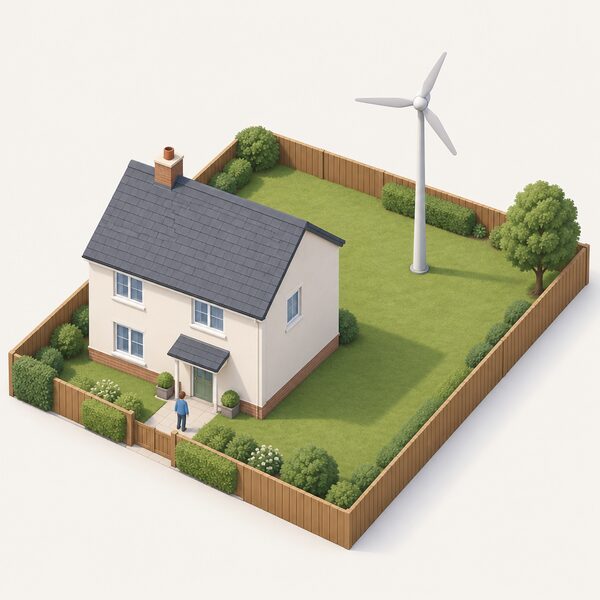
The heat pump condition runs in both directions, and it catches households that install technologies in sequence rather than together. A wind turbine is permitted development only if there is no existing air source heat pump at the property4. An air source heat pump is permitted development only if there is no existing wind turbine on a building or within the curtilage of that property10. Local guidance states the same restriction plainly: there must be no existing wind turbine on the property or within its grounds11, and you cannot install an air source heat pump if a standalone wind turbine is already installed within the curtilage of your home12.
The legislation behind the heat pump route says the same. Development is not permitted if a wind turbine is installed on the same building or within the curtilage of the dwellinghouse or block of flats13. A separate class covering wind turbines on domestic premises prohibits the turbine where it would be installed on safeguarded land, a site designated as a scheduled monument, or within the curtilage of a listed building14.
The one-turbine rule is equally firm. Only the first installation of any wind turbine would be permitted development4. Additional wind turbines or air source heat pumps at the same property require an application for planning permission6. Local authority guidance confirms that no other air source heat pump or wind turbine may have been installed on the building, and that additional installations will require planning permission15.
There is also a materials condition for stand alone turbines: blades must use non-reflective materials3.
MCS 020 planning standards the turbine must meet
MCS 020 is the Microgeneration Certification Scheme planning standard, and it is the technical gate through which permitted development passes. A stand alone wind turbine installation is permitted only if it complies with the Microgeneration Certification Scheme Planning Standard (MCS 020) or equivalent standards6. The same requirement applies to building-mounted turbines4.
The standard has a specific wind component. MCS 020 b is the Wind Turbine Sound Calculation for permitted development installations, and it replaced the earlier MCS 006 reference in legislation16. The definition in the regulations covers the standards specified in the Microgeneration Certification Scheme for air source heat pumps (MCS 020 a) and for small and micro wind turbines (MCS 020 b)17.
Scottish guidance uses the same language. A wall or roof-mounted domestic wind turbine complies with MCS 020 planning standards18, and both turbines on detached dwellinghouses and free-standing turbines must comply with MCS planning standards for wind turbines or equivalent standards19. Welsh consultation material notes that where compliance is not achieved a planning application will be required20.
The practical effect is that the sound calculation, not just the physical dimensions, determines whether permitted development is available. A turbine that cannot demonstrate compliance with MCS 020 or an equivalent standard falls outside permitted development, whatever its size or position.
"the standards specified in the Microgeneration Certification Scheme for air source heat pumps"
For households exploring small wind turbine standards, MCS 020 is the planning-facing standard, distinct from the product certification route. Certification bodies list micro and small wind turbines under MCS 00621, which is the product standard rather than the planning sound calculation.
Where location changes the answer: conservation areas, listed buildings and local rules
Location can remove permitted development entirely, and the rules differ by nation. The Planning Portal's building-mounted guidance relates to the planning regime for England, and notes that policy in Wales may differ4.
In conservation areas, the restrictions are positional. A building-mounted turbine is not permitted if it is on a wall or roof slope which fronts a highway4. A stand alone turbine is not permitted if it would be installed so that it is nearer to any highway bounding the curtilage than the part of the house or block of flats nearest to that highway6, or if it would be visible from a highway which bounds the curtilage of the dwellinghouse3.
Listed buildings and scheduled monuments are excluded outright. Permitted development rights do not apply to a turbine within the curtilage of a listed building or within a site designated as a scheduled monument, and they do not apply on designated land other than conservation areas, which includes national parks and the Broads, areas of outstanding natural beauty, and world heritage sites4. The legislation confirms the prohibition for scheduled monuments and listed building curtilages14.
Local rules can tighten matters further. Article 4 directions can remove permitted development rights for roof alterations in conservation areas23. Guidance for buildings in designated areas such as a conservation area, national park, area of outstanding natural beauty or the Broads states that planning permission will be required24. For listed buildings and conservation areas, local planning authority advice should be sought7, and there are exemptions to building regulation rules for listed buildings and conservation areas25.
| Location | Building-mounted turbine | Stand alone turbine |
|---|---|---|
| England, ordinary dwelling | Permitted development on detached buildings if MCS 020 met4 | Permitted development if all conditions met3 |
| Conservation area | Not permitted on a wall or roof slope fronting a highway4 | Not permitted if nearer to or visible from a bounding highway6 |
| Listed building curtilage | Not permitted4 | Not permitted14 |
| Scheduled monument | Not permitted4 | Not permitted14 |
| National park, AONB, Broads, world heritage site | Not permitted4 | Not permitted4 |
Building-mounted versus freestanding turbines: different rules apply
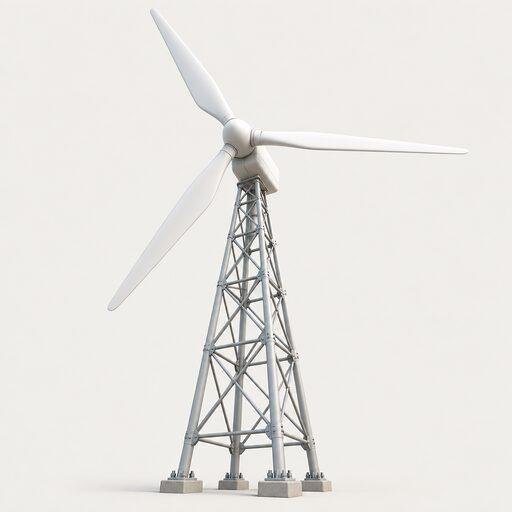
The two turbine types sit under different permitted development classes, and the differences are not cosmetic.
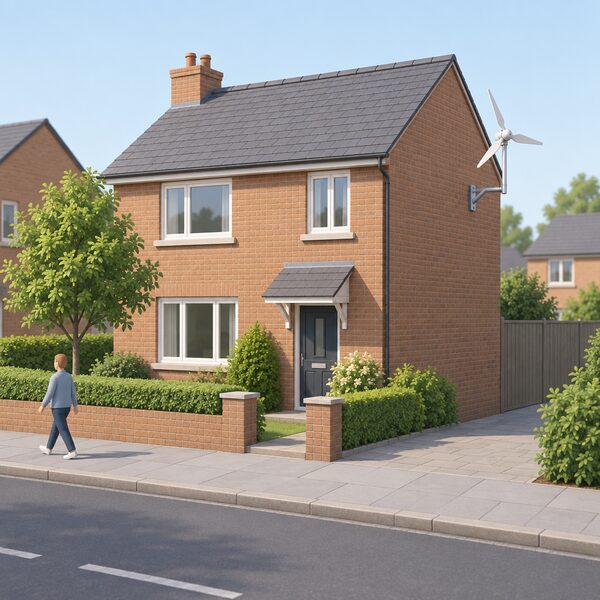
A building-mounted turbine is permitted development only on detached houses (not blocks of flats) and other detached buildings within the boundaries of a house or block of flats4. It must comply with MCS 020 or equivalent standards, must be the first installation at the property, and must be removed as soon as reasonably practicable when no longer needed for microgeneration4. It is excluded from listed building curtilages, scheduled monuments and designated land other than conservation areas4.
A stand alone turbine has a different geometry to satisfy. Any part of the turbine, including blades, must be at least the overall height of the turbine including blades plus 10 per cent of its height from any point along the property boundary6. Welsh guidance states the same boundary rule in the negative: an installation is not permitted if any part of the stand alone wind turbine, including blades, would be in a position less than a distance equivalent to the overall height of the turbine including blades plus 10 per cent of its height when measured from any point along the property boundary3. Blades must use non-reflective materials3.
The building regulations position also differs. A turbine attached to the house normally brings building regulations to bear on the installation1. A turbine that is not attached leaves only the electrical installation and connection within scope1.
For a household comparing pole-mounted and roof-mounted turbines, the planning route is therefore not interchangeable. The freestanding route offers permitted development on a wider range of buildings but imposes a boundary setback that many small plots cannot meet. The building-mounted route avoids the setback but is confined to detached buildings and carries a removal condition.
Applying for permission and who checks compliance
Where permitted development does not apply, a planning application is the route. In Scotland, a free-standing wind turbine requires the developer, before beginning development, to apply to the planning authority for approval of the design and size and a determination as to whether prior approval is required for siting and external appearance26. Elsewhere, the advice is to check with the local council on the necessary planning permissions before installing27, and to check with the Local Planning Authority about planning issues before having a system installed2.
Northern Ireland has its own position: planning approval is needed for small-scale wind turbines28. Independent guidance notes that depending on where you are located, you may need planning permission before installing a wind turbine29, and that planning permission may be required prior to installation30. The Energy Saving Trust notes that for England and Scotland the rules are more complex, and that in some specific situations you might not need planning permission31.
On building regulations compliance, the competent person route matters. For a turbine attached to the house, an installer registered with the relevant competent person scheme, as listed in Row 17 of Schedule 3 of the Building Regulations, may be authorised to self-certify the work without involving local authority building control1. For a turbine not attached to the house, if the electrical work is of the type listed in Row 12 of Schedule 3 and the installer is a member of a competent person scheme listed against that row, the installer may be authorised to self-certify the work without involving local authority building control1.
For the wider context on how a turbine fits a household's energy position, see microgeneration and energy independence.
Sources31 cited
- Building regulations for wind turbines, Planning Portal, 2026
- Wind turbines, Planning Portal, 2026-09-17
- Planning permission: wind turbines, Welsh Government, 2026-09-17
- Planning permission: building-mounted wind turbines, Planning Portal, 2026-09-17
- Permitted development, London Borough of Redbridge, 2026-09-17
- Planning permission: stand alone wind turbines, Planning Portal, 2026-09-17
- Insulation, Planning Portal, 2026-09-17
- Planning permission: introduction, Planning Portal, 2026
- Roof planning permission, Planning Portal, 2026-09-17
- Planning permission: air source heat pump, Planning Portal, 2026-09-17
- Heat pumps, New Forest District Council, 2026-04-22
- Planning permission: heat pumps, Welsh Government, 2026-09-17
- Class G: air source heat pumps on domestic premises, legislation.gov.uk, 2026-09-17
- Class H: wind turbine on domestic premises, legislation.gov.uk, 2026-09-17
- Air source heat pumps, Cornwall Council, 2026-09-17
- The Town and Country Planning (Permitted Development etc.) (England) (Amendment) Regulations 2025, legislation.gov.uk, 2025-05-06
- Part 14: renewable energy, legislation.gov.uk, 2026-09-17
- Review of permitted development rights: phase 3 consultation analysis, Scottish Government, 2024-03-28
- Circular 1/2024: householder permitted development rights, Scottish Government, 2024-05-28
- Changes to permitted development rights: summary of responses, Welsh Government, 2025-12
- MCS microgeneration certification, BSI, 2026-09-17
- MCS microgeneration certification, BSI, 2026-09-17
- Solar Together domestic planning guidance, Southampton City Council, 2026-09-17
- Planning permission: boilers and heating, Welsh Government, 2026-09-17
- Building regulations for homeowners, FENSA, 2026-09-20
- Householder permitted development rights guidance, Scottish Government, 2021-04-01
- Small wind turbines, MCS Certified, 2026-08-18
- Wind, nidirect, 2026-05-18
- What are wind farms all about?, Smart Energy GB, 2026-03-16
- Microgeneration energy guide, Uswitch, 2026-06-08
- Wind turbines, Energy Saving Trust, 2026-05-20
 Wind Turbine Planning in EnglandCan you put up a small wind turbine at home without asking the council first?
 Wind Turbine Planning in WalesDo you need planning permission for a wind turbine at home in Wales?
 Small Wind Turbine StandardsA small wind turbine needs the right certificate before it can go up, and that affects whether you need planning permission and whether you can get paid for the electricity you send to the grid.
 Wind Turbine Planning in NIDo you need planning permission for a home wind turbine in Northern Ireland?
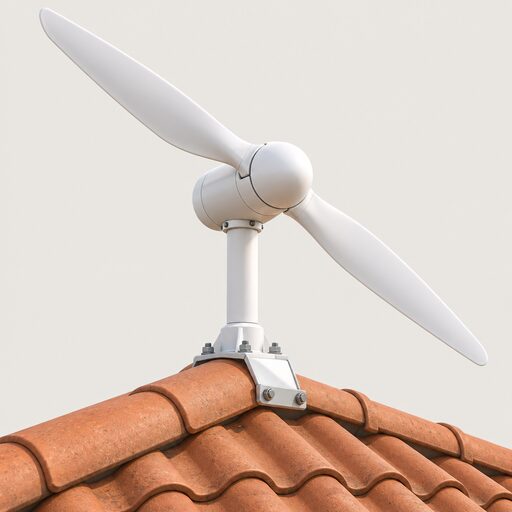 Building-Mounted Wind TurbinesWill a wind turbine on your roof actually make enough electricity to be worth it?
 Wind Turbine Planning ScotlandScotland lets some home wind turbines go ahead without planning permission, but only if they stay within strict size and distance limits.