
In this answer
Short answer
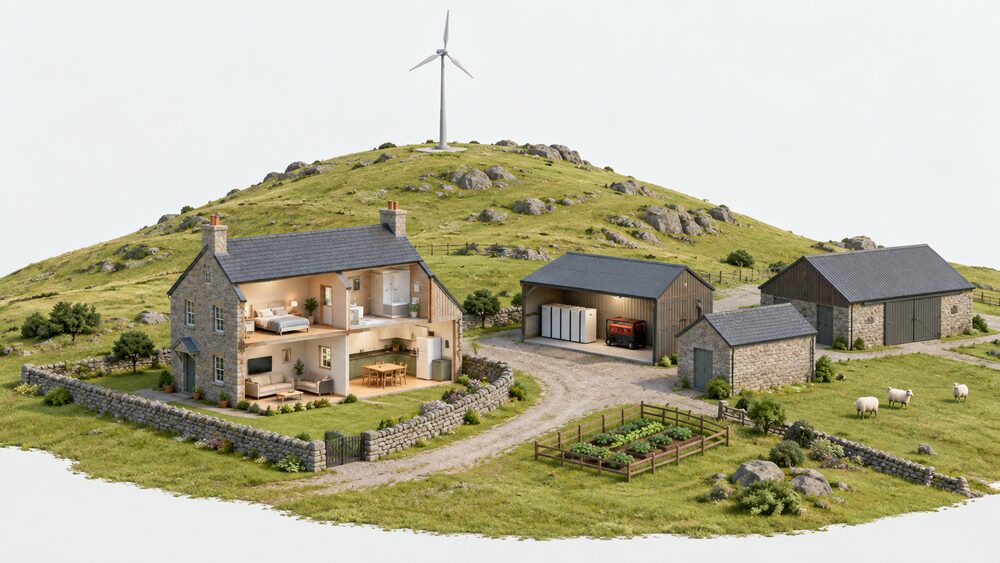
Yes, in principle a small wind turbine can power a farm off grid, but only where three conditions hold at once: the site has a genuinely strong wind resource, the turbine is sized to the farm's actual demand, and there is storage plus a backup generator for the still spells. Small wind is especially practical for remote areas where connecting to the grid may be costly or challenging1. Where those conditions are not met, the turbine will not carry the load on its own.
The single figure that decides most of it is average wind speed. The Energy Saving Trust's threshold for considering a turbine at all is a local annual average of five metres per second or more1. That is an annual average measured at the exact spot, not a regional figure, and it is the difference between a system that pays its way and one that sits idle through the calm months.
What follows is what a turbine can realistically supply, how siting and wind resource drive the numbers, how batteries, inverters and backup generation balance supply against demand, what going off grid means legally, and what the whole thing costs to install and keep running.
What a small turbine can realistically supply on a farm
The honest starting point is that small turbines produce modest amounts of power. Small turbines usually produce less than 100 kilowatts per day3. At the smallest end, units that charge a battery generate around 100W2, and UK makers such as Marlec and Leading Edge build small turbines that can generate a few hundred watts of power in a strong wind, aimed at off-grid setups like boats or remote cottages5.
That range matters for a farm because farm loads are not cottage loads. A milking parlour, grain dryer, cold store or irrigation pump draws far more than a few hundred watts, and draws it at times that may not coincide with strong wind. Individual turbines vary in size and power output from a few hundred watts to two or three megawatts, and a typical domestic system for a home would be 2.5 to six kilowatts, depending on the location and size of the house1. Bigger units used to power homes and businesses generate between 0.6 and 50kW2.
The practical consequence is that a farm turbine is sized against annual consumption, not against peak load. A turbine that covers the base load of a farmhouse and outbuildings is a realistic proposition. A turbine that covers a high-draw agricultural process is a much larger machine, and the cost rises with it.
Siting and wind resource: why average wind speed decides everything
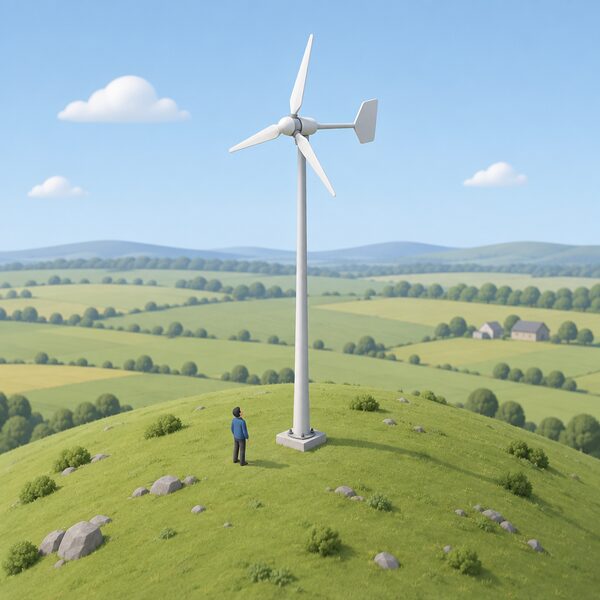
Wind energy relies on consistently strong winds to generate electricity efficiently, so wind farms are usually built in remote locations such as close to the coast or on open land6. A farm turbine lives or dies by the same rule, at a much smaller scale.
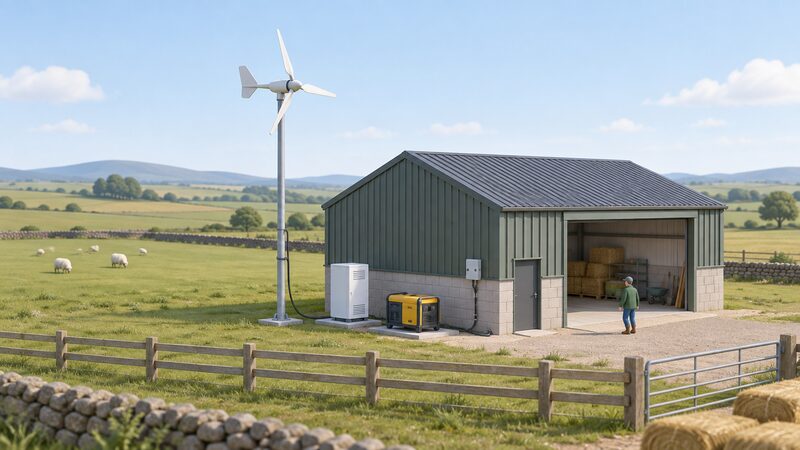
Turbines should ideally be located on a hilltop or raised structure, away from obstructions like trees or other buildings, and higher placements catch stronger, steadier winds4. Obstacles matter more than they look: a tree line upwind of a turbine creates turbulence that both cuts output and increases wear on the machine.
The assessment standard is demanding. Ideally, a professional assessment of the local wind speed should be carried out for a full year at the exact location where the turbine is planned, before proceeding1. For an earlier estimate, the wind speed database or the Carbon Trust's wind yield estimation tool can be used with a grid reference2. Those tools give a first indication; they do not replace a year of measurement at the site.
The threshold itself is five metres per second or more as an annual average1, and independent guidance points to the same figure, looking for a wind speed of at least five metres per second7. For context, a typical onshore wind turbine used in wind farms has a capacity of around 2 to 3 megawatts8, which is a different class of machine entirely and sits in a location chosen specifically for its wind.
Where the wind is marginal, a wind-diesel mixed system is common: it is common to run a small wind system with a diesel generator for use during periods of low wind speeds1. That is not a failure of the design, it is the design.
Balancing generation with demand: batteries, inverters and backup generation
An off-grid system has to solve a problem a grid-connected one never faces: matching supply to demand in real time, with no network to fall back on.
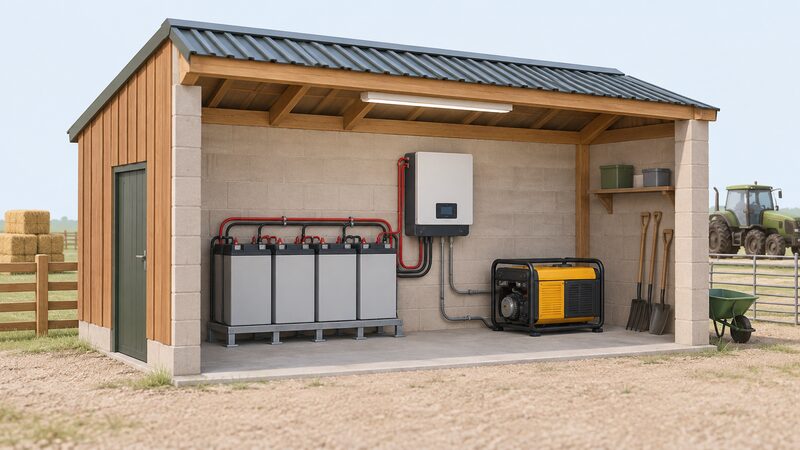
Off-grid inverters operate independently from the grid and depend only on solar panels or battery storage9. That independence is the point, and it is also the constraint. In off-grid systems, the batteries must be large enough to meet your needs, because large batteries ensure power availability in cloudy or low sunlight periods9. The same logic applies to wind: a calm week is the wind equivalent of a cloudy week.
The inverter sets the ceiling on what can be drawn at any moment. Off-grid inverters can provide power up to the rating of the inverter whilst there is enough energy in the battery10. Once the battery is depleted, the inverter's rating is irrelevant.
That is where backup generation comes in. A generator charges the battery and runs loads when batteries become low, and can be automatically started and stopped using the inverter or charger11. Automation matters on a working farm, because nobody is watching a battery state of charge at three in the morning.
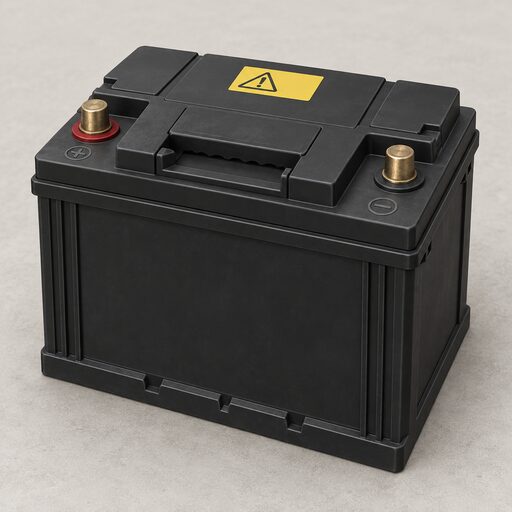
Battery storage for wind systems typically lasts around six to ten years, depending on the type, so batteries may have to be replaced during the life of the turbine1. You can store excess electricity and use it when there is no wind13, but only within the capacity installed.
Grid connection, G99 applications and what off grid means legally
Off grid has a precise meaning. An off-grid installation is one connected to a private wire network and not the Electricity Network14. A farm with its own private distribution between buildings, and no connection to the distribution network, is off grid in that sense. A farm with a mains supply and a turbine alongside it is not.
For anything connected, the connection process is governed by G98 and G99. G98 covers small-scale electricity generation such as solar panels or wind turbines with a capacity of 3.68kW or less per phase15, and exists to ensure small-scale generation installations connect to the grid safely and do not compromise network stability, safety or power quality16. Above that threshold, a G99 application applies, and the DNO needs to check whether the grid can take the extra electricity load before the system is up and running17.
The separate G98/G99 process covers connecting generation equipment, such as solar panels or home batteries, to the grid18. In Northern Ireland the equivalent route is G99/NI, and the parameters of G99/NI Fast Track applications changed on 1 May 202619.
Planning sits alongside the connection rules. In Northern Ireland, planning approval is needed for small-scale wind turbines1. In England, Scotland and Wales, under permitted development rights it is possible in some cases to install domestic wind turbines without an application for planning permission, so long as specified limits and conditions are met20. Stand-alone turbines have their own permitted development conditions, and local authorities may charge a fee for pre-application advice21. In Wales, stand-alone turbines granted under permitted development must be removed as soon as reasonably practicable when no longer needed for microgeneration22.
Costs, planning permission and maintenance over the turbine's life
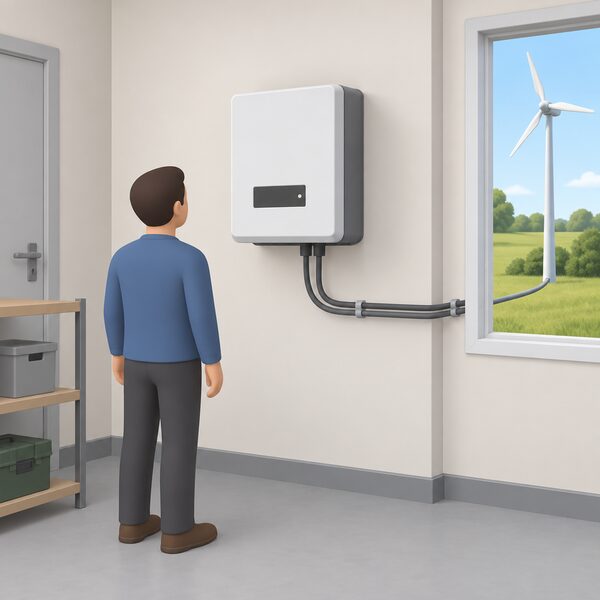
Costs would include the turbine, mast, inverters, battery storage if needed, and installation1. There is no single published figure that covers a farm-scale off-grid system, because the battery and backup generator are sized to the load, so prices are installer-quoted.
Maintenance is the more predictable line. Small wind turbine maintenance typically costs between £100 and £200, depending on the size of your system4. That is a routine service figure, not a repair bill.
Two components have known replacement horizons. If an inverter is needed, then this is likely to need replacing within the life of the turbine23, and you may need to replace the inverter, which helps convert the turbine's energy into usable electricity, once during its lifetime4. Battery storage typically lasts around six to ten years, depending on the type1. Over a turbine's working life, both are recurring costs rather than one-off purchases.
For comparison, a small 1kW off-grid hydro generator costs around £5,000 to £6,000 plus installation costs24. Total system costs for micro hydro can be high but often less than the cost of a grid connection, and with no electricity bills to follow25. That comparison is worth holding in mind, because the alternative to an off-grid wind system is often the cost of extending a grid connection, and the only way to connect wind farms to the wider power grid is through the installation of newer infrastructure like power lines, which can be expensive6.
On the Feed-in Tariff, the scheme is closed to new applicants, but a small FIT licensee registering a new generator pays £25 per generator in FIT year 1726. That is an administrative charge, not a payment to the household.
Where a small turbine falls short, and what to do about it
The limits are worth stating as plainly as the benefits.
- Calm spells. A wind turbine relies on consistently strong winds6. Multi-day calm periods are normal, and the battery has to cover them or the generator has to run.
- Battery replacement. Six to ten years is the expected life1, so at least one replacement falls within a typical turbine's working life.
- Inverter replacement. Likely once during the turbine's life4.
- Site sensitivity. Trees, buildings and terrain all reduce output, which is why a hilltop or raised structure away from obstructions is preferred4.
- Planning. Not automatic, and different in each nation1.
Where a farm has a suitable water source, micro hydropower can be especially cost-effective for rural or off-the-grid homes, farms and businesses that are close to a suitable water source27, and a good hydro system can generate a steady, more reliable electricity supply than other renewable technologies at a lower cost25. Useful power may be produced from even a small stream25. That is a genuinely different proposition from wind, because a river runs when the wind does not.
For a farm without water, the practical answer is a hybrid: small wind turbines can work with solar panels in a wind solar hybrid system, covering low light and wind conditions4. Small wind turbines can be paired with a battery storage system to store excess electricity for when it is most needed4, and if you have battery storage, you can store excess electricity from wind turbines and solar panels to use later28.
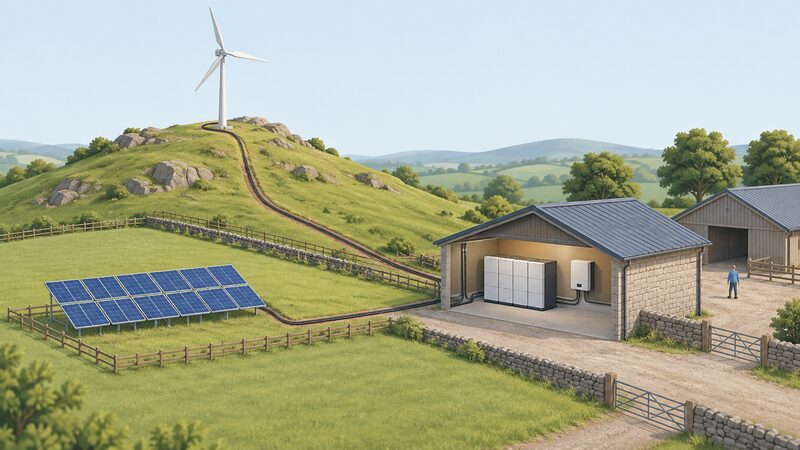
What this means for a farm's energy independence
An off-grid wind system delivers real independence from the grid, from a supplier and from electricity bills, and it does so on the farm's own land. That is the case for it.
The dependence that remains is worth naming. The system depends on the wind, which is variable and site-specific. It depends on a battery bank that will need replacing every six to ten years1. It depends on an inverter that will likely need replacing once4. It depends on a backup generator, usually diesel, for low wind periods1. And it depends on the manufacturer and installer for parts and service over a working life measured in decades.
None of that makes the proposition unreasonable. It makes it a system with inputs and maintenance, rather than a one-off purchase that runs itself. The wind speed at the site, measured over a full year, is the figure that decides whether the rest of it stacks up.
Sources28 cited
- Wind, nidirect, 2026-05-18
- Wind turbines, Uswitch, 2026-01-06
- Renewable statistics, Uswitch, 2025-05-13
- Small wind turbines, MCS Certified, 2026-08-18
- Domestic wind power, Centre for Alternative Technology, 2023-10-01
- What are wind farms all about, Smart Energy GB, 2026-03-16
- Minimum wind speed for a worthwhile turbine, Changeworks, 2026-06-01
- How does wind energy work, Power NI, 2026-04-09
- Hybrid inverter vs off-grid inverter, LuxPowerTek, 2024-07-24
- Off-grid battery inverters, Wind & Sun, 2026-09-20
- Medium off-grid AC system, Wind & Sun, 2026-09-20
- Off-grid vs hybrid inverter, SolaX Power, 2026-03-13
- Renewable energy, Consumer Council, 2026
- Feed-in Tariff glossary, ScottishPower, 2026-09-17
- Installations up to 3.68kW per phase, SSEN, 2026-09-17
- Micro generation and storage connections, Electricity North West, 2026-09-19
- Building regulations renewables guidance, Bedford Borough Council, 2026-09-17
- EV charger installation Barnstaple, Fuse Energy, 2026-09-16
- G99/NI Fast Track installations, NIE Networks, 2026-05-01
- Planning permission introduction, Planning Portal, 2026
- Planning permission: stand alone wind turbines, Planning Portal, 2026-09-17
- Planning permission: wind turbines, Welsh Government, 2026-09-17
- Wind power, Centre for Alternative Technology, 2025-06-27
- Hydroelectricity, Energy Saving Trust, 2025-11-06
- Hydro electricity, Planning Portal, 2026
- Feed-in Tariffs determinations, year 16, GOV.UK, 2026-02-26
- What is hydropower and how does it work, Smart Energy GB, 2026-08-19
- Wind turbines, Energy Saving Trust, 2026-05-20
 Off-Grid Wind PowerHow much power can a small wind turbine actually make for a house, boat or caravan that is not on the grid?
 Domestic Wind TurbinesCan a wind turbine really power a home, and is your site windy enough?
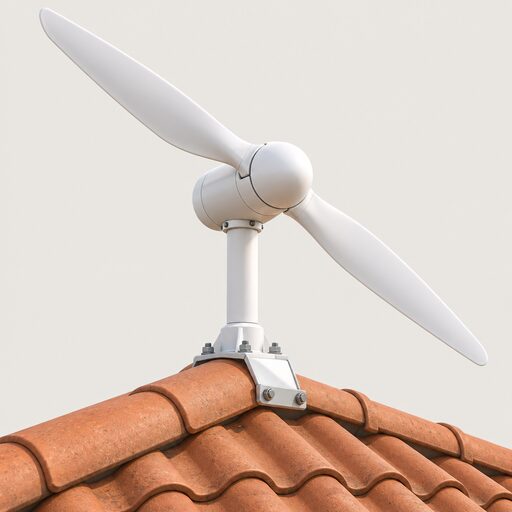 Building-Mounted Wind TurbinesWill a wind turbine on your roof actually make enough electricity to be worth it?
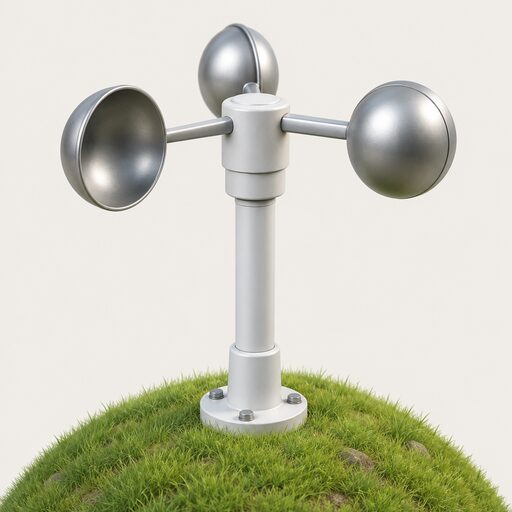 Wind Turbine Output and SizingHow much electricity a home wind turbine makes depends far more on your wind than on its size.
 Small Wind Turbine StandardsA small wind turbine needs the right certificate before it can go up, and that affects whether you need planning permission and whether you can get paid for the electricity you send to the grid.
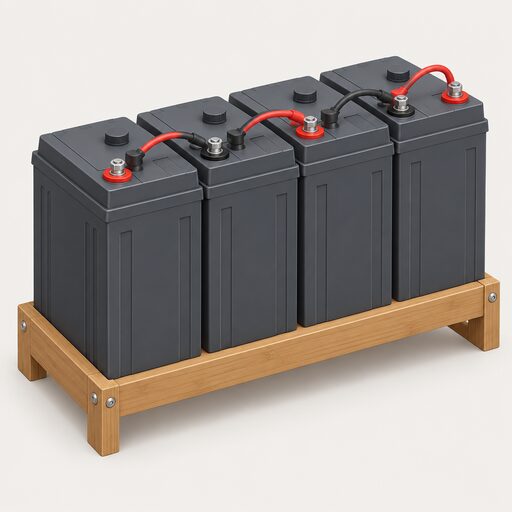 Off-Grid Battery SystemsHow many days of power do you need when there is no sun?