
In this answer
Short answer
A small wind turbine needs an annual average wind speed of at least 5 metres per second (m/s) at the site where it will stand. That is the threshold the Energy Saving Trust sets for considering a turbine at all, and it comes with a second condition: no major obstacles nearby, such as buildings, trees or hills, that would reduce wind speed or increase turbulence1. Other guidance puts the requirement slightly higher, at more than 5 m/s average, and describes around five metres per second as the optimum2.
The figure is an annual average, not a gust speed, and that distinction decides most domestic projects. A site can record violent winter gales and still average below 5 m/s across the year. Because turbine power rises with the cube of wind speed, doubling the wind speed yields eight times as much power, so a site a little below the 5 m/s threshold is not marginally worse than one at 5 m/s, it is in a different category altogether4.
For a household, this is the first and cheapest viability check, and it is the one most likely to end the idea. Small wind works best in exposed, windy locations and is less suitable for built-up or sheltered areas5. Where the average is met, a turbine can contribute real independence; where it is not, no amount of equipment changes the resource.
The average wind speed a small turbine needs: at least 5 m/s
The 5 m/s figure appears across official and independent guidance with unusual consistency. Northern Ireland's official guidance states that a site should be considered only where the local annual average wind speed is five metres per second or more1. Independent guidance from the Centre for Alternative Technology puts it at more than 5 m/s average, and a consumer comparison site repeats the Energy Saving Trust recommendation of at least 5 m/s3. One further guidance page describes turbines as needing consistent, strong wind, typically averaging at least 5 m/s9.
What drives the threshold is the shape of the power curve rather than any property of the machine. A turbine rated at 2.5 to six kW, the typical domestic system size, produces its rated output only near its design wind speed1. Below that, output falls away steeply. The consequence is that two sites a mile apart, one just under the 5 m/s annual average and one comfortably above it, can differ by more than the arithmetic suggests, because the second spends far more hours in the productive part of the curve.
The threshold also interacts with siting. The Energy Saving Trust pairs the 5 m/s requirement with the absence of major obstacles, because a building or tree line does not merely slow the wind, it makes it turbulent, and turbulence both reduces output and increases wear on moving parts1. Guidance from a distribution network operator describes around five metres per second as the optimum wind speed for a domestic installation10.
For energy independence, the practical reading is this: a site that genuinely averages 5 m/s or more can host a machine that offsets imported electricity, and in an off-grid setting can displace generator running hours. A site below the threshold remains dependent on the grid or a generator for effectively all of its power, whatever is mounted on the roof.
Cut-in speed: why turbines start turning at 3 to 5 m/s but produce little

Cut-in speed is the wind speed at which a turbine begins generating, and it is much lower than the 5 m/s annual average. One maker's product page lists a cut-in speed of 3 m/s (6.7 mph) for its standard small turbine7. Guidance from a Northern Ireland utility describes turbines generally as beginning to generate at around 6 to 9 mph6.
The gap between cut-in and useful output is the point householders most often miss. A machine that starts turning at 3 m/s is not producing meaningful power at 3 m/s; it has merely crossed the threshold at which the generator overcomes its own losses. Rated output arrives much further up the curve. This is why an annual average of 5 m/s is a reasonable proxy for viability while a cut-in speed of 3 m/s is not.
"Doubling the wind speed will yield eight times as much power."
The cube relationship explains the whole design of a wind installation. It is also why rotor diameter matters so much: a rotor with a 10 metre diameter will capture one hundred times as much wind as one with a one metre diameter4. Small domestic machines cannot compensate for a poor site by being clever; they can only sweep the area their rotor allows.
Below cut-in, the machine produces nothing, and the household draws entirely from the grid, a battery bank or a generator. Official guidance notes that small-scale wind systems are commonly run with a diesel generator for use during periods of low wind speeds, which is an honest statement of what a low-wind period means for an off-grid property1.
How to check whether your site reaches 5 m/s
There are two routes, and they differ enormously in reliability. The first is a published wind speed map. The Centre for Alternative Technology hosts a map using the NOABL database of estimated wind speeds at heights of 10 metres or more, modelled for flat terrain and averaged over a kilometre square2. That last detail is the limitation: a real property sits in terrain that is rarely flat and rarely uniform across a kilometre, so the map is a screening tool, not an answer.
The second route is measurement on site. Guidance suggests it could be worth spending a few hundred pounds on wind monitoring equipment, such as a mast and data logger, before spending thousands of pounds on a turbine4. Field trial practice went further: anemometry was installed at sites for a minimum period of three months to measure the actual local wind speed before deciding on a machine8. A shorter period risks catching an unrepresentative season.
For a household, the sequence is straightforward: check the modelled map for the postcode, then, if the modelled figure is near or above 5 m/s, measure on site before committing. Where the modelled figure is well below the threshold, measurement is unlikely to rescue the project.
Where turbines work well, and where they fall short
Small wind performs well in exposed, windy locations and poorly in built-up or sheltered ones5. The evidence on building-mounted machines is unusually blunt. Field trials found that building-mounted turbines perform poorly, producing only a small fraction of the energy they would produce if properly sited4. Consumer guidance states that studies show them to be far less effective owing to lower wind speeds in built-up urban areas3.
The field trial data quantifies the gap. Average expected load factor figures for domestic small-scale wind turbines were put at 10 per cent for building-mounted turbines8. For comparison, large commercial wind turbines generally produce 30 to 40 per cent of stated capacity, depending on wind speed and air density11. The two figures are not measuring identical things, but the direction is unmistakable.
Turbine orientation matters too. Vertical axis wind turbines tend to be less efficient than horizontal turbines, and have been around a long time and tended to disappoint in practice5.
Where small wind does earn its place is off grid. Small wind is described as especially practical for remote areas where connecting to the grid may be costly or challenging12. UK makers such as Marlec and Leading Edge produce small turbines generating a few hundred watts in a strong wind, suited to boats and remote cottages2. That is a different proposition from a grid-connected roof machine, and it is the one the technology genuinely serves.
What output to expect at different average wind speeds
Output scales with the cube of wind speed, so a site that averages a little above 5 m/s will out-produce one that averages a little below it by far more than the numbers suggest4. The published load factor figures give a sense of the practical range. Building-mounted domestic turbines were expected to average 10 per cent load factor in field trials8. Large commercial machines generally produce 30 to 40 per cent of stated capacity11.
Domestic machine sizes span a wide band. Individual small-scale turbines vary in power output from a few hundred watts to two or three megawatts, though a typical domestic system for a home would be 2.5 to six kW1. Small wind turbines that can power a single property may have an electricity generating capacity of 10 kW10. At the smallest end, units that charge a battery generate around 100W, while larger units used to power homes and businesses generate between 0.6 and 50 kW3. Field trial machines ranged in rated power output from 400W to 6000W8.
| Machine class | Typical rated output | Notes |
|---|---|---|
| Battery charging micro wind | around 100W | Charges a battery rather than supplying a house3 |
| Small off-grid turbine | a few hundred watts in a strong wind | Suited to boats and remote cottages2 |
| Typical domestic system | 2.5 to six kW | Depends on location and house size1 |
| Single property machine | up to 10 kW | Can power a single property10 |
| Field trial range | 400W to 6000W | Rated power output of trial machines8 |
The honest summary is that a well-sited machine on a genuine 5 m/s site will produce a meaningful fraction of a household's demand, and a poorly sited machine of the same rating will produce a small one. The wind resource, not the nameplate rating, sets the outcome.
Planning permission and the limits that come with it
Planning rules are the second gate after wind speed, and they differ across the four nations. Under permitted development rights it is possible in some cases to install domestic wind turbines without a planning application, so long as specified limits and conditions are met; in other cases an application to the local authority is needed13. Northern Ireland's guidance is simpler and stricter: planning approval is needed1. Wales sets out its own permitted development position for stand-alone turbines within the boundaries of a dwellinghouse, provided all the listed limits and conditions are met12.
Building-mounted turbines carry their own dimensional limits. No part of a building-mounted turbine, including the blades, should protrude more than three metres above the highest part of the roof, and there is an overall height limit of 15 metres including building, hub and blade, whichever is the lesser with the roof protrusion limit14. There is also an interaction with heat pumps: planning permission is needed if a wind turbine is installed on the same building or within the curtilage as an air source heat pump15.
For independence, planning is a constraint rather than a dependence, but it shapes what is possible. A household that cannot meet the permitted development limits, or that sits in a sensitive area, faces a consent process before any question of wind speed becomes relevant.
What the wind speed threshold means for energy independence
A small wind turbine's contribution to household independence is set almost entirely before installation, by the site. Where the annual average reaches 5 m/s and the airflow is clean, a machine can offset imported electricity and, off grid, displace generator hours. Where the average falls short, the household remains dependent on the grid or a generator for effectively all of its supply, and the turbine becomes a marginal contributor rather than a source of independence.
The dependence that remains even on a good site is worth stating plainly. A grid-connected turbine relies on the grid for export and for supply when the wind drops, and on a supplier for payment for what it exports. The Smart Export Guarantee covers small wind of 5MW or less installed at a home or business, so export payments are available, but they come from a supplier rather than from the household's own arrangements16. Off-grid systems trade grid dependence for battery and generator dependence.
Maintenance is a continuing obligation. Turbines have moving parts and require regular servicing10. Wind turbines can have a life of up to 22.5 years but need service checks every few years, and small turbines can last over 20 years with regular upkeep1. Some moving parts may have to be replaced during a lifetime of around 20 years, and an inverter may need replacing once during its lifetime4.
The practical conclusion is that wind speed is the deciding variable. A household that measures its site, finds an annual average of 5 m/s or more with no major obstacles, and satisfies the planning limits has a genuine route to partial independence. A household that does not has, on the evidence, very little.

Sources16 cited
- Wind, nidirect, 2026-05-18
- Domestic wind power, Centre for Alternative Technology, 2023-10-01
- Wind turbines, Uswitch, 2026-01-06
- Wind power, Centre for Alternative Technology, 2025-06-27
- Wind turbines, Energy Saving Trust, 2026-05-20
- How does wind energy work?, Power NI, 2026-04-09
- Leading Edge LE-300 Standard Wind Turbine, Wind & Sun, 2026-09-20
- Location, Location, Location: field trial of small-scale wind, Energy Saving Trust, 2009-07
- Solar panels vs wind turbines, Heatable, 2026-03-31
- Wind power, Electricity North West, 2026-09-19
- Renewable statistics, Uswitch, 2025-05-13
- Small wind turbines, MCS Certified, 2026-08-18
- Planning permission: introduction, Planning Portal, 2026-09-17
- Planning permission: building-mounted wind turbines, Planning Portal, 2026-09-17
- Heat pumps, New Forest District Council, 2026-09-17
- Smart Export Guarantee, MCS Certified, 2026-04-27
 Turbine Siting and Wind SpeedIs my garden windy enough for a home wind turbine?
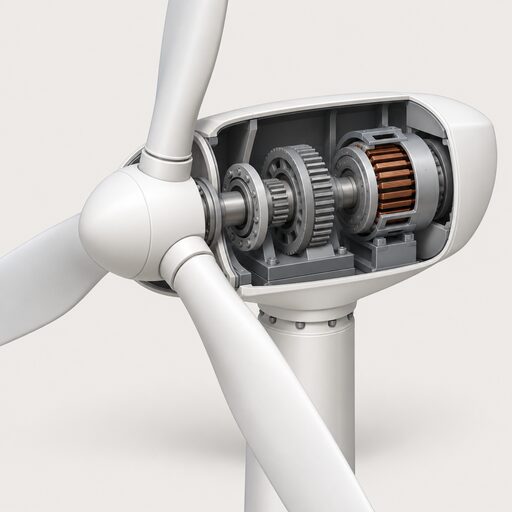 Domestic Wind TurbinesCan a wind turbine really power a home, and is your site windy enough?
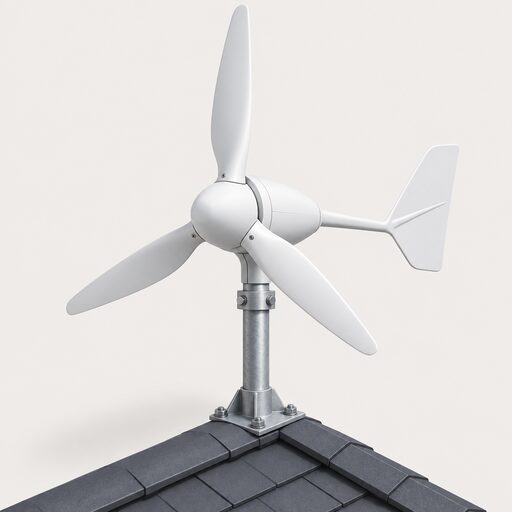 Domestic Wind Turbine CostA home wind turbine usually costs between nine thousand and nineteen thousand pounds, but the real price depends on its size and how it is mounted.
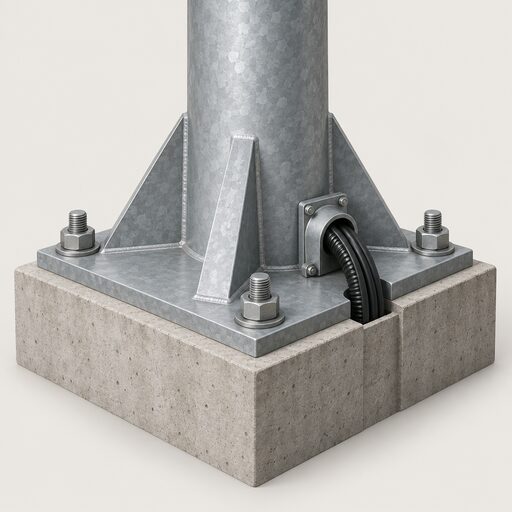 Wind Turbine InstallationWill a wind turbine actually pay for itself in a normal British garden, and how much wind does your spot really need?
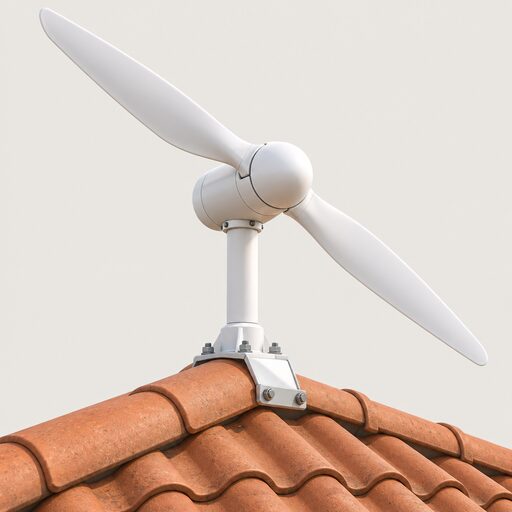 Building-Mounted Wind TurbinesWill a wind turbine on your roof actually make enough electricity to be worth it?
 Wind Turbine Planning in EnglandCan you put up a small wind turbine at home without asking the council first?