In this guide
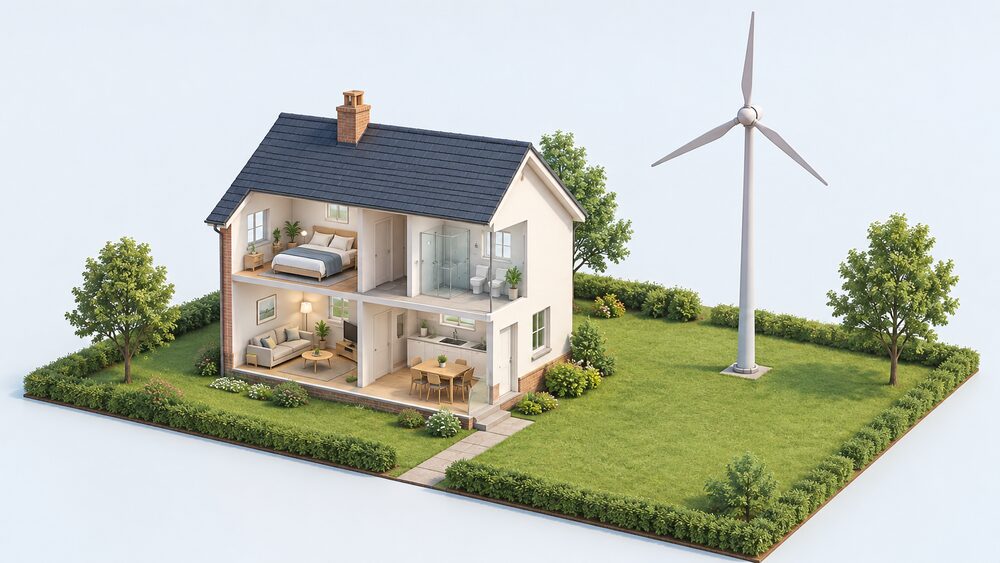
Wind speed is the single factor that decides whether a domestic wind turbine is worth installing. Guidance across official and independent sources converges on the same threshold: a site needs an annual average local wind speed of five metres per second (m/s) or more before a turbine should be considered1. Below that, the machine will still spin, but the annual yield falls away steeply, because the energy available in wind rises as the cube of its speed: doubling the wind speed yields eight times as much power3.
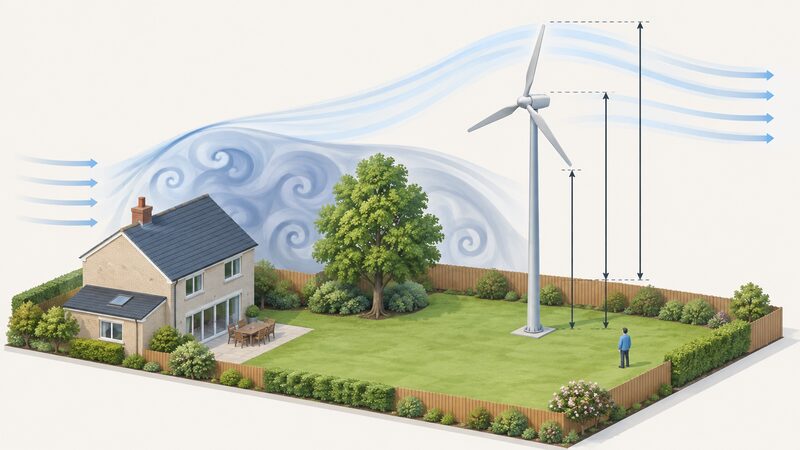
The second factor is what the wind does when it arrives. A turbine needs clean, steady air. Guidance sets the condition that there are no major obstacles nearby such as buildings, trees or hills that are likely to reduce the wind speed or increase turbulence2. That rules out most built-up settings. Domestic turbines generally are not suitable in a built-up area4, and studies show building-mounted machines in urban areas to be far less effective owing to lower wind speeds5. Systems work best in exposed, windy locations and are less suitable for built-up or sheltered areas6.
Height is the third factor, and it is partly fixed by planning law. Wind speeds increase significantly with height, so even small turbines need to be mounted on a high tower, away from buildings and trees3. But a stand alone turbine installed under permitted development in England must not exceed 11.1 metres to its highest part7, and in Scotland a free-standing turbine's blade tip height must not exceed 15 metres8. Those ceilings, not the physics, often set how much wind a household can actually reach.
Why wind speed decides whether a home turbine works
A domestic turbine works when wind forces rotor blades around, driving a turbine that generates electricity, and the stronger the wind, the more energy produced1. That relationship is not linear. Because doubling the wind speed yields eight times as much power3, a small difference in average wind speed between two sites makes a far larger difference to annual output than the gap in speed suggests, and most of a year's generation comes from a modest number of genuinely windy hours rather than from the average condition.
This is why siting dominates every other decision. The same turbine, the same installer and the same cost produce quite different results on two properties a mile apart. Official guidance puts it simply: small-scale turbines generate electricity from wind, and these depend on wind speed and location14. Independent guidance frames the household test the same way: if your house is in an exposed or isolated location, a turbine could be a suitable renewable energy option1.
The practical consequence is that no product specification can tell a household what it will get. A rated power figure describes the machine at a particular wind speed, not the site. Two sources illustrate the spread for the same nominal size: a 2.5 kW turbine is reported to produce between 2,500 and 5,000 kWh a year on an ideal site with a 5 m/s average annual wind speed15, while a well-sited 6 kW turbine is quoted at around 9,000 kWh a year16. A field trial calculation puts a 6 kW turbine at a 30 per cent load factor at approximately 18,000 kWh per annum13, and Northern Ireland guidance states that in optimum circumstances a 6 kW turbine will produce around 15,000 kWh a year17. Those figures do not agree, and the reason they do not agree is the site assumption behind each one. Output is covered further on wind turbine output and sizing.
The 5 m/s threshold: what a site needs

The recommended minimum is an annual average, measured at the intended location. Northern Ireland official guidance lists, as a condition for considering a turbine, that the local annual average wind speed is five metres per second or more2. An independent guide states that an average of more than 5 m/s is generally needed5. A network operator describes an optimum wind speed of around five metres per second18. Retrofit guidance advises looking for a wind speed of at least five metres per second19. The Energy Saving Trust field trial recommends that sites achieve a minimum average annual wind speed of 5 m/s13.
The consistency across official, independent and charity sources is unusual and useful: it means the threshold can be treated as settled rather than as one organisation's opinion.
Two qualifications matter. First, 5 m/s is a floor for consideration, not a promise of a good return. Estimates for the time taken to recover the investment vary wildly from 6 to 20 years16. Second, the threshold applies to the wind at the turbine, not to a regional figure. Modelled databases are averaged over a kilometre square and assume flat terrain5, so a sheltered valley or a walled garden inside a windy square will not deliver what the map suggests.
| Source of the 5 m/s figure | Who is speaking | Wording |
|---|---|---|
| nidirect wind guidance2 | Official | local annual average wind speed is five metres per second or more |
| CAT domestic wind power5 | Independent charity | an average of more than 5 m/s |
| Electricity North West18 | Network operator | optimum wind speed of around five metres per second |
| Changeworks19 | Independent | at least five metres per second |
| Energy Saving Trust field trial13 | Independent trial | minimum average annual wind speed of 5 m/s |
Cut-in speed: the wind a turbine needs before it generates
Cut-in speed is the wind at which the rotor begins producing usable output. It is much lower than the annual average a site needs. Most turbines will start turning at a wind speed of 3 to 5 m/s, described as a gentle breeze9, and one supplier states that turbines usually begin generating electricity at wind speeds of around 6 to 9 mph20. Small off-grid machines sit at the bottom of that band.
| Machine | Cut-in speed |
|---|---|
| Leading Edge LE-300 (Standard) | 3 m/s (6.7 mph)10 |
| Rutland 914i Windcharger | 3.1 m/s (6.9 mph)11 |
| Rutland 1200 Windcharger | 2.5 m/s (5.6 mph)11 |
| Rutland 1200 Terrain Windcharger | 2.5 m/s21 |
| Furlmatic FM910-4 | 2.5 m/s (5.6 mph)22 |
A low cut-in speed is easily misread as a sign of a productive machine. It is not. It only says the rotor turns early; the energy in a 3 m/s breeze is a small fraction of the energy in a 6 m/s wind, and the cube relationship means the early hours contribute very little to the annual total3. Cut-in speed matters most for off-grid battery charging, where trickle charge through light winds has real value, and least for a grid-connected household chasing kilowatt-hours. Off-grid machines are described further under off-grid wind power.
At the other end of the range, turbines protect themselves. Turbines will shut themselves down to prevent being damaged when the wind is too strong9, with one supplier citing shutdown at very high wind speeds of around 55 mph20. Smaller machines use mechanical governing instead: the Rutland FM910-4 Windcharger's tail fin mechanically furls at 15 m/s to reduce turbine speed23. Controllers add electronic protection, the MPPT Terrain Controller stalling the turbine on over-current and resetting after 5 minutes, which may cycle in high winds21. Households in exposed places should expect generation to stop in the heaviest weather, not peak in it. For context on how severe UK wind can be, gusts of 70 mph were recorded in the north of mainland Scotland during a 2023 storm24.
How to assess the wind at a property
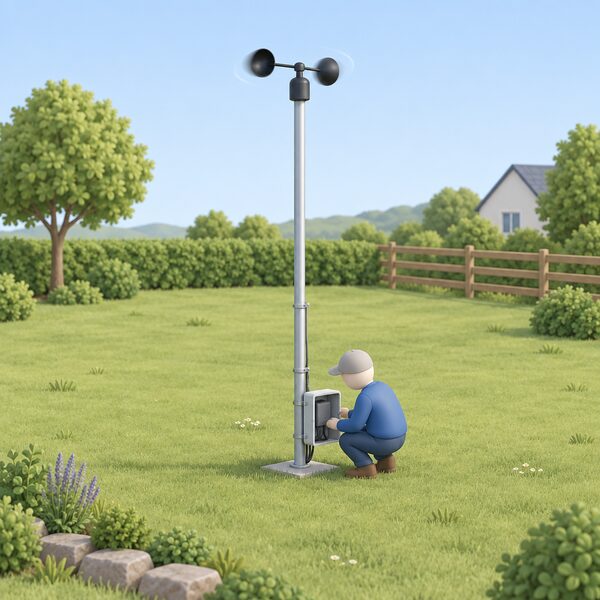
There are two routes, and MCS methods use both. The first method uses the proposed location to look up the mean wind speed using the Global Wind Atlas; the second uses wind speed monitoring data collected for at least 6 months, with the characteristics of the proposed turbine, to predict the annual energy generation25. Older MCS planning calculations direct that the wind speed database should be used to obtain the annual mean wind speed data for the site, queried with a six character grid reference, with wind data taken at 10 metres above ground level26.
Database estimates
A publicly accessible map hosts the NOABL database of estimated wind speeds at heights of 10 metres or more, modelled for flat terrain, and averaged for a kilometre square5. The Energy Saving Trust also publishes a wind speed predictor whose output indicates whether it is worth installing a wind turbine27, and the average wind speed can be estimated using a grid reference in the wind speed database, or the Carbon Trust's wind yield estimation tool28. Databases are a screening step. Because they are modelled for flat terrain and averaged over a square kilometre, they cannot see the hedge, barn or ridge that will actually govern the turbine.
Measurement on site
Measured data is stronger. The Energy Saving Trust recommends installing an anemometer in the place where the turbine would go29, and advice on duration varies with how much confidence is wanted:
- A couple of months, as a wind gauge check near the property18
- At least three months before considering a home turbine28, the field trial using a minimum period of three months to measure the actual local wind speed13
- At least six months of monitoring data for the MCS prediction method25
- Ideally a professional assessment of the local wind speed for a full year at the exact location where the turbine would be installed2
Official guidance for Northern Ireland states that a professional assessment of local wind speed, carried out over a full year at the exact location proposed for the turbine, is the ideal basis for deciding whether to proceed2.
The disagreement between two months and twelve is not a contradiction so much as a trade between cost and certainty: a short record catches one season, a full year captures the annual cycle. Longer measurement is discussed under anemometry before a wind turbine, and postcode-level lookup under wind speed by postcode.
Official wind data also exists at a national level: the Energy Trends and Prices statistical release includes statistics on average temperatures, heating degree days, wind speeds, sun hours and rainfall up to the end of December 202530. That is a national climate series rather than a siting tool.
Turbine sizes and what each needs from a site
Individual turbines vary in size and power output from a few hundred watts to two or three megawatts2. Domestic machines occupy the bottom of that range, and the published bands do not agree precisely.
| Band | Figure | Who is speaking |
|---|---|---|
| Typical domestic system | 2.5 to 6 kW, depending on location and house size | Official, nidirect2 |
| Domestic range | 1 kW to 15 kW | Independent, Changeworks19 |
| Domestic range, Scotland | generally 4 to 15 kW | Official, Scottish Government31 |
| Small domestic capacities | around 1 to 10 kW | Supplier, Power NI20 |
| Single-property capacity | may be 10 kW | Network operator18 |
| Field trial machines tested | 400 W to 6,000 W rated power | Independent trial13 |
| Larger domestic units | 0.6 to 50 kW | Independent guide28 |
| Physical height | usually between two and eight metres high | Independent guide32 |
Smaller units are a different proposition again: small wind turbine units that generate around 100 W and charge a battery28, and a turbine with a rotor diameter of about 1 metre could give a few hundred kilowatt-hours of electricity per year on a site with good average wind speeds3. By contrast, larger machines with a rotor several metres in diameter mounted on a high tower are not suitable for most homes5. One maker states each SD6 turbine installation is estimated to produce between 21,000 kWh and 26,000 kWh depending on the annual mean wind speed in each location33.
Size and site interact. A bigger rotor needs a taller tower and more clearance from obstacles, which is exactly what permitted development limits restrict. Sizing is developed further on domestic wind turbines.
Height, turbulence and placement

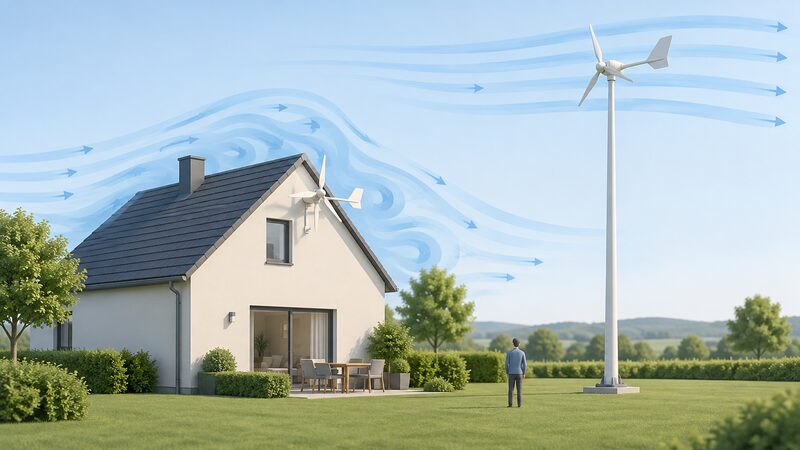
Location and height are major factors in the performance of the turbine34. Higher placements catch stronger, steadier winds, and turbines should ideally be located on a hilltop or raised structure, away from obstructions like trees or other buildings35. Obstacles do two things at once: they slow the wind and they make it turbulent, and the Energy Saving Trust condition for considering a turbine is that there are no major obstacles nearby such as buildings, trees or hills likely to reduce the wind speed or increase turbulence2.
Turbulent air is not merely less productive. It arrives from changing directions, so a small turbine spends time yawing rather than generating, and the fluctuating loads are carried by the structure. Where a turbine is attached to a house, official building regulations guidance notes that the size, weight and force exerted on fixed points would be considerable36. Building regulations approval is dealt with under wind turbine building regulations.
Planning rules then cap how high the answer can be. In England, permitted development for a stand alone turbine requires that the highest part including blades does not exceed 11.1 metres7, that the distance between ground level and the lowest part of any blade is not less than five metres, and that no part including blades is within five metres of any boundary of the curtilage12. There is a further separation rule: no part of the turbine may be closer to any point along the property boundary than the overall height of the turbine including blades plus 10 per cent of its height7. Class H also excludes development where the swept area of any blade would exceed 3.8 square metres12.
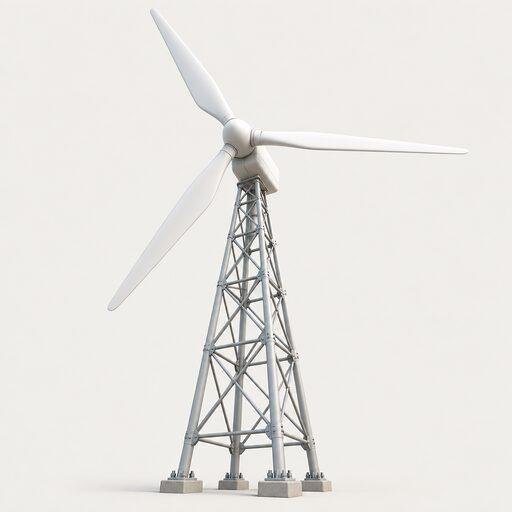
In Scotland, a free-standing turbine within a dwelling's curtilage must not exceed a blade tip height of 15 metres8, the lowest part of the blade must be at least 5 m from ground level, and the turbine must stand not less than 110 per cent of the blade tip height from the curtilage of another dwelling37. For a turbine on a detached dwellinghouse, no part may be less than 5 m from ground level or 5 m from the boundary of the curtilage37.
Permitted development also depends on certification: development is not permitted unless the wind turbine complies with the MCS Planning Standards or equivalent standards12, a standard which sets out what must be complied with for domestic installations of wind turbines and air source heat pumps to be permitted development26. The nation-by-nation detail is set out under wind turbine planning permission in England and in Scotland. In Wales and Northern Ireland the position differs: one guide states that in Wales and Northern Ireland an application is needed to install any kind of wind turbine29, Northern Ireland official guidance states plainly that planning approval is needed2, while a Welsh policy commentary states that homeowners there do not currently need to apply provided there is only one turbine and it meets certain criteria, with a requirement to minimise its effect on the amenity of the area39. Where sources describe the Welsh position differently, the local planning authority is the authority on a given site. See wind turbine planning permission in Wales and in Northern Ireland.
Roof-mounted or freestanding: the siting difference
There are two main types of domestic turbine in the UK, the freestanding or pole-mounted turbine and the roof-mounted turbine28, and two types of installation to consider: roof mounted and free-standing18. The siting logic differs sharply between them.
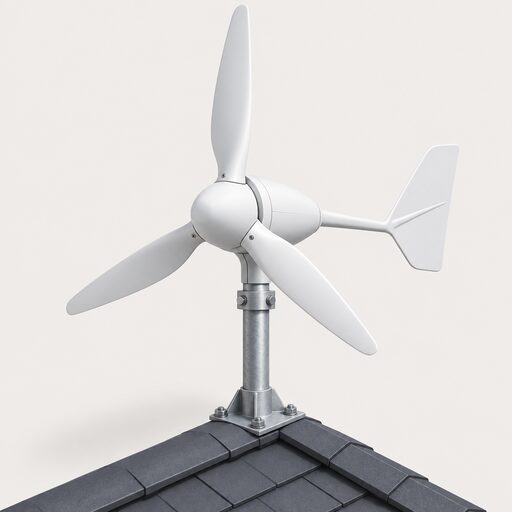
A building-mounted turbine can be installed on the roof of a home and can generate around 2 kW of electricity, while a pole-mounted turbine can generate around six kilowatts6. Pole-mounted turbines are also described as typically producing 3 to 15 kWh of electricity35. The difference is not only rating: a roof turbine sits in the disturbed air shed by the building it is fixed to, and its effective height above the surrounding obstacles is small. The field trial found a commonly quoted load factor of 10 per cent for building-mounted turbines13, against a free-standing 6 kW turbine at a 30 per cent load factor producing approximately 18,000 kWh per annum in the same analysis13.
| Building-mounted | Free-standing / pole | |
|---|---|---|
| Typical output cited | around 2 kW6 | around 6 kW6; 3 to 15 kWh35 |
| Load factor cited | 10 per cent commonly quoted13 | 30 per cent in the worked example13 |
| England PD height | no more than 3 m above the highest part of the roof (excluding the chimney), or 15 m overall, whichever is the lesser40 | 11.1 m including blades7 |
| Structural issue | force on fixed points would be considerable36 | independent foundation |
Building-mounted turbines can work in urban settings if there is consistent wind35, but that is a narrow condition rather than a general endorsement, and studies show them far less effective in built-up urban areas owing to lower wind speeds28. The comparison is developed further under pole-mounted vs roof-mounted wind turbines and building-mounted wind turbines.
What a wind-dependent supply means for independence
A well-sited turbine is genuine homegrown generation, and more homegrown energy means greater energy independence41. Small turbines offer a clean, renewable power source for a home35, with the benefits listed as free electricity, electricity storage and cutting or eliminating a home's carbon footprint28. Permitted development in Scotland for a free-standing turbine is available where it is used only for the purposes of domestic microgeneration42.
The dependence that remains is the wind itself, and it is intermittent by nature. Below cut-in, the turbine contributes nothing and the household draws from the grid, a battery or another source. For off-grid sites, it is common to run a wind system with a diesel generator for use during periods of low wind speeds2, which is a fossil-fuel dependency reintroduced at exactly the moment independence is being tested. Grid-connected households remain connected for the calm days, and export arrangements bring their own counterparty: the Smart Export Guarantee applies to small wind of 5 MW or less43.
There are further dependencies worth naming. The installation route itself depends on a certification body, since permitted development requires compliance with the MCS Planning Standards or equivalent12. The machine depends on its manufacturer for parts and service: turbines can have a life of up to 22.5 years, but need service checks every few years to make sure they work efficiently2. And the financial case depends on the site more than on the product, with payback estimates ranging from 6 to 20 years16. Against that, the carbon case is quicker: an onshore wind turbine can be expected to repay its energy debt within six to nine months of operation44.
The honest summary is that wind is a site technology rather than a household technology. Where the annual average exceeds 5 m/s and the ground is open, a turbine can carry a meaningful share of a home's electricity. Where it does not, no amount of specification will recover the shortfall, and the relevant comparison is with other microgeneration options set out on the microgeneration pillar and under which microgeneration suits your home and site.
Sources45 cited
- Are home renewables right for you?, Energy Saving Trust, 2025-12-11
- Wind, nidirect, 2026-05-18
- Wind power information, Centre for Alternative Technology, 2025-06-27
- Generating renewable electricity, Energy Saving Trust, 2025-12-11
- Domestic wind power, Centre for Alternative Technology, 2023-10-01
- Wind turbines, Energy Saving Trust, 2026-05-20
- Planning permission for stand alone wind turbines, Planning Portal, 2026-09-17
- The Town and Country Planning (General Permitted Development) (Scotland) Amendment Order 2024, legislation.gov.uk, 2024-05-24
- How do wind turbines work, Good Energy, 2024-12-09
- Leading Edge LE-300 Standard wind turbine, Wind and Sun, 2026-09-20
- Marlec windchargers, Wind and Sun, 2026-09-20
- Class H: installation or alteration of a wind turbine on domestic premises, legislation.gov.uk, 2026-09-17
- Location, Location, Location: field trial of small-scale wind, Energy Saving Trust, 2009-07
- Sustainable home energy solutions, Planning Portal, 2024-09-02
- Wind turbines for properties on the grid, Wind and Sun, 2023-07-13
- Renewable energy FAQs, Electricity North West, 2023-02-23
- Conservation of fuel and power guidance, Building Control NI, 2010-08
- Wind power, Electricity North West, 2026-09-19
- Domestic wind turbines, Changeworks, 2026-06-01
- How does wind energy work, Power NI, 2026-04-09
- Rutland 1200 Terrain Windcharger, Marlec, 2026-08-19
- Off-grid wind turbines, Wind and Sun, 2026-09-20
- Rutland FM910-4 Windcharger, Marlec, 2021-01-04
- SSEN restores supplies following high winds, SSEN, 2023-12-22
- MCS publishes updates to small wind turbine standards, MCS, 2024-12-06
- MCS 020 Planning Standards, MCS, 2019-06-19
- Energy tools and calculators, Energy Saving Trust, 2025-12-12
- Wind turbines guide, Uswitch, 2026-01-06
- Home wind turbines: pros, cons and how much they cost, OVO Energy, 2021-05-06
- Energy Trends and Prices statistical release: 29 January 2026, GOV.UK, 2026-01-29
- Microgeneration strategy for Scotland, Scottish Government, 2012-06-22
- Microgeneration energy guide, Uswitch, 2026-06-08
- Energise fuel poverty scheme delivers 90 small wind turbine projects, SD Wind Energy, 2026-09-20
- Troubleshoot a windcharger system, Marlec, 2025-01-31
- Small wind turbines, MCS, 2026-08-18
- Wind turbines: building regulations, Planning Portal, 2026
- Circular 1/2024: householder permitted development rights, Scottish Government, 2024-05-28
- Planning permission for building-mounted wind turbines, Planning Portal, 2026-09-17
- What could the next Senedd do on heat pump planning, Nesta, 2026-01-26
- Planning permission for wind turbines, Welsh Government, 2026-09-17
- Solar Energy Scotland manifesto, Solar Energy UK, 2026-09-17
- Householder permitted development rights guidance, Scottish Government, 2021-04-01
- Smart Export Guarantee, MCS, 2026-04-27
- Renewable energy common myths debunked, Dulas, 2021-11-08
- Draft VAT guidance on changes to energy-saving materials, GOV.UK, 2019-10-01
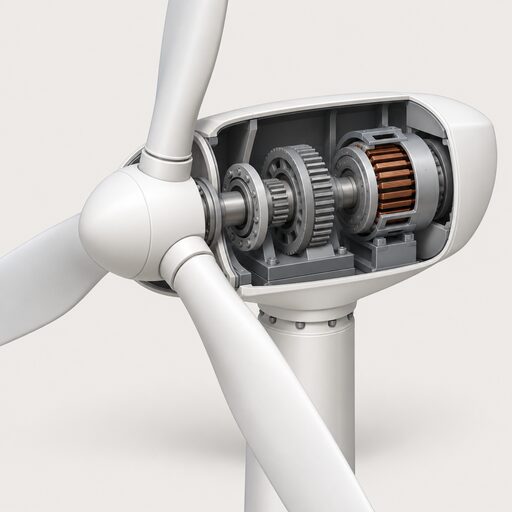 Domestic Wind TurbinesCan a wind turbine really power a home, and is your site windy enough?
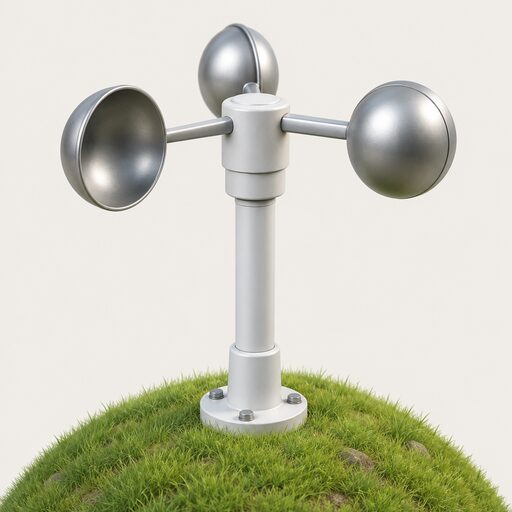 Wind Turbine Output and SizingHow much electricity a home wind turbine makes depends far more on your wind than on its size.
 Wind Turbine Planning in WalesDo you need planning permission for a wind turbine at home in Wales?
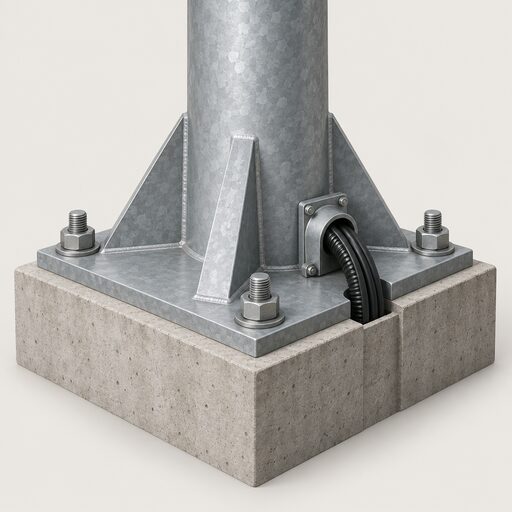 Wind Turbine InstallationWill a wind turbine actually pay for itself in a normal British garden, and how much wind does your spot really need?
 Wind Turbine Planning ScotlandScotland lets some home wind turbines go ahead without planning permission, but only if they stay within strict size and distance limits.
 Domestic Wind Turbine CostA home wind turbine usually costs between nine thousand and nineteen thousand pounds, but the real price depends on its size and how it is mounted.