

In this answer
Short answer
Maintenance checks for a small wind turbine are necessary every few years and generally cost around £100 to £200 a year, depending on the size of the turbine1. That is the figure to budget for, and it is the same range whether it is expressed as an annual sum or as the cost of a periodic visit2.
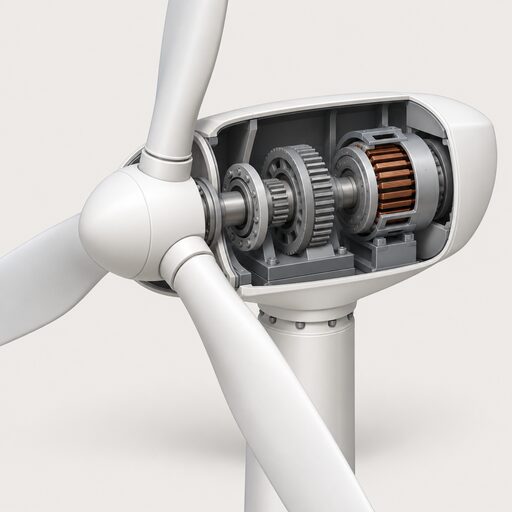
The reason the bill exists at all is mechanical: a wind turbine has moving parts, so it requires regular servicing in a way that a solar array does not3. With that upkeep, a small wind turbine can last over 20 years2. Official guidance puts the working life at up to 22.5 years, but ties that to service checks every few years to make sure the machine works efficiently4.
What the £100 to £200 does not cover is the inverter. On a larger system, replacing one usually costs between £1,000 and £2,000, which is a capital item rather than a running cost2. For context on the scale of the whole proposition, a 6kW pole-mounted system costs around £35,000 for equipment and installation, and a well-sited 6kW turbine could save around £650 a year in Great Britain and £800 in Northern Ireland5.
What the £100 to £200 a year actually buys
The published range is described as the cost of maintenance checks, which are necessary every few years and depend on the size of the turbine1. Two independent sources give the same band: around £100 to £200 a year, and between £100 and £200 depending on the size of the system1. Neither breaks the figure down into parts, so there is no published split between labour, inspection and replacement components at this level.
What is clear is the purpose. Service checks every few years are what allow a turbine to reach its stated life of up to 22.5 years4. The maintenance is not optional decoration on the system; it is the condition attached to the lifespan figure. A machine that is not serviced has no published expected life.
The comparison with other home technologies shows how the figure sits. A biomass appliance needs annual maintenance, described as a critical factor in ensuring it operates efficiently and effectively and in reducing costs6. A boiler service carries a warranty condition: not keeping up with annual servicing can invalidate any warranty7. Wind sits between the two in frequency, at every few years rather than annually, but it is a mechanical service in the same family rather than a cleaning task.
For a household's energy independence, this is the recurring cost of staying off the grid's variability rather than a one-off purchase. The turbine itself needs no fuel, because wind is free, so once the installation is paid for the saving is on the electricity bill8. The maintenance charge is what keeps that saving available.
What drives the cost: turbine and system size

A typical domestic system for a home is 2.5 to six kilowatts, depending on the location and size of the house4. Individual wind turbines vary far more widely, from a few hundred watts to two or three megawatts, where one megawatt equals 1,000 kilowatts4. Bigger units used to power homes and businesses generate between 0.6 and 50kW9. The maintenance figure is explicitly tied to turbine size, which is why the range is a range rather than a single number1.
Installation costs follow the same logic. A turbine plus tower and installation might cost between £2,500 and £6,000 per rated kilowatt10. Very small wind turbines may cost a few hundred pounds, and their power output will be a fraction of a kilowatt10. The Energy Saving Trust notes that costs depend on the size of the turbine and its location11.
Size also changes what the machine does to the building. For turbines attached to the house, the size, weight and force exerted on fixed points would be considerable11. That structural load is a separate matter from the service bill, but it explains why building-mounted machines are a different proposition from pole-mounted ones.
| Factor | What the sources state |
|---|---|
| Typical domestic system | 2.5 to six kilowatts4 |
| Larger domestic and business units | 0.6 to 50kW9 |
| Installation cost basis | £2,500 to £6,000 per rated kilowatt, including turbine, tower and installation10 |
| Maintenance cost basis | Around £100 to £200 a year, depending on turbine size1 |
The practical expectation is that a larger machine carries a larger annual figure, and that the inverter, at between £1,000 and £2,000 on a larger system, is the single biggest non-routine cost a household should know about2.
How often servicing is needed, and why the interval is years not months
Maintenance checks for small wind turbines are generally needed every few years2. Official guidance repeats the interval: wind turbines can have a life of up to 22.5 years, but need service checks every few years to make sure they work efficiently4. The Energy Saving Trust frames it as a requirement rather than a recommendation, because turbines have moving parts and will require regular servicing3.
That interval is longer than for a boiler or a biomass appliance, both of which are annual7. It is shorter in kind than for hydropower, which is described as almost maintenance free with a system life expectancy of up to 50 years12. Wind sits between the two: more attention than water, less than combustion.
The interval is not the only thing a household should plan around. Before installation, the Energy Saving Trust recommends installing an anemometer, or wind gauge, in the intended location for at least three months before considering a home wind turbine9. The Centre for Alternative Technology suggests it could be worth spending a few hundred pounds on wind monitoring equipment such as a mast and data logger before spending thousands on a turbine10. That monitoring is a pre-installation cost, not a maintenance one, but it belongs in the same budget line.
What maintenance covers, and who carries it out
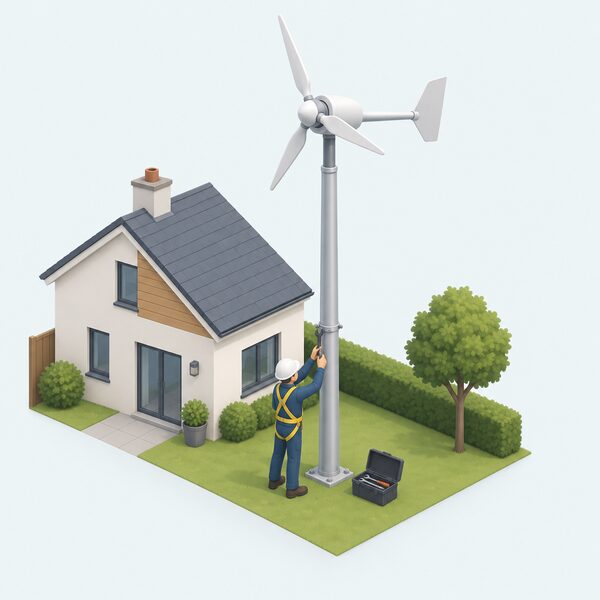
The published sources describe maintenance as checks and servicing rather than listing a scope of works. What they do establish is who is qualified to do certain parts of the job. For turbines attached to the house, an installer registered with the relevant competent person scheme, as listed in Row 17 of Schedule 3 of the Building Regulations, may be authorised to self-certify the work without involving local authority building control11. That is a route through the building regulations, not a statement that servicing is a specialist task in every case, but it points to registered installers as the normal channel.
Building control application itself is usually included within the price of installation, so it is not a separate running cost13. The Home Energy Scotland Grant and Loan will not cover the cost of any extended warranty beyond the one-year warranty all certified installers must offer free of charge14. That one-year warranty is the baseline a household gets from a certified installer, and extended cover is a separate purchase.
There is no published figure for owner servicing, and no source sets out a do-it-yourself maintenance regime for a grid-connected domestic turbine. The evidence on skipped servicing comes from comparable appliances: not keeping up with annual servicing can invalidate a boiler warranty7, and biomass appliances need annual maintenance to operate efficiently and reduce costs6. For wind, the stated consequence is that the service checks are what make the lifespan figure achievable4.
"Maintenance checks for small wind turbines are generally needed every few years"
Is a roof-mounted turbine cheaper to maintain?
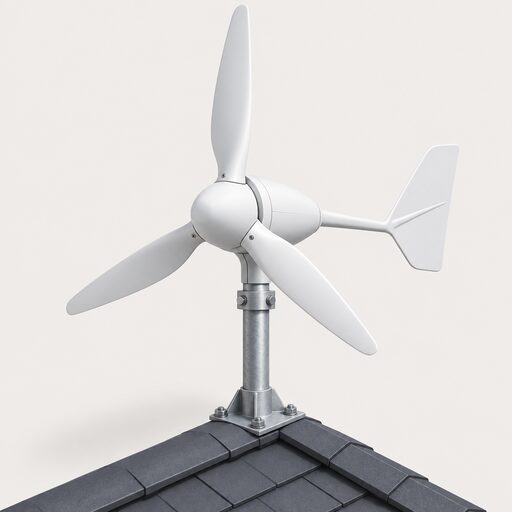
Building-mounted turbines cost less to install than pole-mounted ones, but they tend to be smaller and less efficient5. Studies show them to be far less effective owing to lower wind speeds in built-up urban areas9. A smaller machine may need less work at each visit, but no source gives a separate maintenance figure for roof-mounted turbines. The published £100 to £200 a year range is not broken down by mounting type1.
The siting conditions matter more than the mounting method for the economics. The Energy Saving Trust sets out the conditions for considering a wind turbine: the local annual average wind speed is five metres per second or more, and there are no major obstacles nearby such as buildings, trees or hills that are likely to reduce the wind speed or increase turbulence4. The Centre for Alternative Technology puts the threshold at an average of more than 5m/s15. A roof-mounted turbine in a built-up area is working against both conditions at once.
That is the honest position on roof-mounted machines: lower installation cost, lower output, and no published maintenance discount. The running-cost case for a turbine rests on siting, which is why the pre-installation wind measurement matters so much9.
Budgeting for maintenance alongside the rest of the running costs

The maintenance figure needs to sit alongside the other numbers a household will meet. A 6kW pole-mounted system costs around £35,000 for equipment and installation5. A well-sited 6kW turbine could save around £650 a year in Great Britain and £800 in Northern Ireland5. The Eco Experts and Energy Saving Trust predict that wind turbines could save around £700 a year on electricity2. Against an average variable tariff of around £1,135 a year per household, those savings are a meaningful share of a bill16.
The grant position is limited. The Home Energy Scotland Grant and Loan offers £2,500 per improvement for a wind turbine, and the scheme's own table marks it as not available17. The scheme will not cover the cost of any extended warranty beyond the one-year warranty all certified installers must offer free of charge14.
For comparison, solar maintenance is a cleaning cost: around £4 to £15 per panel, depending on how easy they are to access and how dirty they are18. A typical domestic solar system is around 3.5 kW and costs around £6,100 in 2026, or around 4.5 kWp and around £7,600 on another estimate19. Solar has no moving parts and no service interval of the kind a turbine has3.
| Technology | Published maintenance position |
|---|---|
| Small wind turbine | Around £100 to £200 a year, checks every few years1 |
| Solar PV | Cleaning at around £4 to £15 per panel18 |
| Biomass appliance | Annual maintenance6 |
| Micro hydro | Almost maintenance free, life up to 50 years12 |
The independence question is straightforward. A serviced turbine converts a free fuel into electricity on the household's own terms, and the maintenance charge is the price of keeping that arrangement working. What remains is the grid connection, the inverter, and the fact that the machine's output depends on a wind resource the household cannot control.
Sources20 cited
- Wind turbines, Home Energy Scotland, 2026
- Small wind turbines, MCS Certified, 2026
- Wind power, Electricity North West, 2026
- Wind, nidirect, 2026
- Wind turbines, Energy Saving Trust, 2026
- Biomass maintenance, HETAS, 2026
- Why you need a boiler service, Which?, 2025
- Generating renewable electricity, Energy Saving Trust, 2025
- Wind turbines, Uswitch, 2026
- Wind power, Centre for Alternative Technology, 2025
- Building regulations for wind turbines, Planning Portal, 2026
- Domestic hydropower, Uswitch, 2026
- Building regulations for electric vehicle charging, Planning Portal, 2026
- Home Energy Scotland Grant and Loan terms and conditions, Home Energy Scotland, 2026
- Domestic wind power, Centre for Alternative Technology, 2023
- Are your bills higher than average?, Turn2us, 2026
- Grants and loans, Home Energy Scotland, 2026
- Solar panel myths, Which?, 2026
- Solar panels, Parliamentary Office of Science and Technology, 2026
- Solar panels, Energy Saving Trust, 2026
 Domestic Wind Turbine CostA home wind turbine usually costs between nine thousand and nineteen thousand pounds, but the real price depends on its size and how it is mounted.
 Wind Turbine InstallationWill a wind turbine actually pay for itself in a normal British garden, and how much wind does your spot really need?
 Domestic Wind TurbinesCan a wind turbine really power a home, and is your site windy enough?
 Wind Turbine Output and SizingHow much electricity a home wind turbine makes depends far more on your wind than on its size.
 Home Battery CostA home battery usually costs between one and a half and ten thousand pounds fitted, depending on size.
 Turbine Siting and Wind SpeedIs my garden windy enough for a home wind turbine?