
In this answer
Short answer
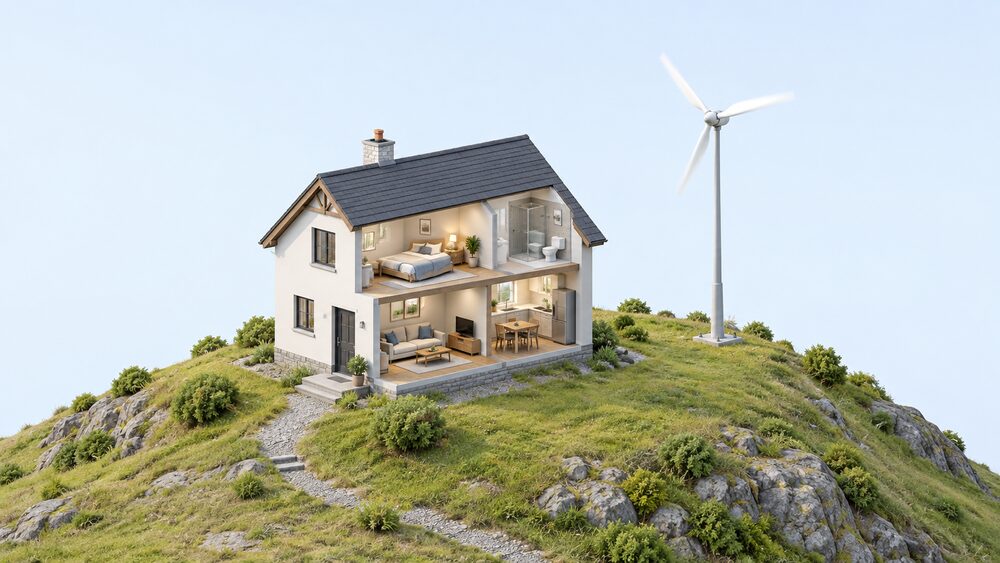
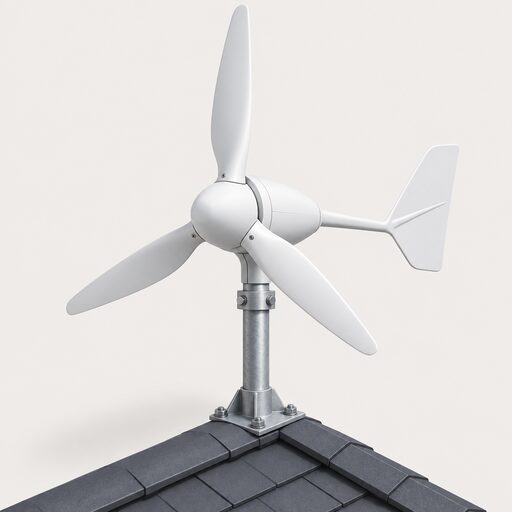
A well-sited 6kW pole-mounted wind turbine can save around 3.4 tonnes of CO2 a year, according to independent guidance, on annual generation of around 9,000kWh1. That is the headline figure householders search for, and it is a real one: it assumes a site with an optimum wind speed of around five metres per second, which is a demanding standard that most suburban and urban locations do not meet1.
The same body of guidance puts the carbon reduction from installing a turbine at around 2,600kg in Great Britain and 2,200kg in Northern Ireland, a difference that reflects the two grids rather than the machine2. Independent guidance also lists cutting or eliminating your home carbon footprint as one of the three main benefits of a domestic turbine, alongside free electricity and electricity storage3.
The saving is not a property of the turbine. It is a property of the site, the wind resource and, increasingly, the grid the turbine displaces. A turbine in a sheltered garden will generate a fraction of the figure above, and the same kilowatt hour saved in 2035 will avoid less carbon than it does today, because the grid it displaces is getting cleaner.
What the 3.4 tonnes figure actually rests on
The 3.4 tonnes figure comes from a worked example of a well-sited 6kW pole-mounted system generating around 9,000kWh a year1. Both numbers are scenario-based rather than guaranteed. Independent guidance is explicit that all savings shown are scenario-based, and that actual outcomes depend on the home, system performance and choice of tariff6.
The financial figures follow the same pattern. A well-sited 6kW turbine could save around £650 a year in Great Britain and £800 in Northern Ireland, according to independent guidance2. A separate independent source puts small wind turbine bill savings at around £700 a year on electricity, citing the same advisory body4. The two figures are close but not identical, and the difference reflects different assumptions about tariff and site rather than a disagreement about the technology.
What drives the carbon figure is generation, and generation is driven by wind speed cubed. A site at 5m/s and a site at 4m/s are not 20 per cent apart in output; they are far further apart than that. This is why the headline saving should be read as the top of a range rather than a typical outcome, and why the siting question below matters more than any other.
For a household, the independence value is straightforward: every kilowatt hour generated on the roof or in the garden is a kilowatt hour not imported and paid for from the grid7. That is a genuine reduction in dependence on a supplier, though not on the grid itself unless the system includes storage or an off-grid design.
Siting decides the saving, not the machine
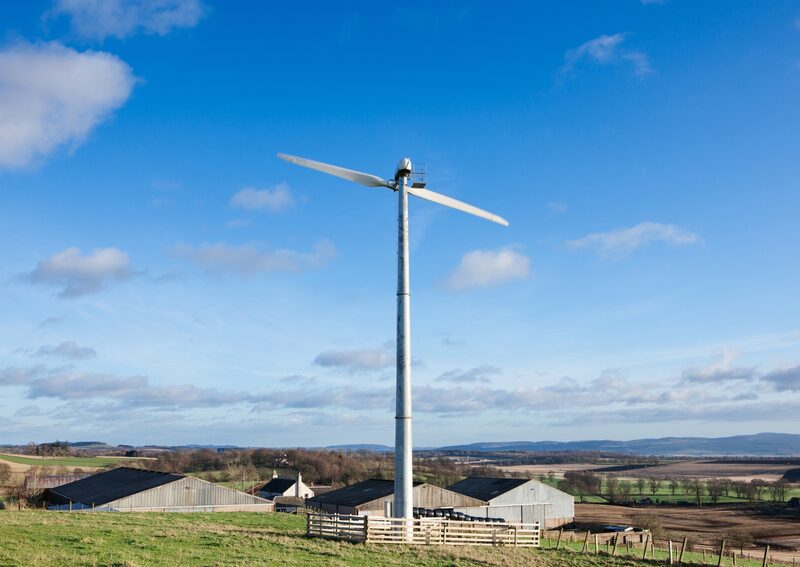
Independent guidance is blunt about where turbines work: systems work best in exposed, windy locations and are less suitable for built-up or sheltered areas2. The same guidance recommends turbines be located on a hilltop or raised structure, away from obstructions like trees or other buildings, and notes that higher placements catch stronger, steadier winds4.
The threshold figure is consistent across sources. Official guidance states that a turbine should be considered where the local annual average wind speed is five metres per second or more8. Independent guidance repeats the recommendation to install only in areas with at least 5m/s of wind or more3. The optimum wind speed quoted for a well-sited 6kW machine is around five metres per second1.
That combination, a 5m/s annual average and an unobstructed, elevated position, describes a minority of UK homes. Independent guidance frames domestic wind as suitable where a house is in an exposed or isolated location7. If a site does not meet those conditions, the carbon saving falls with the output, and no amount of turbine specification recovers it.
Where a home turbine's carbon saving fits in a household's footprint
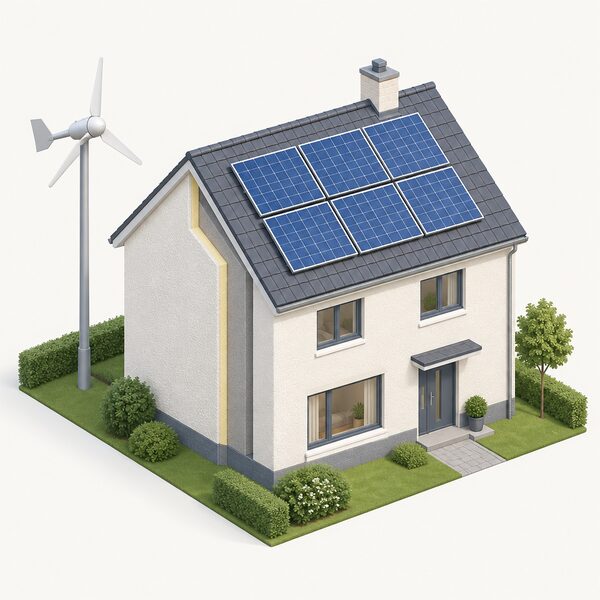
To judge whether 3.4 tonnes is a lot, it helps to set it against other measures. External wall insulation can save approximately 1.8 tonnes of carbon dioxide per year, and external insulation of solid walls 1,770kg a year, both figures attributed to the same advisory body9. A solar panel system saves around 0.5 to 0.6 tonnes of CO2 a year5. On those numbers, a well-sited 6kW turbine is the largest single carbon saving of the three, and the most site-dependent.
At the household scale, the Resolution Foundation reports that homes, transport and electricity account for close to 70 per cent of the carbon footprints of lower- and middle-income households10. A deep retrofit, according to official guidance, could achieve an 80 to 90 per cent reduction in carbon emissions11. A single turbine is a contribution to that picture, not a substitute for it.
Larger programmes show what aggregated domestic work adds up to. Leeds City Council reports that its home energy efficiency work will reduce the city's carbon footprint by 5,000 tonnes12. The Future Homes Standard interim uplift was expected to deliver a 31 per cent carbon emissions saving compared with the then-current standard for new homes13. Domestic energy efficiency has been a stated national target since at least 2004, when carbon savings of 5MtC per annum by 2010 and a further 4MtC per annum by 2020 were set out in Parliament14.
For an individual household, the practical reading is that a turbine's saving is meaningful but conditional, and that fabric measures and generation measures are complements rather than alternatives.
Why the same kilowatt hour saves less over time
A wind turbine's carbon saving is calculated against the generation it displaces. As the grid decarbonises, each displaced kilowatt hour avoids less CO2. Official guidance acknowledges this directly, noting that because the energy being saved is already low carbon, the value of these savings is proportionately smaller than might be expected15.
The mechanism is visible in how the grid already behaves. Independent guidance explains that at off-peak times, for example overnight and when it is windy, demand is lower and more electricity comes from renewable sources, meaning lower emissions16. Independent guidance on grid balancing makes the same point from the other direction: the grid needs to generate less electricity from fossil-fuelled generators because enough renewable energy is generated to cover more homes for longer throughout the day17.
Two consequences follow. First, a turbine's carbon case is strongest today and weakens over its working life, which official guidance puts at up to 22.5 years with service checks every few years8. Second, the timing of generation matters: a unit generated when the grid is dirty avoids more carbon than the same unit generated when it is clean. Running costs stay low regardless, since wind costs nothing to produce and turbines need little maintenance18.
The independence case is more durable than the carbon case. Generating at home lowers the amount of electricity imported and paid for from the grid7, and that holds whatever the grid's carbon intensity does.
Planning, export and the practical conditions
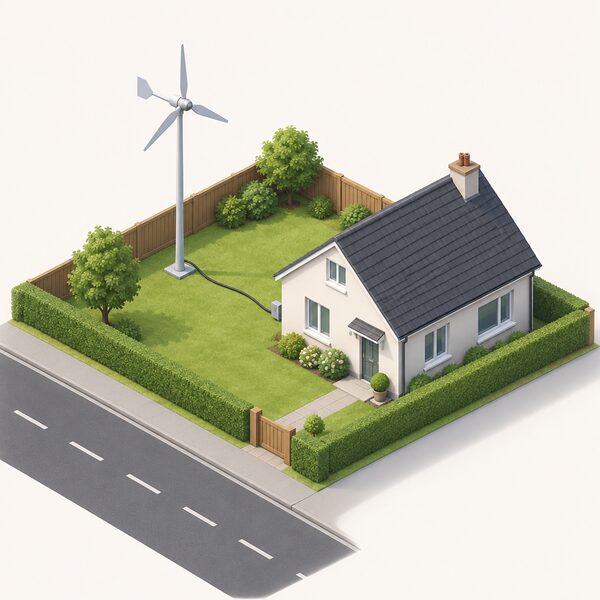
Planning treatment varies by nation and by site. Official guidance states that under permitted development rights it is possible in some cases to install domestic wind turbines without a planning application, so long as specified limits and conditions are met, and that in other cases an application to the local authority is needed9. In Northern Ireland, official guidance states simply that planning approval is needed8.
Conservation areas carry specific restrictions. In Wales, official guidance notes that within a conservation area a stand-alone turbine would be installed so that it is visible from a highway bounding the curtilage of the dwellinghouse19. The permitted development legislation for England sets out that on land within a conservation area a turbine would not be permitted if installed on a wall or roof slope of the dwellinghouse or a curtilage building fronting a highway20. Official guidance also notes that planning permission is needed where a wind turbine is installed on the same building as, or within the curtilage of, a dwelling house in the context of heat pump permitted development21.
On export, official guidance states that any unused or excess electricity can be exported to the grid and sold to the local electricity supply company8. Wind turbines did not qualify as energy-saving materials for the reduced VAT rate during the period covered by the HMRC manual22, so the VAT position on a turbine differs from that on insulation.
Community wind and the wider picture
Community-owned wind power is defined in independent guidance as a wind turbine or wind farm locally owned by individuals or groups in a community, and such groups use wind energy to support and reduce energy costs in the local community23. Independent guidance describes community energy more broadly as providing clean, efficient and affordable ways to power schools, hospitals, local government buildings and high streets24.
The scale of the community route is different from the domestic one. Independent guidance on retrofit notes that deeper retrofitting of homes leads to greater carbon and cost savings25, and for context on what other low-carbon measures can achieve, independent guidance states that replacing a home coal-fired heating system with a domestic biomass boiler could save up to 11 tonnes of CO2 emissions per year26. That is a different fuel switch in a different setting, but it shows the range of household-scale carbon figures.
For a household without a 5m/s site, community wind is the realistic route to a wind carbon saving: the generation happens where the resource is, and the benefit returns to the community rather than to the individual roof. The dependence that remains is on the grid, the supplier and the tariff, and on the wind itself, which no ownership model changes.
Sources26 cited
- Wind power, Electricity North West, 2026-09-19
- Wind turbines, Energy Saving Trust, 2026-05-20
- Wind turbines, Uswitch, 2026-01-06
- Small wind turbines, MCS Certified, 2026-08-18
- Are solar panels worth it?, Uswitch, 2026-09-16
- Renewable technologies: what really cuts energy bills, Energy Saving Trust, 2026-08-12
- Generating renewable electricity, Energy Saving Trust, 2025-12-11
- Wind, nidirect, 2026-05-18
- Planning permission introduction, Planning Portal, 2026
- Net zeroing in on investment, Resolution Foundation, 2024-07-22
- Guidance toolkit on building retrofit, Birmingham City Council, 2024-02
- Retrofitting energy efficiency in buildings, Leeds City Council, 2026
- Publication of the Future Homes Standard: government response, CIPHE, 2021-02-09
- Microgeneration, Hansard, 2004-07-13
- Identification and assessment of improvements to energy standards, Scottish Government, 2026-07-24
- Should I switch to a time of use tariff, Energy Saving Trust, 2026-01-23
- Balancing the grid, Uswitch, 2026-02-09
- What are wind farms all about, Smart Energy GB, 2026-03-16
- Planning permission: wind turbines, Welsh Government, 2026-09-17
- Class H: installation of wind turbine on domestic premises, legislation.gov.uk, 2026-09-17
- Heat pumps, New Forest District Council, 2026-09-17
- VAT energy saving materials, HMRC, 2026-09-17
- What are the benefits of community owned wind power, Energy Saving Trust, 2026-09-17
- What is community and local energy, Electricity North West, 2026-09-19
- Energy efficiency programmes and what we can learn from our neighbours, Energy Saving Trust, 2025-10-03
- Biomass energy: definition, pros, cons and energy savings, Smart Energy GB, 2026-08-17
 Wind Turbine Output and SizingHow much electricity a home wind turbine makes depends far more on your wind than on its size.
 Domestic Wind Turbine CostA home wind turbine usually costs between nine thousand and nineteen thousand pounds, but the real price depends on its size and how it is mounted.
 Domestic Wind TurbinesCan a wind turbine really power a home, and is your site windy enough?
 Turbine Siting and Wind SpeedIs my garden windy enough for a home wind turbine?
 Wind Turbine InstallationWill a wind turbine actually pay for itself in a normal British garden, and how much wind does your spot really need?
 Building-Mounted Wind TurbinesWill a wind turbine on your roof actually make enough electricity to be worth it?