
In this answer
Short answer
The short answer is that both work, and which one suits a household depends on whether it has a battery. Charging during the day maximises direct use of a home's own solar power, which is described as the cheapest and greenest option1. Charging overnight on an EV tariff is the other route, and the Energy Saving Trust notes that most EV tariffs involve a lower rate for charging overnight, which will often be the best option2.
The deciding factor is storage. Without a home battery, surplus solar generated while the car is away is exported to the grid, often at a relatively low rate, whereas with a battery that surplus is captured and held for when it is needed, including overnight EV charging3. A battery also allows charging on cheap electricity from a supplier, typically on certain tariffs at night or in the middle of the day4.
In practice, most households with solar and an EV run a hybrid: direct solar charging whenever the car is home in daylight, and off-peak grid charging for everything else. The sections below set out how each route works, what it costs in terms of foregone export, and how the setup changes between a PV-only home and one with panels plus a battery.
Midday solar charging versus night charging: the short answer
The two options are not competing ways of doing the same thing. Midday charging uses generation the household already owns; night charging buys electricity at a time when it is cheaper. A household with panels and a car at home during the day gets the first for nothing beyond the capital cost of the array. A household with the car away at work all day gets the second, and the solar it generates goes elsewhere.
The Energy Saving Trust's position is that an attractive overnight rate for charging will often be the best option, which reflects the fact that most cars are parked at home overnight and most solar generation happens while they are not2. That is a statement about typical patterns, not a rule. Where the car is on the drive at midday, direct solar use avoids a purchase entirely, and no tariff can beat avoiding a purchase.
What complicates the comparison is export. Solar that is not used on site is exported, and the rate paid for export is generally lower than the rate charged for importing at night. That gap is the whole argument for a battery, and it is why the choice between midday and night charging is really a question about whether the household can store what it makes.
"Charging your EV during the day maximises direct use of your solar power, making it the cheapest and greenest option."
Charging from solar at midday: how the power flows
During daylight hours, a solar array first powers the home, then supplies energy to charge the EV, and finally stores any excess in the battery or exports it to the grid for credit8. That order matters: the car is third in the queue behind the house and, where fitted, the battery. Solar charging software can be set to charge the EV with 100% solar energy or a mix of solar and grid energy9, and a charger can follow the surplus solar power dynamically10, so a household drawing more than the array is generating is importing the difference, whatever the inverter is doing.
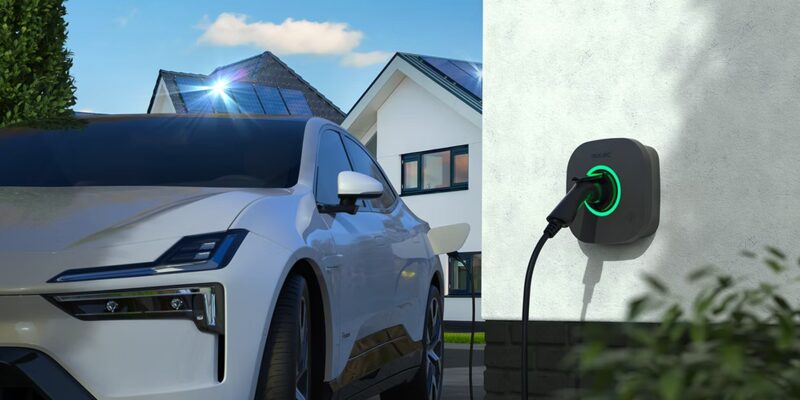
Standard charge points do not manage this. They draw electricity from the home supply without distinguishing between solar-generated power and grid electricity, so a car plugged in at midday will charge at its set rate and pull whatever the panels cannot cover from the grid3. Solar-aware chargers behave differently: they monitor real-time solar electricity production, adjust charging speed accordingly, and switch between solar and grid supply depending on availability3. Some have modes that use only the surplus solar the house is not consuming and would otherwise export1.
The practical consequence is that midday charging is a variable-rate activity. Output rises and falls with cloud and season, and a charger that follows it will spend part of the session at low power. That is fine for a car parked all afternoon and poor for one that needs a full battery by two o'clock.
Charging at night from a home battery: how it works
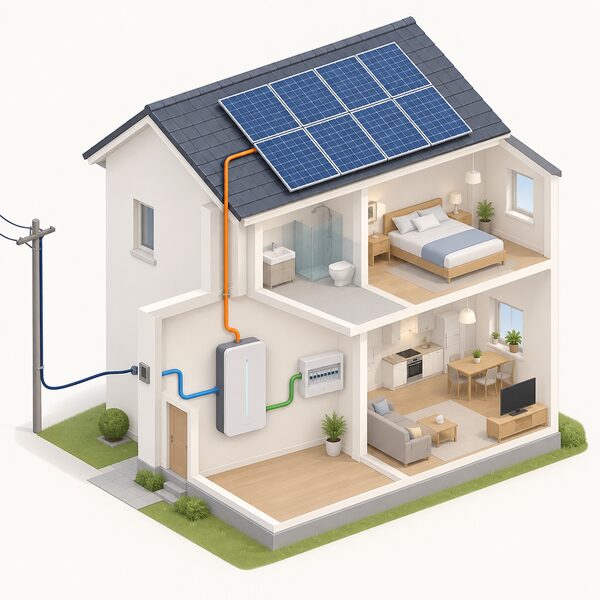
At night, a system with storage prioritises stored battery energy to power the home and charge the EV, and if the battery is depleted it switches to grid power8. The battery itself can be filled two ways: from surplus solar during the day, or from cheap electricity bought from a supplier, typically on certain tariffs at night or in the middle of the day4.
That dual input is what makes the setup flexible. A home battery stores free electricity generated by solar panels during the day so it can be used by the household at night11, and it can also charge at lower electricity prices overnight or at certain times during the day and discharge at peak hours9. The same unit therefore serves the summer solar case and the winter tariff case.
The Energy Saving Trust's battery guidance is blunt about the alternative: without storage, unused solar electricity is wasted or exported to the grid, often at a relatively low rate3. A battery converts that low-value export into avoided import, which is worth more. It also opens special export tariffs and lowers EV charging costs when combined with an overnight EV tariff10.
Why an energy storage system is the deciding factor
Everything above turns on storage. A PV-only household has one lever, which is timing: run the car when the sun is out. A PV-plus-battery household has two, because it can move solar generation from midday to night and can also buy cheap units to top up.
The scale of the difference is set by the export rate against the import rate. Solar exported at a low rate and bought back at a night rate is a loss on every unit; solar stored and discharged into the car is a unit not bought at all. That is the arithmetic behind the Energy Saving Trust's framing of a battery as the thing that captures surplus for overnight EV charging3.
Storage also changes what the car itself is for. A battery storage system allows a household to store extra electricity until it is needed, for example at night or during overcast or rainy weather12, and solar PV can be paired with battery storage to hold excess electricity for when it is most needed13. The household can then choose when to use it, such as during peak hours when supply is expensive14.
The dependence that remains is on the grid for whatever the array and battery cannot cover, and on the manufacturer for the battery's controls, app and warranty. A battery is a managed product with firmware and a monitoring platform, not a passive tank.
Off-peak night tariffs versus free solar: what each costs you
EV tariffs are typically two-rate tariffs where it is cheaper to use energy at night, so vehicles can be charged more cheaply overnight15. The windows vary. Economy 7 gives a lower tariff per kWh between the night-time hours of 22:00 and 08:305. Octopus Go, described as the original EV tariff, gives five hours of cheaper energy every night6. EV tariffs generally work similarly to domestic Economy 7 tariffs, with a lower unit rate for seven hours during the night16.
Against that, self-generated solar has no unit price at all. The comparison a household actually faces is between the export rate it gives up by using solar on site and the night rate it would otherwise pay. Where the night rate is low and the export rate is comparable, the gap narrows; where export is paid at a low rate, self-consumption wins clearly.
| Route | When it runs | What it draws on | What it costs |
|---|---|---|---|
| Direct solar | Daylight, car present | Own generation | Foregone export3 |
| Battery discharge | Evening and night | Stored solar or cheap import | Foregone export or night unit rate4 |
| Off-peak tariff | Set night window | Grid | Night unit rate15 |
Economy 10 offers a different shape again: ten set hours of cheaper off-peak electricity, made up of three hours in the afternoon, two in the evening and five through the night17. That afternoon block is unusual among off-peak products and overlaps with solar generation, which makes it a poor fit for a household already self-consuming at midday and a reasonable one for a household without panels.
Matching your setup to the choice: PV only, PV plus battery
A PV-only household should expect to charge in daylight or not at all on solar. The array requires only daylight, not direct sunlight, to generate electricity18, so an overcast midday still produces something, but output in winter drops considerably and grid top-ups become more necessary3. In summer, a reasonably sized system can cover a significant portion of a typical household's EV charging needs3. The rest of the year, the car is on the grid.
A PV-plus-battery household can run the same pattern in summer and switch to stored or off-peak power in winter. The battery can be charged with cheap electricity from a supplier, typically on certain tariffs at night or in the middle of the day4, which covers the shortfall without any change to the car or the charger.
Two practical points apply to both. First, charging speed: a slow charger will normally fully charge a partly charged car in around four hours19, while a 3kW, 5kW or 7kW charger generally takes between six and 12 hours to go from 20 to 80 per cent20. Overnight windows are sized for that. Second, smart charge points are pre-set not to charge during peak demand hours, between 8am and 11am and 4pm and 10pm on weekdays7, which leaves the solar-rich middle of the day clear for charging.
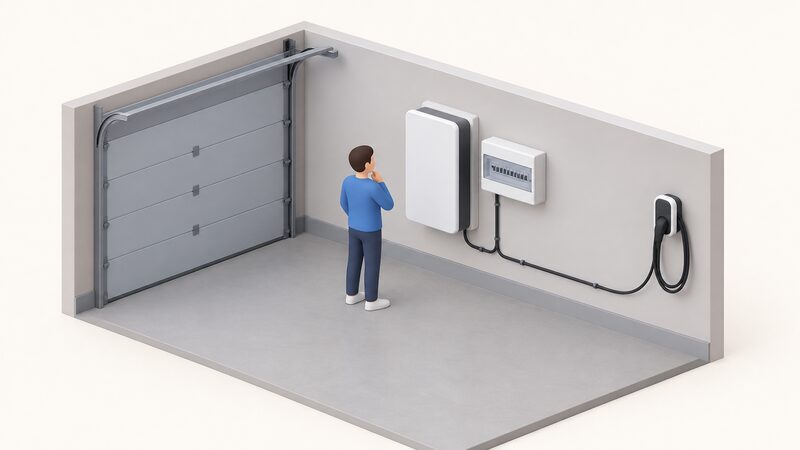
Where the choice breaks down
Three limits are worth stating plainly. The first is seasonal: winter output falls and grid top-ups become more necessary3, so a solar-only household is a grid household for part of the year whatever its summer performance. The second is timing: solar-aware charging only helps if the car is present, and a standard charger will draw from the grid regardless of what the panels are doing3. The third is control: the battery, the charger and the tariff are all managed products, and the household's independence runs through a manufacturer's app and a supplier's tariff terms.
Sources21 cited
- EV chargers for solar panel charging, E.ON Next, 2026-09-17
- Tariffs for renewable technology, Energy Saving Trust, 2026-08-12
- Can solar panels charge electric cars?, The CPA, 2026-04-15
- Battery storage, Home Energy Scotland, 2026-09-20
- V2G Britain, Cenex, 2026-09-17
- Octopus EV energy tariffs, Uswitch, 2025-10-09
- Guide to EVSCP regulations 2021, GOV.UK, 2026-09-18
- The complete guide to solar EV charging at home, SolaX Power, 2025-08-20
- Smart meters, MCS Certified, 2026-07-24
- How to decide if solar panels are right for your home, IVIE, 2026-09-20
- Getting smarter with energy, Centre for Sustainable Energy, 2026-07
- Solar panel installation, maintenance and repair, NICEIC, 2026-09-17
- Solar photovoltaic PV, MCS Certified, 2026-07-30
- Renewables and electrics, NICEIC, 2026-09-17
- Energy flexibility, Smart Energy GB, 2026-08-17
- Electric cars and energy bills, Uswitch, 2026-04-27
- Getting the most from Economy 7, National Energy Action, 2026-09-10
- Solar electricity photovoltaics, Planning Portal, 2026-09-17
- Charging electric vehicles, Electricity North West, 2026-09-19
- How long does it take to charge an electric car?, Zapmap, 2026-04-15
- Tips for electric cars in hot weather, Zapmap, 2025-07-08
 What Size Battery?How much electricity does your home use in a day, and how much of that falls in the hours when power is cheap or your solar panels are generating?
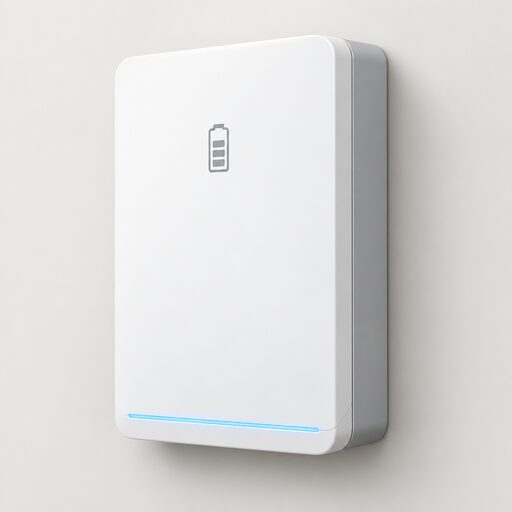 Charging With a Home BatteryHow a home battery and an EV charger share one supply, whether a battery can usefully charge a car, and how combined systems are controlled so the battery is not discharged into the vehicle at a loss.
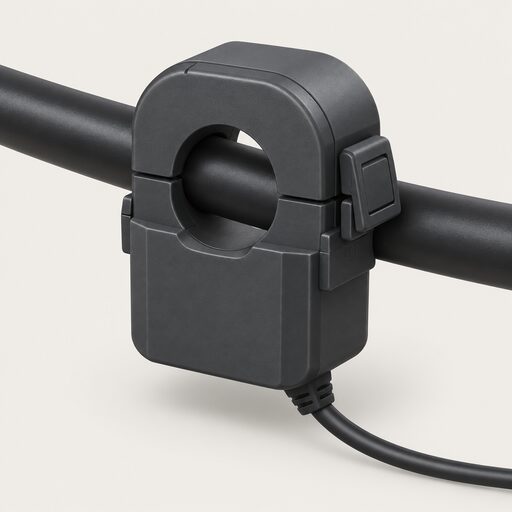 Charging an EV from Solar PanelsCharging your car from solar panels means using the power your roof makes instead of sending it to the grid.
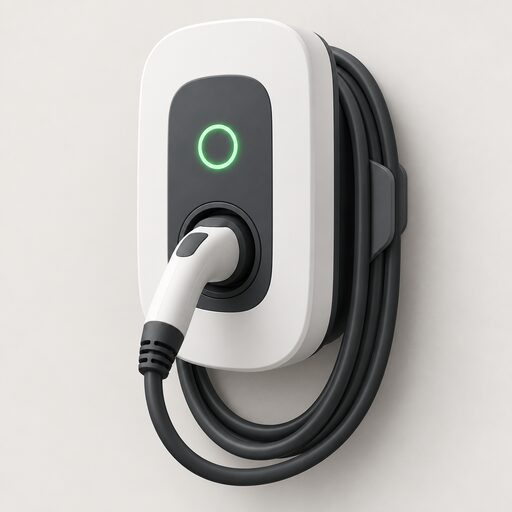 Supplier-Controlled ChargingSmart charging tariffs let your energy supplier decide when your car charges, usually overnight when electricity is cheaper.
 Self-ConsumptionHow much of the electricity from your own solar panels do you actually use, and how much goes to the grid?
 EV Tariffs and Home ChargingHow EV-specific import tariffs and charging bolt-ons work, including supplier-controlled charging where the energy company decides when the car draws power, which charge points each scheme supports, and what a household needs in place.