In this guide
An EV tariff is an electricity plan with different unit rates at different times of day, a structure known as time-of-use pricing1. In practice that means one period of very cheap electricity in the early hours for charging an electric car, paid for by a peak rate that sits above what a flat tariff would charge. Most of these plans are two-rate tariffs where night electricity is cheaper2, and the cheap rate typically applies to all of the home's electricity, not just the power going into the car1.
The overnight rates on offer sit far below standard prices. E.ON Next's Next Drive prices electricity at 10p/kWh for charging between 12am and 6am3. EDF's overnight tariff for EV owners has been reported at an average night-time unit rate of 8.00 pence per kWh across all DNO regions, against 16.63 pence per kWh on its standard variable night rate4. So Energy states its So EV tariff can be as low as 6.5p/kWh overnight5. For comparison, a standard seven-hour off-peak rate used in official fuel price data is 15.00 p/kWh from 1 January 20266.
Uptake is now substantial: an official consultation document puts the proportion of home EV charge points that use an EV tariff at 62%7, while a Zapmap driver survey reports that 80% of EV owners use off-peak, renewable electricity tariffs for home charging8. The trade-off is dependence: these rates come from a supplier contract, usually require a working smart meter, and on smart tariffs hand control of when the car charges to the supplier's dispatch system.
What an EV tariff is and how the off-peak rate works
Several suppliers have introduced overnight or off-peak tariffs aimed solely at EV drivers13. Two designs dominate. The first is a straightforward two-rate tariff: cheaper overnight electricity that can also be used for other appliances14. The second is an add-on, where the household keeps its existing tariff and the cheaper rate applies only to charging the car14. The Energy Ombudsman describes add-on EV tariffs as arrangements where "consumers keep their existing household tariff but receive separate EV charging discounts, credits or other benefits"15.
The cheap window has to be paid for somewhere. Peak costs per unit typically increase a little on these plans, so households with higher daytime electricity consumption may end up worse off overall16. One comparison sets out the arithmetic: with an off-peak rate of 8p and a peak of about 33.7p against a flat rate of 26.11p, roughly 30% of total annual electricity needs to fall inside the off-peak window for the tariff to beat the flat rate17. That is a meaningful threshold. A household doing low mileage, or one that cannot shift laundry, dishwashing and hot water into the night, may not clear it.
Where a supplier displays off-peak and peak pricing, that pricing is part of the standard EV tariff rather than an option available to all customers16. The distinction matters when comparing headline rates: the advertised overnight figure comes bundled with a higher peak rate covering the rest of the day. On E.ON Next's Next Drive, for example, the lower rate of 10p/kWh applies when charging between 12am and 6am, which the supplier gives as 42 hours of off-peak electricity per week17.
Overnight rates compared: 7p, 8p and 10p per kWh
EV tariffs often work like domestic Economy 7, with a lower unit rate for seven hours during the night18. What separates them is how far the night rate falls.
| Tariff or rate | Overnight unit rate | Period or note | Source type |
|---|---|---|---|
| So EV (So Energy) | as low as 6.5p/kWh | September 2025, maker statement5 | Maker |
| EV-specific tariffs generally | as low as 5p/kWh to 7p/kWh | August 20259 | Maker |
| EDF overnight tariff for EV owners | 8.00p/kWh average across all DNO regions | September 20264 | Independent |
| E.ON Next Drive | 10p/kWh | 12am to 6am3 | Maker |
| 7-hour tariff low rate (official fuel prices) | 15.00p/kWh | from 1 January 20266 | Independent |
| EDF standard variable night rate | 16.63p/kWh | September 20264 | Independent |
| Click Energy Economy 7 night rate (Northern Ireland) | 17.291p/kWh | 18 September 202619 | Independent |
The spread is large. The gap between an EV overnight rate around 8p and a conventional Economy 7 night rate around 16.63p is roughly double, and the Northern Ireland figure of 17.291p shows that the deep EV rates common in Great Britain are not mirrored across the whole UK market. Northern Ireland operates a separate electricity market with its own suppliers, and Economy 7 there is priced as a general night tariff rather than an EV product19. Households there should expect the charging economics described here to look different.
Rates quoted by suppliers for their own tariffs are promotional figures and should be read against the peak rate and standing charge in the same contract. The official off-peak figure of 15.00 p/kWh is a modelling price for a generic seven-hour tariff, not a market offer6.
Off-peak windows: how the charging hours differ
Most EV tariffs involve a lower rate for charging overnight20, but the hours differ enough to change which household appliances can benefit.
| Tariff | Off-peak window | Hours |
|---|---|---|
| E.ON Next Drive | 12am to 6am daily21 | 6 per night, 42 per week21 |
| Good Energy EV Charge | Midnight to 5am, peak 5am to midnight22 | 5 per night |
| Octopus Go | five hours of cheaper energy every night23 | 5 per night |
| Intelligent Octopus Go | up to 6 hours of smart charging every 24 hours24 | 6, dispatched by supplier |
| Economy 7 | seven-hour night window, typically 12:00am to 07:00am, times vary by supplier25 | 7 per night |
Some guidance places typical time-of-use lower rates between 00:30 and 04:3026, and storage heater guidance describes Economy 7 and Economy 10 cheap periods as varying but commonly around 12pm to 7am27. Economy 7 and Economy 10 use fixed cheaper periods, while newer EV and tracker tariffs can be more dynamic and usually work best with a smart meter2.
A fixed window has one practical advantage that E.ON Next states for Next Drive: because the cheaper rates are the same every night, the charging time only has to be set once28. A dispatch-based tariff removes that task entirely but also removes the certainty of knowing when the car will draw power. Further detail sits on time-of-use tariffs and Economy 7 tariffs.
Intelligent Octopus Go: smart charging and the six-hour limit
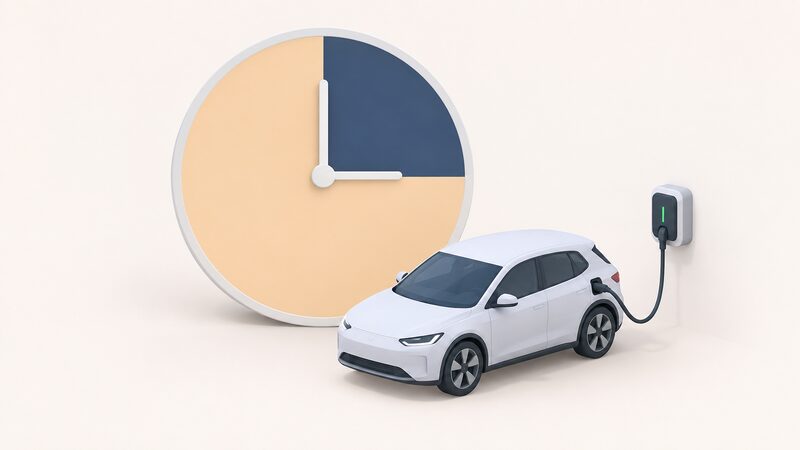
On Intelligent Octopus Go the supplier charges the car at times when energy is at its cheapest23. Rather than the household setting a timer, the tariff dispatches charging sessions, which is why it requires a compatible vehicle or charger.
The rules around how much cheap charging is available have changed. Octopus states that the tariff "will provide up to 6 hours of super-cheap smart charging every 24 hours" for EV charging24, and that "The 6-hour limit only applies to smart charging for your EV"24. Once those hours are used, "any further smart charging will be billed at the peak rate, even if it happens overnight"24. Separately, "All Max charging will be billed at peak rates, this is true even between 11:30pm, 5:30am"29. Max charging is the option that fills the battery immediately rather than waiting for a cheap dispatch, and the billing treatment is the same whatever the hour.
Octopus offers three EV tariffs, including the original Octopus Go with five hours of cheaper energy every night23 and an Intelligent Drive Pack, described as an add-on to an existing home energy tariff where customers pay an extra monthly subscription fee for unlimited smart EV charging23. A related product, Intelligent Octopus Flux, is a two-rate import and export tariff with matching prices and automated battery management that charges when power is cheapest and exports between 4pm and 7pm30. Comparisons sit at Intelligent Octopus Go vs Octopus Go and smart charging tariffs.
E.ON Next Drive: fixed rates and the 12am to 6am window
Next Drive is aimed at EV owners28 and prices electricity at 10p/kWh for charging between 12am and 6am3. That window runs daily and amounts to 42 hours of lower rate off-peak electricity per week21. E.ON Next's own guidance elsewhere quotes the EV tariff 12am to 6am rate as 0.075 £ per kWh as at November 202531; the two figures come from different dates and the current published rate should be checked before signing.
The contract terms are set out plainly by the supplier: fixed energy prices for one year and no exit fees21. Eligibility criteria include needing a smart meter that sends half hourly readings and paying by Direct Debit21. The tariff also carries a free one year subscription to Zoom EV benefits and discounts, and is managed through the E.ON Next app3.
E.ON Next lists a wider set of time-of-use products: Economy 7, Economy 10, Next Drive, Next Drive Smart, Next Pumped, Next Smart Saver and Next Optimise, plus two variable rate tariffs28. Next Drive Smart is the dispatch-based option and requires a compatible EV and a smart home charger31. Next Pumped is the heat pump product, covered on heat pump tariffs. When signing up for an EV tariff E.ON Next usually gives a 14 day average waiting time32, longer than an ordinary tariff switch because the equipment and meter arrangements have to be confirmed. More on the supplier's range is at E.ON Next tariffs.
EV Optimise: ScottishPower's free add-on
EV Optimise is not a tariff in its own right. It can be added to any ScottishPower tariff free of charge, excluding the company's Time of Use tariffs, which include EV Saver, Heat Saver and Solar Saver33. It is available to ScottishPower customers via the ScottishPower App33, which means the benefit depends on an app and an account relationship rather than on a metered rate alone.
Because it works as a credit applied against charging, the mechanics of leaving matter. ScottishPower states that cancelling EV Optimise removes access to smart charging history, so any details worth keeping should be saved first, and that outstanding credit appears on the next bill automatically34. Changing the car used with EV Optimise requires cancelling the current setup and signing up again with the new vehicle34. Charging sessions are not instantaneous: it can take up to 20 minutes from plugging the car in at home for a smart charging session to start34.
Add-on structures like this one are the model the Energy Ombudsman describes, where the household keeps its existing tariff and receives separate charging discounts or credits15. The practical consequence is that the rest of the home's electricity is priced as before, so there is no cheap window for the washing machine or a hot water cylinder. EV charging bolt-ons covers that trade-off in more depth, and ScottishPower tariffs covers the supplier's wider range.
Eligibility: smart meters, chargers and vehicle compatibility
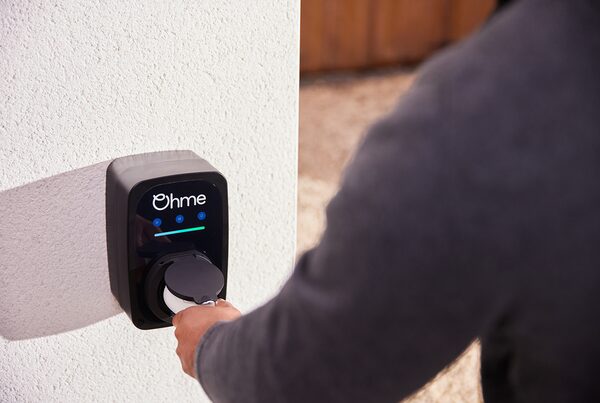
Three conditions recur across suppliers: an electric vehicle, a working smart meter, and in most cases a compatible charger.
- A vehicle. You must own or lease an EV18. This is a contractual condition, not an inference from usage.
- A smart meter. For many EV-specific tariffs, particularly smart or time-of-use tariffs, a working smart meter is needed15. In most cases a smart meter is required to access EV tariffs35, because suppliers need certainty about when electricity is used23. Charging an electric car does not itself require a smart meter, but without one some EV-specific tariffs are closed off15.
- A compatible charger. Some tariffs are only available with certain equipment such as an EV charger or solar panels36. Smart-dispatch tariffs require a specific list of compatible vehicles or chargers, commonly Ohme, Hypervolt, Zappi, Indra, Easee and some others17. A smart charger that supports scheduled charging and energy data sharing is the general requirement9.
Where an application is refused, ineligibility usually stems from not having a connected SMETS2 smart meter, or the EV model or home charger not being on the supplier's approved compatibility list1. Smart meter installation eligibility may itself vary between households37, which is a particular issue for renters and flats.
Smart meters are compatible with Economy 7 tariffs and fixed rate tariffs, and can enable a household to join newer time-of-use tariffs without changing the meter25. That is the main practical gain: the meter, once installed, does not lock the household to one product. See which tariffs your meter allows and am I eligible for an EV tariff.
Access to home charging is not universal. A government grant of up to £350 is available to landlords and flat tenants for home EV chargers, which can reduce the installation cost to as low as £65038.
Whole-home or EV-only: which cheap rate applies
This is the single most consequential difference between EV tariffs, and it is often buried in the terms.
On a whole-home two-rate tariff, the cheaper overnight electricity can also be used for other appliances14, and the cheap off-peak rate typically applies to all of the home's electricity usage, not just the power going into the car1. Fuse Energy describes its off-peak variable tariff as applying off-peak rates to usual household usage, not just when charging1. That is what makes the 30% off-peak share threshold reachable for many homes: a dishwasher, a washing machine, an immersion heater or a battery charging cycle can all be pulled into the window.
On an EV-only add-on, the discount attaches to the charging session. Everything else stays on the existing rate. For a household with a modest annual mileage and no other shiftable load, that can be the safer structure, because there is no elevated peak rate applied to daytime cooking, heating or working from home.
The risk on whole-home tariffs is the mirror image: households with higher electricity consumption during the day may end up worse off overall, since peak costs per unit typically increase a little on such plans16. A home with electric heating that runs through the afternoon, or a household at home all day, needs to test that carefully. Shifting electricity use to cheap-rate periods and comparing energy tariffs go further into the arithmetic.
Savings in practice
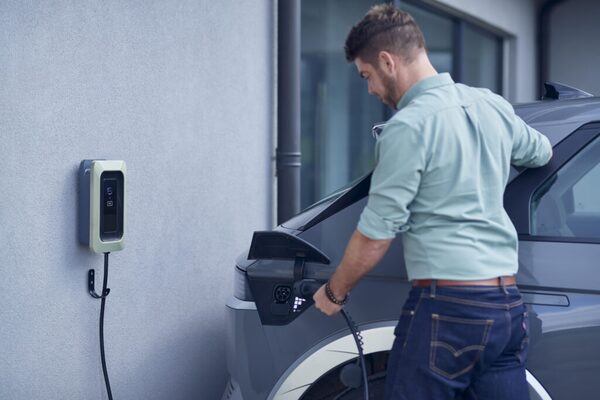
The best-supported figure comes from government: an average-consumption household with an EV could already save around £330 annually by smart-charging on a time-of-use tariff compared with a static one10. Energy UK gives a higher figure of £680 a year for electric vehicle chargers on a time-of-use tariff, with EV ownership required39. The two differ because they model different household consumption and different charging volumes; neither is a quoted price.
On a per-unit basis, Which? costs home charging at an off-peak or EV rate of 7p at 2p per mile, based on an average tested EV efficiency of 3.18 miles per kWh40. With an off-peak tariff, a full charge can cost less than £1041. So Energy states customers could be charging for up to 92% less than in public5, a maker claim about its own tariff.
Tax explains part of the gap: off-peak home electricity is taxed at 5% VAT, compared with 20% VAT on public chargers11. That difference is structural and applies regardless of supplier.
Charger bundles, credits and offer deadlines
Some tariffs bundle a charger or driving credit. Zapmap notes that some provide credit for a number of free miles, while others offer public charging network membership, environmental incentives or tickets to events16. Charge cards, which can be used with multiple networks and let payments be managed in one account including receipts, are sometimes included, and some offer time-limited discounts on charging42.
Bundles carry contract length. The Pod Point Plug & Power EV tariff bundle spreads the remaining charger cost over a two-year tariff, and exit fees apply if the tariff is cancelled within two years43. That offer ended on 30 November 202543. More on that product sits at Pod Point Plug & Power and on contract terms generally at exit fees and tariff contract terms.
OVO's Charge Anytime is not technically a tariff but an add-on to existing tariffs44. EDF also offers tariffs for heat pumps and electric vehicles alongside its main range45.
Solar, batteries and multi-technology homes
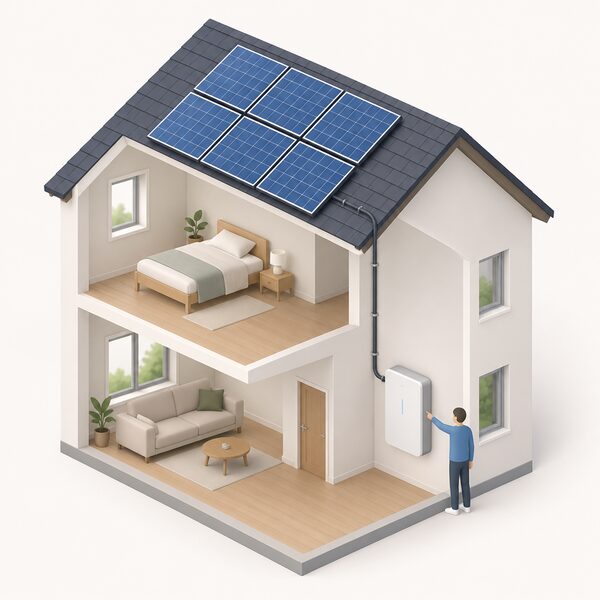
An EV, heat pump or home battery makes smart tariffs much more valuable46. Where a home has panels and storage as well as a car, the choice widens: a dedicated solar and battery tariff designed for that combination, or a good Smart Export Guarantee rate matched with a dynamic import tariff or an Economy 7 tariff47. Dedicated solar and battery tariffs generally require both panels and a battery to qualify47. A solar and battery tariff can be especially useful where the solar array is bigger than average or the heat pump smaller than average47. EDF customers installing solar panels or a battery through EDF can use its Empower Exclusive tariff48.
One regulatory wrinkle affects solar owners directly. BEAMA's response to the Energy Smart Appliance Regulations consultation states that, as drafted, households with solar panels cannot charge optimally from solar and still have a randomised delay of up to 30 minutes, which renders the optimised charging schedule through solar less effective49. The same response argues the timeline for randomised delay changes for EV charging should take place at the end of 2027 in line with other energy smart appliances49. Households combining solar with smart charging should expect some friction between the two until that is settled.
Multi-technology tariffs exist elsewhere too: ivie offered compatible households with heat pumps and EVs a set-priced energy tariff50. See import tariffs designed for solar and battery homes and the Smart Export Guarantee.
Switching, waiting times and what to expect
Switching to any energy tariff is simple, will not cause power outages and typically takes just a few days51. Under the Energy Switch Guarantee, customers can switch to a new tariff within five working days, whether changing supplier or changing tariff with an existing supplier12, and uSwitch states the same five working day standard52. EV tariffs can run longer: E.ON Next usually gives a 14 day average waiting time when signing up for one of its EV tariffs32, reflecting the equipment checks involved.
Smart charging sessions themselves are supplier-dispatched. Some energy providers offer smart charging tariffs that make it cheaper to use electricity at night, or at times of low electricity demand53, which means the car may not begin drawing power the moment it is plugged in. On EV Optimise, a session can take up to 20 minutes to start34. Where public charging is used alongside home charging, pre-authorisation holds on a bank card can take up to two weeks to be released by some banks54.
What this means for energy independence
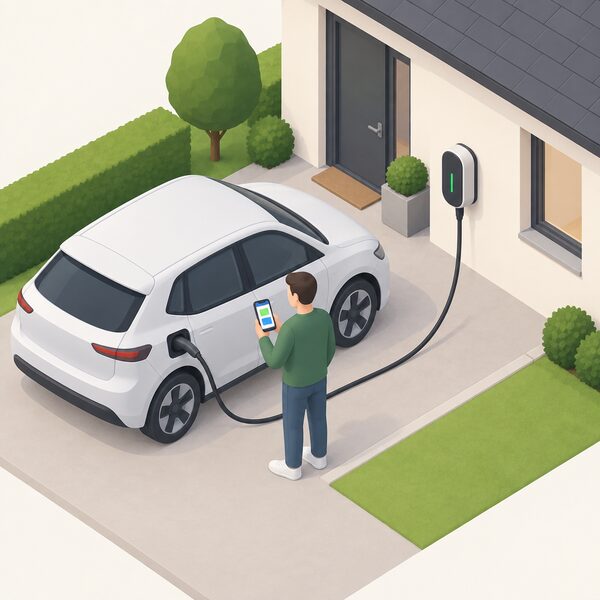
An EV tariff reduces the cost of running a car on domestic electricity and, on a whole-home structure, the cost of running the house overnight. It does not reduce dependence. The household remains on a supplier contract, usually with a fixed term and sometimes with exit fees; it depends on a working smart meter that sends half hourly readings21; and on smart tariffs it depends on an app, a cloud dispatch service and a compatible charger or vehicle remaining on the supplier's approved list17.
There is an upside beyond price. Home EV drivers get the benefit of accessing lower tariffs at times when demand for electricity is lower55, and shifting load away from peak hours is what the wider system needs. But the cheap rate is a commercial offer that can be withdrawn or repriced when a fixed term ends, and the deepest overnight rates depend on the supplier retaining control over when the car charges. A household wanting less exposure to that trades the lowest rate for a fixed window it sets itself. Tariffs and household energy independence sets out that choice, and the full market overview sits on the energy tariffs guide.
Sources55 cited
- Choosing the right EV tariff, Fuse Energy, 2026-04-02
- Energy flexibility and smart meters, Smart Energy GB, 2026-08-17
- EV myths, E.ON Next, 2026-09-17
- Tariff Watch, End Fuel Poverty Coalition, 2026-09-20
- How do you charge an electric car, So Energy, 2025-09
- SAP 10 fuel prices from 01/01/2026, BRE Group, 2026-01-01
- Smart meter Guaranteed Standards of Performance draft impact assessment, Ofgem, 2025-08
- Common misconceptions about electric cars, Zapmap, 2026-05-08
- Understanding off-peak charging, waEV-charge, 2025-08-07
- Electricity distribution networks study: government response, GOV.UK, 2025-07-07
- How to charge an electric car with no driveway, Carwow, 2025-07-18
- Energy Switch Guarantee, Energy UK, 2026-07-08
- EV time-of-use tariffs, Flexi-Orb, 2024-06-19
- Time-of-use tariffs explained, Which?, 2026-04-23
- EV tariffs and home charging: what consumers need to know, Energy Ombudsman, 2026-09-11
- EV energy tariffs, Zapmap, 2024-05-14
- Compare EV tariffs, The Energy Shop, 2026-08-03
- Electric cars and energy bills, uSwitch, 2026-04-27
- Economy 7, Consumer Council for Northern Ireland, 2026-09-18
- Charging electric vehicles, Energy Saving Trust, 2026-04-23
- EV tariffs explained, E.ON Next, 2026-09-17
- Time of use peak and off-peak times, Good Energy, 2026-03-24
- Octopus EV tariffs, uSwitch, 2025-10-09
- Intelligent Octopus Go 6-hour smart charging FAQs, Ohme, 2026-09-17
- What is Economy 7, Smart Energy GB, 2026-04-07
- The cheapest way to charge an EV, uSwitch, 2025-07-02
- Storage heaters, Which?, 2026-06-01
- Time of use tariffs, E.ON Next, 2026-09-17
- Prioritise savings or your target with Intelligent Octopus Go, Ohme, 2026-08-04
- Smart Export Guarantee rates: the best and worst SEG tariffs, Which?, 2026-04-24
- EV tariff vs public charger, E.ON Next, 2025-11-10
- EV tariffs: billing and payments, E.ON Next, 2026-09-17
- EV bundle, ScottishPower, 2026-09-17
- EV Optimise charging support, ScottishPower, 2026-03-31
- Smart meter benefits for Britain, Smart Energy GB, 2026-04-24
- Time of use tariffs: all you need to know, Energy Saving Trust, 2026-05-20
- Smart meters and renting, Smart Energy GB, 2026-04-24
- EV charging statistics, uSwitch, 2025-12-15
- Clean heat: supporting low-income households, Energy UK, 2026-06-11
- How much does it cost to charge an electric car, Which?, 2026-08-26
- Should I buy an electric car, Which?, 2026-04-16
- How to use electric car charging points, Which?, 2026-05-20
- EDF offers 4,000 free electric miles in Black Friday EV deal, EDF Energy, 2025-11-14
- OVO EV energy tariffs, uSwitch, 2025-10-09
- EDF Energy, Energyhelpline, 2026-09-20
- Should I switch to a time of use tariff, Energy Saving Trust, 2026-01-23
- Tariffs for renewable technology, Energy Saving Trust, 2026-08-12
- Solar panel costs, Which?, 2026-08-03
- Response to Energy Smart Appliances Regulations consultation, BEAMA, 2026-02-05
- ivie Energy Sure: helping with home heating over winter, ivie, 2026-09-20
- EV energy tariffs, uSwitch, 2025-09-17
- Energy Switch Guarantee, uSwitch, 2026-07-20
- EV charger installation and maintenance, NICEIC, 2025-08
- Payment pre-authorisation when charging an EV, ChargeUK, 2026-09-17
- Agile Streets: future flexible charging report, Energy Saving Trust, 2025-10-03
 EV Charging Bolt-OnsCan you get cheap electricity for your car without changing the tariff for the rest of your home?
 The Full EV Charging GuideCharging an electric car at home usually means a wallbox, but do you need one, and what will it cost to fit and run?
 Cost to Charge an EV at HomeHow home charging cost is worked out from battery size, efficiency, the unit rate paid and the tariff behind it, with full-charge costs of about £8 to £17, cost per mile, annual running costs and what changes for EV owners from April 2028.
 Supplier-Controlled ChargingSmart charging tariffs let your energy supplier decide when your car charges, usually overnight when electricity is cheaper.
 Charging and Energy IndependenceCharging an electric car at home can cut your fuel costs, but how much does it really free you from the grid?
 EV Tariffs and Home ChargingHow EV-specific import tariffs and charging bolt-ons work, including supplier-controlled charging where the energy company decides when the car draws power, which charge points each scheme supports, and what a household needs in place.