

In this guide
Click Energy is a Northern Ireland domestic electricity supplier, one of five that comparison tools list for the region. It is not a Great Britain supplier, and it does not supply gas. Northern Ireland runs its own electricity market under the Utility Regulator, separate from the market Ofgem regulates across England, Scotland and Wales, so a Click Energy account sits inside a regulatory and network world that has no equivalent on the mainland1.
The practical consequence for a household is that switching, support and complaint routes all run through Northern Ireland bodies. The Consumer Council offers an energy price comparison tool covering electricity and gas tariffs for all suppliers in Northern Ireland, and the Consumer Council and Northern Ireland Energy Advice give free, independent and impartial energy advice to all domestic householders in Northern Ireland1. Power NI is described in legislation as the main electricity provider in Northern Ireland, overseen by the Utility Regulator, which sets the scale Click Energy is competing against2.
What follows is what the official and independent record supports about Click Energy: where it operates, the market it sits in, the tariffs recorded as discontinued, how to reach help as a domestic customer, and what choosing any single electricity supplier does and does not do for a household's energy independence.
What Click Energy is and where it operates
Click Energy supplies domestic electricity in Northern Ireland. It does not appear in the Great Britain supplier landscape, and the two markets are structurally different rather than merely differently branded. Northern Ireland has a single distribution network operator, Northern Ireland Electricity, a structure the solar strategy documents describe as the regulated single DNO for the region6. Great Britain has several, and a different regulator.
That single-DNO structure matters to a household because it removes one variable from switching. Changing electricity supplier in Northern Ireland changes who bills you and what tariff you pay, not who owns the wires or who restores supply after a fault. The same company distributes regardless of which of the five suppliers holds the account.
Northern Ireland's electricity market is also smaller in customer numbers than any comparable GB region, which shapes what suppliers can offer. Around 500,000 households in Northern Ireland received energy bill support through the voucher scheme that opened in January 2023, a figure that gives a working sense of the domestic market's size5. A supplier operating at that scale cannot spread fixed costs across the customer base a GB supplier can.
For a household, the honest position is that Click Energy is a billing and tariff relationship. It does not own generation, it does not own the network, and it does not change the fuel a home runs on. The independence it offers is choice of tariff and supplier within one small market, and no more than that.
| What changes with the supplier | What does not change |
|---|---|
| Who bills the household | The distribution network operator6 |
| The tariff and unit rate paid | The all-island wholesale market |
| The account and support arrangements | The Utility Regulator's rules2 |
| The fuel the home runs on | The gas or oil used for heat |
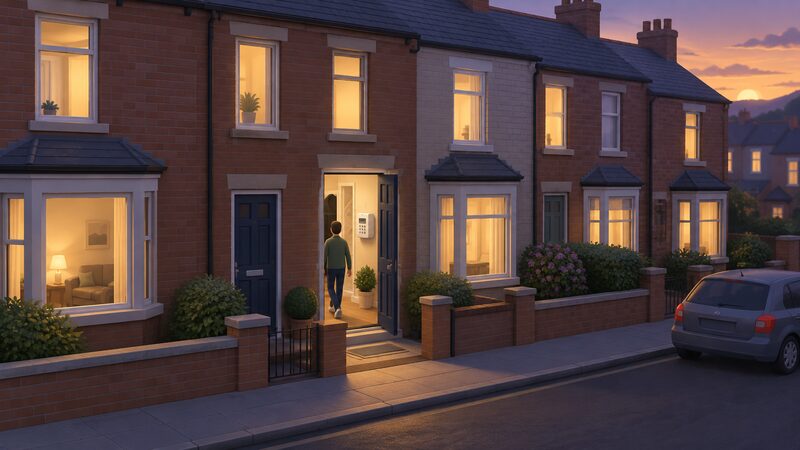
Northern Ireland's electricity market: one of five suppliers
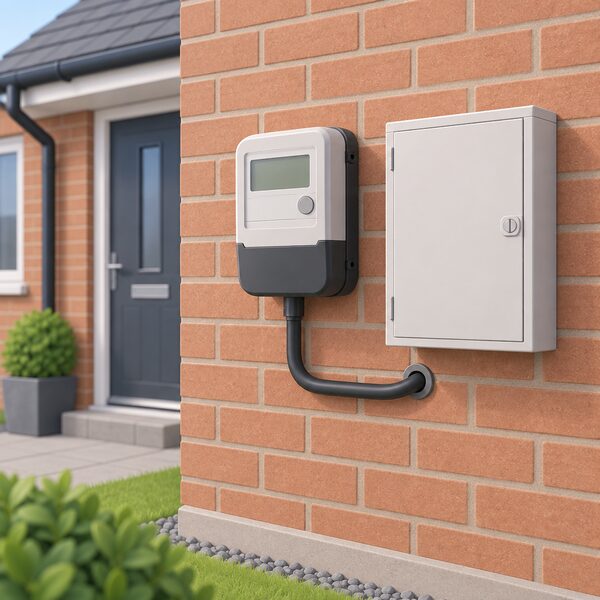
Northern Ireland's domestic electricity market is served by five suppliers, of which Click Energy is one. The field is small enough that the Consumer Council maintains a single comparison tool covering electricity and gas tariffs for all suppliers in Northern Ireland, rather than the multiple commercial comparison sites that operate across Great Britain1.
The market has a dominant incumbent. Power NI is described in legislation as the main electricity provider in Northern Ireland, overseen by the Utility Regulator2. That description comes from the Energy Prices (Domestic Supply) (Northern Ireland) Regulations 2022, the instrument that put the Energy Price Guarantee into force in Northern Ireland, and it reflects the position at that date rather than a current market share figure.
Regulation sits with the Utility Regulator rather than Ofgem. The Utility Regulator publishes the Northern Ireland Sustainable Energy Programme, an energy efficiency programme for domestic and non-domestic customers, and the Energy Saving Trust administers that programme on the regulator's behalf7. This is the mechanism through which supplier-funded efficiency schemes reach Northern Ireland households, and it is a different structure from the Energy Company Obligation that operates in Great Britain9.
For a household, the shape of the market has three consequences. Switching options are fewer than in Great Britain. The incumbent's position is large enough that its tariff movements set the reference point. And the support schemes a household might access are administered through Northern Ireland bodies, not through a GB supplier or a GB regulator.
Market position: Northern Ireland's top energy supplier
Click Energy is described in the comparison material as Northern Ireland's top energy supplier. That description sits alongside the legislative record, which names Power NI as the main electricity provider in Northern Ireland, overseen by the Utility Regulator2. The two statements are not necessarily in conflict: one is a market-position claim carried by a comparison listing, the other is a statutory description of the incumbent written into the 2022 regulations.
What the official record does support is the size of the market both are operating in. Around 500,000 households in Northern Ireland received the £600 energy bill support payment, with vouchers issued from mid-January 20235. A separate figure records around 500,000 households in Northern Ireland receiving support with their energy bills through the earlier scheme10. These are the same order of magnitude and describe the same domestic population.
Domestic electricity consumption in Northern Ireland is measured by the Department for Energy Security and Net Zero (Northern Ireland), which publishes the indicator used in official statistics11. That is the authoritative source for how much electricity Northern Ireland homes actually use, and it is a Northern Ireland-specific dataset rather than a GB one with a regional cut.
For a household weighing suppliers, market position is a weaker signal than it looks. A supplier's customer numbers say nothing about the terms it will offer a particular property, and in a five-supplier market the practical question is which tariff suits the home's consumption pattern. The comparison tool is the mechanism for that, and it covers all suppliers in the region1.
Tariffs: the discontinued Round the Clock and Twilight options
Two Click Energy tariffs are recorded as discontinued: Round the Clock and Twilight. No withdrawal dates for either appear in the official material available here, so none can be given. A household searching for either should treat them as historical products and check what the supplier currently offers rather than assuming a legacy tariff can be revived.
The wider Northern Ireland tariff support landscape has also changed. The Energy Price Guarantee's additional backdated support for Northern Ireland ended in March 202312. The Energy Bills Support Scheme for Northern Ireland provided a £400 discount on energy bills for households in Northern Ireland under the scheme as legislated13, and the later payment route delivered a single £600 payment to all households across Northern Ireland, with vouchers starting to be issued from mid-January 20235.
These were temporary, government-funded interventions rather than supplier tariffs, and they have ended. A household comparing Click Energy against other Northern Ireland suppliers today is comparing commercial tariffs without that support in the background.
| Support measure | Amount | Status |
|---|---|---|
| Energy Bills Support Scheme NI | £400 discount on bills13 | Legislated scheme |
| Later NI payment route | £600 single payment to all households5 | Vouchers from mid-January 2023 |
| Energy Price Guarantee, NI backdated support | Not stated here | Ended March 202312 |
Contacting Click Energy as a domestic customer
No domestic contact number or email address for Click Energy appears in the official material available here, so none can be given. What is published is the independent advice route, which is the appropriate first stop for a household with a query about supply, billing or a tariff it does not understand.
The Northern Ireland Energy Advice Service can be contacted on 0800 111 4455, open 9am to 5pm Monday to Friday3. The same service is reachable by email at nienergyadvice@nihe.gov.uk4. The Northern Ireland Housing Executive manages the Energy Advice Line and provides advice on all energy efficiency schemes14. The Affordable Warmth Scheme is applied for through the Northern Ireland Energy Advice Service, on free phone 0800 111 44 55, through nihe.gov.uk, or by email at nienergyadvice@nihe.gov.uk15.
For consumer disputes rather than energy advice, Consumerline can be reached on 0300 123 626216. National Energy Action, which offers advice and support to help people across England, Wales and Northern Ireland stay warm and manage energy costs, publishes 0800 304 715917. The Energy Ombudsman also offers advice for consumers worried about their energy bills17.
| Route | Contact | Purpose |
|---|---|---|
| Northern Ireland Energy Advice Service | 0800 111 4455, 9am to 5pm Monday to Friday3 | Energy advice, grant referrals |
| Northern Ireland Energy Advice Service | nienergyadvice@nihe.gov.uk4 | Written enquiries |
| Consumerline | 0300 123 626216 | Consumer disputes |
| National Energy Action | 0800 304 715917 | Warmth and cost advice |
| Energy Ombudsman | Advice service17 | Bills and supplier disputes |
What Click Energy means for household energy independence
Choosing an electricity supplier in Northern Ireland changes who bills a household and what tariff applies. It does not change where the electricity comes from, who owns the network, or how exposed the home is to wholesale prices. That distinction is the whole of the independence question here.
The dependence that remains is structural. A Click Energy customer depends on the Northern Ireland electricity grid and on the single distribution network operator that runs it6. The household depends on the all-island wholesale electricity market for the price it pays, and on the Utility Regulator for the rules that govern that price. None of those change with the supplier's name on the bill.
What a household can change is its consumption and its tariff fit. Northern Ireland Energy Advice offers free, independent and impartial energy advice to domestic householders in Northern Ireland, plus referrals to energy grants and other sources of help18. The same service is described across official guidance as independent and impartial, and it covers energy efficiency as well as billing questions19. The Northern Ireland Sustainable Energy Programme funds efficiency measures for domestic and non-domestic customers, administered by the Energy Saving Trust on the Utility Regulator's behalf7.
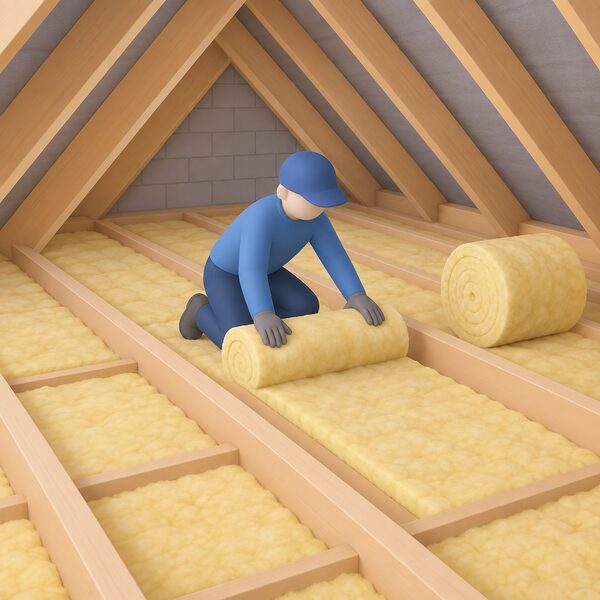
Beyond tariff choice, the levers are physical: insulation, heating technology and ventilation, each covered by separate official guidance for Northern Ireland households21. Those measures reduce the units a home consumes, which is the only part of the bill a household controls directly. Switching supplier moves the price per unit; it does not reduce the number of units.
For a household thinking about independence in the fullest sense, the honest summary is that supplier choice in Northern Ireland is a modest lever. It is worth using, because the market is small and tariffs differ, but it sits alongside efficiency measures and, where a home can support them, on-site generation. The comparison tool covers all suppliers in the region, and the advice service is free1.
Sources23 cited
- Advice if you're struggling to pay your energy bills, nidirect, 2026-09-17
- Energy Prices (Domestic Supply) (Northern Ireland) Regulations 2022(NorthernIreland)Regulations2022), Hansard, 2022-11-16
- NISEP List of Schemes 2026-27, Utility Regulator, 2026-04
- NI Energy Advice, Northern Ireland Housing Executive, 2026-09-17
- Northern Ireland households to receive voucher support for energy bills starting in January, GOV.UK, 2022-12-30
- UK Solar PV Strategy Part 2, Parliament, 2014-04
- 2024/2025 annual report, Northern Ireland Sustainable Energy Programme published, Utility Regulator, 2026-07-03
- NISEP List of Schemes 2024-25, Utility Regulator, 2024-10
- Energy Companies Obligation, Bristol City Council, 2026
- Vital help with energy bills on the way for millions more homes across Great Britain and Northern Ireland, GOV.UK, 2022-12-19
- Domestic electricity consumption indicator, ONS, 2025-12-18
- Energy Price Guarantee up until 30 June 2023, GOV.UK, 2026-09-17
- Energy Bills Support Scheme Northern Ireland, Parliament, 2022-10-18
- NISEP 2023/2024 List of Schemes, Utility Regulator, 2023-05-09
- Changes to the Affordable Warmth Scheme, Department for Communities, 2023-09-08
- Consumer protection rights, GOV.UK, 2026-09-17
- Worried about your energy bills, Energy Ombudsman, 2026-03-24
- Energy saving grants in your area, nidirect, 2026-09-17
- Energy efficiency tips, nidirect, 2026-09-17
- Heating technologies to suit your home, nidirect, 2026-09-17
- Insulation, nidirect, 2026-09-17
- Low carbon heating, nidirect, 2026-09-17
- Ventilation systems, nidirect, 2026-09-17