In this guide
Northern Ireland buys its electricity and gas in a market of its own. There is a different regulator, the Utility Regulator for Northern Ireland, no price cap, and an entirely different set of suppliers from Great Britain1. That single fact explains most of what follows: the switching sites, the price cap headlines and the supplier names a householder in England would recognise do not carry across the Irish Sea. Northern Ireland has a separate electricity market and metering arrangements, so customers there should check directly with their supplier2.
Domestic electricity in Northern Ireland is supplied by five licensed suppliers, and gas by two1. Suppliers need a licence from the Utility Regulator to supply electricity to customers in Northern Ireland, and the list of suppliers may change2. Gas is a smaller market again, split between firmus energy, which supplies the Ten Towns network, and SSE Airtricity, which supplies Greater Belfast3. Both gas suppliers must go through the Utility Regulator for tariff changes, and firmus energy's Ten Towns tariffs require the regulator's approval3.
For a household, the practical consequences are three. Switching is done through the Consumer Council's own comparison tool rather than the GB-wide sites. Pay-as-you-go electricity runs on a Keypad meter rather than a smart prepayment meter. And when something goes wrong, the route to redress runs through the Consumer Council for Northern Ireland and, for network faults, through NIE Networks' guaranteed standards, which pay fixed sums for missed service2.
Why Northern Ireland's energy market is separate from Great Britain
The separation is structural, not a matter of policy drift. Northern Ireland has its own regulator, the Utility Regulator, and no price cap, which is why the Energy Price Guarantee had to be legislated for Northern Ireland separately from the scheme covering Great Britain1. Bills in Northern Ireland are regulated separately and are not currently subject to Ofgem's price cap2, and energy prices there are not set by Ofgem3. The same territorial split shows up in technical rules: connection requirements for small-scale generation in Northern Ireland are set out separately by Engineering Recommendation G98/NI rather than by the GB standard4.
The market is also smaller and more concentrated. Where Great Britain has dozens of licensed suppliers competing for domestic customers, Northern Ireland has five electricity suppliers and two gas network areas. That has consequences for switching: the Consumer Council's comparison tool exists precisely because the GB-wide comparison sites do not cover the Northern Ireland market properly5.
There is a further difference in how support has been delivered. When the Energy Price Guarantee was extended to Northern Ireland, the Secretary of State issued ministerial directions to allow domestic electricity and gas suppliers in Northern Ireland to make tariff changes on days other than the first day of a quarter6. That flexibility was needed because the Northern Ireland market does not run on the same quarterly tariff cycle as Great Britain.
For a household's energy independence, the separation cuts both ways. It means Northern Ireland households are not exposed to the same supplier failures that followed the GB price cap squeeze, because the market is smaller and the suppliers are more established. It also means there is less choice, fewer tariff innovations, and no route to the GB-wide switching infrastructure that a household in England would take for granted.
Who supplies electricity and gas in Northern Ireland
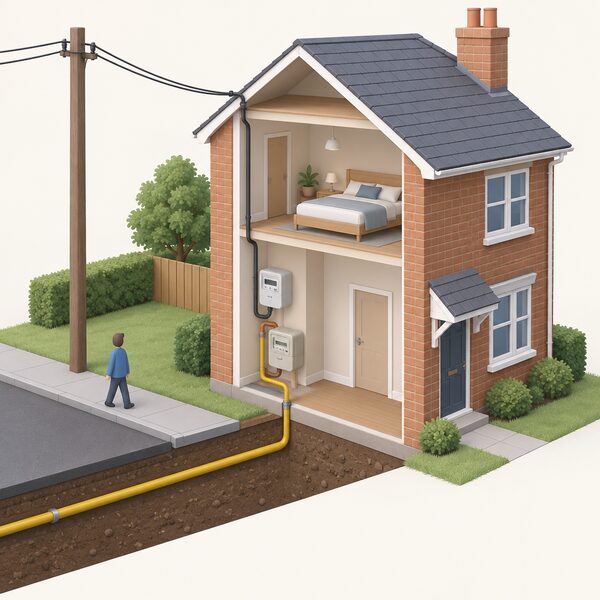
Electricity supply in Northern Ireland is licensed to five domestic suppliers, and gas to two1. Suppliers need a licence from the Utility Regulator to supply electricity to customers in Northern Ireland, and the list of suppliers may change2. Power NI is the historic incumbent, and Northern Ireland Electricity Networks is a separate company to Power NI3. The gas side is split geographically: the Ten Towns gas network area in Northern Ireland is supplied exclusively by Firmus Energy4, and SSE Airtricity supplies Greater Belfast5.
The two gas suppliers are regulated differently from electricity suppliers in one important respect. Both must go through the Utility Regulator for tariff changes, and firmus energy's Ten Towns tariffs specifically require the regulator's approval1. That means gas price changes in Northern Ireland are not simply a commercial decision by the supplier; they are subject to a regulatory process. The Ten Towns network area has been open for other suppliers to compete with firmus energy since 20152, so the exclusivity there is a matter of who actually supplies, not a bar on entry.
| Market | Suppliers | Network areas |
|---|---|---|
| Electricity | Power NI, SSE Airtricity, Click Energy, Budget Energy, Electric Ireland | All of Northern Ireland |
| Gas | firmus energy | Ten Towns network |
| Gas | SSE Airtricity | Greater Belfast |
The Consumer Council's comparison tool covers electricity and gas tariffs from all suppliers in Northern Ireland, which is the practical starting point for any household considering a switch5. The tool is free and independent, and it is the only comparison route that covers the full Northern Ireland market.
For a household, the choice of supplier affects the tariff and the service, but not the physical supply. The wires and pipes are the same whoever bills the household. That is the same position as in Great Britain, and it is worth stating plainly because it is the single most common misunderstanding about switching.
Five electricity suppliers: Power NI, SSE Airtricity, Click Energy, Budget Energy and Electric Ireland
The five electricity suppliers operate across the whole of Northern Ireland, so a household's choice is not restricted by geography in the way gas supply is. Power NI is the incumbent and the largest, with a long history as the former Northern Ireland Electricity supply business. SSE Airtricity operates in both electricity and gas, which makes it the only supplier present in both markets. Click Energy, Budget Energy and Electric Ireland are the smaller challengers.
The supplier landscape matters for energy independence in a specific way. A household that switches electricity supplier is changing who bills it, not who delivers the power. The network remains NIE Networks, and the physical supply is unaffected by the switch. That means switching is a financial and service decision, not a change in the household's relationship with the grid.
There is one further structural point. The Northern Ireland Sustainable Energy Programme, known as NISEP, is an energy efficiency programme for domestic and non-domestic customers, funded through a levy and administered by the Utility Regulator7. It funds energy efficiency schemes available for domestic and business customers8. The scheme is delivered by SSE Airtricity Energy Services NI Ltd, which acts as scheme manager for several NISEP schemes including Energy Plus Provincewide and Housing Association Efficient Electric10.
That means the supplier a household chooses can affect its access to certain energy efficiency schemes, because the scheme manager is a supplier. It is a small but real way in which the supplier relationship extends beyond billing.
Gas tariffs: firmus energy, SSE Airtricity and the Ten Towns comparison
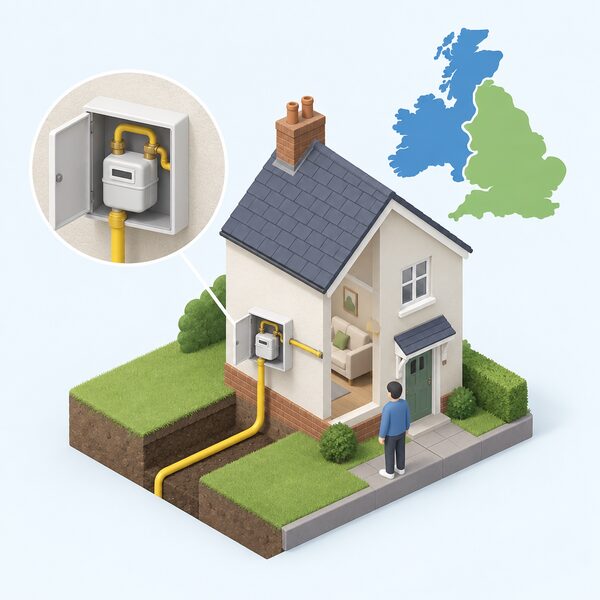
Gas supply in Northern Ireland is geographically split, and that split is the single most important fact about the gas market. The Ten Towns gas network area in Northern Ireland is supplied exclusively by Firmus Energy1, and SSE Airtricity supplies Greater Belfast2. A household's gas supplier is therefore determined by where it lives, not by choice, unless it happens to be in an area where both networks overlap, which is not the general case. The Ten Towns network area has been open for other suppliers to compete with firmus energy since 20153.
Both suppliers must go through the Utility Regulator for tariff changes, and firmus energy's Ten Towns tariffs require the regulator's approval1. That regulatory oversight is a meaningful difference from the electricity market, where suppliers set tariffs commercially within the constraints of the market. The Ten Towns network area has been open for other suppliers to compete with firmus energy since 20152, so the regulatory process sits alongside a market that is formally open to entry.
The Consumer Council publishes a Ten Towns comparison and a Greater Belfast comparison, and it advises households to check the comparison tool when tariff changes are scheduled5. Tariff changes for Ten Towns gas tariffs have been scheduled for 1 October 2026, and a tariff change for SSE Airtricity in Greater Belfast is scheduled for 1 October 2026, with a further Firmus Energy Greater Belfast change scheduled for 8 October 20265.
For a household, the gas market offers less switching opportunity than the electricity market because the network determines the supplier. The practical decision is therefore about tariff type and payment method rather than about which company to buy from. That is a real limit on energy independence in the gas market, and it is worth stating plainly.
Power NI Keypad: how pay-as-you-go electricity works
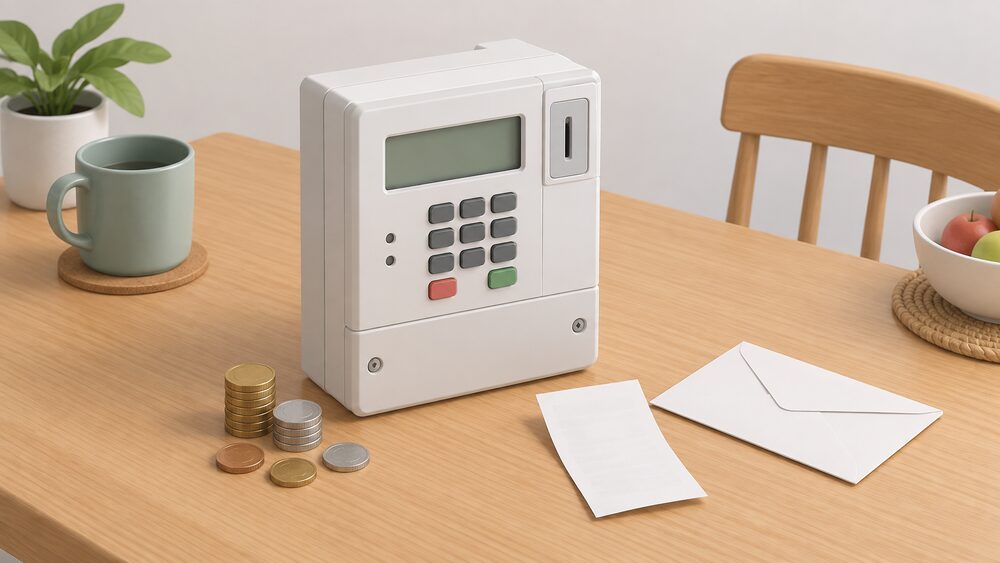
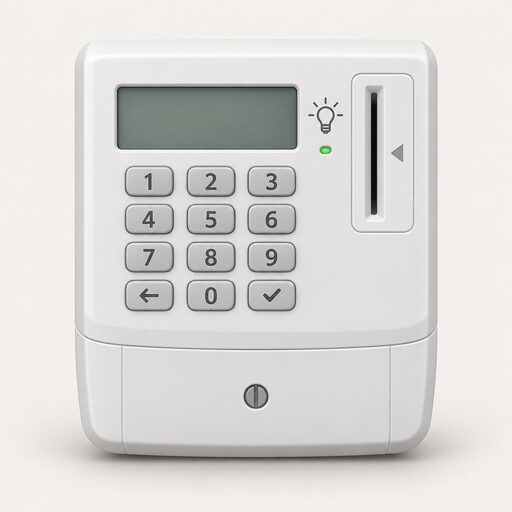
Pay-as-you-go electricity in Northern Ireland runs on a Keypad meter, which is a different technology from the smart prepayment meters being rolled out in Great Britain. The Keypad meter is credited by entering a Powercode, usually a 20-digit number, which is bought in advance4. When electricity prices change, the household is given a special 40 or 60-digit Powercode instead4.
The Keypad system has several features that matter to a household. There is no rental fee, no security deposit and free installation4. Keypad customers do not receive a quarterly bill4. Power NI provides 21 days' notice of any tariff change4. And Keypad customers can take a 2.5% discount off the standard rate on an ongoing basis4.
Top-ups can be made online at powerni.co.uk, by Customer Helpline 24 hours a day, at any Post Office or PayPoint, or via the Power NI app for iPhone and Android4. Replacement cards carry no charge4. Where meter work is required, it is completed by Northern Ireland Electricity Networks within 10 working days4.
The Keypad system is a genuine form of energy independence in one narrow sense: the household pays in advance and cannot build up debt on the meter itself. But it also means the household is dependent on the top-up infrastructure, the Powercode system, and the supplier's app or website. A household that cannot reach a PayPoint or Post Office, or that loses its card, is dependent on the supplier's replacement process.
Keypad top-ups: minimums, limits, discounts and rewards
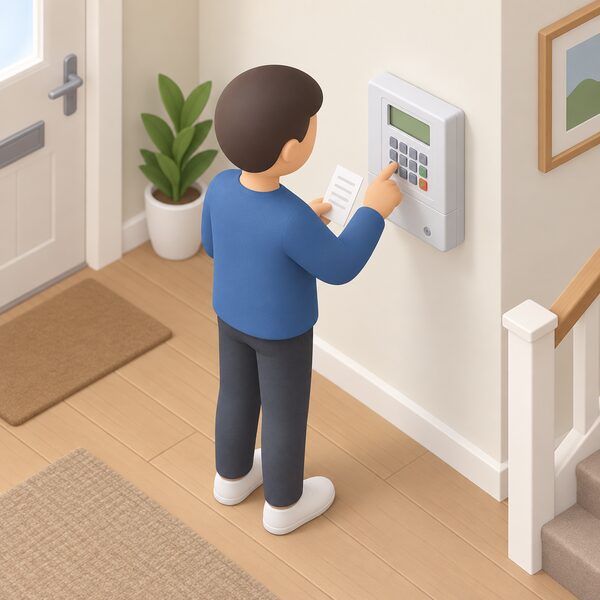
The Keypad top-up system has a set of rules that a household needs to understand to use it well. Top-ups can be made online, by phone, at a Post Office or PayPoint, or through the Power NI app4. The Powercode is usually 20 digits, and after a price change it is 40 or 60 digits4.
There is a rewards offer: Keypad customers can take a Keypad Reward by topping up online or via the Power NI App, which gives £1 free on a £50 top-up4. There is also a Keypad+ offering, described as a new offering in NI available to Power NI customers4.
Where a household is repaying arrears through the meter, the meter is set to collect part of the arrears with each top-up, and that deduction will not be more than 20% of each top-up4. On a £10 top-up at a 20% recovery rate, £8 goes on the meter as credit and £2 comes off the outstanding balance4. Alternative rates can be arranged if the household is working through Citizens Advice or Advice NI, with proof of benefits required11.
| Feature | Detail |
|---|---|
| Powercode length | Usually 20 digits; 40 or 60 digits after a price change4 |
| Top-up channels | Online, Customer Helpline, Post Office, PayPoint, Power NI app4 |
| Reward | £1 free on a £50 top-up online or via the app4 |
| Arrears deduction cap | No more than 20% of each top-up4 |
| Tariff change notice | 21 days4 |
| Replacement card charge | None4 |
The arrears deduction is the feature most likely to surprise a household. A top-up of £10 does not put £10 of credit on the meter if arrears are being recovered. The 20% cap is a protection, but it is a cap on the rate, not a guarantee that no deduction will be made.
Friendly credit and emergency credit on a Keypad meter
The Keypad meter has two forms of protection against running out of credit at an inconvenient time. The first is emergency credit: when the low-credit warning sound is turned off, the household automatically gets £3 emergency credit4. The second is friendly credit, which keeps the supply on outside normal hours even when emergency credit has run out.
The friendly credit rules are specific. If emergency credit runs out after 4pm Monday to Thursday, the supply stays on until 8am the following day4. If it runs out after 4pm on a Friday, the supply stays on until 8am the following Monday4. Friendly credit does not run out on 1 January, 17 March, 12 July or 25 December, and the supply stays on until 8am the following working day4. With Economy 7 and for other tariffs on request, the friendly credit period runs to 11am4. All times stated are GMT, with one hour added during Summertime4.
The Keypad meter also provides feedback on electricity use, and the friendly credit out-of-hours feature is listed among its keypad features11. If the meter shows a message, the most common ones are incorrect, meaning the top-up code entered does not match, and wrong tar, meaning the most recent tariff change code has not been entered12. For an incorrect code, the remedy is to wait until the message clears, press the star button and re-enter the number12. For wrong tar, the tariff change code must be entered before the last top-up code can be used12.
If the meter needs attention, Northern Ireland Electricity Networks can be contacted on 03457 643 643, available 24 hours a day, seven days a week12.
NIE Networks' eleven guaranteed standards and what they pay
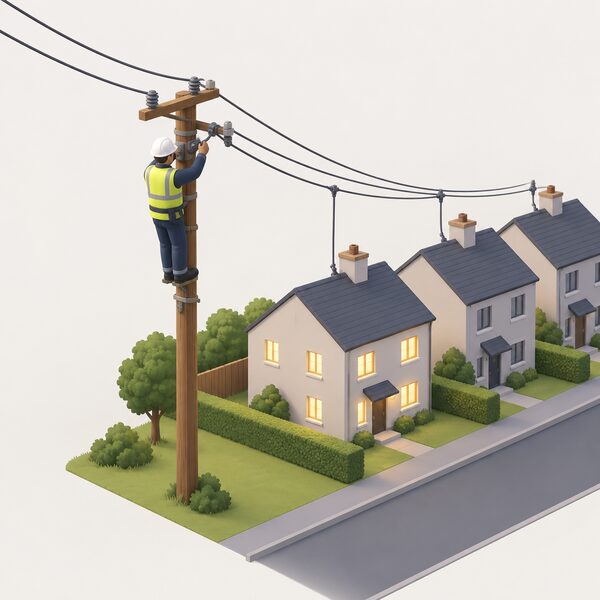
NIE Networks operates eleven guaranteed standards, and if it fails to meet any of them it is committed to compensating the household for the inconvenience2. The standards cover the network side of supply rather than the billing side, which means they apply regardless of which electricity supplier a household uses.
The most significant standard for most households is supply restoration. NIE Networks commits to restoring electricity within 24 hours of a power cut2. If it does not, the household is due £50 and business premises £125, then £25 for every further 12 hour period2. That payment is automatic under the standards rather than something the household has to claim.
Other standards carry fixed payments. A failure to keep an agreed appointment or to contact the household carries £252. A failure on a connection quote carries £502. A failure on a main fuse carries £252. A failure on a prepayment meter carries £252. A failure on a payment query carries £252. A late payment carries £252.
| Standard | Compensation |
|---|---|
| Supply restoration within 24 hours | £50 home, £125 business, then £25 per further 12 hours2 |
| Connection quote | £502 |
| Missed appointment or failure to contact | £252 |
| Main fuse | £252 |
| Prepayment meter | £252 |
| Payment query | £252 |
| Late payment | £252 |
One version gives £50 or £125 for other premises, and another gives £251.
For a household's energy independence, the guaranteed standards are the clearest example of what the network owes the household when the physical supply fails. They do not prevent a power cut, but they put a price on the network's failure to restore supply promptly.
The Consumer Council: comparison tool, complaints and compensation
The Consumer Council for Northern Ireland is the contact for problems dealing with a fuel supplier3. It offers an energy price comparison tool to compare electricity and gas tariffs for all suppliers in Northern Ireland5. The Consumer Council NI and Northern Ireland Energy Advice give free, independent and impartial energy advice to all domestic householders in Northern Ireland13.
NI Energy Advice offers independent and impartial energy advice to domestic householders in Northern Ireland, plus referrals to energy grants and other sources of help14. The Northern Ireland Energy Advice Service can be contacted on 0800 111 4455, open 9am to 5pm Monday to Friday7.
The Consumer Council's comparison tool is the practical route to switching in Northern Ireland, because the GB-wide comparison sites do not cover the market properly. The tool covers all suppliers, and the Consumer Council advises households to check it when tariff changes are scheduled5.
For a household in difficulty, the advice routes are the Consumer Council and NI Energy Advice, both of which are free and independent. The Northern Ireland Affordable Warmth Scheme is delivered by the government of Northern Ireland, and NI Energy Advice can refer households to it and to other grants18.
"The Consumer Council NI and Northern Ireland Energy Advice give free, independent and impartial energy advice to all domestic householders in Northern Ireland."
The Consumer Council's role is not limited to comparison. It is the designated contact for complaints about fuel suppliers, which means it sits between the household and the supplier in a way that has no direct equivalent in Great Britain, where Citizens Advice and the Energy Ombudsman split the role differently.
How to complain about your supplier

The complaint route in Northern Ireland starts with the supplier. A household should contact its energy supplier about late, incorrect or missing bills, back billing, being overcharged, a faulty meter, poor customer service, or a refusal to refund credit from the account19. If the household has its own contract with an energy supplier, it can follow the supplier's complaints procedure, with details on the bill or on the supplier's website20.
If the household is not happy with the way the supplier has handled the complaint, it can contact the Energy Ombudsman21. The same escalation route applies to complaints about prepayment meter installation23. The Energy Ombudsman is the final stage for supplier complaints, and it can decide the outcome.
There is a separate route for network disputes. Under Article 27, an unresolved dispute over disconnection or refusal to connect may be referred by any party to the Department24. That is a different route from the supplier complaint process, and it applies to the network operator rather than the supplier.
For a household struggling to pay, the advice routes are the Consumer Council and NI Energy Advice, and the Northern Ireland Energy Advice Service can be contacted on 0800 111 44557. The Third Party Payment scheme allows deductions to be made from benefits for certain organisations, including the Northern Ireland Housing Executive, Northern Ireland Electricity, Land & Property Services and Housing Associations3.
The complaint system in Northern Ireland is therefore three-layered: the supplier first, the Energy Ombudsman second, and the Consumer Council as the advice and advocacy body throughout. That is a different structure from Great Britain, where the supplier, the Ombudsman and Citizens Advice play comparable but not identical roles.
Sources24 cited
- Energy Prices (Domestic Supply) (Northern Ireland) Regulations 2022(NorthernIreland)Regulations2022), UK Parliament, 2022-11-16
- Customer Standards, NIE Networks, 2026-09-20
- Overdue utility bills, Northern Ireland Direct, 2026-09-17
- Services for prepayment meter customers, Power NI, 2026-09-20
- Advice if you're struggling to pay your energy bills, Northern Ireland Direct, 2026-09-17
- Energy Price Guarantee for domestic energy consumers in Northern Ireland: ministerial directions, GOV.UK, 2022-10-31
- NISEP List of Schemes 2026-27, Utility Regulator, 2026-04
- 2024/2025 annual report Northern Ireland Sustainable Energy Programme published, Utility Regulator, 2026-07-03
- List of schemes published 2023/2024 Northern Ireland Sustainable Energy Programme, Utility Regulator, 2023-05-09
- NISEP List of Schemes 2024-25, Utility Regulator, 2024-10
- NIEE Social Action Plan, Utility Regulator, 2020
- I've got a message on my Keypad, what does it mean?, Power NI, 2026-09-20
- Low carbon heating, Northern Ireland Direct, 2026-09-17
- Energy saving grants in your area, Northern Ireland Direct, 2026-09-17
- Ventilation systems, Northern Ireland Direct, 2026-09-17
- Insulation, Northern Ireland Direct, 2026-09-02
- Hydropower, Northern Ireland Direct, 2026-09-17
- Biomass, Northern Ireland Direct, 2026-09-02
- Complain about your energy supplier or network operator, Ofgem, 2026
- Alternative homes energy guidance, Ofgem, 2026
- Check energy suppliers can install prepayment meters without household permission, Ofgem, 2026
- Understand your electricity and gas bills, Ofgem, 2026
- Installing a prepayment meter without your permission, Ofgem, 2026
- The Electricity (Standards of Performance) Regulations (Northern Ireland) 2012, Article 27, legislation.gov.uk, 2026-09-17
 Energy Bills in Northern IrelandNorthern Ireland has no price cap.
 Energy Supply in NICan you get gas where you live in Northern Ireland, and what happens if your power goes off?
 Utility Regulator NIWho sets your energy prices in Northern Ireland and who can you complain to?
 Tariffs in Northern IrelandWhy does Northern Ireland have its own energy tariffs instead of the Ofgem price cap?
 The Full Energy Suppliers GuideWho the UK's domestic gas and electricity suppliers are, how the market is structured across Great Britain and Northern Ireland, what a supplier is licensed and obliged to do, how the price cap limits bills, what happens when a supplier fails, and who regulates it all.
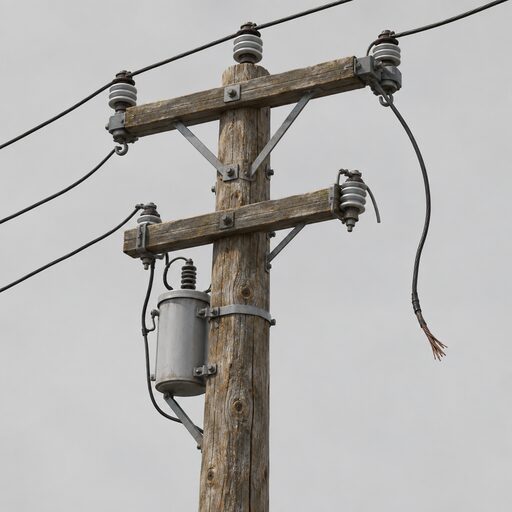 Power Cuts in Northern IrelandNorthern Ireland has a single electricity distribution network, run by NIE Networks, and its own reporting number, registers and compensation arrangements.