
In this answer
Short answer
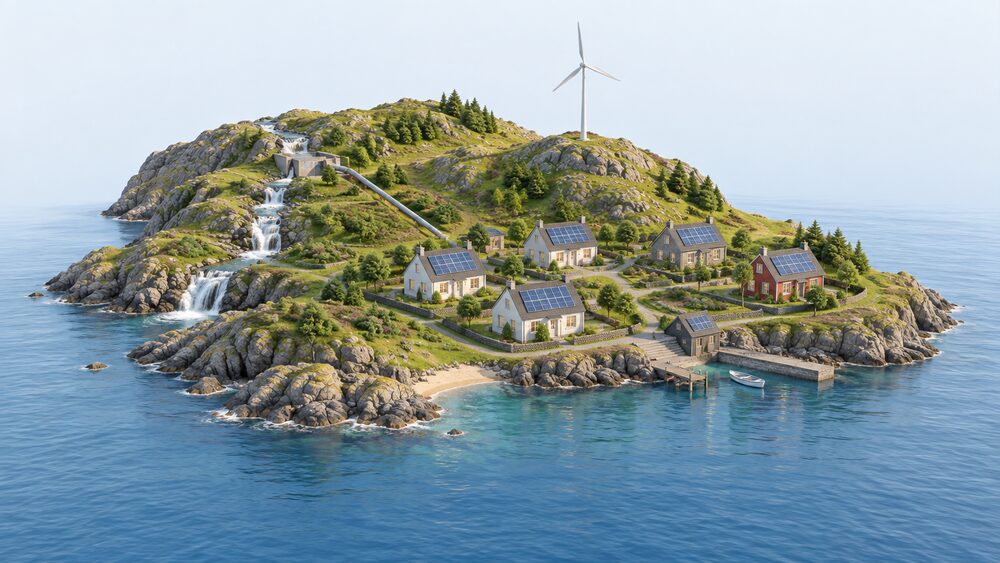
The Isle of Eigg electricity scheme is a community-owned island grid that supplies homes from hydro, wind and solar generation rather than from the national transmission network. It is the best-known UK example of a stand-alone system built at the scale of a village, and it is the reference case for what a demand limit means in practice: when the plant is sized for a known number of households, the households have to live within it.
That is the central lesson for anyone thinking about household energy independence. A community grid of this kind delivers genuine independence from the national grid and from any single supplier, because the generation, the network and the billing all sit with the island. What it does not deliver is unlimited supply. The dependence that remains is on the weather, on the storage and backup that cover the still days, and on the community body that keeps the system running.
For context on scale, the mainland comparison is a grid that handles the distribution of electricity around the UK, balanced by National Grid ESO so that there is always enough generation to meet customer demand1. Eigg replaces that arrangement with a much smaller one. The AECB has described the alternative approach as "a small electricity supply system, supplied largely by dispatchable sources"2.
What the Isle of Eigg electricity scheme is
Eigg's scheme is a stand-alone electricity supply: generation, distribution and billing held by the island rather than delivered by a licensed supplier over the national network. Households on the island are, by definition, off the gas grid, meaning they are not connected to the gas network at all8. That single fact shapes everything else, because there is no mains gas to fall back on for heat and no large grid to absorb the swings in local generation.
The scheme sits within the wider category that official and independent bodies call community energy, described as "delivering citizen-led and owned renewable energy projects"9. The distinction matters. A community grid is not a tariff or a supplier arrangement; it is an asset held locally, and the people who use the power are the people who own the plant.
For a household, the practical meaning is that independence is structural rather than contractual. There is no switching supplier, because there is no supplier in the ordinary sense. There is no export payment to chase either, since the power is consumed within the same small system that generates it. The trade is straightforward: the island gains control of its own supply and accepts responsibility for maintaining it.
The comparison with mainland schemes is instructive. The Smart Export Guarantee exists so that small scale renewable energy generators get paid by electricity suppliers for the export of electricity back into the grid10, and it is not available in Northern Ireland, where energy can be exported direct to a supplier or through an agent11. Those are arrangements for homes attached to a large network. Eigg's system is the opposite case: a network small enough that the community is the operator.
How the island grid works: hydro, wind and solar combined
The generation mix is the engineering heart of the scheme. Hydro supplies a steady base, wind adds output when it blows, and solar contributes in summer. Combining them is what smooths the supply across seasons and weather, and it is the same logic that any off-grid household system follows. Independent guidance notes that hydropower "might be a cheaper option if your home is off the electricity grid"12, which is precisely the situation the island is in.
The reason a mix is needed rather than a single source is that each technology fails at a different time. Official climate guidance identifies the risks plainly: "flooding, high winds, heat, and drought impact the energy system"13. Drought bears directly on hydro output, high winds can force turbines to shut down, and heat reduces solar yield. A system relying on one of the three would be exposed to whichever condition it is worst suited to.
Storage and power conversion sit between generation and the household. Inverter equipment for this kind of installation typically includes utility monitoring and islanding protection14, the function that lets a system operate independently of a larger network and disconnect safely when needed. That capability is what makes a stand-alone grid possible at all, and it is the same principle covered in islanding and anti-islanding.
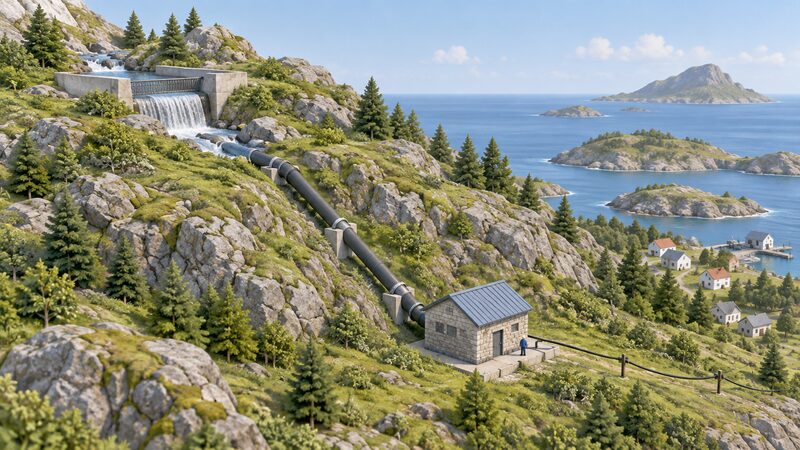
The result is a supply that is renewable in origin and variable in output. For scale, renewables provided a record 53.7% of electricity generation by Major Power Producers in the period from September to November 20254, and Northern Ireland has a target for at least 80% of electricity consumption to come from renewable sources by 20305. Eigg's system goes further than either figure implies, because the island has no fossil generation to blend with.
The community company behind the grid
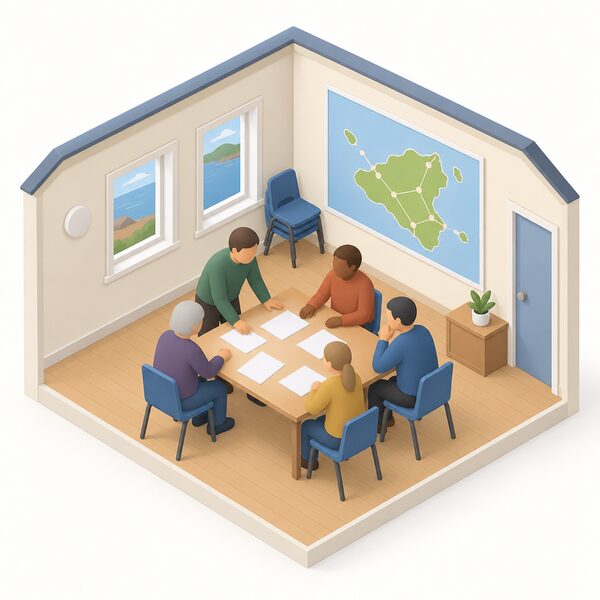
The grid is run by a community body rather than a utility, and that structure is the reason the scheme exists. Community energy is defined by its ownership model, "delivering citizen-led and owned renewable energy projects"9, and the activities such organisations undertake range from providing energy saving advice to installing solar panels, heat pumps and electric vehicle charging points15. On Eigg the organisation's remit is narrower and more fundamental: keep the lights on.
Support for this model has grown at national level. Great British Energy is committed to enabling Smart Local Energy Systems "with a presumption on community ownership"16, and funding opportunities to support community energy projects come from Great British Energy alongside local authorities17. The London Community Energy Fund has run nine rounds, with applications to its feasibility and delivery streams closing at 11:59pm on 30 September 2026 and a development stream opening in October 202617.
The ownership question is what separates a community grid from a private wire arrangement. In a private wire network, power is supplied directly to another building under a commercial relationship. In a community scheme, the members are the owners, and the surplus, if any, is reinvested locally. That is the structure that gives the island its independence, and it is also the structure that makes the scheme dependent on local capacity: volunteers, a committee, and the willingness to keep a small technical system maintained.
For households elsewhere considering the same route, the relevant comparison is set out in joining a community energy scheme vs installing your own solar. The community route trades individual control for shared infrastructure and shared risk.
What life on the grid means for households
Living on a small island grid means the household is inside the system rather than at the end of a long chain. There is no supplier to switch to, no standing charge set by a regulator, and no national balancing mechanism behind the socket. The electrical grid on the mainland is defined as the system that handles the distribution of electricity around the UK1; on Eigg, that system is the island's own.
Billing follows the same logic. Islanders pay the community body that runs the grid, so the money stays within the scheme. For mainland context on what a regulated supply costs, the electricity price cap for 1 July to 30 September 2026 gives the Northern region a standing charge of £223.48 and an annual bill of £824.03 at 2,500 kWh on a single rate, or £220.70 and £986.44 at 3,400 kWh on a multi-rate7. Those figures describe the mainland market, not the island, and they are useful only as a benchmark.
The everyday discipline is demand management. A system sized for a known number of homes cannot absorb unlimited simultaneous load, and the same principle appears in grid connection rules: current network requirements restrict plug-in solar to one device per household connection6. On a stand-alone system the constraint is tighter still, because there is no larger network to import from when local demand spikes.
What a household gains is control and resilience: the power comes from the island, the money stays on the island, and the system does not depend on imported fuel. What it gives up is the anonymity of a large network, where supply is someone else's problem.
Reliability, limits and backup on a small island system
Reliability on a small system is engineered rather than assumed. The first principle is that replacement plant should not shrink the system: official guidance states that "the installed generation capacity of the new system should be no less than that of the existing system"19, with the same rule repeated in the approved document covering conservation of fuel and power, which allows a smaller system only where it can be demonstrated to be more appropriate or effective20. In other words, capacity is treated as a floor, not a target to trim.
The second principle is that backup has to cover the worst case, not the average. A system built on hydro, wind and solar will face periods when all three are weak, and the climate risks that drive those periods are documented: flooding, high winds, heat and drought all affect the energy system13. Backup generation and storage are what bridge them.
Voltage management is part of the same picture. On constrained networks, the voltage of the electricity supply can be reduced by small percentages while remaining within statutory limits21, a technique used to manage load without cutting supply. It is a reminder that small systems are managed actively rather than left to balance themselves.
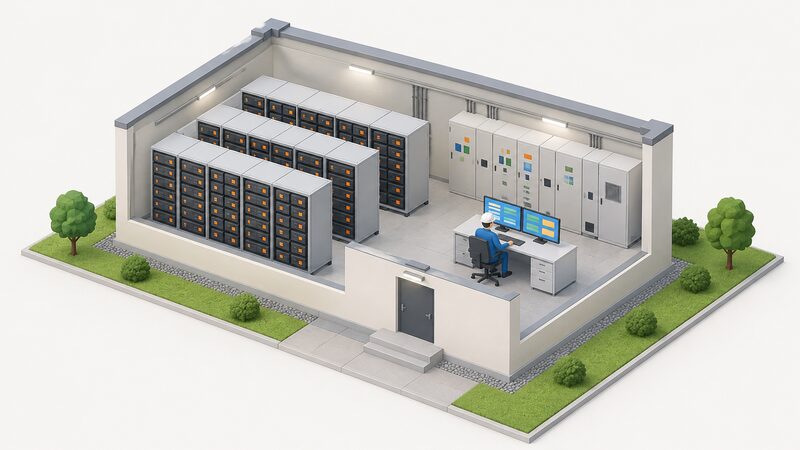
The limits are real and should be stated plainly. A community grid of this kind cannot offer the unlimited, unmanaged supply a mainland household takes for granted. It offers something different: a supply the community controls, sized to what the island can generate, with the shortfall covered by storage and backup rather than by imports. Households weighing that trade against a conventional connection will find the wider comparison in going off-grid in the UK and can a UK home be completely energy self-sufficient.
Eigg as a model for community energy elsewhere
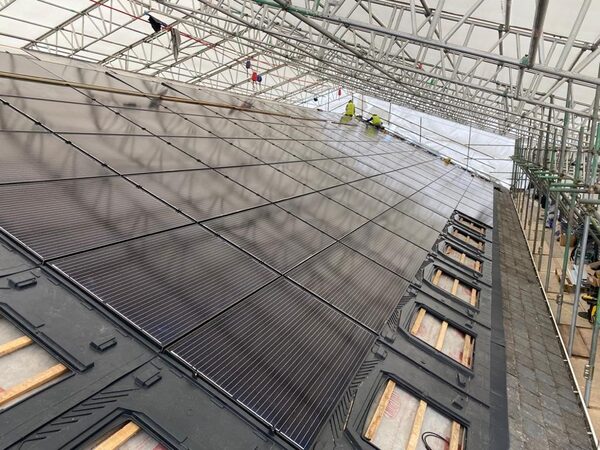
The Eigg model travels, but not without adaptation. The elements that make it work are a generation mix suited to the site, storage and backup for the still periods, and a community body that owns and operates the asset. Community energy as a category covers everything from providing energy saving advice to installing solar panels, heat pumps and electric vehicle charging points15, and independent guidance notes that it provides "clean, efficient and affordable ways to power schools, hospitals, local government buildings, high streets and so on"15.
Funding is the practical constraint. Great British Energy and local authorities offer funding opportunities to support community energy projects17, and the London Community Energy Fund's ninth round illustrates the shape of these programmes, with a feasibility and delivery deadline of 30 September 2026 and a development stream opening in October 202617. The community energy target reported to Parliament is 8 GW by 2030, which sets the scale of ambition.
The regulatory backdrop differs across the UK, and that matters for replication. The Feed-in Tariff scheme's costs are spread across all licensed electricity suppliers in Great Britain through the levelisation process, based on their share of the electricity supply market22, and the scheme's territorial extent is Great Britain. The Energy Price Guarantee, by contrast, "operated, for the most part, in the same way for households across the whole of the UK", with differences for Northern Ireland23, where support reached up to 13.6 p/kWh for electricity and 3.9 p/kWh for gas in Q1 202324.
For islands and remote communities, the relevant comparison is with other stand-alone schemes, such as the Fair Isle Electricity Scheme, and with the wider body of work on microgrids and local energy systems. The Eigg case shows what a community can achieve when it owns the plant, and it shows the limits that come with it: a supply that is genuinely independent, and genuinely finite.
Sources24 cited
- Balancing the grid, Uswitch, 2026
- Less is More: Energy security after oil, AECB, 2026
- Draft licence conditions, Department for Business, Energy and Industrial Strategy, 2026
- Energy trends and prices statistical release, Department for Energy Security and Net Zero, 2026
- UK Solar Roadmap, Department for Energy Security and Net Zero, 2026
- Plug-in solar interim product specification, Department for Energy Security and Net Zero, 2026
- Energy price cap levels, 1 July to 30 September 2026, Ofgem, 2026
- MCS data dashboard glossary, MCS Certified, 2026
- Delivering warm homes through community power, Energy Saving Trust, 2025
- Smart Export Guarantee, MCS Certified, 2026
- Are solar panels worth it, Which?, 2026
- Renewable energy for consumers, Consumer Council, 2026
- Well-adapted energy system monitoring framework, Climate Change Committee, 2026
- Single phase inverter with HD-Wave technology datasheet, SolarEdge, 2026
- What is community and local energy, Electricity North West, 2026
- Batteries and community energy policy priorities, Community Energy England, 2026
- London Community Energy Fund ninth round, Community Energy England, 2026
- Demand Flexibility Service and running appliances at cheaper times, Electrical Safety First, 2026
- Approved Document L, Volume 1, Dwellings, Department for Levelling Up, Housing and Communities, 2026
- Approved Document L, Conservation of fuel and power, Volume 1, Dwellings, Department for Levelling Up, Housing and Communities, 2026
- Changes to the electricity supply, NIE Networks, 2026
- Feed-in Tariffs, Ofgem, 2026
- Energy Price Guarantee up until 30 June 2023, Department for Energy Security and Net Zero, 2026
- Energy bills support briefing, House of Commons Library, 2026
 Community Energy in NICan a community group in Northern Ireland sell power to its neighbours, and is there funding to get a project off the ground?
 Energy Supply in NICan you get gas where you live in Northern Ireland, and what happens if your power goes off?
 Community Energy in EnglandCommunity energy lets neighbours own their own power together, often through solar panels, and share the money it makes.
 Microgrids and Local EnergyA microgrid shares electricity between neighbours, using local solar and batteries instead of relying only on the national grid.
 Micro Hydro Power for HomesA stream on your land that flows all year can make steady electricity, day and night, even when there is no sun or wind.
 Suppliers in Northern IrelandNorthern Ireland runs its own energy market, with its own regulator, its own suppliers and no price cap.