
In this answer
Short answer
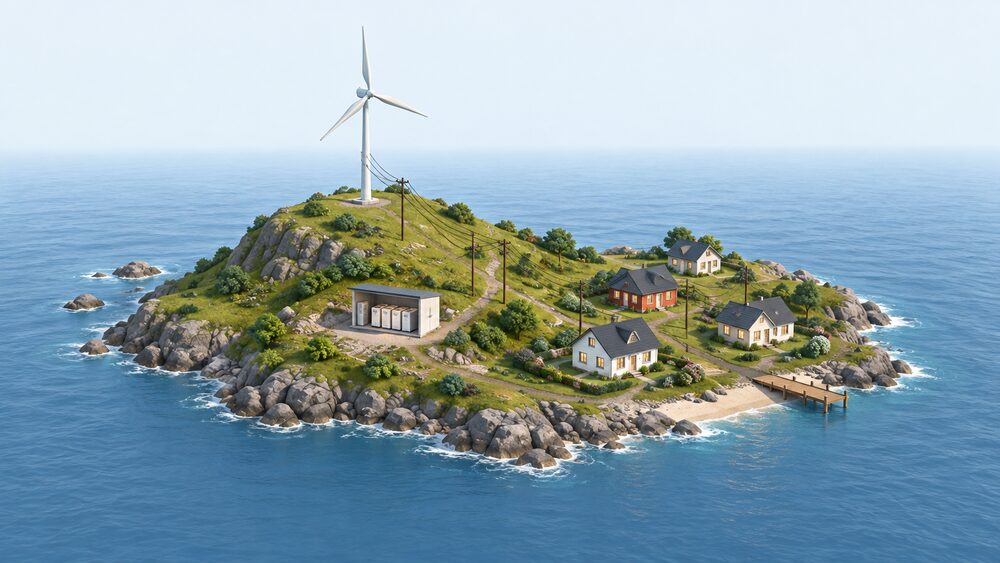
Fair Isle's electricity scheme is a low carbon generation and storage project that provides the island's 55 residents with stable 24-hour power1. It replaced a supply built on diesel generation with a combination of wind generation, battery storage and a rebuilt local network. The island is not connected to the mainland grid, so the scheme is an islanded supply: generation, storage and distribution all sit on the island itself.
That makes it one of the clearest UK examples of what energy independence looks like in practice at a settlement scale. There is no transmission cable to fall back on, no national balancing market clearing the island's demand, and no supplier importing power on the island's behalf. The scheme's own generation and storage carry the whole load, and the network that distributes it was rebuilt as part of the project1.
The numbers are small and specific. Fifty-five residents, one island, one low carbon project. For a household elsewhere in the UK, the interest is not the scale but the structure: what an islanded supply requires, what remains dependent, and what a community can and cannot control when it owns its own generation.
The Fair Isle Electricity Scheme: what it is and why it was built
The Fair Isle Unified Low Carbon Electricity Storage and Generation Project is recorded as having provided the 55 residents of Fair Isle with stable 24-hour power as of June 20241. The name sets out the design: unified, meaning generation and storage are managed together as one system rather than as separate installations; low carbon, meaning the diesel plant is no longer the primary source; and storage, meaning batteries carry the island through the hours when the wind does not blow.
The reason for building it is the same reason islanded supplies are difficult everywhere. A small island cannot rely on a single generation source, because there is no wider network to import from when that source is unavailable. A wind-only supply would leave the island without power in a calm spell. A diesel-only supply leaves it exposed to fuel delivery, fuel price and emissions. Pairing wind with storage addresses both, and rebuilding the network addresses the third constraint, which is that generation is only useful if it can be delivered to the properties that need it1.
Community ownership is the other half of the design. Community-owned wind power is defined as a wind turbine or wind farm locally owned by individuals or groups in a community2. That definition matters because it changes who captures the value of generation and who carries the risk of it. In a community-owned scheme, the members are the owners, and the revenue from generation stays with the community rather than passing to an external developer.
For a household reading this from the mainland, the scheme is a worked example of a principle that applies at any scale: independence comes from matching generation to demand locally, and from owning the assets that do the matching. The full guide to household energy independence sets out how the same logic applies to a single home.
How the island is supplied: wind turbines, diesel backup and the new network
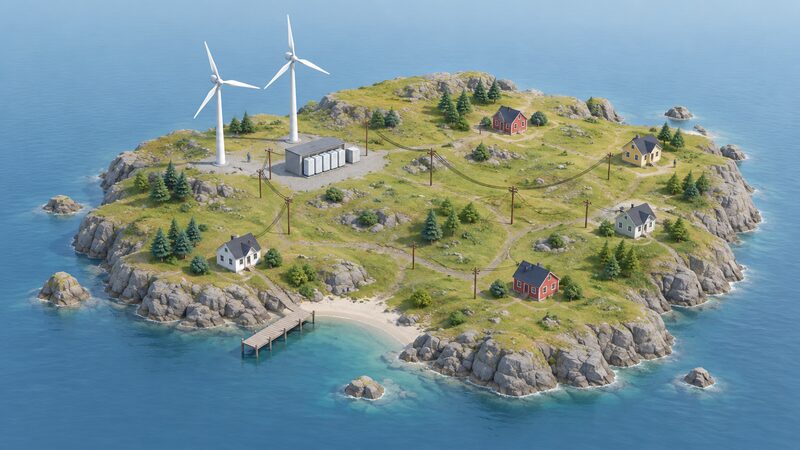
The supply chain on Fair Isle has three parts. Wind turbines generate when the resource is available. Battery storage holds surplus generation and releases it when demand exceeds output. A rebuilt network distributes power to the island's properties1. Diesel generation, which was the island's previous arrangement, is no longer the primary source1.
That structure is recognisable from mainland network planning, at a much smaller scale. Northern Ireland's grid, for comparison, draws generation from the Kilroot, Ballylumford and Coolkeeragh power plants using gas, from increasing renewables such as wind and solar farms, and from imports through the Moyle Interconnector5. The mainland has three routes to supply. An island has one, unless it builds storage.
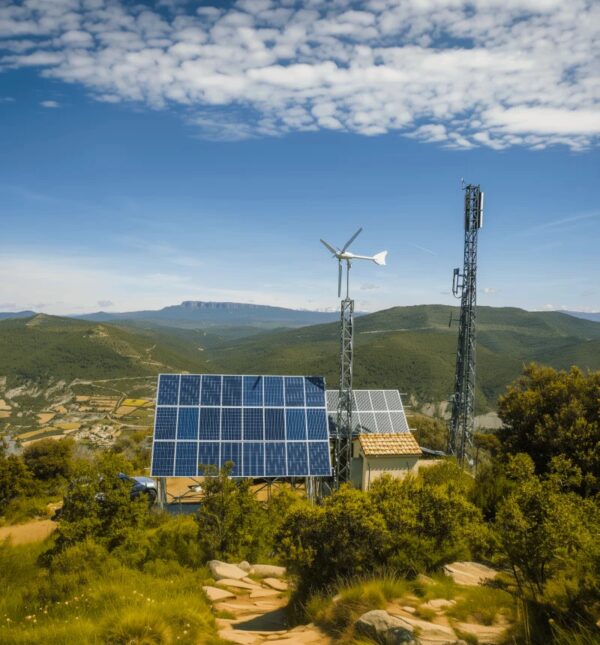
Storage is what makes a wind supply firm rather than intermittent. The same principle appears in the guidance for houses with no mains connection but with access to a micro hydro site, where a good hydro system can generate a steady, more reliable electricity supply than other renewable technologies at a lower cost4. Hydro suits a site with a reliable water flow; wind and batteries suit a site with a good wind resource and no water. The choice is a site question, not a preference.
The wider direction of network planning in the UK is towards more local flexibility rather than less. The Big Network Rebuild in Northern Ireland is described as making it easier for customers to reduce reliance on fossil fuels, switch to an electric vehicle, install a heat pump, or connect renewable energy like solar panels, and as increasing the resilience and reliability of the network6. Northern Ireland's variable renewables capacity, a combination of offshore and onshore wind and solar, is projected to grow three-fold by 2040 to 5.5 GW7. Fair Isle's scheme is a small, complete version of the same shift.
What the scheme means for households on Fair Isle
For the 55 residents, the scheme's practical meaning is stable 24-hour power from a low carbon source1. That is a change in the reliability and the origin of supply, not in how electricity is used in the home. A household on the island still draws power from a socket, still pays for what it uses, and still depends on a network that someone else maintains.
The dependence that remains is worth stating plainly. The island is not connected to the mainland grid, so there is no import route when local generation and storage fall short. The scheme depends on its own turbines, its own batteries and its own network, and on the maintenance arrangements that keep all three working. Community ownership means the community holds the asset, but it also means the community carries the operational risk that a licensed network operator would otherwise absorb.
That pattern is common to community energy across the UK. Community-owned wind power is locally owned by individuals or groups in a community2, and the Graig Fatha wind farm is owned by over 900 members2. Ownership of that kind gives members a stake in generation, but it does not remove the need for a network, a supplier relationship or a maintenance contract.
For scale, the Affordable Warmth Scheme in Northern Ireland has installed more than 56,000 energy efficiency measures in over 31,000 low-income households8. A scheme serving 55 residents is a different order of thing entirely: it is a settlement-scale system, not a national programme. The case studies of UK homes that cut their imports show what the same principles look like at a single-property scale.
Cost, funding and who owns and runs the scheme
The Fair Isle project is recorded under Scotland's low carbon infrastructure transition programme, which is the funding route documented for it1. Scotland also supports community renewables through the Community and Renewable Energy Scheme, delivered by Local Energy Scotland3. Those are the two Scottish routes that bear directly on a scheme of this kind.
Community energy funding in the UK is a patchwork rather than a single scheme, and the routes differ by nation. The Feed-in Tariff scheme's costs are spread across all licensed electricity suppliers in Great Britain through the levelisation process, based on their share of the electricity supply market9, and the scheme's policy and tariff rates are set by the Department for Energy Security and Net Zero10. The Energy Price Guarantee operated, for the most part, in the same way for households across the whole of the UK, with differences for Northern Ireland11. Support for community generation and support for household bills are separate systems, and a scheme like Fair Isle's sits in the first.
Ownership on Fair Isle is community ownership of the wind generation2. The Community and Renewable Energy Scheme is delivered by Local Energy Scotland3, and the Renewable Energy Consumer Code, which governs the consumer-facing end of small-scale renewables, is managed by Renewable Energy Assurance Ltd, a wholly-owned subsidiary of the Renewable Energy Association, which sponsors the scheme12.
"Community-owned wind power is a wind turbine or wind farm that's locally owned by individuals or groups in a community."
The funding page for community energy projects sets out the routes available to groups elsewhere, and the community energy overview explains how local projects are structured.
What Fair Isle's scheme shows for community energy elsewhere in the UK
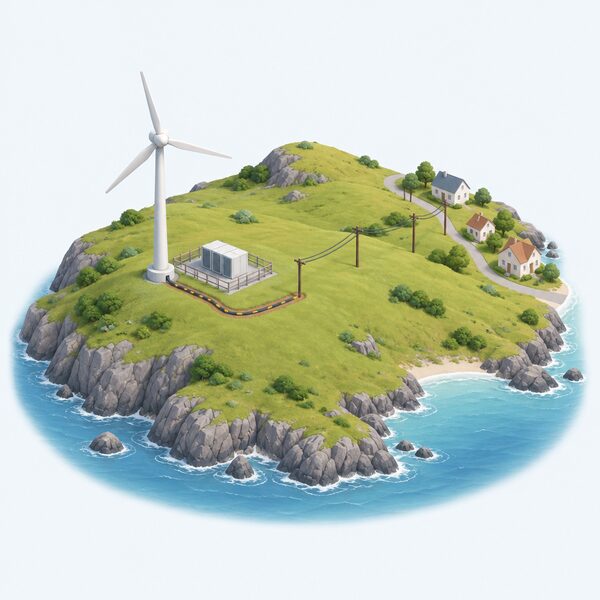
Fair Isle demonstrates three things that transfer to other small islands and to mainland communities. The first is that generation and storage have to be designed together. A wind scheme without storage is an intermittent supply; a wind scheme with storage is a firm one. The second is that the network is part of the project, not an afterthought: the Fair Isle scheme included a rebuilt network alongside generation and storage1. The third is that community ownership is a workable model, defined as local ownership by individuals or groups in a community2.
Replication depends on conditions that vary by site. A micro hydro site can give a steadier and cheaper supply than other renewables where the water resource allows4. A wind site needs a wind resource and storage sized to carry the load through calm periods. An island with a cable to the mainland has a different calculation from one without.
Scotland's climate plan records that contracts have been signed to build seven new zero-emission and shore-powering-capable electric ferries for the Clyde and Hebrides Ferry Services fleet13, which shows the direction of travel for island infrastructure more broadly. The Isle of Eigg electricity scheme is the closest UK comparison, and the microgrids and local energy systems page explains how islanded and local supplies are structured.
The limit is the same everywhere. A community scheme can own its generation and its storage, and it can rebuild its network. It cannot remove its dependence on the wind, on maintenance, on parts, or on the funding decision that made it possible in the first place. Fair Isle's scheme is independence with a clear boundary around it, and that boundary is the honest measure of what any islanded supply delivers.
Sources13 cited
- Low Carbon Infrastructure Transition Programme, Scottish Government, June 2024
- What are the benefits of community-owned wind power, Energy Saving Trust, 2026
- Local and small-scale renewables, Scottish Government, 2026
- Hydro electricity, Planning Portal, 2026
- Emergency power cuts, NIE Networks, 2026
- Why are you rebuilding the electricity network, NIE Networks, 2026
- Northern Ireland's Fourth Carbon Budget, Climate Change Committee, March 2025
- Warm Healthy Homes Fund consultation, Department for Communities, May 2026
- Feed-in Tariffs FIT 0, Ofgem, 2026
- Feed-in Tariffs FIT, Ofgem, 2026
- Energy Price Guarantee up until 30 June 2023, Department for Energy Security and Net Zero, 2026
- About the Renewable Energy Consumer Code, Renewable Energy Consumer Code, 2026
- Scotland's Climate Change Plan 2026-2040, Scottish Government, 2026
 Off-Grid Wind PowerHow much power can a small wind turbine actually make for a house, boat or caravan that is not on the grid?
 Microgrids and Local EnergyA microgrid shares electricity between neighbours, using local solar and batteries instead of relying only on the national grid.
 Off-Grid in a UK WinterHow does a home with no mains connection keep the lights on through the darkest, stillest weeks of a UK winter?
 Community Energy in NICan a community group in Northern Ireland sell power to its neighbours, and is there funding to get a project off the ground?
 Balancing Services and FrequencyKeeping the lights on means matching what the country uses with what is being generated, second by second.
 Free Electricity and RewardsCovers tariffs and offers that give free or half-price electricity in set windows, including recurring weekly free hours, weekend offers and savings challenges.