In this guide
Community energy in Northern Ireland means local projects that generate or save energy, funded and run with community involvement, inside a electricity market that is entirely separate from Great Britain's. That separation is the single most important fact for anyone trying to start or join a project. Northern Ireland has its own regulator, the Utility Regulator for Northern Ireland, no price cap, and a different set of suppliers from Great Britain1.
The money that reaches communities mostly arrives through the Northern Ireland Sustainable Energy Programme, an £8 million fund collected from electricity customers through a public service obligation and administered by Energy Saving Trust on behalf of the Utility Regulator2. At least 80% of it is reserved for vulnerable or priority customers4. That is an energy efficiency programme, not a community generation fund, and the distinction matters: Northern Ireland does not have a direct equivalent of England's community energy funds.
The policy backdrop is ambitious. The Northern Ireland Executive has a target for at least 80% of electricity consumption to come from renewable sources by 20306, alongside a 48% reduction in emissions on 1990 levels by 2030 and 100% by 20507. Community projects sit inside that framework, but the route from ambition to a working local scheme runs through licensing, funding and grid rules that are specific to Northern Ireland.
What community energy means in Northern Ireland
Community energy covers a wide range of activity, and in Northern Ireland the practical centre of gravity is energy efficiency rather than local generation. The Northern Ireland Sustainable Energy Programme is described as an energy efficiency programme for domestic and non-domestic customers4, and it funds categories including priority whole house solutions covering heating and insulation measures, priority individual measures, innovative whole house solutions, and non-priority conventional schemes for domestic and commercial premises4.
That is a different shape from community energy in Scotland or Wales, where the emphasis falls more heavily on community ownership of generation. In Scotland, the Community and Renewable Energy Scheme encourages community ownership of renewable energy projects, helping to maximise the benefits of renewable energy systems and ensuring that delivery of community energy comes with benefits for people in Scotland8. Northern Ireland's programme is built around reducing the amount of energy homes and businesses need in the first place.
For a householder, the practical meaning is this: the community energy route most likely to reach your home in Northern Ireland is a funded upgrade, not a share in a wind turbine. That upgrade might cover boiler improvements, LED lighting or draught proofing9. The programme operates across Northern Ireland, though schemes vary by location and licence area3.
There is also a wider definition worth holding onto. Community energy includes projects where local people hold a stake in generation, receive income from it, or direct that income into local projects. Energy Saving Trust describes community energy as having huge potential to reduce the UK's carbon footprint10, and community-owned wind groups as using wind energy to support and reduce energy costs in the local community10. Both descriptions apply to the concept as a whole, not specifically to Northern Ireland's current programme mix.
Why households and communities get involved
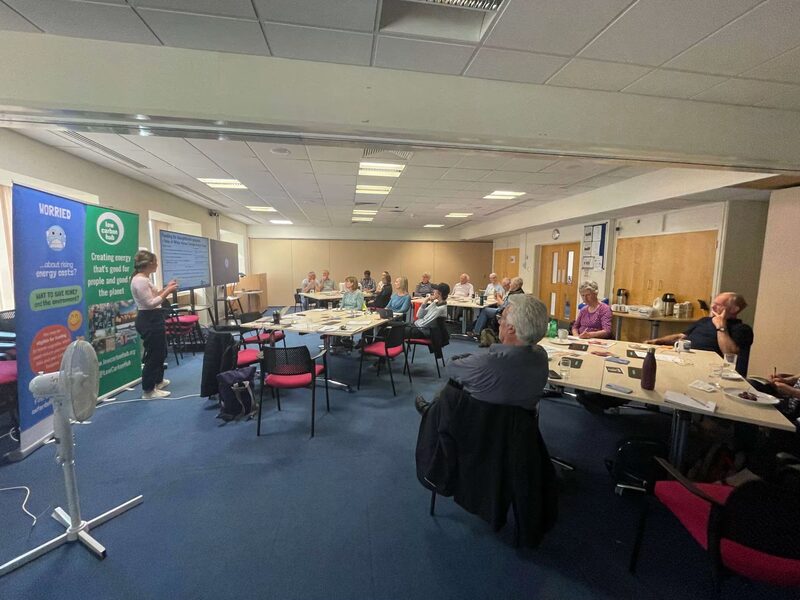
The benefits fall into two groups: what a project does for the household, and what it does for the area.
For the household, the clearest documented benefit is cost. Energy Saving Trust states that community energy has the potential to reduce energy costs for those who have a stake in the project10. That is a potential, not a guarantee, and it depends on the project structure. The other household route is grant-funded efficiency work through the Northern Ireland Sustainable Energy Programme, where at least 80% of funding is available to vulnerable or priority customers4.
For the area, Energy Saving Trust lists a set of community-level benefits:
- Fund more local projects that benefit the community using the income from the electricity generated10
- Boost the local economy by creating jobs and attracting investment10
- Inspire communities to tackle other local issues, such as improving transport connections10
The Department for Communities frames its own long-term ambition in similar terms: to improve the energy efficiency of Northern Ireland's housing stock, thereby reducing carbon emissions and helping to keep homes comfortably warm at an affordable cost11. That is the policy goal the funding programmes are meant to serve.
There is a third, less obvious benefit: information. NI Energy Advice offers free, independent and impartial energy advice to domestic householders in Northern Ireland, plus referrals to energy grants and other sources of help12. Its advice topics include energy grants and support, heating and energy use, energy bills and fuel poverty support, damp, condensation and ventilation, insulation and home improvements, renewable energy, changing electricity or gas supplier, and heating-oil savings13. For a household trying to work out whether a community scheme is worth joining, that advice line is the starting point, and it is free to all households across Northern Ireland13.

The policy backdrop: Northern Ireland's 80% renewable electricity target
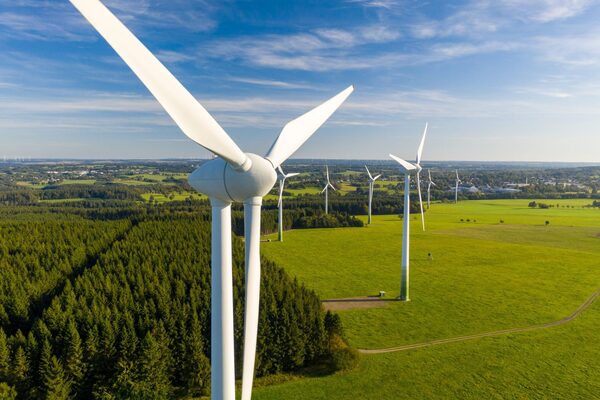
Northern Ireland's climate targets are set out in carbon budgets, and they are demanding. The 2030 target is a 48% reduction on 1990 levels, the 2040 target is 77%, and the 2050 target is 100%7. The second carbon budget, covering 2028 to 2032, requires a 48% average annual reduction on 1990 levels7.
Electricity is central to how those targets are met. The Climate Change Committee's advice on Northern Ireland's fourth carbon budget states that electrification, including the supply of low-carbon electricity and its use in electric vehicles, heat pumps and industry, delivers 55% of the emissions reduction needed by 20407. Clean electricity replaces oil and gas for surface transport, buildings and much of industry, so that electricity demand more than doubles by 20407. Capacity from variable renewables, a combination of offshore and onshore wind and solar, grows three-fold by 2040 to 5.5 GW7. Land-based actions to increase natural carbon sequestration and reduce emissions from land deliver 8% of the total emissions reduction by 20407.
The electricity target itself is separate and more specific: at least 80% of electricity consumption from renewable sources by 20306.
For community energy, the implication is a grid that will need to absorb far more variable generation and far more demand, at the same time. That creates both opportunity and friction. Opportunity, because local generation and local flexibility become more valuable as the system strains. Friction, because connection capacity and licensing rules determine what a community project can actually do with the power it produces.
"Electrification, including the supply of low-carbon electricity and its use in electric vehicles (EVs), heat pumps, and industry, delivers 55% of the emissions reduction needed."
Funding routes: Barnett allocations, Energy Redress and UK-wide funds
Money reaches Northern Ireland through several distinct channels, and they are not interchangeable.
The Northern Ireland Sustainable Energy Programme is the main domestic route. It is an £8 million fund collected from both domestic and non-domestic electricity customers2, and the fund is collected from all Northern Ireland electricity customers through a public service obligation12. Energy Saving Trust administers it on behalf of the Utility Regulator3. The programme's categories are set out each year, and the 2026/27 list of schemes has been published5.
The second channel is Barnett consequentials. The Northern Ireland Executive receives a Barnett share of the value of VAT relief for energy saving materials until the relief can be introduced UK-wide14. More broadly, the Executive receives £1 billion resource per year on average through the Barnett formula for 2026-27 to 2028-29, and £220 million capital per year on average for 2026-27 to 2029-3015. Barnett funding is not ring-fenced for community energy; it is general funding for the Executive to allocate.
The third channel is UK-wide. The Energy Redress Scheme expanded on 23 July 2026 so that community energy organisations in England, Scotland and Wales became eligible for all Energy Redress Funds, including the Main Fund, which is around 75% of scheme funding. That expansion followed lobbying by Community Energy England. Northern Ireland is not included in that territorial expansion.
A UK government working paper published on 21 May 2025 sought views on introducing a mandatory community benefit fund scheme and facilitating shared ownership of renewable generation infrastructure6. Separately, £6.8 million was announced for Local Net Zero Hubs across England and a £5 million Community Fund for community energy groups was launched on 21 March 20256. Both are England-focused.
Barriers: selling power locally and the licensing problem
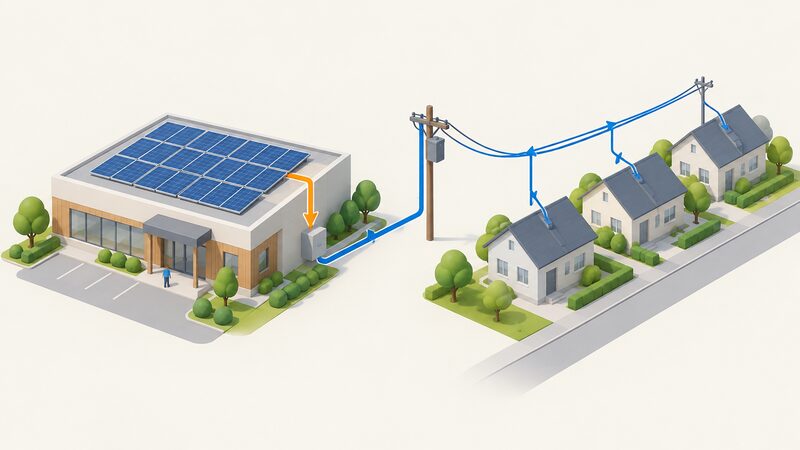
The hardest constraint on community energy in Northern Ireland is that a community group cannot simply become a local supplier. Electricity supply to domestic customers runs through licensed suppliers, and the Utility Regulator oversees the market. Power NI is the main electricity provider in Northern Ireland, overseen by the Utility Regulator1.
The licensing framework is the reason. Ofgem's consultation on distributed energy and more flexible market and licensing arrangements set out proposals for electricity distribution16, and the direction of travel across the UK has been towards more flexible arrangements. But flexibility is not the same as permission, and the rules a community group must satisfy to sell power to neighbours remain substantial.
There is precedent for how restrictions on local selling hold back investment. In electric vehicle charging, since 2014 there had been limited private investment due to restrictions on the maximum resale price of electricity, removed as of March 2020, and planning legislation barriers removed in December 2020 through legislative amendments17. That example shows how a single pricing rule can suppress local activity for years, and how removing it unlocks investment.
Northern Ireland's market structure adds a further layer. The Energy Price Guarantee for domestic energy consumers in Northern Ireland applies to Northern Ireland18, and the Energy Prices Act 2022 set out that the EPG Northern Ireland schemes apply to those with domestic electricity supply and domestic gas supply1. The Secretary of State may establish a domestic electricity price reduction scheme for Northern Ireland19, and the Northern Ireland Regulator may give an NI domestic electricity supplier directions in relation to the supplier's performance of the terms of the designated scheme19. All of this runs through licensed suppliers, not community organisations.
The practical consequence is that community projects in Northern Ireland tend to generate for their own use, fund efficiency measures, or hold a stake in a development, rather than selling units to neighbours. Where local selling does happen elsewhere in the UK, it does so under arrangements that Northern Ireland has not adopted.
What support exists: advice, guidance and the community benefits working paper

Support for households and groups in Northern Ireland is well developed on the advice side and thinner on the project development side.
NI Energy Advice is the main household-facing service. It offers independent and impartial energy advice to domestic householders in Northern Ireland, plus referrals to energy grants and other sources of help20. It is for all households across Northern Ireland13, and the service is funded by the Department for Communities and delivered by the Housing Executive13. The NI Energy Advice Line Service provides free, comprehensive advice and support on how to save energy in the home and eligibility for help to improve energy efficiency23, and it can be contacted at nienergyadvice@nihe.gov.uk23.
The Consumer Council NI also gives free, independent and impartial energy advice to all domestic householders in Northern Ireland20, and offers an energy price comparison tool to compare electricity and gas tariffs for all suppliers in Northern Ireland24. National Energy Action offers advice and support to help people across England, Wales and Northern Ireland stay warm and manage energy costs25.
On the project development side, the picture is less complete. The UK government's working paper on community benefits and shared ownership, published on 21 May 2025, sought views on a mandatory community benefit fund scheme and shared ownership of renewable generation infrastructure6. Solar Energy UK published its Community Engagement Good Practice Guidance on 16 July 2025 for engagement with people local to solar farm developments6. Both are UK-level documents rather than Northern Ireland-specific support.
For comparison, Scotland's Community and Renewable Energy Scheme provides advice and funding to communities looking to develop renewable energy, heat decarbonisation and energy efficiency projects, including shared ownership projects8, and there is dedicated guidance for repowering projects including support on financing, evaluation and governance8. Northern Ireland has no directly equivalent scheme.
"Community benefits should be integral to any development; but be transparent about what isn't possible in relation to renewable energy development."
Community energy and energy independence: what a stake in a project means for your bills
A stake in a community project changes a household's relationship with energy in a specific and limited way. It does not disconnect you from the grid, and it does not make you your own supplier. What it can do is give you a financial interest in generation or a share of the benefit that generation produces.
Energy Saving Trust states that community energy has the potential to reduce energy costs for those who have a stake in the project10. That is the core of the independence argument at community scale: instead of buying all your electricity from a supplier at whatever the market rate is, part of the value of local generation flows back to you or to projects you benefit from.
The dependence that remains is substantial and worth stating plainly:
- The grid. A community project connects to the distribution network and relies on it. Local generation does not remove the connection.
- A licensed supplier. Domestic electricity supply in Northern Ireland runs through licensed suppliers overseen by the Utility Regulator1. A community stake does not change who bills you.
- The funding cycle. The Northern Ireland Sustainable Energy Programme is collected from electricity customers through a public service obligation12 and allocated annually, with the 2026/27 list of schemes published5. Support depends on that cycle continuing.
- The administering body. Energy Saving Trust administers the programme on behalf of the Utility Regulator3. The route to funding runs through that relationship.
For households on low incomes, the more immediate independence gain is likely to come from efficiency measures rather than generation stakes. The programme's priority categories cover heating and insulation measures, and at least 80% of funding is reserved for vulnerable or priority customers4. Reducing the energy a home needs is a form of independence that does not depend on a project's commercial success.
There is also a resilience argument at community scale. A Welsh Government consultation recommended providing support for communities to develop smart local energy systems where these could help balance supply and demand or provide a solution where grid capacity is constrained26. That is a recommendation about enabling infrastructure, and it points to a future in which local systems do more of the balancing work. For more on how local generation and local supply fit together, see microgrids and local energy systems and local energy supply.

Northern Ireland compared with Great Britain: where schemes differ
The differences between Northern Ireland and Great Britain are structural, not cosmetic, and they shape what community energy can achieve.
The regulator is different. Northern Ireland has the Utility Regulator for Northern Ireland, no price cap, and an entirely different set of suppliers from Great Britain1. Ofgem's remit does not extend to Northern Ireland domestic supply in the same way, which is why the Energy Redress Scheme expansion of 23 July 2026 covers England, Scotland and Wales but not Northern Ireland.
The funding architecture is different. Northern Ireland's domestic programme is the Northern Ireland Sustainable Energy Programme, an £8 million fund collected from electricity customers2, with at least 80% reserved for vulnerable or priority customers4. Scotland has the Community and Renewable Energy Scheme, which provides advice and funding for renewable energy, heat decarbonisation and energy efficiency projects including shared ownership8, and supports progress towards a target of two GW of community and locally owned energy in Scotland8. Wales has its own consultation-led approach, including recommendations on smart local energy systems26. England has had community energy funds including the £5 million Community Fund launched in March 20256.
The consumer protection landscape differs too. The Energy Price Guarantee for domestic energy consumers in Northern Ireland applies to Northern Ireland18, and directions allow domestic electricity and gas suppliers in Northern Ireland to make tariff changes on days other than the first day of a quarter18. The Energy Prices Act 2022 set out that the EPG Northern Ireland schemes apply to those with domestic electricity supply and domestic gas supply1, and the schemes are intended for customers on domestic tariffs, with some non-domestic premises with similar metering and tariff arrangements in scope, including places of worship, some farms and small businesses operating from former dwelling-houses1.
For households, the practical comparison is this: a community energy project in Scotland or Wales is more likely to involve a stake in generation, because the funding and support architecture is built for that. A community energy project in Northern Ireland is more likely to involve funded efficiency measures, because that is where the money is directed. Both are forms of local energy action, but they deliver different things to a household.
For the wider picture of how community schemes work across the UK, see community energy and funding for community energy projects. For how a community stake compares with installing your own generation, see joining a community energy scheme vs installing your own solar.
Sources26 cited
- Northern Ireland Households to Receive Voucher Support for Energy Bills, Department for Energy Security and Net Zero, 2022
- Northern Ireland Sustainable Energy Programme List of Schemes 2026/2027 Published, Utility Regulator, 2026
- NISEP List of Schemes 2024-25, Utility Regulator, 2024
- 2024/2025 Annual Report Northern Ireland Sustainable Energy Programme Published, Utility Regulator, 2026
- Cost of Living and Winter Support, Belfast City Council, 2026
- Preparing Wales for a Renewable Energy 2050, Welsh Government, 2024
- UK Solar Roadmap, Department for Energy Security and Net Zero, 2025
- Domestic Energy Price Reduction Schemes for Northern Ireland, legislation.gov.uk, 2022
- Energy, Northern Ireland Housing Executive, 2026
- Northern Ireland's Fourth Carbon Budget, Climate Change Committee, 2025
- Electric Vehicle Charging Market Study Final Report, Competition and Markets Authority, 2021
- Energy Saving Grants in Your Area, nidirect, 2026
- Low Carbon Heating, nidirect, 2026
- Local and Small Scale Renewables, Scottish Government, 2026
- Spring Statement 2022, HM Treasury, 2022
- Northern Ireland's Fourth Carbon Budget Research Briefing, House of Commons Library, 2025
- Northern Ireland Energy Efficiency of Housing Consultation, Department for Communities, 2024
- NISEP Framework Document, Utility Regulator, 2009
- Energy Prices (Domestic Supply) (Northern Ireland) Regulations 2022(NorthernIreland)Regulations2022), Hansard, 2022
- Insulation, nidirect, 2026
- Energy Efficiency Tips, nidirect, 2026
- Advice if You're Struggling to Pay Your Energy Bills, nidirect, 2026
- Distributed Energy: Initial Proposals for More Flexible Market and Licensing Arrangements, Ofgem, 2007
- Worried About Your Energy Bills, Energy Ombudsman, 2026
- What Are the Benefits of Community Owned Wind Power, Energy Saving Trust, 2026
- Spending Review 2025, HM Treasury, 2025
 Community Energy in EnglandCommunity energy lets neighbours own their own power together, often through solar panels, and share the money it makes.
 Energy Supply in NICan you get gas where you live in Northern Ireland, and what happens if your power goes off?
 Community Energy in the UKWhat community energy means in practice, the legal structures used, and the types of project householders can join or benefit from.
 Suppliers in Northern IrelandNorthern Ireland runs its own energy market, with its own regulator, its own suppliers and no price cap.
 Utility Regulator NIWho sets your energy prices in Northern Ireland and who can you complain to?
 Community Energy in ScotlandCommunity energy in Scotland lets you join a local scheme for cheaper, greener heat and power, or get advice and funding to make your own home warmer and cheaper to run.