
In this guide
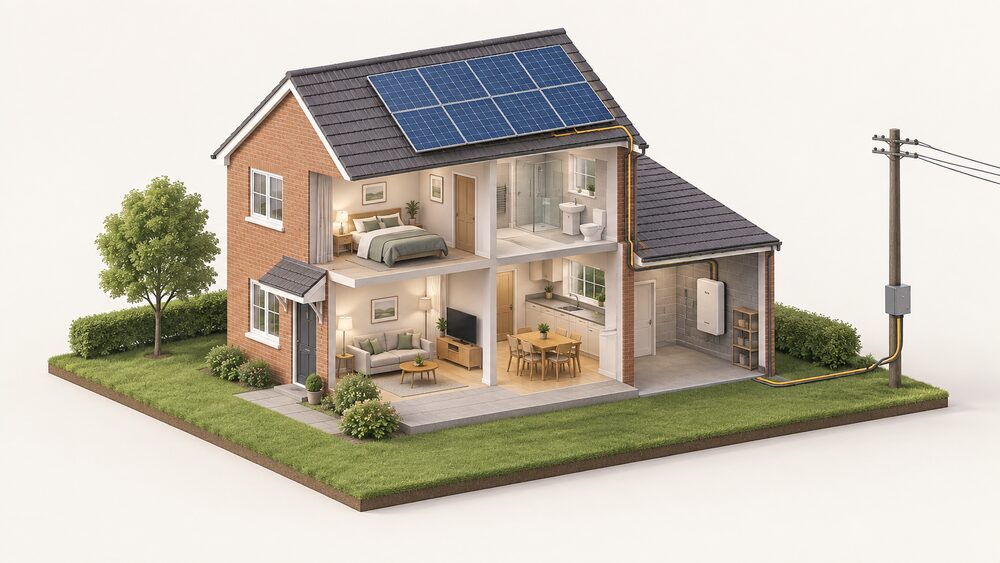
Household energy resilience in the UK means a home that can keep heat, light and hot water running when the wider system falters, and that draws less from that system in normal times. The national framework now treats that as a security question, not only a climate one. The 2025 Spending Review states that "Energy security is core to the government's national security plans"1, and the Climate Change Committee's adaptation work records that "The need for resilient infrastructure design is recognised as a strategic objective of the UK Government's Energy Resilience Strategy"2.
The scale of the household contribution is easy to underestimate. Homes use 35% of the UK's energy and emit 20% of its carbon dioxide emissions3, and heating those homes accounts for around 14% of total UK greenhouse gas emissions4. Over three-quarters of household energy demand goes on space and hot water heating5. That is why resilience policy keeps returning to the same two levers: cut the demand, then cover what remains with generation and storage the household controls.
What follows sets out how the UK's resilience arrangements treat energy supply, what has changed in law and policy, and what a household can and cannot insulate itself from. Independence reduces exposure to price and supply shocks. It does not remove dependence on a grid connection, a supplier, a gas network in most homes, or the manufacturer whose app and cloud a battery may rely on.
What household energy resilience means in the UK
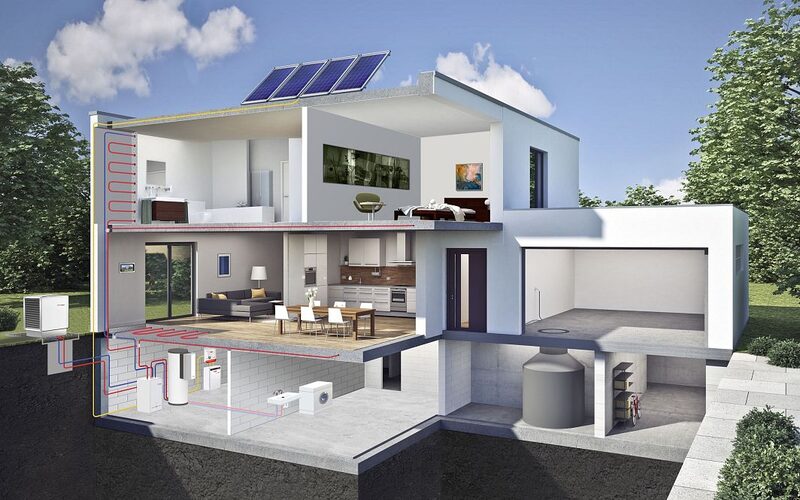
Resilience for a household has three layers, and they are usually confused with one another. The first is demand reduction: a home that needs less energy to stay warm and lit is less exposed to any interruption or price movement. The second is on-site supply: generation and storage that keep some services running and reduce what is bought in. The third is continuity: what still works during a power cut, a supply failure or a period of very high prices.
The UK's own framing of the first layer is long standing. The National Energy Efficiency Action Plan states that "The UK is committed to realising the remaining cost-effective energy efficiency potential in the UK economy"9. The Climate Change Committee's assessment of the UK heat and buildings strategy found that it "has laid out important high-level decisions on the UK's approach to reducing emissions from heating buildings, but plans are not yet comprehensive or complete and significant delivery risks remain"10. That gap between direction and delivery is the context in which household-level resilience has become attractive: it is something a household can act on while national programmes move slowly.
The second layer is where most of the recent change sits. The third is the hardest, and it is where the limits of household independence show. A grid-connected home with solar and a battery will typically shut down its inverter during a network outage unless it has specific islanding capability, a subject covered in islanding and anti-islanding. Resilience, in the policy sense, is not the same as going off-grid, and the two should not be sold as the same thing.
Why resilience is now part of national risk planning
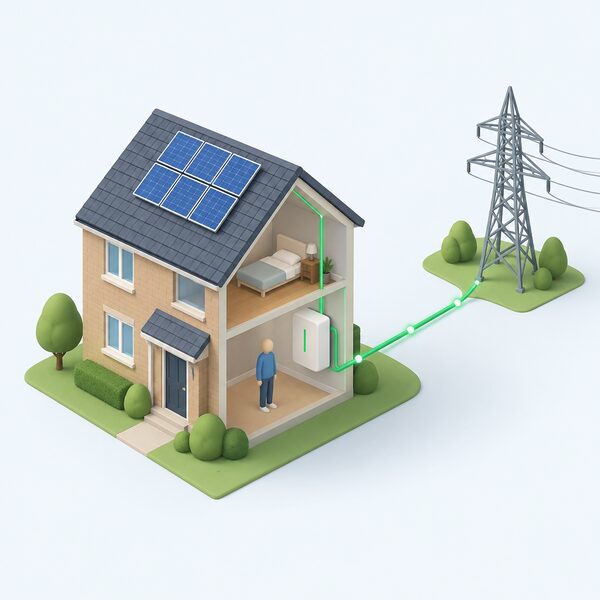
Energy resilience moved from an engineering concern to a national security one over the past several years. The Spending Review 2025 commits government to "secure its energy system and improve people's lives in every part of the UK"1, and the Energy Bill of 2022 to 2023 was built on three pillars: "1. Leveraging investment in clean technologies. 2. Reforming the UK's energy system and protecting consumers. 3. Maintaining the safety, security and resilience of the energy systems across the UK"11. Resilience is written into the legislation, not bolted on afterwards.
The adaptation side of the argument has been pressed by the Climate Change Committee, which recommended that "The need for investment in adapting to climate change should be included within mandates/strategic priorities for all relevant regulated industry regulators through resilience standards aligned to national-level objectives"12. That recommendation names energy and water regulators and implementing agencies such as the Environment Agency. In other words, the committee's case is that resilience should be a formal duty of the regulators, not a voluntary extra.
Two further strands matter for households. The first is overheating: half of UK homes are already at risk of overheating8, and the Climate Change Committee's work with Arup considers "current and future risks posed by summertime overheating to the UK housing stock at scale, factors influencing risk, adaptation and upgrade options and costs"13. A resilient home is one that copes with heat as well as cold. The second is cyber and grid-level risk, covered below. Both point the same way: the household's own systems are part of the national picture, and their design affects how much the wider network has to carry.
Policy levers: levies, the Future Homes Standard and rebalancing
Three policy levers shape whether household resilience is cheap or expensive to buy.
The first is how policy costs sit on bills. The Climate Change Committee's recommendation is explicit: "Making electricity cheaper, through rebalancing prices to remove policy levies from electricity bills, is a key recommendation"14. The Scottish Government's scenario modelling of removing the Renewables Obligation levy and ending the Energy Company Obligation found a mean fuel bill reduction of £530 per year for households with electricity as the primary heating fuel, for January to March 20267. That is a modelled figure for a specific scenario, not a forecast for any individual home, and it depends on the levy changes being made. The Welsh Government has responded to Ofgem's call for input on standing charges15, and the UK Government operates a separate policy of applying an Energy Intensive Industries levy to the bills of other consumers to support those industries15. The direction of travel is towards moving costs off electricity, but the mechanism is not settled.
The second lever is the standard for new build. The Future Homes and Buildings Standards "aim to improve the energy efficiency and reduce the carbon emissions of new dwellings and non domestic buildings to ensure they are zero carbon ready"16. One of the stated priorities is to "Reduce energy demand of homes and non-domestic buildings by requiring high performing building fabric and building services in new buildings, thereby improving energy security"17. The standards therefore matter for storage and flexibility: what is built now determines whether new homes are wired and sized for a battery and for flexible loads. The Regulatory Policy Committee has published its opinion on the standards' impact assessments16, and the government has proposed replacing the Standard Assessment Procedure with a new methodology, the Home Energy Model, in England and Wales18.
The third lever is the fabric of the existing stock. The Energy Company Obligation covers "just over 9% of homes in Great Britain"19, and the government has consulted on mid-scheme changes to ECO4 and the Great British Insulation Scheme19. The Climate Change Committee's cost-of-living work concluded that "England needs a comprehensive home energy retrofit scheme"20. TrustMark's homeowner guidance describes the retrofit process for households going ahead anyway3.
| Lever | What it changes | Where it stands |
|---|---|---|
| Levy rebalancing | Moves policy costs off electricity bills | Modelled at £530 a year for electrically heated homes in Scotland7; mechanism not settled |
| Future Homes and Buildings Standards | Sets fabric and services for new build | Consultation published; RPC opinion issued16 |
| Energy Company Obligation | Funds insulation in existing homes | Covers just over 9% of Great Britain's homes19 |
Plug-in solar: the new legal route to household generation
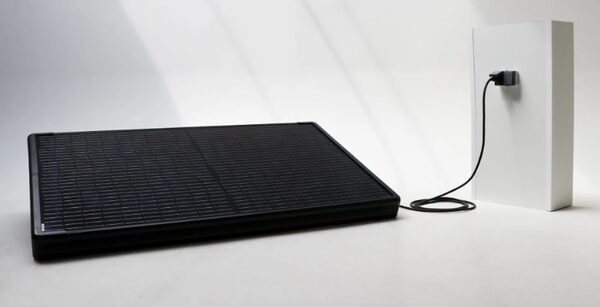
Plug-in solar became legal to buy and use across Great Britain from 27 August 2026. The government's announcement states that "From today (27 August), the easy-to-install panels can be plugged into homes across the country"6, and that the change followed "rigorous, independent safety testing, covering all key electrical elements, which shows that compliant panels are safe and compatible with UK wiring"6. The saving is put at "up to £110 a year on their bills through clean, homegrown power"6.
This is the most direct resilience lever a renter or a household without capital for a full array has been given. It is also the smallest. A plug-in system offsets a slice of base load rather than heating a home, and the household remains fully dependent on the grid for everything else. The legal change applies to Great Britain; households in Northern Ireland should check their own position, as the announcement does not cover them.
For households with a roof, the planning position is more permissive than many assume. Richmond Council's guidance states that "In many cases, even in conservation areas, homes can have solar panels without requiring planning permission from the Council under permitted development"21. The British Energy Security Strategy committed to "Reviewing the practical planning barriers households can face when installing energy efficiency measures, including in conservation areas and listed buildings, by the end of 2022"22. Solar photovoltaic capacity in the UK has been tracked in official deployment statistics since at least 201523.
Battery storage and the case for household flexibility
Storage is where household resilience and national system need overlap most directly. Ofgem's 2025 research on consumer take-up of low carbon and flexible products found that "most additional flexibility potential currently sits with a small group of households, typically those willing and able to shift EV charging and laundry use"24. That is a finding about who currently provides flexibility, and it is narrower than the policy ambition. The system's flexibility is concentrated in a minority of homes with the right appliances, tariffs and habits.
The Energy Storage Association has argued that storage should be standard in new-build housing and accessible to households that cannot afford it, citing the expanded Demand Flexibility Service25. That is an industry position, not a government commitment, and it should be read as such. The government's own flexibility work has included a competition run by UKRI for AI and digital solutions to increase consumer-led flexibility capacity26, and negotiations began between the UK and the European Commission in May 2026 on UK participation in the EU Internal Electricity Market26.
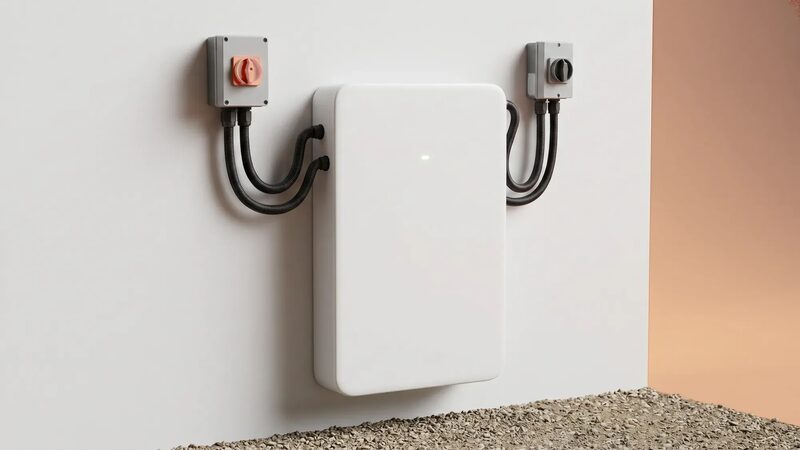
For a household, the practical question is what storage does for independence. A battery raises self-consumption of on-site generation, which is covered in self-consumption, and it allows a home to buy cheaply and use later. It does not make the home independent of the grid, and it usually depends on a manufacturer's app or cloud service for monitoring and control, a dependence examined in local control versus the manufacturer's cloud. Storage is a resilience asset with a supplier relationship attached.
How much energy UK households actually use
The demand side sets the size of the resilience problem. Homes use 35% of the UK's energy and emit 20% of its carbon dioxide emissions3. Over three-quarters of household energy demand is for space and hot water heating5. Heating homes accounts for around 14% of the UK's total greenhouse gas emissions4. Any resilience plan that does not address heat is addressing a minority of the household's energy use.
The official data on consumption is published at postcode level by the Department for Energy Security and Net Zero and the Department for Business, Energy and Industrial Strategy18, which allows a household to see how its own use compares with its neighbours. The National Energy Efficiency Data-Framework exists to "assess the impact of installing home efficiency measures such as loft insulation on household energy consumption"27, and the 2025 data tables set out the need for and impact of measures27.
The Climate Change Committee's figures give the scale of the fabric task: "5.5 million UK homes are recommended to have large energy efficiency measures (cavity wall, solid wall, loft, and floor insulation) by 2040"8. That is a recommendation for the stock as a whole, not a statement about any individual property. For a household, the implication is that the largest single resilience gain available is usually demand reduction, and that it is a multi-year programme rather than a purchase.
| Measure of household energy | Figure | Source |
|---|---|---|
| Homes' share of UK energy use | 35% | 3 |
| Homes' share of UK carbon dioxide emissions | 20% | 3 |
| Heating's share of UK greenhouse gas emissions | around 14% | 4 |
| Share of household demand for space and hot water heating | over three-quarters | 5 |
| UK homes recommended for large efficiency measures by 2040 | 5.5 million | 8 |
Who is pushing for resilience: the industry bodies and their evidence
The organisations pressing for household resilience come from three directions, and their evidence differs in kind.
The Climate Change Committee is the independent statutory adviser. Its recommendation for a public engagement campaign is direct: "There is a need for a UK Government public engagement campaign that focuses on reducing energy demand. This should be aimed at both businesses and households"20. Its adaptation monitoring framework treats the energy system as something that must be made well adapted2, and its Scottish carbon budgets work sets out the devolved dimension14.
The Energy Saving Trust is the delivery body for advice in Scotland. It "manages these schemes on behalf of the Scottish Government through Home Energy Scotland, in partnership with advice providers and energy companies"28, and Home Energy Scotland "is administered by the Energy Saving Trust on behalf of the Scottish Government"29. It offers "advice on energy at home and a guide to green renovation to help you put energy efficiency first room by room"30.
The devolved administrations have their own positions. The Scottish Government's Heat in Buildings Strategy states that "We will have to stop using natural gas. We might be able to use other kinds of gas"31, and notes that "Consumer protection is controlled by the UK Government"31, a limit on what devolved resilience policy can do. The Scottish Government has also modelled the fuel bill effects of removing the Renewables Obligation levy and ending the Energy Company Obligation7. The Welsh Government has engaged with Ofgem on standing charges15. The pattern is that advice and building standards are devolved, while consumer protection and much of the levy structure are not.
| Body | Role | Position on household resilience |
|---|---|---|
| Climate Change Committee | Independent statutory adviser | Calls for a UK public engagement campaign on reducing energy demand20 |
| Energy Saving Trust | Administers Home Energy Scotland for the Scottish Government | Provides free, impartial advice on energy at home28 |
| Energy Storage Association | Industry body | Argues storage should be standard in new build and accessible to all25 |
Cyber security and grid-level risks households should know about
The grid-level risks that bear on households are increasingly digital. The UK government published the Energy Sector Cyber Security Strategy in June 2026, described as a four-year roadmap for strengthening energy sector cyber resilience32. The same implementation report commits the government to deliver a national home defence exercise involving local responders up to ministers, scheduled for 202732. That is the exercise households may hear about; the published commitment describes the participants and does not set out a role for individual households.
Two other grid-level developments matter. The UK and the European Commission began negotiations in May 2026 on UK participation in the EU Internal Electricity Market26, which affects how interconnected the system is and therefore how supply shocks propagate. The International Energy Agency released its eleventh annual World Energy Investment report in June 202633, an international benchmark rather than a UK figure, included here because it frames the investment context.
For a household, the honest position is that cyber and interconnection risk is not something a home can manage. What a home can do is reduce the consequence of an interruption: stored heat, stored electricity, a source of light and cooking that does not depend on the gas network, and a plan for a multi-day outage. The Climate Change Committee's overheating work is a reminder that the same planning applies to heat as to cold13.
What a household resilience plan looks like in practice
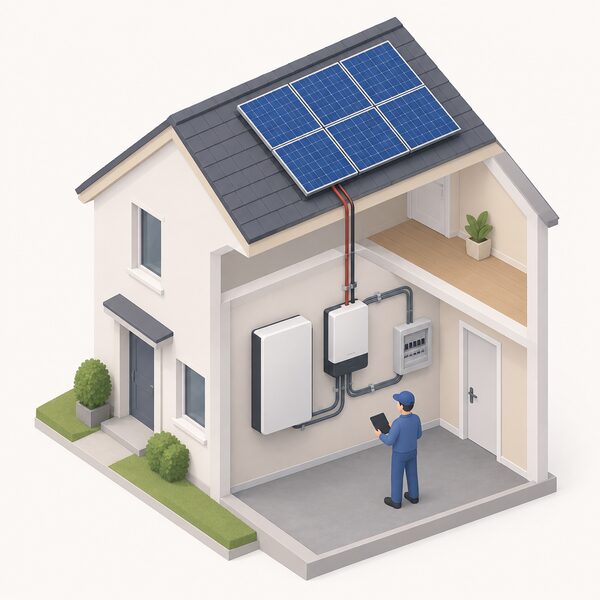
A resilience plan is a sequence, not a shopping list, and the order matters because each step changes what the next one needs to be.
- Measure the demand. Postcode-level consumption data published by the Department for Energy Security and Net Zero allows a household to compare its use with similar homes18. The National Energy Efficiency Data-Framework shows what measures do to consumption27.
- Cut the demand. Insulation, draughtproofing and glazing come first. The Climate Change Committee recommends large measures in 5.5 million UK homes by 20408, and the Energy Company Obligation covers just over 9% of homes in Great Britain19.
- Take the advice that exists. Home Energy Scotland offers "free advice on improving the energy efficiency of your home"30, and the new Home Energy Advice service is intended as "a single-entry point for consumer home energy advice on GOV.UK helping homeowners, landlords and tenants find tailored, impartial and trusted advice on how to heat their homes and make them more energy efficient"34. The parliamentary Environmental Audit Committee recommended that England's advice service be "upgraded to a specialist bespoke advice service similar to the Home Energy Scotland network"35.
- Add generation within the rules. Plug-in solar is legal across Great Britain from 27 August 20266, and roof solar often needs no planning permission under permitted development21.
- Add storage and flexibility. Storage raises self-consumption and allows cheap purchase and later use, but the flexibility potential currently sits with a small group of households24.
- Plan for the interruption. Decide what stays running in an outage, and check whether the inverter will actually operate, which is the subject of islanding and anti-islanding.
The Warm Homes Plan is expected to expand rooftop solar and home battery storage2, and the Scottish Government has said it expects the plan "to set out crucial detail on how and to what extent the UK Government plans to rebalance energy prices, particularly the price of electricity relative to gas"36. Until that detail lands, the household's own sequence is the part it controls.
Where household independence stops
It is worth being exact about what a resilient home is still dependent on. It depends on the grid for import and export, on a supplier for billing and for the standing charge, on the gas network if it has not switched heating, on imported energy for much of what it consumes, and on a manufacturer for the app, firmware and cloud service that many batteries and inverters use. The Energy Bill's third pillar, "Maintaining the safety, security and resilience of the energy systems across the UK"11, is a national duty precisely because no household can carry it alone.
The devolved picture adds a further limit. Consumer protection is controlled by the UK Government31, so Scottish resilience policy can improve buildings and advice but cannot change the consumer framework. The Welsh Government's engagement with Ofgem on standing charges15 is a similar case of influence rather than control. Where the four nations differ, it is mostly in advice, building standards and scheme design, not in the underlying dependence.
What independence does buy is a smaller consequence when the system falters. A home that needs less, generates some of its own, stores some of it, and has a plan for an outage is materially better placed than one that does not. That is the realistic claim, and it is the one the evidence supports. For the wider picture of what a household can and cannot detach from, the full guide to household energy independence sets out the options, and how much imported energy a UK household uses quantifies the dependence that remains.
Sources36 cited
- Spending Review 2025, GOV.UK, 2025-06-30
- Well-adapted energy system monitoring framework, Climate Change Committee, 2026-09-19
- Retrofit your home, TrustMark, 2026-09-20
- DRHI Annual Report Scheme Year 11, Ofgem, 2025-07
- Written evidence on household energy demand, UK Parliament, 2019-01
- Households can save as plug-in solar panels come to market, GOV.UK, 2026-08-26
- Scenario modelling of RO and ECO removal on fuel bills in Scotland, Scottish Government, 2026
- EINAS 2025 heat and buildings, GOV.UK, 2025
- The UK's National Energy Efficiency Action Plan and Building Renovation Strategy, GOV.UK, 2014-04-30
- Independent assessment of the UK's heat and buildings strategy, Climate Change Committee, 2022-03-16
- [Energy Bill [HL] 2022-23 research briefing](https://commonslibrary.parliament.uk/research-briefings/cbp-9787), House of Commons Library, 2026-09-20
- A lack of leadership is preventing essential investment, Climate Change Committee, 2023-02-01
- Addressing overheating risk in existing UK homes, Climate Change Committee, 2026-09-19
- Scotland's carbon budgets, Climate Change Committee, 2025-05-21
- Welsh Government response to Ofgem call for input on standing charges, Welsh Government, 2024-02-15
- RPC opinion on Future Homes and Buildings Standards impact assessments, GOV.UK, 2026-03-25
- The Future Homes and Buildings Standards 2023 consultation, GOV.UK, 2026-09-17
- Postcode level domestic gas and electricity consumption: about the data, GOV.UK, 2017-03-30
- ECO4 and Great British Insulation Scheme mid-scheme changes consultation, GOV.UK, 2024-11-14
- Climate policy that cuts costs: international policy comparison, Climate Change Committee, 2026-09-19
- Solar panels and permitted development, Richmond Council, 2026-07-06
- British Energy Security Strategy research briefing, House of Commons Library, 2026-09-20
- Solar PV deployment December 2014, GOV.UK, 2015-01-29
- Tracking energy consumers' use of low carbon and flexible products and services 2025, Ofgem, 2025-06
- Plug-in battery, Energy Storage Association, 2026-04-15
- Clean Flexibility Roadmap July 2026 update, GOV.UK, 2026-07
- National Energy Efficiency Data-Framework: need and impact of measures, GOV.UK, 2025-06-26
- Energy saving home improvements, Scottish Government, 2026-09-17
- Home Energy Scotland research briefing, House of Commons Library, 2026-05-13
- Financial help for energy efficiency and low carbon heating, City of Edinburgh Council, 2026-09-20
- Heat in Buildings Strategy easy read, Scottish Government, 2022-03-07
- The UK Government Resilience Action Plan 2026 implementation report, GOV.UK, 2026-06
- Heat pumps hold firm as electrification reaches a record share of energy investment, Heat Pumping Technologies, 2026-06
- Reforming consumer protection for home upgrade schemes consultation, GOV.UK, 2026-06-17
- Environmental Audit Committee report on energy efficiency, UK Parliament, 2021-03-22
- Heat in Buildings Bill update from Cabinet Secretary, Scottish Parliament, 2025-11-18
 The Full Energy Independence GuideCan you really run your home on your own power in the UK, and how far can that go before the grid still matters?
 Heating and Energy IndependenceCan you heat your home without relying on gas or oil, and what would that take?
 Cost of Energy IndependenceA heat pump and better insulation are the usual starting point, but what does the whole job really cost, and what help is there with the bill?
 Data and Energy IndependenceHow many UK homes actually make their own power, and is that number really growing?
 Batteries and IndependenceHow far home battery storage moves a UK household away from the grid and supplier pricing, covering self-sufficiency, winter limits, cost, lifespan, backup, export payments and flexibility earnings.
 Energy IndependenceA heat pump runs your heating on electricity instead of gas or oil, so how much does that really cut what you pay and how exposed you are when fuel prices jump?