

In this guide
Half of UK homes are already at risk of overheating, and the Climate Change Committee projects that 92% of existing homes could overheat by mid-century1. The End Fuel Poverty Coalition puts the current proportion of UK homes experiencing overheating at 80%, up from 18% in 20113. In England alone, the number of occupied dwellings reporting overheating rose from an estimated 1.7 million to 3 million between 2019 and 20244.
This is not only a summer discomfort story. Over 10,000 heat-related deaths occurred in the UK between 2020 and 2024, and 4.5 million adults report having been made unwell by excessive heat in their homes3. The households most exposed are those least able to respond: almost half of households in the lowest income bracket face serious overheating risks, compared with 17% of the wealthiest3.
What follows sets out why UK homes overheat, how the risk is distributed across dwelling types and regions, what the regulations now require in new build, and what shading, ventilation and cooling measures can and cannot do for a household that is already too hot.
Why UK homes overheat: designed to keep heat in, not let it out
The British housing stock was built and, more recently, retrofitted around a single problem: retaining heat through a long, damp winter. Most heating in the UK is supplied by gas, and the fabric-first logic of insulation, draught-proofing and double glazing has been applied consistently for two decades7. That same fabric now works against occupants in July.
The Climate Change Committee's assessment of overheating risk in existing UK homes, carried out by Arup, found that a high proportion of existing homes fail to meet the new overheating standard that applies to new homes8. The standard exists because the problem was recognised in new build first, but the existing stock is where most people live and where the shortfall is largest.
The physical drivers are consistent across the evidence:
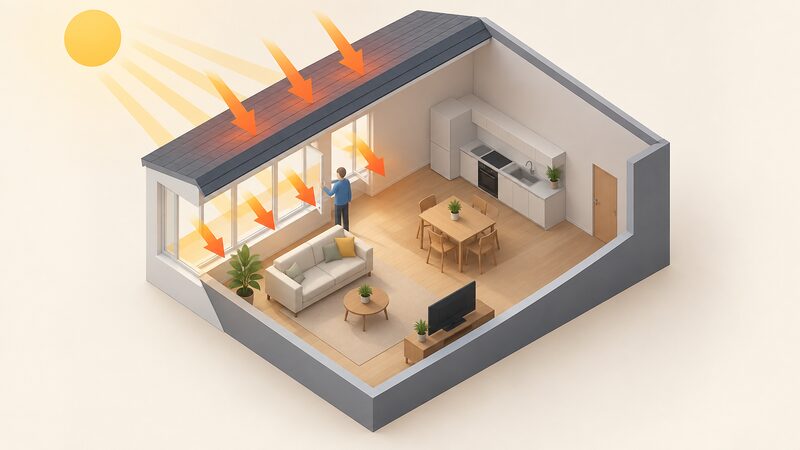
- Solar gain through glazing. Rooms facing south or west take in heat through windows all afternoon, and it stays in the fabric into the evening9.
- Insulation that slows heat loss in both directions. A well-insulated wall that keeps winter heat in also keeps summer heat out of the ground and out of the structure overnight.
- Limited purge ventilation. Many homes have windows on one side only, so air cannot cross the room and leave.
- Internal gains. Cooking, appliances and occupants add heat that a sealed, insulated box cannot shed quickly.
The Welsh Government's factsheet on summertime overheating in highly insulated homes is aimed at asset managers, retrofit coordinators, housing owners and occupiers, which reflects how the problem has moved from a design curiosity to a mainstream housing management issue10.
For a household's energy independence, this cuts both ways. A well-insulated, airtight home needs less bought-in energy to stay warm, which reduces exposure to gas prices. The same home, without shading or a way to purge heat, becomes dependent on mechanical cooling in summer, which means electricity, a supplier and a running cost. Insulation alone does not deliver independence across the whole year.
How widespread it is now: millions of homes affected and rising
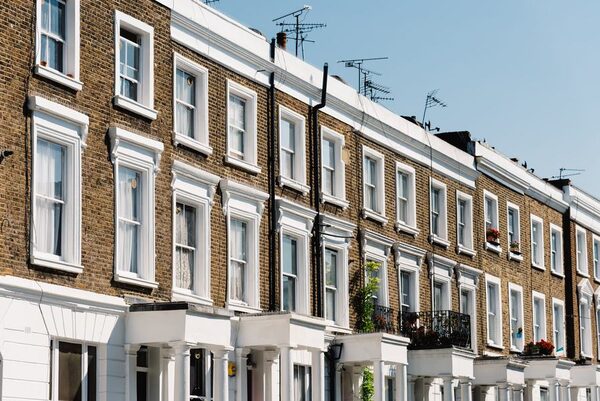
Overheating is not a fringe problem. The End Fuel Poverty Coalition reports that 4.5 million adults in the UK have been made unwell by excessive heat in their homes12. The same figure appears in the Coalition's own account of high temperatures, which puts it at around 4.5 million adults10. Those households typically have low incomes, live in poorly ventilated homes, and are often repaying energy debts or on prepayment meters10. The Coalition, which brings together more than 100 charities, health organisations, housing groups, trade unions and consumer bodies, warns that with energy bills set to rise again in July, households cannot be left to face more extreme summer conditions without support10.
The headline figures differ by source and by method, and the differences matter.
Official statistics published in June 2025 state that half of UK homes are already at risk of overheating2. The End Fuel Poverty Coalition, drawing on the same body of work, reports that the proportion of UK homes experiencing overheating has soared from 18% in 2011 to 80% today3. The gap between "at risk" and "experiencing" explains much of the difference: risk is modelled from dwelling characteristics, while experience is reported by occupants.
The English Housing Survey 2023 to 2024 climate resilient homes fact sheet brings together evidence on dwelling age, self-reported overheating, the ability of households to keep warm in winter, moisture damage following a storm, working from home and energy costs, and why households did or did not carry out EPC recommendations13. It is the most detailed official picture of how the same homes perform in both directions.
Nesta's analysis of fresh data found that about 395,000 homes in England experienced both getting uncomfortably hot and an inability to keep warm in the winter4. That overlap is the sharpest illustration of the problem: the same dwelling fails at both ends of the temperature range, and the household has no single fix available.
The number of occupied dwellings in England reporting overheating rose from an estimated 1.7 million to 3 million between 2019 and 20244.
The regional picture is uneven. The London Assembly's Planning and Regeneration Committee collected evidence on whether London's homes are ready for a heatwave, and its national polling found that 68% of respondents reported that they or someone in their household experienced at least one negative impact from overheating in summer 20255. London's concentration of flats, top-floor dwellings and highly glazed new build makes it a useful indicator of where the rest of the country is heading.
The projections: 92% of homes could overheat by mid-century
The forward projections are starker than the current position, and they come from official and independent sources rather than from campaigning bodies.
The Climate Change Committee's 2026 progress report to Parliament states that hotter heatwaves could see 92% of existing homes overheat, creating dangerous conditions for vulnerable people1. The End Fuel Poverty Coalition cites the same committee figure of 92% of existing homes that could overheat in more extreme heat events14.
Official statistics published in June 2025 give two warming scenarios side by side: under a 2 degrees C global warming scenario, 90% of UK homes will overheat, and in a 4 degrees C scenario all UK homes will overheat2. The same document records that the Climate Change Committee's CB7 Balanced Pathway Scenario estimates approximately half of UK homes being heated by heat pumps2.
The Climate Change Committee's assessment of overheating risk in existing UK homes covers retrofit works required across the housing stock to mitigate the risk of overheating up to a 4 degrees C global warming scenario8. That is the scale at which the committee frames the response: not individual adaptations, but stock-wide retrofit.
For a household, the practical reading is that a home which is comfortable now may not stay comfortable. The measures that reduce overheating risk, external shading, night-time ventilation and control of solar gain, are largely the same measures that reduce reliance on mechanical cooling later. A household that installs them now is buying down future electricity dependence, not just solving this summer's problem.
Who is most at risk: health impacts and the groups most affected
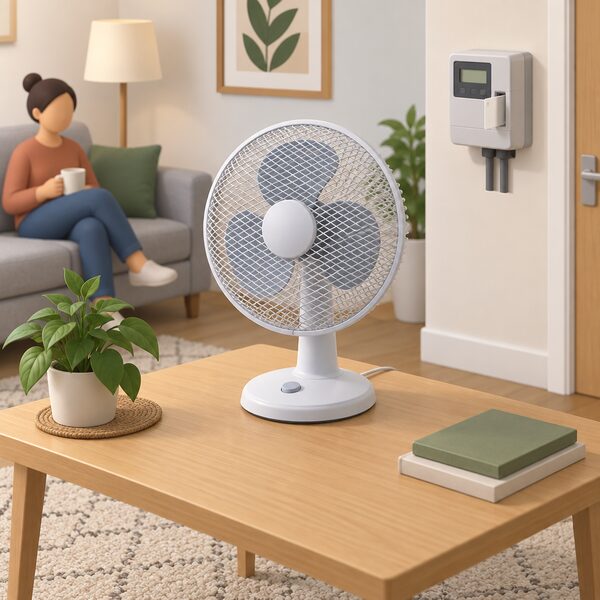
Overheating is not evenly distributed, either across dwellings or across households.
The London Assembly's polling found that younger adults aged 18 to 34 were disproportionately likely to report at least one negative impact from overheating in the home, at 84%5. That is a higher reported impact rate than the national average of 68%, and it runs against the assumption that overheating is primarily a problem for older people.
The End Fuel Poverty Coalition reports that almost half of households in the lowest income bracket face serious overheating risks, compared with just 17% of the wealthiest3. The coalition describes the typical household circumstances as low incomes, poorly ventilated homes, often repaying energy debts or on prepayment meters14. The same organisation reports that 4.5 million adults in the UK have been made unwell by excessive heat in their homes3.
The health consequences are documented at population level. There are currently around 2,000 heat-related deaths in the UK each year, and overheating risks to health emerged as one of the top six key risks where more action is required11. Over 10,000 heat-related deaths occurred in the UK between 2020 and 20243.
The Climate Change Committee's work on risks to health, wellbeing and productivity from overheating in buildings sets out the wider consequences, including the effect on people who work from home and on those whose condition makes them medically dependent on stable temperatures15. The English House Survey has been used to assess the profile of English dwellings at risk from overheating, which is how the dwelling-level risk factors were established16.
For energy independence, this is the point at which overheating stops being a comfort issue and becomes a health and cost issue. A household on a prepayment meter that cannot afford to run a fan or a cooling unit has no independent means of managing a hot home. The End Fuel Poverty Coalition has called for a faster rollout of a national energy debt relief scheme to address record levels of household debt, a targeted reduction in energy unit rates from July if the Ofgem price cap rises significantly, further expansion of the Warm Home Discount, and strengthening Cold Weather Payments so support reaches vulnerable households earlier17. Those proposals are aimed at winter bills, which is itself part of the problem: the support architecture is built around cold.
Why opening windows alone falls short
Opening windows is what households actually do, and the data shows how heavily they rely on it. In England in 2024, the most common methods of keeping cool were opening the windows, at 89.7% of coping methods, closing shutters, curtains or blinds at 74.7%, and switching on a fan at 58.7%4.
The limits of that approach are structural rather than behavioural. The Welsh Government's factsheet on summertime overheating identifies a greater overheating risk in certain types of dwelling, such as flats and mid-terraced houses, as well as rooms facing south or west and single-aspect flats that do not allow cross ventilation9. A single-aspect flat has windows on one wall only, so opening them moves air in and out of the same opening rather than drawing it through the home.
The London Assembly evidence includes a specific case: Midland Heart's Project 80, covering 12 homes compliant with Part O and the anticipated Future Homes Standard, reported that the sun-facing sides of the buildings were extremely hot and the windows and mechanical ventilation systems were not sufficiently capable of removing temperature gains5. Those were homes built to the current overheating standard.
There is also a regulatory constraint that households rarely anticipate. Approved Document O, 2022 edition for Wales, states that only the proportion of openings which can be opened with a very low risk of occupants falling from height should be considered to form part of the overheating mitigation strategy18. In practice, upper-floor windows that are restricted for safety cannot be counted on to cool the room.
"Only the proportion of openings which can be opened with a very low risk of occupants falling from height should be considered to form part of the overheating mitigation strategy."
Cost adds a further constraint in the opposite season. Uswitch's research found that 39% of UK adults kept windows shut this winter due to cost, 37% used heating for fewer hours, and 14% avoided opening windows even when condensation appeared19. A household managing both a winter condensation problem and a summer overheating problem is being pulled in two directions by the same windows.
Natural ventilation: low-cost, low-energy airflow for older homes
Natural ventilation is the lowest-cost route to reducing overheating, and it is the one most constrained by building form.
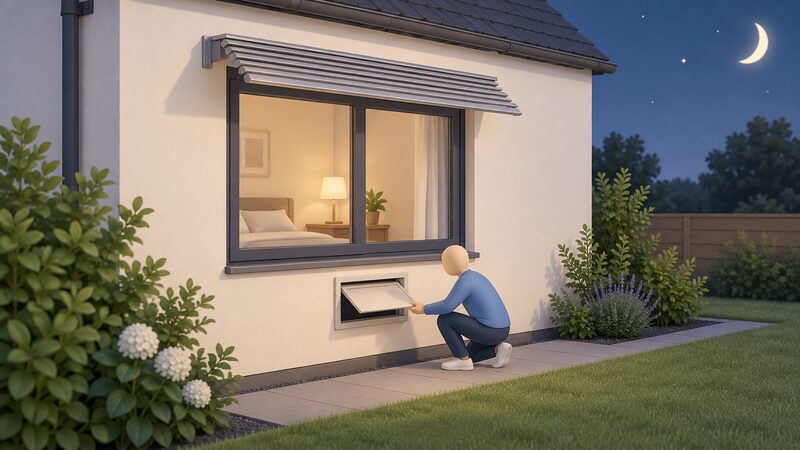
The principle is straightforward: purge warm air at night when the outside temperature drops, and keep solar gain out during the day. The UK government's Warm Homes Plan evidence shows that combining external shading with night-time ventilation can reduce indoor temperatures by 11 to 18 degrees C in some homes5. That is a substantial reduction, and it comes from two measures working together rather than either alone.
Mechanical ventilation with heat recovery takes a different approach. The Welsh Government's press release on the Three Brewers Court development describes ventilation systems that circulate warm, fresh air and reduce condensation12. These systems are designed primarily for air quality and moisture control, and they recover heat rather than remove it, which is why they are not a cooling solution on their own.
The regulatory position on retrofit is permissive rather than mandatory. There is currently no legal requirement for existing homes to be retrofitted or for low-carbon heating technologies to be installed in existing homes, with exceptions for privately rented homes and homes owned by local authorities and housing associations in some parts of the UK20. That means a householder in an older home is largely making their own decisions about shading and ventilation.
The Climate Change Committee's assessment of low-regret climate change adaptation options in the residential buildings sector presents updated cost curves for a range of building-scale adaptation measures for the UK21. The framing is deliberate: these are measures worth doing regardless of how far warming goes, because they pay back in comfort, health and reduced cooling demand.
For a household in an older home, natural ventilation and shading are the measures that reduce dependence on bought electricity. They require no supplier, no app and no subscription. Their limitation is that they depend on the building having openings on more than one side and on the household being able to open windows safely at night.
Air conditioning as a last resort: sizing, efficiency and running costs
Air conditioning is the option that removes the household's dependence on building form, and replaces it with dependence on electricity.
The classification matters for both tax and planning. HMRC's understanding is that most air conditioning units are air source heat pumps, and in cases of doubt, deciding whether any particular product is to be treated as an air source heat pump will depend on the facts of each case23. That is not a technicality: it determines how the equipment is treated under the VAT rules for energy saving materials and under permitted development.
The permitted development limit is specific. Under Class G in England and Wales, an air source heat pump is not permitted if the volume of the outdoor compressor unit, including any housing, would exceed 0.6 cubic metres24. The Scottish Government's consultation on permitted development rights notes that the PDR have been amended to allow for cooling and heating, but not solely for cooling purposes25.
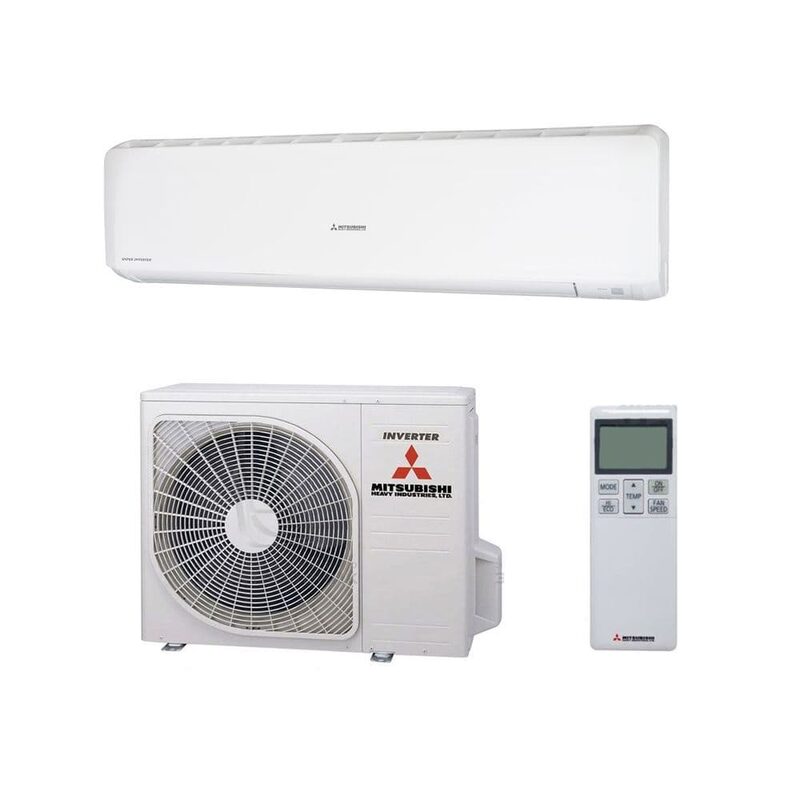
Costs are installer-quoted rather than published. The Scottish Government's guidance on energy retrofit possibilities in multiple ownership and mixed use buildings gives approximately £1,000 to £2,000 each for small capacity air-to-air units6. That is a capital figure only, and it does not include running costs.
The running cost picture is thin in the evidence, and it is worth being honest about that. The London Assembly's polling found that 13% of UK survey respondents reported higher energy bills associated with efforts to cool homes, including the use of fans and air-conditioning5. That is a self-reported figure rather than a measured one, and it covers fans as well as air conditioning.
There is a wider context that bears on running costs. The End Fuel Poverty Coalition reports that UK wholesale gas was up 36% year-on-year and heating oil up 39% year on year as of March 2026, with gas at levels last seen on 30 January 202327. The same source notes that the grid still relies on gas-fired power stations, which links electricity prices to gas prices27. A household that installs air conditioning is therefore exposed to the same volatile input as its heating.
Heat pumps are widely used in some European countries but are currently installed in 1% of UK homes26. Studies suggest that 90% of UK homes already have enough insulation to run a heat pump28. A reversible air-to-air unit provides cooling in summer and heating in winter, which is the configuration in which the equipment does most for a household's independence, because it displaces gas as well as providing cooling.
Adapting existing homes at scale: insulation, ventilation and policy responses
The retrofit challenge is stock-wide, and the evidence is consistent that current policy does not yet match it.
The Climate Change Committee commissioned Arup to appraise the current and future risks posed by summertime overheating to the UK housing stock at scale, considering what factors influence risk, how homes can be adapted or upgraded to mitigate the impacts, and how much that would cost8. The same work found that a high proportion of existing homes fail to meet the new overheating standard for new homes, and that a lot of retrofit works are required across the housing stock to mitigate the risk of overheating up to a 4 degrees C global warming scenario8.
The policy levers are split across nations and departments. The Warm Homes: Social Housing Fund operates in England, installing energy efficiency upgrades and low-carbon heating measures in English social housing29. The review of barriers to adapting historic homes for energy efficiency applies to England30. The Scottish Government consulted on energy standards and associated topics including ventilation and overheating22. The Welsh Government has published factsheets on summertime overheating in newer build properties and in highly insulated homes9.
The BEIS recommendation is that overheating risk is considered and mitigated against, if necessary, when doing energy efficiency retrofit programmes15. That is the key policy point for households: insulation work done without a ventilation and shading assessment can make a home hotter in summer while making it cheaper to heat in winter.
The decarbonisation routes for home heating are expected to be heat pumps, hydrogen and/or heat networks, alongside energy efficiency through insulation upgrades31. Each of those routes changes the internal heat balance of a home, and each therefore interacts with overheating risk.
For a household's energy independence, the picture is mixed and worth stating plainly. Insulation and airtightness reduce bought-in heating, which is genuine independence from gas prices. Shading and night ventilation reduce the need for mechanical cooling, which is independence from electricity demand spikes. But the household remains connected to the grid for lighting, appliances and any cooling equipment, and remains exposed to the wholesale gas price through the electricity market. The measures that most reduce overheating risk are also the ones that require the least ongoing purchase, which is why the Climate Change Committee classifies them as low-regret adaptation21.
The End Fuel Poverty Coalition's position is that households cannot be left to face more extreme summer conditions without support, particularly with energy bills set to rise again in July14. Its proposals include speeding up reform to electricity pricing and preparing a scalable universal support package that could be activated quickly if energy prices spike further17. Whether that support materialises is a policy question, not a technical one, but it determines whether the households at greatest risk can act on any of the measures above.
Sources31 cited
- Progress in reducing emissions: 2026 report to Parliament, Climate Change Committee, 2026
- Heat and buildings: EINAS 2025, UK Government, 2025
- Fuel poverty doesn't end in winter, it's a summer crisis too, End Fuel Poverty Coalition, 2025
- How well do homes in England cope with extreme weather, Nesta, 2026
- Are London's homes ready for a heatwave, London Assembly, 2026
- Heat in buildings: multiple ownership and mixed use buildings, Scottish Government, 2023
- Fuel poverty and energy efficiency, House of Commons Library, 2022
- Addressing overheating risk in existing UK homes, Climate Change Committee, 2026
- Summertime overheating in newer build properties, Welsh Government, 2024
- Considering summertime overheating in highly insulated homes, Welsh Government, 2024
- Hidden problem: overheating, Climate Change Committee, 2017
- Innovative and energy efficient development will provide 50 new homes, Welsh Government, 2024
- English Housing Survey 2023 to 2024: climate resilient homes fact sheet, UK Government, 2025
- Record May heat reveals homes that cannot afford to keep cool, End Fuel Poverty Coalition, 2026
- Risks to health, wellbeing and productivity from overheating in buildings, Climate Change Committee, 2026
- The risks to housing from overheating, Climate Change Committee, 2017
- Chancellor confirms energy bill support planning, End Fuel Poverty Coalition, 2026
- Approved Document O: overheating frequently asked questions, Welsh Government, 2024
- Mouldy nation report, Uswitch, 2026
- Retrofit and low-carbon heating requirements for existing homes, House of Commons Library, 2026
- Costs and benefits of low-regret climate change adaptation options, Climate Change Committee, 2019
- Scottish building regulations: proposed changes to energy standards, Scottish Government, 2021
- VAT energy saving materials: air source heat pumps, HMRC, 2026
- Class G: installation of air source heat pumps on domestic premises, legislation.gov.uk, 2020
- Permitted development rights: support and provision for new homes, Scottish Government, 2025
- Heat pumps in the UK, Parliamentary Office of Science and Technology, 2026
- Iran conflict pushes gas prices higher but the risk for bills lies ahead, End Fuel Poverty Coalition, 2026
- Heat pump, UK Government, 2026
- Heat pump deployment tables Q2 2026, UK Government, 2026
- Adapting historic homes for energy efficiency, UK Government, 2024
- Decarbonising heat in homes, BEIS Committee, 2022
 How a Home Loses HeatWhere does most heat actually escape from a UK home, and does it change with the age or type of house?
 Heatwaves and HealthWhich homes get dangerously hot in a heatwave, and which rooms?
 UK Cooling DemandPublished data on air conditioning ownership and home overheating, with projections for summer temperatures in each UK nation, and what rising cooling demand means for summer electricity use.
 The Full Cooling and Air Conditioning GuideDo you really need air conditioning in a British summer, or would a fan and better shading do the job?
 The Full Insulation and Glazing GuideWhere is your home losing the most heat, and what can you do about it?
 Which Homes Suit a Heat PumpMost UK homes can have a heat pump fitted, so the real question is whether yours makes it easy or expensive.