

In this guide
Damp and mould in a rented home are treated in law as a repair and housing conditions matter, not a housekeeping one. Since October 2025, registered social landlords in England have had to investigate reports of damp or mould within 10 working days and to address emergency hazards within 24 hours1. Those duties are known as Awaab's Law, named after two year old Awaab Ishak, who died from mould exposure1. The Centre for Sustainable Energy states plainly that a social landlord "has a duty to fix reported damp, mould and emergency repairs by law"2.
For private tenants the picture is older and less time bound. The duty rests on repairing terms implied into the tenancy, on fitness standards that differ across the four nations, and on the council's enforcement powers. In England and Wales, Citizens Advice notes that where a landlord will not make improvements the council can be asked to act and can fine the landlord3. In every case the clock starts with the report: a landlord is usually only responsible for repairing the problem once they become aware of it, which is why the date, wording and proof of each report matter as much as the mould itself4.
Damp is not evenly spread across tenures. The English Housing Survey for 2024 to 2025 found damp in 10% of private rented homes, 7% of social rented homes and 4% of owner occupied homes5. That gap is the reason renting carries its own set of rules, and why renting and home energy sits apart from owner occupation on this site.
What the law requires once damp or mould is reported
The starting point in most tenancies is a repairing obligation implied by law. Citizens Advice explains that a term implied into the tenancy agreement makes it the landlord's responsibility to keep the exterior and structure of the home in repair, and to keep in repair installations such as basins, sinks, baths, toilets and their pipework4. Welsh guidance for landlords puts the duty more directly: "A landlord must keep the dwelling in repair at all times", and once the landlord is aware of the need for repairs, "they must be carried out in a reasonable time and to a reasonable standard"7.
That phrase, a reasonable time, is the difference between the private and social sectors. Awaab's Law replaces it, for registered social landlords, with a fixed 10 working day investigation window and a 24 hour response to emergency hazards1. Government analysis of heat and buildings policy records that from October 2025 social landlords are required to investigate and resolve damp and mould within set time periods8.
Alongside repair, there are duties that bear on the causes of damp. In England, a private landlord must make sure plumbing and heating work properly3. Guidance for landlords in Northern Ireland lists insulation and draught measures a landlord should carry out in a rented property: insulating roof spaces, replacing draughty and ill fitting windows and doors, draught proofing external doors and windows (though not rooms containing an open flue gas appliance), insulating exposed water pipes, and fitting a good quality insulation jacket to the hot water tank9. It also states that before letting, the landlord should ask a qualified surveyor to check the condition of the property9. Broken heating and poor ventilation are among the listed causes of condensation damp, so these duties and the mould are directly connected4.
The wider set of obligations, from gas and electrical safety to alarms, is set out in landlord duties on energy, heating and home safety.
Awaab's Law: 24 hours, 10 working days, and what triggers each
Awaab's Law came into force in October 20252. Its two headline timescales are simple to state and harder to apply.
| Trigger | Deadline | Applies to |
|---|---|---|
| Report of damp or mould | Investigate within 10 working days1 | Registered social landlords |
| Emergency hazard | Address within 24 hours1 | Registered social landlords |
The Centre for Sustainable Energy frames the investigation duty for tenants as follows: "Serious cases of damp and mould must be investigated within 10 working days of being reported"2. The 24 hour duty is not an investigation duty at all but an action duty: emergency hazards must be addressed, not merely looked at1.
Two practical points follow. First, the deadline runs from the report, so a tenant's evidence that a report was made, and when, is what makes the deadline enforceable. Second, an investigation is not a repair. The law sets a clock on finding out what is wrong; resolving it is covered by the wider requirement that social landlords investigate and resolve damp and mould within set time periods8.
Phase 2 of Awaab's Law is due to take effect on 30 November 2026, expanding the hazards covered and applying the same immediate response times to electrical faults, risks of falling, structural defects, excess cold and heat, fire risks and pest infestations. Phase 3, in 2027, brings all remaining Housing Health and Safety Rating System hazards presenting a significant risk of harm into scope, except overcrowding. The hazard framework itself is explained in the Housing Health and Safety Rating System and excess cold.

Social or private rented: which rules cover your home
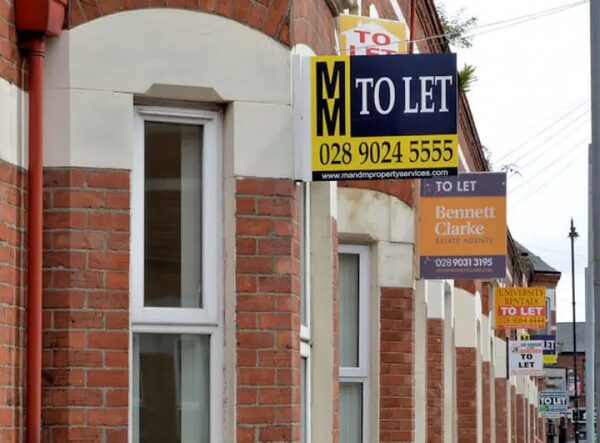
Tenure decides which regime applies, and the boundary is not always where a tenant expects it.
- Council and housing association tenants in England. Awaab's Law timescales apply1. Citizens Advice adds that the landlord is responsible for the damp where it means the home is not safe to live in, or where it is an ongoing serious problem affecting physical or mental health4. See energy in social housing.
- Private tenants in England. The implied repairing terms and council enforcement apply. A private landlord might be responsible for the damp where it means the home is not safe to live in, for example where it has made the household ill4.
- Wales. Fitness for human habitation governs the landlord's duty, with the obligation to keep the dwelling in repair at all times and to repair within a reasonable time once aware7. Further detail sits in fitness for human habitation in Welsh rented homes.
- Scotland. The repairing standard applies, and new regulations mean that all houses in the private rented sector must meet the statutory tolerable standard10. Tenants have a right to refer any landlord not complying with any element of the repairing standard to the First-tier Tribunal for Scotland Housing and Property Chamber11. See the repairing standard for rented homes in Scotland.
- Northern Ireland. Official guidance on checking whether a home is fit to live in sets out the landlord's condition and insulation duties before and during a letting9.
One overlap worth noting: a property owned or let by a social landlord can be treated as private domestic premises for ECO4 purposes where it has been let at or above market rate, subject to measure eligibility and occupant requirements12. Scheme classification and housing law classification are separate questions, and a home can be in one category for grant funding and another for repair duties.
Condensation, penetrating damp or rising damp: why the cause decides the duty
The cause is not a technicality. It determines whether a landlord's repairing obligation is engaged at all.
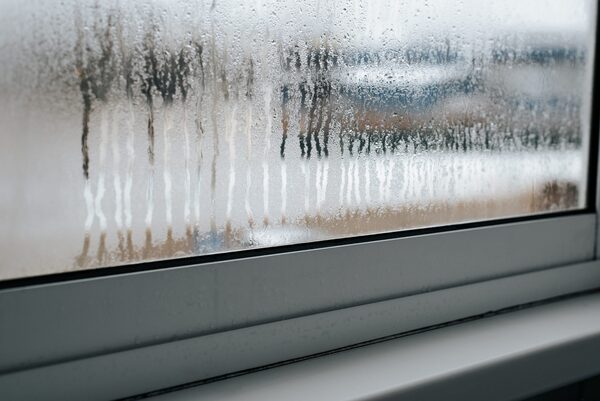
Condensation happens when warm, moist air hits a cold surface such as a window or an outside wall and condenses, running down the surface as water droplets13. Citizens Advice lists its usual causes in rented homes as a lack of proper ventilation, inadequate extraction in kitchens and bathrooms, broken heating systems such as a boiler not working properly, no insulation on external walls or ceilings, and no suitable way to dry clothes4. It can occur anywhere on a wall, may form at the base or from top to bottom, and can result in mould growth, damage to furniture and belongings and in some cases mite infestation4.
Penetrating damp comes from a defect letting water in: a leaking roof, a cracked wall, leaking guttering or external pipes, a leaking drainage pipe, or rotten windows or doors4. Because these are structure, exterior or installation failures, the implied repairing term usually makes them the landlord's4.
Rising damp is more common in older properties, and in many cases the landlord is responsible because of the same implied term covering exterior and structure4. Where an existing damp proof course is failing and causing the damp, the landlord is likely to be responsible for repairing it4. The narrower question is answered in is my landlord responsible for rising damp?.
Condensation is the contested category. Citizens Advice sets out that the landlord will probably be responsible where the tenancy agreement says so or says they will keep the home fit to live in, where the damp was caused by the landlord not making certain repairs such as heating or ventilation, or where the damp has caused damage the landlord has to repair, such as rotting window frames or damaged plasterwork4. Where the problem stems from a design feature that does not affect the structure or exterior and causes no damage to the building, the landlord may have no responsibility under the tenancy agreement to prevent the damp, though they are responsible for repairs where a design problem damages the building, for example wall or ceiling plaster4. See also is my landlord responsible for condensation damp? and what causes condensation damp in a rented property?.
Evidence: what to record and why it decides the outcome
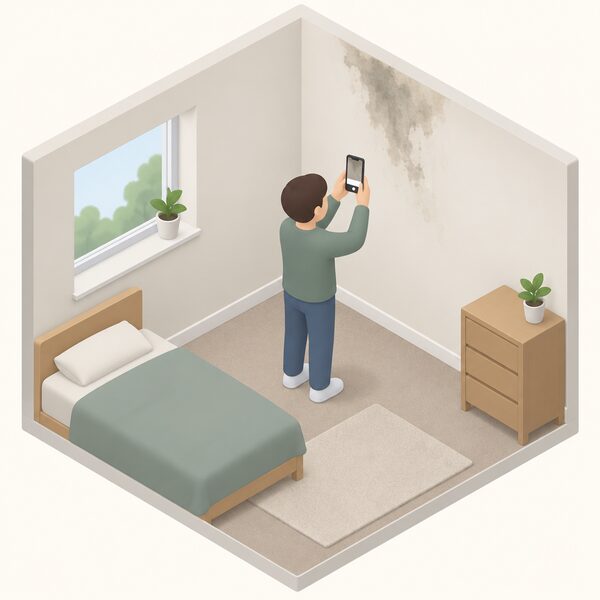
Because the duty is usually triggered by the landlord becoming aware of the problem, the report itself is the first piece of evidence: Citizens Advice advises reporting straight away for exactly this reason4.
A useful record generally includes:
- The date and method of each report, and a copy of the message sent.
- Every reply, reference number and appointment offered or missed.
- Dated photographs of the affected surfaces, repeated over time so growth or recurrence is visible.
- Evidence of a structural or service failure: the leaking roof, cracked wall, failed guttering, rotten frames, or the heating or extraction that does not work4.
- Any health effects and the medical contact made about them, which matter where the test is whether the home is unsafe or the problem is affecting physical or mental health4.
- Documents the landlord is already obliged to hand over, which show the condition of the building services.
That last point is stronger than it sounds. Landlords must give their tenants proof that installations and equipment have been inspected, tested and checked14. For electrical installations, a copy of the report must be supplied to the existing tenant within 28 days of the inspection and test14. Where further investigative or remedial work is required, it must be completed within 28 days, or within the shorter period specified in the report, starting with the date of the inspection and testing, with written confirmation and a copy of the originating report supplied to each existing tenant and to the local housing authority within 28 days of completion15. Where the further work finds still more work is needed, those steps must be repeated15. These are documented dates a tenant can hold, and they establish what the landlord knew and when. Electrical safety checks in rented homes covers the regime in full.
Where the landlord's duty ends and the tenant's begins
Not all condensation is a building defect. National Energy Action's Northern Ireland guidance states that condensation "is not caused by a defect of the building so can often be improved by making small changes", and that where a tenant has tried those changes and the damp and condensation is not going away, the next step is to contact the landlord13. That is the boundary in practice: household moisture management on one side, ventilation, heating, insulation and structural repair on the other, all of which are the landlord's.
The limits on what a tenant may do are real. In England, a tenant must get the landlord's permission before making improvements to the home3. So fitting extract ventilation, a positive input ventilation unit or insulation is not a unilateral option, even where the tenant would pay. Asking a landlord for energy improvements and ventilation in flats and apartments set out what is possible without altering the fabric.
For independence, this is the honest position. A renter facing damp depends on the landlord for the fabric, on the landlord or managing agent for the heating and ventilation systems, and on the council or a tribunal for enforcement when the landlord does not act. Very little of that can be substituted by the household's own spending, and the measures that would fix the underlying cold surfaces, insulation and controlled ventilation, are precisely the ones that need consent. What a tenant does control is the quality of the record, the speed of the report, and the decision to escalate.
Escalating beyond the landlord

Where a landlord does not act, the routes differ by nation and tenure.
| Nation | Route | Source |
|---|---|---|
| England | Complain to the council; it can fine the landlord where the landlord will not make improvements | 3 |
| Wales | Fitness for human habitation duties enforced alongside council housing powers; landlord must repair within a reasonable time | 7 |
| Scotland | Refer the landlord to the First-tier Tribunal for Scotland Housing and Property Chamber for any breach of the repairing standard | 11 |
| Northern Ireland | Official fitness guidance sets the landlord's condition duties; a landlord who fails to comply with a statutory duty commits an offence under the relevant regulations | 9 |
Penalties are not theoretical. In Scotland, government guidance states that landlords "have a legal obligation to comply and could be subject to a fine if they do not" in relation to certificate requirements18. In Northern Ireland, regulations provide that "a landlord who fails to comply with a duty imposed on the landlord by regulation 3 commits an offence"17. In England, the maximum financial penalty for relevant housing offences was increased to £40,000 on 1 May 2026 by the Financial Penalties (Housing Offences and Breach of Banning Orders) Regulations 2026.
Free help and where to get it
Citizens Advice gives free and impartial help and advice, and covers consumers in England and Wales6. Its telephone line is 0808 223 1133, with a Welsh language line on 0808 223 1144, open Monday to Friday, 9am to 5pm6. In England there is an additional number, 0808 144 884420. Its published support covers, among other things, saving energy at home and problems with an energy supplier or supply, which matters where damp is bound up with a heating system that does not work or bills the household cannot afford20.
Council environmental health teams hold the enforcement powers over housing conditions in England and Wales, and are the route where a private landlord will not improve the property3. In Scotland, the tribunal route is available directly to tenants11. In Northern Ireland, nidirect publishes the guidance on whether a home is fit to live in and the landlord's duties before and during a letting9. Independent guidance on condensation and mould is published by National Energy Action for Northern Ireland households13 and by the Centre for Sustainable Energy2.
Where the damp is affecting health, what if damp in my rented home is making my family ill? and damp, mould and respiratory illness deal with that specific test.
What is still changing
Three strands are moving at once.
The Awaab's Law timescales are being widened. Phase 2 takes effect on 30 November 2026, extending the same immediate response times to electrical faults, risks of falling, structural defects, excess cold and heat, fire risks and pest infestations. Phase 3 follows in 2027, covering all remaining Housing Health and Safety Rating System hazards that present a significant risk of harm, other than overcrowding. Extension of comparable duties to private landlords has been signalled but the dated obligations in force are those on registered social landlords1.
Minimum standards for the condition of private rented homes are tightening separately. In Scotland, new regulations mean all houses in the private rented sector must meet the statutory tolerable standard, with landlords given time to carry out the necessary works before the new provisions other than the tolerable standard changes came into force10. Draft Scottish energy efficiency regulations for the private rented sector would prohibit letting a sub-standard property on or after 1 April 2028 for new tenancies and renewals unless improvements are made or an exemption applies, with existing tenancies of sub-standard properties protected until 31 March 203321.
Energy efficiency rules bear on damp because cold surfaces cause condensation. Those changes, and the wider Renters' Rights framework in England, are tracked in the Renters' Rights Act and home energy and across the home energy by home type and household guide. Whichever way the standards move, the mechanism for a tenant stays the same: report it, record it, and use the deadline that applies to the tenure.
Sources21 cited
- The Cold Truth: Awaab's Law timescales, Cadent Gas, 2026-09-20
- Condensation, damp and mould advice, Centre for Sustainable Energy, 2025-12
- Make sure your home is energy efficient, Citizens Advice, 2026-09-19
- Repairs and damp: who is responsible, Citizens Advice, 2026-09-20
- English Housing Survey 2024 to 2025: introduction and key findings, GOV.UK, 2024
- Consumer protection rights and contacts, GOV.UK, 2026-09-17
- Fitness of homes for human habitation: guidance for landlords, Welsh Government, 2022-01-13
- Energy and Net Zero Impact Assessment: heat and buildings, GOV.UK, 2025-10
- Checking your home is fit to live in, nidirect, 2026-09-17
- Consultation on the repairing standard and energy efficiency, Scottish Government, 2026-09-20
- Carbon monoxide alarms in private rented properties: guidance, Scottish Government, 2016-12-01
- ECO4 delivery guidance version 4.0, Ofgem, 2026-03-26
- Dealing with condensation and mould, National Energy Action, 2026-09-07
- Electrical safety standards in the private and social rented sectors, GOV.UK, 2025-11-01
- The Electrical Safety Standards in the Private Rented Sector (England) Regulations 2020, regulation 3, legislation.gov.uk, 2026-09-17
- Building Regulations Part L and F review: Approved Document F consultation, Welsh Government, 2020-11
- The Private Tenancies (Smoke, Heat and Carbon Monoxide Alarms) Regulations (Northern Ireland) 2024, legislation.gov.uk, 2024-11-27
- Energy performance certificates: buildings for let, Scottish Government, 2023-11-29
- Landlord and tenant rights and responsibilities in the private rented sector (withdrawn), GOV.UK, 2026-05-07
- Getting help if you cannot afford your energy bills, Ofgem, 2026-09-17
- Consultation draft: Energy Efficiency (Domestic Private Rented Property) (Scotland) Regulations, Scottish Government, 2025-06
 Energy in Social HousingWhat must your landlord do if your home is cold, damp or mouldy?
 Rented Homes and Landlord MetersWho is responsible for the energy in your rented home?
 Insulation in Rented HousingWho pays for insulation when you rent, and who has to agree to it?
 Renting and Home EnergyThe position of a tenant in a privately rented home: which measures need no permission, which are fixtures the landlord controls, and what the law says about heating, insulation, certificates and bills across the four UK nations.
 Social and Rented Home StandardsWhat condition is your landlord legally required to keep your home in?
 Landlord Electrical ChecksWho is responsible for checking the electrics are safe in your rented home, and how often should it happen?