

In this answer
Short answer
The Housing Health and Safety Rating System (HHSRS) is the risk assessment that sits behind cold and damp enforcement in England and Wales. A local authority officer inspects a dwelling, scores each of 29 hazards on the likelihood of an occurrence and the spread of possible harm, and places the result in a band from A to J. Bands A, B and C are Category 1 hazards, the most serious, and a Category 1 finding triggers a duty on the authority to act. Excess cold is one of those hazards, and it is the one most often searched for directly.
The practical consequence is that a cold home is not only a comfort problem. The reformed Decent Homes Standard states that a dwelling will fail if there is a category 1 hazard present, as assessed under the HHSRS1. In Wales, the equivalent fitness standard requires an appropriate heating system, safely and properly installed and maintained and controllable by the occupant2. Cold sits at the centre of both regimes, and the health evidence behind that is stark: the National Energy Action cold weather warning records that when the temperature reaches 5-8°C, an increased risk of death can be observed at population level3.
For a household, the rating matters because it is the point at which a landlord's duty becomes enforceable rather than advisory. It also marks the limit of what a tenant can do alone: the assessment is made on the dwelling, not on the occupant's behaviour, so heating a cold home harder does not remove the hazard.
What the HHSRS is and how excess cold fits among the 29 hazards
The system is a scoring framework rather than a pass or fail certificate. Each hazard is assessed for the likelihood of an occurrence and the range of outcomes, from minor harm to death, and the two are combined into a band. The 29 hazards are grouped around four physiological requirements, psychological requirements, protection against infection and protection against accidents. Excess cold sits in the physiological group, alongside excess heat, damp and mould, asbestos, carbon monoxide and other risks.
Excess cold is unusual among the hazards because it is largely a property of the building rather than of behaviour. A dwelling with poor insulation, an undersized or badly controlled heating system, or uncontrolled ventilation loses heat faster than it can be replaced, and the assessment captures that as a risk to whoever lives there. The Welsh guidance for landlords puts the requirement plainly: an appropriate heating system, safely and properly installed and maintained and controllable by occupant2.
The mirror hazard, excess heat, is assessed on the same logic. The Building Research Establishment guidance records that for temperate zones, the WHO guidance on thermal comfort states that temperatures above 24°C cause discomfort, and that where temperatures exceed 25°C there is an increase in mortality and the incidence of strokes6. The Committee on Climate Change has recommended further research to understand when overheating occurs in existing homes, including ongoing monitoring of temperatures in the housing stock and the number of homes currently adapted7. Cold and heat are two ends of the same assessment.
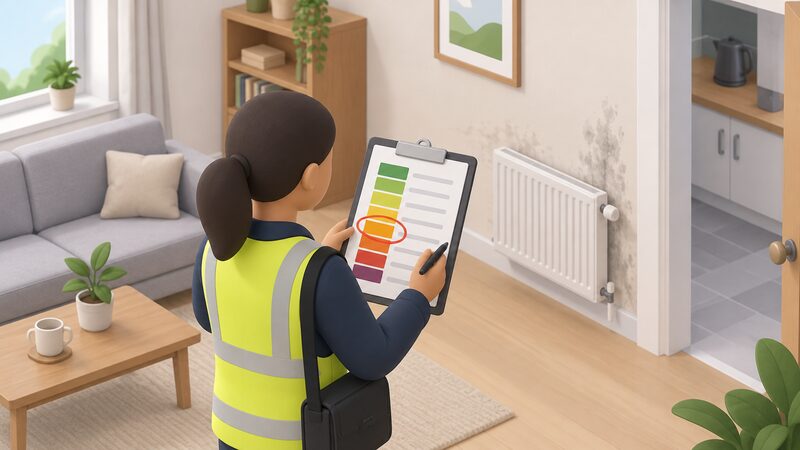
Why excess cold is classed as a top health hazard
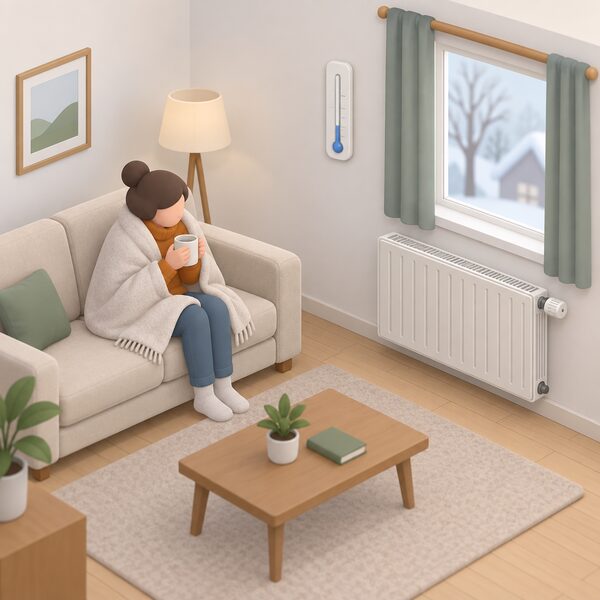
The evidence base for treating cold as a serious hazard is unusually consistent. The Centre for Sustainable Energy notes that circulatory problems, diabetes, arthritis and mental health issues can be made worse by living in a cold home8. The Energy Saving Trust adds that if the house gets too cold it could be dangerous for older residents, people with health conditions and anyone living in a home that's already underheated9. Those are the groups the assessment weights most heavily.
The mortality picture is measured in excess winter deaths. End Fuel Poverty Coalition figures record 3,229 excess winter deaths caused by cold homes in the UK in winter 2021/20224. The same body notes a very clear correlation between a low average winter temperature and a high level of excess winter deaths10, and that when the average winter temperature drops below 3.6 degrees Celsius, the number of excess winter deaths caused by cold rises10. The UK Health Security Agency published its first cold mortality report in February 202611.
"When the temperature reaches 5-8°C, an increased risk of death can be observed at population level."
What this means for a household is that the hazard is not about discomfort at the margins. A cold home is a measurable health risk, and the assessment treats it as one of the most serious in the list. That is why excess cold appears in the first expansion of Awaab's Law rather than in the final phase.
Category 1 excess cold: the F or G EPC equivalence
There is no statutory equivalence between an HHSRS band and an EPC band. The two systems measure different things: the HHSRS scores health risk in a specific dwelling, while the EPC scores the cost of energy for a standardised occupancy pattern. In practice, a Category 1 excess cold hazard is most often found in homes at the bottom of the EPC scale, bands F and G, because those are the dwellings that are hardest and most expensive to keep warm.
The direction of travel in Scotland shows how the two measures are being drawn closer. The Scottish Government states that the new Heat Retention Rating will be based on the amount of energy a dwelling requires to maintain comfortable temperature, expressed as energy demand per m2 of floor area12. The intention is that the new Band C should be as largely as possible equivalent to the current EPC's SAP-based Band C13. Modelling for the Scottish regulations found that when the upper boundary of the band is set to 120 kWh/m2/year, only 50% of properties currently at EPC Band C achieve Heat Retention Rating Band C14. Band A is set at 30 or less kWh/m2/year15.
| Measure | Basis | Band C reference |
|---|---|---|
| Current EPC | SAP cost score | SAP-based Band C13 |
| Heat Retention Rating (Scotland) | Energy demand per m2 of floor area12 | 120 kWh/m2/year upper boundary14 |
| Heat Retention Rating Band A | Energy demand per m2 of floor area12 | 30 or less kWh/m2/year15 |
The gap between the two systems matters for enforcement. A home can hold an EPC band that looks acceptable while still presenting a Category 1 excess cold hazard, because the EPC does not assess the occupant's health, the heating controls or the actual running of the system. The rating is the more specific test.
How enforcement works when a home is rated a cold hazard

Enforcement begins with the assessment. Where a Category 1 hazard is identified, the local authority has a duty to take action, and the range of responses runs from informal advice through to an improvement notice requiring works, or a prohibition order restricting use of all or part of the dwelling. The Welsh landlord guidance sets out the underlying requirement that the heating system be safely and properly installed and maintained and controllable by occupant2.
Where work has been carried out on a heating system, responsibility follows the work. Welsh building regulations guidance states that if an existing system has been altered or replaced then the person who last worked on the system is responsible for the safe running of that system16. For gas work, separate duties apply, and the Health and Safety Executive sets out the gas safety framework for domestic premises17. Electrical installation work in industrial or commercial buildings falls to the Health and Safety Executive, while domestic electrical work is covered by the building regulations18.
Funding routes exist alongside enforcement for households that qualify. The Energy Company Obligation is administered by Ofgem, and the Home Heating Cost Reduction Obligation covers the installation of heating qualifying actions to people deemed to be low income, vulnerable or living in fuel poverty19. ECO4 Flex provides alternative routes for local authorities to identify eligible households and refer those they consider to be living in fuel poverty or on a low income and vulnerable to the effects of living in a cold home20. One local authority route covers households identified as low income and vulnerable, with an occupant whose health conditions may be impacted further by living in a cold home, including an NHS referral route21. Ofgem's own guidance for homeowners and tenants sets out the health eligibility test: a person in the household has a severe or long-term health condition that is adversely affected by living in a cold home, and is due to one of a cardiovascular condition, a respiratory disease, limited mobility or immunosuppression22. The NHS referral route covers housing a person suffering from severe or long-term ill-health due to one of those conditions, where their health is adversely affected by living in a cold home20.
For households on electric heating, the new measures guidance sets a technical bar: the manufactured responsiveness rating of 0.8 or above must be met when assessed against SAP for high heat retention electric storage heaters23. Air-to-air heat pumps are currently not eligible for the Warm Homes: Social Housing Fund until all relevant MCS tools and standards, notably MCS 026 and MCS 031, are updated to accommodate air-to-air products and systems24.
Awaab's Law and the tightening duties on social landlords
Awaab's Law changes the timescale on which social landlords must respond to hazards. The first phase came into force on 27 October 20255, covering damp and mould. Phase 2 comes into effect on 30 November 2026 and expands the hazards covered, applying the same immediate response times to electrical faults, risks of falling, structural defects, excess cold and heat, fire risks and pest infestations5. Phase 3 is set for 2027 and brings all remaining HHSRS hazards presenting significant risk of harm into scope, with overcrowding excluded5.
The effect is to convert the HHSRS from an assessment framework into a set of deadlines. A hazard that would previously have been recorded and acted on over months now carries a fixed response time, and the landlord's failure to meet it is a breach in its own right. Excess cold's place in Phase 2, rather than Phase 3, reflects how the hazard is weighted against the others.
The Scottish and Welsh regimes run on separate timetables. Scottish provisions under the Housing (Scotland) Act 2025 come into force on 1 April 202725. In Wales, the Annual Sufficiency Plans Regulations 2026 come into force on 26 October 202626. The Scottish House Condition Survey 2024 key findings set out the heating regime definitions used in that assessment, including enhanced heating regime 1 for households frequently occupied during the morning or afternoon or both on weekdays when cold where any member is aged 75 or over, has a long-term sickness or disability, or is in receipt of benefits received for a care need or disability27, and enhanced heating regime 3 for households frequently occupied during the cold where any member has a child aged 5 years old or under and not eligible for regimes 1 or 227.
| Nation | Framework | Key date |
|---|---|---|
| England | Awaab's Law, HHSRS, Decent Homes Standard1 | Phase 2: 30 November 20265 |
| Scotland | Housing (Scotland) Act 2025, Heat Retention Rating12 | 1 April 202725 |
| Wales | Fitness for human habitation, building regulations2 | 26 October 202626 |
What the rating means for householders and energy independence
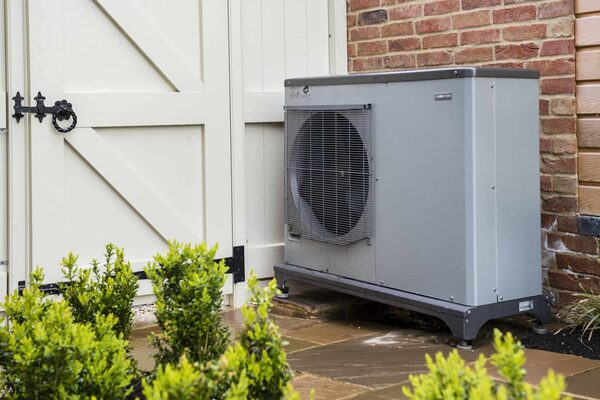
A Category 1 excess cold finding is a statement about the building, not about the household's habits. It means the dwelling itself presents a serious risk of harm from cold, and that the remedy lies in the fabric and the heating system rather than in turning the thermostat up. For a household, that is the point at which the problem becomes someone else's legal duty to fix.
The independence question is sharper here than in most energy topics. A household in a cold-rated home is dependent on the landlord to carry out the works, on the local authority to enforce, and on whatever funding route the occupant qualifies for. The Energy Company Obligation and its Flex routes exist precisely because the household cannot close that gap alone19. Where a heat pump is installed, the methodology guidance notes that a backup energy source is required when the required flow temperature is above the maximum flow temperature limit of the heat pump28, which is a further reminder that a single-technology answer is not always available.
The limit of the rating is that it does not, by itself, deliver a warm home. It establishes that one is owed. Enforcement powers, funding eligibility and the Awaab's Law timescales are the mechanisms that convert the finding into works, and each of them depends on a landlord, an authority or a scheme administrator acting. For related duties, see damp and mould in rented homes and landlord duties on energy, heating and home safety. Households in social housing can find the wider standards in energy in social housing, and those in the private rented sector in the UK private rented sector.
Sources28 cited
- Consultation on a reformed Decent Homes Standard: government response, GOV.UK, 2026-01-28
- Fitness for Human Habitation guidance for landlords, Welsh Government, 2022-01-13
- Cold weather warning, National Energy Action, 2024-11-17
- 4,950 excess winter deaths caused by cold homes last winter, End Fuel Poverty Coalition, 2021/2022
- The cold truth, Cadent Gas, 2025-10-27
- Overheating guidance, Building Research Establishment
- Risks to health, wellbeing and productivity from overheating in buildings, Climate Change Committee, 2026-09-19
- Cold homes and health, Centre for Sustainable Energy, 2026-08
- Should I turn my boiler's flow temperature down?, Energy Saving Trust, 2026-05-20
- Excess winter deaths and fuel poverty, End Fuel Poverty Coalition, 2023-09
- Cold homes are still killing people in fuel poverty, End Fuel Poverty Coalition, 2026-02-18
- Energy Performance of Buildings (Scotland) Regulations 2025: stock model research, Scottish Government, 2025-10-10
- Energy Performance of Buildings (Scotland) Regulations 2025 update: government response, Scottish Government, 2025-10-10
- Energy Performance of Buildings (Scotland) Regulations 2025 update: EPC reform consultation response, Scottish Government, 2025-10
- EPC reform consultation: government response, Scottish Government, 2025-01
- Building regulations: boilers and heating, Welsh Government, 2026-09-17
- Gas safety in domestic premises: frequently asked questions, Health and Safety Executive, 2026
- Building regulations: general information, Planning Portal, 2026
- ECO4 supplier administration guidance, Ofgem, 2026-07-06
- ECO4 Flex and GBIS Flex information document, Ceredigion County Council, 2025-11
- ECO4 scheme, West Lindsey District Council, 2025-07
- Energy Company Obligation: homeowners and tenants, Ofgem, 2026-09-17
- ECO4 new measures and products guidance v3.0, Ofgem, 2026-03-26
- Warm Homes: Social Housing Fund wave 3 scheme guidance addendum, GOV.UK, 2026-06
- Housing (Scotland) Act 2025 commencement regulations, legislation.gov.uk, 2027-04-01
- Annual Sufficiency Plans Regulations 2026, legislation.gov.uk, 2026-10-26
- Scottish House Condition Survey 2024: key findings, Scottish Government, 2026-02
- HEM TP 12: heat pump methodology, GOV.UK, 2026-01
 Cold Homes and HealthCold homes cause real harm, especially to older people and anyone with a heart or lung condition.
 Overheating and Hot WeatherIs your home getting uncomfortably hot in summer, and is there anything you can do about it?
 Overheating StandardsScotland and Northern Ireland handle overheating in new homes differently from England and Wales.
 Energy Policy in WalesWhat help can you get in Wales to make your home warmer and cheaper to run?
 Housing Stock Data for WalesHow energy efficient are Welsh homes, and how many have a rating?
 Housing Stock and EPCsWelsh homes are among the oldest and least energy efficient in the UK, so what does that mean for yours?