
In this answer
Short answer
The Decent Homes Standard is the minimum housing quality standard that applies to social housing in England. It currently sets minimum requirements for all registered providers of social housing, and a reformed version was confirmed in January 2026, marking the first major update to the standard since 20061. For the first time, the reformed standard extends to both social housing and the private rented sector2.
The scale of the problem is significant. In 2024, 4.0 million dwellings, or 15% of English homes, failed to meet the current Decent Homes Standard, a figure similar to 20223. Independent analysis puts the share of English homes failing the standard at around 15%4. Enforcement of the reformed standard begins in 2035, with properties given until then to comply or face fines of up to £40,0002.
For a household, the standard matters because it sets the floor for what a landlord must provide: structural stability, freedom from serious disrepair, adequate heating and ventilation, and modern facilities. It does not, on its own, deliver energy independence. A home can pass the Decent Homes Standard while still relying entirely on the grid, a supplier and, in most cases, gas. The standard addresses condition and fitness, not self-sufficiency.
What the Decent Homes Standard is and who it applies to
The Decent Homes Standard currently sets a minimum housing quality standard for all registered providers of social housing in England1. It applies to England only. Scotland, Wales and Northern Ireland have separate housing quality standards2. The standard is not a building regulation and does not govern new construction; it governs the condition of existing homes.
The reformed standard, confirmed in January 2026, updates the old four-point checklist to five modern criteria2. It introduces a condition-based test that replaces age-related rules, meaning a property is assessed on its actual state rather than on when it was built6. This matters for older housing stock that may be in good condition, and for newer stock that may have defects.
A consultation response from the UK Green Building Council noted that the standard currently sets minimum requirements for social housing, and that the consultation proposed important reforms to update and expand its scope by extending the standard to the private rented sector8. The government also proposes to extend the standard to cover private rented sector dwellings1.
The standard's reach is therefore widening. For social tenants, it has applied for years. For private renters in England, it represents a new layer of protection that will take effect as enforcement approaches in 2035. The Department for Communities in Northern Ireland has consulted on a Decent Homes Standard applicable to Northern Ireland, indicating that the concept is being examined across the UK9.
"The Decent Homes Standard currently sets minimum requirements for social housing"
The five criteria: what a home must meet to count as decent

The reformed Decent Homes Standard requires every rental property to meet five distinct criteria6. The old standard had four points; the reformed version updates this to five modern criteria2. The criteria cover fitness, repair, facilities, thermal comfort and the condition-based test that replaces age-related rules.
The current statutory minimum fitness standard requires a dwelling to be structurally stable, free from serious disrepair, free from dampness prejudicial to the health of occupants, and to have adequate provision for lighting, heating and ventilation. It must also have an adequate piped supply of wholesome water, satisfactory facilities for preparing and cooking food including a sink with hot and cold water, a suitably located water closet, a suitably located fixed bath or shower and wash-hand basin with hot and cold water, and an effective system for draining foul, waste and surface water9.
For the facilities criterion, properties must provide at least two out of three required facilities for houses, and at least three out of four required facilities for flats6. Dwellings fail this criterion where they lack three or more of the listed facilities and services9.
The standard also requires a reasonable degree of thermal comfort9. This is the criterion most directly linked to energy, and it is where the standard intersects with energy efficiency policy. A home can meet the thermal comfort criterion without being energy efficient in the sense of a high EPC rating; the criterion addresses whether the home can be kept warm, not how much energy that takes.
| Criterion | What it covers | Failure test |
|---|---|---|
| Fitness | Structural stability, disrepair, damp, water, drainage | Fails if any element is not met9 |
| Repair | Reasonable state of repair | Condition-based test replaces age rules6 |
| Facilities | Kitchen, bathroom, WC, hot and cold water | Houses: fewer than two of three; flats: fewer than three of four6 |
| Thermal comfort | Reasonable degree of warmth | Assessed against the thermal comfort criterion9 |
| Modern criteria | Reformed standard's fifth criterion | Failing any single one fails the property6 |
Failing any single one of the five criteria means the entire property fails6. There is no partial pass and no weighting. A property that meets four criteria but fails the fifth is non-decent.
Where the standard falls short today: energy efficiency, damp and ventilation
The standard's thermal comfort criterion addresses whether a home can be kept warm, but it does not set an EPC rating. Socially rented homes are not currently required to meet a minimum MEES-style EPC rating10. The current requirement for social housing has been described in consultation as EPC F, which one response called wholly inadequate to reduce fuel poverty and provide healthy and comfortable homes11.
The reformed standard sets an ambition for all social rented properties to reach EPC Band C or equivalent by 1 April 2030, or to have a valid exemption7. This is an ambition rather than a current legal requirement, and the date is earlier than the 2035 enforcement date for the standard itself.
On damp and ventilation, the Energy Saving Trust welcomed the inclusion of components that influence energy demand and support tenants' thermal comfort, specifically ventilation, damp and mould, and heating system inspection12. CIBSE has argued that the standard should ensure adequate ventilation is provided, not just that ventilation systems are in a good state where they are already present11. This distinction matters: a home with no ventilation system at all can currently pass a check that only examines existing systems.
Upgrading inefficient heating systems and introducing modern heating controls improves heating efficiency, enabling homes to be heated more affordably12. Any measures taken to meet energy efficiency requirements, such as heating system upgrades or insulation, must comply with relevant building and fire safety regulations and preserve essential safety features13.
For a household, the gap between thermal comfort and energy efficiency is the gap between being warm and being independent. A home that meets the thermal comfort criterion may still have high bills and a poor EPC. The standard does not require a heat pump, solar panels or any form of self-generation. It requires that the home can be adequately heated, not that it is cheap or clean to heat.
The Decent Homes Standard in the private rented sector
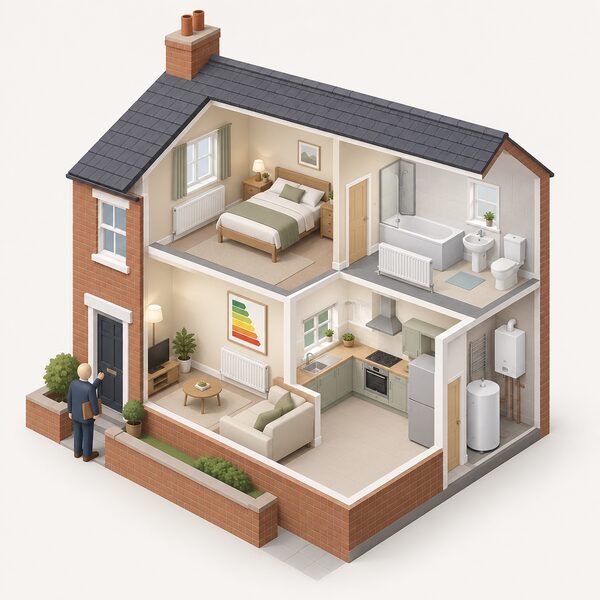
The application of the Decent Homes Standard to the private rented sector is one of the most significant changes in the reformed standard14. The private rented sector would now be subject to the Decent Homes Standard, extending protections that previously applied only to social housing11. The government proposes to extend the standard to cover private rented sector dwellings1.
For the first time ever, the standard now applies to both social housing and the private rented sector2. This brings private renters into a framework that social tenants have known for years. The consultation proposed important reforms to update and expand the standard's scope, extending it to the private rented sector8.
Private renters in England currently have some protection through the Housing Health and Safety Rating System and, for energy efficiency, through the Minimum Energy Efficiency Standards. The minimum standard of energy efficiency for certain domestic rented property in England and Wales is a rating of E or above15. Guidance for landlords on complying with the 2018 Minimum Level of Energy Efficiency standard sets out the EPC band E requirement16.
In Scotland, there are minimum energy efficiency standards for homes in the private rented sector17. The position differs across the UK: England and Wales operate the EPC E minimum for private rented homes, Scotland has its own standards, and Northern Ireland has separate arrangements.
The reformed Decent Homes Standard adds a condition-based assessment to these energy standards. A private rented home will need to meet the five criteria, not just the EPC minimum. For landlords, this means the standard's requirements sit alongside, rather than replace, the existing energy efficiency rules.
Scotland and Wales: the SHQS and WHQS equivalents
Scotland and Wales operate their own housing quality standards rather than the Decent Homes Standard. The Decent Homes Standard applies to rented properties in England; Scotland, Wales and Northern Ireland have separate housing standards2.
The Scottish Housing Quality Standard is made up of 55 different elements grouped into 5 higher-level criteria18. It was introduced in February 2004 and means social landlords must make sure their tenants' homes are in a good state18. A target was agreed that all social landlords must ensure that all their dwellings pass the SHQS by April 201518. The SHQS therefore predates the reformed Decent Homes Standard by more than two decades and has a different structure: 55 elements against the Decent Homes Standard's five criteria.
The Welsh Quality Housing Standard specifies minimum requirements for safe housing in the social sector19. All existing social homes must meet the Welsh Quality Housing Standard20. The purpose of WHQS is to improve the quality of social homes in Wales20. Like the SHQS, it is a social sector standard, and the Welsh Government has consulted on energy efficiency in the private rented sector separately21.
| Nation | Standard | Applies to | Key date |
|---|---|---|---|
| England | Decent Homes Standard | Social housing; extending to private rented sector | Reformed standard confirmed January 2026; enforcement 20352 |
| Scotland | Scottish Housing Quality Standard | Social housing | Introduced February 2004; all dwellings to pass by April 201518 |
| Wales | Welsh Quality Housing Standard | Social housing | All existing social homes must meet it20 |
| Northern Ireland | Decent Homes Standard (NI) | Subject to consultation | Consultation published August 20259 |
The Scottish building standards system exists to ensure buildings are safe, efficient and sustainable22. This is a separate framework from the SHQS, which focuses on the condition of existing social housing. For a household in Scotland, the SHQS is the relevant standard for social housing quality, while building standards govern new work.
Northern Ireland has consulted on a Decent Homes Standard applicable to Northern Ireland9. The Northern Ireland guidance on checking whether a home is fit to live in sets out the fitness standard for private rented housing: if a privately rented house fails in one or more of the criteria, it does not meet the fitness standard and is not suitable for people to live in23.
What non-compliance costs: penalties, prosecution and remediation
The costs of non-compliance fall into three categories: civil penalties, criminal prosecution and the cost of remediation itself. Local councils can issue immediate civil penalties of up to £7,000 for serious failures including Category 1 hazards2. Councils can issue these fines directly without going through the courts. For repeat offenders or serious violations, criminal prosecution is possible, and rent repayment orders can be sought via the First-tier Tribunal2.
Non-compliance with enforcement notices can result in criminal prosecution6. This is a separate route from the civil penalty and applies where a landlord has been served with a notice and failed to act on it.
For energy efficiency breaches, the penalties are different. Failure to comply with a compliance notice under the Minimum Energy Efficiency Standards can attract a penalty of up to £2,000 per property and per breach24. For electrical safety, landlords could face a penalty fine of up to £30,000 where no attempt has been made to complete necessary remedial work25. Failing to have a heating installation approved could leave a landlord liable to a fine as well as facing additional costs to put things right26.
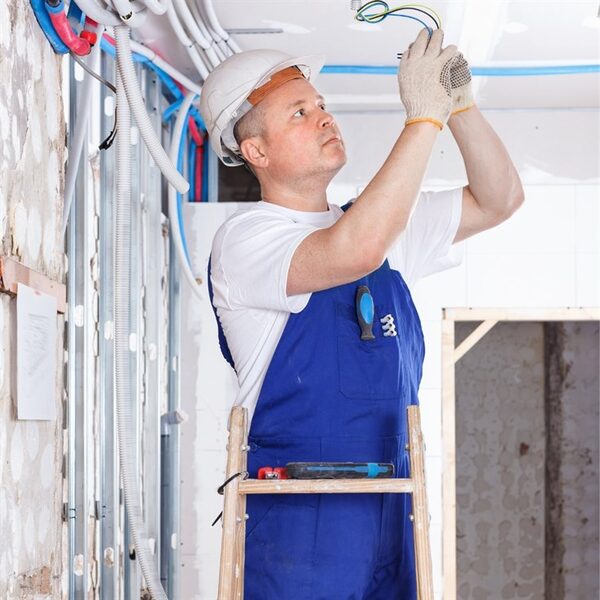
The cost of remediation itself is often the largest figure. Bringing a substandard rental property up to standard costs over £8,000 on average per non-decent property6. Electrical rewiring alone runs from £3,000 to £6,0006. These are maker guidance figures, and actual costs depend on the property and the work required.
For a household, the enforcement regime matters because it determines whether a landlord acts. A standard without enforcement is a statement of intent. The reformed Decent Homes Standard combines a long compliance window to 2035 with immediate civil penalties for serious failures, meaning the worst conditions can be addressed before the deadline while the broader stock is upgraded over time.
Sources26 cited
- EHS Briefing: Modelling a revised Decent Homes Standard for consultation, GOV.UK, 2025-07-02
- Decent Homes Standard 2025-2026 update: what's changed and how to comply, Chameleon Technology, 2026-03-05
- English Housing Survey 2024 to 2025: headline findings on housing quality and energy efficiency, GOV.UK, 2024
- Watt a Save, Home Builders Federation, 2026-02
- Watt a Save 2026, Home Builders Federation, 2026-02-02
- Decent Homes Standard checklist: complete compliance guide, Chameleon Technology, 2026-03-03
- EPC C deadline for landlords 2028: complete compliance guide, Chameleon Technology, 2026-03-02
- A Reformed Decent Homes Standard consultation response, UK Green Building Council, 2026-04-30
- Current Decent Homes Standard summary table, Northern Ireland Department for Communities, 2025-08-05
- The impact of solar power on EPC ratings, Marley, 2026-06-30
- A reformed Decent Homes Standard for social and privately rented homes consultation, CIBSE, 2026-09-17
- Revised Decent Homes Standard, Energy Saving Trust, 2026-04-13
- Consultation on a reformed Decent Homes Standard: government response, GOV.UK, 2026-01-28
- Government affairs October 2025 update, CIBSE, 2026-09-17
- Minimum energy efficiency standards, Isle of Anglesey County Council, 2026-05
- Minimum energy efficiency standards, Carmarthenshire County Council, 2026-09-20
- Funding for energy efficiency in homes, Citizens Advice Scotland, 2026-09-17
- Scottish House Condition Survey 2024: key findings, Scottish Government, 2026-02
- Older people in Wales are more at risk of electrical fires and accidents, Electrical Safety First, 2026-09-19
- Welsh Housing Quality Standard 2023: integrated impact assessment, Welsh Government, 2024-08-02
- Delivering warmer homes for private renters in Wales, Citizens Advice, 2025-11-03
- Building standards, Scottish Government, 2026-09-17
- Checking your home is fit to live in, nidirect, 2026-09-17
- Support for landlords, Centre for Sustainable Energy, 2026-06
- Electrical checks in privately rented homes: your questions answered, Electrical Safety First, 2026-09-19
- Building regulations and heating installation work, OFTEC, 2026-09-20
 Social and Rented Home StandardsWhat condition is your landlord legally required to keep your home in?
 Damp and Mould in Rented HomesDamp or mould in your rented home is your landlord's problem to fix.
 Insulation in Rented HousingWho pays for insulation when you rent, and who has to agree to it?
 MEES for Rented HomesCovers the minimum EPC standards that apply to private rented homes, the cost caps and exemptions, and how exemptions are registered.
 Energy in Social HousingWhat must your landlord do if your home is cold, damp or mouldy?
 Renting and Home EnergyThe position of a tenant in a privately rented home: which measures need no permission, which are fixtures the landlord controls, and what the law says about heating, insulation, certificates and bills across the four UK nations.