

In this answer
Short answer
The Renters' Rights Bill passed into law in October 2025, placing new obligations on English landlords that reach directly into the fabric of a rented home: how quickly damp and mould must be dealt with, what energy performance a property must reach before it can be let, and how that performance will be measured in future1.
For a tenant, the practical effect is a set of enforceable timescales and standards where previously there was often only negotiation. For a landlord, it is a compliance timetable. For the household's energy independence, the picture is mixed: the rules raise the floor on the building itself, but the tenant's control over supply, fuel choice and fabric remains limited by the tenancy.
The headline figures are these. Registered social landlords must investigate reports of damp or mould within 10 working days and address emergency hazards within 24 hours3. Domestic private rented property in England and Wales cannot be let below an Energy Performance Certificate rating of E unless a valid exemption is registered4. New-style EPCs are being introduced from 30 April 20286.
What the Renters' Rights Act changes for home energy and damp
The Act's energy and damp provisions sit alongside a wider package: an end to Section 21 evictions, registration with a Private Rented Sector Database, a Decent Home Standard, a timeframe on urgent repairs to hazardous homes, and measures against discrimination and unfair practices2. The energy-relevant parts are the damp timescales, the minimum efficiency standard and the reform of the certificate that measures it.
For tenants, the Act does not transfer control of the building. A tenant who wants to make changes, whether a smart meter, insulation or a heating alteration, will likely need the landlord's permission, and each meter may form part of the tenancy agreement8. What the Act does is strengthen the position on condition: a home that is cold, damp or hazardous becomes a matter of regulated timescales rather than a private dispute.
The distinction between private and social renting matters here. Awaab's Law, the damp and mould regime, applies to social landlords. The minimum energy efficiency standards apply to private rented property, and cover private, local authority and other public body landlords, as well as a tenant who sub-lets a property within scope4. A separate consultation has proposed a new Minimum Energy Efficiency Standard for the social rented sector, including metrics to define compliance, transitional arrangements, a per-property spend exemption, and exemptions for cases such as tenant refusal10.
"Passed into law in October 2025, the Renters' Rights Bill will also place new obligations on English landlords"
Awaab's Law: the damp and mould timescales landlords must meet
Awaab's Law sets the clock that social landlords must work to. From October 2025 it requires social landlords to investigate and resolve damp and mould in homes within set time periods7. In practice, registered social landlords must take action and investigate reports of damp or mould within 10 working days, and address emergency hazards within 24 hours3.
A second phase, reported for 30 November 2026, expands the hazards covered and applies the same immediate response times to electrical faults, risks of falling, structural defects, excess cold and heat, fire risks and pest infestations3. That widening matters for energy: excess cold becomes a hazard with a deadline attached, not merely a comfort complaint.
For private renters, the position is different and depends on cause. If a design problem does not affect the structure or exterior of the home or cause damage to the building, the landlord may not have a responsibility under the tenancy agreement to prevent the damp. The landlord is responsible for repairs if a design problem causes damage to the building, for example to a wall or ceiling plaster11. Where a private renter's home is unsafe to live in, for example because the damp has made the household ill, the landlord might be responsible11. For council and housing association tenants, the landlord is responsible if the damp means the home is not safe to live in, or if it is an ongoing serious problem affecting physical or mental health11.

MEES: the legal basis for minimum energy efficiency in rented homes
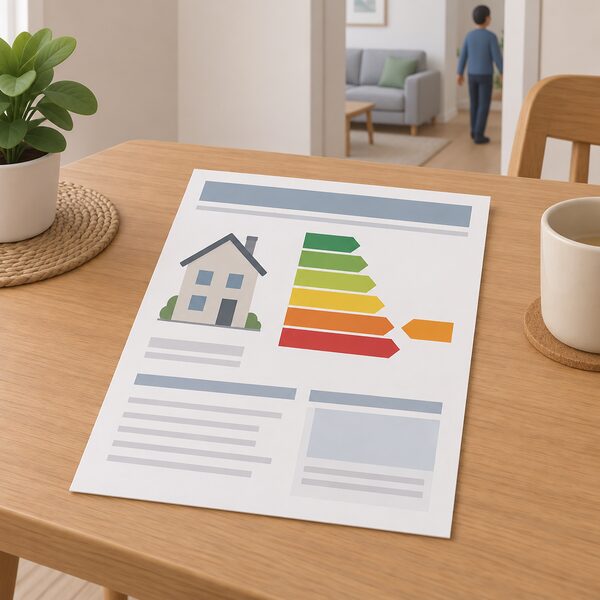
The Minimum Energy Efficiency Standards rest on the Energy Efficiency (Private Rented Property) (England and Wales) Regulations 2015, which brought the standards into force in April 20165. The Energy Act 2011 required Government to introduce regulations to improve the energy efficiency of buildings in the private rented sector no later than April 201812. The Private Rented Sector Minimum Energy Efficiency Standards Regulations came into force in April 201812.
The current minimum standard for certain domestic rented property is a rating of E or above9. No property that has not at least got an Energy Performance Certificate rating of E or above can be rented out unless a valid exemption applies4. The standards apply to all domestic private rented properties, and to private rented domestic properties in England and Wales4.
| Element | Position |
|---|---|
| Legal basis | Energy Efficiency (Private Rented Property) (England and Wales) Regulations 20155 |
| Current minimum | EPC band E or above9 |
| Territorial extent | Private rented domestic properties in England and Wales5 |
| Landlords covered | Private, local authority and other public body landlords, and tenants who sub-let9 |
| Tenancy exclusions | Tenancies of less than six months or more than 99 years9 |
| Tenancy types in scope | Assured tenancy, regulated tenancy, domestic agricultural tenancy13 |
A register exists to find private rental properties registered as exempt from the minimum standard of energy efficiency14. Exemptions are the mechanism by which a property that cannot reasonably be improved is let lawfully, and they are registered rather than assumed.
EPC reform: the new-style certificate replacing the current EPC
The certificate that underpins all of this is being rebuilt. New-style Energy Performance Certificates are being introduced from 30 April 2028, with reform introducing new ratings, redesigning the certificates, and improvements to the operational infrastructure6. The Scottish Government has consulted on changing the format of domestic EPCs to better equip homeowners and occupiers to make informed decisions about improvements to their home's energy efficiency and heating systems15.
In Scotland, EPCs will be generated using the UK Government's new Home Energy Model, which will replace the current Standard Assessment Procedure methodology in autumn 202616. The Scottish Government has set out the role the new EPC rating system could play in supporting proposed regulations such as a private rented sector minimum energy efficiency standard, with planned resourcing to be funded by EPC lodgement fees17.
The direction of travel is a minimum standard equivalent to EPC C. The Heat in Buildings Strategy set out requiring all private rented sector properties to reach a minimum standard equivalent to EPC C by 2028 where technically feasible and cost-effective at change of tenancy, with a backstop of 2028 for all remaining existing properties18. The Scottish Government's aim is all privately rented properties, as far as possible, reaching the equivalent of EPC C under the new, reformed EPC16.
Commencement dates and phases: what applies when

The timetable runs across several years and several regimes. Awaab's Law applied from October 20257. The Renters' Rights Bill passed into law in October 20252. Electrical safety standards were extended to the social rented sector: for social housing tenancies granted before 1 December 2025, the regulations come into force on 1 May 20261.
In Scotland, the draft Energy Efficiency (Domestic Private Rented Property) (Scotland) Regulations 2026 would require a landlord of a sub-standard domestic private rented property not to let the property, or part of it, on or after 1 April 2028 unless improvements are made or an exemption applies19. Existing tenancies of sub-standard properties are protected until 31 March 203319. The Scottish Government's summary is that this would apply to new tenancies from 2028 and to all private rented sector properties by the end of 203320.
| Date | What applies |
|---|---|
| October 2025 | Awaab's Law applies to social landlords; Renters' Rights Bill passes into law7 |
| 1 May 2026 | Electrical safety regulations in force for social housing tenancies granted before 1 December 20251 |
| Autumn 2026 | Home Energy Model replaces SAP for EPCs in Scotland16 |
| 30 November 2026 | Reported second phase of Awaab's Law widens hazards covered3 |
| 1 April 2028 | Scottish prohibition on letting sub-standard properties for new tenancies and renewals19 |
| 30 April 2028 | New-style EPCs introduced6 |
| 31 March 2033 | End of protection for existing sub-standard tenancies in Scotland19 |
What this means for household energy independence in the rented sector
Energy independence for a renter is narrower than for an owner. The building is not the tenant's to alter, and the fuel and fabric decisions sit with the landlord. What the tenant does control is the supply contract, where their name is on the bill.
Tenants who pay their energy bills directly are entitled to switch gas and electricity supplier, and the right to switch holds if the name is on the bill, even if the tenancy agreement says otherwise21. Where a resident pays a landlord or site owner by meter readings or estimates, the position is different: they do not access all the protections available to domestic energy customers, but they may only be charged for energy at the unit rate agreed in the tenancy, licence or occupancy agreement, and they can see the bills and contract between the landlord or site owner and the energy supplier23.
Grants for energy efficiency measures are available to homeowners and private tenants, which gives a renter a route to improvement that does not depend on the landlord's capital alone25. Under the Warm Homes: Local Grant, landlords must obtain tenants' permission to carry out work, and the property must have an EPC rating of D or below26. Privately rented properties with an EPC rating of band F or G which have a registered exemption under the Energy Efficiency (Private Rented Property) (England and Wales) Regulations 2015 are within the scheme's household eligibility27.
The dependence that remains is structural. A tenant can switch supplier, ask for improvements and enforce condition standards, but cannot decide the heating system, the insulation or the glazing. The Act tightens the floor; it does not hand over the keys to the plant room.

Sources27 cited
- Electrical safety standards in the private and social rented sectors: guidance, GOV.UK, 2026-05-01
- Decarbonisation: what are landlords' rights and obligations, Nesta, 2025-11-11
- The cold truth, Cadent Gas, 2026-09-20
- Minimum Energy Efficiency Standards, Planning Portal, 2026
- Minimum Energy Efficiency Standards (MEES) for landlords, Elmhurst Energy, 2026-09-20
- EPCs are changing, Scottish Government, 2026-08-24
- Energy in buildings 2025: heat and buildings, GOV.UK, 2025-10
- How to get a smart meter, Smart DCC, 2026
- Minimum energy efficiency standards, Isle of Anglesey County Council, 2026-05
- Improving the energy efficiency of socially rented homes: consultation response, UKGBC, 2026-04-30
- Repairs and damp, Citizens Advice, 2026-09-20
- Minimum energy performance standards in England and Wales, CIBSE, 2026-09-17
- Support for landlords, Centre for Sustainable Energy, 2026-06
- View private rented sector energy standards exemptions, GOV.UK, 2026-05-05
- Our response to the Scottish Government's consultation on domestic Energy Performance Certificate reform, Energy Saving Trust, 2025-10-08
- Heat in buildings progress report 2025, Scottish Government, 2025-10-02
- EPC reform: government response, Scottish Government, 2025-07-11
- Heat in Buildings Strategy: summary document, Scottish Government, 2021-10
- Consultation on draft Energy Efficiency (Domestic Private Rented Property) (Scotland) Regulations, Scottish Government, 2025-06
- Energy Efficiency (Domestic Private Rented Property) (Scotland) Regulations 2026: partial BRIA, Scottish Government, 2025-06-06
- Tenants' guide to switching, Uswitch, 2026-05-29
- Dealing with your energy supplier, Centre for Sustainable Energy, 2026-01
- If you live in a home on a business energy contract, Ofgem, 2026
- Alternative homes energy guidance, Ofgem, 2026
- Help with energy efficiency measures, Turn2us, 2026-09-08
- Warm Homes: Local Grant scheme, Uswitch, 2026-01-05
- Warm Homes Local Grant, Greater Manchester Combined Authority, 2026-09-17
 Renting and Home EnergyThe position of a tenant in a privately rented home: which measures need no permission, which are fixtures the landlord controls, and what the law says about heating, insulation, certificates and bills across the four UK nations.
 Rented Homes and Landlord MetersWho is responsible for the energy in your rented home?
 Damp and Mould in Rented HomesDamp or mould in your rented home is your landlord's problem to fix.
 Social and Rented Home StandardsWhat condition is your landlord legally required to keep your home in?
 Where to Start If You RentRenting means you can switch supplier or get a smart meter yourself, but insulation, glazing and heating need your landlord's agreement.
 UK Private Rented SectorHow many homes in the UK are rented privately, and how do they compare with homes people own or rent from a council or housing association?