
In this answer
Short answer
Wales runs its own fitness and safety regime for rented homes, separate from the Homes (Fitness for Human Habitation) Act 2018 that governs England. The framework is the Renting Homes (Wales) Act 2016, and the fitness requirements for privately rented homes were strengthened by regulations that came into force in 20231. The published fitness standard is a list of nine core criteria covering structure, damp, services and drainage, and it applies to private rented properties2.
The scale of the problem is measurable. Almost two-thirds (60%) of rented homes in Wales have poor energy ratings, EPC D or below1. Official statistics put the privately rented dwelling stock in Wales at 184,900 as at 31 March 2025, with a confidence interval of 175,200 to 194,6003. On the hazard measure, 82% of all Welsh dwellings are free from Category 1 HHSRS hazards, falling to 76% of private rented sector dwellings4.
For a household, fitness rules matter to energy independence because they set the floor a landlord must meet on heating, ventilation and damp, and because they give a tenant a route to enforcement that does not depend on the tenant's own capital. What they do not do is remove dependence on the landlord, the council, or the grid.
What 'fit for human habitation' means for rented homes in Wales
The Welsh concept of fitness is a defined list rather than a general standard of decency. For a dwelling to be fit for human habitation it must be structurally stable; free from serious disrepair; free from dampness prejudicial to the health of the occupants; have adequate provision for lighting, heating and ventilation; have an adequate piped supply of wholesome water; have satisfactory facilities for the preparation and cooking of food including a sink with hot and cold water; have a suitably located water-closet; have a suitably located fixed bath or shower and wash-hand basin with hot and cold water; and have an effective system for the draining of foul, waste and surface water2.
That list is the operative test for private rented properties. The same criteria appear in the published fitness standard for private rented housing, which states that if a privately rented house fails in one or more of the criteria, it does not meet the fitness standard and is not suitable for people to live in2.
The heating element of fitness connects to a separate Welsh measure. Fuel poverty statistics for Wales define a satisfactory heating regime as 23°C in the living room and 18°C in other rooms for 16 hours in a 24-hour period for households with older or disabled people, and 21°C in the living room and 18°C in other rooms for nine hours in every 24-hour period on weekdays and 16 hours on weekends for all other households7. Those are the temperatures the Welsh Government uses when modelling whether a home can be heated adequately, and they give a practical sense of what adequate provision for heating means in a Welsh context.
For a household, the significance is that fitness is not a matter of the landlord's opinion. It is a checklist that a council officer can test, and a failure on any single item is enough to make the home unfit. That is a stronger position than a general repairing obligation, because it does not require the tenant to prove that a specific repair was promised.
The Renting Homes (Wales) Act 2016 and its safety duties
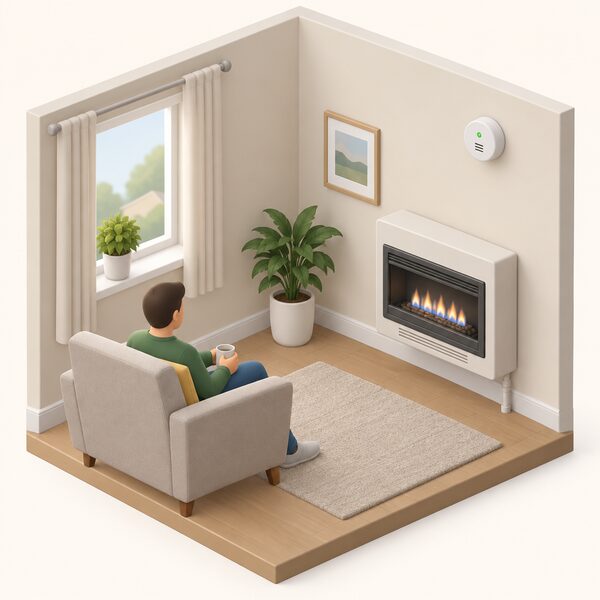
The Renting Homes (Wales) Act 2016 is the statute that reshaped Welsh tenancies, and its fitness for human habitation regulations carry specific safety duties. Since 2022, the Act, under fitness for human habitation regulations, mandates landlords to ensure working carbon monoxide alarms are fitted in properties with gas, oil-fired or solid fuel-burning appliances6.
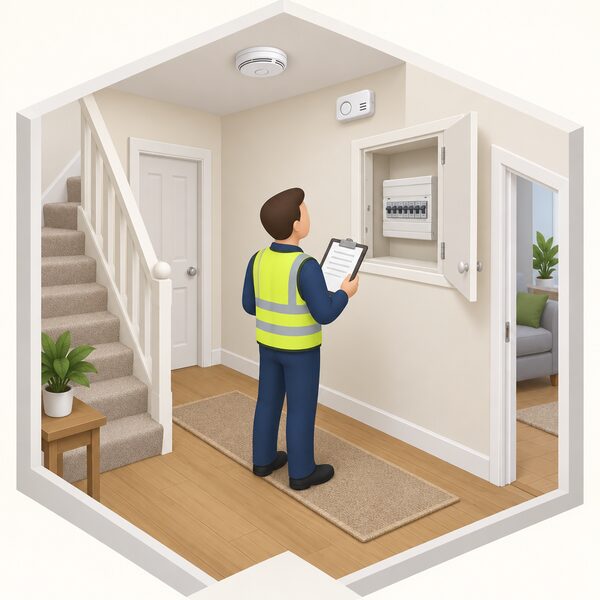
Electrical safety sits alongside this. Landlords of both private and social rented properties in Wales have to undertake electrical safety checks of their property, on a cycle of once every five years5. That five-year cycle is a Welsh requirement, and it applies across tenures rather than only to private lets.
The Act also carries a compliance consequence that is unusual in the UK. Landlords who fail to comply with the law face renters being legally permitted to withhold rent payments5. That is a significant lever, though it is a legal mechanism rather than a practical remedy, and a tenant considering it would be dealing with a matter that carries real risk of dispute.
"Landlords who fail to comply with the law face renters being legally permitted to withhold rent payments."
The Act's duties sit on top of the general repairing obligation. Independent guidance states that landlords must make sure plumbing and heating work properly, and that tenants must get the landlord's permission before making improvements to their home8. For a tenant thinking about energy work, that permission rule is the practical constraint: the fitness regime sets a floor the landlord must meet, but it does not give the tenant a right to install anything.
The 29 matters and HHSRS: what landlords must check
The Housing Health and Safety Rating System is the hazard assessment tool used by Welsh councils, and the Welsh figures show how it lands in practice. In Wales, 82% of dwellings are free from Category 1 HHSRS hazards, and 76% of private rented sector dwellings are free from them4. The gap between the two figures is the measure of how much more hazard-prone the private rented stock is than the stock as a whole.
The published guidance for private rented housing fitness checks states that before letting a house to tenants, the landlord should ask a qualified surveyor to check the condition of the property2. That is a recommendation rather than a statutory duty, but it describes the evidence a landlord would be expected to hold.
For social housing, the standard is different and more prescriptive. The Welsh Housing Quality Standard 2023 is a demanding standard which all social landlords in Wales will be legally obliged to meet9. Registered Social Landlords must comply with WHQS 2023, rules and guidance, and the Welsh Ministers set the standards to be met by Registered Social Landlords under section 33A of the Housing Act 19968. Local Authorities must comply with the standard pursuant to section 111 of the Housing (Wales) Act 20148. The purpose of WHQS is to improve the quality of social homes in Wales8.
| Measure | All Welsh dwellings | Private rented sector |
|---|---|---|
| Free from Category 1 HHSRS hazards | 82% | 76% |
| Source | Swansea Council,4 | Swansea Council,4 |
The practical point for a household is that the hazard system and the fitness list are two different tests. A home can pass the fitness checklist and still carry a Category 1 hazard, or fail fitness on drainage while scoring well on hazards. Councils use HHSRS to decide whether to take enforcement action, and the fitness standard to decide whether a private let is lettable at all.
How fitness is assessed and evidenced
Assessment starts with the condition of the property and the evidence the landlord holds. The published guidance recommends a qualified surveyor's check before letting2, and the WHQS regime for social landlords requires compliance with a defined standard rather than a one-off inspection8.
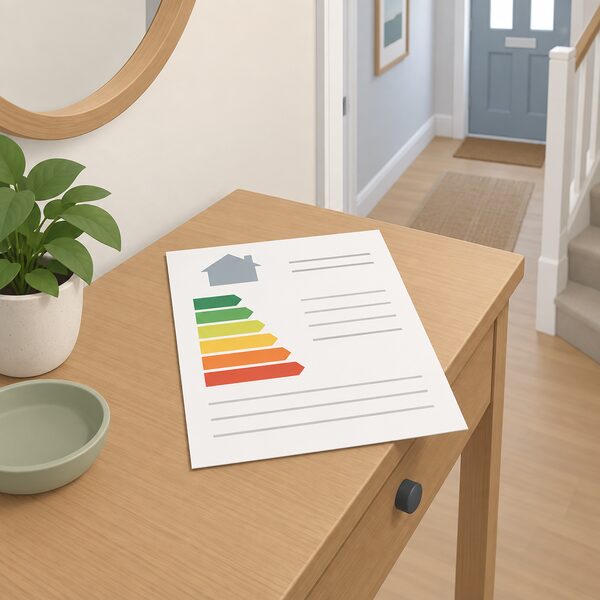
Energy performance is a separate but related evidence trail. In England and Wales, rented residential properties must have an energy efficiency certificate rating of E or better10. The Energy Efficiency (Private Rented Property) (England and Wales) Regulations 2015 apply in England and Wales, and do not apply to properties let on a tenancy of less than six months or more than 99 years11. There are exceptions where the property is listed or officially protected and the minimum energy performance requirement would unacceptably alter it, or where it is a temporary building used for two years or less, a place of worship, a low-energy industrial site, a detached building under 50 m² total floor space, a building occupied less than four months a year with expected energy consumption under 25% of all-year use, or a property due for demolition with consents11.
For new work, Approved Document L Volume 1: Dwellings provides practical guidance on ways of complying with the energy efficiency requirements of the Building Regulations 2010 for Wales12. Where work does not comply, the owner of the building may ultimately be served with an enforcement notice13.
The evidence question matters to independence because a tenant cannot easily commission the surveys that would prove a failure. The route is the council, not the tenant's own expert report.
What tenants can do if a home is not fit
The published route is direct. If a tenant thinks their rented home does not meet the fitness standard, the guidance is to tell the council's Environmental Health office2. That is the enforcement trigger, and it is the same route whether the failure is damp, drainage, heating or structure.
The Welsh Government has recommended that public awareness campaigns be led to ensure private renters understand their rights and available support for energy efficiency14. It has also recommended strengthening protections to protect renters from unfair rent increases or evictions that might follow energy efficiency upgrades14. Those are recommendations rather than duties, and they reflect a recognised risk: that a tenant who asks for improvement faces a retaliatory response.
Support outside the enforcement route exists. Nest provides free, impartial energy advice to help lower energy bills and improve health and wellbeing, and free home energy efficiency improvements15. Eligibility for the Nest scheme requires owning or privately renting the home, receiving a means-tested benefit or living in a low-income household, and living in a home with an EPC rating of 54 (E) or less, or 68 (D) or less where a household member has an eligible health condition16. Nest is available to residents of Wales15.
For households in difficulty, Safe and warm hubs offer welcoming spaces for people to stay warm, connect with others, and access advice and services during difficult times17. Green Homes Wales is designed to support eligible homeowners, though private landlords cannot currently apply to the scheme18.
How the Welsh rules differ from England's Homes Act
The two nations share some instruments and diverge on others. The Energy Efficiency (Private Rented Property) (England and Wales) Regulations 2015 apply across both, and the guidance is for England and Wales11. The private rented sector energy standards exemptions register also applies to England and Wales19. The Energy Efficiency (Private Rented Property) (England and Wales) (Amendment) Regulations 2022 were assessed as green-rated and fit for purpose20.
Where the regimes diverge is in the fitness and safety framework. Wales operates through the Renting Homes (Wales) Act 2016 and its fitness regulations, with the five-yearly electrical safety check and the carbon monoxide alarm duty5. England operates through the Homes (Fitness for Human Habitation) Act 2018, which came into force in 2019 and requires all landlords, private and social, to keep properties fit for human habitation throughout a tenancy.
Planning and building guidance is a further area of difference. Guidance on the Planning Portal relates to the planning regime for England, and the policy in Wales may differ21. The same caveat applies to heat pump planning permission guidance, which states that the policy in Wales may differ and that anyone in doubt should contact their local planning authority21. For building regulations approval in Wales, the Planning Portal has a separate Welsh route13.
| Feature | Wales | England |
|---|---|---|
| Fitness framework | Renting Homes (Wales) Act 2016 and fitness regulations1 | Homes (Fitness for Human Habitation) Act 2018 |
| Electrical safety check cycle | The Welsh Government has committed to introduce regulations for mandatory five-yearly electrical safety checks in the private and social rental sectors through the Renting Homes (Wales) Act5 | No equivalent commitment identified |
| Carbon monoxide alarm duty | Since 2022, under fitness regulations6 | No equivalent duty identified |
| Minimum EPC for rented homes | E or better10 | E or better10 |
The Energy Efficiency (Private Rented Property) (England and Wales) Regulations 2015 apply across both nations, and do not apply to properties let on a tenancy of less than six months or more than 99 years11. Planning guidance for England states that the policy in Wales may differ, and that householders in doubt should contact their local planning authority12.
For a household, the difference that matters most is the enforcement lever. Wales pairs the fitness standard with a rent-withholding consequence for non-compliance5, and it applies electrical safety checks across both private and social tenancies5. A tenant in Wales is dealing with a regime that is more prescriptive on safety cycles than the English fitness duty alone.
Where the Welsh regime leaves a household dependent
Fitness rules set a floor, and a floor is not independence. A tenant in Wales still depends on the landlord to carry out the work, on the council to enforce, and on the grid and a supplier for the energy itself. The 60% figure for rented homes at EPC D or below shows how far the stock sits from the top of the scale1, and the 76% hazard-free figure for private rented dwellings shows the gap that remains4.
The support routes carry their own limits. Nest is means-tested and capped at EPC 54 (E) or less, or 68 (D) or less with an eligible health condition16. Green Homes Wales is closed to private landlords18. The Welsh Government's own recommendations on tenant information and protections are recommendations, not entitlements14.
What the regime does give a household is a defined test, a named enforcement route, and a compliance consequence that reaches the landlord's income. That is a meaningful degree of leverage over the condition of the home. It is not leverage over the price of the energy, the carbon intensity of the supply, or the landlord's willingness to invest beyond the minimum.
Sources21 cited
- Left in the Cold: Protecting Private Renters in Wales, Citizens Advice, 2023-05-02
- Checking Your Home is Fit to Live In, nidirect, 2026-09-17
- Dwelling Stock Estimates Quality Report, Welsh Government, 2025-03-31
- Private Sector Housing Renewal and Adaptations, Swansea Council, 2026-09-20
- Renters Put at Unnecessary Risk Due to Welsh Government Legislation Delay, Electrical Safety First, 2026-09-19
- Carbon Monoxide Safety, Welsh Water Utilities, 2022
- Fuel Poverty Modelled Estimates Wales October 2024, Welsh Government, 2025-10-16
- Welsh Housing Quality Standard 2023, Welsh Government, 2024-08-02
- Welsh Housing Quality Standard 2023 Integrated Impact Assessment, Welsh Government, 2022-05-11
- UK Energy Efficiency, National Insulation Association, 2021
- Trading Standards Guidance: Other Consumer Problems, Isle of Anglesey County Council, 2026-05
- Approved Document L Volume 1: Dwellings Consultation Version, Welsh Government, 2026-09-17
- When You Need Building Regulations Approval, Planning Portal, 2026
- Delivering Warmer Homes for Private Renters in Wales, Citizens Advice, 2025-11-03
- Nest: Free Energy Advice and Improvements, Ofgem, 2026-03-04
- Nest Scheme Eligibility, House of Commons Library, 2026-05-13
- Safe, Warm and Connected Community Hubs, Welsh Government, 2024-12-19
- Green Homes Wales, Development Bank of Wales, 2026-09-17
- View Private Rented Sector Energy Standards Exemptions, UK Government, 2026-05-05
- The Energy Efficiency (Private Rented Property) (England and Wales) (Amendment) Regulations 2022: RPC Opinion, UK Government, 2024-04-22
- Planning Permission Guidance, Planning Portal, 2026-09-17
 Welsh Housing Quality StandardWhat does the Welsh Housing Quality Standard mean for your home if you rent from a council or housing association in Wales?
 Social and Rented Home StandardsWhat condition is your landlord legally required to keep your home in?
 Insulation in Rented HousingWho pays for insulation when you rent, and who has to agree to it?
 Building Regulations WalesIf you are building or extending in Wales, the rules are not the same as in England.
 Landlord Energy and SafetyWhat a landlord must provide and maintain across the four nations: working heating and hot water, an EPC before letting, alarms, gas and electrical safety, and fitness for habitation, with the points where Scottish, Welsh and Northern Irish duties differ from England.
 Energy Policy in WalesWhat help can you get in Wales to make your home warmer and cheaper to run?