
In this guide
The Welsh Housing Quality Standard is the set of minimum requirements that social landlords in Wales must meet and maintain. It was introduced by the Welsh Government in 2002 and applies to registered social landlords and local authorities with social rented housing stock1. Its purpose is to improve the quality of social homes in Wales, and the 2023 iteration adds standards relating to decarbonisation to support carbon reduction from the Welsh housing stock2.
The headline compliance figure is high. The Welsh Government reported that 100 per cent of social homes met the standard as of 31 March 20222. Earlier progress was steady: by the end of 2020, 99 per cent of social housing in Wales met the original standard3. The standard is legally binding, and all social landlords in Wales are legally obliged to meet the 2023 version4.
For a household, the standard matters because it governs the fabric, heating and energy performance of a social home. The 2023 standard boosts energy efficiency requirements significantly to reflect decarbonisation ambitions and to minimise energy bills for tenants4. It also sets new targets to address decarbonisation and water efficiency5.
What the standard requires of a social home
The standard is built around seven overarching categories and 42 individual elements1. In practice it covers the physical condition of the home, its services and its surroundings. Homes must be in a good state of repair, safe and secure, and comfortable, promoting wellbeing5. They must be fitted with an up-to-date kitchen and utility area and an up-to-date bathroom5. They must have a suitable garden and attractive outside space5.
On energy, the requirement is that homes must be affordable to heat and have minimal environmental impact5. That is the clause that carries most of the energy content, and it is the clause the 2023 standard develops furthest. The existing standard contained energy efficiency, or affordable warmth, requirements, but these have been boosted significantly to reflect decarbonisation ambitions and to minimise energy bills for tenants4.
The standard also sets new targets to address decarbonisation and water efficiency5. The Welsh Ministers propose to specify a rule or rules in relation to social landlords' response to damp, mould and other hazards, and once set, those rules will need to be met in order to comply with the 2023 standard5.
"The purpose of WHQS is to improve the quality of social homes in Wales."
The energy figures: EPC D now, EPC A proposed
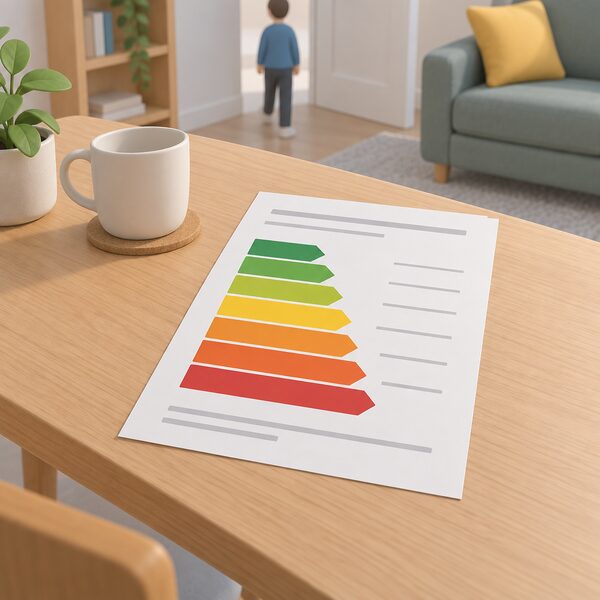
The energy performance requirement has moved over time. The Welsh Government's fuel poverty outcome summary records a long-standing commitment to delivering investment through the Welsh Housing Quality Standard, requiring social homes to reach not less than EPC D, with the new standard due for release looking at a target of an A rating6. The 2023 standard is that new standard.
The Welsh Government has also said it will evaluate the cost effectiveness of retrofitting social housing to reach an EPC A rating, and review the proposed target7. That wording matters: the A rating is described as proposed and subject to review, not as a settled requirement with a fixed date.
Compliance with the energy element has been measured before. At 31 March 2014, 88 per cent of registered social landlord dwellings were compliant with the energy rating requirement of SAP 65 or above, against 83 per cent of registered social landlord dwellings achieving overall standard compliance including acceptable fails8. Those two figures come from the same 2014 snapshot and show that the energy element was, at that point, slightly ahead of overall compliance.
| Measure | Figure | Date |
|---|---|---|
| Social homes meeting the standard | 100 per cent | 31 March 20222 |
| Social housing meeting the original standard | 99 per cent | End of 20203 |
| RSL dwellings compliant with energy rating (SAP 65 or above) | 88 per cent | 31 March 20148 |
| RSL dwellings achieving overall compliance | 83 per cent | 31 March 20148 |
| Minimum energy rating required | Not less than EPC D | 6 |
| Proposed target under review | EPC A | 7 |
What drives the standard
Three forces sit behind the energy requirements. The first is fuel poverty. The 2023 standard aims to ensure households can afford to heat their homes and be lifted out of fuel poverty2. That is a social purpose as much as an environmental one, and it explains why the energy clauses are framed around affordable warmth rather than carbon alone.
The second is the Welsh housing stock's contribution to emissions. The 1.4 million homes in Wales are responsible for around 25 per cent of carbon emissions annually2. Social housing is a minority of that stock, but it is the part the Welsh Government can reach directly through regulation and funding.
The third is the wider climate framework. The new standard underpins the key Welsh Government commitment to decarbonise housing in Wales to meet legally binding climate targets in 20502. Wales has a legal commitment to achieve net zero emissions by 2050, and the Welsh Government has said it is pushing to get there sooner9. The Welsh Ministers have also set out ambitions for renewable energy to 205010, and a Net Zero 2035 Challenge Group was established in January 2023 to examine potential pathways to net zero by 2035, against a current target date of 205011.
The Welsh Government has separately committed to build 20,000 high quality, low carbon homes for rent over five years12, and has said no new buildings should be connected to the gas grid from 20257. New social housing funded by the Welsh Government is expected to trailblaze the newer standards12.
How the standard differs across the UK nations
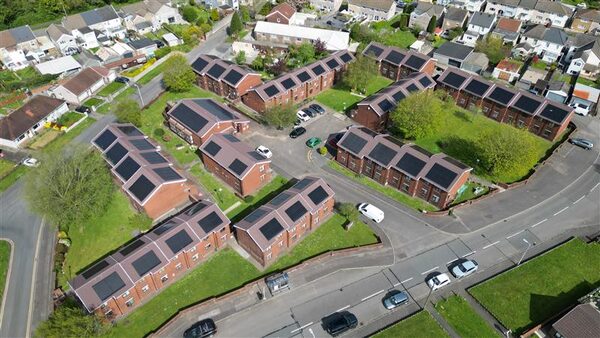
The Welsh Government has described its standard as a standard which is more demanding than in the other home nations3. That claim rests on the combination of physical quality requirements with decarbonisation targets, and on the fact that the standard applies to the whole social housing stock rather than to individual properties. The proposed standard demands net zero from the whole housing stock, rather than net zero for individual properties4.
The scope is also a limit. The standard applies to registered social landlords and local authorities with social rented housing stock, and does not apply to other housing developed by registered social landlords or to the private sector1. Private owners and private tenants in Wales fall outside it, and are covered by other regimes.
Scotland runs a separate energy efficiency standard for social housing, and Northern Ireland has its own housing fitness and energy efficiency rules. The four nations also differ on fuel poverty definitions and on grant schemes, which is covered in fuel poverty in Wales and in the wider guide to home energy across the UK nations.
| Nation | Social housing energy standard | Notes |
|---|---|---|
| Wales | Welsh Housing Quality Standard, with 2023 decarbonisation requirements | Described by the Welsh Government as more demanding than in the other home nations3 |
| Scotland | Energy Efficiency Standard for Social Housing | Separate Scottish regime |
| Northern Ireland | Housing fitness and energy efficiency rules | Separate Northern Ireland regime |
| England | Decent Homes Standard and social housing regulation | Separate English regime |
The rules, the dates and who enforces them
The standard is legally binding2. Local authorities must comply with it under section 111 of the Housing (Wales) Act 2014, and the Welsh Ministers have set the standards to be met by registered social landlords under section 33A of the Housing Act 19962. All existing social homes must meet the Welsh Housing Quality Standard2, and all social homes in Wales are required to meet and maintain it4.
The original standard carried a target date of 2020. The Welsh Government stated that the achievement of the Welsh Housing Quality Standard by 2020 was important14, and an earlier evaluation described the standard as requiring all social landlords to improve their housing stock to an acceptable level by 202015. Progress against that date was reported at 99 per cent of social housing by the end of 20203, and at 100 per cent of social homes as of 31 March 20222.
The 2023 standard is a demanding standard which all social landlords in Wales will be legally obliged to meet4. The Welsh Government has said the new iteration will focus on a suite of requirements which balance energy efficiency requirements against decarbonisation requirements16. The Welsh Ministers propose to specify rules on social landlords' response to damp, mould and other hazards, and once set, those rules will need to be met in order to comply with the 2023 standard5.
What the standard means for energy independence
For a social tenant, the standard is the main lever on the energy performance of the home, and it is a lever the household does not control. The landlord decides the heating system, the insulation, the glazing and the ventilation. The tenant pays the bills that result. That is the central limit: the standard improves the building, but it does not give the household control over the supply, the tariff or the generation.
What it does deliver is a floor. Homes must be affordable to heat and have minimal environmental impact5, and the 2023 standard boosts energy efficiency requirements to minimise energy bills for tenants4. A home built or upgraded to the standard should need less energy to reach a given temperature than one that is not, which reduces exposure to price movements even where the household remains on a standard tariff from a standard supplier.
The dependence that remains is the grid and the supplier. The standard does not require on-site generation, storage or a switch away from gas for existing social homes, and the Welsh Government's no-gas-grid-connection position applies to new buildings from 20257. A social tenant in a standard-compliant home is still buying electricity and, in most cases, gas from a supplier, and is still exposed to wholesale prices.
There is also a measurement limit. The most recent whole-stock condition data comes from the Welsh Housing Conditions Survey of April 2017 to March 2018, which assessed dwellings against the Housing, Health and Safety Rating System and the Welsh Housing Quality Standard, and collected energy efficiency statistics and the potential for future energy improvements17. The energy efficiency report from that survey covers the same period18. The Welsh Government's decarbonisation work for Welsh housing between 2020 and 2050 draws all its data from that 2017 to 2018 survey19. Any statement about the current energy performance of the Welsh housing stock rests on data collected in that period.
"the WHQS has been instrumental in improving social housing quality standards across the range of measures that it encompasses"
Sources19 cited
- Summative evaluation of the Welsh Housing Quality Standard: summary, Welsh Government, 2021
- Welsh Housing Quality Standard 2023: integrated impact assessment, Welsh Government, 2024
- Time to raise the bar on Wales' housing standards, Welsh Government, 2022
- Welsh Housing Quality Standard 2023, Welsh Government, 2022
- Welsh Housing Quality Standard: overview, Welsh Government, 2019
- Tackling fuel poverty 2020 to 2035: outcome summary, Welsh Government, 2021
- Progress report: reducing emissions in Wales, Climate Change Committee, 2023
- Summary of responses to the Welsh Housing Quality Standard consultation, Welsh Government, 2015
- Wales commits to net zero by 2050 and sets out ambitions to get there sooner, Welsh Government, 2021
- Preparing Wales for a renewable energy 2050, Welsh Government, 2024
- Written statement: publication of final reports of the Wales Net Zero 2035 Challenge Group, Welsh Government, 2024
- Welsh Government: no more fossil fuels to heat new homes, Welsh Government, 2021
- Welsh Housing Quality Standard 2023 consultation, Welsh Government, 2022
- Progress on the Welsh Housing Quality Standard, Welsh Government, 2016
- Tackling fuel poverty 2021 to 2035, Welsh Government, 2021
- Fuel Poverty Advisory Panel meeting, 17 June 2021, Welsh Government, 2021
- Welsh Housing Conditions Survey 2017 to 2018: technical report summary, Welsh Government, 2021
- Welsh Housing Conditions Survey: energy efficiency of dwellings, April 2017 to March 2018, Welsh Government, 2019
- Homes of today for tomorrow: decarbonising Welsh housing between 2020 and 2050, Welsh Government, 2024
 Housing Stock Data for WalesHow energy efficient are Welsh homes, and how many have a rating?
 Energy Policy in WalesWhat help can you get in Wales to make your home warmer and cheaper to run?
 Social and Rented Home StandardsWhat condition is your landlord legally required to keep your home in?
 Housing Stock and EPCsWelsh homes are among the oldest and least energy efficient in the UK, so what does that mean for yours?
 Insulation in Rented HousingWho pays for insulation when you rent, and who has to agree to it?
 MEES for Rented HomesCovers the minimum EPC standards that apply to private rented homes, the cost caps and exemptions, and how exemptions are registered.