
In this guide
Wales has two headline renewable electricity targets running in parallel. The first is for renewable electricity generation to meet the equivalent of 70% of Welsh electricity consumption by 2030. The second is for renewable sources to meet the equivalent of 100% of annual electricity consumption by 2035, and to keep pace with consumption after that1. A third target sits alongside them: at least 1.5 GW of renewable energy capacity to be locally owned by 2035, excluding heat pumps3.
The starting point matters as much as the destination. Wales generated 23.2 TWh of electricity in 2023, of which 15.4 TWh came from fossil fuels, 66% of the total1. Renewable electricity capacity stood at 3,663 MW at the end of 20231. In 2021, renewables produced 7.7 TWh, about 28% of total generation, but because Wales generates more electricity than it consumes, that was equivalent to roughly 55% of Welsh electricity consumption2.
For a household, the practical question is what counts. Domestic solar panels, home batteries and heat pumps are counted within the locally owned category, not the large-scale commercial one. Wales had 0.99 GW of locally owned renewable energy at the end of 2024, against the 1.5 GW target for 20354. Households are therefore a measurable part of the national figure, not a footnote to it.
The targets in figures
The Welsh targets operate on two different measures, and confusing them is the commonest error. The 70% figure for 2030 is a share of consumption, not of generation. Because Wales exports electricity, renewable generation can equal a large share of what Welsh homes and businesses use while still being a minority of what Wales actually produces. In 2021, renewables were 28% of total generation but approximately 55% of consumption2.
The 2035 target is expressed the same way: 100% of annual electricity consumption from renewable sources, with a commitment to continue keeping pace with consumption thereafter3. The Welsh Government has also set a heat pump capacity target of 5.5 GW by 2035, which it states is contingent on scaled up support from the UK Government and reductions in the cost of the technology3.
On local ownership, the target has been raised over time. The original ambition was 1 GW of locally owned renewable electricity capacity by 2030, set in 20176. That was later increased to 1.5 GW by 2035, covering renewable electricity and heat capacity and excluding heat pumps from the count3. Wales had reached 0.9 GW by 2023, described as 60% of the way towards the new target1, and 0.99 GW by the end of 20244.
| Measure | Figure | Date |
|---|---|---|
| Renewable generation as share of consumption | 70% | 2030 |
| Renewable generation as share of consumption | 100% | 2035 |
| Locally owned renewable capacity | at least 1.5 GW | 2035 |
| Heat pump capacity | 5.5 GW | 2035 |
| Locally owned capacity achieved | 0.99 GW | end of 2024 |
| Renewable electricity capacity installed | 3,663 MW | end of 2023 |
The capacity figures show how much of the total is small scale. In 2021, Wales had 84,477 renewable energy projects with 3,508 MW of electricity capacity and 742 MW of heat capacity2. Of those, 78,373 projects were locally owned, contributing 581 MW of electrical capacity and 316 MW of heat2. The arithmetic is stark: locally owned projects were the overwhelming majority by number and a minority by capacity.
What drives the targets
The targets sit inside a wider Welsh vision: for Wales to generate renewable energy to at least fully meet its energy needs and utilise surplus generation to tackle the nature and climate emergencies8. That framing is broader than electricity alone, and it explains why heat pumps and renewable heat appear in the same target set as wind and solar.
The Welsh Government has also stated an ambition to scale up renewable energy generation in a way that maximises economic and social benefits for the people of Wales9. Local ownership is the mechanism that connects the two: capacity owned by households, communities and public bodies keeps more of the value in Wales than capacity owned by outside developers.
The statutory backdrop is the Environment (Wales) Act 2016, which originally included a target to reduce emissions by at least 80% by 2050, later increased to Net Zero10. In March 2021, under the provisions of that Act, Wales set a Net Zero target by the year 205011. The Climate Change (Wales) Regulations 2021 provide the technical mechanism and governance framework for meeting that target12. The renewable electricity targets are the delivery route for the power sector within that framework.
There is also a demand-side driver. The Welsh Government states that electricity demand is projected to increase4, which raises the bar the targets have to clear. Electrification of heating and transport adds load, so a fixed percentage of a growing consumption figure implies more generation, not the same amount.
"Our Vision is for Wales to generate renewable energy to at least fully meet our energy needs and utilise surplus generation to tackle the nature and climate emergencies"
Wales against the other UK nations
Wales' targets are set by the Welsh Government, and they are not the same as the UK-wide position or Scotland's. The comparison is complicated by the fact that the four nations publish on different bases and at different times.
Scotland's renewable electricity share is materially higher. In 2022, Scotland's renewables accounted for a substantially larger proportion of generation than England and Wales, where renewables were 36.2% and low carbon sources 48.7%13. Wales' own 2021 figure was 28% of total generation from renewables, equivalent to approximately 55% of consumption2. The two figures are not directly comparable, because one is a generation share and the other a consumption share, but the direction is clear.
Wales' 2035 target of 100% of annual electricity consumption from renewables is more ambitious in framing than a generation-share target, because it is measured against demand rather than output. Scotland's equivalent target is set on a different basis and is not directly translatable.
On local ownership, Wales has a distinctive policy that the other nations do not mirror in the same form. The 1.5 GW target for locally owned capacity by 2035, excluding heat pumps, is a Welsh construct3. The Welsh Government has also pledged to expand renewable energy generation by public bodies and community groups in Wales by over 100 MW by 20262.
The planning and support frameworks differ too. Planning rules for home energy equipment are devolved, and the planning rules for home energy equipment in Wales set out what can be installed without permission. Support schemes also differ: the Arbed scheme was a Welsh energy efficiency programme, now closed, and the wider question of why grants vary is covered in why home energy grants differ by nation.
| Nation | Renewable electricity position | Local ownership target |
|---|---|---|
| Wales | 28% of generation, about 55% of consumption (2021) | 1.5 GW by 2035 |
| England and Wales combined | 36.2% renewables, 48.7% low carbon (2022) | No equivalent |
| Scotland | Higher share than England and Wales (2022) | No equivalent |
How the targets are set and governed

The targets are policy commitments rather than statutory duties in themselves. The legally binding framework is the Environment (Wales) Act 2016 and the Climate Change (Wales) Regulations 2021, which provide the mechanism and governance for the Net Zero 2050 target12. The renewable electricity targets sit underneath that as delivery milestones.
The local ownership target has been through consultation. The Welsh Government consulted on renewable energy targets, with the consultation closing on 18 April 20233, and committed to publishing updated renewable energy targets by Summer 20233. The 1.5 GW by 2035 figure emerged from that process, replacing the earlier 1 GW by 2030 ambition6.
The heat pump element carries an explicit condition. The 5.5 GW by 2035 target is contingent on scaled up support from the UK Government and reductions in the cost of technology3. That is a recognition that heat pump deployment depends on UK-level policy and market conditions, not solely on Welsh decisions.
For households, the rules that matter most are the planning and building regulations that govern installation. Building control in Wales has been under review, with the Welsh Government commissioning Local Partnerships to examine delivery models in December 2025, and new Building Regulations taking effect on 1 July 2026 covering dutyholder responsibilities, competence requirements and Higher Risk Building procedures. The Welsh Housing Quality Standard sets separate requirements for social housing.
Household and community generation
Domestic and community installations are the visible end of the local ownership target, and the numbers are substantial in aggregate even though each installation is small.
In 2021, Wales had around 56,200 domestic solar PV projects and over 10,500 domestic heat pumps within the locally owned category2. Domestic projects alone accounted for 70,575 installations, 209 MWe of electrical capacity, 142 MWth of heat capacity and 500 GWh of generation2. By 2023, solar PV across all scales in Wales totalled 1.3 GW across more than 86,000 projects1.
The growth is concentrated in small scale. In 2021, 97% of renewable electricity capacity installed that year was solar PV2, and 113 MW of new solar PV capacity was installed, five times the amount installed in 20202. In 2023, 108 MW of new solar PV capacity was installed, with more than 15,300 new projects commissioned, of which 69 MW was in installations under 1 MW1.
Independent data supports the household picture. Over 6.7% of households in Wales had solar PV installed as of February 202414, and MCS data recorded 103,506 installations of solar PV, battery storage, heat pumps and other renewable technologies in Wales as of November 202315.
| Technology | Capacity (2021) | Projects (2021) |
|---|---|---|
| Solar PV | 1,134 MW | 63,707 |
| Onshore wind | 1,266 MW | 753 |
| Offshore wind | 726 MW | 3 |
| Hydropower | 170 MW | 376 |
| Pumped hydropower | 2,088 MW | 2 |
Community energy has had dedicated support. The Welsh Government has provided £10 million to support community led energy projects across Wales16 and £129 million to support Welsh communities in the transition to renewable energy17. These are grant programmes rather than tariffs, and they sit alongside the local ownership target rather than replacing it.
Where the generation comes from
The technology mix explains both the progress and the difficulty. Wind dominates renewable generation: 70% of all renewable electricity generation in Wales in 2021 was from onshore and offshore wind2. Onshore wind capacity stood at 1,266 MW in 2021, 34% of it in the Swansea Bay City Region2, and 1,267 MW in 20231. Offshore wind capacity was 726 MW across three projects, all off the north coast2.
Solar is the growth technology at household scale but a smaller share of output. Solar PV capacity reached 1.3 GW by 20231, up from over 1.1 GW across almost 64,000 projects in 20212. Hydropower is small and static: 170 MW across 376 projects in 2021, with seven new projects totalling 0.4 MW commissioned that year, all under 100 kW and all but one in North Wales2.
The regional distribution is uneven. Two thirds of renewable electricity capacity in Wales comes from the Swansea Bay City and Cardiff Capital regions, which represent 33% (925 MW) and 29% (824 MW) respectively, with North Wales at 23% (639 MW) and Mid Wales at 15% (419 MW)2.
Fossil fuel generation remains the larger part of the total. In 2023, fossil fuels generated 15.4 TWh, 66% of Wales' total electricity generation, down from 19.5 TWh and 72% in 20211. Natural gas represents 94% of Wales' fossil fuel based electricity generation1, and total fossil fuel electricity generation capacity in Wales is 4.3 GW1. Diesel generation represents 226 MW of capacity1.
What the targets mean for energy independence
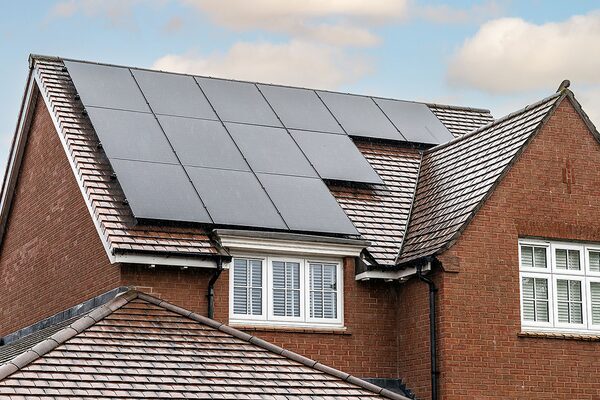
The targets describe a trajectory towards generating renewable electricity equivalent to all of Wales' annual consumption by 2035, with local ownership of at least 1.5 GW of capacity by the same date3. For a household, that translates into three things: more renewable generation on the system, more of it owned locally, and a growing role for domestic installations in the national count.
The independence gained is partial and specific. Wales would still be connected to the GB grid, still dependent on gas for most of its electricity generation in the near term, and still subject to UK-level policy on support schemes and technology costs. The heat pump target is explicitly contingent on UK Government support3, which is a direct statement that Welsh energy independence has limits.
What local ownership does change is where the value sits. Capacity owned by households, communities and public bodies keeps generation and its benefits within Wales rather than exporting them to outside developers. The 0.99 GW achieved by the end of 2024 against the 1.5 GW target shows both progress and the distance remaining4.
For an individual household, the practical position is that domestic solar PV, battery storage and heat pumps contribute to a national target that is measured, reported and revised. The microgeneration uptake by nation page sets out how Welsh installation rates compare with the rest of the UK. The wider constitutional picture, including which energy powers are devolved and which are reserved, is covered in which energy powers are devolved and which are reserved, and the relationship between devolution and household energy independence is examined in devolution and household energy independence.
The dependence that remains is real: a grid connection, a supplier, gas for most generation, and a policy framework set partly in Westminster. The targets reduce the first two over time and do not touch the last two.
Sources17 cited
- Energy Generation in Wales 2023, Welsh Government, 2025
- Energy Generation in Wales 2021, Welsh Government, 2022
- Renewable Energy Deep Dive: Biannual Recommendations Update 2, Welsh Government
- Publication of Energy Generation and Energy Use in Wales: First Combined Edition, Welsh Government
- Publication of Energy Use in Wales Report: Third Edition, Welsh Government
- Smart Living Initiative Annual Report, Welsh Government, 2019
- Publication of Summary of Responses: Consultation on Wales' Renewable Energy Targets, Welsh Government
- Renewable Energy Deep Dive: Biannual Recommendations Update 3, Welsh Government
- Publication of Energy Generation in Wales 2020 Report and Energy Use in Wales Second Edition, Welsh Government
- Wales' Fourth Carbon Budget, Climate Change Committee
- Part L Wales Impact Assessment: Domestic Existing and New Build, Welsh Government
- Climate Change (Wales) Regulations 2021: Integrated Impact Assessment, Welsh Government
- Energy Statistics for Scotland Q3 2022, Scottish Government, 2022
- Battle of the Nations: Renewable Uptake Across the UK in 2023, MCS Certified
- More Than 100,000 Welsh Home and Business Owners Turn to Renewable Energy, MCS Certified, 2023
- £10 Million Support for Community Led Energy Projects Across Wales, Welsh Government
- £129 Million Support for Welsh Communities Transition to Renewable Energy, Welsh Government
 Energy Supply in WalesWales makes more electricity than it uses, but how much of it comes from renewables, and will that reach all of it by 2035?
 Community Energy in WalesWales wants more of its energy owned by local people, not big companies.
 Climate TargetsWales is legally committed to net zero by 2050 under the Environment (Wales) Act 2016, with carbon budgets set in five-year periods.
 Fuel PovertyHow the Welsh Government defines and measures fuel poverty, the latest modelled estimate of 340,000 households (25%) as at October 2024, who is most affected, and how the Tackling Fuel Poverty Plan and the Warm Homes Nest scheme are meant to bring the figure down.
 Community Energy StatisticsHow much of the UK's energy comes from projects owned by local people, and is that number growing?
 Housing Stock Data for WalesHow energy efficient are Welsh homes, and how many have a rating?