

In this guide
Northern Ireland has a dedicated support scheme for households that heat with oil, and it takes the form of a £100 voucher rather than a discount on a bill. The Home Heating Oil Support Scheme opened to applications on 9 September 2026 and runs until 31 March 2027, with the qualifying months set as April and November 20261. It is administered by the Department for Communities, which received £36.4 million from the Northern Ireland Executive to deliver it2.
The reason a separate scheme exists is the fuel mix. Approximately 500,000 homes in Northern Ireland rely on oil as a primary heating source, roughly two thirds of households, and oil is bought outright from a supplier rather than billed monthly through an energy account2. Support mechanisms built around electricity and gas accounts do not reach those homes, so a voucher route was created instead. Around 340,000 households are expected to qualify4.
The scheme is a one-off payment, not an ongoing tariff or a standing discount. It does not change how a household buys oil, does not fix the price of a fill, and does not reduce dependence on imported fuel or on the supplier a household chooses. What it does is offset £100 of a single purchase, at a point when the household would otherwise carry the whole cost itself.
What the Home Heating Oil Scheme provides
The scheme pays a £100 voucher to eligible households for use with oil suppliers in Northern Ireland. Once activated, the voucher can be used to purchase home heating oil with any Northern Ireland oil supplier, which means the household is not tied to a particular merchant or to a particular delivery area1. The Executive described the mechanism as a £100 prepaid card that can be used at heating oil suppliers, and the scheme rules describe the same instrument as a voucher2. The two descriptions refer to the same digital payment.
The funding behind it is a £36.4 million support package agreed by the Executive for the Department for Communities to deliver2. Set against around 340,000 eligible households, that is the scale of the commitment: a fixed sum, allocated once, distributed as individual £100 payments4.
It is worth being precise about what this is not. It is not a price cap, a unit rate, a standing charge or a discount applied automatically to an account. There is no supplier relationship involved in the payment itself, because heating oil in Northern Ireland is not supplied through a billed account in the way gas and electricity are. The household buys oil when it needs it, at whatever price the local market offers on the day, and the voucher reduces the cost of one of those purchases.
That structure has a consequence for how the support lands. A household that fills its tank in the depths of winter, when demand and prices are highest, gets the same £100 as a household that fills in summer. The scheme does not smooth the seasonal price of oil, and it does not insulate a household from a rise in the price per litre. It is a fixed contribution to a variable cost.
The scheme also sits alongside, rather than replacing, the wider grant landscape in Northern Ireland. The Affordable Warmth Scheme funds energy efficiency upgrades, and the Northern Ireland Sustainable Energy Programme funds insulation and heating measures through obligated suppliers5. Those address the fabric and the heating system; the oil scheme addresses the fuel bill itself.
Why Northern Ireland needs an oil-specific scheme
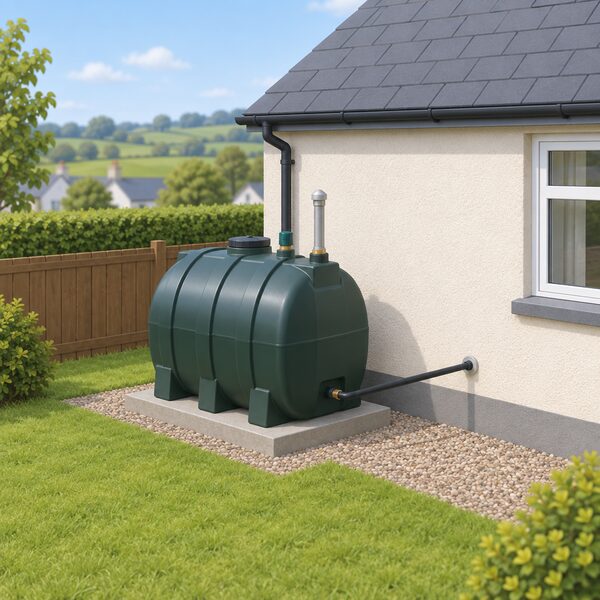
Northern Ireland's housing stock is unusual within the UK in how heavily it depends on oil. Approximately 500,000 homes rely on oil as a primary heating source, and the figure is put at roughly two thirds of households2. In the House of Commons in March 2026 the point was made that almost two thirds of homes in Northern Ireland rely on heating oil, and that over 60% of homes rely on oil for heat3. Legislation from 2022 recorded the same pattern, describing two-thirds of households in Northern Ireland using heating oil7.
Census 2021 data gives a more granular picture: 380,541 households, or 49.5% of the total, used oil only as their central heating fuel8. The gap between that 49.5% and the two-thirds figure reflects the difference between homes using oil alone and homes using oil as their primary source alongside other fuels. Both measures point the same way: oil is the dominant heating fuel in the province to a degree unmatched elsewhere in the UK.
The pattern is not confined to older housing. Evidence submitted in the 2023 review of building regulations noted that some 30% or more of new dwellings in Northern Ireland were still being constructed using home heating oil9. That matters for the future shape of support: new homes coming onto the market are still adding to the oil-heated stock rather than reducing it.
The practical consequence is that a support mechanism designed around billed energy accounts misses the majority of households in Northern Ireland. The Energy Bills Support Scheme Northern Ireland delivered a single, one-off £600 payment to all households in Northern Ireland, with Direct Debit customers receiving it into their bank account and other customers sent a voucher to redeem through their payment method10. The alternative fuel payment provided £100 to support households who do not use mains gas for heating7. The Home Heating Oil Support Scheme is the more targeted successor to that approach, aimed specifically at oil users and means-tested rather than universal.
"We know that this is a particular issue in Northern Ireland, where almost two thirds of homes rely on heating oil"
Who runs the scheme and who qualifies
The scheme is administered by the Department for Communities, which received the £36.4 million Executive allocation to support delivery2. Applications are made through nidirect, the Northern Ireland government services portal1. The Department's longer-term ambition, stated in its own guidance, is to improve the energy efficiency of Northern Ireland's housing stock, reducing carbon emissions and helping to keep homes comfortably warm at an affordable cost11. The oil scheme sits within that wider programme of work rather than standing alone.
Eligibility has three elements, all of which must be met. The household must use oil as its primary source of heating, must be resident in Northern Ireland, and must, in either of the qualifying months, be in receipt of a qualifying benefit, or be a single person or couple, including pensioners, with an annual income of less than £30,000 net of allowable deductions1.
The qualifying benefit route and the income route are alternatives, not cumulative. The published eligibility groups include households in receipt of Disability benefits, pensioner households not in receipt of Pension Credit with income below £30,000, and households on incomes below £30,000 that are not in receipt of income-related benefits2. That last group is significant: it captures households that fall just outside the benefit system but still face the full cost of an oil fill.
| Element | Requirement |
|---|---|
| Fuel | Oil as the primary source of heating1 |
| Residence | Resident in Northern Ireland1 |
| Benefit route | In receipt of a qualifying benefit in a qualifying month1 |
| Income route | Single person or couple, including pensioners, with annual income under £30,000 net of allowable deductions1 |
| Address limit | One voucher per eligible residential address1 |
The address limit is stated without qualification: only one voucher will be issued per eligible residential address1. Where a property is shared between two households, or where an annexe or flat shares an address, the support is still a single £100 payment. The unit of entitlement is the address, not the household or the person.
The scheme's territorial extent is Northern Ireland, and the application route reflects that: the guidance states that if you live in Northern Ireland, you may be eligible to apply online12. There is no equivalent scheme in England, Scotland or Wales under this name. Scotland operates a separate Emergency Heating Oil Scheme, administered by Advice Direct Scotland, which pays £300 per eligible household directly to the supplier and opened for applications from 1 April13. Wales has run its own support for oil and LPG heating costs, including a one-off £200 payment for households on the Council Tax Reduction Scheme using heating oil or LPG15.
When the scheme opens and the qualifying months

Applications opened on 9 September 2026 and close on 31 March 20271. The qualifying months, which determine whether a household meets the benefit or income test, are April and November 20261. That means the assessment is not made on the household's circumstances at the moment of application, but on its circumstances in one of those two months. A household whose income or benefit status changed between April and November 2026, or after November, needs to check which month it meets the test in.
The opening date was announced in advance. In April 2026 the Executive confirmed agreement on the scheme and stated that officials would work at pace to open it, with further details to follow2. The opening date of 9 September 2026 was then announced separately4. The regulations underpinning the temporary financial assistance were screened on 3 September 2026 and recorded as new16.
The deadline structure matters for two reasons. First, the application window is fixed and does not roll forward: a household that misses 31 March 2027 has no route into this scheme. Second, the qualifying months sit in the past relative to the application window, so a household applying in, say, February 2027 is being assessed against April or November 2026 circumstances.
The scheme is one element of a wider set of Northern Ireland energy support arrangements that have operated on different timetables. The Energy Price Guarantee for domestic electricity and gas consumers in Northern Ireland was set out in scheme documents covering both fuels17. The Northern Ireland Energy Bills Support Scheme provided £400 of support to households in Northern Ireland, and a similar scheme was to provide the same level of support to households in Northern Ireland from 1 November 202218. The £600 payment followed in December 202210. The oil scheme is the latest in that sequence, and the first to be means-tested and targeted specifically at oil users.
How to apply, and what to have ready
Applications are made online through nidirect1. The scheme rules direct applicants to nidirect for more information and to apply1. The application form asks for a defined set of information, and having it ready avoids a stalled application.
To apply online, the applicant needs a National Insurance number, their own or joint household income if they are not getting a qualifying benefit, and a contact email address or smartphone number12. The email address or smartphone number is not incidental: the voucher is delivered digitally, so a working contact route is part of the mechanism, not just a correspondence detail.
After applying, further evidence may be required to show that the address on the application form is the main home, that oil is the main heat source of the home, and what the income is12. These are the three factual claims the scheme turns on, and they are the three that verification will test.
The application deadline is 31 March 2027, and the guidance states plainly that the application must be made before the scheme closes on that date12.
For households that cannot complete an online form, support is available. The scheme is administered by the Department for Communities and applications run through nidirect, which provides telephone and office support alongside the online route1. Separately, the Northern Ireland Energy Advice Service, managed by the Northern Ireland Housing Executive, provides advice on all energy efficiency schemes and can be contacted by email at nienergyadvice@nihe.gov.uk19. That service is not the scheme administrator, but it is a route to guidance on what a household may be entitled to.

How eligibility is checked, and what happens if a decision goes against you
Eligibility is established through automated and manual verification, and applicants have a right to a review of a decision1. The two-stage structure reflects the nature of the claims being tested. Some elements, such as benefit receipt, can be checked against departmental records automatically. Others, such as whether oil is the main heat source at a particular address, or what a household's income is, may require manual checking and supporting evidence.
The evidence a household may be asked to provide maps directly onto the three eligibility claims: that the address on the application form is the main home, that oil is the main heat source, and what the income is12. A household that has its documentation in order before applying is in a stronger position if manual verification follows.
The right to a review is the route for a household that believes a decision is wrong. The published rules confirm that right exists1. What the material does not provide is a separate published appeals timetable or a named review body, so the practical step is to pursue the review through the Department for Communities rather than to submit a fresh application. A second application would in any case run into the address limit, since only one voucher is issued per eligible residential address1.
It is worth noting how other schemes in the same family handle verification failures, because it shows the range of consequences. Under the Boiler Upgrade Scheme, which Ofgem administers, a property owner who refuses a site audit request may have payment withheld, the voucher or redemption application rejected, a voucher revoked, or grant already paid recouped21. That is a different scheme with a different administrator, but it illustrates that verification is not a formality and that refusal to cooperate carries consequences.
The Northern Ireland scheme's own verification provisions are set out in the scheme rules and the temporary financial assistance regulations1. Households should expect that the address and fuel claims in particular may be checked, since those are the elements that distinguish an oil-heated household from any other applicant.
Getting and using the voucher
The voucher is delivered digitally. The Executive described the mechanism as a £100 prepaid card usable at heating oil suppliers, and the scheme rules describe a £100 voucher for use with oil suppliers in Northern Ireland2. Once activated, the voucher can be used to purchase home heating oil with any Northern Ireland oil supplier1. There is no restriction to a single merchant or a nominated supplier list.
That open-supplier design is a deliberate feature. Because heating oil is bought from whichever local merchant offers the best price on the day, tying the voucher to one supplier would remove the household's ability to shop around. The scheme instead lets the household choose, and the voucher reduces the cost of the purchase wherever it is made.
The voucher has an activation step and a validity period. The scheme rules state that the voucher must be activated before it can be used, and that it is then valid for use with oil suppliers1. The published rules do not set out a single activation window in the material available here, so a household should treat the activation instruction that comes with the voucher as the authoritative deadline rather than assuming it can be left indefinitely.
The wider deadline that does apply is the scheme's own: applications close on 31 March 20271. Any voucher issued has to be dealt with inside that framework.
For context on how voucher-based energy support has worked in Northern Ireland before, the 2022 energy bill support payment issued vouchers as letters carrying the badges of the relevant electricity supplier and the UK government, containing a barcode, and those vouchers were valid until 31 March 202322. They could be reissued if lost, but customers were urged to redeem them as soon as possible22. The lesson from that exercise is that voucher-based support has a hard expiry and that lost instruments, while replaceable, cost time.

What the scheme means for household energy independence
The scheme is a £100 contribution to one oil purchase. It does not change the underlying position of an oil-heated household in Northern Ireland, and it is worth being clear about what that position is.
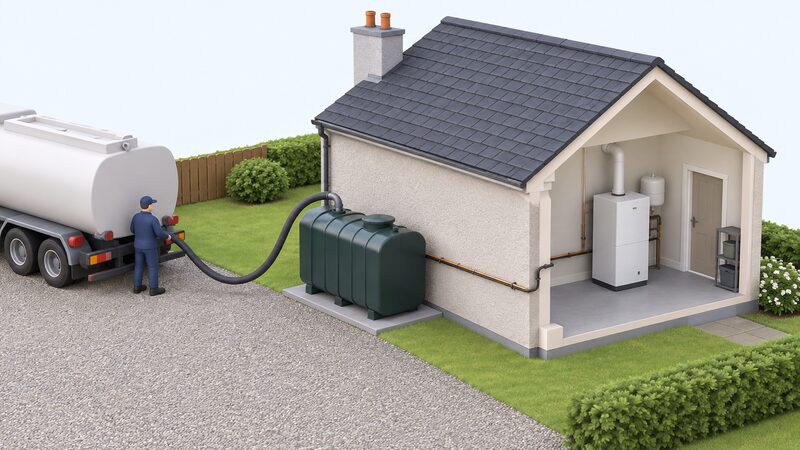
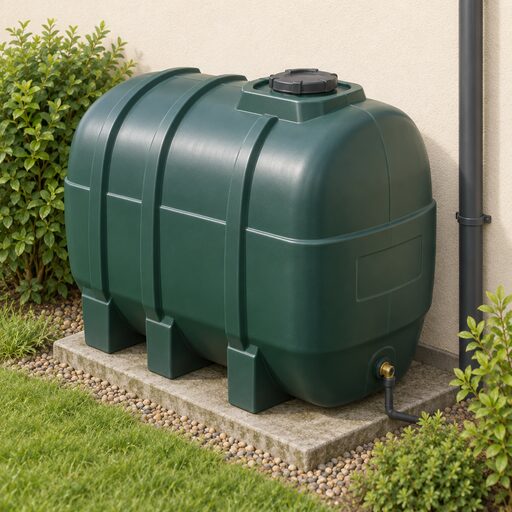
Oil heating gives a household a degree of independence that billed fuels do not. The fuel is bought outright and stored on the property, so a full tank is a physical reserve. There is no standing charge, no supplier account and no direct debit. A household that fills its tank in advance of winter has bought its winter heat in advance, at a price it chose to accept.
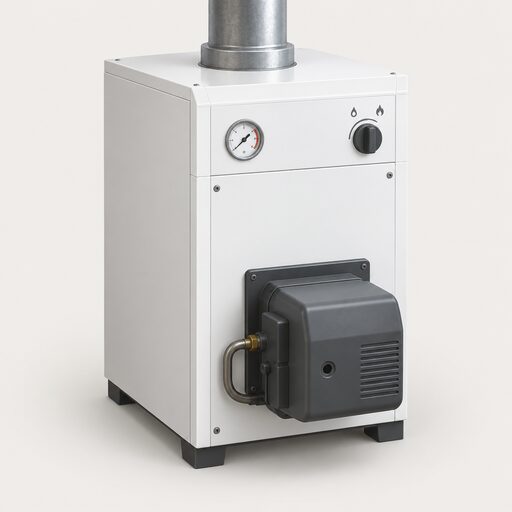
What remains is dependence of a different kind. The household depends on a supply chain it does not control: oil is imported, priced in a global market, and delivered by local merchants whose prices move with international crude and with seasonal demand. It depends on a tank and a boiler that need maintenance and eventual replacement. And it depends on being able to pay for a fill in a single lump sum, which is the specific pressure the £100 voucher addresses.
The scheme does not reduce any of that structural dependence. It does not insulate a household from a price rise, does not provide a stored reserve, and does not change the fuel. It is a one-off transfer that reduces the cost of a single purchase by £100.
The wider Northern Ireland support landscape addresses different parts of the problem. The Affordable Warmth Scheme, funded by the Department for Communities and delivered in partnership with the Housing Executive, local Councils and a range of local installers, provides up to £7,500 for energy-efficiency upgrades for owner occupiers and private renters23. The Northern Ireland Sustainable Energy Programme funds priority whole house solutions covering heating and insulation measures, priority individual measures, and non-priority schemes6. In 2024/2025 it treated 2,484 domestic properties25. Those schemes change the fabric and the heating system, which is where lasting reductions in fuel demand come from. The oil voucher changes the bill for one delivery.
There is also a direction of travel to note. The Department for Communities has consulted on a new Warm Healthy Homes Fund, a 12-week public consultation, intended to replace the Affordable Warmth Scheme when it ends in March 202811. Building regulations proposals for Northern Ireland have examined requiring heat pumps or alternative solutions, potentially biofuel, in areas without access to mains gas, and noted that a significant increase in the uptake of heat pumps is likely under both options considered if oil heating is no longer viable in new homes off the gas grid9. For a household heating with oil today, that suggests the support landscape will keep shifting, and that the oil-specific voucher is a response to the present fuel mix rather than a permanent feature of it.
Sources26 cited
- Home Heating Oil Support Scheme, Department for Communities, 2026-09-17
- Lyons announces agreement on Home Heating Oil Support, Department for Communities, 2026-04-16
- Heating Oil Support, Hansard, 2026-03-16
- Lyons announces opening date for Home Heating Oil Support Scheme, Department for Communities, 2026-08-26
- Energy saving grants in your area, nidirect, 2026-09-17
- Northern Ireland Sustainable Energy Programme list of schemes 2026/2027 published, Utility Regulator, 2026-04-01
- Energy Prices (Domestic Supply) (Northern Ireland) Regulations 2022(NorthernIreland)Regulations2022), Hansard, 2022-11-16
- The cost of living and energy bills in Northern Ireland, House of Commons Library, 2021
- Building Regulations discussion document and pre-consultation, Department of Finance, 2023-10-11
- Vital help with energy bills on the way for millions more homes across Great Britain and Northern Ireland, GOV.UK, 2022-12-19
- Warm Healthy Homes Fund: replacing Affordable Warmth Scheme ending March 2028 screening, Department for Communities, 2026-05-19
- Home Heating Oil Support, nidirect, 2026-09-17
- Support for households using heating oil and LPG, Scottish Government, 2026-09-17
- Fund opens for Scots to claim £300 heating oil support, Advice Direct Scotland, 2026-04-01
- Thousands of Welsh households get help with oil and LPG heating costs, Welsh Government, 2026-03-31
- Home Heating Oil (Temporary Financial Assistance) Regulations (Northern Ireland) 2026 screening, Department for Communities, 2026-09-03
- Energy Price Guarantee scheme documents, GOV.UK, 2022-10-31
- Energy Prices (Domestic Supply) (Northern Ireland) Regulations 2022, UK Parliament, 2022-10-18
- Changes to the Affordable Warmth Scheme, Department for Communities, 2023-09-08
- List of schemes published for the 2023/2024 Northern Ireland Sustainable Energy Programme, Utility Regulator, 2023-05-09
- Boiler Upgrade Scheme guidance for property owners, Ofgem, 2023-09-25
- Northern Ireland households to receive voucher support for energy bills starting in January, GOV.UK, 2022-12-30
- Minister Hargey announces improvements to Affordable Warmth eligibility criteria, Department for Communities, 2021-06-09
- The cost of energy in Northern Ireland, House of Commons Library
- 2024/2025 annual report of the Northern Ireland Sustainable Energy Programme published, Utility Regulator, 2024
- Consultation on the Warm Healthy Homes Fund, Department for Communities, 2026-09-17
 Home HeatingWhy do so many homes in Northern Ireland run on heating oil, and will that ever change?
 Housing Stock Data for NIMost homes in Northern Ireland heat with oil, so why are the grants and help different from the rest of the UK?
 Fuel PovertyWhy does Northern Ireland have such a high rate of fuel poverty, and how many households are affected?
 Utility Regulator NIWho sets your energy prices in Northern Ireland and who can you complain to?
 Oil Boilers and Heating OilHow oil-fired boilers work, the kerosene they burn, and the tanks, burners and servicing they need.
 Energy Supply in NICan you get gas where you live in Northern Ireland, and what happens if your power goes off?