
In this guide
Around a quarter of households in Northern Ireland are counted as fuel poor. The most recent published estimate puts the figure at 24% of all households, and that estimate is for 20211. Fuel poverty there is measured with the 10% indicator: a household is fuel poor if the fuel costs required to maintain a satisfactory heating regime exceed 10% of household income3. A satisfactory regime means 21 degrees Celsius in the main living room and 18 degrees Celsius in other occupied rooms2.
The 2021 estimate is now the newest official one. Estimates for Northern Ireland have not been published for 2022 or later years1, which means the published rate predates the 2022 energy price shock and the oil price movements since. A building regulations consultation in October 2023 cited 247,000 households in fuel poverty, a rate of 34%4. In April 2026 the Department for Communities restated 24% of households as living in fuel poverty before the recent surge in oil prices5.
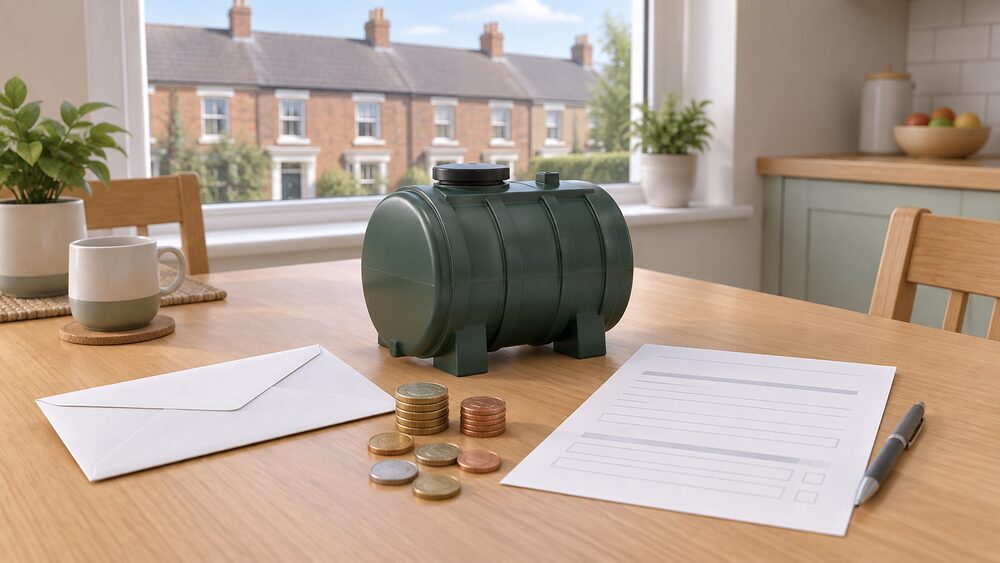
Fuel poverty in Northern Ireland is shaped by a distinctive heating mix. At Census 2021, 63% of households used heating oil and 33% mains gas2. Oil is bought in bulk, unregulated by a price cap and delivered by road, so households carry the full swing of the market and must find several hundred pounds at a time. That is the central fact behind both the rate and the schemes built to answer it: the oil question in Northern Ireland heating is inseparable from the fuel poverty question.
The Affordable Warmth Scheme and what its wind-down means
The Affordable Warmth Scheme has been the main fuel poverty energy efficiency scheme in Northern Ireland since September 20149. In September 2023 the Department for Communities announced a two-year extension so that the scheme would continue until March 202610. A House of Commons briefing records it as currently planned to run to 202611. A departmental screening document in May 2026 refers to the current Affordable Warmth Scheme as having business case approval until March 2028, and describes a Warm Healthy Homes Fund as replacing it12. Those dates are not consistent with each other, and a household planning work should treat the closing date as unsettled rather than fixed.
For anyone with a live interest, the entry point has not changed: contact the NI Energy Advice Service. If the service establishes that the household meets the entry requirements, an application form is sent out, to be completed and returned with supporting documents to the local Grant Office13. That route also covers referral to whatever successor arrangement applies, since the advice service makes referrals to energy grants and other sources of help14.
The direction of travel matters for household independence. A grant scheme that fits insulation or a replacement boiler reduces the amount of fuel a home needs permanently. A cash payment towards a bill does not. Northern Ireland's current position leans on the second while the first is between schemes. The successor is the Warm Homes, Healthy Futures work and the wider fuel poverty strategy.
Measurement: the 10% indicator, not the low income low energy efficiency measure
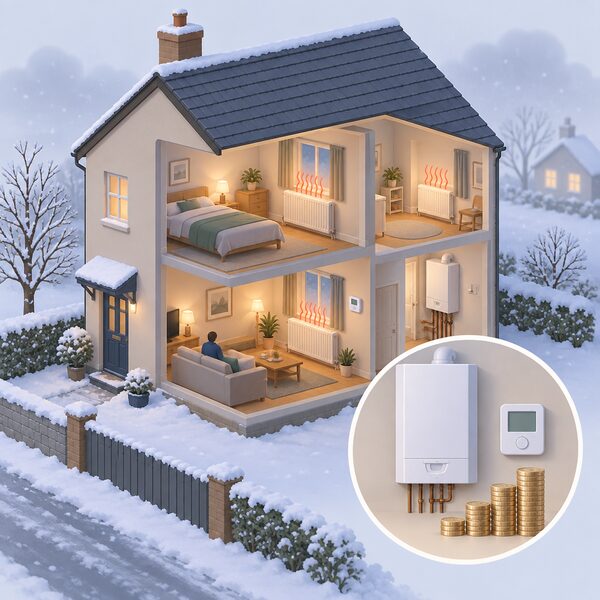
Northern Ireland uses the 10% indicator, applied by the Northern Ireland Housing Executive: a household is fuel poor if fuel costs required to maintain a satisfactory heating regime are greater than 10% of household income3. The Department for Communities states the rule as needing to pay more than 10% of full household income to maintain a satisfactory heating regime at an affordable cost6. This was originally the common definition across Scotland, Wales and Northern Ireland: a household was fuel poor if it would have to spend more than 10% of its income to keep its home at a reasonable temperature15.
Three features of the measure are worth understanding before reading any rate:
- It is a modelled requirement, not observed spending. A household that keeps the heating off to save money is still fuel poor if the modelled cost of proper heating would exceed the threshold.
- The threshold rests on full household income, so a change to how income is treated moves the rate without anything changing in the homes themselves.
- It is sensitive to fuel prices. Because it divides a modelled fuel bill by income, a price spike pushes large numbers of households across the line in a single year, which is why the pre-2022 and post-2022 figures diverge so sharply.
The 10% approach differs from the low income low energy efficiency framing used elsewhere in the UK, and it means Northern Ireland's rate is not directly comparable with an English figure. It is closer in construction to the Welsh measure, which also asks whether a household needs to spend more than 10% of income on all household fuel use to maintain a satisfactory heating regime3, and differs from the Scottish definition. Why the four nations count differently, and why that matters for grants, is covered in why grants differ by nation.
From 34% to 24%: reading the published figures
| Figure | Basis | Who published it | Date |
|---|---|---|---|
| 24% of all households | Latest official fuel poverty estimate, for 20212 | Official statistics briefing | 2026-08-06 |
| 24% in Northern Ireland | Cross-UK comparison of nation rates1 | Official guidance | 2025-04 |
| 247,000 households, a rate of 34%4 | Building regulations discussion document | Official consultation | 2023-10-11 |
| 18% of households | Position before the October 2021 price cap increase16 | Independent guidance | 2021-10 |
| 22% of the population | Stated in a decarbonisation article17 | Independent guidance | 2025-10-01 |
The spread here is real and unresolved. The 18% figure describes the position before the October 2021 cap increase16; the 24% figure is the modelled estimate for 2021 itself2; the 34% figure appeared in an October 2023 consultation alongside a count of 247,000 households4. A consultation opened by the Department for Communities describes nearly a quarter of the population as experiencing challenges in heating their homes adequately18, which sits with the 24% figure rather than the 34% one.
The practical consequence is that no one currently knows the rate. Estimates for Northern Ireland have not been published for 2022 or later years1, so the whole period of high energy prices is outside the official series. One of the changes welcomed in the draft strategy is the decision to model extreme and severe fuel poverty annually, which Energy Saving Trust describes as a welcome improvement allowing closer monitoring19. Until that happens, the gap between a 2021 estimate and 2026 conditions is filled by modelling rather than measurement. The National Energy Action Northern Ireland manifesto put the position plainly in June 2024:
"Northern Ireland is in the midst of a Fuel Poverty crisis."
What drives the rate: oil, off-gas and the housing stock
The single largest structural driver is the heating mix. With 63% of households on heating oil and 33% on mains gas at Census 20212, most homes in Northern Ireland buy their heat in a market with no price cap and no supplier-level social tariff mechanism. Oil is bought in minimum deliveries, which turns a running cost into a lump-sum cost, and a household without the cash for a fill has no partial substitute beyond electric heaters. That is a different kind of exposure from a metered gas bill and it is why the emergency response has taken the form of a voucher usable with oil suppliers rather than a credit to an energy account.
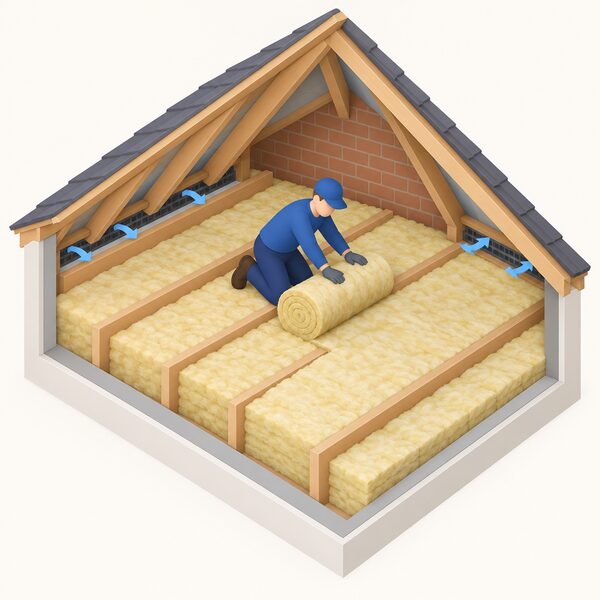
Building fabric is the second driver. The Affordable Warmth Scheme's priority list is itself a description of the stock's weaknesses: loft insulation to 300mm, roof, loft and eaves ventilation, hot water cylinder jackets, cavity wall insulation where suitable, draught proofing, and removal and replacement of ineffective cavity wall insulation13. Below that sit heating replacement, single glazing and solid wall insulation. Homes of solid wall construction were treated as a distinct and more expensive problem, attracting grant aid up to 10,000 pounds rather than the standard maximum21. In Wales, where comparable modelling exists, households in dwellings with solid walls were more likely to be fuel poor, at 32%3. The condition of the stock is covered further in Northern Ireland's housing stock and EPC ratings.
The third driver is scheme design. The Department for Communities has acknowledged that the Affordable Warmth Scheme relied on outdated data which set the income threshold of 23,000 pounds, and that this was considered unsuitable6. Energy Saving Trust made the same point, describing the threshold as now unsuitably low19. A threshold fixed years ago against incomes and prices that have since moved excludes households the measure itself would count as fuel poor.
Finally, there is no Warm Home Discount in Northern Ireland. Ofgem states that the Warm Home Discount Scheme does not run there, and points to the Affordable Warmth Scheme instead22. The Warm Home Discount in Scotland page sets out how that scheme operates where it does apply.

Affordable Warmth Scheme: grants, eligibility and the process it used
The scheme addresses the effects of fuel poverty and energy inefficiency and is directed at low-income households23. It replaced the Warm Homes Scheme24. It is funded by the Department for Communities and delivered in partnership with the Housing Executive, local councils and a range of local installers25; Belfast City Council, for example, is a partner with the Department and the Housing Executive26. Since September 2014 it has installed more than 56,000 energy efficiency measures in over 31,000 low-income households6. An earlier statement, from June 2021, recorded over 85 million pounds invested to improve energy efficiency for more than 19,500 low-income households25.
Who qualified
- Live in Northern Ireland, and own and occupy the property as a main home, or hold a life interest in it, or rent from a private landlord13
- Total annual gross income of less than 23,000 pounds13
- Not a Housing Executive or housing association tenant: the scheme is not available for tenants living in social housing13
- The property must not be a holiday home, bed and breakfast or commercial establishment13
- Private tenants need the landlord's consent for work to take place13
What was paid
| Item | Amount |
|---|---|
| Standard maximum grant | Up to £7,50013 |
| Solid wall construction needing insulation | Grant aid up to £10,00021 |
| Householder contribution | None expected for agreed work13 |
| Extra work the Grants Office will not fund | Householder pays the difference13 |
The measures, in priority order
- Insulation, ventilation and draught-proofing: loft insulation to 300mm, roof, loft and eaves ventilation, a hot water cylinder jacket, cavity wall insulation where suitable, draught proofing of doors and windows, and removal and replacement of ineffective cavity wall insulation13.
- Heating: replacing solid fuel, LPG or Economy 7 with natural gas or oil central heating; converting Economy 7 to a high efficiency electrical storage system only where gas and oil are not available; boiler replacement or system upgrade13.
- Windows: replacing single glazed windows13.
- Solid wall measures: solid wall insulation, detached properties only13.
Boiler replacement applied where a boiler was at least 15 years old and the householder was over 65, or had a child in receipt of Child Benefit or Kinship payments, or received Disability Living Allowance, Personal Independence Payment, Attendance Allowance or Industrial Injuries Benefit13. The boiler replacement scheme that ran separately is now closed.
Process points that carry real consequences: a technical assessment may take up to 60 minutes; the approval pack confirms how much grant aid is payable, that work may start, which measures are to be carried out and in what order of priority, and the date by which work must be completed, usually within three months of approval13. Supporting documents must prove ownership or private tenancy and main residence, and income evidence means wage slips, benefits award letters or bank statements13.
Fuel poor households in privately rented or owner-occupied properties can access support through the scheme, delivered by the Housing Executive working with local councils27. Fuller detail sits on the Affordable Warmth Scheme page.
NISEP: an 8 million pound fund raised from electricity customers
The Northern Ireland Sustainable Energy Programme is an 8 million pound fund collected from both domestic and commercial electricity customers through a public service obligation21. It is an energy efficiency programme for domestic and non-domestic customers29 and is administered by Energy Saving Trust on behalf of the Utility Regulator21. Its stated aim is to reduce carbon emissions28.
Because the money is raised through a levy on electricity bills, NISEP is not grant funding in the ordinary sense: electricity customers pay for it collectively, including households that never receive a measure. What it buys is fully funded or part-funded energy efficient home improvements, with what is available varying by location, tenure and income31.
| Feature | Detail |
|---|---|
| Fund size | £8 million21 |
| Administrator | Energy Saving Trust, on behalf of the Utility Regulator30 |
| Funding source | Public service obligation on all Northern Ireland electricity customers28 |
| Programme year | 1 April to 31 March, or until funds are exhausted30 |
| Current approved schemes | 2026/2027, approved and live32 |
| Not eligible | Self-build properties under construction; new builds and older houses undergoing extension works28 |
Schemes are published as a list each year, and applying means identifying the scheme wanted, checking eligibility and area availability, then contacting the relevant scheme manager on the telephone number or email address published against it33. Income criteria vary by scheme: the Keep Warm Scheme in the 2026/2027 list, for instance, sets a single person household income or pension below 33,000 pounds gross, and a couple, joint or single parent household below 40,000 pounds gross, with Housing Executive leaseholders not eligible34. Some listed schemes are closed, and the published list marks them as such30.
NISEP's future is now tied to the successor arrangements. On 2 April 2026 the Utility Regulator announced an extension running from 1 April 2027 to 31 March 2029, closable after the first year if the Department for the Economy's successor scheme is fully developed; if that successor is not operational, NISEP will continue for the second year, 2028/202935. The 2024/2025 annual report was published on 3 July 202629. More detail is on the NISEP page.
The Home Heating Oil Support Scheme: a £100 voucher for around 340,000 households
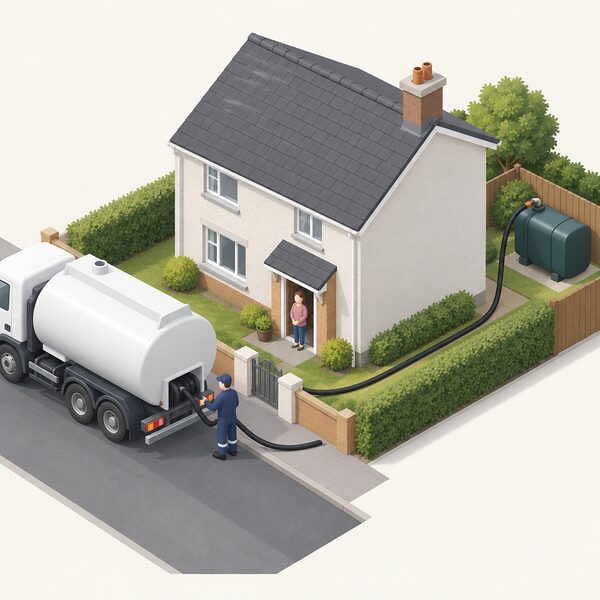
The Home Heating Oil Support Scheme was created to help households in Northern Ireland with the cost of home heating oil, and eligible households can apply for a 100 pound voucher for use with oil suppliers in Northern Ireland7. It rests on a 36.4 million pound support package agreed by the Executive, announced on 16 April 20265. The Department for Communities administers it36.
Eligibility, as published by the Department, covers households that use oil as their primary source of heating, are resident in Northern Ireland, and in either of the qualifying months are either in receipt of a qualifying benefit, or are a single person or couple, including pensioners, with an annual income of less than 30,000 pounds net of allowable deductions7. Households in receipt of disability benefits were named as a qualifying group when the package was agreed5.
| Element | Detail |
|---|---|
| Value | £100 per eligible household7 |
| Form | Digital pre-paid card or voucher37 |
| Households covered | Around 340,000 using oil as main heating source37 |
| Applications open | 9 September 202639 |
| Where usable | Any Northern Ireland oil supplier, once activated7 |
| Total package | £36.4 million5 |
Estimates of coverage were reported as more than 300,000 households in July 2026 and up to 340,000 in April 202638; the Department's own figure on going live was around 340,00037. Earlier in 2026 the opening date had not been announced38, and one independent summary in August 2026 still described the scheme as expected to open later in 202636.
Set against the scale of the problem, 100 pounds is a contribution to one delivery rather than a structural fix. For comparison, in December 2022 all households in Northern Ireland received a single one-off 600 pound payment towards bills under the Energy Bills Support Scheme40. A voucher leaves the household's fuel requirement, its insulation and its boiler exactly where they were. The Home Heating Oil Scheme page sets out the mechanics in full.
The draft Fuel Poverty Strategy and what comes next
Northern Ireland's last Fuel Poverty Strategy was published in 201118. The Department for Communities has consulted on a long-term strategy for tackling fuel poverty in Northern Ireland, together with proposals for a new fuel poverty energy efficiency scheme18. Energy Saving Trust agrees with the ten-year timeframe proposed for the strategy, 2025 to 203519. A related Warm Healthy Homes Strategy for 2026 to 2036 is intended to help address fuel poverty2, and the Warm Healthy Homes Fund is the proposed replacement for the Affordable Warmth Scheme12.
The consultation responses converge on one criticism. National Energy Action Northern Ireland has long advocated for an updated strategy, citing a clear need for a strategic, cross-departmental and cross-sectoral approach to Northern Ireland's fuel poverty crisis41. Its response welcomes the draft strategy's key objectives, proposed outcomes and actions, but is disappointed at the lack of specific, measurable targets, particularly a clear target for reducing fuel poverty41. Energy Saving Trust makes the same point: it would like to see the final strategy include targets for reducing fuel poverty19. NEA NI also urges that the finalised strategy be backed by comprehensive funding and a detailed action plan for effective implementation41.
That gap matters for households rather than only for policy watchers. Without a target there is no date by which a home currently in fuel poverty can expect to be out of it, and without a funded action plan there is no committed volume of insulation or heating replacement. The improvements that are conceded, notably annual modelling of extreme and severe fuel poverty19, improve the measurement of the problem rather than the fabric of the homes.
Where households stand on independence
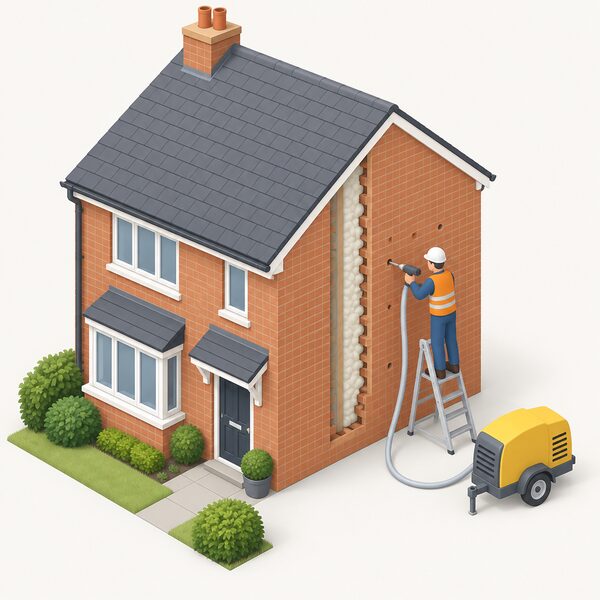
The honest position is that Northern Ireland's fuel poverty response currently reduces exposure to price rather than dependence on fuel. The 100 pound voucher is spent with an oil supplier and is gone. NISEP is funded by a levy the same households pay through their electricity bills. The Affordable Warmth Scheme, the one instrument that permanently cut how much fuel a home needs, is winding towards replacement with its income threshold acknowledged as outdated and its successor not yet running at scale.
What remains dependent, therefore: an unregulated oil market and road deliveries for 63% of households2; a levy-funded programme whose continuation past 2029 depends on a Department for the Economy scheme still in development35; a grant route whose closing date the official documents state variously as March 2026 and March 202810; and a strategy without a reduction target41. What a household can control is the fabric work itself, and the entry point for finding funding for that is the NI Energy Advice Service on 0800 111 4455, open 9am to 5pm Monday to Friday, or nienergyadvice@nihe.gov.uk34. Households in Northern Ireland may qualify for financial support towards the cost of loft and cavity wall insulation42. How the nations compare on all of this is set out across the four nations guide.
Sources42 cited
- Fuel poverty in the UK, House of Commons Library, 2025-04
- Fuel poverty statistics briefing, House of Commons Library, 2026-08-06
- Fuel poverty modelled estimates for Wales, October 2024, Welsh Government, 2025-10-16
- Building regulations discussion document and pre-consultation, Department of Finance NI, 2023-10-11
- Lyons announces agreement on home heating oil support, Department for Communities, 2026-04-16
- Warm Healthy Homes Fund consultation, Department for Communities, 2026-05
- Home Heating Oil Support Scheme, Department for Communities, 2026-09-17
- Support with energy costs, Consumer Council for Northern Ireland, 2026
- Northern Ireland housing statistics 2023-24, NISRA, 2024-09-25
- Changes to the Affordable Warmth Scheme, Department for Communities, 2023-09-08
- Energy efficiency schemes briefing, House of Commons Library, 2026-09-17
- Warm Healthy Homes Fund replacing the Affordable Warmth Scheme: screening, Department for Communities, 2026-05-19
- Affordable Warmth Scheme, Northern Ireland Housing Executive, 2026-09-17
- Energy advice and support, Northern Ireland Housing Executive, 2026-09-17
- Fuel poverty definitions, House of Commons Library, 2026-09-17
- Fuel poverty campaign, CIPHE, 2026-09-17
- Decarbonisation in Northern Ireland: the potential of a one-stop shop, Energy Saving Trust, 2025-10-01
- Fuel poverty strategy consultation, Department for Communities, 2026-09-20
- A new fuel poverty strategy for Northern Ireland, Energy Saving Trust, 2025-07-03
- Warm, safe and healthy at home: NEA NI manifesto for homes 2024, National Energy Action, 2024-06-24
- Household energy support schemes briefing, House of Commons Library, 2026-05-13
- Warm Home Discount, Ofgem, 2026-09-17
- Grants we offer, Northern Ireland Housing Executive, 2026-09-17
- Affordable Warmth Scheme consultation document, Department for Communities, 2017-11
- Improvements to Affordable Warmth eligibility criteria, Department for Communities, 2021-06-09
- Affordable Warmth Scheme partnership, Belfast City Council, 2026-09-20
- Northern Ireland insulation support, National Insulation Association, 2026
- NISEP programme page, Energy Saving Trust, 2026-09-07
- 2024/2025 annual report for NISEP published, Utility Regulator, 2026-07-03
- NISEP list of schemes 2024-25, Utility Regulator, 2024-10
- Financial support for home energy, Energy Saving Trust, 2026-09-14
- NISEP list of schemes 2026/2027 published, Utility Regulator, 2026-04-01
- NISEP 2024/2025 list of schemes, Utility Regulator, 2024-04-03
- NISEP list of schemes 2026-27, Utility Regulator, 2026-04
- Extension announced for NISEP, Utility Regulator, 2026-04-02
- Other help with fuel for pensioners, Turn2us, 2026-08-05
- £100 Home Heating Oil Support Scheme goes live for applications, Department for Communities, 2026-09-08
- Heating oil prices and the £100 payment, Which?, 2026-04-24
- Opening date for Home Heating Oil Support Scheme, Department for Communities, 2026-08-26
- Help with energy bills for homes across Great Britain and Northern Ireland, GOV.UK, 2022-12-19
- Draft new Fuel Poverty Strategy for Northern Ireland: consultation response, National Energy Action, 2026-05-26
- Insulation, nidirect, 2026-09-02
 Fuel Poverty in the UKWho counts as living in fuel poverty, and why does the number change depending on where in the UK you live?
 Housing Stock Data for NIMost homes in Northern Ireland heat with oil, so why are the grants and help different from the rest of the UK?
 Home HeatingWhy do so many homes in Northern Ireland run on heating oil, and will that ever change?
 Local Fuel Poverty StatisticsHow many households in your area struggle to afford their heating?
 Fuel Poverty PolicyWhy does fuel poverty mean something different depending on where in the UK you live?
 Fuel Poverty StatisticsWhy do fuel poverty figures differ across the UK, and why is there no single number for the whole country?