

In this guide
Wales uses a "10 per cent of income" measure: a household is in fuel poverty if it needs to spend more than 10% of its income, including housing related benefits and net of council tax, on all household fuel use to maintain a satisfactory heating regime. Needing to spend more than 20% is severe fuel poverty, and needing to spend between 8 and 10% is classed as being at risk of fuel poverty1.
On that measure, around 340,000 households in Wales, 25% of all households, were estimated to be in fuel poverty as at October 2024, including 63,000 households (5%) in severe fuel poverty, with a further 215,000 households (16%) at risk1. That is roughly one household in four fuel poor and a further one in six close to it. Among vulnerable households the estimate was around 304,000 (26%), of which 46,000 (4%) were in severe fuel poverty and 198,000 (17%) at risk1.
The figures are modelled, not counted directly. They are produced by the Welsh Government using the Welsh Housing Conditions Survey 2017-18 as a base2, with household energy requirements modelled using the Building Research Establishment Domestic Energy Model (BREDEM 2012 version 1.1), and October 2024 chosen as the reference point because it falls in line with the energy price cap reviews1. Because of differences in methodology, the Welsh Government states that the 2024 estimates cannot be directly compared with previous figures, although broad comparisons can be made1.
The Welsh definition and its three thresholds
The Welsh measure is an income share measure applied to full household income. Welsh Government guidance states that fuel poor households are "those needing to pay more than 10% of their full household income to maintain a satisfactory heating regime", and that "those paying more than 20% are considered to be in severe fuel poverty"3. The statistical release adds the intermediate band: a household needing to spend between 8 and 10% is classed as being at risk of fuel poverty1.
Three elements do the work. The first is the income base: income including housing related benefits and net of council tax1. The second is the fuel definition, which covers all household fuel use rather than heating alone1. The third is the notional heating standard, described below, which sets the spend the model attributes to the household whether or not the household actually spends it. That last point matters: the measure captures the cost of being adequately warm, not the bill actually paid, so households that ration heating are still counted.
The Tackling Fuel Poverty plan uses the same wording, defining fuel poverty as "Households needing to pay more than 10% of their full household income to maintain a satisfactory heating regime" and severe fuel poverty as more than 20%4. For a household weighing its own position, the practical consequence is that the Welsh threshold is sensitive to income as well as to the dwelling: a fall in income can move a household across the line with no change to the house.
What "satisfactory heating regime" means in degrees and hours
| Measure | Wales, 2021 | Wales, 2024 |
|---|---|---|
| Mean annual fuel cost for a satisfactory heating regime | £1,5771 | £2,3351 |
| Median annual household income | £25,9001 | £31,4001 |
| CPIH inflation rate | 2.5%1 | 3.3%1 |
The temperatures and heating hours behind the "satisfactory heating regime" are not set out in the figures published with the Welsh estimates, so this page does not state them. What is published is the modelling behind them: household energy requirements were modelled using the Building Research Establishment Domestic Energy Model (BREDEM 2012 version 1.1), with October 2024 chosen as the reference point because it falls in line with the energy price cap reviews1.
One household in four: the October 2024 headline

The headline modelled estimate is 340,000 households in Wales (25%) living in fuel poverty in October 2024, with a further 215,000 households (16%) estimated to have been at risk5. The National Energy Action figure is the same, described as 340,000 households, equivalent to 25% of households, with 63,000 in severe fuel poverty, equivalent to 5%6. A Welsh Government written statement in February 2026 refers to "the estimated 340,000 households (25%) living in in fuel poverty"7.
Set against earlier modelling, the direction is clear even if the arithmetic is not directly comparable. Previous figures were 196,000 households (14%) in 2021 and 155,000 (12%) in 20181. In 2021, 38,000 households (3%) were in severe fuel poverty and 153,000 (11%) at risk8; in 2018 the severe figure was 32,000, equivalent to 2% of households9. Further back, 291,000 households were projected to be in fuel poverty under the 10% measure in 2016, which was 23% of households10.
What sits behind the rise is the gap between income growth and fuel cost growth. Modelled median annual household income rose 33% between 2018 and 2024, from £23,600 to £31,400, while mean annual household fuel costs for a satisfactory heating regime rose by 74%, from £1,343 to £2,3351. Between 2021 and 2024 alone, income rose 21% from £25,900 while fuel costs rose 48% from £1,5771. CPIH inflation was 2.5% in 2021, 7.9% in 2022 and had eased to 3.3% by 20241.
"340,000 households in Wales were estimated to be living in fuel poverty, equivalent to 25% of households"
The estimates are weighted to represent 1.39 million households in Wales in 20241.
Severe fuel poverty and the "at risk" band
Severe fuel poverty is the sharper end of the same measure: needing to pay more than 20% of full household income to maintain a satisfactory heating regime4. As at October 2024, 63,000 households (5%) were in that position1. The concentration among poorer households is stark. Of lower income households, defined as those whose income is less than 60% of UK median household income before housing costs, around 195,000 (83%) were in fuel poverty, with 56,000 (24%) in severe fuel poverty and 28,000 (12%) at risk1.
The "at risk" band, 8 to 10% of income, is not a softer version of the same thing so much as an early warning group: these households are one price rise, one boiler failure or one drop in hours from crossing the threshold. At 215,000 households (16%) in October 2024, against 153,000 (11%) in 20211, the band has grown alongside the headline rate.
Among vulnerable households, defined as those containing a person aged 60 or over, a dependent child under 16, a single person under 25, or a person living with a long-term illness or disability1, 198,000 (17%) were at risk and 46,000 (4%) in severe fuel poverty1.
Who is most affected: age, work status, tenure and income
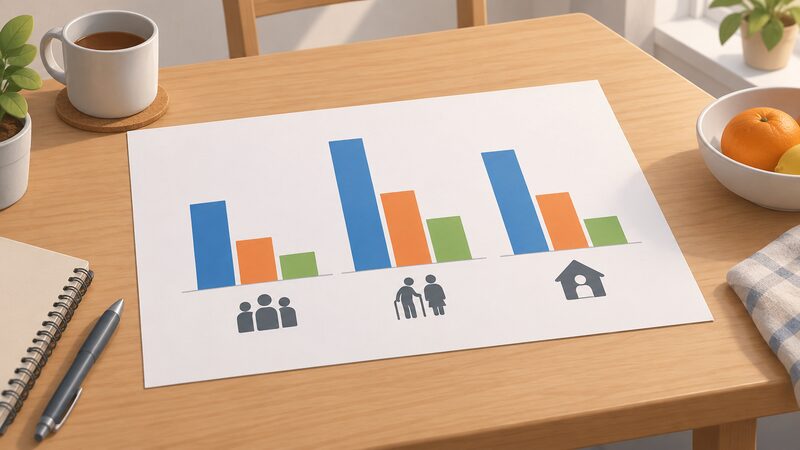
Fuel poverty in Wales is concentrated in small, older and workless households. Single-person households were the most affected, accounting for 55% of all fuel-poor households, with single pensioners without children making up 32% of the total and single non-pensioners without children 16%1. Two adult households with children represented just 5% of fuel-poor households1. Just over half (51%) of all fuel-poor households had a household reference person (HRP) aged 65 or over1.
Looked at as rates rather than shares, 43% of single pensioner households without children were fuel poor, against 8% of households with two adults and children1. By age of HRP, 44% of households with an HRP aged 75 and over were fuel poor, against 10% where the HRP was aged 35 to 441.
| Characteristic | Fuel poverty rate, October 2024 |
|---|---|
| HRP unemployed | 56%1 |
| HRP economically inactive | 37%1 |
| Someone in employment | 10%1 |
| On means tested benefits | 19%1 |
| Not on means tested benefits | 12%1 |
| Private rented sector | 30%1 |
| Owner occupiers | 24%1 |
| Social housing | 22%1 |
| Rural | 26%1 |
| Urban | 24%1 |
Tenure shares tell a different story from tenure rates: more than two thirds of households in fuel poverty were owner-occupied (68%), even though the private rented rate is higher1. Owner occupation dominates the Welsh stock, so most fuel-poor households are owners of homes they cannot easily afford to upgrade. Only 40% of households in fuel poverty received means tested benefits including housing related benefits1, which means benefit receipt alone is an imperfect way to find fuel-poor households. Further detail sits on the page covering fuel poverty rates by tenure in Wales.
Where the rates are highest: dwelling age, walls, heating and EPC band
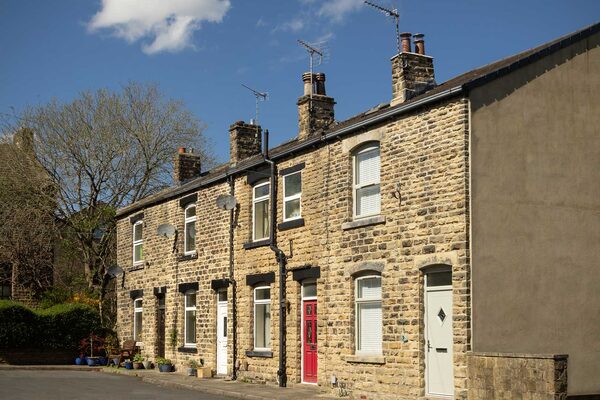
The dwelling side of the measure is dominated by the oldest and hardest-to-treat stock. Households in pre-1919 dwellings had a fuel poverty rate of 33%, against 14% in post-1980 properties1. Solid-walled dwellings ran at 33% in the main findings and 32% in the detailed section1. By built form, rates ran from 23% for detached to 28% for end of terrace1.
One finding cuts against the intuitive case for insulation as a fuel poverty cure: whether cavity walls were insulated (21%) or not (22%) had no significant impact on fuel poverty status1. That is a statement about a single measure in a stock where cavity fill is already widespread, not about insulation in general, and it sits alongside the much larger gaps by EPC band and heating system.
Heating system and fuel matter more than almost anything else. More than half of households living in dwellings without central heating (59%) were fuel poor, against 23% of those with central heating1. By fuel, an estimated 22% of households using mains gas for heating were in fuel poverty, compared with 53% of those using electricity and 30% of those using other types of fuel2. That spread is the single clearest link between fuel poverty and how Welsh homes are heated.
| EPC band | Fuel poverty rate |
|---|---|
| A to C | 15% (October 2024)1 |
| F or G | 59% (October 2024)1 |
| B to C | 5% (2018)9 |
| F and G | 43% (2018)9 |
The 2018 and 2024 rows are not directly comparable, for the methodology reasons given below, but both show the same structure: the band gap is the largest single dimension in the data. In 2018, 21% of households living in properties with uninsulated solid walls were fuel poor9. The Welsh Housing Conditions Survey found social housing had the highest percentage of dwellings in EPC bands C or above11, which is consistent with social housing showing the lowest fuel poverty rate of the three tenures in 2024. The stock picture is set out further in Wales' housing stock and EPC ratings and in the Welsh Housing Quality Standard, which is intended to ensure "households can afford to heat their homes and be lifted out of fuel poverty"12.
How the estimates are produced, and what they cannot tell you
The Welsh figures are modelled estimates rather than a survey count of household bills. Household energy requirements are modelled with BREDEM 2012 version 1.1, applied to dwelling data from the Welsh Housing Conditions Survey 2017-18, with fuel prices taken at a reference point chosen to line up with the energy price cap reviews1. Detailed analysis of the October 2024 estimates followed headline results published in August 20252.
Three limits follow. First, the dwelling base is ageing: 2017-18 stock data carried forward to a 2024 price point cannot capture retrofit work done since. Second, the model produces required spend, not actual spend, so it will not identify households that are cold because they have cut back. Third, the reference-point method makes the series highly sensitive to where in the price cap cycle the snapshot is taken. At the peak of the 2022 price shock, the Welsh Government's own scenario work estimated that 614,000 households in Wales could be in fuel poverty following the price cap increase, or 45% of Welsh households following the April 2022 price increase13. That 45% figure is a modelled scenario, not a measured rate, and it should not be read as a data point in the same series as the 25% headline.
The House of Commons Library noted in April 2025 that estimates for Wales and Northern Ireland had not yet been published for 2022 or later years14, which is why the October 2024 release, published in 2025, was the first refresh of the Welsh series for some time.
Comparing the four nations is harder than it looks
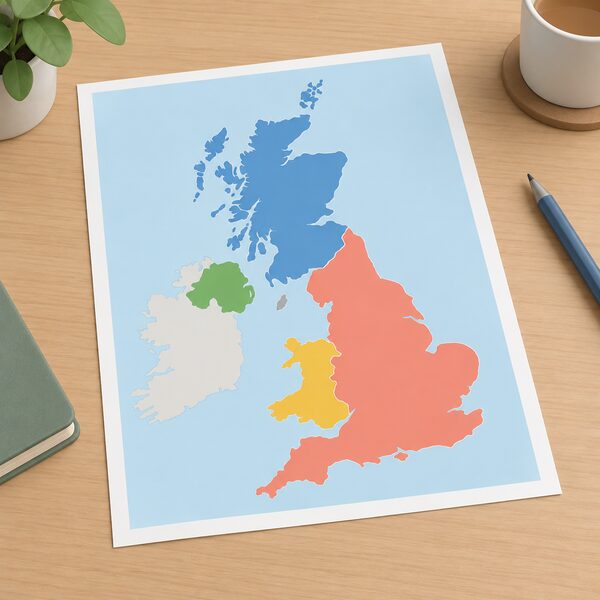
Each nation measures fuel poverty differently, and the resulting rates are not like-for-like. The ratios between them shift according to which measure and which year is being quoted. On the previous Welsh estimate of 14%, the Commons Library placed Wales alongside England at around 11% and Scotland at 34%14; on the earlier 12% Welsh figure, comparisons put England at around 13%, Scotland at 25% and Northern Ireland at 18%14.
The safest reading is that Wales sits above England and below Scotland on published estimates, while the Welsh 25% for October 2024 is the newest of the Welsh figures and is drawn from a different methodology again1. Definitions, income bases, heating regimes and reference dates all differ, so a direct ranking across the four nations is not supportable from these releases. The parallel pages set out each nation's own measure: fuel poverty in Scotland and fuel poverty in Northern Ireland, with the broader context in the guide to home energy across the UK nations and in why home energy grants differ across the four nations.
Nest and the Warm Homes Programme: what help exists
Nest is a Welsh Government scheme15, delivered as part of Welsh Government Warm Homes, which has been the most significant fuel poverty support programme in Wales16. The Warm Homes Programme historically consisted of the Nest and Arbed schemes17.
Eligibility for home improvement measures. Published eligibility criteria are that the household:
- owns or privately rents their home;
- receives a means tested benefit or lives in a low income household;
- lives in a home with an EPC rating of 54 (E) or less, or an EPC rating of 68 (D) or less where a household member has an eligible health condition15.
Scheme material also describes Nest as supporting people in Wales living on a lower income who receive a means tested benefit or live with a respiratory, circulatory or mental health condition18, and as funding energy efficiency improvements for low income households and those living in deprived communities across Wales19.
Advice is open to everyone. Nest provides all households in Wales with free, impartial advice, and the Welsh Government has stated that free expert energy advice is available to all householders in Wales via the Nest helpline7. The advice service supports households to access the most appropriate scheme for their circumstances5, and can signpost to other help including the Welsh Government's Discretionary Assistance Fund and the Fuel Bank Foundation.
A crisis route. Where a household is currently without heating or hot water and faces an immediate risk to their health and wellbeing, help is designed to cover repairs to boilers or electric storage heaters to restore heating or hot water as quickly as possible20. Households can check eligibility by calling Nest free on 0808 808 224420, or by visiting the Nest website18.
Delivery is through a network of Wales-based installers working under the management of the Nest team21, and the scheme includes an independent quality assurance service in which experts check scheme designs and inspect installers' work, with issues corrected before the installer is paid22. Scale should be judged realistically against a fuel-poor population of 340,000: between October 2024 and March 2025 the scheme delivered energy efficiency improvements to 348 households23.
The Welsh Government has said the new Warm Homes Programme will take over from Nest as its primary mechanism to tackle fuel poverty8. Its stated design is that all households in Wales, not just those in or at risk of fuel poverty, should continue to be eligible for advice and support, while measure funding focuses on households least able to pay for improvements themselves, in the owner occupier, private rented and housing co-operative sectors24.
What the strategy and the targets commit Wales to

The Tackling Fuel Poverty plan was published in March 2021 and runs to 20351, setting targets together with ten short term actions to be delivered by the Welsh Government25. The first review of the plan was published in June 20251.
The targets are:
- By 2035, no more than 5% of all Welsh households living in fuel poverty3.
- No households in persistent or severe fuel poverty, as far as is reasonably practicable, by 20354.
- The number of all households "at risk" of falling into fuel poverty more than halved against the 2018 estimate by 20354.
Measured against the October 2024 position, the distance is considerable: 25% against a 5% target, and 16% at risk against a target of more than halving an at-risk baseline that was estimated at 144,504 households in 20184. Wales has also missed an earlier deadline: a previous commitment set a target date of 2018 for eradicating fuel poverty26. Progress has not been linear in either direction. Welsh Government material from 2019 noted that fuel poverty had reduced by more than half over the past ten years, with 155,000 homes remaining, representing 12% of all homes27, and a 2020 statement put the number lifted out of fuel poverty since 2008 at around 177,00028. The price shocks from 2021 onward reversed a large part of that.
What this means for household energy independence
Fuel poverty in Wales is, on the published evidence, more an income and fuel-price problem than a pure fabric problem, but the fabric determines who is exposed. The rate is 15% in EPC bands A to C and 59% in bands F or G, 23% with central heating and 59% without, and 22% on mains gas against 53% on electric heating1. A household that lowers its required spend, through fabric measures or a cheaper heating fuel, reduces its exposure to the next cap movement; a household that cannot remains dependent on the cap, on benefit levels and on whatever discretionary support is running that winter.
The dependence that remains is substantial and should be stated plainly. The Welsh measure is calculated from regulated fuel prices, so the single largest determinant of the headline rate is set outside Wales. Support is conditional: Nest measures depend on tenure, income and EPC band15, and delivery volumes are modest relative to the fuel-poor population23. Free advice is universally available through the helpline7, but advice does not change a bill on its own. And the statistics themselves rest on a 2017-18 stock base until the planned 2027-28 Housing Survey feeds through1, so households and policymakers alike are working from a picture of the Welsh housing stock that is several years old.
Sources28 cited
- Fuel poverty modelled estimates for Wales: as at October 2024, GOV.WALES, 16 October 2025
- Fuel poverty in the UK, research briefing CBP-9838, House of Commons Library, 6 August 2026
- New Warm Homes Programme: integrated impact assessment, GOV.WALES, 8 March 2024
- Tackling Fuel Poverty 2021 to 2035, GOV.WALES, 2021
- Written statement: fuel poverty, GOV.WALES, 7 August 2025
- One quarter of Welsh households in fuel poverty, National Energy Action, 7 August 2025
- Written statement: fuel poverty, GOV.WALES, 26 February 2026
- New Warm Homes Programme: children's rights impact assessment, GOV.WALES, 8 March 2024
- Fuel poverty estimates for Wales 2018, GOV.WALES, 29 August 2019
- Tackling fuel poverty 2020 to 2035: consultation outcome summary, GOV.WALES, 2021
- Fuel poverty modelled estimates for Wales: as at October 2024, GOV.WALES, 16 October 2025
- Wales Fuel Support Scheme: integrated impact assessment, GOV.WALES, 18 July 2023
- Fuel poverty research briefing CBP-8730, House of Commons Library, April 2025
- Get help with energy efficiency in your home: Nest, GOV.WALES, 17 September 2026
- Energy efficiency schemes, research briefing CBP-9585, House of Commons Library, 13 May 2026
- Response to the consultation on the future Warm Homes Programme, Energy Saving Trust, 8 October 2025
- Next iteration of the Warm Homes Programme: review and recommendations, GOV.WALES, 13 June 2023
- Nest: a scheme to make your home warmer and more energy efficient, Isle of Anglesey County Council, 17 September 2026
- Welsh Government Nest scheme, Energy Saving Trust, 18 November 2024
- Get help with unexpected costs such as food and heating, GOV.WALES, 15 April 2026
- Warm Homes Nest scheme annual report 2024 to 2025, GOV.WALES, 26 March 2026
- Written statement: response to UK Government action on GBIS and ECO4, GOV.WALES, 23 January 2025
- Home energy efficiency schemes, research briefing CBP-9889, House of Commons Library, 2026
- New Warm Homes Programme: policy statement, GOV.WALES, 15 June 2023
- Tackling fuel poverty: priority actions, GOV.WALES, 23 June 2025
- Fuel poverty targets across the UK, GOV.WALES, 30 September 2020
- Welsh Housing Conditions Survey: energy efficiency of dwellings, April 2017 to March 2018, GOV.WALES, 2018
- Welsh Housing Quality Standard 2023: integrated impact assessment, GOV.WALES, 2 August 2024
 Fuel PovertyHow does Scotland decide if a household is in fuel poverty, and how many homes are affected?
 Fuel Poverty in the UKWho counts as living in fuel poverty, and why does the number change depending on where in the UK you live?
 Fuel Poverty PolicyWhy does fuel poverty mean something different depending on where in the UK you live?
 Fuel PovertyWhy does Northern Ireland have such a high rate of fuel poverty, and how many households are affected?
 Local Fuel Poverty StatisticsHow many households in your area struggle to afford their heating?
 Wales Renewable Energy TargetsWales aims for renewable sources to meet the equivalent of 70% of its electricity consumption by 2030 and 100% by 2035, with at least 1.5 GW locally owned by 2035.