

In this guide
The Affordable Warmth Scheme was Northern Ireland's main grant for making a cold, expensive home cheaper to heat. It ran from September 2014 and closed in March 20261. It offered grant aid of up to £7,500, and up to £10,000 where a home of solid wall construction needed insulation3. It was aimed at low-income households in the private sector: owner occupiers and private renters, not social housing tenants3.
The scheme was not open to everyone who wanted it. Households had to have a total annual gross income of less than £23,000, live in Northern Ireland, and own and occupy the property as their main home, or hold a life interest arrangement in it3. Local councils identified and referred households, and the Housing Executive delivered the work6.
It has now been replaced in policy terms by the Warm Healthy Homes Fund, which was out to consultation in May 2026 and is intended to cover the owner-occupier and private rented sectors5. Until that fund opens, households in Northern Ireland have a different set of schemes to look at, and the Warm Home Discount that operates in Great Britain does not run here at all8.
Grants of up to £7,500, and up to £10,000 for solid wall homes
The headline figures were simple and stayed stable for years. You could receive up to £7,500 through the scheme, and if your home was of solid wall construction and needed insulation, the Housing Executive might pay grant aid up to £10,0003. The same two figures appear in the parliamentary briefing on the scheme, which describes owner occupiers and private renters in Northern Ireland getting up to £7,500 for energy efficiency upgrades, with homes of solid wall construction needing insulation entitled to grant aid up to £10,0004.
Those ceilings mattered because solid wall insulation is the most expensive measure the scheme funded. It was also the most restricted: solid wall insulation was a Priority 4 measure, and it was available for detached properties only3. A household in a solid wall terrace, however cold, was not in line for the £10,000 figure.
The grant was not uprated with building costs. Council minutes from June 2021 record that in most instances the grant covered the required measures, but that it was unlikely the grant or allowance would be increased in line with inflated costs, because that would require a change in legislation9. That is a useful thing to understand about grant ceilings generally: they are set in legislation, and they do not track the price of a boiler or a roll of insulation.
The scheme's annual budget was set separately from the individual grant. In 2020-2021 the confirmed scheme funding was £12 million across Northern Ireland10. In September 2023 the Department for Communities said £14 million was available that year for energy efficiency works to the homes of fuel poor households2. Council minutes from June 2021 refer to funding of £16 million allocated for the overall scheme9. These are different years and different accounting points, and they are not directly comparable.
Who qualified: income limits, tenancy and property rules
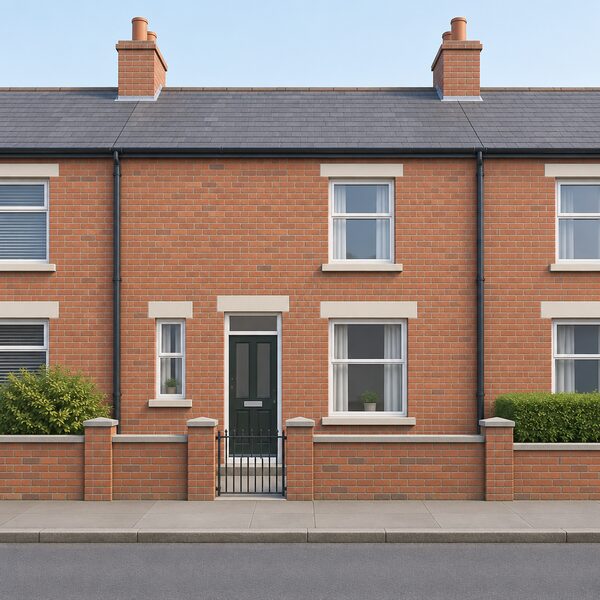
Eligibility rested on three things: who you were, what you earned, and what you lived in.
On income, the rule was a total annual gross income of less than £23,0003. That figure was itself the product of a change. In June 2021 the department announced it was increasing the income threshold from £20,000 to £23,000, and at the same time dis-applying certain benefits from the calculation of income, namely Disability Living Allowance, Personal Independence Payment, Carer's Allowance and Attendance Allowance6. Before that change, those benefits could push a household over the threshold and out of help, which is why councils had argued strongly for their removal11.
On tenure, the scheme was directed at low-income households in the private sector. You had to own and occupy your property as your main home, or have a life interest arrangement in the home, or rent from a private landlord3. It was not available for tenants living in social housing: you were not eligible if you were a Housing Executive or housing association tenant3. The scheme was primarily a targeted one, aimed at homeowners and private renters most likely to be in severe to extreme fuel poverty6.
On property, the home had to be your main residence and must not be a holiday home, bed and breakfast or commercial establishment3. You also had to live in Northern Ireland3.
Private renters had an extra condition. The Housing Executive needed the landlord's consent for work to take place in their property3. Under the replacement scheme proposed in 2026, the requirement goes further: tenants who privately rent from a landlord and satisfy the eligibility criteria may apply with agreement that the landlord pays half the cost of the energy upgrades5.
What the grant covered: the four priority measures
The scheme funded a defined list of measures, ranked in priority order. The ranking was not decoration: it governed what a household was offered and in what sequence.
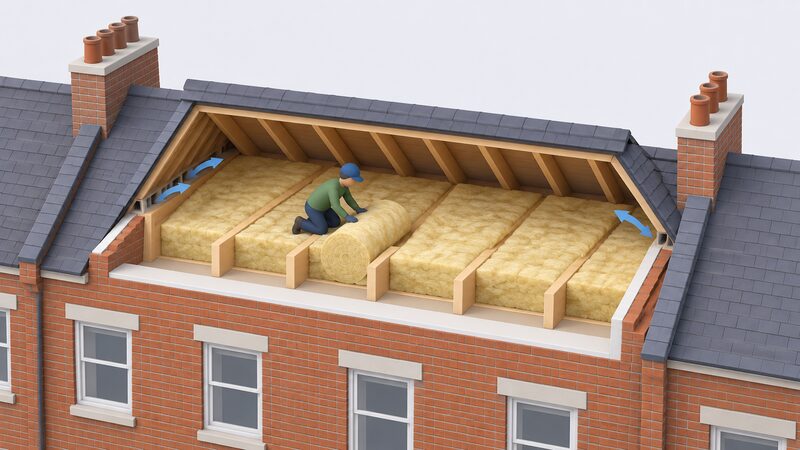
Priority 1, insulation, ventilation and draught-proofing. This covered installation or topping up of loft insulation to 300mm, roof, loft and eaves ventilation, a hot water cylinder jacket, cavity wall insulation where the property was suitable, draught proofing of doors and windows, and the removal and replacement of ineffective cavity wall insulation3.
Priority 2, heating. This covered replacing solid fuel, LPG or Economy 7 heating by providing natural gas or oil central heating, converting Economy 7 to a high efficiency electrical storage system where gas and oil were not available, and boiler replacement or system upgrade3.
Priority 3, windows. Replacing single glazed windows3.
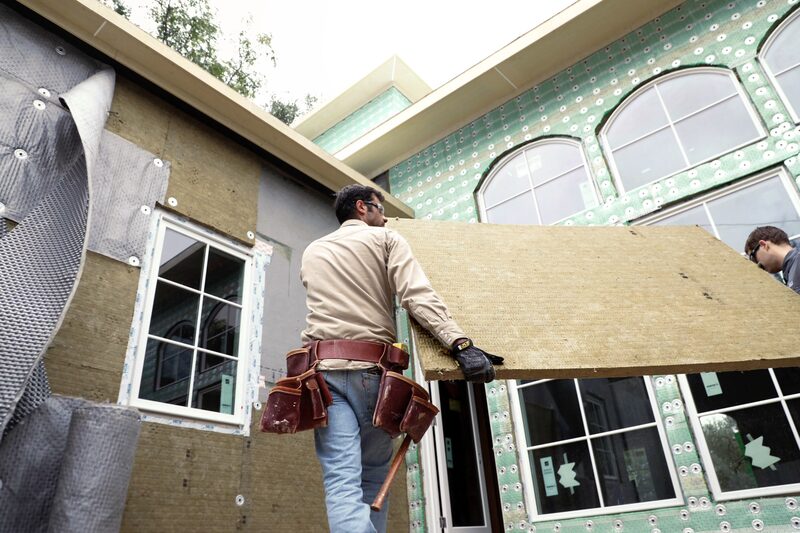
Priority 4, solid wall measures. Providing solid wall insulation, for detached properties only3.
The boiler replacement element carried its own conditions. It applied where a boiler was at least 15 years old, and the householder had to be over 65, or have a child in receipt of Child Benefit or Kinship payments, or receive Disability Living Allowance, Personal Independence Payment, Attendance Allowance or Industrial Injuries Benefit3. A later departmental statement described the boiler replacement measure as being for householders with children under 16 years old, or who receive Disability Living Allowance or Personal Independence Payment, or are aged over 65 and have an existing boiler at least 15 years old2. The two descriptions of the age condition differ, and the scheme rules are the fuller statement of it.
The scheme's own summary of what it funded was broader in everyday terms: home improvement measures such as loft and cavity wall insulation, replacement boilers and new double glazed windows10.
How to apply and the documents you needed
The route in changed over the scheme's life, and the change is the single most important thing to understand about how it worked.
For most of its existence the scheme was targeted. Local councils actively identified the most vulnerable households, who could then benefit from improvements, and referrals went to the Housing Executive6. Belfast City Council, for example, worked in partnership with the Department for Communities and the Housing Executive7. The scheme up to that point had been administered on a partnership basis between the Housing Executive and local councils, using a mix of self and targeted referrals12.
From September 2023 it became an applications-based process, delivered solely by the Housing Executive12. Further details on how to access the scheme from 1 September were to be published later that summer12.
Under the application route, the process ran like this. You contacted the NI Energy Advice Service. If the team understood that your household met the entry requirements, an application form was sent to you. You completed and returned it with supporting documents to your local Grant Office3. The supporting documents had to prove ownership or private tenancy at the property and that you occupied it as your main residence, and they had to cover your income: wage slips, benefits award letters and bank statements3. A technical assessment of the property could take up to 60 minutes3.
The contact details for the scheme were the Housing Executive's. The NI Energy Advice Service can be reached on freephone 0800 111 4455 or through the NI Energy Advice online form, and the Housing Executive delivers the scheme13. The email address for the service is NIenergyadvice@nihe.gov.uk3.

The rules once you were approved: timing, contractors and guarantees
Approval came in writing, and it set out the terms. The approval confirmed how much grant aid you would get, that you might start the work, what energy efficiency measures you were to carry out and the order of priority, and the date by which you must complete the work3.
Two rules did most of the work in protecting the household and the public purse. First, you must not start work until you received confirmation, in writing, that you qualified for grant aid, and the Housing Executive would not pay for any work started or finished in your home before you received written permission3. Second, the usual expectation was that you complete grant aid work within three months of the date of approval3.
The contractor was yours to choose and yours to manage. It was your responsibility to appoint a contractor you believed was competent to carry out the work at your home, and the Housing Executive stated plainly that it was not responsible for contractors and that you employ them3. Work had to follow all building regulations and any other statutory requirements3. Where a gas boiler was being installed, you had to use a registered Gas Safe Engineer3.
Guarantees were a condition of the award for the wall insulation measures. If you were awarded grant aid for cavity wall or solid wall insulation, the installer you employed had to be able to provide a minimum 25-year guarantee for the work3.
On cost, the scheme rules were clear that a household did not have to contribute to the work agreed through the scheme3. The exception was extra work: if the Grants Office did not agree to pay for extra items and the householder still wished to go ahead, the difference had to be paid3.
"We are not responsible for contractors. You employ the contractors."
The scheme's record: homes improved and money spent
The scheme's own figures describe a programme that reached tens of thousands of households over more than a decade. By May 2026 the consultation on its replacement recorded that it had installed more than 56,000 energy efficiency measures in over 31,000 low-income households5. An earlier departmental statement, in June 2021, said over £85 million had been invested to improve energy efficiency for more than 19,500 low income households since the scheme's inception in September 20146.
The most recent year with published statistics is 2023-24. Improvements were made to 2,746 homes at a cost of £14.4 million, and there were a total of 2,675 approvals issued1. The scheme was introduced in September 2014 and is targeted at fuel poor households in the private sector1.
For comparison, the Northern Ireland Sustainable Energy Programme, which funds a separate list of schemes, delivered 514 insulation measures across 469 properties through its Thermal Comfort 2 scheme in 2023-2414. The Affordable Warmth Scheme operated at a different scale entirely.
The referral machinery is worth seeing at council level, because it explains why waiting was normal. Belfast City Council's 2017-2018 annual target was 405 referrals, of which 320 were provided to the Housing Executive. The target was then reduced to 220 referrals for 2018-2019, with a budget of £68,780 against £73,305 the previous year15. By June 2018 there were over 950 people on an expression of interest list, and the service had received over 1,700 calls about the scheme between July 2017 and February 201815. In February 2018 the council was processing approximately 40 high priority cases, mainly households with no heating due to boiler issues, approximately 550 cases confirmed eligible but lower priority, and approximately 300 lower priority cases awaiting a call back to determine eligibility11.

Why the scheme wound down: budget cuts and funding uncertainty

Funding uncertainty was built into the scheme from the start, and it is the thread that runs through its whole history.
The scheme rules stated that grants were subject to the availability of funding3. In February 2018 the council recorded that no formal confirmation of funding had been received for 2018-2019, and that the Department for Communities was preparing a business case proposing a further five year lifespan for the scheme11. Written confirmation of the funding and referral targets arrived from the department on 11 June that year15. In 2020, delivery was interrupted by Covid-19 restrictions, resulting in an underspend9. In June 2021 a review by Business Continuity Services in the Department of Finance was examining the targeted approach and funding models, with a final report likely by the end of June 2021 and changes unlikely to be completed before the next financial year9.
The end came in stages. In September 2023 the department announced that the scheme had been extended for a further two years, meaning the current scheme would continue until March 20262. It closed on that date2. The 2026 consultation on the replacement fund was blunt about one of the reasons: the current Affordable Warmth Scheme relied on outdated data which set the income threshold of £23,000, and was considered too low5.
The replacement is the Warm Healthy Homes Fund. The consultation, published in May 2026, covers an energy efficiency scheme to improve warmth, health and energy affordability of low-income households in Northern Ireland, in the owner-occupier and private rented sectors5. It keeps the social housing exclusion: it is not available for NIHE, social housing or housing association tenants5.
Until the fund opens, households in Northern Ireland have other routes. The Northern Ireland Sustainable Energy Programme publishes a list of schemes for 2026-2027, with grants allocated on a first come first served basis16. Its schemes are generally targeted at households who do not qualify for assistance from other government schemes such as Affordable Warmth, and a household is not eligible if it was approved under another grant-funded programme for the same measure at the same property, or received a grant within the last 15 years for the same measure at the same property17. For households using oil as their primary source of heating, the Home Heating Oil Support Scheme is open to those resident in Northern Ireland who, in either of the qualifying months, are in receipt of a qualifying benefit, or are a single person or couple, including pensioners, with an annual income of less than £30,000 net of allowable deductions18.
The Warm Home Discount does not run in Northern Ireland. It is a fuel poverty reduction scheme that reduces the energy costs of low-income and vulnerable households across Great Britain8.
What the scheme meant for a household's independence
The Affordable Warmth Scheme was a grant, not a generating technology. It did not make a home self-sustaining, and it was never designed to. What it did was reduce how much heat a home loses and how efficiently it makes the heat it uses, which lowers the running cost of whatever fuel the household buys.
That distinction matters in Northern Ireland more than in most places, because so many homes there are off the mains gas grid and dependent on delivered oil. A household that took loft insulation to 300mm, cavity wall insulation and a modern boiler still buys its heat from a supplier, still depends on a delivery of oil, and still depends on the electricity grid to run the boiler's controls and pump. The scheme reduced the size of the bill and the amount of fuel needed; it did not change where the fuel came from.
The dependence it did reduce was on the grant itself, and that has now gone. The scheme closed in March 2026, and the fund intended to replace it was still at consultation stage in May 20262. A household that would have qualified under the old rules has no equivalent route open to it at the time of writing, and the Warm Home Discount that cushions bills in Great Britain does not apply here8.
The other lasting feature is the guarantee. Wall insulation installed under the scheme had to carry a minimum 25-year guarantee from the installer3. That obligation sits with the installer, not with the Housing Executive, which stated that it is not responsible for contractors and that the householder employs them3. A household relying on that guarantee years later is relying on a company, and on paperwork it kept.
Sources18 cited
- Northern Ireland Housing Statistics 2023-24, Northern Ireland Statistics and Research Agency, 2024-09-25
- Changes to the Affordable Warmth Scheme, Department for Communities, 2023-09-08
- Affordable Warmth Scheme, Northern Ireland Housing Executive, 2026-09-17
- Fuel Poverty in Northern Ireland (CBP-9585), House of Commons Library, 2026-05-13
- Warm Healthy Homes Fund consultation, Department for Communities, 2026-05
- Minister Hargey announces improvements to Affordable Warmth eligibility criteria, Department for Communities, 2021-06-09
- Stay warm at winter, Belfast City Council, 2026-09-20
- Warm Home Discount, Ofgem, 2026-09-17
- Affordable Warmth Scheme update, Belfast City Council, 2021-06-08
- Affordable Warmth update, Belfast City Council, 2020-08
- Affordable Warmth Scheme consultation response, Belfast City Council, 2018-02
- Change to the delivery of the Affordable Warmth Scheme, Department for Communities, 2023-06-02
- Energy saving grants in your area, nidirect, 2026-09-20
- 2023-24 NISEP Annual Report, Utility Regulator, 2025-07
- Affordable Warmth Scheme update, Belfast City Council, 2018-06-22
- Northern Ireland Sustainable Energy Programme List of Schemes 2026-2027 published, Utility Regulator, 2026-04-01
- NISEP List of Schemes 2026-27, Utility Regulator, 2026-04
- Home Heating Oil Support Scheme, Department for Communities, 2026-09-17
 Housing Stock Data for NIMost homes in Northern Ireland heat with oil, so why are the grants and help different from the rest of the UK?
 Home HeatingWhy do so many homes in Northern Ireland run on heating oil, and will that ever change?
 Community Energy in NICan a community group in Northern Ireland sell power to its neighbours, and is there funding to get a project off the ground?
 Utility Regulator NIWho sets your energy prices in Northern Ireland and who can you complain to?
 Fuel PovertyWhy does Northern Ireland have such a high rate of fuel poverty, and how many households are affected?
 Home Energy Planning Rules in NIDo you need planning permission for solar panels or a heat pump in Northern Ireland?