

In this guide
Northern Ireland runs its own household energy scheme landscape, and the differences from Great Britain are structural rather than cosmetic. The Affordable Warmth Scheme, delivered by the Housing Executive, offers up to £7,500 for energy-efficiency upgrades, with grant-aid up to £10,000 for homes of solid wall construction needing insulation1. It is directed at low-income households, and households with a total annual gross income of less than £23,000 may be able to get funding3.
Alongside it sits the Northern Ireland Sustainable Energy Programme (NISEP), an £8 million fund collected from domestic and non-domestic electricity customers and administered by Energy Saving Trust on behalf of the Utility Regulator3. NISEP grants are allocated on a first come first served basis, and at least 80% of the funding is available to vulnerable or priority customers4.
For the many homes off the gas grid, the Home Heating Oil Support Scheme provides a £100 voucher usable with oil suppliers in Northern Ireland, backed by a £36.4 million support package6. Heating oil prices are not regulated by Ofgem and are not covered by the energy price cap, so oil households carry price risk that gas and electricity customers do not8.
Energy grants in Northern Ireland: what exists and who it is for
The Northern Ireland landscape divides into three practical routes. The first is the Affordable Warmth Scheme, the Housing Executive's main grant for low-income households, aimed at helping with the effects of fuel poverty and energy inefficiency1. The second is NISEP, a levy-funded programme that pays for energy saving schemes through competitive bidding rather than individual application. The third is oil-specific support, which exists because so much of Northern Ireland heats with oil.
The scale of the Affordable Warmth Scheme is visible in the official statistics. Improvements were made to 2,746 homes at a cost of £14.4 million in 2023-249. That gives a working average, but the scheme is not a fixed entitlement: grants are subject to the availability of funding, so a household that qualifies on income may still find the budget for its area exhausted2.
NISEP works differently. It is an £8 million fund collected from both domestic and non-domestic electricity customers, and Energy Saving Trust is the Programme Administrator on behalf of the Utility Regulator in Northern Ireland3. The money does not go to households directly. It goes to scheme promoters who bid for funds, and the resulting schemes, such as boiler upgrades, LED light bulbs and draught proofing, are then delivered to customers10.
For households, the practical consequence is that eligibility depends on which scheme a local delivery partner is running in a given year, not only on personal circumstances. The Utility Regulator publishes the list of schemes approved for each programme year, and that list is the reliable place to check what is actually available4.
Several schemes familiar from Great Britain do not apply in Northern Ireland at all. The Warm Homes: Local Grant, for instance, is an England-focused scheme with its own eligibility rules, including privately rented properties with an EPC rating of Band D or E11. Scotland runs separate programmes, including grant funding of up to £7,500 for clean heating systems such as heat pumps12. Northern Ireland households should not assume a GB scheme name translates.
Affordable Warmth Scheme: grants of up to £7,500 for low-income households
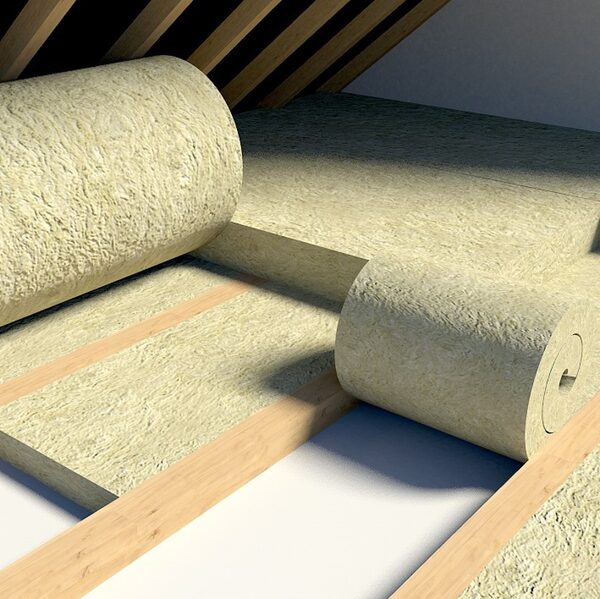
The Affordable Warmth Scheme is the principal grant for Northern Ireland households that need help making a home warmer. Owner occupiers and private renters in Northern Ireland may be able to get up to £7,500 for energy-efficiency upgrades, and homes of solid wall construction needing insulation may be entitled to grant-aid up to £10,0003. The Housing Executive's own scheme rules state the same headline figure: you may receive up to £7,500 through the Affordable Warmth Scheme2.
The two figures are not in conflict. They describe the same scheme at different depths of work. A home needing loft insulation, cavity wall insulation and heating controls sits within the standard maximum. A detached home with solid walls, where insulation costs far more per square metre, can attract the higher figure. The Department for Communities has described the scheme as offering a grant of up to £7,500, with £10,000 for solid wall measures14.
What the scheme does not do is guarantee the maximum. Grants are subject to the availability of funding, and the scheme is directed at low-income households rather than being open to all2. The 2023-24 figures, 2,746 homes improved at a cost of £14.4 million, show a scheme operating at real but finite scale9.
For a household's energy independence, the Affordable Warmth Scheme changes the fabric of the building rather than the fuel source. Insulation and heating controls reduce the amount of energy needed to keep a home warm, which lowers exposure to whatever the fuel costs. They do not remove dependence on a supplier, a grid connection or an oil delivery. What they do is shrink the bill that dependence produces.
"You may receive up to £7,500 through the Affordable Warmth Scheme."
Who qualifies: income under £23,000, tenure and property rules
Eligibility for the Affordable Warmth Scheme turns on three things: income, tenure and the property itself. Households with a total annual gross income of less than £23,000 may be able to get funding3. The scheme is directed at low-income households, and the eligible tenures include owner occupiers and those who rent from a private landlord2.
The income threshold is a gross figure, taken before tax and other deductions, and it applies to the household total rather than to one earner. That matters in a two-earner household where neither income alone looks high but the combined figure crosses the line.
Receipt of certain benefits is a separate route into help. If you receive certain benefits, you could be eligible for help to improve your home heating through the Affordable Warmth Scheme13. The scheme therefore has both a means-tested path and a benefit-linked path, and the Housing Executive means tests applicants for a grant6.
Tenure rules are broader than many households assume. Private renters are eligible, which distinguishes the Affordable Warmth Scheme from grant routes that require owner occupation. The practical complication for renters is documentary: the Housing Executive's grant process may require proof of ownership, which for a tenanted property means the landlord's involvement in the application.
Other Northern Ireland schemes set their own income limits, and they are not interchangeable. The Keep Warm Scheme, for example, uses a single person household income or pension threshold of less than £33,000 gross, and a couple or single parent family threshold of less than £40,000 gross, with Northern Ireland Housing Executive leaseholders excluded8. The Better Energy Homes Plus scheme uses £28,000 gross for a single person household and £35,000 gross for a couple or single parent family, and is open to owner occupiers throughout Northern Ireland8. The Priority PV Scheme is restricted to Northern Ireland Housing Executive tenants in single storey properties with oil or electric heating, outside the natural gas area8.
The lesson for a household is to check the specific scheme rather than a general income figure. Two schemes operating in the same year can differ by thousands of pounds in their thresholds and by tenure in who may apply.
What the scheme funds: the four priority measures, from loft insulation to solid wall work
The Affordable Warmth Scheme funds a defined set of measures rather than a general improvement budget. The fourth priority measure is solid wall insulation, and it is restricted to detached properties only2. That restriction explains the higher £10,000 ceiling: solid wall work is the most expensive measure in the scheme and the one most tightly bounded.
Loft and cavity wall insulation are the measures most households associate with the scheme. Households in Northern Ireland may qualify for financial support towards the cost of loft and cavity wall insulation15. Heating measures sit alongside them, and the wider grant landscape in Northern Ireland covers loft insulation, cavity wall insulation and a new boiler or heating system10.
NISEP funds a comparable but separately administered set of measures. The programme provides funding across priority whole house solutions covering heating and insulation, priority individual measures covering insulation and various other energy efficiency measures, priority whole house solutions for innovative measures, and non-priority conventional schemes for non-priority domestic and commercial customers5. Funding has covered boiler upgrades, LED light bulbs and draught proofing10.
The distinction between fabric measures and heating measures matters for how long the benefit lasts. Insulation reduces demand permanently, for the life of the building. A boiler replacement reduces running cost until the appliance reaches the end of its life, typically a decade or more, and then the household faces the same decision again.
For households considering low-carbon heating, Northern Ireland guidance covers the technologies suited to a home and the low-carbon heating options available16. The grant landscape and the technology landscape are separate questions, and a household weighing a heat pump should check both the measures a scheme funds and whether the property is suitable.
How to apply, and the rules that apply once you are approved

Applications for the Affordable Warmth Scheme go through the Northern Ireland Energy Advice Service. The route is to call the freephone number 0800 111 4455 or complete the NI Energy Advice online form13. The same service can be reached by email or by telephone for grant information and energy advice10.
The process has published timescales, and they are worth knowing before starting. A case officer sends an acknowledgement letter within three working days of the initial enquiry6. It can take up to six months for the Housing Executive to provide an Approval of Application6. Once approval is in place, details of the grant-aided work are sent within 12 weeks of inspection6.
The single most important rule is the prohibition on starting early.
Documents are the other common source of delay. The Housing Executive's grant process may require proof of ownership, architect or Principal Designer plans or proposed plans, estimates from the builder or contractor, building control approval and planning approval6. These must be provided within six months of the date on the Housing Executive's letter6.
At the end of the work, payment depends on paperwork. Accounts, receipts and certificates must be provided, including the insurance backed bond which guarantees the work where applicable6. Once all documents have been received it may take up to four weeks until the grant payment is released6. Inspections are scheduled within up to two weeks of an inspection request, and the Housing Executive aims to give no less than 10 working days' notice of a property inspection6.
Applicants are means tested, so income evidence forms part of the assessment6. For a household planning the work, the practical sequence is: enquire, wait for acknowledgement, supply documents, wait for written approval, appoint the contractor, complete the work, submit accounts and certificates, then wait for payment.
Northern Ireland Sustainable Energy Programme: an £8 million fund, first come first served
NISEP is the levy-funded counterpart to the grant schemes. It is an £8 million fund collected from both domestic and non-domestic electricity customers, and Energy Saving Trust is the Programme Administrator on behalf of the Utility Regulator in Northern Ireland3. The role of Programme Administrator is defined by Condition 43 of the NIE plc licence, which places the programme on a statutory footing rather than a voluntary one19.
The money reaches households indirectly. Scheme proposals must be submitted to the Programme Administrator between 1 October and 31 December to bid for funds for sustainable energy schemes to commence in April of the following year19. The Utility Regulator then publishes the approved list of schemes for the coming programme year4.
Allocation is the feature households notice most. Grants are allocated on a first come first served basis, and the majority of the funding, at least 80%, is available to vulnerable or priority customers4. That means a household that qualifies may still miss out if it applies after a scheme's allocation is committed.
The programme's categories show where the money goes. The programme provides funding for priority whole house solutions covering heating and insulation measures, priority individual measures covering insulation and various other energy efficiency measures, priority whole house solutions for innovative measures, and non-priority conventional schemes for non-priority domestic and commercial customers5.
Historic funding levels give a sense of scale and of how the programme has been structured. Total available funding was £7,338,148 for 2010/11 and £7,709,642 for 2012/13, subject to review, with an additional £1,000,000 added to NISEP funding at that time19. Funding for renewable schemes targeting non-priority customers was set at 5% of total funds, £361,770 in 2010/1119. These are historical figures from the framework document and should be read as such, not as current allocations.
For a household, NISEP's value depends on whether a delivery partner is running a scheme in its area in the current programme year. The published list of schemes is the place to check, and the Northern Ireland Energy Advice Service can make referrals to energy grants and other sources of help4.
Help with heating oil: the Home Heating Oil Support Scheme and its £100 voucher
The Home Heating Oil Support Scheme exists because Northern Ireland has an unusually high number of homes off the gas grid. The scheme was created to help households in Northern Ireland with the cost of home heating oil, and eligible households can apply for a £100 voucher for use with oil suppliers in Northern Ireland11.
The eligibility test has two limbs. The scheme is open to households who use oil as their primary source of heating, are resident in Northern Ireland, and, in either of the qualifying months, are in receipt of a qualifying benefit, or a single person or couple, including pensioners, with an annual income of less than £30,000 net of allowable deductions11. The income figure is net, after tax, national insurance or pension contributions, which distinguishes it from the gross thresholds used by other schemes20.
Two administrative rules shape how the support works in practice. Only one voucher will be issued per eligible residential address, so a shared house or a house in multiple occupation does not generate multiple vouchers11. Once activated, the voucher can then be used to purchase home heating oil with any Northern Ireland oil supplier, which keeps the household free to buy from whichever supplier it chooses11.
The funding behind the scheme is substantial. The Executive agreed a £36.4 million support package for home heating oil users in Northern Ireland, delivered as a £100 prepaid card that can be used at heating oil suppliers7. A separate allocation of £17 million was made to support households with heating oil costs21.
For a household's energy independence, oil support is a cushion rather than a structural change. A £100 voucher offsets part of one delivery. It does not alter the fact that the household buys a physical fuel, stores it on site, and depends on a delivery chain rather than a pipe.
Why heating oil dominates NI bills: no price cap and volatile prices
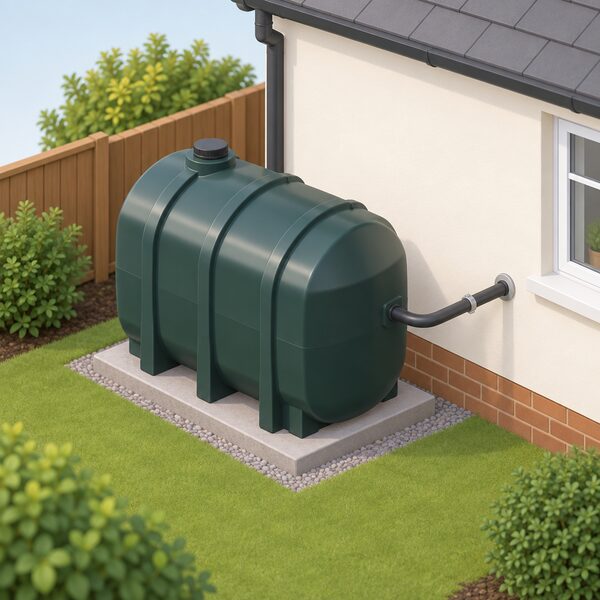
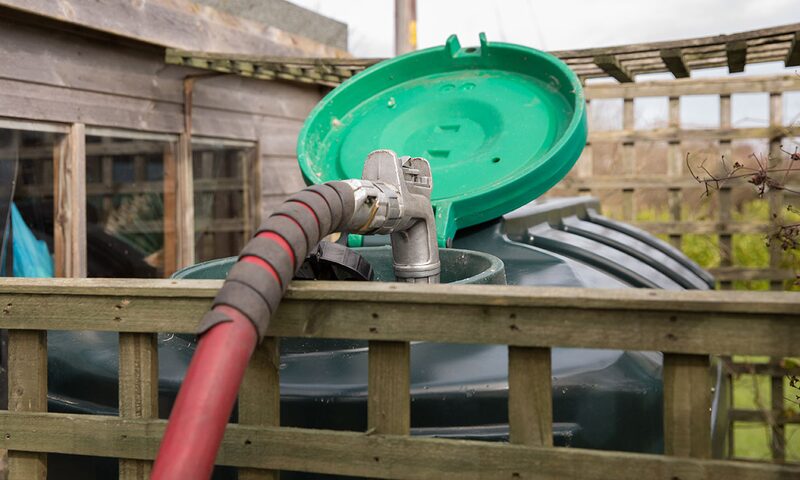
Heating oil is an alternative fuel used to heat homes and buildings that are not connected to the gas grid, and it is produced from crude oil8. That single fact explains most of the price behaviour that oil households experience. Because the fuel is refined from crude, its price moves with global oil markets rather than with a regulatory settlement.
The regulatory position is the sharpest difference from gas and electricity. Heating oil prices are not regulated by Ofgem and are not covered by the energy price cap8. A household on gas or electricity has a capped unit rate and a supplier bound by licence conditions. A household on oil has neither.
The volatility is documented. Heating oil costs increased between 6% and 17% across the regions of the UK in the year up to the first quarter of 2026, according to the Sutherland Tables22. In March 2026 the price of oil increased by 91% on the February 2026 level22. A movement of that size within a single month is not something a capped tariff can produce.
For Northern Ireland specifically, the comparison with Great Britain is stark. The Energy Price Guarantee for domestic energy consumers in Northern Ireland was implemented through ministerial directions that allowed domestic electricity and gas suppliers in Northern Ireland to make tariff changes on days other than the first day of a quarter23. Domestic energy price reduction schemes for Northern Ireland worked by reducing the amount that would otherwise be charged for NI domestic electricity supply by licensed electricity suppliers who are parties to the scheme24. These interventions applied to electricity and gas, not to oil.
The practical consequence for an oil household is that budgeting is harder. A capped tariff allows a household to predict a monthly direct debit. An oil household buys in bulk, at whatever the price is on the day it orders, and stores the fuel. Timing the purchase becomes a financial decision in its own right, and one that no scheme removes.
Free advice and where to check your eligibility
The entry point for almost every Northern Ireland household energy question is NI Energy Advice. It offers free independent and impartial energy advice to domestic householders in Northern Ireland, including referrals to energy grants and other sources of help15. The Consumer Council NI and Northern Ireland Energy Advice give free, independent and impartial energy advice to all domestic householders in Northern Ireland17.
The service covers more than grant signposting. Free advice is available on saving energy in your home, energy efficiency grants, and oil buying clubs10. Oil buying clubs are a practical response to the fuel's price volatility: buying collectively can change the price a household pays without changing the fuel it uses.
The contact route is straightforward. For grant information and energy advice, contact NI Energy Advice by email or call 0800 111 445510. The Northern Ireland Energy Advice Service can also be contacted on 0800 111 4455, open 9am to 5pm Monday to Friday8. Applications for the Affordable Warmth Scheme run through the same number or the NI Energy Advice online form13.
Local councils also publish cost-of-living and winter support information, and Belfast City Council lists home heating guidance alongside its cost-of-living support pages25. These pages are useful for checking what is running locally, since delivery partners vary by area.
For households weighing the wider picture, the pillar guide to home energy grants sets out how the UK scheme landscape fits together, and the comparison of NISEP against the Affordable Warmth Scheme examines the two Northern Ireland routes side by side. Households with oil heating specifically may find the guide to what heating system NISEP covers for oil homes useful, and those considering VAT treatment of low-carbon measures can check whether VAT on solar panels and heat pumps is zero-rated in Northern Ireland.
The limits are worth stating plainly. Northern Ireland's grant landscape reduces the cost of heat and improves the fabric of homes, but it does not make a household self-sufficient. The household remains connected to an electricity network, dependent on a supplier for billing and standing charges, and, if it heats with oil, dependent on a delivery chain and a global crude price. What the schemes do is lower the volume of energy a home needs and offset part of what it costs.
Sources26 cited
- Energy Saving Grants in Your Area, nidirect, 2026-09-20
- Affordable Warmth Scheme, Northern Ireland Housing Executive, 2026-09-17
- Research briefing CBP-9585, UK Parliament, 2026-05-13
- NISEP List of Schemes 2026-27, Utility Regulator, 2026-04-01
- NISEP 2024/2025 Annual Report Published, Utility Regulator, 2026-07-03
- How long will the whole process take, Northern Ireland Housing Executive, 2026-09-17
- Lyons announces agreement on Home Heating Oil Support, Department for Communities, 2026-04-16
- NISEP List of Schemes 2026-27, Utility Regulator, 2026-04
- Northern Ireland Housing Statistics 2023-24, Northern Ireland Statistics and Research Agency, 2023-24
- Cost of living support, Belfast City Council, 2026-09-20
- Home Heating Oil Support Scheme, Department for Communities, 2026-09-17
- Energy Saving Home Improvements, Scottish Government, 2026-09-17
- Stay warm at winter, Belfast City Council, 2026-09-20
- Change in delivery of the Affordable Warmth Scheme, Department for Communities, 2023-06-02
- Insulation, nidirect, 2026-09-02
- Heating technologies to suit your home, nidirect, 2026-09-17
- Low carbon heating, nidirect, 2026-09-17
- Disabled Facilities Grants: what you'll get, GOV.UK, 2026-09-17
- NISEP Framework Document, Utility Regulator, 2009-09
- Home Heating Oil Support, nidirect, 2026-09-17
- Over £50 million to help families struggling with soaring heating oil costs, GOV.UK, 2026-03-16
- Research briefing CBP-10609, House of Commons Library, 2026
- Energy Price Guarantee for domestic energy consumers in Northern Ireland: ministerial directions, GOV.UK, 2023-01-04
- Energy Act 2022, legislation.gov.uk, 2022-10-25
- Home heating, Belfast City Council, 2026-09-20
- Energy efficiency tips, nidirect, 2026-09-17
 Housing Stock Data for NIMost homes in Northern Ireland heat with oil, so why are the grants and help different from the rest of the UK?
 Why Energy Grants DifferWhere you live in the UK changes which home energy grants you can get.
 The Full Grants and Schemes GuideWhich grants can you actually get right now, and how do you apply for them?
 Check Which Energy Grants ApplyWhich energy grants can you actually get right now, and which have closed?
 Home HeatingWhy do so many homes in Northern Ireland run on heating oil, and will that ever change?
 Apply for a Home Energy GrantThe application sequence common to funded schemes: the checker, the survey or assessment, the installer, the paperwork and the sign-off.