

In this guide
The Domestic Renewable Heat Incentive was a government scheme that paid households in Great Britain for the renewable heat their systems produced. It opened in April 2014 and closed to new applicants at midnight on 31 March 20221. Payments were quarterly, ran for seven years, and were based on the estimated heat a system was expected to produce rather than on what a meter recorded, in most cases1.
The scheme accredited 117,203 installations and generated around 10,745 GWh of heat over its life, with £93.8 million paid in Scheme Year 12, covering 1 April 2025 to 31 March 20263. Ofgem administers the scheme on behalf of the Department for Energy Security and Net Zero, and the only applications it now accepts are those following a change of ownership1.
For a household, the Domestic RHI was a payment for heat, not a grant towards a boiler. It rewarded the switch to a heat pump, biomass boiler or solar thermal system, but it did not remove the running costs of that system, the electricity or fuel it consumes, or the dependence on a supplier and the grid. What it did was shorten the payback period on a technology that most homes would otherwise have funded entirely themselves.
The Domestic RHI in brief: a closed scheme that paid for renewable heat
The Domestic Renewable Heat Incentive was introduced in 2014 as a financial incentive to promote renewable heat3. It was set out in legislation under the Domestic Renewable Heat Incentive Scheme Regulations 2014, as amended, and it applied across Great Britain: England, Scotland and Wales4. Northern Ireland was not covered by the scheme, and households there had no equivalent domestic renewable heat tariff.
The scheme was extended by two years at one point, and the domestic RHI was due to close in March 20221. It closed to new applications on 31 March 2022, and the government named the Boiler Upgrade Scheme as its successor7. The non-domestic RHI, which served businesses and larger installations, had already closed to new applicants at midnight on 31 March 20219.
The distinction matters for anyone searching for the scheme today. The Domestic RHI is not dormant: it still has active participants receiving payments, and Ofgem continues to administer accreditations, audits and change of ownership applications4. What has ended is the ability to join it. The scheme's own closure guidance states the position plainly: "Only applications following a change of ownership can be made now that the scheme has closed."1
For a household's energy independence, the scheme's legacy is a stock of homes with heat pumps, biomass boilers and solar thermal systems that were installed with a subsidy attached. Those systems still run, and the households that own them still depend on electricity, fuel deliveries or the grid to operate them. The RHI paid for the heat; it did not make the home self-sufficient.
What the scheme paid and how: quarterly payments for seven years

Payments were made every three months for up to seven years, described in the scheme rules as the tariff lifetime, running from the application date2. The seven-year period is consistent across the scheme's documentation: participants received quarterly payments over seven years for the clean, green, renewable heat their systems produced1.
The basis of payment varied by technology. For most installations, payments were based on the annual heat demand of the property, taken from its Energy Performance Certificate2. Solar thermal was the exception, paid on the Estimated Annual Heat Generation found on the MCS certificate2. Installations metered for payment were paid on meter readings instead2.
Tariff rates were set by the Department for Energy Security and Net Zero, and once an accreditation was granted the tariff rate was secured2. It changed each year in line with inflation but never decreased4. The index used depended on when the application was submitted: applications before 1 April 2016 were adjusted by the Retail Prices Index, and applications on or after that date by the Consumer Prices Index4.
The first payment arrived three months after the date of application, and payments accrued from the date Ofgem received the complete application2. That date also fixed the tariff rate14. The scheme was funded from general taxation, along with Ofgem's audit and compliance programme4.
"Once an accreditation has been granted the tariff rate is secured and will change each year in line with inflation but will never decrease."
Eligibility and the MCS certification requirement
Eligibility rested on certification as much as on technology. A renewable heating system had to be issued with an MCS certificate by the installer, and certificates could only be issued for systems using an MCS certified product7. The technology had to be installed and commissioned by an MCS certified installer able to provide that certificate8.
The Microgeneration Certification Scheme was a requirement for heat pump installations made under the Domestic Renewable Heat Incentive, the Green Homes Grant and the Clean Heat Grant15. The same certification principle carried into later schemes: the Warm Homes: Local Grant requires MCS certification for low carbon heating measures, with the exception of high heat retention storage heaters covered by PAS 203016.
The scheme was available to any household off and on the gas grid that could meet the eligibility criteria, so a mains gas connection was not a bar8. Applicants had to own the renewable heating system at the application stage and throughout their Domestic RHI membership13. They also had to complete the application themselves: third parties such as installers were not permitted to complete it on their behalf, because applicants had to make declarations and understand their ongoing obligations14.
The application window depended on commissioning date. Installations commissioned before 1 March 2019 had one year from the commissioning date shown on the MCS certificate to submit an application13. Installations commissioned on or after 1 March 2019 could apply at any time before the scheme closed at midnight at the end of 31 March 202213.
| Requirement | Detail |
|---|---|
| Certification | MCS certificate issued by the installer, for an MCS certified product7 |
| Installer | MCS certified installer who can provide the certificate8 |
| Ownership | Applicant must own the system at application and throughout membership13 |
| Application | Completed by the applicant, not a third party14 |
| Grid status | Open to households on and off the gas grid8 |
Metering: when deemed payments end and meters begin
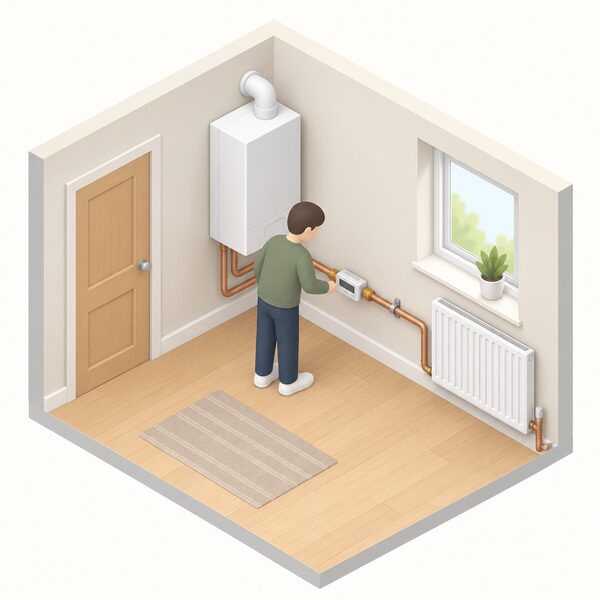
Most Domestic RHI participants were paid on a deemed basis, meaning payments followed the estimated heat demand of the property rather than a meter2. Metering for payment changed that. If certain circumstances changed during an accreditation, a participant might need to install meters to carry on receiving payments6.
The triggers are specific. Metering could be required where a separate installation provides heat to the property, where the installation combines a heat pump with a fossil-fuel system, where a biomass installation's capacity does not provide 100% of the property's space heating requirement, or where the property has been occupied for less than 183 days in the last 12 months6.
Some installations were excluded from metering. Solar thermal is excluded, as are systems designed and installed to heat only one room, such as a fireplace or plug-in heater, or those in a partition wall radiating heat directly to two rooms6. Systems generating heat only for domestic hot water, such as an immersion heater, are excluded, as are supplementary electric heaters controlled by the same control system as the installation, another installation of the same technology type commissioned by the installer on the same date, and systems that capture heat expelled from the property and transfer it back without generating additional heat6.
Once metered, the position is permanent. Ofgem states: "Once you are required to install metering for payment, you cannot return to being deemed for payment."6 Metered installations are paid on the renewable heat produced, up to the annual heat demand on the EPC or the relevant heat demand limit, whichever is lower14. Restarted payments are not backdated14.
Ongoing obligations for existing participants
Accreditation carried duties that continued for the full seven years. Participants must complete and submit an annual declaration every year, confirming they continue to meet the ongoing obligations4. To ensure payments are not suspended, the declaration must be submitted within 28 days13. If a participant is unable to meet any obligation, Ofgem must be told within 28 days4.
Ofgem may carry out an audit of the property and installation to check compliance with ongoing obligations and eligibility criteria4. In Scheme Year 11, Ofgem reported a statistical desk audit compliance rate of 85.04%4. The scheme's compliance work prevented £578,530 of public funds from being paid out incorrectly in that year, and a further £591,609 was identified for recovery through the debt recovery process4. Ofgem reported safeguarding over £1.17 million of public funds during the scheme year4.
Participants with biomass technologies must use fuel that meets specific sustainability requirements, a condition applying to existing and new participants since 20151. Participants are also advised to retain all documentation for the duration of the scheme, a point Ofgem made when the non-domestic scheme closed17.
The scheme had over 60,000 participants still accredited as of the 2023 to 2024 annual report12. There have been no new accreditations since Scheme Year 9, and the one outstanding application from the last scheme year has been resolved and accredited4. Ofgem's customer service team handles queries on 0300 003 0744 or by email at domesticrhi@ofgem.gov.uk4.
How the scheme performed: installations, heat generated and payments
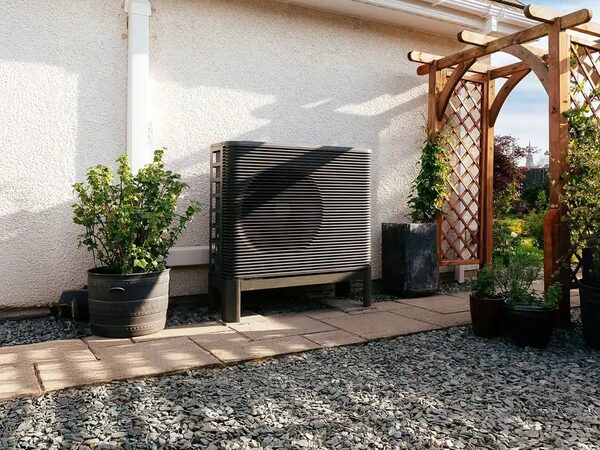
The Domestic RHI accredited 117,203 installations and generated around 10,745 GWh of heat since the scheme began in 20143. Ofgem's Scheme Year 11 report put lifetime heat generation at over 10,121.7 GWh, with 10.1 TWh estimated heat generation in domestic properties since 20144. The two figures come from different reporting dates and different annual reports, and they disagree; the later figure of around 10,745 GWh reflects an additional year of generation.
Payments followed the same pattern. Lifetime support reached almost £1.2 billion since the scheme began in 2014, with almost £106.2 million paid in Scheme Year 114. The Scheme Year 12 figure was £93.8 million3. Ofgem's earlier blog on the Boiler Upgrade Scheme cited over 110,281 installations accredited and £819.3m paid to consumers, a figure overtaken by later reporting18.
The technology split is uneven. Across the scheme's lifetime, air source heat pumps received £442,272,047 (38.0% of payments), biomass £358,872,897 (30.8%), ground source heat pumps £342,592,524 (29.4%) and solar thermal £19,776,937 (1.7%), totalling £1,163,514,4064. Heat generation followed a similar order: air source heat pumps 4,829 GWh (47.7%), biomass 3,498 GWh (34.6%), ground source heat pumps 1,692 GWh (16.7%) and solar thermal 103 GWh (1.0%)4.
| Technology | Lifetime payments | Share | Lifetime heat generated | Share |
|---|---|---|---|---|
| Air source heat pump | £442,272,047 | 38.0% | 4,829 GWh | 47.7% |
| Biomass | £358,872,897 | 30.8% | 3,498 GWh | 34.6% |
| Ground source heat pump | £342,592,524 | 29.4% | 1,692 GWh | 16.7% |
| Solar thermal | £19,776,937 | 1.7% | 103 GWh | 1.0% |
| Total | £1,163,514,406 | 10,122 GWh |
The scheme replaced fossil fuel heating at scale. A total of 78,553 boilers using fossil fuels were replaced by lower carbon alternatives under the scheme4. Boilers accounted for just over half of total accreditations at 82,000, or 52.0%, and 95.8% of those replaced boilers used fossil fuels such as oil, gas, coal and LPG4. Oil was the most common at 52.6%, followed by gas at 28.6%, LPG at 7.8% and coal at 6.8%4. First heating systems in eligible new builds, where no heating technology was being replaced, accounted for 21.9% of all installations, and storage heaters a further 16.4%4.
Where the scheme operated: Great Britain and regional take-up
The Domestic RHI applied to England, Scotland and Wales, and was designed to encourage consumers there to switch to renewable heating systems8. Northern Ireland was outside it. The scheme is described in Ofgem's guidance as operating in Great Britain, which is the same territorial extent1.
Take-up was concentrated in England but proportionally strongest in Scotland. Of accredited installations, 75.1% are in England, 18.0% in Scotland and 6.9% in Wales4. Measured against household numbers, penetration is highest in Scotland with 0.8% of households, then Wales at 0.6% and England at 0.4%4.
Within England, the South West has the highest number of accredited installations at 17,967, while London has the lowest at 1,2174. The pattern reflects the off-gas geography of the South West and the prevalence of oil heating in rural areas, which the replacement fuel data supports: oil was the single most common fuel displaced.
Scotland's higher penetration sits alongside a distinct policy direction. The Scottish Government's heat in buildings strategy set out that the domestic RHI was due to close in March 2022, and the strategy covers heat technologies such as ground and air source heat pumps and biomass boilers19. Scotland has continued to run its own domestic support through Home Energy Scotland, separate from the GB-wide scheme.
For households in Wales, the scheme operated on the same terms as England, and the Welsh take-up share of 6.9% is the smallest of the three nations4. Northern Ireland households had no access to the Domestic RHI at any point, and any renewable heat support there came from separate Northern Ireland arrangements.
What closure means, and what replaced it
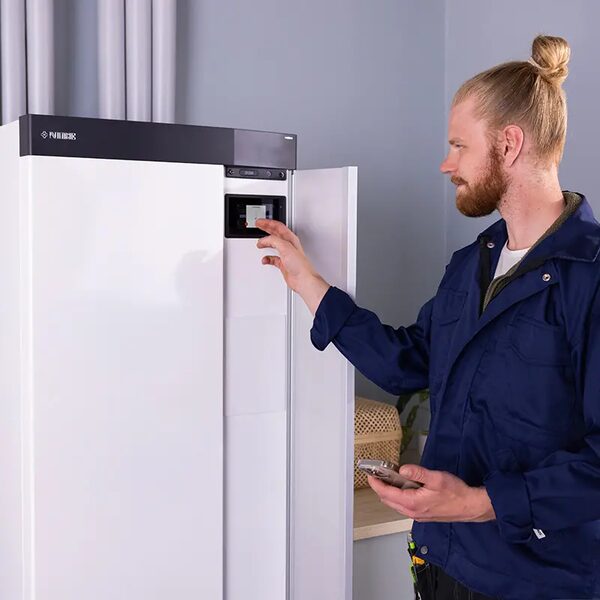
The Domestic RHI closed to new applicants at midnight on 31 March 20221. The government added a note about the closure of the DRHI scheme and its successor, the Boiler Upgrade Scheme7. Ofgem's own blog described the closure of the key green heat scheme and what came next21.
Closure did not end the scheme's obligations. Existing participants continue to receive payments as usual until their seven-year accreditation ends, as long as they continue to meet their ongoing obligations9. Ofgem will continue to support participants until the last one completes their seven-year support period in March 20294. Annual reports will continue until all accredited installations have reached the end of their support period, projected to be Scheme Year 15, covering 2028 to 20294.
The Regulations require Ofgem to publish an annual report by 31 July following the end of each scheme year, and each scheme year runs from 1 April to 31 March4. That timetable explains why the most recent figures cover the year to 31 March 2026 and were published in July 2026.
For households that missed the scheme, the successor is the Boiler Upgrade Scheme, which provides capital grants rather than heat tariffs. The two work differently: the RHI paid over time for heat produced, while the Boiler Upgrade Scheme pays a fixed amount towards installation. Households weighing the options can compare the Boiler Upgrade Scheme against ECO4, or look at the wider picture of home energy grants and schemes still open.
Selling a property with an accredited system
Accreditation can outlive the household that applied for it. Where a property with a renewable heating system is sold, the DRHI accreditation may be transferred to the new owner4. The seller must contact Ofgem at least 28 days before the sale goes through4. The new owner must apply for accreditation within 12 months from the date of sale4.
The mechanics matter because the remaining payments are attached to the accreditation, not to the person. A new owner who does not apply within the 12-month window loses the remaining tariff lifetime. Ofgem's closure guidance puts the same deadline in terms of notification: from the date of sale, new owners have 12 months to notify Ofgem and confirm they wish to continue with the accreditation9.
Where a product is replaced, an MCS certified installer is needed to complete a product replacement declaration form4. That keeps the certification chain intact for the remainder of the accreditation.
Contact, references and reviews

Ofgem administers the scheme, and its customer service team handles participant queries on 0300 003 0744 or at domesticrhi@ofgem.gov.uk4. A reference number is given when an application is created, and Ofgem asks participants to have it ready when getting in touch16. The number identifies the accreditation and speeds up any query about payments, metering or obligations.
Where a participant disagrees with a decision, a Right of Review application must be made in writing within 28 days of receiving notice of the decision being appealed13. Ofgem also publishes a glossary of key terms for participants who need a definition before responding22.
The scheme's legal basis remains in force for existing accreditations. It is set out in legislation under the Domestic Renewable Heat Incentive Scheme Regulations 2014 and subsequent amendments, and the scheme is underpinned by the Domestic Renewable Heat Incentive Scheme Regulations 2014, as amended4. Those regulations govern the ongoing obligations, the audit powers and the payment terms that continue until March 2029.
Sources22 cited
- Domestic Renewable Heat Incentive (Domestic RHI), Ofgem, 2026
- Domestic RHI tariffs and payments, Ofgem, 2026
- Domestic Renewable Heat Incentive annual report April 2025 to March 2026, Ofgem, 2026
- DRHI Annual Report Scheme Year 11, Ofgem, July 2025
- DRHI Essential Guide, Ofgem, June 2024
- Installers and metering, Ofgem, 2026
- Eligible heating systems, Ofgem, 2026
- Domestic RHI applicants, Ofgem, 2026
- Domestic RHI closure, Ofgem, 2026
- Key terms explained for the Domestic RHI, Ofgem, 2026
- Domestic Renewable Heat Incentive annual report April 2024 to March 2025, Ofgem, July 2025
- Domestic Renewable Heat Incentive annual report April 2023 to March 2024, Ofgem, 2024
- DRHI 2023-24 Annual Report, Ofgem, July 2024
- Domestic RHI Essential Guide, Ofgem, March 2022
- Changes to the Renewable Heat Incentive schemes, GOV.UK, March 2022
- RHI monthly deployment data January 2021, GOV.UK, January 2021
- Heat pump deployment quarterly statistics United Kingdom 2025 Q3, Department for Energy Security and Net Zero, December 2025
- Warm Homes: Local Grant policy guidance, Department for Energy Security and Net Zero, July 2026
- Boiler Upgrade Scheme launch, Ofgem, 2026
- Heat in Buildings Strategy strategic environmental assessment, Scottish Government, 2021
- Key green heat scheme closes and what comes next, Ofgem, 2026
- Contacts, guidance and resources, Ofgem, 2026
 Closed Energy PoliciesIf a scheme you used has closed, do you still get paid?
 Grants and Energy IndependenceCan you get a grant for solar panels or a battery?
 The Full Grants and Schemes GuideWhich grants can you actually get right now, and how do you apply for them?
 Deposits and Staged PaymentsHow much deposit should you pay for solar panels or a heat pump, and what happens to your money if the installer goes bust?
 Older People and Home EnergyOlder people often pay more to keep warm and can miss out on help they are entitled to.
 The Full Heat Pumps GuideWill a heat pump keep my house warm in winter, and what does one cost to buy and run?