

In this guide
The Renewable Heat Incentive was a government financial incentive to promote the use of renewable heat, intended to help reduce carbon emissions and meet the UK's renewable energy targets1. It ran in two parts: a Non-Domestic RHI that opened in November 2011, and a Domestic RHI that opened in April 2014 and closed to new applicants at midnight on 31 March 2022. Participants who joined and followed the scheme rules received quarterly payments over seven years for the renewable heat their systems were estimated to produce1.
The closed domestic scheme leaves a long and unusually complete statistical record. Ofgem's annual reporting puts the final position at 117,203 accredited installations, which have generated around 10,745 GWh of heat since the scheme began2. Lifetime payments to domestic participants reached £1,163,514,406 by Scheme Year 11, split across air source heat pumps at £442,272,047 (38.0 per cent), biomass at £358,872,897 (30.8 per cent), ground source heat pumps at £342,592,524 (29.4 per cent) and solar thermal at £19,776,937 (1.7 per cent)3.
For a household today, the RHI matters in three ways. Existing participants are still inside a seven-year tariff lifetime and still bound by its ongoing obligations. Anyone buying a house with an accredited system inherits a transferable but time-limited entitlement. And for everyone else, the RHI record is the longest continuous dataset on who installed renewable heat in British homes, against which later schemes and the wider heat pump installation statistics are measured.
What the Renewable Heat Incentive was and why it existed
The plan to introduce the RHI was first announced on 15 July 20096. It was described at the outset as a new government scheme to promote the uptake of renewable heat7, and was set up in 2011 to boost rates of renewable and low-carbon heating in Great Britain8. When the domestic arm launched, it was presented as the world's first long-term financial support programme for renewable heat, offering homeowners payments to offset the cost of installing low carbon systems9.
The design logic was straightforward. Heat is the hardest part of household energy to decarbonise, and the capital cost of a heat pump or biomass boiler is far higher than that of a replacement gas boiler. Rather than paying a lump sum at installation, the RHI paid a tariff over seven years against the renewable heat a system was expected to produce, so that the running subsidy gradually offset the upfront gap. The Climate Change Committee described the scheme in July 2014 as "very generous" while noting that take-up had not followed10.
The measured outcome is now settled. Ofgem's Scheme Year 11 reporting records 10.1 TWh of estimated heat generation in domestic properties since 20143, while the latest annual report gives around 10,745 GWh from 117,203 accredited installations2. The two figures cover different reporting cut-offs, which is why they differ; the Scheme Year 10 report recorded 811.4 GWh subsidised in that single year, bringing the total since 2014 to an estimated 8.84 TWh at that point11. Read together, they show a scheme whose annual output flattened as accreditations stopped and early participants exhausted their tariff lifetimes.
The two schemes: domestic and non-domestic RHI
The RHI was never a single scheme. The guidance consultation distinguished a Domestic RHI from a Non-Domestic RHI from the start7, and the two had different opening dates, payment periods and statistical series.
| Feature | Domestic RHI | Non-Domestic RHI |
|---|---|---|
| Opened | April 20144 | November 201112 |
| Closed | 31 March 20224 | 31 March 2021 to most applicants, extensions to 31 March 2023 in some cases13 |
| Payment period | Quarterly over seven years5 | 20 year inflation-linked subsidy12 |
| Renewable heat subsidised | 10.1 TWh in domestic properties since 20143 | 58.3 TWht14 |
The non-domestic scheme was by far the larger in energy terms, at 58.3 TWht of subsidised renewable heat14, and in cash terms it remained larger even late in life: a July 2024 transaction record shows £79,359,757 paid to Ofgem for non-domestic RHI payments against £9,312,975 for domestic payments in the same week15.
Uptake by technology was also uneven. In non-domestic settings, for the period between November 2011 and September 2014, there were five applications to the scheme for air source heat pumps across the whole of Great Britain16. The domestic scheme, by contrast, was dominated by air source heat pumps, which account for 4,829 GWh of lifetime generation (47.7 per cent), ahead of biomass at 3,498 GWh (34.6 per cent), ground source heat pumps at 1,692 GWh (16.7 per cent) and solar thermal at 103 GWh (1.0 per cent), from a total of approximately 10,121.7 GWh3.
The domestic scheme was extended by two years in 20201, which is why applications continued into the 2021 to 2022 period rather than stopping earlier.

Installations, heat generated and payments: the headline numbers
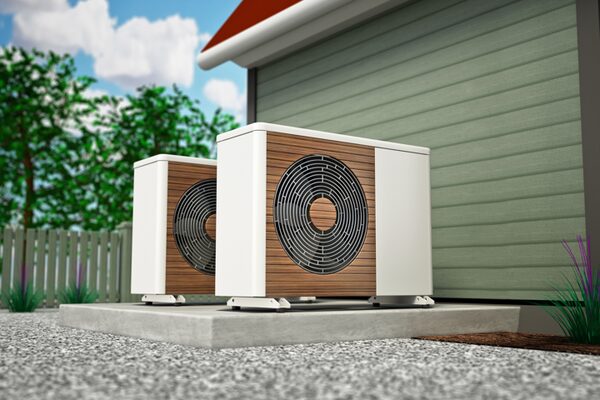
Three different official totals circulate for the domestic scheme, and they are not contradictory: they are snapshots at different dates.
| Measure | Figure | Reported |
|---|---|---|
| Accredited installations | 117,2032 | Annual report to March 2026 |
| Heat generated since launch | around 10,745 GWh2 | Annual report to March 2026 |
| Lifetime payments | £1,163,514,4063 | Scheme Year 11 report |
| Lifetime payments | £1,057,331,25517 | Scheme Year 10 report, to 31 March 2024 |
| Payments in Scheme Year 11 | almost £106.2 million3 | Scheme Year 11 report |
| Payments in Scheme Year 10 | almost £113.9 million17 | Scheme Year 10 report |
| Accredited installations at closure | over 110,281, with £819.3m paid to consumers18 | Ofgem, Boiler Upgrade Scheme launch |
The Scheme Year 10 report marked the point at which total payments passed one billion pounds for the first time, at £1.06 billion since the scheme began in 201417. The Warm Homes Plan technical annex states that since 2014 the Renewable Heat Incentive has made £1.2bn of payments19, a rounder figure reflecting a later cut-off.
The fall from almost £113.9 million in Scheme Year 10 to almost £106.2 million in Scheme Year 11, a difference of about £7.7 million on those two figures, reflects the mechanical run-off of a closed scheme: the earliest 2014 cohorts have completed their seven years and left the payment roll, with no new accreditations replacing them. Deployment data shows the same pattern: 3,722 domestic RHI installations were recorded in 2021 Q320, and zero in 2024 Q321 and 2025 Q122.
How the tariffs and payments worked
Payments were made every three months for up to seven years, the tariff lifetime, from the application date5. Tariff rates were set by the Department for Energy Security and Net Zero, with Ofgem responsible as scheme administrator for publishing the current rates5.
What made the domestic RHI distinctive was that most payments were not metered. In most circumstances payments are based on the annual heat demand of the property, which can be found on its EPC5. Ofgem's reporting sets out the exceptions: solar thermal payments are based on the MCS certificate, and metered installations are treated separately17. For metered installations, payments are based on the amount of renewable heat produced, up to the annual heat demand on the EPC or the relevant heat demand limit, whichever is lower23.
This deemed-payment approach has a direct consequence for anyone reading the statistics: the "heat generated" totals are largely estimated rather than measured output. Ofgem's own language is careful, describing quarterly payments for the low carbon heat systems were estimated to produce11. The point matters when comparing RHI generation figures with metered field trials, a distinction explored further in measured versus modelled home energy performance.
Accreditation also brought obligations that did not end at installation. Participants needed to comply with a number of ongoing obligations during the seven-year accreditation to continue to receive payments24. Metering for performance for heat pumps was introduced from 22 May 20181.
Which technologies qualified, and the certification requirements
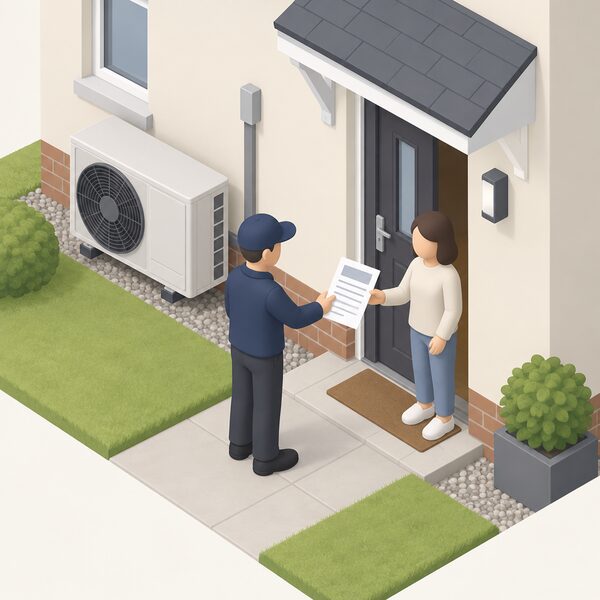
Four renewable technology types were eligible: biomass only boilers and biomass pellet stoves, air source heat pumps, ground source heat pumps, and flat plate and evacuated tube solar thermal panels25. Ofgem's essential guide phrased the same list as air source heat pumps, ground and water source heat pumps, biomass boilers and stoves, and solar thermal in liquid-filled flat plates or evacuated tubes26. The department's household energy efficiency reporting used the formulation of air-source heat pumps, ground and water-source heat pumps, biomass-only boilers and biomass pellet stoves with integrated boilers, and solar thermal panels27.
Certification was the gatekeeper. Ofgem's rule was explicit:
"To be eligible, a renewable heating system must be issued with an MCS certificate by the installer. Certificates can only be issued for systems using an MCS certified product."
The eligible renewable technology had to be installed and commissioned by an MCS certified installer who could provide an MCS certificate24. The House of Commons Library notes that the Smart Export Guarantee and the previous Feed-in Tariff and Renewable Heat Incentive schemes all require the product and installer to be certified and to meet MCS standards28. Government guidance on device registration makes the same point for installation contractors29. Separately, for installing renewable technologies including heat pumps there are currently six registered competent person schemes: APHC, BESCA, Certsure, HETAS, NAPIT and OFTEC30.
This is why RHI accreditation counts and MCS installation statistics track each other closely for the years the scheme was open, and why the RHI series says nothing about self-installed or uncertified systems.
How the scheme performed against its targets
The Public Accounts Committee's 2018 assessment is the clearest official verdict. The department had cut back its expectations of how much renewable heat will be produced by the scheme by almost two-thirds, and of the reductions in carbon emissions due to the scheme by almost half8. Written evidence to Parliament puts it in comparative terms, describing the RHI as marginally more successful than other interventions, although sale volumes of low carbon heating have remained stubbornly low31.
Compliance data supplies a second performance measure, and it is less flattering than the headline totals. Ofgem runs two audit programmes: statistical audits, randomly selected to provide a representative view at a 90 per cent confidence level, and targeted audits aimed at higher-risk cases3.
| Audit type | Scheme Year 10 | Scheme Year 11 |
|---|---|---|
| Statistical, desk | 418 audits, 87.56% compliant17 | 421 audits, 85.04% compliant3 |
| Statistical, site | 393 audits, 85.75% compliant17 | 389 audits, 69.41% compliant3 |
| Targeted, desk | 200 audits, 42.50% compliant17 | not stated in the same form |
| Targeted, site | 200 audits, 62.00% compliant17 | 189 audits, 57.67% compliant3 |
The drop in statistical site compliance from 85.75 per cent to 69.41 per cent across a single scheme year is the most striking movement in the series. The most common material non-compliance in Scheme Year 11 statistical audits was "evidence not provided" with 30 instances (15.2 per cent), followed by "ineligible metering performance" with 29 instances (14.7 per cent); "evidence not provided" also headed the non-material category with 28 instances (14.2 per cent)3.
Criticisms and design problems
Beyond missed targets, three design criticisms recur in the official record.
- Upfront cost barrier. The Public Accounts Committee found that the RHI simply does not work for households and businesses unable to pay the high upfront costs of renewable and low-carbon heating equipment8. A seven-year tariff cannot help a household that cannot finance the installation in the first place.
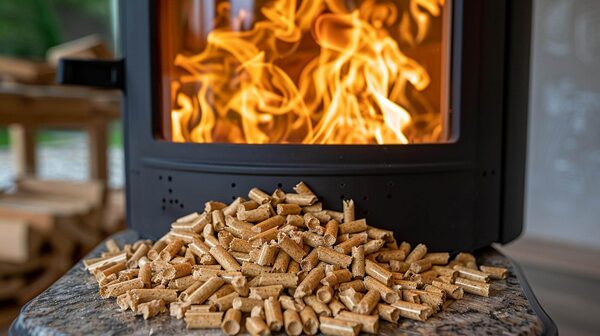
- Biomass and air quality. Government proposed that biomass combustion installations should no longer be eligible for RHI support if located in urban areas that are on the gas grid, a restriction that would apply to new domestic and non-domestic biomass installations of all sizes and to biomass combined heat and power, but not to biogas, which does not create the same level of particulate and other pollutant emissions as biomass combustion32. The restriction would apply only to new applications, and the consultation also asked whether larger biomass plants subject to planning and tighter emission controls should be included, and whether mandatory maintenance checks for existing and new installations should be introduced32. Separately, requirements were set for biomass used in renewable heat installations to meet a set of sustainability criteria33.
- Metering rules. Ofgem consulted on changes to the independent report on metering arrangements criteria34, reflecting the difficulty of verifying output under a scheme that mostly did not meter it.
A distributional point also emerges from the data: Registered Social Landlords were one of the groups eligible to apply for the DRHI and account for 21.6 per cent of all scheme accreditations35. More than a fifth of the domestic scheme, in other words, went to social housing providers rather than owner-occupiers.
Closure and what came after
The domestic scheme closed to new applicants, including metering and monitoring service package applications, at midnight on 31 March 202236. The non-domestic scheme closed in March 2021, though extensions ran to 31 March 2023 in some cases13. Both had been signalled well in advance: Scottish Government material in February 2021 recorded that the non-domestic RHI was due to close in March 2021 and the domestic RHI in March 202233.
Ofgem's account of the transition recorded over 110,281 accredited installations and £819.3m paid to consumers under the closing scheme18. The replacement model shifted from ongoing tariff to upfront capital grant, a change with consequences that were anticipated at the time. Scottish heat pump sector deal advisory work noted that support under the Clean Heat Grant would be worth less than under the RHI, making domestic heat pumps a less attractive option than at present37. Current grant uptake is tracked separately in the Boiler Upgrade Scheme statistics.
Selling a home with an accredited system

Accreditation does not automatically die with a sale. A DRHI accreditation may be transferred to the new owner38, but only within tight deadlines.
- The departing participant must contact Ofgem at least 28 days before the sale goes through36.
- From the date of sale, new owners have 12 months to notify Ofgem of the change and confirm they wish to continue with the accreditation39.
- The new owner must apply for accreditation within 12 months from the date of sale38.
Independent guidance sets out the same sequence and lists the paperwork: the original MCS certificate number for the heat pump, the installer commissioning certificate and the Energy Performance Certificate number, with payments then available to the new owner for the rest of the eligibility period40.
Where the official statistics live, and how to read them
There are two distinct publication families, and confusing them is the commonest error in citing RHI numbers.
Ofgem scheme reporting. Quarterly and annual Domestic RHI reports present the latest statistics on accreditations on the scheme, payments made and feedback from the customer survey41; from the 2014-15 annual report onward the annual editions also covered renewable heat generated and carbon dioxide saved42, with the 2016-17 report carrying the same broader set43 and the 2017-18 report covering accreditations, payments made and renewable heat generated44.
Departmental deployment data. The monthly statistics for the RHI programme present the number of applications and accredited installations on the scheme so far, broken down by technology type, Great Britain region and application status, published by the Department for Energy Security and Net Zero45. The Renewable Heat Premium Payments data detailed vouchers issued and redeemed by technology type and GB region45. RHPP figures were no longer included in the release from January 2015; from March 2016 the release included quarterly data previously published separately; and quarterly reporting was introduced with effect from July 202245. The last update to that dataset was 18 April 202445. An earlier quarterly publication, running to March 2013, summarised deployment under the Non-Domestic RHI and the RHPP householder voucher schemes46. The monthly series carries Official Statistics status47.
Two practical cautions. The data for the heat pump deployment statistics that carry RHI rows is as of March 2024, in line with the RHI official statistics22, so RHI columns in more recent releases are frozen rather than updated. And the scheme's legal basis, the Domestic Renewable Heat Incentive Scheme Regulations 2014 as amended26, was repeatedly changed, so definitions are not constant across the series. The general principles are set out in how to read UK energy statistics.

What the RHI record means for household energy independence
The RHI moved a meaningful number of homes off fossil heating: 117,203 accredited installations generating around 10,745 GWh2. For those households, a heat pump or biomass boiler removed or reduced dependence on a gas or oil supplier and, in the heat pump case, shifted heating onto electricity that can be partly self-generated. Ofgem's Scheme Year 11 reporting notes that storage heaters accounted for 16.4 per cent of the systems replaced3, indicating that a sizeable share of the scheme served homes that were already off the gas grid.
The dependencies that remained are equally clear from the data. The subsidy itself was a seven-year dependence on a government scheme, administered by Ofgem with rates set by the department5, and it ends. Eligibility depended on the MCS certification chain, tying households to certified installers and certified products25. Payments depended on an EPC assessment of the property rather than on what the system actually delivered5, so a household's income from the scheme was decoupled from its real performance. And the audit record, with statistical site compliance at 69.41 per cent in Scheme Year 113, shows that continued payment depended on documentary compliance that a significant minority of participants did not sustain.
For households considering renewable heat now, the RHI's most durable legacy is evidential rather than financial. It produced eleven years of accreditation, payment and generation data on a defined, certified population of installations, which is why it remains a baseline in the wider UK home energy statistics and in comparisons with the closed Feed-in Tariff. The scheme also demonstrated the limit the Public Accounts Committee identified: an ongoing tariff does not reach households that cannot meet the capital cost, and no volume of subsidy per kilowatt hour changes that8.
Sources47 cited
- Domestic Renewable Heat Incentive scheme page, Ofgem, 2026-09-17
- Domestic RHI Annual Report April 2025 to March 2026, Ofgem, 2026-07-17
- Domestic RHI Annual Report Scheme Year 11, Ofgem, 2025-07
- Heat pump deployment quarterly statistics, UK 2024 Q4, DESNZ, 2025-03-06
- Domestic RHI tariffs and payments, Ofgem, 2026
- Domestic RHI factsheet: systems installed before scheme opening, Ofgem, 2015-02
- Renewable Heat Incentive guidance consultation, volume one, Ofgem, 2011-06-24
- Renewable Heat Incentive report published, Public Accounts Committee, 2018-05-16
- More households can benefit from renewable heating, GOV.UK, 2014-11-10
- Policy strengthening required to meet future carbon budgets, Climate Change Committee, 2014-07-15
- Domestic RHI Annual Report April 2023 to March 2024, Ofgem, 2024-07-31
- Refrigerants in heat pumps final report, DECC, 2014-03
- Heat pump deployment quarterly statistics, UK June 2024, DESNZ, 2024-09-26
- Key green heat scheme closes and what comes next, Ofgem, 2021-03-01
- DESNZ spending transactions, July 2024, DESNZ, 2024-07
- Permitted development rights consultation paper, Scottish Government, 2015-06
- Domestic RHI Annual Report 2023-24, Ofgem, 2024-07
- Boiler Upgrade Scheme launch, Ofgem, 2026-09-17
- Warm Homes Plan technical annex, GOV.UK
- Heat pump deployment quarterly statistics, UK 2025 Q3, DESNZ, 2025-12-04
- Heat pump deployment quarterly statistics, UK 2024 Q3, DESNZ, 2024
- Heat pump deployment quarterly statistics, UK 2025 Q1, DESNZ, 2025-06-05
- Domestic RHI Essential Guide, Ofgem, 2024-06
- Domestic RHI applicants guidance, Ofgem, 2026
- Domestic RHI eligible heating systems, Ofgem, 2026-09-17
- Domestic RHI Essential Guide 2022, Ofgem, 2022-03
- Household Energy Efficiency detailed release, March 2023, DESNZ, 2023-03-30
- Smart Export Guarantee briefing CBP-9585, House of Commons Library, 2026-05-13
- Register energy devices in homes or small businesses, GOV.UK, 2021-03-31
- Future Homes and Buildings Standards consultation response, MHCLG, 2026-03
- Written evidence on low carbon heating, UK Parliament
- RHI biomass combustion in urban areas consultation, CIBSE
- Heat in Buildings Strategy strategic environmental assessment, Scottish Government, 2021-02
- Consultation on amendments to the independent report on metering arrangements criteria, Ofgem, 2013-01-07
- Domestic RHI Annual Report Scheme Year 9, 2022-23, Ofgem, 2023-07-31
- Domestic RHI participants guidance, Ofgem, 2022-03-31
- Heat Pump Sector Deal Expert Advisory Group, Scottish Government, 2021-12-02
- Domestic RHI participants, Ofgem, 2026
- Domestic RHI closure guidance, Ofgem, 2026
- Heat pump inheritance, Energy Saving Trust, 2025-07-04
- Domestic RHI Quarterly Report Issue 16, Ofgem, 2018-06-13
- Domestic RHI Annual Report 2014-2015, Ofgem, 2015-07-29
- Domestic RHI Annual Report 2016-2017, Ofgem, 2017-07-31
- Domestic RHI Annual Report 2017-2018, Ofgem, 2018-07-30
- RHI and RHPP deployment data, DESNZ, 2024-04-18
- RHI and RHPP quarterly statistics, March 2013, DECC, 2013-03-21
- RHI monthly deployment data, January 2021, BEIS, 2021-02-18
 Policy, Targets and Coming RulesHeat pumps are central to the government's plans for greener home heating.
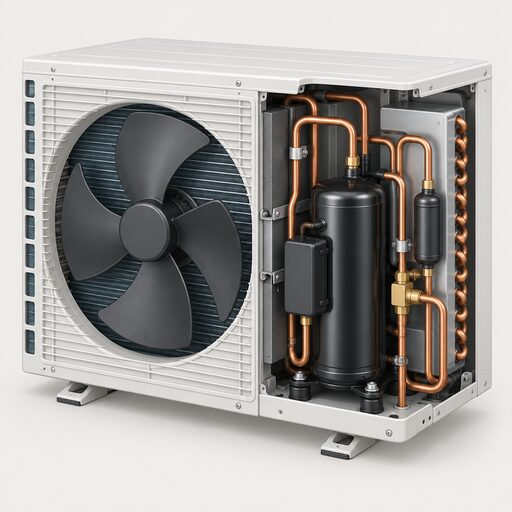 Air Source Heat PumpsHow an air source heat pump takes heat from outdoor air, the difference between air-to-air and air-to-water systems, typical efficiency, the £7,500 Boiler Upgrade Scheme grant, noise and planning limits, and what ownership means for a household's energy independence.
 Closed Energy PoliciesIf a scheme you used has closed, do you still get paid?
 Future Homes StandardWill your new build still have a gas boiler, and when do the new rules actually start?
 Grants and Energy IndependenceCan you get a grant for solar panels or a battery?
 Taking Part in a Home TrialJoining a home energy trial can mean getting new kit fitted for free or at a lower price, but places are limited and close quickly.