In this guide
Home Energy Equipment Manufacturers: The Full UK Guide to Brands, Warranties and Certification
The equipment that makes a UK home more self-sufficient comes from a long list of manufacturers: boiler and heat pump makers, solar panel and inverter makers, battery, EV charger, cylinder, control and ventilation makers. No single register covers them all. What they share is the evidence they must produce before their products can be installed and funded: legal conformity, and for renewables certification under MCS, which describes itself as "the UK's quality mark for renewable energy technologies like solar panels and heat pumps".1
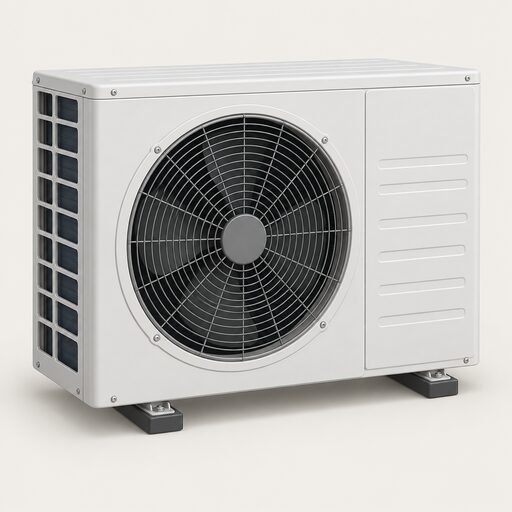
Heat pumps show how the market is shaped. Air source heat pumps made up 82.6% of heat pump units sold in the UK in 2024. The main companies manufacturing them in the UK that year were Mitsubishi Electric, Vaillant, Ideal and Octopus Energy, with a combined market share of 34%.2
Government support is tied to certification. The Boiler Upgrade Scheme in England and Wales offers grants of up to £7,500, or £9,000 for heating oil and LPG users.3 The scheme sets a performance floor for the products it funds: a seasonal coefficient of performance of at least 2.8.4 The sections below explain each test a manufacturer has to pass and what dependence remains once the product is installed.
What a manufacturer must prove before a product reaches a UK home
A manufacturer's legal obligations continue after the product is sold. Under the Electrical Equipment (Safety) Regulations 2016, which apply in England, Wales and Scotland, a manufacturer who considers or has reason to believe that equipment it has placed on the market does not conform must act.
"must immediately take the corrective measures necessary"
The duty starts from the maker's own knowledge and does not depend on a regulator finding the fault first. It is the legal basis for the modification programmes and recalls described later on this page, and it is why a product recall is normally run by the manufacturer itself.
The wider rules are under review. The government's consultation on a new product safety framework, dated 31 March 2026, proposes that higher-risk products could face specified essential safety requirements, testing, or third party conformity assessment before being placed on the market.9 These are proposals and have not been made law. They indicate a move towards independent verification before sale for the riskier categories.
An overseas maker is not outside policy either. In its 2021 consultation on a market-based mechanism for low-carbon heat, the government proposed applying the obligation to all manufacturers of appliances sold for installation in the UK, whether or not they are registered here.10 Much of the hardware in UK homes is imported, a subject covered in where home energy products are made.
Approval marks are the visible end of this system. The Health and Safety Executive's gas safety guidance for householders says a carbon monoxide alarm should comply with British Standard EN 50291 and carry a British or European approval mark, such as a Kitemark.11 A mark means a named body has checked the product against a named standard. How that checking works is set out in how energy products are tested and manufacturer certification and approvals.
For a household seeking independence, the consequence is an ongoing dependence on the maker. A battery or heat pump is a long-lived product, and its safety and support depend on a company that may be overseas and may be owned by a larger group. Who owns which energy brand sets out those relationships.

Brands and product ranges sold in the UK

This site profiles manufacturers by product type. The groupings below are descriptive and do not rank the brands, and each link leads to a fuller page.
| Product type | Category page | Examples of brand profiles |
|---|---|---|
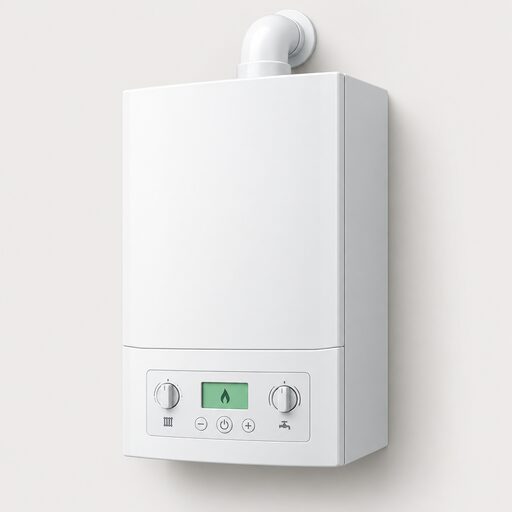
| Boilers | Boiler manufacturers | Vaillant, Worcester Bosch, Ideal Heating, Baxi, Viessmann, Grant |
| Heat pumps | Heat pump manufacturers | Mitsubishi Electric, Daikin, Octopus Cosy, Aira, NIBE, Samsung |
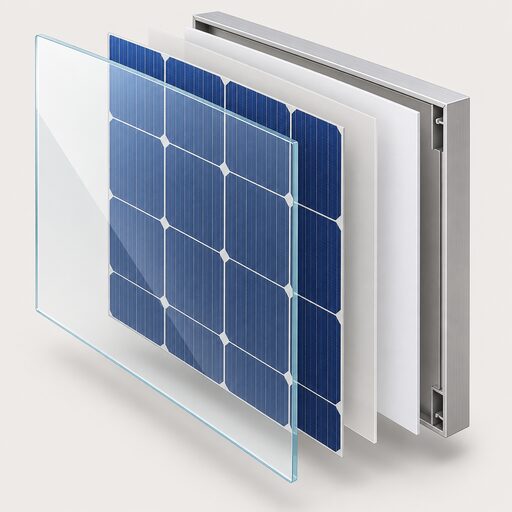
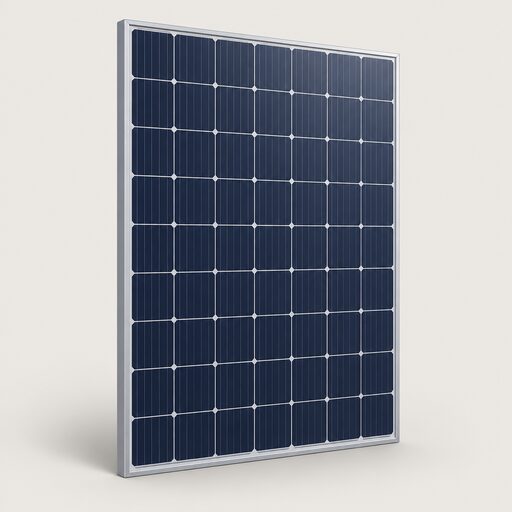
| Solar panels | Solar panel manufacturers | JA Solar, LONGi, JinkoSolar, Trina Solar, REC, AIKO |
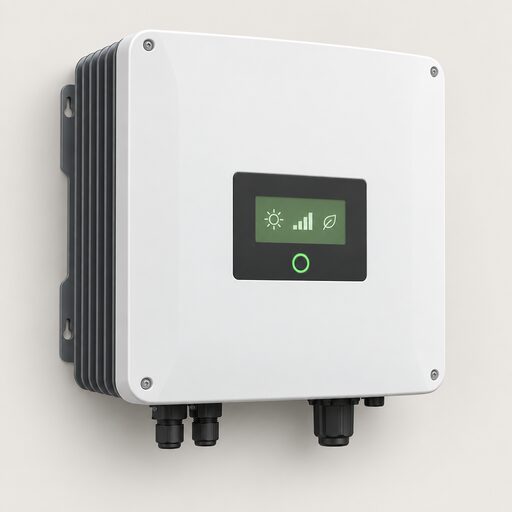
| Inverters | Solar inverter manufacturers | SolarEdge, Enphase, Solis, Growatt, SMA, Sunsynk |
| Batteries | Home battery manufacturers | GivEnergy, Tesla, Fox ESS, Pylontech, Powervault, Sungrow |
| EV chargers | EV charger manufacturers | Myenergi, Ohme, Pod Point |
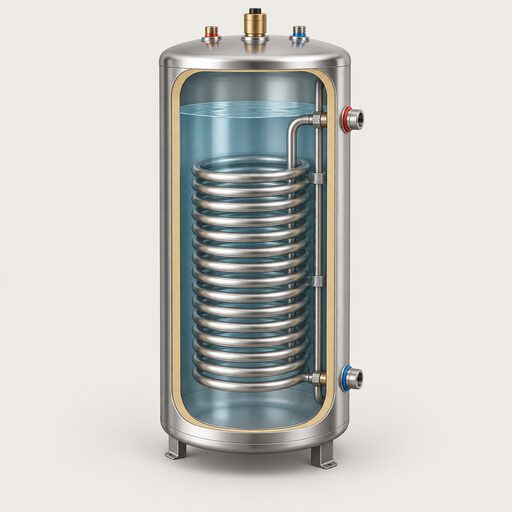
| Cylinders and hot water | Hot water cylinder manufacturers | Mixergy, Heatrae Sadia and Megaflo, Stiebel Eltron |
| Controls, electric heating and ventilation | Heating controls, electric heating, ventilation | tado, Dimplex, EnviroVent, Nuaire |
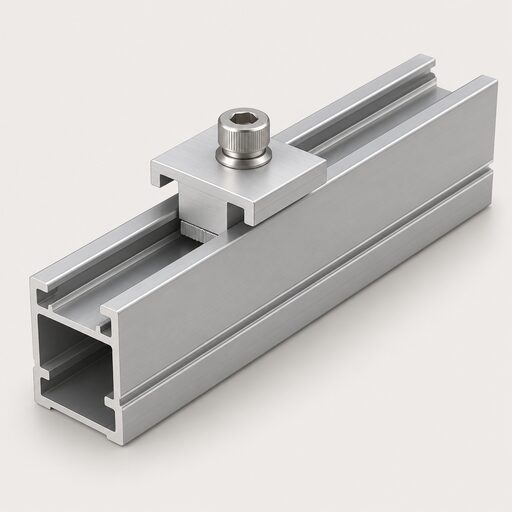
| Mounting and electrical components | Solar mounting, electrical components | K2 Systems, Hager, Wylex |
Among heat pump makers, official figures name four companies as manufacturing air source units in the UK in 2024: Mitsubishi Electric, Vaillant, Ideal and Octopus Energy.2 The rest of the market is supplied from abroad.
Makers reach UK buyers in different ways. One example of warranty terms and sales route comes from a maker's own product page. For its BDC 95045-A1 battery base unit, Growatt states a European service warranty of 10 years, and the unit is sold through an online shop where compatibility is confirmed before purchase.12 That is the maker's statement of its own terms. The enforceable conditions are in the warranty document. The general rules are set out in manufacturer warranties, and the choice of buying route in buying direct from a manufacturer or through an installer.
Not every brand survives. SunPower and Maxeon has its own page because of the company's failure, and when an energy equipment manufacturer fails explains what owners of orphaned products face.
MCS product certification: the mark behind grants and incentives
MCS certifies two things: the product, and the installer who fits it. Government guidance on registering energy devices states that, to qualify for incentive schemes such as the Renewable Heat Incentive or Green Homes Grant, installation contractors must be certified by MCS and must install MCS certified products.13 The schemes named there are past ones. The same structure applies to current funding.
MCS itself tells consumers that certification "is also a requirement for accessing many UK government incentives" and that it ensures access to robust protections.1 Ofgem's rules for the Domestic Renewable Heat Incentive show how this works in practice. To be eligible, a renewable heating system had to be issued with an MCS certificate by the installer, and certificates could only be issued for systems using an MCS certified product.14 A product without a listing could therefore not be funded, however well it performed.
A product qualifies only within the scheme's size limits: 50kW for electrical technologies and 45kW for heating. MCS states that product certification ensures compliance with UK regulations. In Scotland, the Home Energy Scotland Grant and Loan requires installations to be MCS certified to qualify for funding.5 The Boiler Upgrade Scheme applies to England and Wales only, but the certification requirement follows funding across Great Britain.
Households do not apply for these grants themselves. Which? notes that an installer's MCS certification is necessary for them to apply for a government grant on a household's behalf.15 For a manufacturer, that makes MCS listing a commercial necessity in the domestic market, because an installer cannot claim a grant for an unlisted product.
Manufacturers obtain product certification through certification bodies. BSI, one such body, lists among the benefits for a maker the chance to "improve your product and manufacturing procedures", and offers a combined MCS and BSI Kitemark certification for microgeneration products that produce electricity and heat from renewable sources.16 Our page on the MCS certified product directory explains where listings are found, and MCS equivalent schemes covers overseas certifications that MCS recognises.
MCS by the numbers: over 2 million certified installations

Government scheme guidance describes MCS as the leading quality assurance organisation for microgeneration, meaning small scale renewable technologies of 50kW or smaller.17 The scheme's own figures show its scale: over 2 million MCS certified installations across the UK, and over 4,000 MCS certified solar installers.18
Recent growth has been fast. A government press release reports almost 150,000 certified solar panel installations in the first six months of 2026, up 17% on the previous highest start to a year, in 2025. Certified battery installations reached 36,000 in the same period, almost double the same period the year before.19
| Measure | Figure | Period |
|---|---|---|
| MCS certified installations, all technologies | over 2 million | to August 202618 |
| MCS certified solar installers | over 4,000 | to August 202618 |
| Certified solar panel installations | almost 150,000, up 17% | first six months of 202619 |
| Certified battery installations | 36,000, almost double | first six months of 202619 |
These totals count certified installations only. An installation outside the scheme appears in none of them, and the true number of systems in UK homes is therefore higher. This matters when a brand's UK volume is cited from MCS data. The figure measures certified installations of the brand's products, which falls short of everything the brand has sold.
Volume matters to a household in a practical way. A product fitted in large numbers, by many certified installers, is more likely to have engineers who know it and parts in circulation. High volume does not guarantee that, and it tells a buyer nothing about how long the maker will support the product. Manufacturer installer networks describes how makers accredit the people who fit their equipment.
What MCS covers: solar PV, wind, heat pumps, biomass and heat products, and its limits
Official guidance summarises the scope. MCS certifies, quality assures and provides consumer protection for microgeneration installations and installers, covering small-scale renewable electricity technologies such as solar photovoltaic panels, biomass, wind, heat pumps and heat products.20 MCS describes the same range, in homes and small businesses throughout the UK, as running "from solar panels, to heat pumps, to small wind turbines".18
The limits on that scope matter as much as the scope itself:
- Large heat pumps. Heat pumps with a thermal output larger than 45kW are not covered by MCS.21
- New-build homes. The majority of installations in new-build properties are not covered.22
- Official statistics follow the same line. The government's quarterly heat pump deployment figures exclude retrofit installations that are not MCS certified, which are thought to be small in number, and all installations in new dwellings.21
Batteries sit awkwardly within the scheme's scope. MCS data on batteries is published as a separate official statistic covering the retrofitting of electric batteries into domestic properties in the United Kingdom, and it excludes commercial and new-build data.23 A battery generates nothing. It is a storage product added to a scheme that was built around generation and heat. The route to certification for home battery manufacturers is therefore newer, and a battery's certified status is worth checking separately from that of the panels or inverter it is sold with.
A home built with a heat pump already installed may therefore have a product and an installation that never passed through MCS. That does not make the equipment deficient, but there is no MCS certificate on file for it and the MCS consumer protections do not apply to it.
BSI Kitemark: independent testing and what it tells a buyer
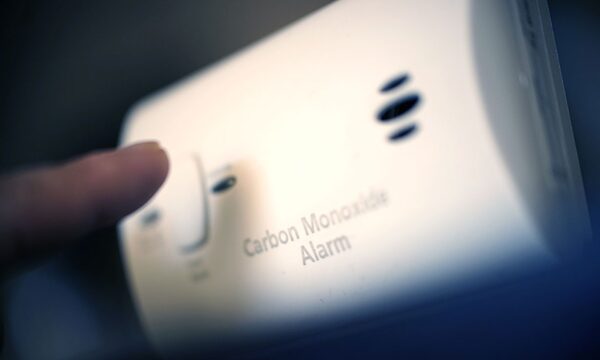
The Kitemark is BSI's approval mark and is separate from MCS. MCS is specific to microgeneration. The Kitemark appears on many product types, and official guidance treats it as a recognisable sign of independent approval. The Health and Safety Executive tells householders buying a carbon monoxide alarm to ensure that it complies with British Standard EN 50291 and carries a British or European approval mark, such as a Kitemark.11
For home energy hardware the two marks can be held together. BSI offers a combined MCS and BSI Kitemark certification for microgeneration products used to produce electricity and heat from renewable sources.16 A manufacturer holding both has had its product assessed for the MCS listing that funding schemes require and for BSI's own mark.
| MCS product certification | BSI Kitemark | |
|---|---|---|
| What it is | The UK's quality mark for renewable energy technologies1 | BSI's approval mark, cited in official guidance as an example of a British approval mark11 |
| Role in funding | A requirement for many UK government incentives1 | None stated in scheme rules |
| Size limits | 50kW electrical, 45kW heating5 | Not applicable |
| Can they be combined? | Yes, BSI offers a combined certification for microgeneration products16 | Yes16 |
Neither mark says whether a product suits a particular house, how long the maker will supply parts, or whether its app will still work in a decade. Other voluntary marks, such as the one covered in Quiet Mark certification for boilers and heat pumps, address single attributes. Tier 1 and bankability ratings explains a label that is often mistaken for a quality mark.
UKCA and CE marking for heat pumps: the current Great Britain position
For energy related products, which include heat pumps, the present position in Great Britain is that CE marking remains accepted. The government's consultation on extended CE marking recognition for ecodesign regulations states that energy related products carrying the CE mark can currently be sold in Great Britain if they comply with Great Britain's ecodesign standards, without also needing a UK Conformity Assessment marking.24 The consultation document repeats the point in relation to the Ecodesign for Energy-Related Products Regulations 2010.25
A heat pump in a UK home may therefore carry a CE mark, a UKCA mark or both. The consultation on raising minimum energy performance standards for heat pumps, dated November 2024, refers to a mandate for heating products sold on the Great Britain market to display the UKCA mark.26 The two consultations describe different stages of the same policy: recognition of CE marking as it stands, and a UKCA requirement under discussion for heating products. No confirmed date for a change is given in those texts, so none is stated here.
Policy in this area is also meant to help makers. The Parliamentary Office of Science and Technology notes that support is available for installers and manufacturers to expand supply chains.27 For the household, the marking on the unit is evidence that the maker has declared conformity with the applicable rules. The marking does not show that the product is MCS listed, because MCS listing is a separate process.
Air source heat pumps: the dominant product category, at 82.6% of UK heat pump sales
Air source heat pumps accounted for 82.6% of heat pump units sold in the UK in 2024.2 The pattern holds across support schemes as well. Ofgem's annual report on the Domestic Renewable Heat Incentive records air source heat pumps as the dominant technology type, accounting for 67.4% of accreditations since the start of the scheme, as at 31 March 2024.28
Two kinds of product share the name. Ofgem's ECO4 guidance defines an air-to-water system as one that transfers heat drawn from surrounding air to water in a wet central heating system. An air-to-air system "is not considered to be a renewable system in ECO4".29 The same hardware category is therefore funded very differently depending on how it delivers heat, a point picked up again under the Boiler Upgrade Scheme below.
Manufacturing within the UK is growing but supplies only a minority of the market. The four UK-based makers named earlier held 34% of the market in 2024.2 A government options assessment predicts that the share will grow to around one half of heat pumps manufactured in the UK by 2030.26 The same official analysis identifies air source heat pumps as the most promising export opportunity in heat and buildings, contributing 35% of export driven GVA by 2050. It models cumulative cost savings of £110.8bn in 2050 at the high innovation level in its High Diversification scenario, compared with £67.8bn and £71.7bn in the High Hydrogen and Minimally Constrained scenarios.2 These are modelled projections of what could happen, and they do not measure what has happened.
In Scotland, modelling for the review of energy standards in new domestic buildings found that the air source heat pump consistently produced the lowest DDER (the energy metric used in that study) across the archetypes modelled. It had the lowest capital cost for the houses, though for the block of flats it was the highest at the business-as-usual specification.30
Individual makers are profiled on heat pump manufacturers, with side-by-side pages such as Mitsubishi vs Daikin and Octopus Cosy 6 vs Aira.

Heat pump specifications to compare between makers: SCOP, noise and size

Among the specifications makers publish, a few are set by scheme rules or planning law and are not left to the maker's own presentation.
Seasonal efficiency. The Boiler Upgrade Scheme sets a floor.
"Heat pumps must have a seasonal coefficient of performance (SCOP) of at least 2.8."
Ofgem's installer guidance carries the same requirement.31 Scotland's Domestic Building Services Compliance Guide states that SCOP is measured in accordance with BS EN 14825:2013, the standard for testing and rating heat pumps at part load conditions and calculating seasonal performance.32 A SCOP figure is a calculated seasonal value under a defined method. A COP quoted at a single test condition is a different measure, and the two cannot be compared directly. Published COP figures and refrigerant choices vary by model and are the maker's own data, and no official minimum is given for either. Comparing manufacturer specifications explains how to compare published figures like for like.
Noise. Local authority guidance on the permitted development rules states that noise from an air source heat pump on its own must stay at or below 42 decibels at a metre from any habitable room. If that level is exceeded, planning permission is needed.6
Physical size and number. Permitted development in England is allowed only if the installation complies with the MCS Planning Standards. The main conditions are:
- The outdoor compressor unit, including housing, must not exceed 1.5 cubic metres on a house or 0.6 cubic metres on a block of flats.33
- Only the first installation is permitted on a house that is not detached or on a block of flats. On a detached house, the first two are permitted.33
- All parts must be at least one metre from the property boundary.6
- Installations on pitched roofs are not permitted development. On a flat roof, all parts must be at least one metre from the roof's external edge.33
- The rights do not apply within the curtilage of a Listed Building or a Scheduled Monument. In a Conservation Area or World Heritage Site, the unit must not be on a wall or roof fronting a highway.33
- The unit must not be used solely for cooling. It must be removed as soon as reasonably practicable when it is no longer needed.33
Council guidance in the Cotswolds and Central Bedfordshire restates the same limits on number and volume.34 In Wales, the Welsh Government states that installing either a ground source or an air source heat pump will have to comply with the Building Regulations.36 Because of these limits, a maker's cabinet size and sound output decide whether a given model needs a planning application at a given house.
Warranty, lifespan and servicing over the life of the product
The Planning Portal puts the current lifespan of a boiler at around 15 years, which gives a sense of how long heating equipment is expected to last.7 A warranty usually runs for less time than the product's working life. In the later years the household relies on the maker's continued existence, on spare parts, and increasingly on the maker's software.
Warranty lengths are set by each manufacturer. They are published on the maker's own pages and differ by product and region. One maker's product page, for example, states a European service warranty of 10 years for a battery unit.12 The conditions attached matter as much as the term: registration deadlines, servicing requirements and the question of who carries out the repair. These are covered in registering a warranty and keeping it valid, manufacturer service plans and technical support and spare parts.
Independent advice is available alongside what makers say. The Centre for Sustainable Energy, which offers retrofit advice for homeowners, describes over 45 years of experience helping homeowners save energy and money.37
Paperwork also has a lifespan. Under the Boiler Upgrade Scheme, installers must keep all documentation relied upon in voucher applications for six years from the date the application was properly made.38 After that period the installer's copy may no longer exist, so the household's own copies of the MCS certificate, commissioning record and warranty registration are the only long-term record.
Some installers add their own promises to the maker's warranty. Which? reports that British Gas offers a survey, installation and aftercare with a "Warm Home Promise" that refunds the customer if the heat pump does not reach an agreed temperature, and that Octopus Energy supplies and installs heat pumps, including to non-customers.15 These are installer commitments, separate from the manufacturer's warranty, and they depend on the installer remaining in business. Firmware updates and product support life covers the software side of the same issue.
Cost and support: installation prices and the Boiler Upgrade Scheme grant

Installation prices for heat pumps are quoted by installers house by house, and published estimates differ from one another. No price range is given here for that reason. The grant amounts, by contrast, are fixed.
The Boiler Upgrade Scheme provides grants to assist with installation costs.27 It applies to domestic and small non-domestic properties in England and Wales, with grants of up to £7,500, or £9,000 for heating oil and LPG users.3 The grant amounts and voucher periods in the table below come from Ofgem's guidance for property owners and installers, the government's notice of approved grant values and the official grant listing.39
| Technology | Grant | Voucher validity |
|---|---|---|
| Air-to-water heat pump | £7,500 | 3 months |
| Ground source heat pump | £7,500 | 6 months |
| Air-to-air heat pump (residential properties only) | £2,500 | 3 months |
| Biomass boiler | £5,000 | 3 months |
The grant levels have risen over time. Ofgem's quarterly report records that the grant for air source heat pumps (£5,000) and ground source heat pumps (£6,000) increased to £7,500 from 23 October 2023.42 Earlier guidance therefore shows a ground source grant of £6,000 with the same six-month voucher.4
Some dates and rules on timing:
- The scheme applies to England and Wales only. Vouchers were issued from 23 May 2022 on eligible technologies installed from 1 April 2022.43
- Where a system was commissioned before the application, the voucher application must be properly made within 120 days of the commissioning date stated on the MCS certificate.41
- Installers keep supporting documents for six years.46
Scotland and Northern Ireland are outside the scheme. In Scotland, the Home Energy Scotland Grant and Loan requires MCS certified installations.5 Every one of these funding routes depends on the manufacturer holding MCS listing for the product. A household choosing an unlisted product gives up the grant.
Discontinued models, modifications and recalls: checking a product's status
A product's status can change after it is sold. Manufacturers update their model ranges continually, and the scheme rules are tied to certification at the time of installation. An MCS certificate can only be issued for a system using an MCS certified product.14 Whether a model is currently listed therefore matters most on the day of commissioning. After that, the household relies on the maker's continuing legal duties, including the duty to take corrective measures immediately when it has reason to believe equipment does not conform.8
Recent official notices show how those duties have been applied:
- Modification programme. In April 2026 a product safety report on the Sigenergy SigenStor Energy Controller with quick connect AC plug recorded that the manufacturer had initiated a modification programme to warn customers of the risk and arrange for on-site inspection and repair of affected products.47
- Recall from end users. In April 2022, for a plug-in "electricity saving box" sold online, the report stated: "The authority are requiring the recall of the product from end users."48
- Stop-use warning. In August 2025 the Office for Product Safety and Standards told more than 17,000 owners of heat pump tumble dryers modified by Haier to stop using them.49
Current notices are collected on home energy product recalls and safety notices, with individual cases such as LG home energy products and the battery recall. Registering a product with its maker is the main way a household hears about a modification programme, and it is one of the practical reasons for warranty registration.

Choosing between manufacturers: quotes, certification and the questions to ask
A comparison between makers rests on a few questions of fact, each drawn from the rules above:
- Is the product MCS certified, and is the installer? Both are needed for grant funding, and the installer applies on the household's behalf.15
- For a heat pump, what is the SCOP and how does it compare with the 2.8 minimum? The figure should be a SCOP, measured to the named standard, and not a single-point COP.
- Does the unit's size, number and noise level fall within permitted development? The limits are 1.5 cubic metres and 42 dB, with different rules for listed buildings and conservation areas.
- Who stands behind the warranty? The answer may be the maker, a UK subsidiary or the installer. It also matters what registration and servicing the warranty requires.
- Has the product been the subject of a safety notice or modification programme?
- What depends on the maker's app or cloud service, and what still works without it?
Advice is available from sources that do not sell equipment. In Northern Ireland, nidirect states that homeowners should seek independent advice on solar panels, heat pumps and other energy efficiency measures.51 For measures installed under the Energy Company Obligation, Ofgem publishes a complaints process for problems with an installation.52
For energy independence, the brand on the box is a continuing relationship with a company. A heat pump removes a home's dependence on gas, but the home then depends on the electricity grid and on a manufacturer for parts and software. Solar and a battery reduce grid dependence, but the home then relies on an inverter maker's firmware and its cloud service. UK manufacturing supplied 34% of the air source market in 2024, and most of the remainder is imported.2 Manufacturers and household energy independence sets out these trade-offs in full.
Sources52 cited
- Why MCS certification matters, MCS, 2026-08-17
- Energy Innovation Needs Assessment 2025: heat and buildings, UK Government, 2024 data
- Research briefing CBP-9838, House of Commons Library, 2026-08-06
- Boiler Upgrade Scheme guidance for property owners v2.3, Ofgem, 2023-09-25
- Certifying your product, MCS, 2026-05-18
- Building regulations and renewables guidance, Bedford Borough Council, 2026-09-17
- Heating and hot water: planning guidance, Planning Portal, 2026
- Electrical Equipment (Safety) Regulations 2016, regulation 12, legislation.gov.uk, 2026-09-17
- The UK's new product safety framework, UK Government, 2026-03-31
- Market-based mechanism for low-carbon heat consultation, UK Parliament deposited papers, 2021-10
- Gas safety FAQs for owner occupiers, Health and Safety Executive, 2026
- Growatt BDC 95045-A1 base product page, Growatt, 2026-09-17
- Register energy devices in homes or small businesses, UK Government, 2021-03-31
- Domestic RHI eligible heating systems, Ofgem, 2026-09-17
- Air source heat pump costs and savings, Which?, 2026-04-14
- MCS microgeneration certification, BSI, 2026-09-17
- Warm Homes: Social Housing Fund Wave 3 scheme guidance addendum, UK Government, 2026-06
- Tomlinson Longstaff case study, MCS, 2026-08-20
- Households can save as plug-in solar panels come to market, UK Government, 2026
- ECO4 Flex and GBIS Flex information document, Ceredigion County Council, 2025-11
- Heat pump deployment tables Q2 2026, UK Government, 2026-09-10
- Heat pump deployment quarterly statistics Q1 2026, UK Government, 2026-06-11
- MCS domestic retrofit battery installations 2025 to 2026, UK Government, 2026-05-28
- Extended CE marking recognition for ecodesign regulations, UK Government, 2025-12-09
- Extended CE marking recognition: consultation document, UK Government, 2026-07-06
- Raising minimum standards for heat pumps: options assessment, UK Government, 2024-11-27
- POSTnote 699, Parliamentary Office of Science and Technology, 2026-09-19
- Domestic RHI annual report 2023 to 2024, Ofgem, 2024-03-31
- ECO4 new measures and products guidance v3.0, Ofgem, 2026-03-26
- Improvements to the energy standard for new domestic buildings, Scottish Government, 2026-07-24
- Boiler Upgrade Scheme guidance for installers v2.1, Ofgem, 2023-05-18
- Domestic Building Services Compliance Guide 2022, Scottish Government, 2022-06
- Planning permission: air source heat pump, Planning Portal, 2026-09-17
- Permitted development for retrofit and energy efficiency, Cotswold District Council, 2026-09-17
- Air source heat pumps: householder planning advice, Central Bedfordshire Council, 2026-09-17
- Building regulations: heat pumps, Welsh Government, 2026-09-17
- Retrofit advice for homeowners, Centre for Sustainable Energy, 2026-06-16
- Boiler Upgrade Scheme guidance for installers v5.1, Ofgem, 2026-07-02
- Boiler Upgrade Scheme guidance for property owners v5, Ofgem, 2026-03-25
- Notice of approved grant categories and values for the Boiler Upgrade Scheme, UK Government, 2026-07-21
- Boiler Upgrade Scheme grant listing, UK Government Find a Grant, 2026-09-18
- Boiler Upgrade Scheme quarterly report issue 6, Ofgem, 2023-11-30
- Heat pump deployment quarterly statistics Q3 2025, UK Government, 2025-12-04
- Heat pump deployment quarterly statistics Q2 2025 (ODS), UK Government, 2025-09-04
- Heat pump deployment quarterly statistics Q2 2025 (XLSX), UK Government, 2025-09-04
- Boiler Upgrade Scheme guidance for installers v5, Ofgem, 2026-04-28
- Product safety report: Sigenergy SigenStor Energy Controller, UK Government, 2026-04-23
- Product safety report: electricity saving box, UK Government, 2022-04-28
- OPSS stop warning for heat pump tumble dryer owners, UK Government, 2025-08-01
- Research briefing CBP-9585, House of Commons Library, 2026-05-13
- Support to generate your own electricity, nidirect, 2025-09-22
- ECO contacts, guidance and resources, Ofgem, 2026-09-17