In this guide
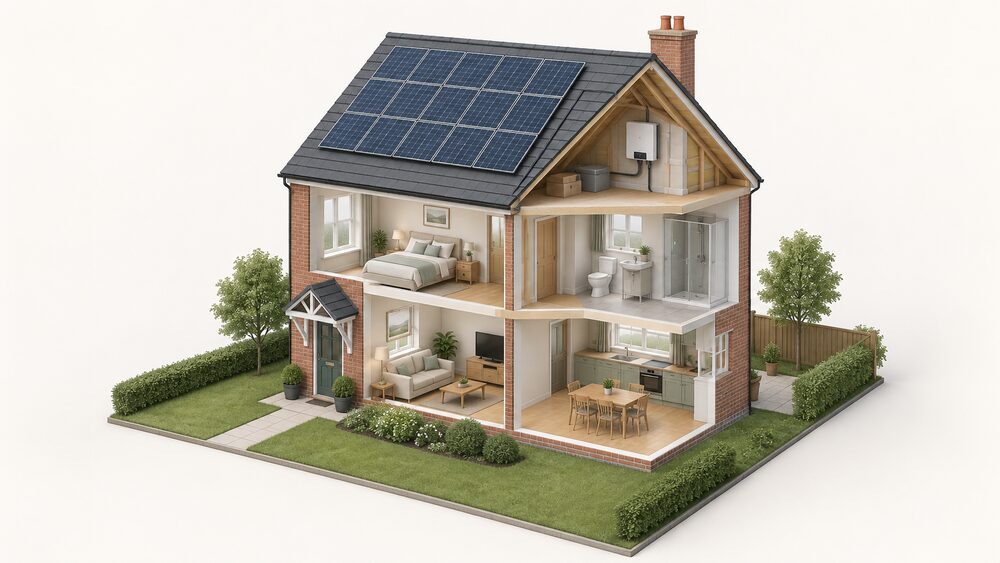
Canadian Solar is one of the module makers whose panels reach UK roofs, and the range that matters for a British house is the high-power end: the HiKu7 family, built on 210 mm cells, which Canadian Solar put into mass production in April 2021 with power output of up to 665W1. For a domestic installation the relevant figure is lower, because a UK roof takes a handful of modules rather than a solar farm's worth. Typical household systems run to about 4.6kW, and a 4.5kWp system typically uses around 12 panels covering 20 to 30m2 of roof surface2.
Solar is not a niche choice in the UK. More than 1.4 million homes across the UK already use solar power, according to Welsh Government guidance published in January 20264, while independent guidance from June 2026 puts the figure at more than 1.5 million homes5. The median UK local authority records 123 solar panel installations per 10,000 people6. Solar panels are the most common domestic renewable energy source in the UK7, and independent guidance is clear that they are suitable across the UK, not just in the sunniest counties8.
What follows is what the paperwork, the roof and the ownership experience actually involve for a household considering Canadian Solar modules, and where the limits sit.
The range: from domestic modules to the 430W HiKu7
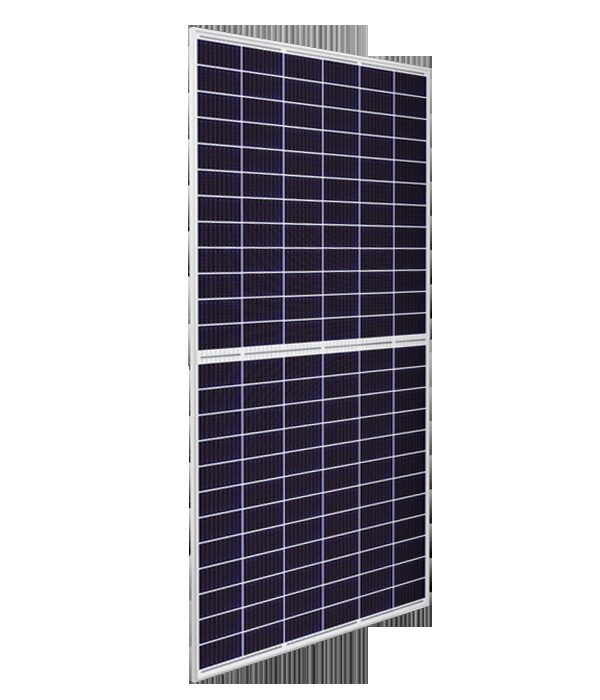
Canadian Solar's HiKu7 and BiHiKu7 modules are built on 210 mm large cells, and the company announced mass production of both in April 2021 with power output of up to 665W, saying it would deliver the first batch of the new high-power, high-efficiency modules during that month1. That is the top of the range and it is aimed at utility and commercial arrays. Domestic installations draw on the same cell technology at lower wattages, and the 430W module sits in the band that UK installers actually specify for a house.
The reason the domestic figure is lower is arithmetic rather than technical. A UK household system is typically up to 4kWp10, and the average solar panel system is around 4.5kWp2. A 4.5kWp system typically covers between 20 to 30m2 of roof surface area, typically using around 12 panels2. Twelve modules at 430W each lands above the typical figure, so a real design mixes module count and wattage to fit the roof and the inverter rather than maximising panel power for its own sake.
Canadian Solar also makes inverters, and its own guidance on system design states that a 1.1 to 1.3 DC/AC ratio can be selected, and that the inverter supports a 1.3 DC/AC ratio1. That ratio is the relationship between the array's peak DC output and the inverter's AC rating, and it is the reason a designer may fit more panel wattage than the inverter's nameplate suggests. The inverter can generate active power and reactive power, and lightning protection modules are integrated on both the DC and AC sides1.
| Item | Figure | Basis |
|---|---|---|
| HiKu7 and BiHiKu7 module output | up to 665W | Mass production announced April 20211 |
| Typical UK household system | up to 4kWp | Independent guidance10 |
| Average UK system | around 4.5kWp | Independent guidance2 |
| Typical panel count | around 12 panels | For a 4.5kWp system2 |
| Typical roof area | 20 to 30m2 | For a 4.5kWp system2 |
| DC/AC ratio | 1.1 to 1.3 | Canadian Solar system design guidance1 |
Certification and compliance: what the paperwork covers
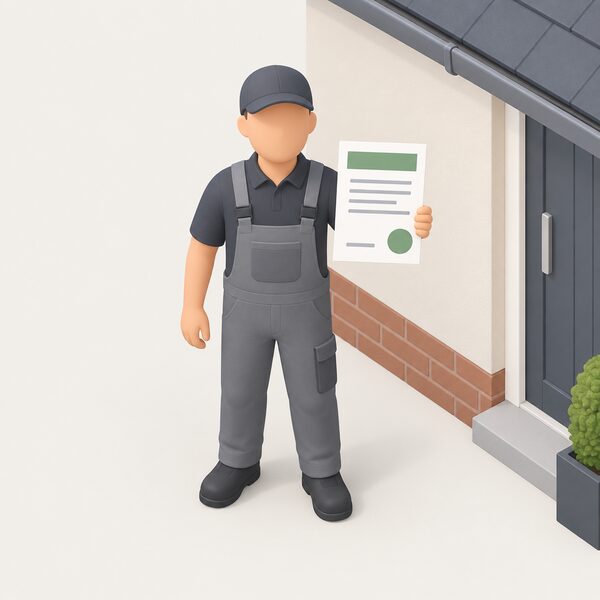
Canadian Solar holds certification that bears on UK installation. TUV SUD BABT UNLIMITED issued Certificate BABT 8767 R4 to Canadian Solar Inc. for photovoltaic solar panel production on 21 January 2020, a factory production control certificate1. CSA Group issued Certificate of Compliance 2284121 to Canadian Solar Inc for listed photovoltaic modules and panels on 13 April 2020, and Certificate 2655017 on 30 April 20201. SGS-CSTC issued verification SHES190902210501PVC and SHES190902210601PVC on 16 December 2019, covering CanadianSolar photovoltaic modules and, in the second case, the CS3W-425MB-AG module type, alongside a blowing sand test qualification1.
Those are the manufacturer's own certificates. The scheme that governs a UK domestic installation is different. The Microgeneration Certification Scheme certifies, quality assures and provides consumer protection for microgeneration installations and installers including solar photovoltaic panels, biomass, wind, heat pumps and heat products11. Installers working under official schemes must carry a current and valid MCS Certificate issued by one of a named list of bodies: Certsure LLP t/a NICEIC, Napit Certification Ltd, Simply Certification, The IAA (Installation Assurance Authority), or Amtivo Group t/a British Assessment Bureau12.
"Is the system properly registered with MCS and any export tariffs?"
That question is the one a buyer's surveyor asks, and it is why the installer's registration matters more to a householder than the module maker's factory certificate. A tendering contractor under one official Welsh scheme must supply an MCS Certification Number and an IEEE Certificate Number, and after satisfactory completion of tests submit two copies of inspection and completion certificates to the Employer12. The same discipline applies in a domestic job in a lighter form: the completion paperwork is what proves the installation was done to scheme standard.
Efficiency and panel power: where 430W sits among UK domestic panels
Panel wattage is not the same as efficiency, and the two are often conflated in domestic sales conversations. A 430W module is a statement about peak output under standard test conditions; efficiency is that output divided by the module's area. A higher-wattage module of the same physical size is more efficient, while a higher-wattage module that is simply larger is not.
The UK domestic context sets the frame. Household solar panel systems are typically up to 4kWp10, and the average system is around 4.5kWp2. A 430W module therefore sits comfortably inside normal domestic practice: it is a building block, not an outlier. The constraint on a UK roof is usually usable area, shading and pitch rather than the wattage of any single panel.
For comparison, plug-in solar kits, the small self-install devices that became legal in Great Britain from 27 August 2026 where they meet certain standards, use panels of 400W each, with one or two panels per system14. That is the low end of the same technology, and it shows how far a single 430W module sits from a whole-roof array.
One set of maker guidance gives 250W to 400W, another gives 300W to 450W, and a third gives 400W or more against 450 to 500W. Those conflicts are unresolved, so a householder comparing quotes should read the specific module datasheet for the model proposed rather than rely on a general range.
UK availability and what buying one involves
Canadian Solar modules reach UK households through installers and distributors rather than a direct retail channel. The pattern across the sector is that panel brands are sold and installed in the UK by a number of installers, as JA Solar's own product page describes for its range16, and Canadian Solar's own support material states that local distributors are responsible for after-sales service1. That single sentence shapes the whole ownership route: the manufacturer stands behind the module, but the first point of contact for a fault, a query or a replacement is the distributor or installer who supplied it.
The buying process itself is a survey and a quote, not a purchase. A householder contacts installers, each of whom assesses the roof, the existing electrical installation and the intended system size, then quotes for specific components and installation. Prices are installer-quoted; there is no published Canadian Solar list price for a supplied-and-fitted domestic system in the material available here.
Two regulatory threads run alongside the commercial one. Installing solar panels may require approval under the Building Regulations17, and the associated electrical works are the reason18. Separately, the system should be properly registered with MCS and any export tariffs, which is the check that protects both the original owner and any future buyer13.
Installation: the manual, orientation and what your roof needs
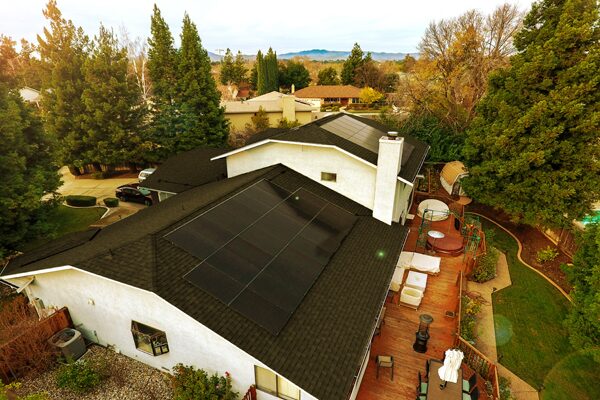
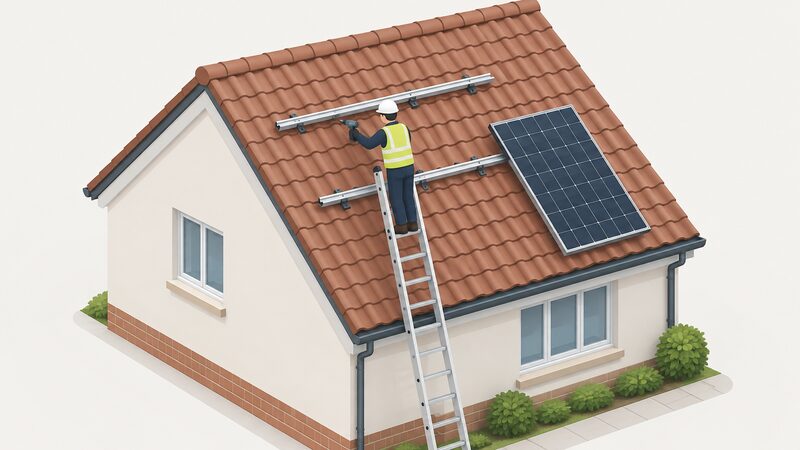
Canadian Solar publishes installation manuals for its module families, and revisions have changed over time: revision 1.21 was released in July 2019, revision 1.3 in September 2019, revision 1.4 in December 2019, revision 1.5 in April 2020 and revision 1.6 in May 2020, with a further manual identified as revision 2.2 carrying a July 2020 copyright date1. The manual is the installer's document. It governs clamping zones, mounting torque and clearance, none of which a householder adjusts, and the version that matters is the one matching the exact module fitted.
Orientation is the part a householder can assess before any installer visits. Independent guidance states that a mainly south-facing roof gives the best power output, with south-west or south-east facing roofs also good5. Solar panels generate the most electricity when they face south because they capture as much sunlight as possible8, and an unshaded, south-facing roof is ideal for maximum performance2. Shading, pitch and roof condition all bear on the real figure.
Building Regulations apply to the roof as a structure, not only to the wiring. Building Regulations approval is likely to be needed to add a solar panel to the roof of a home19, a building regulations application is required when installing a solar panel on a roof20, and building regulations will normally apply to installing solar panels on a roof21. The roof itself must be checked: the roof must be able to support the additional wind, snow and static load imposed by the solar panels, and comply with Part A: Structure21.
What owning Canadian Solar panels means for energy independence
A rooftop array changes where a household's electricity comes from during daylight hours, and that is the independence it delivers: generation on the property, consumed on the property, with the grid as the backup rather than the sole source. Photovoltaic panels could power a home, reduce bills and may earn money17. The dependence that remains is real and worth stating plainly. The house stays connected to the grid, to a supplier, and to whatever export tariff is registered. At night and in winter the array produces little or nothing, so the grid carries the load.
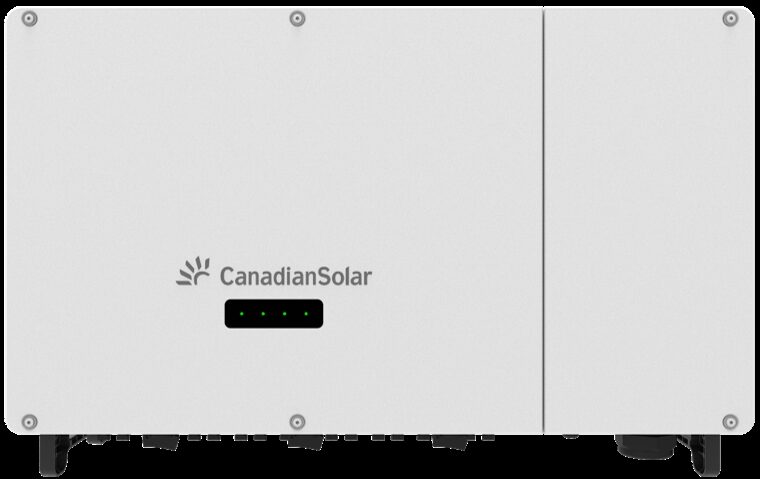
Canadian Solar's inverter documentation describes how much of the system's operation is automatic. The inverter starts and stops itself, without having to be manually controlled1, so daily operation needs no intervention. It supports remote control, including Grid ON/OFF and power factor setting1, and the package contains a GPRS/WIFI sticker which can monitor system power generation in real time through mobile app or web monitoring1. That monitoring is a convenience and a diagnostic tool, and it is also a dependence: the data route runs through a communications module and the manufacturer's platform.
The after-sales structure adds a second dependence. Local distributors are responsible for after-sales service1, so the household's route to support runs through the company that supplied the modules rather than directly to the manufacturer. That is normal for the sector, but it means the installer's longevity matters as much as the module maker's.
Canadian Solar or another brand: how to weigh the choice
Brand comparison in solar is mostly a comparison of paperwork, warranty terms and supply chain rather than of headline wattage. The module is a passive component with no moving parts, and the differences between tier-one makers show up in degradation guarantees, the ease of claiming, and whether the company is likely to be around to honour them. A household weighing Canadian Solar against another brand is really weighing those three things.
The certification position is a reasonable starting filter. Canadian Solar holds a factory production control certificate from TUV SUD BABT dated January 2020 and CSA certificates of compliance dated April 2020, alongside SGS verification of module testing from December 20191. Those documents are the maker's own, and they speak to manufacturing control and product testing rather than to the quality of any individual installation.
The installer side carries more weight for most households. MCS certification covers the installer and the installation, and it is the route to consumer protection and to export tariff registration11. A well-certified module fitted by an uncertified installer leaves the household without that protection, and the reverse, a certified installer fitting a mid-range module, is generally the safer combination.
On value at resale, independent reporting in January 2026 states that studies suggest homes with solar panels may sell for 2% to 14% more9. That is a range across studies, not a promise, and it depends on the system being registered and documented. A buyer's surveyor will ask whether the system is properly registered with MCS and any export tariffs13, and an unregistered system is harder to value.
For the wider picture of who makes the modules sold in the UK, and how certification, warranty and bankability compare across makers, see solar panel manufacturers and tier 1 solar manufacturers and bankability ratings. The parent groups behind the brands are set out in who owns which energy brand, and the general framework for household equipment is at home energy equipment manufacturers.
Sources25 cited
- Canadian Solar inverter and system support, Canadian Solar, 2026-09-17
- Solar panels advice, Energy Saving Trust, 2026-08-27
- Plug-in solar panels vs rooftop systems, Which?, 2026-04-27
- Solar panels, Welsh Government, 2026-01-14
- Solar panel myths: five common concerns debunked, Which?, 2026-06-09
- UK solar panel hotspots, Energy Saving Trust, 2026
- Generating renewable electricity, Energy Saving Trust, 2025-12-11
- Solar panel installation, Energy Saving Trust, 2026-09-07
- Do solar panels increase home value?, The CPA, 2026-01-20
- Buying advice for solar panels, Which?, 2026-08-12
- ECO flexibility funding, Ceredigion County Council, 2026-09-17
- Barcud solar panel installation scheme specification, Sell2Wales, 2026-06-15
- Buying a house with solar panels, Energy Saving Trust, 2026-08-13
- Plug-in solar panels, Energy Saving Trust, 2026-09-17
- Plug-in solar panels, Which?, 2026-09-15
- JA Solar solar panels review, Which?, 2026-08-12
- Solar photovoltaic (PV) panels, London Borough of Bromley, 2026-09-17
- Solar panels, Wirral Council, 2026-09-17
- Building regulations: energy efficiency, Welsh Government, 2026-09-17
- Solar panels and planning permission, Cornwall Council, 2026-09-17
- Solar panels, East Herts Council, 2026-09-17
- Solar panels: building regulations, Planning Portal, 2026-09-17
- Installing solar panels at your home, Brighton and Hove City Council, 2026-09-17
- When consent is required, Buckinghamshire Council, 2026-09-17
- Solar panels and permitted development, Richmond upon Thames Council, 2026-07-06