In this guide
JA Solar is a Shanghai-headquartered module manufacturer and one of the original members of the Solar Module Super League, the informal industry grouping of the largest panel makers1. Its products are mainly produced in China, with other facilities around the world, and its panels are sold and installed in the UK by a number of installers rather than direct from the company1.
The warranty position is the headline for a household weighing the brand: a 12 year product warranty and a 25 year power output warranty at 87.4%, with the most efficient panel recently tested by Which? rated at 600W and 23.2% efficiency1. That places JA Solar in the mainstream tier of modules sold into the UK, alongside the other large Chinese manufacturers.
What the brand does not offer is a direct route to purchase. There is no published per panel price, no manufacturer installation service, and no UK factory. A JA Solar array is bought through an installer, and the model that ends up on the roof is usually the one that installer stocks. Several older JA Solar model numbers are now marked discontinued by distributors, so the range a household can actually buy is narrower than the full catalogue.
What JA Solar makes and where it sits in the market
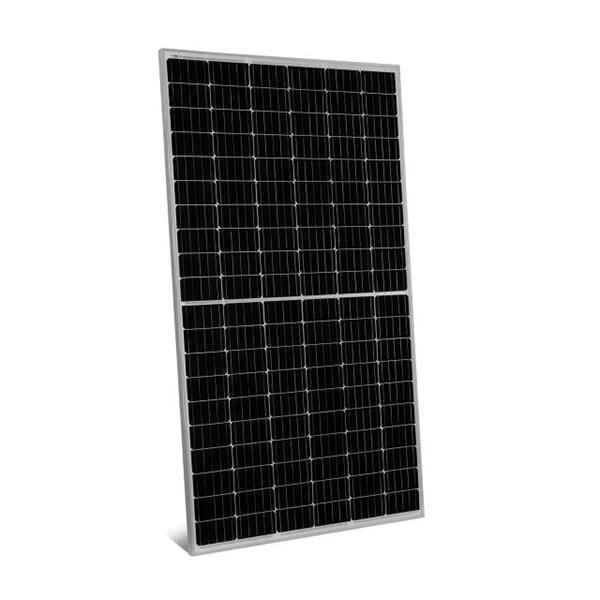
JA Solar manufactures monocrystalline photovoltaic modules, and its MCS-certified monocrystalline PV modules appear in official documentation covering the JAM 54/48 DXX panel range, listed alongside Archai iOPT 800W Smart Optimisers and Gateway modules2. That listing matters for UK households because MCS certification is the route by which a product becomes eligible for the standards that govern domestic installation.
The company's position in the market is defined by scale rather than by a niche. It is one of the original members of the Solar Module Super League, an informal industry name given to the largest module makers, and it is based in Shanghai, China1. Production is mainly in China, with other facilities around the world1. For a UK buyer, that means the module is an imported component with a global supply chain behind it, and the brand's continuity depends on a company operating at utility scale as well as in the residential market.
The product families that appear in the documentation are the JAM54, JAM66 and JAM72 series, covering different cell counts and formats. The JAM66S30 480-505/MR Series datasheet lists mono cell technology, a 495W rated maximum power at STC for the 495 variant, and a 25 year linear power output warranty3. The JAM72D30 MB is a p-type bifacial double-glass module with 144 cells in a 6 by 24 arrangement, 2.0mm front and rear glass, QC4.10-351 or MC4-EVO2A connectors, and IEC 61215 and IEC 61730 certification4.
That spread, from a 54-cell monofacial format to a 144-cell bifacial double-glass module, is the practical shape of the range. A UK household is most likely to be offered a monofacial module in the 400W to 500W class, with bifacial glass-glass products appearing where a roof or ground mount can make use of rear-side gain. The wider market context is covered in solar panel manufacturers.
UK availability: who sells and installs JA Solar panels
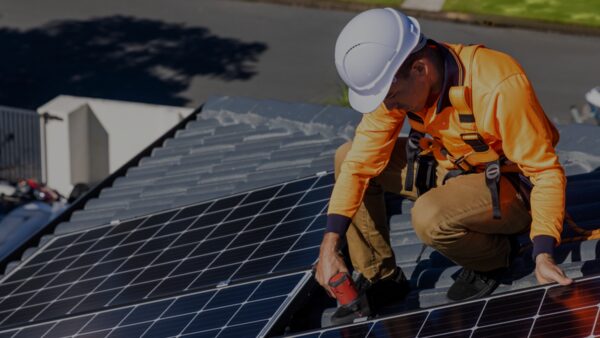
JA Solar panels are sold and installed in the UK by a number of installers1. There is no manufacturer direct sales channel and no JA Solar branded installation arm, so the practical availability of the brand in any given area depends on which local firms stock it.
The installer relationship shapes brand choice more than household preference does. In survey work, just over half of JA Solar panel owners said they chose the brand because it was the only brand fitted by their chosen installer, and 13% said they chose it from several brands recommended by their installer1. That is the reality of the UK residential market: the module is often decided at the point of quote rather than at the point of research.
For context on how households reach an installer, the wider market includes energy suppliers and specialist firms. Good Energy installs solar panels and batteries in multiple places across the south of England, and Scottish Power installs solar panels and batteries throughout Great Britain5. Those are examples of the routes available rather than endorsements of any particular firm, and none is stated to fit JA Solar specifically.
Solar is now a mainstream domestic technology in the UK. More than 1.5 million homes in the UK now have solar panels, according to Which?, and around 1.65 million homes were reported generating their own solar energy as of June 20266. Another estimate puts the figure at under 5% of the UK's 29 million homes8. The documents differ on the exact count, which reflects different survey dates and definitions rather than a dispute about direction.
Cost: from £100 per panel, with quotes done bespoke
There is no published JA Solar list price for a panel or for a supplied and fitted system. Prices are installer quoted, and the figures that exist in the public domain describe whole installations rather than individual modules.
The cost picture for domestic solar in the UK is broad. Confused.com puts solar panels at between £6,100 and £11,000 depending on the size of the property9. Uswitch reports a range of around £4,600 to £8,000 based on panel quality and system size10. The Energy Saving Trust states that domestic solar panel systems are generally around 4.5 kWp and cost around £7,60011, and elsewhere that the average cost to install solar panels is around £6,10012. Uswitch also cites an average upfront cost of £6,100 according to the Energy Saving Trust13. A 2023 figure from the CPA put the average at around £7,800 to buy and install14.
| Source | Figure | Basis |
|---|---|---|
| Confused.com | £6,100 to £11,000 | Property size9 |
| Uswitch | £4,600 to £8,000 | Panel quality and system size10 |
| Energy Saving Trust | around £7,600 | 4.5 kWp domestic system11 |
| Energy Saving Trust | around £6,100 | Average installation cost12 |
| CPA (2023) | around £7,800 | Buy and install average14 |
The spread reflects different assumptions about system size, panel specification and whether battery storage is included. None of these figures is a JA Solar price, and none should be read as one. For a specific array, the number comes from an installer after a survey.
Maintenance costs sit separately. Professional solar panel cleaning typically starts at around £60 to £100 for a standard system, or around £4 to £15 per panel, which works out at roughly £80 to £150 for a typical home installation of 10 to 16 panels15. Cleaning is not a manufacturer requirement and does not affect the JA Solar warranty.
Which JA Solar models UK homes can actually buy
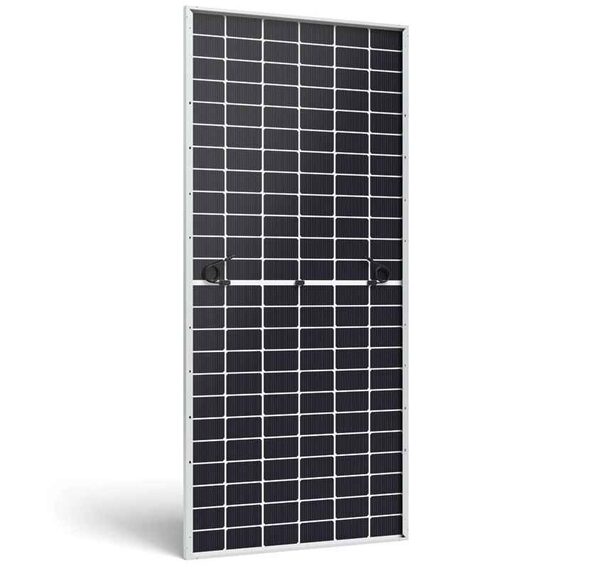
The models a UK household can buy are the ones currently supplied through installers. The documentation in circulation covers the JAM54, JAM66 and JAM72 families, with the JAM66S30 480-505/MR Series listed as mono cell technology with a 25 year linear power output warranty3.
The JAM72D30 MB is the bifacial double-glass option. It uses 144 cells in a 6 by 24 layout, 2.0mm front and rear glass, and QC4.10-351 or MC4-EVO2A connectors, and carries IEC 61215 and IEC 61730 certification4. Double-glass construction is the format associated with bifacial modules, where the rear glass allows light to reach the back of the cells.
| Model | Format | Key figures |
|---|---|---|
| JAM66S30 480-505/MR Series | Mono, 495W variant at STC | 25 year linear power output warranty3 |
| JAM72D30 MB | p-type bifacial double-glass, 144 cells (6x24) | 2.0mm/2.0mm glass, IEC 61215 and IEC 617304 |
| JAM 54/48 DXX range | MCS-certified monocrystalline | Listed with Archai iOPT 800W Smart Optimisers and Gateway modules2 |
The JAM 54/48 DXX range is the one that appears in official documentation as MCS-certified monocrystalline PV modules, listed alongside Archai iOPT 800W Smart Optimisers and Gateway modules2. MCS certification is the relevant marker for a UK domestic installation, because it sits behind the standards that govern how domestic solar is fitted and registered.
What a household can actually buy at any moment depends on installer stock. Model numbers cycle as manufacturers refresh their lines, and a model that appears in a datasheet may already be out of supply. The safest reading of the range is by format and power class rather than by exact model number. Broader brand context sits in solar panel manufacturers and tier 1 solar manufacturers.
Discontinued models: JAM54S30, JAM66S30 and JAM72D40
Three JA Solar model numbers carry discontinued status on their product pages: the JAM54S30-425/LR, a 425W black frame p-type monofacial panel; the JAM66S30-495/MR, a 495W silver frame mono PERC panel; and the JAM72D40-590/LB-ITS, a 590W silver frame n-type panel.
Discontinued status does not mean the panels stop working, and it does not void a warranty already registered. It does mean that a like-for-like replacement of the same model may not be available if a panel is damaged, and that spares and matching units become harder to source over time. For a household, the practical question is whether the installer can still supply a matching module if one fails.
The JAM66S30 480-505/MR Series datasheet remains published, listing mono cell technology, a 495W rated maximum power at STC for the 495 variant, and a 25 year linear power output warranty3. The series documentation and the individual model's discontinued status sit alongside each other: the family continues, the specific variant does not.
This is normal in the module market. Manufacturers refresh lines as cell technology moves from p-type to n-type and as power classes rise, and distributors mark the superseded variants as discontinued once stock clears. A household comparing quotes should treat a discontinued model number as a signal to ask what the current equivalent is, and what happens if a replacement is needed. The same pattern across brands is covered in manufacturer support and spare parts.
Partnerships and product direction: the Solis alliance and new module lines
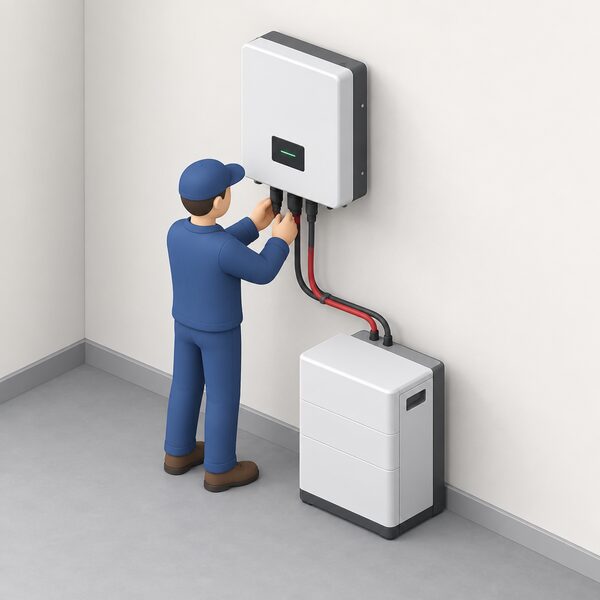
Solis and JA entered a strategic partnership at Intersolar Europe 2026 in Munich, covering cooperation in solar and energy storage technologies, system integration, global market development, supply chain coordination and project deployment16. The agreement was signed on 23 June 2026.
Solis energy storage inverters are described by the maker as compatible with a wide range of battery brands for flexibility16. That is a maker's statement about its own inverter range, not a certification of any specific JA Solar panel and Solis inverter pairing. The partnership is a commercial and supply chain arrangement between two manufacturers, and its practical effect for a UK household is that the two brands are more likely to appear together in system designs and installer offerings.
For a household, the significance is about system coherence rather than a guarantee. A paired panel and inverter from manufacturers working together may see better integration in monitoring and support, but the compatibility that matters at installation is the electrical matching of array voltage and current to the inverter's input window, which is an installer calculation in every case.
The wider direction of the module market is toward higher power classes and n-type cell technology, which is what the JAM72D40-590/LB-ITS represents. That model is now discontinued, which shows how quickly the top of the range moves. Inverter-side context is covered in solar inverter manufacturers and Solis inverters.
What owning JA Solar panels means for household energy independence
A JA Solar array does one thing well for independence: it generates electricity on the roof, and once the installation is paid for, the electricity it generates is free to use17. Uswitch frames the same point as locking in a portion of energy costs at 0p per kWh for the next 25 years13. That is the core of the case, and it is a real reduction in reliance on a supplier for the daytime load a household can shift to match generation.
The dependence that remains is substantial and worth stating plainly. The panels are made mainly in China by a Shanghai-headquartered company, so the hardware supply chain is imported1. The system still needs an inverter, which is a separate manufacturer's product with its own warranty and its own support life. The array is connected to the grid, and in most UK installations it is registered with the distribution network operator, usually by the installer18. Export rates are much lower than import tariffs, so using solar electricity yourself is much more cost-effective than selling it18. A household without battery storage exports at those lower rates and buys back at the higher ones.
There is also a certification and registration layer. JA Solar's MCS-certified monocrystalline modules appear in official documentation covering the JAM 54/48 DXX range2, and MCS certification is what sits behind the standards governing domestic installation. Registration with the network operator is a requirement, not an option18.
On the positive side, solar can reduce reliance on the grid and improve a home's Energy Performance Certificate17. More than 1.5 million UK homes now have solar panels, so the household is joining an established category rather than an experiment6. The limits are the ones that apply to any grid-connected array: no generation at night, reduced output in winter, and a continuing relationship with an installer and an inverter manufacturer for the life of the system. The wider picture is in manufacturers and energy independence and the pillar guide at manufacturers.
Sources18 cited
- JA Solar solar panels review, Which?, 2026-08-12
- ECO4 innovation approved innovation measures, Ofgem, 2026-02
- JAM66S30 480-505/MR Series datasheet, JA Solar, 2026-09-17
- JAM72D30 MB module datasheet, JA Solar, 2026-09-17
- Solar panel costs, Which?, 2026-08-03
- Solar panel myths: five common concerns debunked, Which?, 2026-06-09
- Could solar panels save you £500 a year, Which?, 2026-06-17
- Solar wizard calculator, Centre for Sustainable Energy, 2026-05-06
- Make your home more energy efficient, Confused.com, 2026-07-06
- Solar panels, Uswitch, 2026-09-09
- Solar panels, Energy Saving Trust, 2026-08-27
- Energy saving upgrades for home renovation, Energy Saving Trust, 2026-05-05
- Are solar panels worth it?, Uswitch, 2026-09-16
- Solar panels a good investment, CPA, 2023-08-23
- Solar panel cleaning and maintenance, Energy Saving Trust, 2026-08-25
- Solis and JA establish strategic partnership at Intersolar Europe 2026, Solis, 2026-06-23
- Solar panels, London Borough of Hammersmith and Fulham, 2026-03-16
- Solar photovoltaic panels, London Borough of Bromley, 2026-09-17
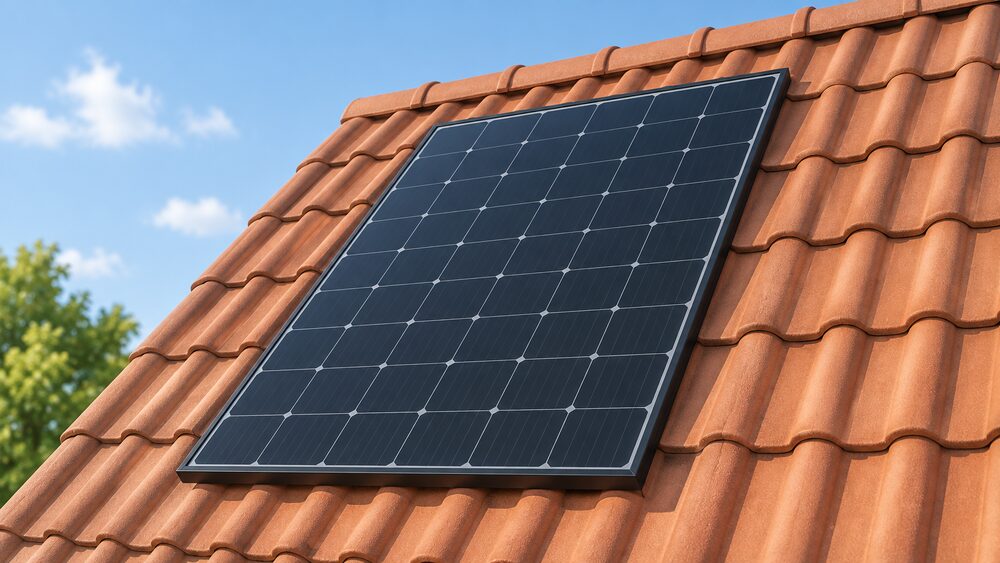 JA Solar panelsVolume panel maker regularly specified for UK homes.