In this guide
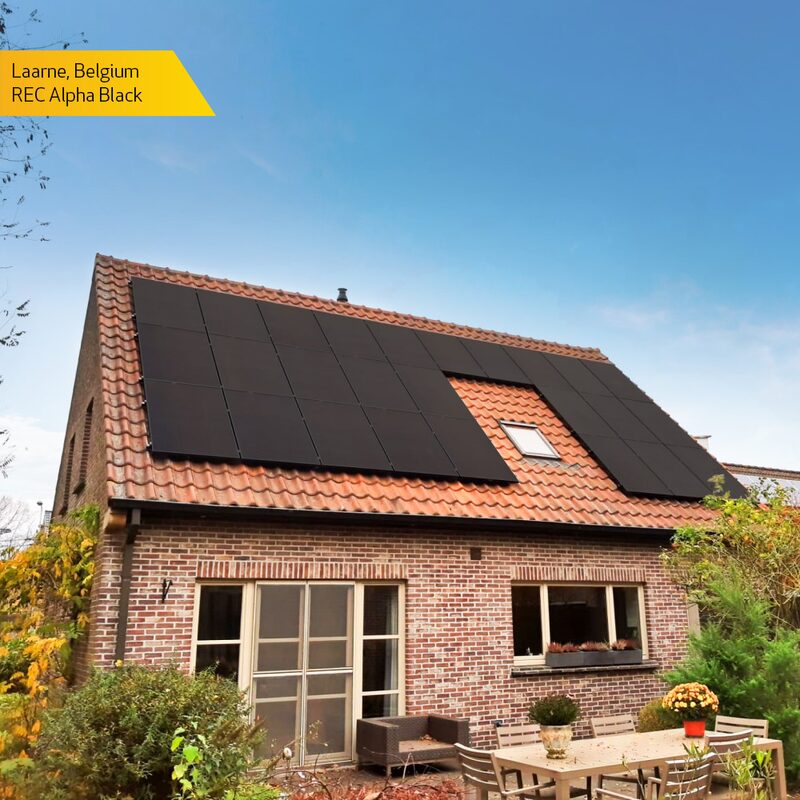
REC Solar is a Norwegian company that builds its panels in Singapore, and it sells into the UK on a premium pitch: heterojunction cell technology, a 20 year product warranty as standard, and a 25 year power warranty1. The residential range is small and specific. The REC420AA Pure-R carries 80 heterojunction cells and the REC460AA Pure-RX carries 88, and the most efficient panel the brand has had tested reached 460W at 22.1%2.
The warranty structure is where REC differs from most brands sold in Britain. The standard terms are a 20 year product warranty and a 25 year power warranty, with the power term expressed as 25 years at 92%2. Above that sits the REC ProTrust Warranty, which the maker describes as a comprehensive package offering a 25 year warranty for each of product, power and labour, and which is available only through REC Certified solar installers3.
For a household, the appeal is straightforward: a high-output panel with a long warranty and a named installer network behind it. The dependence is equally straightforward. The panels are made overseas, the extended cover depends on which installer did the work, and the electricity they produce still flows through a grid connection and a metered supply arrangement.
REC at a glance: a Norwegian brand, a Singapore factory
REC Solar is based in Norway, and its panels are made in Singapore1. That combination is unusual among the brands a UK householder is likely to be quoted, and it shapes what the ownership experience looks like. The company identity, the warranty obligations and the technical support sit with a Norwegian business. The manufacturing, and therefore the module supply chain, sits in a Singapore plant.
The brand positions itself at the upper end of the consumer market. Independent review coverage describes REC as producing high end solar panels using heterojunction cell technology, which is the technical claim the rest of the range rests on2. The residential line is not broad: the named models in the consumer listings are the REC420AA Pure-R and the REC460AA Pure-RX, both heterojunction2.
What this means for a household is a question of where the risk sits. A UK installer quoting REC panels is offering a module made outside the UK, warranted by a company based outside the UK, with no domestic manufacturing footprint to fall back on for spares. That is not unusual in the solar market, but it is worth stating plainly, because the alternative brands sold in Britain include manufacturers with different supply chain arrangements. The wider picture of who makes the modules sold here is set out in solar panel manufacturers.
Heterojunction cells: what the technology is and why it matters
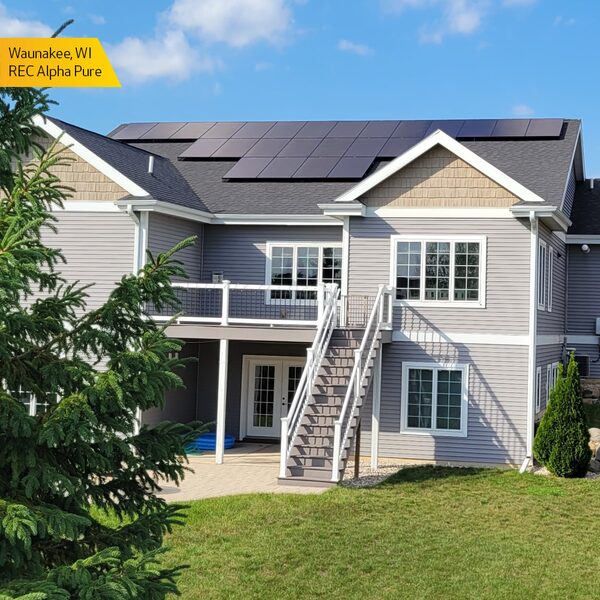
Heterojunction, usually shortened to HJT, is the cell technology REC builds its residential range on2. The panel listings show it applied consistently: the REC420AA Pure-R is a heterojunction panel with 80 cells, and the REC460AA Pure-RX is a heterojunction panel with 88 cells2. The cell count is the visible difference between the two; the underlying technology is the same.
The practical claim attached to the technology is output from a given area. The most efficient REC panel recently tested reached 460W at 22.1%2. That figure is the one to hold on to when comparing quotes, because it describes how much power a panel produces and how much of the sunlight falling on it is converted, rather than describing the panel's physical size.
It is worth separating this from a different product category that sometimes gets confused with it. Hybrid panels, also called PV-T, combine photovoltaic cells with solar thermal panels so that the same panel generates heat and electricity4. That is a distinct technology from heterojunction, which is a way of building the photovoltaic cell itself. A household comparing quotes should check which of the two a salesperson is describing.
The technology choice also has a bearing on how the panels sit alongside the rest of a system. A higher-output panel means fewer modules for a given array size, which matters where roof area is the constraint. The trade-offs between panel formats and system sizes are covered in comparing manufacturer specifications.
The residential range and what the panels cover
The named residential models are the REC420AA Pure-R and the REC460AA Pure-RX, both heterojunction, with 80 and 88 cells respectively2. Those two models are the core of what a UK householder is likely to be offered under the REC name.
Sizing context helps here. A 4.5kWp domestic system typically covers between 20 and 30m2 of roof surface area, using around 12 panels5. Industry guidance puts a typical system at 10 to 14 solar panels6. As a general rule, 10m2 to 20m2 of PV panels will generate between 20 and 40% of a typical household's electricity needs7.
| Measure | Typical figure | Basis |
|---|---|---|
| System size | 4.5kWp | Around 12 panels, 20 to 30m25 |
| Panel count | 10 to 14 panels | Typical domestic system6 |
| Share of household electricity | 20 to 40% | 10 to 20m2 of panels7 |
| Annual generation | around 3,500 kWh | 4kW system8 |
| Annual generation | around 3,500kWh | 4kWp system, varies by region9 |
| Annual generation | 3,600kWh | Modelled house10 |
Generation varies with location and array size, and the published figures differ accordingly. A case study home with 18 solar panels generates about 4,500kWh of electricity a year11. Nationally, solar contributed 14TWh in 2024, which was 4% of UK electricity12. Those national figures are context rather than a prediction for any one roof.
Warranty: 20-year product and 25-year performance cover
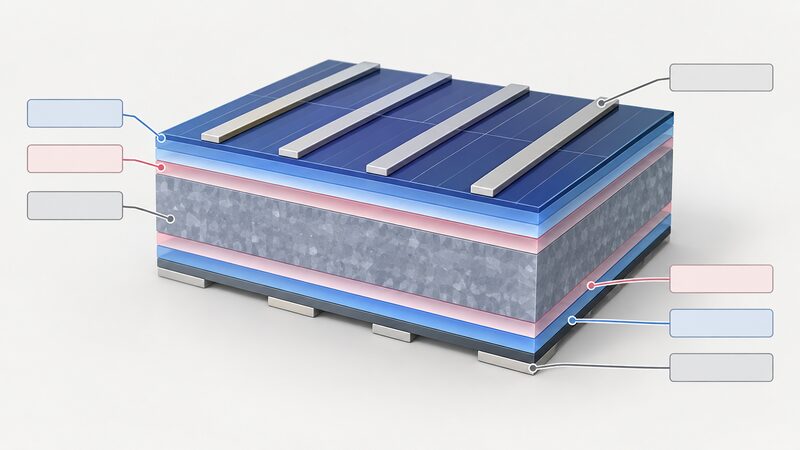
REC panels come standard with a 20 year product warranty, and the maker states the panels will maintain their superior quality for at least 20 years3. The power warranty runs for 25 years, and the independent listing expresses the performance floor as 25 years at 92%2. Read together, the standard package is a 20 year product warranty plus a 25 year power warranty3.
That structure is more generous than the market norm on the product side. Solar panels usually come with a 25 year performance warranty and a five to 10 year product warranty13. Typical warranty terms quoted for rooftop solar panels run to 10 years on one measure and 25 years on another14. REC's 20 year product term sits well above the five to 10 year range that independent guidance describes as usual.
The distinction between the two warranties matters when something goes wrong. The product warranty covers panel defects, which is a physical failure of the module3. The power warranty covers output, and the 92% figure is the floor the panel is warranted to stay above at the end of 25 years2. A panel that still works but produces less than warranted is a power claim, not a product claim.
The REC ProTrust Warranty: a plus five year product extension
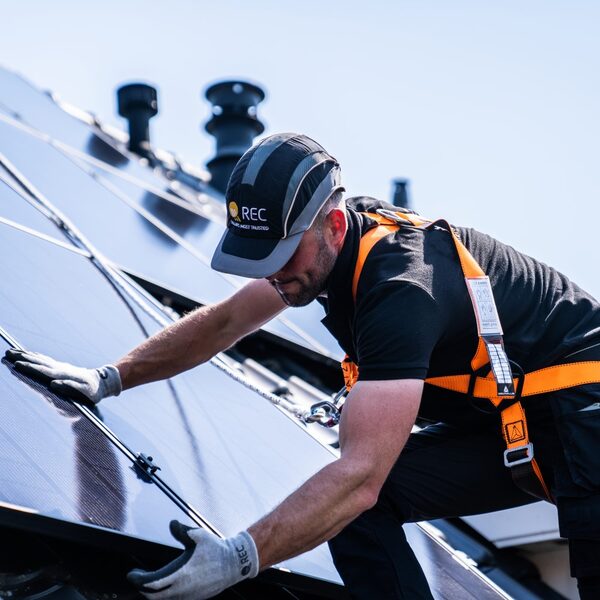
The ProTrust scheme is the layer above the standard terms. The maker states that all panels are eligible for a plus five year product warranty extension under it3. The package is described as offering a 25 year warranty for each of product, power and labour3.
The labour element is where the scheme splits by system size. Consumers with installations up to 25kW can have a 25 year warranty covering product, power and labour3. Systems between 25kW and 500kW can have the same 25 year product and performance warranties, plus a 10 year labour warranty3. For a domestic roof, the 25kW threshold is far above a typical installation, so the 25 year labour term is the one that applies.
The condition is the installer. The ProTrust Warranty is exclusively offered by REC Certified Solar Professional installers3. Independent review coverage describes it as added protection should a panel need servicing, but only where the work was done by an REC Certified solar installer1. The eligibility rule is stated the same way elsewhere: it only applies if an REC Certified solar installer was used2.
"is exclusively offered by REC Certified Solar Professional installers"
That single condition decides which warranty a household actually holds. Two identical arrays on two identical roofs can carry different cover, depending on whether the installer held REC certification. The general mechanics of keeping cover valid are set out in registering a warranty and keeping it valid, and the wider pattern of maker schemes is covered in manufacturer installer networks.
Certification, fire classification and degradation resistance
Certification is where a datasheet claim becomes a tested one. Plastic backed PV panels are classified as class C under IEC 61730-2 in official fire safety guidance15. That classification describes how a panel behaves in a fire spread test, and it is the kind of detail a household rarely sees but a building control or insurance query may turn on.
The standards framework around solar products is broader than any single panel. Solar Keymark, the European certification mark, is owned by CEN/CENELEC16. The UK's own certification landscape for home energy equipment, including which marks a product carries and what they cover, is set out in manufacturer certification and approvals, with the underlying test methods in how energy products are tested.
Degradation resistance is the other half of the warranty story. The 25 years at 92% figure is a statement about how slowly the panel is warranted to lose output2. That is the number to compare against other brands, because a performance warranty is only meaningful alongside the floor it guarantees.
Installation standards sit alongside product certification. Official guidance for solar installations requires a check that the roof can support the additional wind, snow and static load imposed by the panels, and that it complies with Part A: Structure17. Permitted development rights allow the installation of most solar panels, subject to meeting the requirements set out in local guidance18, and panels must not protrude by more than 200mm beyond the wall or roof19. Those are conditions on the installation, not on the panel brand, but they apply to every REC array.
Manufacturing in Singapore and annual output of 1.4 GW

REC solar panels are made in Singapore2. The company is based in Norway1. The manufacturing footprint is therefore entirely outside the UK, which has consequences for lead times, spares and the practicalities of a warranty claim that requires a replacement module.
The scale of that manufacturing matters less to a household than the location, but it frames the supply position. REC is a specialist panel maker rather than a diversified energy conglomerate, and its residential range is narrow: two named heterojunction models in the consumer listings2. A narrow range means fewer variants to track, and it also means less choice within the brand if a particular model is unavailable.
For a UK buyer, the practical questions are about the route to market rather than the factory. Panels arrive through an installer, and the installer relationship determines both the warranty tier and the practical support if something fails. The pattern across the sector, including which brands manufacture where, is covered in where home energy products are made and solar panel manufacturers.
What REC panels mean for household energy independence
Solar panels capture the sun's energy and convert it into electricity that can be used in the home, or sent back to the electricity grid in return for a payment known as the Smart Export Guarantee20. Solar photovoltaic is an eligible technology type for the SEG21. That is the mechanism by which a household turns a roof into a small generating asset.
The independence case rests on self-consumption. Rates for selling electricity to the grid are much lower than tariffs for using electricity from the grid, so using solar electricity yourself is much more cost-effective22. Solar panels lower electric bills by providing an additional source of electricity, which can be used to power appliances without taking electricity from the grid23. Home solar panels can reduce reliance on the grid, and the Energy Performance Certificate can be improved23. Solar panels generate clean energy for the home and can cut down on energy bills24.
The limits are as real as the benefits. A REC array does not disconnect a household from the grid, from a supplier, or from the metering and registration arrangements that go with a connection. In London, a solar installation must be registered with UK Power Networks, usually done by the installer22. Registration requirements of this kind apply across the distribution network areas, and the details differ by region. Northern Ireland has its own support arrangements for generating your own electricity25.
There is also a consumer protection dimension. Reputable solar panel installers should be signed up to a consumer code, such as the RECC, to prevent pressure-selling tactics26. The Renewable Energy Consumer Code was developed and is sponsored and run by Renewable Energy Assurance Ltd27. Homeowners are advised to seek independent advice on solar panels, heat pumps and other energy efficiency measures from organisations that do not sell them25. In England, solar PV panels are among the measures funded under the ECO scheme28.
For a household weighing the purchase, the honest summary is this: REC panels offer a long product warranty and a high-output heterojunction cell, made in Singapore by a Norwegian company, sold through a certified installer network that also determines the warranty tier. The panels reduce grid reliance and cut bills through self-consumption. They do not remove the grid connection, the supplier relationship or the registration duties that come with generating at home.
Sources28 cited
- REC Solar panels review, Which?, 2026-08-12
- REC Solar panels, Which?, 2026-08-12
- Empowering warranty, REC Group, 2026-09-17
- Buying advice for solar panels, Which?, 2026-08-12
- Solar panels, Energy Saving Trust, 2026-08-27
- Solar energy, Solar Energy UK, 2026-09-17
- Plumbing with renewables, CIPHE, 2026-09-17
- Are solar panels worth it?, Uswitch, 2026-09-16
- Electric central heating, Which?, 2025-09-22
- House of the future, Energy Saving Trust, 2026-07-15
- Russell and Kate story: solar panels and heat pump, Energy Saving Trust, 2026-08-13
- Analysis: UK electricity was cleanest ever in 2024, Carbon Brief, 2024
- Buying a house with solar panels, Energy Saving Trust, 2026-08-13
- Plug-in solar panels vs rooftop systems, Which?, 2026-04-27
- Fire spread over pitched roofs fitted with solar panels: summary, GOV.UK, 2025-12-22
- Solar Keymark for public authorities, Solar Keymark, 2026-09-17
- Solar panels, East Herts Council, 2026-09-17
- Installing solar panels at your home, Brighton and Hove City Council, 2026-09-17
- Solar panels, City of York Council, 2026-09-17
- Solar panels, Oxfordshire County Council, 2026-09-17
- Smart Export Guarantee: generators, Ofgem, 2026-09-17
- Solar panels, London Borough of Hammersmith and Fulham, 2026-09-17
- How do solar panels work?, Smart Energy GB, 2026-03-16
- What is global warming and what can I do about it?, Smart Energy GB, 2026-03-16
- Support to generate your own electricity, nidirect, 2025-09-22
- Solar panels, Electrical Safety First, 2026-09-17
- Renewable Energy Consumer Code, Trading Standards Approved Code, 2026-09-20
- ECO4 Flex open, South Cambridgeshire District Council, 2026-09-17
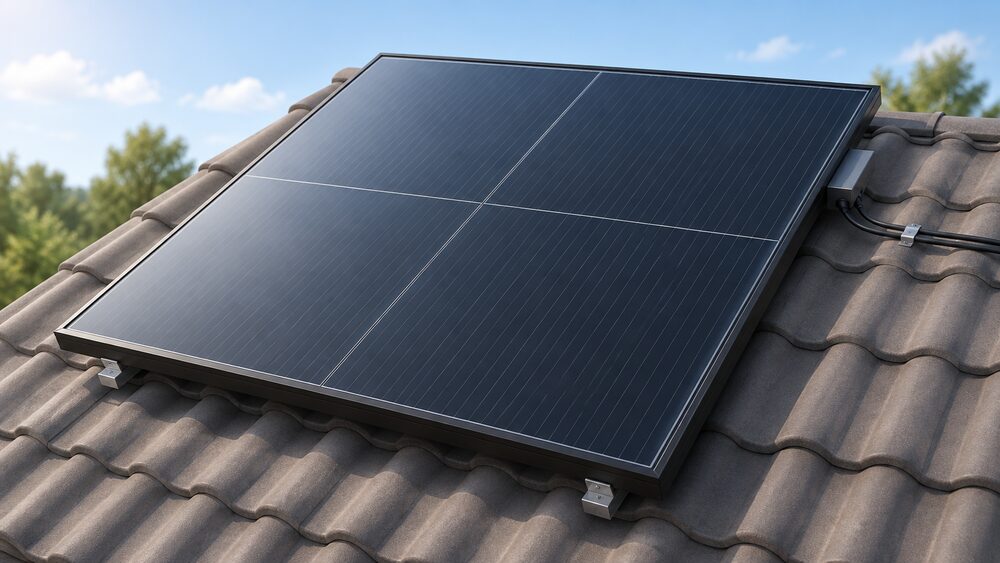 REC Alpha Pure panelsREC Alpha Pure panels come in two versions, the Pure-R and the Pure-RX, and the RX is the more powerful of the two.