In this guide
AIKO is a solar module manufacturer whose residential range is built on ABC cells, a back-contact design that moves the metal ribbons off the front of the panel so that more light reaches the silicon. The company's own product pages describe the ABC module as using a ribbon-less design and pyramid-structured glass to reduce glare, and as carrying 3.2mm tempered glass with pure copper interconnects1. Independent testing by Which? places an AIKO panel at 640W and 23.7% efficiency, described as the most efficient domestic monofacial panel in its test results2.
For a UK household, the practical questions are what the panels produce, how long they last, what the warranty actually covers and whether the paperwork stands up. AIKO's MCS certificate states an expiry date of 23 November 2028, which is the date that matters for incentive eligibility and for the product's standing in the UK market3. The range has moved quickly: a 475W module in the 54-cell format, then a 500W module under 2 m² by late 2025, and a fourth-generation INFINITE ULTRA and Z Series launched at Intersolar Europe in June 20264.
The ABC range at a glance
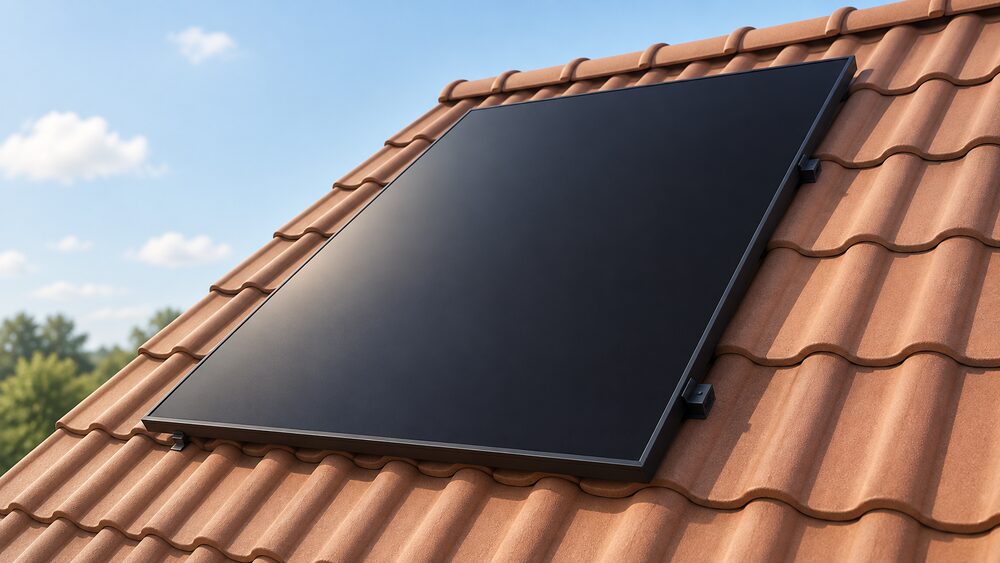
ABC stands for All Back Contact. The cell architecture puts both positive and negative contacts on the rear, which removes the shading that front ribbons would otherwise cause and gives the panel a uniform black face. AIKO's own description of the module emphasises two things: the ribbon-less design and pyramid-structured glass that cut glare, and the micro-crack resistance that the company says is more obvious than its other advantages1. The claim behind that is a welding difference: compared with TOPCon's Z-shaped welding, AIKO states that slotted welding reduces the risk of micro-cracks in the modules1.
The range has developed in steps. AIKO's Neostar 475W represented a leap forward in the 54-cell format in 2024, and by late 2025 the company had a record-breaking 500W module under 2 m²4. The same 54-cell platform was pushed to 480W, with a conflicting figure of 490W appearing in the same year's material; the two figures are unresolved4.
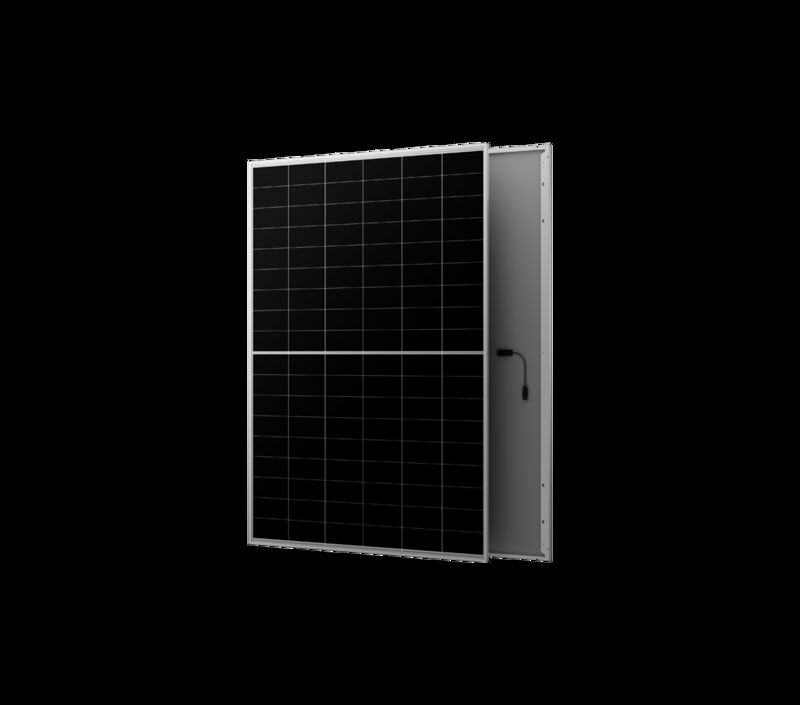
The naming is worth understanding before comparing quotes. AIKO-A475-MCE54Mb is a 475W module measuring 1762x1134x30mm and weighing 20.6kg, using N-type ABC cells in a 108-cell layout2. The AIKO-A485-MCE54Mw is the 485W version of the same platform, also 108 cells and the same physical size2. Model codes differ by a few characters while the panel on the roof looks identical, so the specification sheet, not the badge, is what confirms output.
Efficiency: over 22.8% from back-contact cells
The efficiency story has two layers, and they are often confused. At cell level, AIKO states that its Two-Step Passivation technology is enabling cell conversion efficiency above 27% in mass production4. At module level, the figure a household actually buys is lower, because the gaps between cells, the frame and the glass all take up area that generates nothing. Which? records an AIKO panel at 640W and 23.7% efficiency, based on the most efficient domestic monofacial panel in its test results2.
That 23.7% is a test result rather than a marketing figure, which makes it the stronger number to quote. It sits above the efficiency of most mainstream modules on the UK market, and the gap comes from the back-contact design rather than from a larger panel. Higher efficiency means more watts from the same roof area, which matters most where roof space is limited, where a chimney or dormer breaks up the array, or where the household wants a given array size without covering the whole roof.
Efficiency at the panel is not the same as output at the meter. Orientation, pitch, shading and inverter choice all take a share, and a south-facing roof at around 35 degrees will outperform an east-west roof of the same area. The Energy Saving Trust notes that solar panels are suitable across the UK, and that more than a million UK homes now have them7. The efficiency advantage of a premium module is real but modest in absolute terms; it is most valuable where area, not budget, is the binding constraint.
Power output: 475W panels and what a 14-panel array delivers
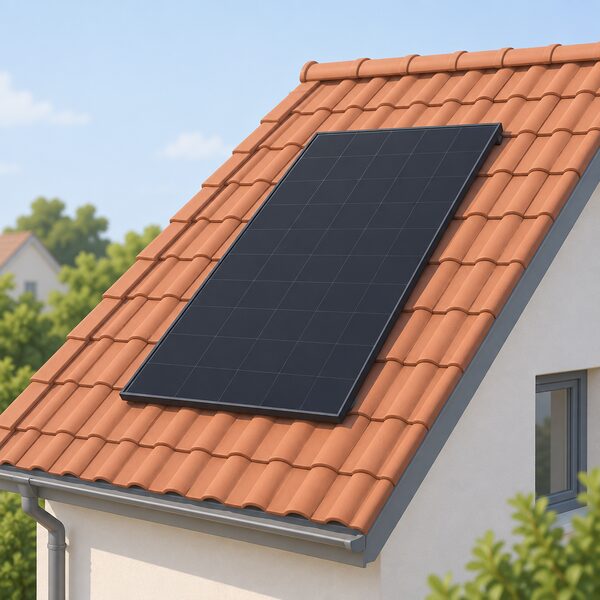
AIKO's residential line spans several output steps. The 475W module is the established workhorse in the 54-cell format, and the company's own comparison sets a 475W ABC panel directly against a 475W TOPCon panel of the same rated power4. Above that sit the 480W and 485W versions of the same platform, the 500W module under 2 m², and the Infinite range, which AIKO says is designed so that every panel is at least 500W and often reaches 515W4.
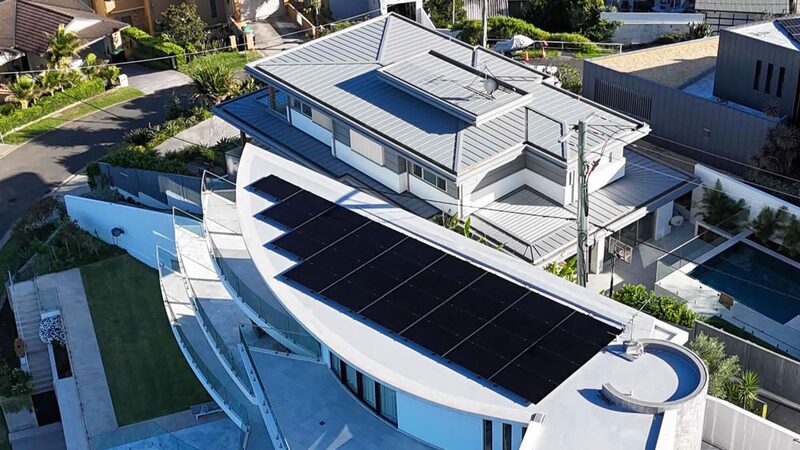
Array size follows from panel count. Fourteen 475W modules give 6.65kWp, and fourteen 500W modules give 7.0kWp. Independent guidance on household demand puts a one-bedroom house at around six panels and a standard three-bedroom house at 10 panels6. A 14-panel array therefore sits above typical three-bedroom demand, which is the point at which a household would normally be considering a battery to shift generation into the evening.
| Module | Rated output | Format | Notes |
|---|---|---|---|
| AIKO-A475-MCE54Mb | 475W | 108 cells, 1762x1134x30mm, 20.6kg | N-type ABC2 |
| AIKO-A485-MCE54Mw | 485W | 108 cells, same dimensions | N-type ABC2 |
| AIKO 54-cell platform | 480W, with a conflicting 490W figure | 54-cell | Two figures unresolved4 |
| AIKO 500W module | 500W | Under 2 m² | Record-breaking at launch4 |
| AIKO Infinite | At least 500W, often 515W | Residential | Maker design target4 |
The distinction between rated power and delivered energy is where ABC and TOPCon are argued about. AIKO states that a 475W ABC panel will typically generate more total energy over a year than a 475W TOPCon panel, attributing this to better performance in high heat and superior shade management4. Those are manufacturer claims made in a comparison published by the maker, not independent measurements, and they should be read as such. The mechanism is plausible: back-contact cells run cooler and lose less output as temperature rises, and a panel with no front ribbons suffers less when part of it is shaded.
Durability: 3.2mm glass and hail resilience
The physical build of the ABC module is conventional in the parts that matter for roof life. AIKO specifies 3.2mm tempered glass and pure copper interconnects1. Tempered glass at that thickness is the standard for residential modules and is what gives a panel its resistance to impact, snow load and thermal cycling.
The maker's durability argument rests on micro-cracking. AIKO states that the micro-crack resistance of its ABC module is more obvious than its other advantages, and links it to the welding method: slotted welding rather than TOPCon's Z-shaped welding, which the company says reduces the risk of micro-cracks in the modules1. Micro-cracks are the failure mode that matters most in practice, because they are invisible from the ground, do not always show up in a flash test at installation, and can grow into hot spots and output loss over years.
AIKO has also published on safety performance in heatwave conditions, discussing how its ABC modules behave in increasingly demanding European temperatures4. That is the maker's own material and should be weighed as such, but the underlying point is sound: module temperature on a UK roof in summer routinely exceeds ambient by a wide margin, and a cell technology that loses less output as it heats will deliver more over a year than its rated wattage alone suggests.
Warranty: 25-year product and 30-year performance cover
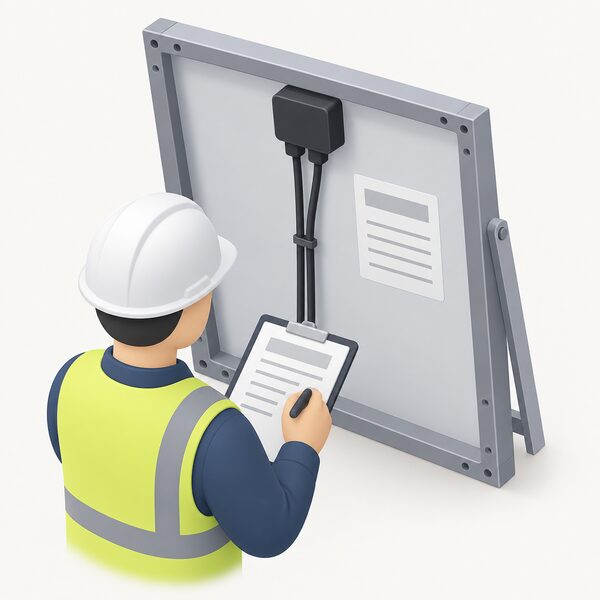
Warranty terms in the solar market are usually split in two. The product warranty covers defects in materials and workmanship; the performance warranty guarantees that the panel will still produce a stated percentage of its rated output after a set number of years. Independent guidance describes the market norm as a 25-year performance warranty and a five to 10-year product warranty5, with most panels carrying a 25-year performance guarantee9 and well-known manufacturers offering warranties of 25 to 30 years6.
AIKO's own published terms sit within that landscape, and the company's material includes a 30-year warranty on one monofacial full black panel alongside a 15-year figure on the same page; the two figures are unresolved1. For comparison, Jinko Solar publishes a 25-year product warranty and a 30-year power output warranty at 87.04%10. A household comparing quotes should read the two warranty documents separately rather than treating a single headline number as the whole cover.
Registration is what activates the cover. Independent guidance is to register a solar installation with the manufacturer so that warranties are activated and the household can be contacted about a problem or safety recall11. One Welsh scheme specification requires inverter product registrations to be completed within 48 hours of commissioning, which shows how short the window can be on some programmes12. The serial number is on the module label and on the commissioning paperwork; recording it before the panels go up avoids a difficult job later. More on keeping cover valid is at warranty registration.
UK availability: on-roof and in-roof mounting
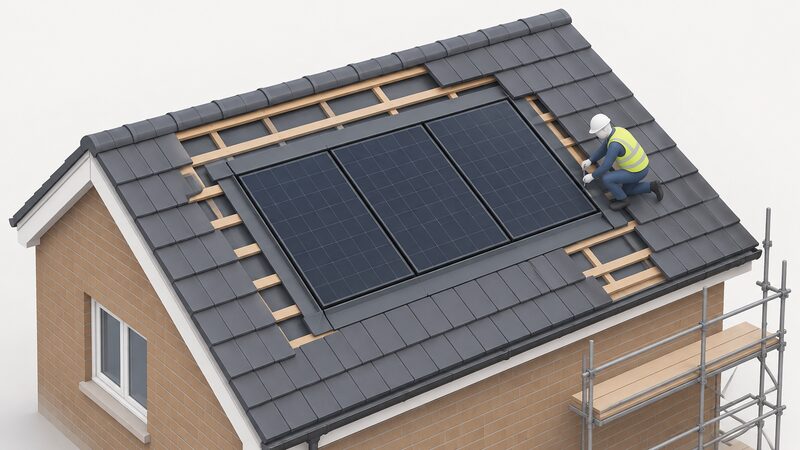
AIKO modules reach UK roofs through MCS certified installers, and the mounting method is chosen separately from the panel. Roof-integrated mounting systems, on-roof systems, ground-mounted systems, solar car ports and floating solar are all offered by UK installers working with a range of mounting hardware13. For most houses the choice is between on-roof, where rails sit above the tiles, and in-roof, where the panels replace the roof covering in a weathertight tray.
Planning is rarely the obstacle. Planning permission is not normally needed for solar panels on domestic roofs in England, because they fall under permitted development rights, with some exceptions14. Freestanding panels are subject to additional restrictions that are not covered by that route14. Solar panels are suitable anywhere in the UK, and can be installed on flat roofs as well as pitched ones7.
In-roof mounting is normally specified when a roof is being replaced or a new extension is being built, because the tray system has to be integrated with the roof covering. On-roof mounting is the default for retrofit. Both accept the same modules, so the choice does not change which AIKO panel is used, only how it is fixed and how the roof is made watertight around it. Mounting hardware is covered at solar mounting system manufacturers.
Certifications and supply chain traceability
MCS is the UK quality mark for renewable energy technologies including solar panels and heat pumps, and certified installers use MCS certified products including panels and mounting kits16. AIKO holds MCS certification for its modules, with the certificate stating an expiry date of 23 November 20283. That date is the one to check against an installation date: a system commissioned before expiry sits within the certified period, and the certificate is renewed on a rolling basis by manufacturers who stay in the market.
Certification bodies that issue MCS certificates include Certsure LLP trading as NICEIC, Napit Certification Ltd, Simply Certification, The IAA and Amtivo Group trading as British Assessment Bureau12. Homeowners are advised to use MCS certified installers so that systems comply with UK standards and qualify for financial incentives18. The installer's certificate and the product's certificate are separate documents, and both matter.
Beyond MCS, Solar Keymark is a European certification that fulfils additional requirements to assure constant quality, and products holding it meet additional requirements beyond the base standard19. It is not a substitute for MCS in the UK market but it is a useful signal of independent testing. Supply chain traceability is the remaining piece: module serial numbers allow a manufacturer to trace a panel back through production, which is what makes a recall or a batch defect manageable rather than a blanket problem. Certification routes are explained further at manufacturer certification.
What AIKO's newer Ultra and Z series mean for UK buyers
AIKO used Intersolar Europe 2026 to launch its fourth-generation INFINITE ULTRA module and the Z Series4. The company opened limited Z Series pre-orders through nine distribution partners across Europe at the show, and announced additional distributed generation contracts totalling 1 GW during the same event4. The full-screen Ultra range was expected to enter mass production and delivery in the third quarter of 20264.
At the same exhibition AIKO ran a live side-by-side demonstration of ABC and TOPCon modules under the same lighting and shading conditions, which is a more useful format than a specification sheet for showing how the two behave when part of a panel is shaded4. The company also presented its G4 full-screen Ultra modules at an event before the 2026 SNEC exhibition in Shanghai, which ran from 3 to 5 June 20264.
For a UK household, the practical reading is that the 475W and 500W modules currently being quoted are mature products with a certification date that runs to 2028, while the Ultra and Z Series are newer and, at the time of the European launch, were at pre-order and planned-production stage rather than generally available4. A buyer specifying a system in the UK is most likely to be offered the established range. The wider manufacturer landscape is set out at solar panel manufacturers.
Where AIKO panels sit on independence
A rooftop array changes what a household draws from the grid during daylight hours, and the size of that change depends on array capacity, orientation and how much of the generation is used on site rather than exported. A 14-panel array of 475W modules is a 6.65kWp system, and one of 500W modules is 7.0kWp; both are large enough that a battery becomes the natural next question, because generation in the middle of the day rarely matches household demand in the evening.
What remains is the grid itself. A grid-tied solar system has no storage of its own, so it exports when generation exceeds demand and imports at night and in winter. The system must be registered with the Distribution Network Operator, usually by the installer21, and in some areas with the network operator directly22. That registration is what makes the connection legal and what allows the network to manage the flow.
The dependence on the manufacturer is narrower but real. Warranty cover runs through the maker and the installer, and the longest terms depend on registration being completed and on the paperwork being kept. Certification has a date attached: AIKO's MCS certificate runs to 23 November 20283. A household buying panels is buying a product, a warranty and a certification status, and all three should be checked before signing. The broader picture is at manufacturers and energy independence.
Sources22 cited
- AIKO ABC module technical page, AIKO, 2026-09-17
- AIKO solar panels review, Which?, 2026-08-12
- AIKO MCS certificate, AIKO, 2025-11
- 475W TOPCon vs 475W ABC comparison, AIKO, 2026-02-14
- Buying a house with solar panels, Energy Saving Trust, 2026-08-13
- How long do solar panels last, Uswitch, 2026-07-13
- Solar panel installation, Energy Saving Trust, 2026-09-07
- UK solar panel hotspots, Energy Saving Trust, 2026-08-13
- Solar panels guide, Uswitch, 2026-09-16
- Jinko Solar panels review, Which?, 2026-08-12
- Plug-in solar consumer guide, Electrical Safety First, 2026-08
- Barcud Solar Panel Installation Scheme Specification, Sell2Wales, 2026-06-15
- Residential solar PV, Renewables First, 2026-03-30
- Solar panels planning guidance, City of York Council, 2024
- Solar panel myths debunked, Which?, 2026-06-09
- Why MCS certification matters, MCS Certified, 2026-08-17
- Solar heating technologies, MCS Certified, 2026-08-17
- Energy efficient home improvements, Consumer Protection Association, 2026-05-07
- Solar Keymark for public authorities, Solar Keymark, 2026-09-17
- Solar Keymark for consumers, Solar Keymark, 2026-09-17
- Solar power facts, Energy Saving Trust, 2026-08-13
- Solar panels energy improvement options, London Borough of Hammersmith and Fulham, 2026-09-17
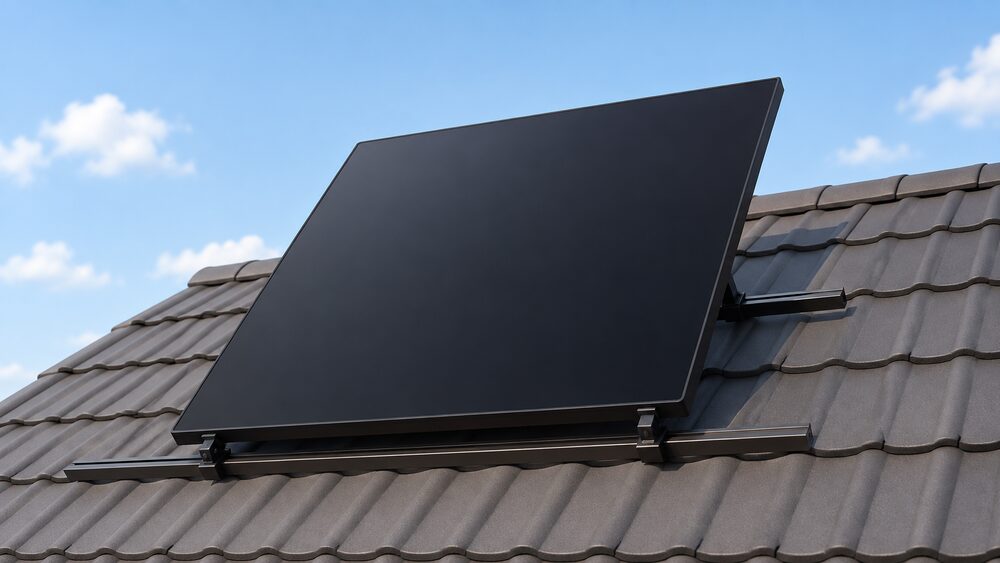 AIKO Neostar panelsAIKO Neostar panels come in several models, so which one suits your roof?
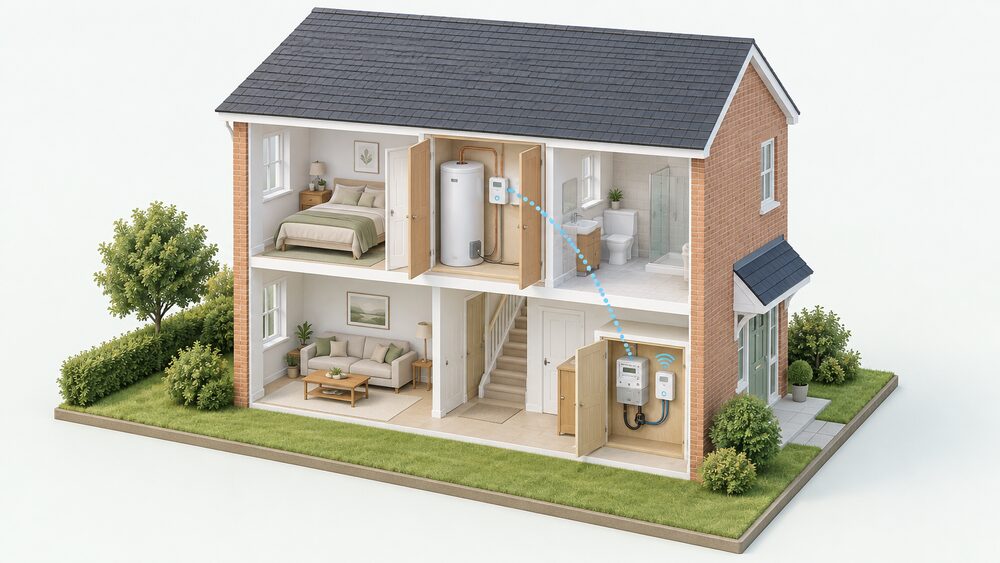 Solar iBoost+Your solar panels often make more electricity than you can use.