
In this answer
Short answer
Perovskite holds the highest efficiency records of any photovoltaic material, and none of it is on a UK roof. The Parliamentary Office of Science and Technology puts the record laboratory efficiency of a single-junction perovskite cell at 27%, and of a perovskite-silicon tandem cell at 35%1. At module scale, the same briefing records 21% for a perovskite module and 31% for a tandem module1. For comparison, panels presently on the market, which are silicon, tend to sit in the range 14 to 22%2.
The gap between those two sets of numbers is the whole story of perovskite efficiency. A record cell is a few square centimetres made under laboratory conditions; a module is a product that has to survive twenty years of British weather. Independent guidance states plainly that perovskite panels are yet to be proven in real-world environments and are not yet commercially available3. So the honest answer to the efficiency question is: very high in the laboratory, unmeasured in a home.
What a household can buy today is silicon, and it is worth knowing what that delivers before comparing it with a technology that has no installed base. Monocrystalline silicon is described by the electrical safety regulator's householders' guidance as the most efficient type currently available for domestic properties4.
Perovskite solar panel efficiency: what the figures mean
Efficiency is a ratio, not a rating. The formula is electrical power output divided by solar power received, multiplied by 1005. A panel rated at 21% turns just over a fifth of the sunlight falling on it into electricity; the rest is reflected, turned into heat, or lost inside the cell. That definition matters because perovskite records are quoted at two different scales, and the two are not interchangeable.
The 27% figure is a cell record. The 21% figure is a module record, and the drop between them is normal: when cells are cut, wired and encapsulated into a panel, some of the active area is lost to gaps and connections, and the module as a whole performs below its best cell1. The same pattern holds for tandems, where the 35% cell record becomes a 31% module record1. Anyone comparing a perovskite headline with a silicon panel's datasheet is comparing a cell with a module unless they check which is which.
Silicon's own numbers show the same spread. Polycrystalline panels, the older and cheaper silicon type, average around 14 to 15% module efficiency in one official scheme's rules6, and are typically quoted at around 14 to 16% elsewhere7. Monocrystalline panels are quoted by one maker at a minimum efficiency of 23%5, and most modern panels are said to convert between 15% and 23% of incident sunlight, with premium options at the top of that band8. The range across sources reflects different vintages, different product tiers and different measurement conventions, not a disagreement about physics.
For a household, the practical consequence of efficiency is area. A more efficient panel produces the same output from less roof, which matters on a small or shaded roof and matters not at all on a large unshaded one. That is the frame in which perovskite's laboratory advantage should be read.
Why perovskite can absorb 50% more energy from the sun
The 50% figure comes from a maker, not a regulator: one manufacturer states that using perovskite in solar panels can absorb 50% more energy from the sun than standard solar panels9. It is a claim about the material's light absorption, and it sits alongside the independent record figures rather than replacing them. The same maker's own low-light claim, that its panels generate 50% more energy in low-light circumstances than conventional PERC panels, is a separate product claim about a different technology10.
The physical reason perovskite attracts attention is that it can be tuned to absorb different parts of the solar spectrum, and it can be stacked. A tandem panel layers perovskite over silicon so that each material captures the wavelengths it handles best, which is why the tandem records, 35% at cell level and 31% at module level, sit above the single-junction records of 27% and 21%1. Stacking is the mechanism behind the headline numbers.
Silicon has been improving on its own account. Panels combining bifacial and PERC technologies are stated to be up to 18% more efficient than standard monocrystalline panels11. That is a maker's comparison, and it shows the moving target problem: perovskite is not chasing a static silicon benchmark, it is chasing a technology that keeps improving while perovskite waits for commercialisation.
"using perovskite in solar panels can absorb 50% more energy from the sun than standard solar panels"
The absorption advantage is real in the laboratory and unquantified in the field. No source in this area gives a measured energy yield for a perovskite panel on a UK roof, because none has been installed at scale.
Perovskite vs standard solar panels: how the efficiency compares
Set the records side by side and perovskite leads clearly. Set the products side by side and there is no comparison to make, because only one of them is a product.
| Technology | Cell record (lab) | Module record | Available for UK homes |
|---|---|---|---|
| Perovskite (single junction) | 27%1 | 21%1 | No3 |
| Perovskite-silicon tandem | 35%1 | 31%1 | No3 |
| Monocrystalline silicon | Not stated | 23% minimum, maker figure5 | Yes4 |
| Polycrystalline silicon | Not stated | 14 to 15%6, 14 to 16%7 | Being phased out3 |
Two caveats belong with that table. First, the silicon column mixes a maker's minimum rating with an official scheme's average, so the figures are not measured the same way. Second, polycrystalline is on its way out: it is being phased out in the UK and few installers still offer it3, and it is described as less efficient than monocrystalline with a higher cost per watt11.
Degradation is the other half of the comparison, and it is where silicon has the evidence. A standard solar panel loses up to 0.5% efficiency each year5. No equivalent degradation figure for perovskite appears in the UK guidance, which is precisely the gap that keeps it off the market: a material that leads on day one but has no published twenty-year curve is not yet a product.
Where perovskite falls short
The limits are not marginal, and they are the reason the efficiency question has no domestic answer yet. Independent guidance is explicit that perovskite panels are yet to be proven in real-world environments and are not yet commercially available3. That single sentence covers durability, degradation, warranty and installer familiarity at once.
Silicon's durability is documented. New solar panels are estimated to last 25 to 30 years, though this varies with environment1, and panels will last 25 years or more12. Most last 25 to 30 years, with recycling technology improving to recover valuable materials13. Warranties follow the same pattern: panels usually come with a 25-year performance warranty and a five to 10-year product warranty14. A household buying silicon today is buying a documented service life. There is no equivalent perovskite figure to quote.
There is also a manufacturing geography point. Around 80% of the panels available in the UK are made in China15, and those are silicon products. Perovskite manufacturing at domestic scale does not exist in the UK yet, so a perovskite panel would carry supply chain and support questions that silicon does not.
What perovskite efficiency means for household energy independence
Efficiency is one lever on household energy independence, and not the largest one. Solar panels generate clean energy for the home and can cut down on energy bills16, and home solar can reduce reliance on the grid while improving a home's Energy Performance Certificate17. Those benefits come from having panels at all, not from the cell chemistry inside them.
The independence a household actually gains depends on self-consumption. In an analysis of plug-in solar, a household able to use 90% of the output, described as typical for such installations, would get 400kWh from the panels18. That is the shape of the calculation: output multiplied by the share used on site. A more efficient panel raises the first number; a battery or a well-timed load raises the second. Battery storage carries its own arithmetic, since solar panels can last 25 years or more and the cost of replacing the battery at least once should be factored into total costs19.
What remains dependent is unchanged by perovskite. A grid connection stays, because panels do not generate at night and a household without storage exports rather than stores. A supplier relationship stays, for import and for export payments. Manufacturing dependence stays, and would if anything deepen, since the perovskite supply chain is not established in the UK. And the technology itself is dependent on a manufacturer that does not yet sell it here.
The realistic reading is that perovskite efficiency is a reason to expect better panels in future, not a reason to wait. Silicon is suitable across the UK20, suitable anywhere in the UK21, and is the most common domestic renewable energy source in the UK22. Panels are made to last 25 years or more and need very little maintenance23. A household weighing perovskite against silicon is weighing a record against a product.
Who makes perovskite solar panels
Oxford PV is the UK perovskite-on-silicon manufacturer named in the sources. Its perovskite-on-silicon solar panel set a record high of 26.9% efficiency, according to the Energy Institute11. That figure sits between the single-junction module record of 21% and the tandem module record of 31%, which is consistent with a perovskite-on-silicon tandem product rather than a single-junction one1.
Beyond Oxford PV, the sources name no maker selling perovskite panels into the UK domestic market. The UK market is silicon: around 80% of panels available here are made in China15, and the brands a household will encounter are silicon brands. Polycrystalline panels are being phased out and few installers still offer them3, so the practical choice is between monocrystalline products.
For a household tracking the technology, the useful distinction is between a record, a pilot line and a product on a pallet. Oxford PV's 26.9% is a record11. A record does not imply availability, price, warranty or installer support, and none of those are published for perovskite in the UK. The pages on perovskite solar cells and tandem perovskite-silicon panels cover the material and the stacked design in more detail, and when perovskite panels will be available tracks the commercial timeline.
What is available in the UK instead
Two things are on sale now, and neither is perovskite. Conventional rooftop solar is suitable across the UK20 and suitable anywhere in the UK21, and it is the most common domestic renewable energy source22. Plug-in solar, also called balcony solar, is available to buy and use across Great Britain24, has been available to buy in the UK since 27 August 202625, and can be self-installed26. It is compatible with UK domestic electrical systems27, and major retailers worked with the UK government on the rollout, with the panels now available in stores and online28.
The government position is that plug-in solar would be available in shops within months and save people money on their bills28. For a household that wants generation now, that is the live option, and its efficiency is silicon's efficiency, not perovskite's.
Sources28 cited
- Existing and future technologies for retrofitting the UK housing stock, Parliamentary Office of Science and Technology, 2026
- Existing and future technologies for retrofitting the UK housing stock, CREDS, 2021
- Are solar panels worth it?, Which?, 2026
- Solar panel installation, maintenance and repair, NICEIC, 2026
- How solar panel efficiency impacts your savings, SunPower Global, 2026
- Notice builder file download, Sell2Wales, 2026
- How much do solar panels cost?, EcoFlow, 2025
- Solar panel efficiency, Fuse Energy, 2026
- New energy solutions for homeowners, E.ON Next, 2025
- Solar power efficiency, Hive, 2026
- Clifton local listed building consent order guidance, Bristol City Council, 2025
- Solar photovoltaic, CAT, 2026
- Mythbusting our most frequently asked questions, Low Carbon Hub, 2025
- Buying a house with solar panels, Energy Saving Trust, 2026
- Aiko solar panels review, Which?, 2026
- What is global warming and what can I do about it?, Smart Energy GB, 2026
- How do solar panels work?, Smart Energy GB, 2026
- How plug-in solar can save UK homes £1,100 on energy bills, Carbon Brief, 2026
- Solar panel battery storage, Which?, 2026
- Solar panel installation, Energy Saving Trust, 2026
- UK solar panel hotspots, Energy Saving Trust, 2026
- Top energy saving ideas for your home improvement project, Energy Saving Trust, 2026
- Solar PV panels, AgilityEco, 2026
- Simple tips for a greener Easter, Home Energy Scotland, 2026
- Plug-in solar, Electricity North West, 2026
- Plug-in solar consumer guide, Electrical Safety First, 2026
- Industry welcomes plug-in solar progress, Solar Energy UK, 2026
- Britain continues to break clean power records, GOV.UK, 2026
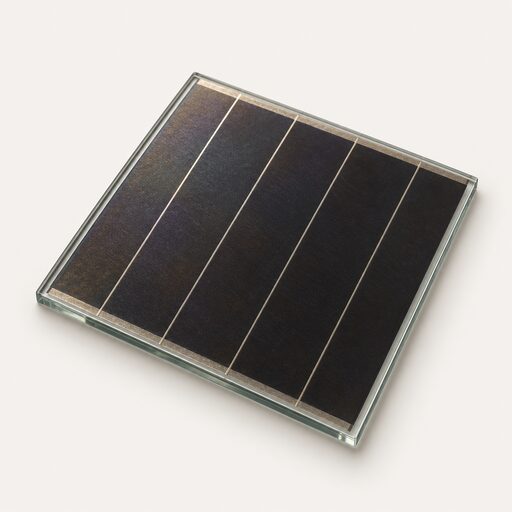 Perovskite Solar CellsPerovskite solar panels are a newer kind of panel that could be cheaper and more efficient than the ones sold today.
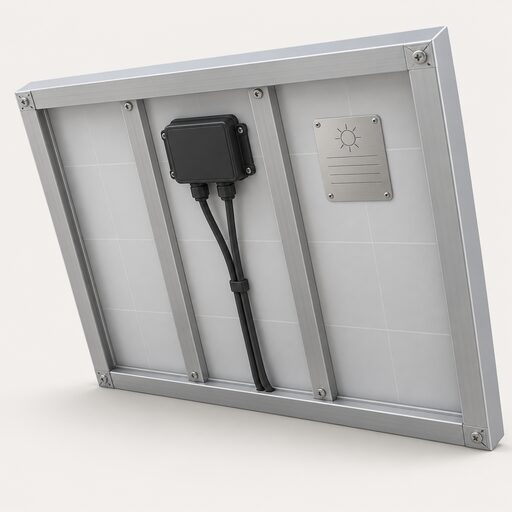 Panel SpecificationsA panel's quoted wattage comes from lab conditions, not a cloudy British roof, so what will it really produce at home?
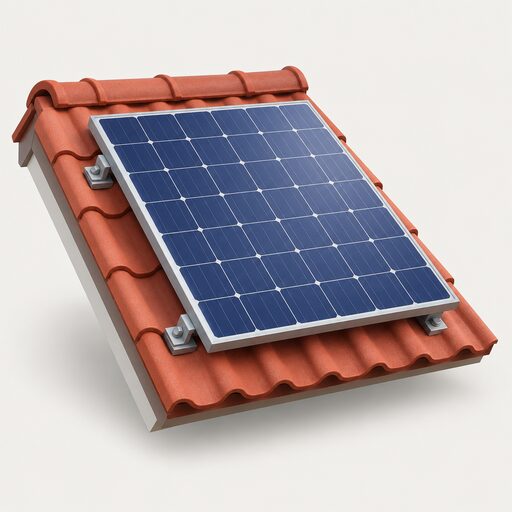 Solar PV Deployment StatisticsHow much solar power does the UK actually have, and how much of it sits on people's roofs?
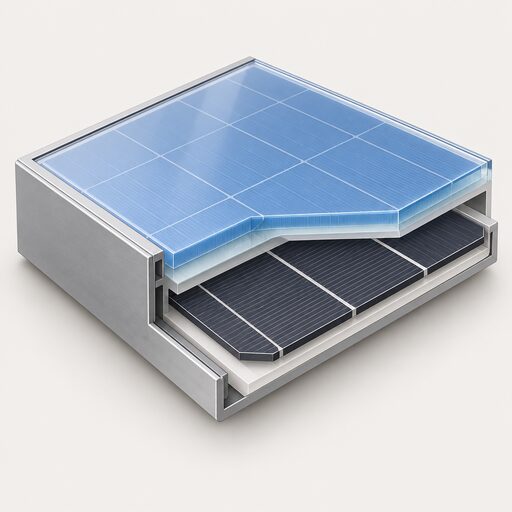 Tandem Perovskite-Silicon PanelsTandem solar panels layer a new material over ordinary silicon so they catch more of the sun's light and make more electricity from the same roof space.
 How Energy Products Are TestedWhy does a solar panel's datasheet power rating look better than what you actually get on a UK roof?
 Panel TypesWhich solar panels are best for a UK home, and how much do they cost?