
In this comparison
Perovskite panels are not yet commercially available in the UK. Independent guidance is explicit that they are "yet to be proven in real-world environments and are not yet commercially available"1. Crystalline silicon, by contrast, accounts for around 98% of the global solar panel market, and the overwhelming majority of panels installed in the UK are imported2. For a household weighing up a purchase now, the practical comparison is not perovskite against silicon on a quote sheet, because only one of them appears on one.
What perovskite offers is a route past the efficiency ceiling that single-junction silicon is approaching. Official guidance describes perovskites as an emerging thin film material with low production costs and higher efficiency than any other single material thin film technology, but with shorter lifetimes than silicon, plus concerns around lead toxicity and the lower efficiency of current lead-free formulations2. That single sentence contains the whole commercial problem: the efficiency case is strong, the durability case is not settled.
The realistic near-term product is a tandem, pairing a perovskite layer with silicon rather than replacing it. Official guidance lists silicon/perovskite among the common pairings, alongside perovskite/organic, perovskite/perovskite and chalcogenide/silicon2. For a UK household, the decision in front of them is still a silicon one, and the perovskite question is about what may follow it.
Perovskite vs silicon: the short answer
Silicon is a mature semiconductor manufacturing industry. Monocrystalline panels draw their increased efficiency from the single-crystal silicon which makes up the photovoltaic cells, while polycrystalline panels are made by melting small silicon crystals together rather than using a single, larger fragment of silicon, a method that results in lower energy efficiency and a shorter lifespan5. Solar electricity panels, also known as photovoltaics (PV), are made from layers of semi-conducting material, usually silicon6. That is the technology a UK household buys today, and it is the benchmark against which any perovskite claim has to be read.
Perovskite is a crystal structure rather than a single material, and it is used as a thin film. Official guidance sets out the trade clearly: low production costs, higher efficiency than any other single material thin film technology, shorter lifetimes than silicon, and open questions about lead toxicity2. Thin film panels more generally use materials including amorphous silicon, cadmium telluride, and copper indium gallium selenide5, so perovskite would enter a family of technologies that have historically competed on cost and flexibility rather than on lifetime.
The short answer for a buyer is therefore asymmetric. Silicon is available, priced, warranted and installed by a trade that sells through installers rather than direct to consumers8. Perovskite is a research and early manufacturing story with UK companies involved, no domestic retail product, and a durability question that no verified field data resolves. The comparison is real, but it is a comparison between a product and a prospect.
Efficiency: where perovskite-silicon tandems now lead
The efficiency argument for tandems rests on stacking. Official guidance explains that common pairings are silicon/perovskite, perovskite/organic, perovskite/perovskite and chalcogenide/silicon, and that triple-junction solar cells have three different material layers2. Each layer absorbs the part of the spectrum it handles best, so the stack converts more of the incoming light than a single junction can. That is why the tandem, not the single-junction perovskite, is the configuration attracting commercial effort.
For context on the incumbent, polycrystalline modules reach up to 21% module efficiency1. Monocrystalline sits above that, which is why polycrystalline panels are being phased out in the UK, with few installers still offering them1. The direction of travel in the silicon market is already towards higher-efficiency single-crystal product, and perovskite tandems would extend that curve rather than restart it.
The efficiency records reported for perovskite and tandem devices are cell and panel results from manufacturers and research groups, not figures for a product a household can buy. They matter because they show the headroom, and they should be read as laboratory and pilot milestones rather than as a specification. The gap between a record cell and a warranted module that survives 25 years on a UK roof is where the commercial question sits, and it is a gap measured in years of testing rather than in percentage points.
Tandem, single-junction or plain silicon: which panel fits which home
For a household buying now, the choice is between silicon options, not between silicon and perovskite. The variables that actually change output are orientation, location and shading. A system facing east or west tends to get around 15 to 20% less energy than one facing directly south10. Southern areas of the UK receive around 20% more solar energy than those furthest north12. Those two figures together explain more of the variation between UK installations than cell chemistry does.
Mounting type is the other live choice. Panels on top of the roof are the cheapest option, while tiles are the most expensive for the equivalent system13. For homes where a full roof array is not possible, plug-in solar has become a genuine alternative: plug-in photovoltaic panels, also known as balcony solar, are now available to buy and self-install in the UK14, and since the end of August 2026 plug-in solar kits have been available to buy online and on the high street15. Only one plug-in solar kit is allowed per home15, and current devices available in the UK are generally more suitable for garden locations than balconies16.
A tandem panel, when one reaches the UK market, would be a like-for-like replacement for a silicon module in a conventional roof array. It would not change the orientation maths, the shading maths or the regional maths. It would change the area of roof needed for a given output, which matters most for small or awkward roofs, and it would arrive with a certification and warranty history that silicon already has and perovskite does not.
| Option | Status for UK homes | Key constraint |
|---|---|---|
| Monocrystalline silicon | Available, installer-supplied | Higher cost per panel than polycrystalline5 |
| Polycrystalline silicon | Being phased out, few installers offer it1 | Up to 21% module efficiency1 |
| Thin film (CdTe, CIGS, amorphous silicon) | Available in specialist applications5 | Lower efficiency than crystalline silicon |
| Perovskite-silicon tandem | Not commercially available1 | Standards not yet suited to tandems9 |
Durability and degradation: the open question for perovskites
Lifetime is where the comparison is decided, and the silicon side of it is well documented. Official guidance puts the estimated lifespan of new solar panels at 25 to 30 years, although this can vary depending on their environment2. Independent guidance says panels should last 30 years or more13, and elsewhere that most last 25 to 30 years, with recycling technology improving to recover valuable materials17. A further independent source states that solar panels are pretty much maintenance-free and should last for at least 25 years18.
Against that, official guidance states plainly that perovskites have shorter lifetimes than silicon2. That is the durability problem in one line. Perovskite materials degrade under moisture, oxygen, heat and light, and the encapsulation and chemistry work needed to hold a 25-year lifetime is the subject of ongoing research rather than a settled engineering answer.
The system around the panel has its own clock. Inverters are not expected to last as long as the panels themselves19, and where a battery is fitted, solar PV panels can last 25 years or more, so the cost of replacing the battery at least once should be factored into total costs20. A household planning a 25-year asset is already planning one or two component replacements around it. A perovskite panel with a shorter life would compress that schedule further, and no verified figure for a domestic perovskite panel lifetime is published.
Cost and availability in the UK
There is no UK price for a perovskite panel, because there is no UK perovskite panel on sale. What can be priced is the silicon system a household would buy instead. Solar panel prices vary based on panel quality and system size but currently range from around £4,600 to £8,0004, and a second independent source gives solar panels as costing on average £4,600 to £8,00021. A third puts the initial cost of solar panels at typically between £6,000 and £10,00022.
Payback is a modelled figure, not a promise. One worked example for a 4.6kWp ten-panel system on an east-facing, 35-degree pitched roof with modest shading in London gives a payback of 16 years 1 month1. That is a specific modelled case, and it shows how much orientation and location move the answer.
On the perovskite cost case, official guidance describes the material as having low production costs2, which is the theoretical argument for a cheaper panel. The counterweight is in the silicon supply chain itself: high electricity costs in Europe mean subsequent polysilicon production is double the cost compared to China2, and China holds more than 80% of manufacturing capacity across all stages of solar panel production, including polysilicon2. A perovskite panel manufactured at scale would face the same question of where it is made.
Two practical points for a UK buyer. Solar panels are covered as energy-saving materials in VAT legislation23, so the tax treatment of a qualifying installation is established. And in the UK, solar panels are sold via installers rather than direct to consumers8, which means availability is a question of what the installer trade can supply and warrant, not what appears in a retail listing.
What perovskite panels mean for household energy independence
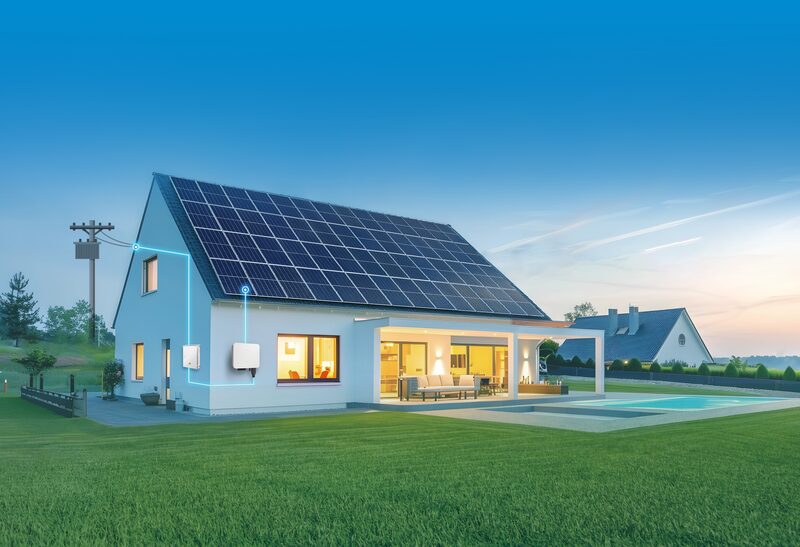
The independence case for solar is about reducing reliance on the grid and on imported fuel, and it holds regardless of which cell technology sits on the roof. Home solar panels can reduce reliance on the grid, and an Energy Performance Certificate can be improved as a result6. Solar panels generate clean energy for the home and can cut down on energy bills25. Sunlight is free, so once the initial installation is paid for, electricity costs are lower26.
What remains is dependence of a different kind. A grid connection stays, because a solar system without storage exports when it generates and imports when it does not. A battery changes the shape of that dependence but adds a component with its own replacement schedule20. The panels themselves are imported: the overwhelming majority of panels installed in the UK are imported3, and China holds more than 80% of manufacturing capacity across all stages of production2. A UK household choosing solar is choosing a lower electricity bill and a smaller grid draw, not manufacturing independence.
Perovskite would shift that picture only at the margins. A higher-efficiency panel means more output from the same roof area, which helps households with limited roof space more than households with a large south-facing roof. It does not change the import position unless manufacturing moves, and it does not change the grid connection. The technology that would most change household independence is storage, not cell chemistry, and the panel is the generation side of a system whose independence is set by how much of its output is used on site.
"Plug in solar panels have the potential to help consumers reduce their energy bills, and their lower cost and portability make them a good option for households where a larger rooftop system isn't an option"
The companies making perovskite panels, and where the technology stands
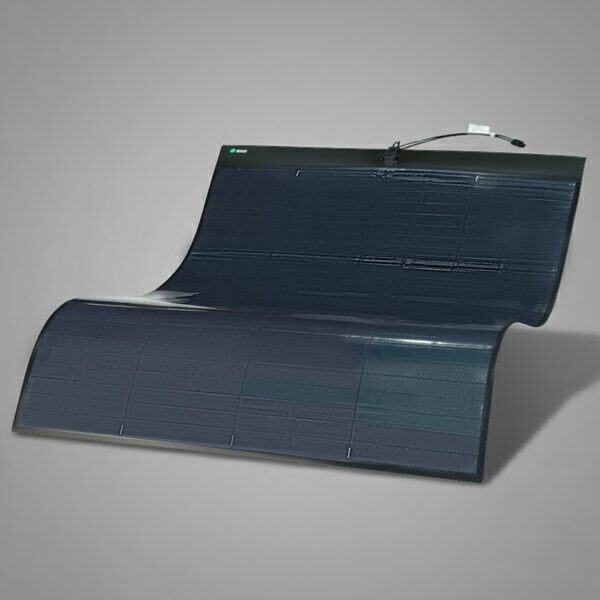
Official guidance names Oxford PV and Power Roll as two examples of UK-based companies working in perovskite-tandem and flexible PV respectively2. Oxford PV is the tandem developer; Power Roll works on flexible PV, a field where silicon is at a disadvantage because silicon PV materials need to be thicker for sufficient light absorption, meaning it is not a good choice for flexible solar panels2. That thickness constraint is the clearest technical opening for a thin film perovskite product, independent of the efficiency race.
Beyond the UK, the reported records come from large manufacturers. LONGi, Trina Solar and GCL have all been reported with perovskite and tandem efficiency results, and the SunXT venture was announced by FuturaSun and Eniverse in December 2025 to develop tandem perovskite-silicon panels jointly. These are development and pilot milestones. None of them is a UK retail product, and none carries a domestic warranty a household could claim on.
The supply chain context matters for anyone waiting. China holds more than 80% of manufacturing capacity across all stages of solar panel production, including polysilicon2, and crystalline silicon accounts for around 98% of the global solar panel market2. A new cell technology entering that market has to displace an incumbent with a fully built supply chain, a trained installer base and 25-year warranties already in the field.
For households tracking the technology, the useful signals are certification and warranty, not record efficiency. Existing IEC standards for silicon photovoltaic cells are not well suited to next generation technologies such as silicon-perovskite tandem cells9, so the appearance of a tandem-specific standard and a mainstream installer offering a warranted tandem module would mark the point at which the comparison becomes a purchasing decision rather than a watching brief.
Sources27 cited
- Are solar panels worth it?, Which?, 15 May 2026
- POSTnote 771: Solar photovoltaics, Parliamentary Office of Science and Technology, 25 June 2026
- Solar carparks and EV charging: call for evidence, Department for Energy Security and Net Zero, May 2025
- Solar panels, Uswitch, 9 September 2026
- Solar panel installation, maintenance and repair, NICEIC, 17 September 2026
- How do solar panels work?, Smart Energy GB, 19 September 2026
- Solar panels, Oxfordshire County Council, 17 September 2026
- How we test solar panels, Which?, 12 August 2026
- UK Solar Roadmap, Department for Energy Security and Net Zero, June 2025
- Solar panels, London Borough of Hammersmith and Fulham, 17 September 2026
- Solar panels, Energy Saving Trust, 27 August 2026
- Buying advice for solar panels, Which?, 12 August 2026
- Solar panels, Home Energy Scotland, 20 September 2026
- Plug-in solar consumer guide, Electrical Safety First, August 2026
- Plug-in solar panels, Which?, 15 September 2026
- What to know about plug solar panels, Home Energy Scotland, September 2026
- Mythbusting: our most frequently asked questions, Low Carbon Hub, 10 December 2025
- Solar panel installation, Which?, 12 August 2026
- Make the most of your solar panels, Which?, 12 August 2026
- Solar panel battery storage, Which?, 14 May 2026
- Are solar panels worth it?, Uswitch, 16 September 2026
- Do solar panels increase home value?, The CPA, 20 January 2026
- Value Added Tax Act 1994, Schedule 7A, legislation.gov.uk, 1 October 2019
- VAT on energy saving materials, HM Revenue and Customs, 30 September 2019
- What is global warming and what can I do about it?, Smart Energy GB, 16 March 2026
- Generating renewable electricity, Energy Saving Trust, 11 December 2025
- DESNZ plug-in solar regulatory amendment and interim product specification: Which? response, Which?, 2 July 2026
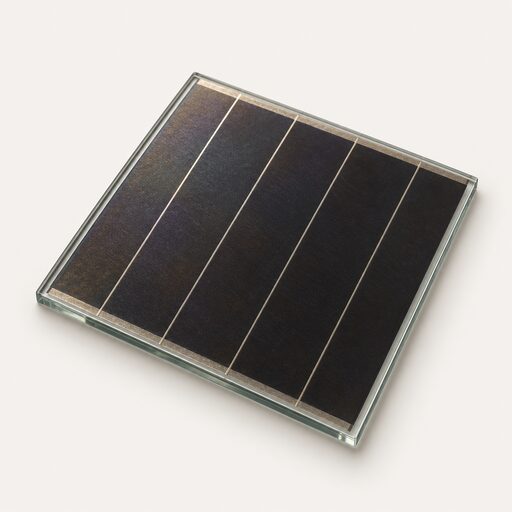 Perovskite Solar CellsPerovskite solar panels are a newer kind of panel that could be cheaper and more efficient than the ones sold today.
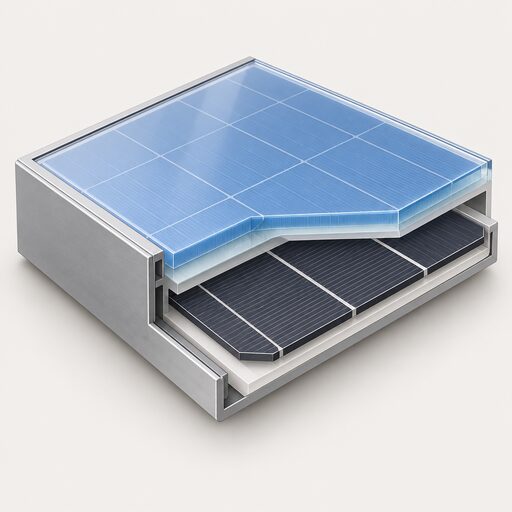 Tandem Perovskite-Silicon PanelsTandem solar panels layer a new material over ordinary silicon so they catch more of the sun's light and make more electricity from the same roof space.
 Warranties and DegradationHow long do solar panels actually last, and what do the warranties really cover?
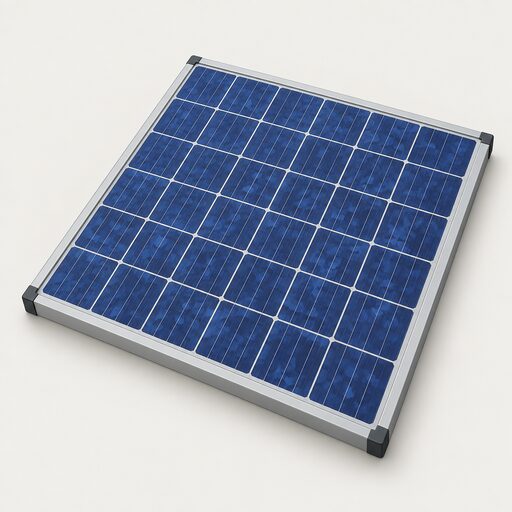 Panel TypesWhich solar panels are best for a UK home, and how much do they cost?
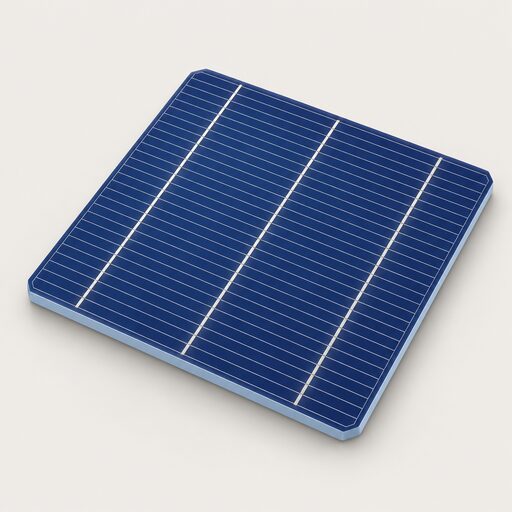 Solar Cell TechnologyBuying solar panels means choosing between cell types that work in different ways.
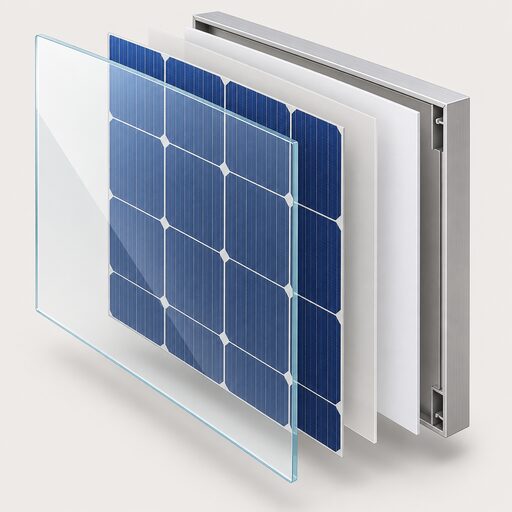 Solar Panel Manufacturers UKWhich solar panel brands are actually worth buying in the UK, and who really makes them?