
In this answer
Short answer
The direct answer to the buying question is that no home battery sold for UK homes in the current record uses sodium-ion cells. Every named home storage product is lithium iron phosphate: Powervault states its batteries use LFP technology1, Duracell Energy says its home batteries are made using lithium iron phosphate2, and E.ON Next describes high efficiency lithium iron phosphate batteries in its home storage offer3. Lithium-ion is described as the most common and popular choice for residential solar storage4.
That does not make the question idle. Sodium-ion is a live research direction, and the searches behind it are usually asking a second question underneath: is there a cheaper, safer, cold-tolerant alternative to lithium that a household can actually buy. On the evidence available, the answer to that is not yet, and the gap between the chemistry's promise and the products on the market is the substance of this page.
What follows sets out what sodium-ion is, what is and is not available in the UK, how it compares with LFP on the measures that matter to a household, and what the choice means for energy independence.
Sodium-ion cells in plain terms
A sodium-ion cell stores and releases energy by moving sodium ions between electrodes, in the same broad family of designs as the lithium-ion cells that dominate home storage. The distinction that matters legally and practically is the electrolyte and the electrode material. The Lithium-ion Battery Safety Bill defines a lithium-ion battery as a secondary (rechargeable) battery with an organic solvent electrolyte and positive and negative electrodes which use an intercalation compound in which lithium is stored9. Sodium-ion substitutes sodium for lithium in that structure.
The chemistry in homes today is narrower than the category name suggests. Lithium-ion and lead-acid batteries are the main type for domestic use10, and lithium-ion batteries have a liquid or gel-like electrolyte11. Lead-acid sits behind on most measures: lithium-ion units can be more efficient than lead-acid batteries, weigh two thirds less, can discharge more stored energy, and have a longer life10. Other types are less common, including nickel-metal hydride, lead-acid and ultracapacitors12.
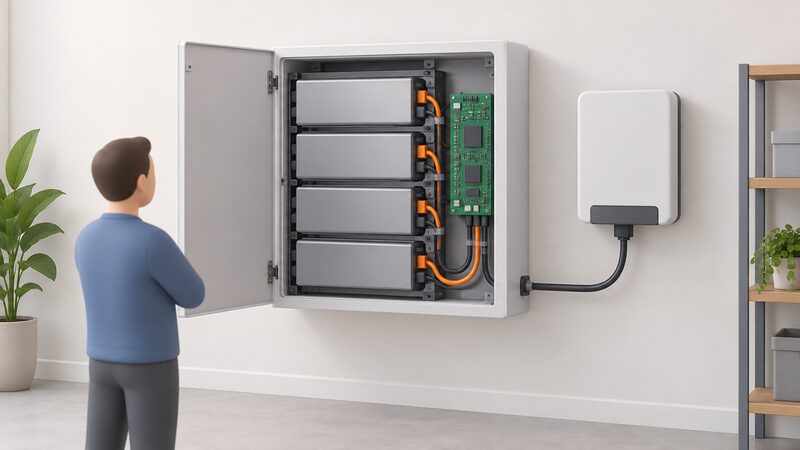
For a household, the practical reading is that sodium-ion is not a different kind of product, it is a different cell inside the same kind of product. A home battery is a box containing cells, a battery management system, an inverter interface and a warranty. Changing the cell chemistry changes the cost, the weight, the cold-weather behaviour and the supply chain, but it does not change what the box does: it stores surplus generation for later use.
Which UK-available home batteries use sodium-ion cells
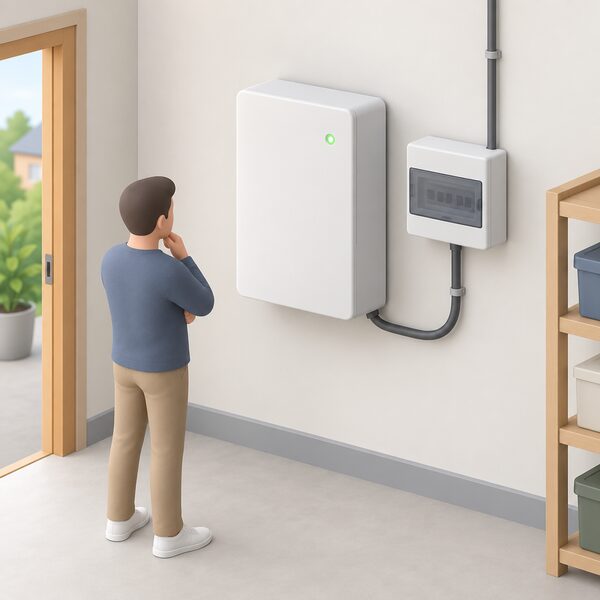
None, on the record available. The named home storage products sold into UK homes are lithium iron phosphate throughout. Powervault batteries use lithium iron phosphate (LFP) technology1. Duracell Energy's home batteries are made using Lithium Iron Phosphate, which the maker describes as the safest battery chemistry in home energy storage2. E.ON Next offers home batteries with high efficiency lithium iron phosphate cells3.
The wider market picture is consistent. Lithium-ion batteries are the most popular choice for home solar installations due to their high energy density, compact design, long lifespan, and efficient charging capabilities5, and the most common and popular choice for residential solar storage4. Installers and suppliers follow the same line: Fuse Energy offers home solar installation and sells home batteries13, and Scottish Power installs solar panels and batteries throughout Great Britain14.
Where sodium-ion does appear in the record is at the edges of the market rather than in it. Plug-in solar batteries are already being developed for the UK market15, and plug-in solar panels themselves are currently not legal to install in a UK home, though they were expected in shops within months following a government announcement16. Representative plug-in PV devices were tested to evaluate their safe operation within UK domestic electrical installations17. That is the segment where a new, cheaper chemistry would most plausibly arrive first, and it is not yet a segment a household can buy into.
Sodium-ion vs LFP: what households gain and give up
The comparison that matters is against lithium iron phosphate, because that is what a household would otherwise buy. LFP is often preferred for stationary battery storage for home where volume is less constrained18, which is precisely the situation in a house: a wall-mounted or floor-standing cabinet has room that a car or a phone does not. LFP offers a longer lifespan, strong safety performance, slower degradation over time, and stable performance in everyday home use13.
Sodium-ion's theoretical advantages sit on the other side of that ledger: sodium is abundant, so cell cost and supply-chain exposure to lithium prices are lower, and the chemistry is often discussed as more tolerant in cold conditions. None of those advantages is quantified in the record for a home product, and none has been demonstrated in a UK installation.
What a household gives up by waiting for sodium-ion is the thing LFP already delivers. The documented LFP package is a long life, a strong safety record and stable everyday performance13, backed by makers who publish warranties and have service networks. A sodium-ion unit would need to match that package before it became a sensible substitute rather than an experiment.
"which is why LFP is often preferred for stationary battery storage for home where volume is less constrained"
The honest summary is that sodium-ion is a cost and supply-chain play, not a performance play. Where it wins, it wins on price per kilowatt-hour and on materials availability. Where it has to catch up is cycle life, proven safety data and installer familiarity, and those are the measures a household actually lives with.
Performance in UK conditions: cold weather and cycle life
Cold weather is the question sodium-ion searches usually circle, and the record holds no sodium-ion cold-weather figure for home storage. What it does hold is seasonal behaviour for homes that already have batteries. Homes with batteries consistently show lower total daily grid consumption across three seasons, with winter energy consumption seeing an increase attributed to suspected arbitrage pattern19. That is a pattern of use, not a chemistry limit, and it is the closest the evidence comes to describing winter performance.
Cycle life is better documented, for lithium-ion. Lithium-ion home batteries, especially lithium iron phosphate, are given as often lasting 10 to 15 years or 5,000 to 10,000 cycles, against lead-acid at typically 3 to 7 years and fewer cycles6. That is the benchmark any sodium-ion product would be measured against, and no equivalent sodium-ion figure appears in the record.
Safety guidance for household batteries is written around lithium-ion and is worth stating plainly, because it applies to whatever chemistry is installed. Fire services advise charging a device in a room that has a working smoke alarm, which doesn't compromise your escape route, keeping the door closed whilst it's charging and away from any heat source20. They also advise: always buy devices and replacement batteries from a reputable seller20, and never be tempted to buy a lithium battery second-hand as you won't know it's history, damage it may have suffered or the dangers it could pose20.
There is a live recall context for home storage. Lithium-ion storage batteries installed as part of a residential energy solar panel system, described as ESS Home Batteries, are the subject of a product recall notice21. That is a reminder that the safety record of a home battery depends on the specific product and its manufacturing batch, not only on the chemistry family.
Cost and availability: what sodium-ion systems sell for today
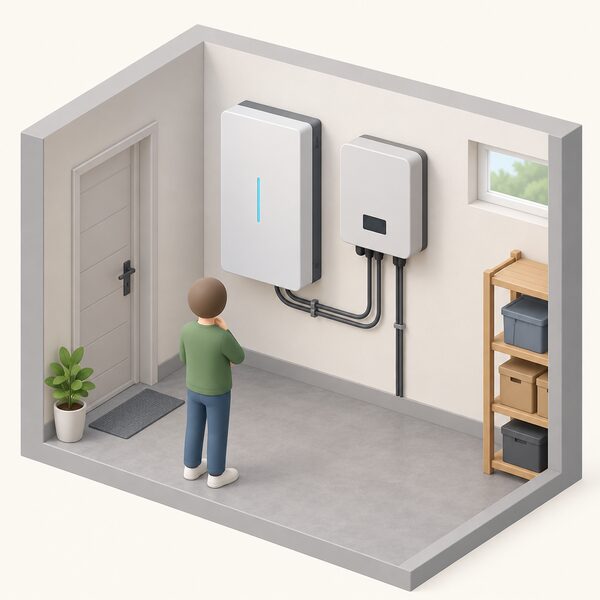
There is no published price for a sodium-ion home battery in the record, because there is no product. Prices for home storage as it exists are installer-quoted, and the figures below describe lithium-ion systems, not sodium-ion ones.
| Item | Figure | Source |
|---|---|---|
| Home solar batteries, typical starting price | around £4,000 | 7 |
| E.ON Next solar packages | from £4,995 for a typical 6-panel system | 14 |
| So Energy solar and battery package | from £7,518 | 14 |
| 6kW solar system without battery | £6,000 to £8,000 | 22 |
Those are package prices for solar plus storage, and the battery element is not broken out. A household comparing a future sodium-ion unit against these figures would be comparing a cell cost against an installed system cost, which is not a like-for-like comparison.
On tax, the relief is written by function rather than chemistry. Batteries qualify for 0% VAT in Great Britain if they are supplied as part of an installation with a qualifying material, meaning a solar system8. Official guidance covers electrical batteries that store electricity generated by certain energy-saving materials and from the National Grid23. A sodium-ion battery performing the same function would fall under the same description, but that is an inference from how the relief is drafted, not a ruling on a product that does not yet exist.
Tariffs are the other half of the economics. There is an increasing choice of smart time of use tariffs from providers including British Gas, E.ON Next, EDF Energy, Octopus Energy, Ovo Energy and Scottish Power, as well as smaller firms including 100Green, Fuse Energy, Good Energy and So Energy24. A battery's value depends on being able to charge when power is cheap and discharge when it is not, and that depends on the tariff and the inverter controls, not on the cell chemistry.
What sodium-ion means for household energy independence
A home battery's contribution to independence is straightforward: it lets a household store free, renewable electricity to power a heat pump, making the household less reliant on grid electricity25. The same logic applies to any load, and it is the reason storage sits at the centre of the self-sufficiency case.
What sodium-ion would add, if it arrives at the price its advocates expect, is a reduction in dependence on a single materials supply chain. Lithium cells concentrate exposure in a small number of producing countries and in the price of one commodity. A sodium-based cell would spread that exposure, and sodium is not scarce. That is a supply-chain argument rather than a household one, but it is the argument that would eventually show up in the price a household pays.
The dependence that remains is unchanged by chemistry. A battery still needs an inverter, a control app or gateway, and usually a manufacturer's cloud service to manage charging around tariffs. It still needs the grid for the months when generation is short, and it still needs a supplier for the import and export arrangements. The record shows the shape of that dependence in the products themselves: the ivie Bud has been helping households save energy since 2022 and is self-installable without an engineer26, while SolaX Power presents residential storage inverters, batteries, EV charging, and integrated home energy pathways27. Both are examples of a household buying into a manufacturer's ecosystem as well as a piece of hardware.
For advice, the official route in Northern Ireland is to seek independent advice on solar panels, heat pumps, and other energy efficiency measures from organisations that provide it28, and the Energy Saving Trust is described as an independent organisation and trusted voice on energy efficiency solutions29. Those are the channels for a household weighing a new chemistry against a proven one.
The practical position is this. Sodium-ion is a real technology direction with a plausible cost and supply argument, and no UK home battery product to buy. A household deciding today is choosing between lithium iron phosphate systems with published cycle lives, warranties and installer support, and waiting for a chemistry that has not yet been through a UK installation. That is the trade, and it is a trade about timing rather than about which chemistry is better in the abstract.
Sources29 cited
- For home, Powervault, 2026
- Home battery storage, Duracell Energy, 2026
- Solar and future-proof energy volatility, E.ON Next, 2026
- Solar panel battery storage, Fuse Energy, 2026
- Solar panel and battery, Fuse Energy, 2026
- How many batteries does a home need, SAJ Electric, 2026
- Is a home battery worth it, Independent Assessment, 2026
- VAT on solar and battery storage, Solar Energy UK, 2026
- Lithium-ion Battery Safety Bill, UK Parliament, 2024
- Electrical energy storage systems, Flexi-Orb, 2025
- Solid state battery vs lithium-ion, Luxpowertek, 2026
- Electric vehicle battery basics, Energy Saving Trust, 2025
- Add a battery to existing solar panels, Aira, 2026
- Solar panel costs, Which?, 2026
- Plug-in solar explained, Low Carbon Hub, 2026
- Plug-in solar panels vs rooftop systems, Which?, 2026
- Plug-in solar electrical safety study, GOV.UK, 2026
- LFP vs NMC home batteries, SolaX Power, 2026
- Grid impacts of heat pumps, EVs and solar, Energy Systems Catapult, 2025
- Lithium-ion batteries, North Wales Fire and Rescue Service, 2026
- LG ESS Home Batteries recall, Electrical Safety First, 2026
- Solar panels, Uswitch, 2026
- VAT energy-saving materials relief, GOV.UK, 2024
- Time of use tariffs explained, Which?, 2026
- How to ensure a heat pump runs efficiently, Energy Saving Trust, 2026
- ivie Bud vs Gateway Connect, ivie, 2026
- Premium vs mid-range inverters, SolaX Power, 2026
- Support to generate your own electricity, nidirect, 2025
- Additional help, National Energy Action, 2026
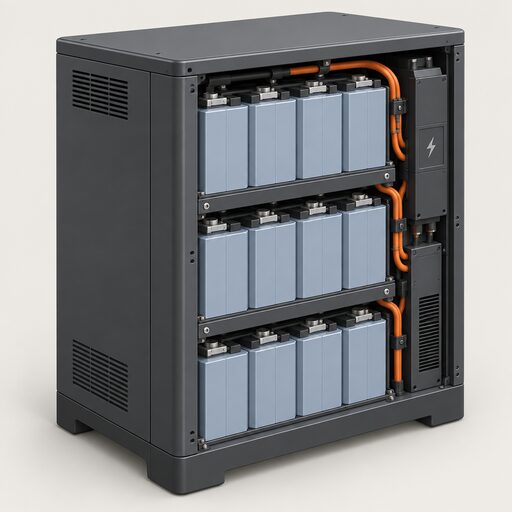 Sodium-Ion Home BatteriesSodium-ion cells are being offered for home storage in the UK, but almost all published performance data still comes from makers.
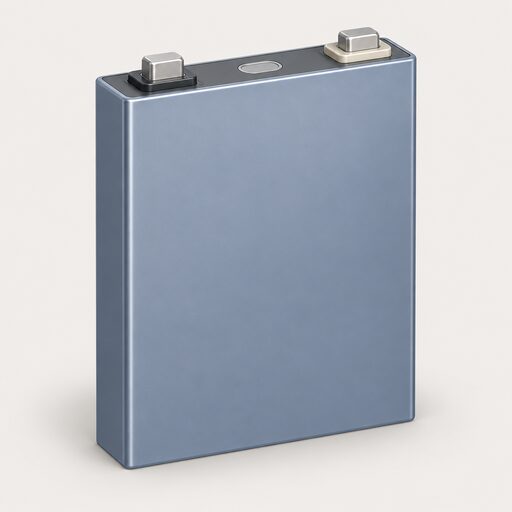 Battery ChemistriesWhich home battery lasts longest, and is it the safest?
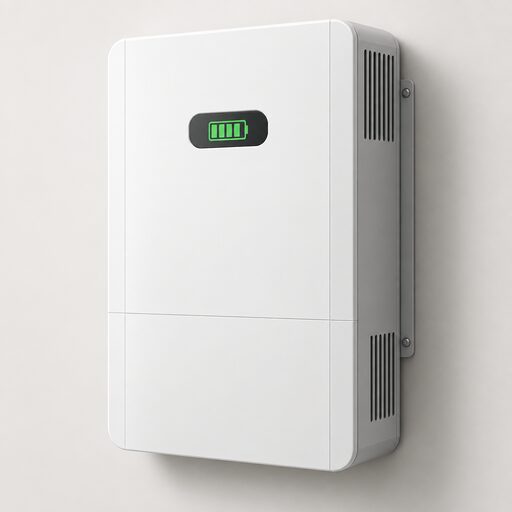 Home Battery Install StatisticsHow many homes in the UK actually have a battery, and is that number growing quickly?
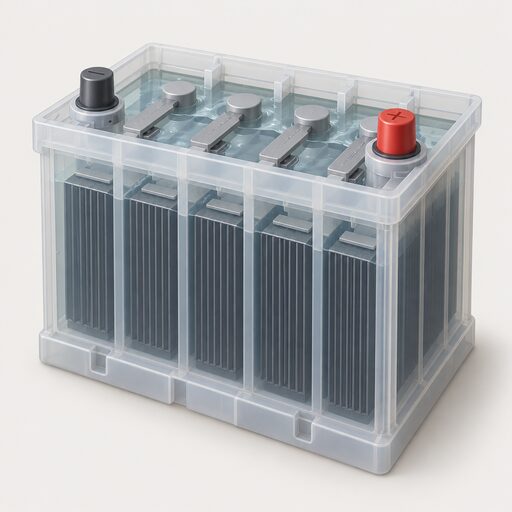 Lead-Acid, AGM and Gel BatteriesAre lead-acid batteries still worth using for solar or an off-grid home?
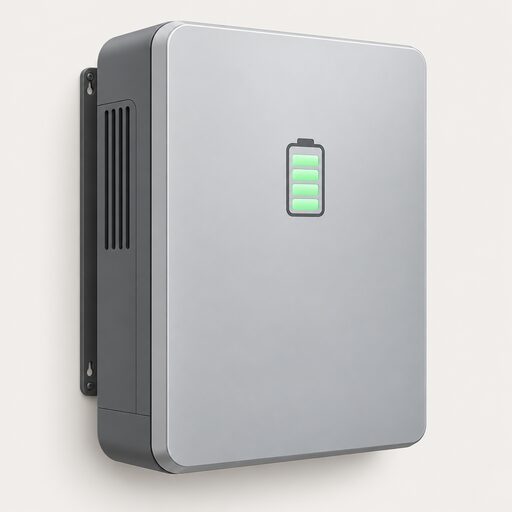 The Full Home Batteries GuideA home battery stores cheap or solar power for later, but will it really cut your bills enough to be worth it?
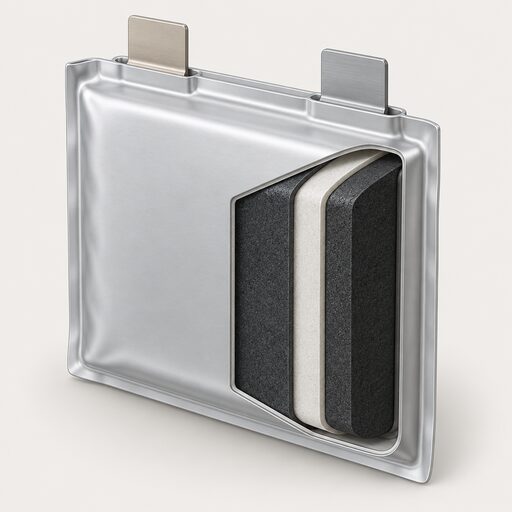 Solid-State BatteriesAre solid-state batteries on sale yet, and should you wait for one?