
In this answer
Short answer
A home battery is a large lithium-ion pack sitting in or on a house, so the safety question is fair. The honest answer is that the technology is well understood, the failure mode is known, and the risk is managed by chemistry, certification, siting and the battery management system rather than by luck. Solar and battery storage is "very safe if installed properly and maintained with care", according to consumer protection guidance from the industry body Solar Energy UK1.
The risk that matters is thermal runaway, the process that starts when a battery cell overheats, perhaps due to an internal fault, physical or electrical abuse, or extreme temperatures2. Electrical Safety First calls thermal runaway the primary risk with lithium-ion batteries3. It is not unique to home storage: fire service guidance notes that lithium-ion batteries in household devices have the potential to cause a serious fire in the home, and that the larger the battery, the larger the danger4.
What follows sets out where the danger comes from, what a compliant installation has to meet, where a battery should physically go, how it behaves in daily use, and what to do when something goes wrong. The short version: a certified system, installed by a certified installer, in a sensible location, is a managed risk rather than an unmanaged one.
What makes a home battery safe or unsafe: the chemistry inside
Domestic batteries are principally lithium, the most common material used for domestic storage, but cobalt and nickel also appear in the mix8. That chemistry is what gives a home battery its energy density and its fire behaviour in one package. Fire service guidance is blunt about the consequence: these fires can develop very quickly, producing huge amounts of extremely toxic gases, and those gases will render a person unconscious4.
The causes of instability are not mysterious. Poor quality and substandard components, flawed design, physical abuse and improper charging or discharging can all cause thermal instability, according to Electrical Safety First's Battery Breakdown work9. Note what that list contains: manufacturing quality, design, physical damage and how the unit is charged and discharged. Three of the four are controlled by the maker and the installer, and the fourth is controlled by the battery management system.
Chemistry choice is a real variable. Nickel-cadmium batteries are not used in homes because their components are toxic and difficult to dispose of properly, though they withstand high temperatures and are durable enough for certain industrial uses10. One maker describes the chemistry in its domestic battery as "a stable and safe battery chemistry, making it ideal for domestic applications"11. A sodium-ion product is marketed on the basis that there is no risk of fire, meaning it could be installed safely inside the home12. Those are maker claims about their own products, not independent findings, and they sit alongside the general lithium picture rather than replacing it.
For a household, the practical reading is this: the chemistry sets the ceiling on how bad a failure can be, and the build quality and management electronics set how likely a failure is. A battery is not safe because it is a battery. It is safe because it is a well-made cell, correctly charged, correctly installed, and monitored.
Thermal runaway: how it starts and how modern systems contain it

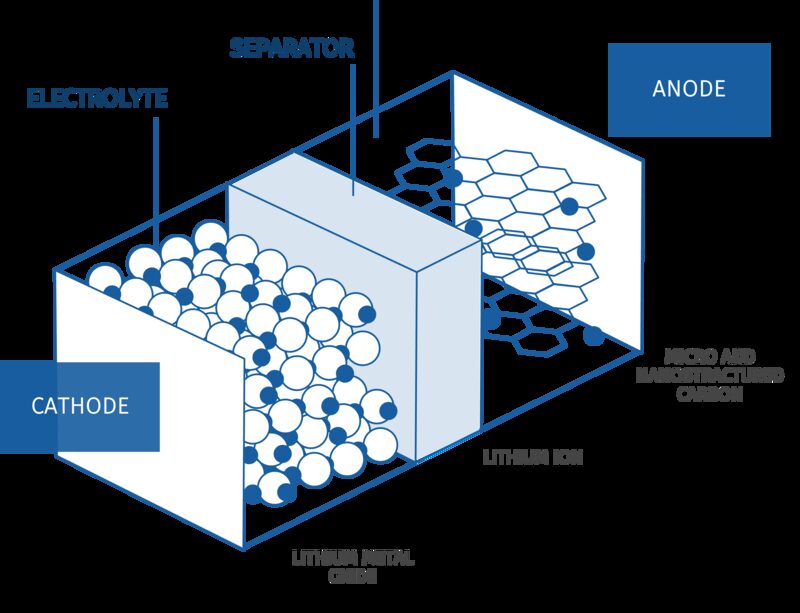
Thermal runaway occurs when internal temperatures exceed safe limits3. The process starts when a battery cell overheats, perhaps due to an internal fault, physical or electrical abuse, or extreme temperatures2. What follows is self-sustaining: the elevated cell temperature results in exothermic reactions, which produce more heat than can be dissipated to surroundings, and eventually the internal structure of the cell begins to become unstable and collapse, resulting in the venting of flammable and toxic gases, fire and explosion13.
The propagation step is what turns a cell failure into a battery fire. The heat spreads to nearby cells, causing them also to enter an uncontrollable and irreversible state of thermal runaway2. This is why containment matters more than suppression: once a pack is in runaway, the aim is to stop the next cell igniting.
That is the design problem a domestic battery has to solve, and it is solved inside the unit rather than in the room. Cell spacing, module barriers, the battery management system's ability to isolate a fault, and the choice of a chemistry with a higher onset temperature all act on the same problem. Thermal runaway starts when a cell overheats, perhaps through an internal fault, physical or electrical abuse, or extreme temperatures, and the heat then spreads to nearby cells, causing them also to enter an uncontrollable and irreversible state of thermal runaway1. Electrical Safety First's e-bike work describes the same mechanism in miniature: affected batteries risk entering thermal runaway, a rapid and extreme chemical reaction that can cause ferocious fires almost impossible to extinguish3.
"This elevated cell temperature results in exothermic reactions, which produce more heat than can be dissipated to surroundings. Eventually the internal structure of the cell begins to become unstable and collapse, resulting in the venting of flammable and toxic gases, fire and explosion."
The scale difference between a home battery and a mobility battery is real but cuts both ways. A domestic pack is larger, and fire service guidance notes that the larger the battery, the larger the danger4. It is also permanently installed, professionally commissioned, and monitored by a management system that a scooter battery does not have. The containment engineering is what a buyer is paying for.
Certification and standards: what a safe installation must meet
A safe home battery is a certified product fitted by a certified installer to a recognised standard. Each of those three links is checkable.
On the product side, domestic batteries on the UK market carry UKCA or CE marking, which is required in the MCS Battery Installation Standard6. On the installation side, the same scheme guidance sets out that units are installed in compliance with the latest version of the quality and installation standards, including MCS, PAS 63100 and PAS 20356. Those three documents cover the installation quality, the battery's own siting and protection requirements, and the whole-dwelling retrofit process respectively.
On the installer side, the advice is to make sure your installer is certified by the Microgeneration Certification Scheme8. Which? adds a second layer: check that your installer is signed up to the Renewable Energy Consumer Code, which now covers storage, and certified by MCS, or alternatively certified by Flexi-Orb14. MCS certification also matters for a specific commercial reason: not all batteries can deliver electricity during a power cut, and where a battery is paid for exported stored renewable energy, the installation must be MCS certified8.
| Requirement | What it covers | Source |
|---|---|---|
| UKCA or CE marking | Product conformity, required in the MCS Battery Installation Standard | 6 |
| MCS installation standard | Installation quality standard for battery systems | 6 |
| PAS 63100 | Siting and protection of batteries in and on dwellings | 6 |
| PAS 2035 | Whole-dwelling retrofit process | 6 |
| MCS certified installer | Competence and access to export payments | 8 |
| RECC or Flexi-Orb | Consumer code coverage for storage installations | 14 |
The pattern is that the UK regulates home battery safety through scheme rules and standards rather than a single product licence. That means the paperwork matters: an installation that cannot show its certification is an installation whose safety case cannot be checked. Related equipment follows a similar route, with building regulations approval always required when installing an EV home charger and a competent and reputable installer used, with specific processes for notifying the local building control authority15.
Where and how a battery should be installed
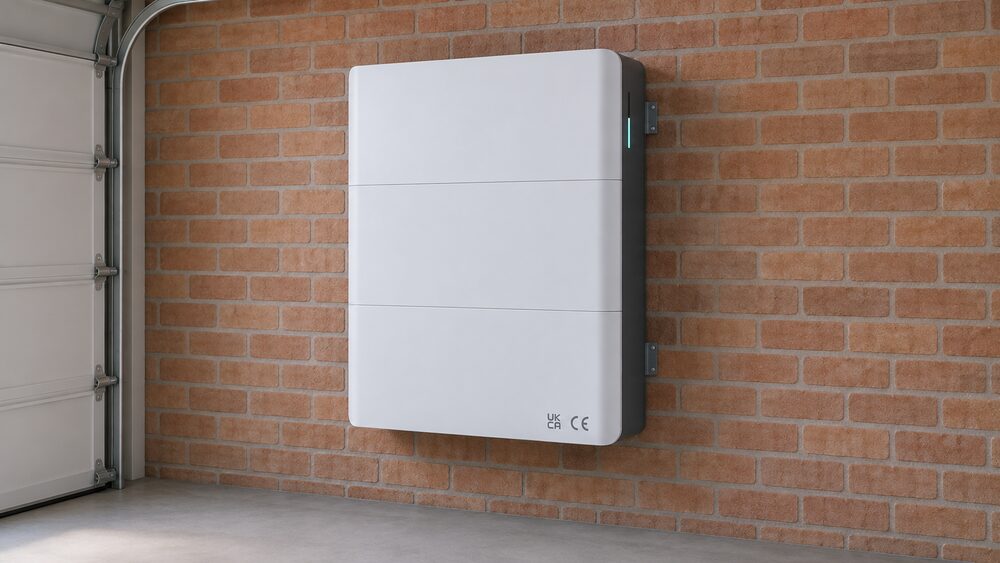
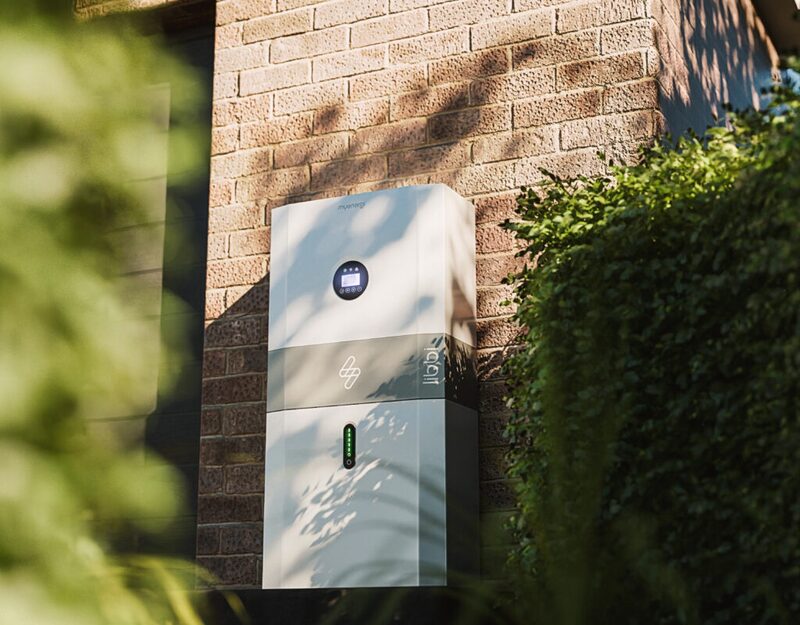
A battery can be installed in garages, on external walls or in utility rooms, depending on which one you choose16. Guidance aimed at residential battery storage lists the permitted locations as a garage, an external wall, a dedicated utility room, or within an outdoor weatherproof enclosure7. The overlap between those two lists is the practical answer: the unit goes somewhere that is not living space, has air around it, and is protected from weather.
The surrounding environment matters as much as the room. It is dangerous to charge a battery close to combustible materials or hazardous substances, or where high temperatures or sunlight are likely17. That rule is written for e-bike batteries but describes the physical hazard generally: heat sources and flammable clutter are the two things to keep away from a pack.
Ventilation is the other siting consideration. Protection from water ingress can reduce ventilation, which is required by the battery to keep cool18. A sealed outdoor enclosure protects against rain but must still let heat out, which is why the enclosure is specified rather than improvised. For a unit stored without being used for any length of time, fire service guidance says the battery should be removed4, which is a reminder that a battery in storage is not in the same managed state as one in service.
Planning is a separate question from safety, and it varies. Installing a home charger is classified as development, so it is up to the householder to ensure the correct permissions are in place19. Where a planning application is needed for related equipment, the guidance asks that the development minimises impact on the visual context of the local area, for example placing the charge point around the side of the house, on a porch, or disguising it with bushes and plants20. For the battery itself, the siting rules above are the ones that govern the installation.
Everyday use: charging, monitoring and maintenance
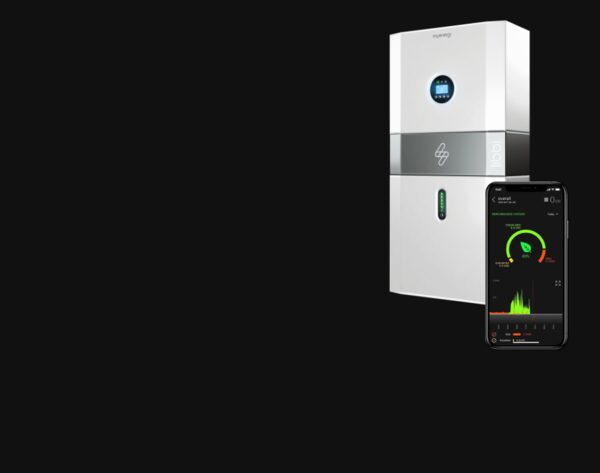
In normal operation a home battery is doing one of two things: storing excess power produced during the day so it can be used when demand is higher21, or charging up during off-peak hours at the lowest rate and using the energy during the peak-rate period to minimise the electricity bill22. Both patterns are gentle on the cells compared with the abuse cases that cause thermal instability.
The system's own electronics carry most of the daily safety work. Most battery storage systems monitor battery health and will alert you when a replacement is needed23. That monitoring is the reason a fault usually announces itself before it becomes a fire: the management system sees the cell behaviour that a householder cannot.
One operating rule is worth knowing because it affects both safety margin and longevity: the system should never let your battery discharge to zero, as this can significantly reduce the life of the battery16. A well-configured system enforces that itself. Where a household wants to see what the battery is doing, third-party monitoring hardware exists for home consumption, solar generation, EV charging, heat pumps and battery storage among other applications24.
The lifespan context is useful for judging when monitoring matters most. Domestic battery storage has a shorter lifetime of around 10 to 15 years, when compared to solar panels5. Independent guidance puts the typical lifespan of a battery at about 10 to 12 years25. Both figures point the same way: a home battery is a component with a service life, and the later years are when degradation and fault detection matter most.
At development scale, batteries are now standard equipment rather than an add-on. The UK's largest net zero housing development in Wales is described as powered by photovoltaic panels and batteries26. That is a statement about how ordinary the technology has become in new build, not a safety finding, but it is a useful signal of maturity.
What to do in an emergency: faults, fires and recalls
The fire response is unambiguous. In the event of a fire, do not try and tackle it yourself: leave and call 9994. Lithium-ion fires develop quickly and produce extremely toxic gases, so the correct action is evacuation and a call to the fire service, not an attempt with an extinguisher.
For a fault that has not yet become a fire, the appliance rule applies: if you think there might be a problem with your appliance, unplug it and contact the retailer, manufacturer or a qualified repair technician, as appropriate27. Heat, swelling, an unusual smell or a persistent alarm all fall into that category. Smoke detection helps: charge your device in a room that has a working smoke alarm, which does not compromise your escape route, keeping the door closed whilst it is charging and away from any heat source4. The same principle of detection nearby applies to other household electrical risks, where the advice is to use smoke alarms or heat detectors nearby28.
Recalls are the third leg of emergency planning. Electrical Safety First maintains product recall notices for home batteries, including one covering RESU ESS Home Batteries, where the concern is potentially linked to specific electrode manufacturing issues that could potentially result in thermal instability leading to an overheating incident29. A recall notice is not a general warning about the category; it is a specific instruction about specific units, and it is worth checking the register against any model already installed.
Disposal closes the loop. Recycling is the safest and most responsible way to dispose of batteries and electrical items that are faulty, old, or beyond repair30. Fire service guidance goes further on the second-hand market: never be tempted to buy a lithium battery second-hand, as you will not know its history, the damage it may have suffered or the dangers it could pose4. For a household weighing up a used or refurbished pack, that is the clearest statement in the guidance.
What this means for household energy independence
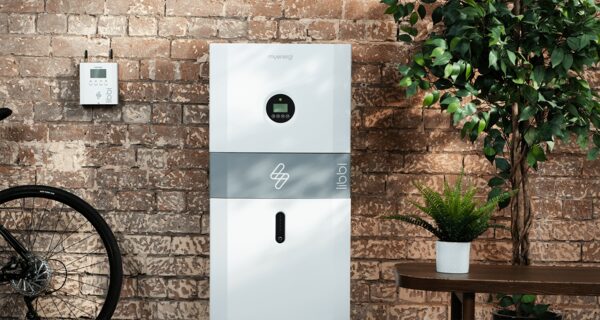
A home battery shifts when a household draws from the grid, and in some configurations whether it can draw at all. Not all batteries can deliver electricity during a power cut8, so backup capability is a specification question rather than a given. Where a system does provide backup, the household's dependence on the grid during an outage falls; where it does not, the battery is an energy-cost and carbon tool rather than a resilience one.
The dependence that remains is worth naming. The battery is charged from the grid or from solar, so it does not remove the connection. It is managed by a manufacturer's electronics and, in most cases, an app, so the household depends on that company's continued support for monitoring and firmware. It has a service life of around 10 to 15 years5, after which it is a replacement decision. And its safety case rests on certification that has to be maintained, not just obtained at installation.
Anyone with a home can potentially install a battery system21, which is the widest possible statement of eligibility. The safety question is not whether a household is allowed to have one, but whether the specific unit, installer and location meet the standards set out above. That is a checkable set of conditions, and checking them is the whole of the safety case.
Sources30 cited
- Consumer protection guidance, Solar Energy UK, 2026-09-17
- Thermal runaway, Electrical Safety First, 2026-09-17
- Battery Breakdown, Electrical Safety First, 2026-09-17
- Lithium-ion batteries, North Wales Fire and Rescue Service, 2026
- Domestic battery storage, Parliamentary Office of Science and Technology, 2026-06-25
- WHSHF wave 3 scheme guidance addendum, UK Government, 2026-06
- Why solar PV battery storage is essential for UK homeowners, Jackery UK, 2026-08-27
- Battery storage advice, Centre for Sustainable Energy, 2025-10
- Battery Safety Campaign, Electrical Safety First, 2026-09-17
- Solar battery, E.ON Next, 2026-09-17
- How does battery storage work, myenergi, 2024-01-03
- Bridgelink, Eleven Energy, 2026-09-19
- Thermal runaway, Electrical Safety First, 2026-09-17
- Solar panel battery storage, Which?, 2026-05-14
- Planning permission for electric vehicle charging, Planning Portal, 2026
- Battery storage, Energy Saving Trust, 2026-08-19
- E-bikes, Electrical Safety First, 2026-09-17
- How e-bike and e-scooter design can be improved, Electrical Safety First, 2026-09-17
- Electric vehicle charging, Planning Portal, 2026
- VAT energy saving materials, HM Revenue and Customs, 2026-09-17
- Batteries in the home, Solar Energy UK, 2026-09-17
- Care and assisted living providers, Energy Networks Association, 2026-09-17
- Battery storage, MCS Certified, 2026-09-17
- emonPi2 overview, OpenEnergyMonitor, 2026-09-17
- Battery storage, Energy Saving Trust, 2026-08-19
- UK's largest net zero housing development to be delivered in Wales, Welsh Government, 2025-10-02
- Running appliances at cheaper times, Electrical Safety First, 2026-09-19
- Portable heaters, Electrical Safety First, 2026-09-17
- LG ESS Battery Division RESU ESS home batteries, Electrical Safety First, 2026-09-17
- Recycling electricals and batteries, Electrical Safety First, 2026-09-17
 Home Battery Fire SafetyHow likely is a home battery to catch fire, and what keeps it safe if it does?
 Siting and LocationWhere can a home battery actually go?
 The Full Home Batteries GuideA home battery stores cheap or solar power for later, but will it really cut your bills enough to be worth it?
 Lithium Battery SafetyLithium batteries power phones, e-bikes, scooters and home storage, and any of them can catch fire.
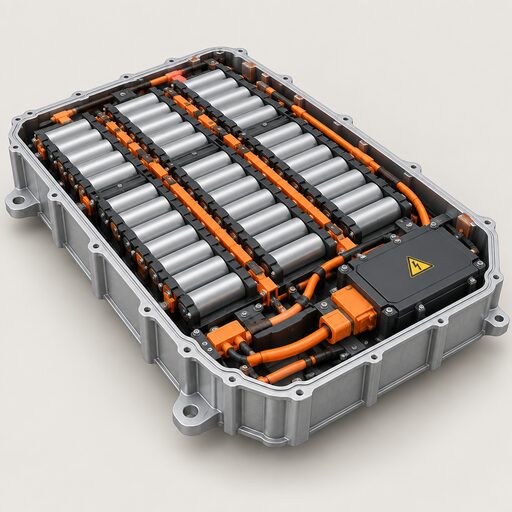 Second-Life EV BatteriesUsed electric car batteries can store solar power at home, but can you actually buy one in the UK?
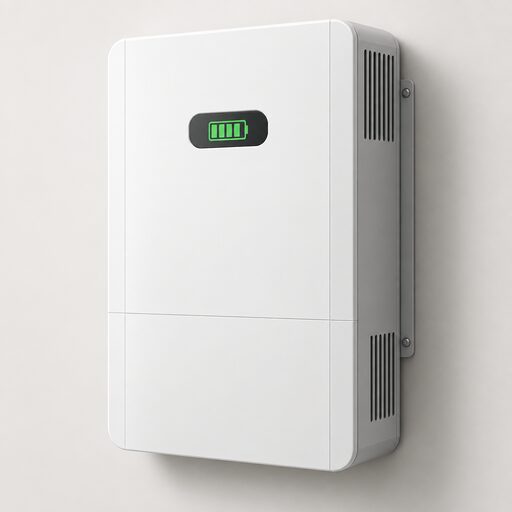 Home Battery Install StatisticsHow many homes in the UK actually have a battery, and is that number growing quickly?